Archive for the 'Human Rights Defenders' Category

Some thoughts on the 25th anniversary of the UN Declaration on Human Rights Defenders

December 14, 2023

Since its adoption, the U.N. established in 2000 a Special Rapporteur to report on the situation of HRDs, and more than 60 countries now have laws, policies, or protection mechanisms to protect HRDs.

Some countries, including the United States, sometimes sanction those who target HRDs with financial penalties and visa bans. Mechanisms like these are important, but they can be slow and used selectively, says Michael Breen of Human Rights First in Just Security of 9 December 2023.

Perpetrators often feel so protected from legal accountability that they openly threaten and attack HRDs. In 2022, more than 400 defenders were killed for their human rights work. This year the number killed is likely to be higher…In our work with HRDs, they often recommend public exposure of those who target them as one step that can be taken for their protection.

Breen states that It is on a reputational level that perpetrators can be most vulnerable and provides several examples.

We are working with HRDs to create a more international approach of social accountability. We will share research on the social circles in which their attackers move, or that they want to join. We will be compiling lists of who has received awards from where, engaging with institutions about publicly rescinding awards, and otherwise publicly causing embarrassment to perpetrators. This is largely new territory for human rights NGOs, and we will work closely with HRDs in assessing any additional risks produced by socially targeting their attackers.

———–

On 11 December 2023 Global Witness published a blog post: “Land and environmental defenders protect our planet – but they cannot halt climate change without access to justice

“For more than a decade, we’ve been documenting and celebrating the hard-fought wins of land and environmental defenders worldwide. Together, their efforts not only help to prevent environmental destruction and human rights harms by companies, but also help to protect the environment from the worst effects of climate change.”

“Defenders globally continue to face reprisals after speaking out to protect the environment. At least 1,910 land and environmental defenders around the world have been killed since 2012, with 177 cases in 2022 alone. Of these killings last year, 88% occurred in Latin America – a region consistently found to be the most dangerous place in the world for activists.”

“Impunity is consistently named as a key driver behind attacks on defenders by the UN Special Rapporteur on the situation of human rights defenders, Mary Lawlor, whose office has repeatedly noted how failures to properly prosecute perpetrators have fueled further attacks. This is no coincidence. Every perpetrator who walks free sends a fatal message to defenders and activists worldwide.”

“The future of our planet depends on the continued stewardship of Indigenous people over their ancestral land, with Indigenous practices cited as protecting 80% of the world’s biodiversity. We simply cannot meet the 1.5°C limit and prevent devastating consequences on human life without the efforts of environmental defenders.”

See also: https://ishr.ch/25-years-un-declaration-on-human-rights-defenders/

https://www.globalwitness.org/en/blog/land-and-environmental-defenders-protect-our-planet-but-they-cannot-halt-climate-change-without-access-to-justice/

True Heroes Films (THF) latest newsletter

December 14, 2023

It deals with the following topics:

Cities of Rights – 75th UDHR Anniversary: The city of Utrecht wants to be city of human rights

Mohammadi Narges is one of the most recognised Human Rights Defenders in the world. She has received 8 major human rights awards according to THF’s digest of human rights awards but no media outlets got it right…

More on the toolkit (available on website) to create workshops for youth about filmmaking and human rights.

HURIDOCS 40th anniversary

More on ISHR‘s #Right2DefendRights campaign for the 25th anniversary of the UN Declaration on HRDs .

Please feel free to spread the word!

https://mailchi.mp/2aebd6e2cb43/true-heroes-insights-2-2023?e=ed48709ac7

Video on Rafto Award winners of 2023

December 14, 2023
The Rafto Prize 2023 was awarded to Defence for Children International-Palestine (DCIP) for their persistent work to defend and promote the rights of children living in the Occupied Palestinian Territory (OPT). [see: https://humanrightsdefenders.blog/2023/09/21/defense-for-children-palestine-winner-of-the-2023-rafto-prize/]. For over 30 years, DCIP has investigated, documented and pursued accountability for grave human rights violations against children; held Israeli and Palestinian authorities accountable to universal human rights principles; and advocated at the international and national levels to advance access to justice and protection for children.

Dissident painter Xiao Liang sentenced to jail

December 14, 2023

Hu Zimo in Bitter Winter of 12 December 2023 tells bout Peng Lifa. He is the “Bridge Man” who on October 13, 2022, managed to hang two banners with anti-Xi-Jinping slogans on Beijing’s Sitong Bridge. He was promptly arrested and his present whereabouts are unknown. [see also: https://humanrightsdefenders.blog/2023/09/05/human-rights-lawyer-gao-zhisheng-and-the-practice-of-enforced-disappearances-joint-letter/]

Less well-known is the name of painter Xiao Liang, although “Bitter Winter” reported in December 2022 that he had been detained for “painting the portrait of a dangerous person.” The “dangerous person” was Peng Lifa. At that time, neither “Bitter Winter” nor the painter’s wife and friends knew what exactly happened to Xiao Liang after the police took him away from his home in Nanchang city, Jiangxi province. But the repressive system of the CCP did not forget him. 

On December 7, 2022, Xiao was formally arrested by the Donghu District Procuratorate of Nanchang City with the accusation of “picking quarrels and provoking trouble,” now a popular charge against all kind of dissidents. His wife was submitted to long interrogations as the police tried to prove that Xiao was part of an organized anti-CCP group.

Relatives and friends have now learned and posted on social media that Xiao was sentenced to one year and three months in jail for the crime of “picking quarrels and provoking trouble.” In addition to his portrait of Peng Lifa, the painter was considered a “troublemaker” by the authorities for his paintings and posters supporting the Ukrainian resistance against Russia, a staunch ally of the Chinese regime.

https://bitterwinter.org/xiao-liang-dissident-painter-was-sentenced-to-1-year-and-3-months-in-jai

Jaw-dropping contempt for human rights by the Emirates

December 13, 2023

On 12 December 2023 Amnesty International UK issued a press release about a mass prosecution of human rights activists during COP28 by the UAE. Ahmed Mansoor, subject of an Amnesty UK protest during a Man City game last month, is among those facing new trumped-up terrorism charges. [see: https://www.trueheroesfilms.org/thedigest/laureates/074ACCD4-A327-4A21-B056-440C4C378A1A]

Responding to news that the Emirati authorities have begun a mass prosecution on trumped-up terrorism charges of more than 80 Emirati human rights activists – including renowned currently-jailed Emirati human rights activists who have already spent a decade behind bars – Aya Majzoub, Amnesty International’s Middle East and North Africa Deputy Director, said:

“To begin hearings in a new sham mass trial in the midst of what it billed as ‘the most inclusive COP ever’, is a jaw-dropping show of contempt for human rights by the Emirati authorities. The timing appears to be deliberately intended to send a clear message to the world that it will not tolerate the slightest peaceful dissent and that the authorities have no intention of reforming the country’s dire rights record. COP28 has already laid bare the barriers of fear and legalised repression that smother dissent in the UAE.

The UAE must immediately release all arbitrarily-detained prisoners, drop charges against them and end their ruthless assault on human rights and freedoms.” 

The new mass trial – first reported by the Emirates Detainees Advocacy Centre and confirmed to Amnesty by exiled Emirati activists – is a joint prosecution of more than 80 defendants, including victims of a past mass trial such as Mohamed al-Siddiq, father of the late exiled Emirati human rights defender Alaa al-Siddiq, prisoners of conscience such as Khalid al-Nuaimi, Hadef al-Owais, Nasser bin Ghaith and Sultan al-Qasimi, and longstanding human rights defenders such as Mohamed al-Roken and Ahmed Mansoor (see below). 

Fresh charges against Ahmed Mansoor

Last month, Amnesty UK campaigners flew a protest plane over Manchester City FC’s Etihad Stadium carrying a large banner saying “UAE – Free Ahmed Mansoor”. Mansoor is a blogger, poet and leading Emirati human rights activist who has been in jail and kept in solitary confinement in the UAE since 2017 as a direct result of his campaigning activity. In 2017, Mansoor was convicted on charges which included “insulting the status and prestige of the UAE and its symbols”, “publishing false information to damage the UAE’s reputation abroad” and “portraying the UAE as a lawless land”. The following year, Mansoor was sentenced to ten years’ imprisonment, with the sentencing court also ordering that he be placed under surveillance for three years after release. His conviction and sentence were upheld by the country’s supreme court on 31 December 2018.

https://www.amnesty.org.uk/press-releases/uae-authorities-launch-mass-prosecution-human-rights-activists-during-cop28

https://www.hrw.org/news/2023/12/14/uae-prominent-critics-face-new-charges

https://www.devdiscourse.com/article/law-order/2746918-un-expert-condemns-uaes-fresh-trials-against-human-rights-defenders-during-cop28

https://monitor.civicus.org/explore/over-60-activists-hit-with-new-fabricated-charges-while-cop28-was-in-progress/

In early 2024 confirmed: https://www.washingtonpost.com/world/2024/01/06/uae-mass-trial-muslim-brotherhood-detained-activists/daff80e4-ac6e-11ee-bc8c-7319480da4f9_story.html

https://www.sfchronicle.com/news/world/article/united-arab-emirates-acknowledges-mass-trial-of-18592850.php

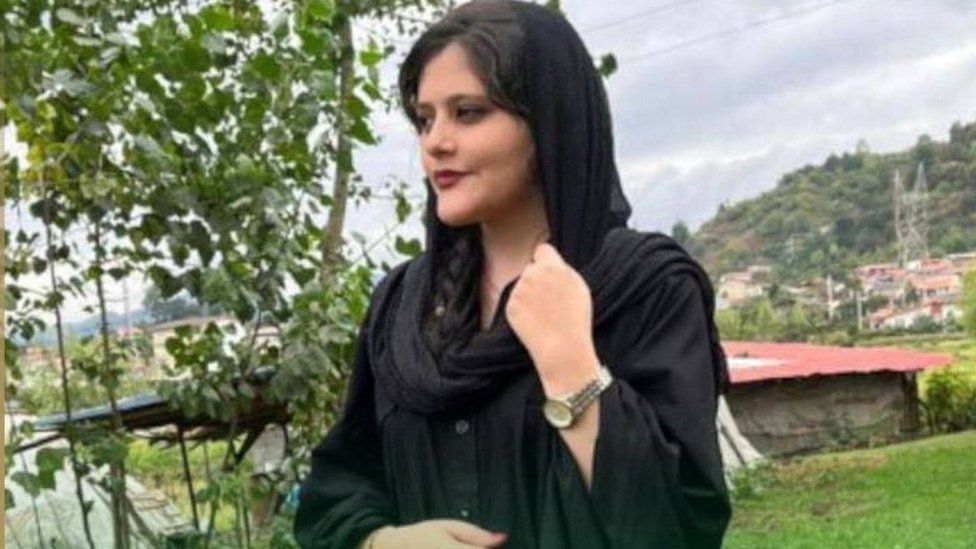
Iran gives the usual treatment to Mahsa Amini’s family: stopped at airport on way to collect award

December 10, 2023
Mahsa Amini file pic
Mahsa Amini

It sounded familiar hearing the BBC News that the family of Mahsa Amini have been banned from flying to France to collect the 2023 EU’s Sakharov Prize [see https://humanrightsdefenders.blog/2023/10/19/mahsa-amini-and-woman-life-and-freedom-movement-in-iran-awarded-eus-sakharov-prize/]. In 2009, as chairman of the MEA, I had to deal with the Martin Ennals Award laureate, Emad Baghi, who could not accept the prize in person due to travel restrictions. The same happened to other awards, including: the Civil Courage Prize (2004), the human rights award from France (2005), and the British Press Award (2008). https://www.trueheroesfilms.org/thedigest/laureates/EA0410ED-BC5A-4436-A3D7-012EF3232C55

Ms Amini’s parents and brother were stopped from boarding their flight and had their passports confiscated, their lawyer said. They were banned from leaving despite having valid visas.

Speaking to the AFP news agency, the family’s lawyer, Chirinne Ardakani, said Ms Amini’s mother, father and brother had been “prohibited from boarding the flight that was to take them to France for the presentation of the Sakharov Prize”.

The president of the European Parliament, Roberta Metsola, called on Iran to “retract the decision” to ban the family from travelling. “Their place next Tuesday is at the European Parliament in Strasbourg to receive the Sakharov Prize, with the brave women of Iran,” she said on social media. “The truth cannot be silenced.”

https://www.bbc.com/news/world-67672565

https://www.theguardian.com/world/2023/dec/10/iran-bans-mahsa-amini-family-travelling-receive-human-rights-prize

UN COP28 climate summit sees rare demonstration for imprisoned Emirati, Egyptian human rights defenders

December 9, 2023

AP reported on 2 December 2023 that protesters at the United Nations’ COP28 climate summit demonstrated Saturday for imprisoned human rights activists in Egypt and the United Arab Emirates, the past and current host of the negotiations.

Demonstrators carried signs bearing the image of Emirati activist Ahmed Mansoor and Egyptian pro-democracy activist Alaa Abdel-Fattah, part of incredibly restricted, but still-unprecedented protests being allowed to take place within the UAE from within the U.N.-administered Blue Zone for the summit.

However, just before the demonstration organized by Amnesty International and Human Rights Watch, protesters had to fold over signs bearing the Emirati detainees’ names — even after they already had crossed out messages about them. The order came roughly 10 minutes before the protest was due to start from the U.N., which said it could not guarantee the security of the demonstration, said Joey Shea, a researcher at Human Rights Watch focused on the Emirates.

See also: https://humanrightsdefenders.blog/2023/09/01/19-ngos-call-on-us-to-press-the-uae-to-release-ahmed-mansoor-ahead-of-cop-28/

“It is a shocking level of censorship in a space that had been guaranteed to have basic freedoms protected like freedom of expression, assembly and association,” Shea of HRW told The Associated Press.

https://apnews.com/article/cop28-climate-summit-protests-ahmed-mansoor-alaa-abdel-fattah-79b2e3180385bb54ca1cc4b6cb4ae4d2

UDHR@75: occasion for US, UK and Canada to put sanctions on human rights abusers

December 9, 2023

The UK, US and Canada are announcing a sweeping package of sanctions targeting individuals linked to human rights abuses around the world, ahead of the 75th anniversary of the Universal Declaration of Human Rights on 10 December. 

UK targets forced labour operations in Southeast Asia, and government-linked officials in Belarus, Haiti, Iran, and Syria complicit in repressing individual freedoms.

The first set targets 9 individuals and 5 entities for their involvement in trafficking people in Cambodia, Laos and Myanmar, forcing them to work for online ‘scam farms’ which enable large-scale fraud. Victims are promised well-paid jobs but are subject to torture or other cruel, inhuman, or degrading treatment…

The second is aimed at a number of individuals linked to the governments, judiciaries and prosecuting authorities of Belarus, Haiti, Iran, and Syria, for their involvement in the repression of citizens solely for exercising fundamental freedoms in those countries.

Included in the USA sanctions are two Afghanistan government ministers accused of repressing women and girls, by restricting access to secondary education; two Iranian intelligence officers who the Treasury says plot violence against Iranian regime opponents beyond the nation’s borders and two Chinese officials accused of torturing Uyghur ethnic minorities in the Xinjiang region of China.

https://www.gov.uk/government/news/uk-and-allies-sanction-human-rights-abusers

https://thehill.com/homenews/ap/ap-u-s-news/ap-u-s-sanctions-officials-from-afghanistan-to-china-on-declaration-of-human-rights-anniversary/

https://www.france24.com/en/live-news/20231208-us-uk-canada-sanction-dozens-on-human-rights-anniversary

Norwegian Human Rights Fund and Human Rights First mark 25th anniversary of United Nations Declaration on Human Rights Defenders

December 9, 2023

Today, 9 December, marks 25 years of the United Nations Declaration on Human Rights Defenders (HRDs). It provides for the support and protection of HRDs, and for many HRDs it’s been a useful marking in legitimizing and supporting their work.

The anniversary is a good time to reflect on what’s working and what isn’t for HRDs, and we discussed some of these issues on a Human Rights First webinar a couple of days ago.

In many ways it was a different world in 1998. Celine Dion and the Backstreet Boys were the big rock acts then. The internet, mobile phones, and digital surveillance of HRDs, were all in their infancy.

For HRDs, much has changed, and it’s possible to see 25 years of success as HRDs have achieved some great things. They’ve changed laws, won the release of people from prison, distributed humanitarian aid, exposed corruption, documented and publicized human rights violations.

For some HRDs just keeping going despite pressure and threats is success in itself. Hundreds are killed every year for their peaceful work on behalf of others, for embarrassing corrupt officials, for making good things happen.

But there is now a greater recognition of the value of the work of HRDs than there was in 1998, and a better understanding of who they are. The family of HRDs has expanded in the last 25 years – back then NGOs discussed whether those working on environmental rights, or those documenting corruption, or medics working in war zones, really counted as HRDs.  Now we know they do.

We better understand too the responsibilities of businesses to protect HRDs, and that defenders working on certain issues face specific threats, that those working on land rights, indigenous rights or environmental rights away from big cities are most likely to be murdered. We know too that many defenders are targeted not just for what they do but for who they are.

Women Human Rights Defenders experience added layers of harassment. They’ve always lived with pressure from society in terms of what they should get engaged in and not, pressure from their families on what a woman should do or not, and since 1998 there’s now added pressures in the digital sphere. They are targeted more than other HRDs with digital harassment, which we see very often leads to physical attacks offline.

Our organizations share a similar approach to working with HRDs. The NHRF supports HRDs working for NGOs outside big cities, often formed by people from the community that they work in. It supports organizations where women are in leaderships roles, and provides resources over the long term. For instance, the NHRF works with an NGO in Thailand originally formed by young women to organize their community in the face of a mining company. Most of these women are  now grandmothers, but still keep up their human rights work.

The NHRF also works with organizations of HRDs in Indonesia made up of family members of those killed and tortured in in the 1960s who are now seeking redress and working against impunity.

Human Rights First, meanwhile, continues its decades-long work on Northern Ireland, also working with bereaved families of those killed during the conflict in the 1970s, 1980s and 1990s who are also looking for redress and working against impunity.

For many HRDs achieving success is a long road, requiring perseverance and allies. International standards and rules aren’t protecting them enough. Their work needs to be better understood, and better funded.

The picture for HRDs since 1998 is mixed, and no doubt will be for the next 25 years. HRDs will achieve more successes, but unless governments find the political will to implement the protections of the HRD Declaration, more defenders will be attacked, jailed and murdered.

So, what do the next 25 years hold for HRDs? The future is hard to predict, but one thing we can say for sure is that HRDs will continue to be, as the UN Special Rapporteur for HRDs Mary Lawlor says, ordinary people doing extraordinary things.

In these times, when many people from Gaza to Ukraine question the power of the human rights framework to actually protect people’s rights, everyone with power must ensure that HRDs can be funded, protected and supported. We will all be better off for it.

See also: https://humanrightsdefenders.blog/tag/25th-anniversary-un-declaration-hrds/

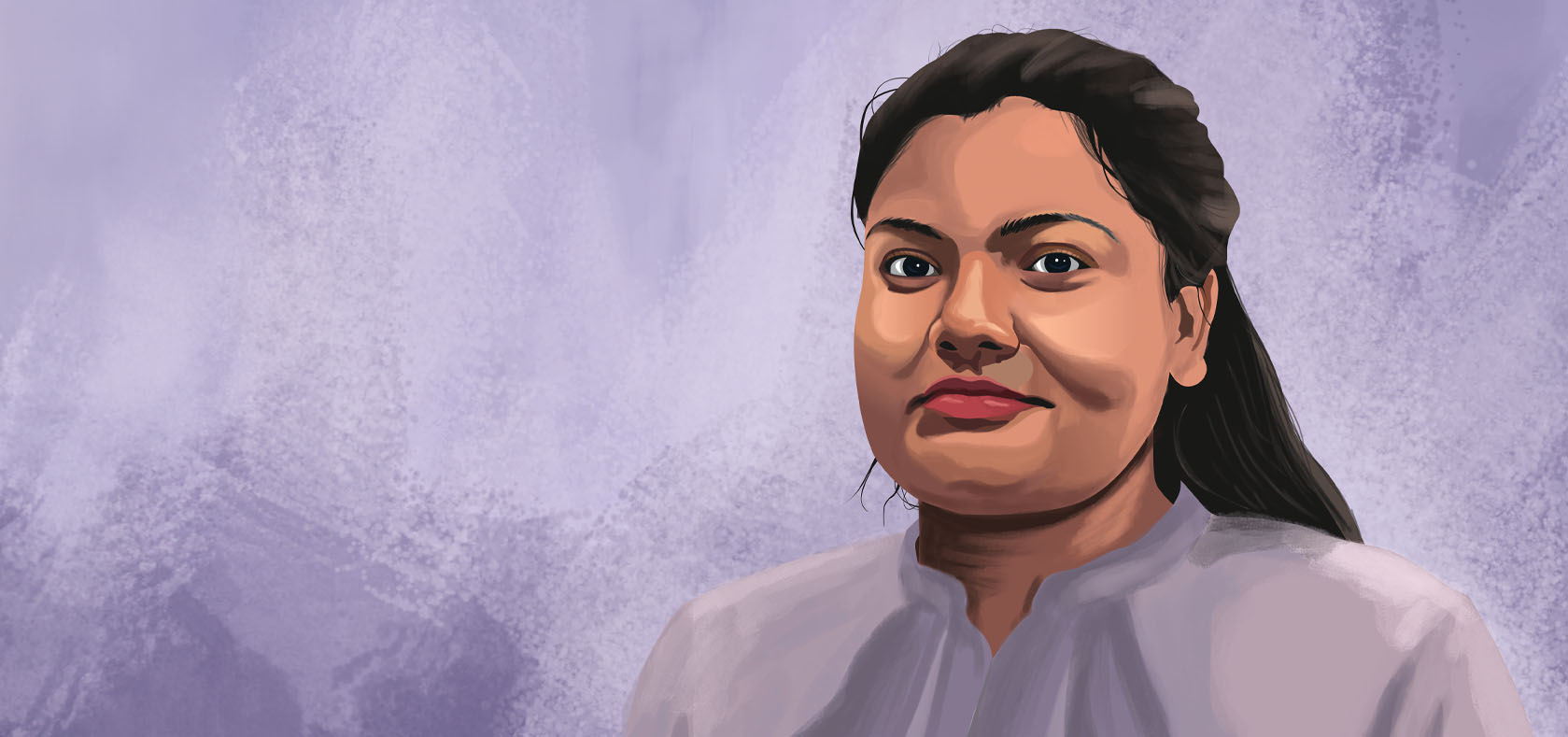
Anushani Alagarajah: “As a human rights defender, you’re almost expected to be superhuman”

December 8, 2023
UN Women

Anushani Alagarajah, human rights defender and executive director at the Adayaalam Centre for Policy Research. Illustration: UN Women Sri Lanka/Dinuk Senapatiratne

Anushani Alagarajah is a human rights defender who has worked closely with conflict-affected communities in the North and East of Sri Lanka. She is the Executive Director at the Adayaalam Centre for Policy Research, a non-profit research think-tank that works on public policy issues in Sri Lanka. On the occasion of the International Day for Women Human Rights Defenders, Ms. Alagarajah spoke about her work in post-conflict Sri Lanka.

I don’t know if I ever consciously decided to become a human rights defender. But when I was seven, there was a gang rape of a girl from our school. Her classmates held a sit-in protest. I didn’t know what rape meant, but children living with conflict grow up fast. I wanted to protest too. If I see injustice, I want to speak up.

As a child, it was horrible to live in bunkers [during the conflict], to come out and see ashes. I’ve been in survival mode my entire life. Seeing what’s happening in other countries, I worry that children will spend their entire lives trying to make sense of it, trying to be okay.

Grief is not only for people, it’s also for a place you called home, that belonged to you. For me, it was always about the childhood I didn’t have. I will probably be grieving that for the rest of my life.

I left Sri Lanka in 2009 to study in Bangladesh. I never wanted to come back. But from the time I left, I knew I had to return. I came home every summer, to conduct workshops with orphanages and conflict-affected communities.

I couldn’t run away. Afterall, I am from this community.

I was displaced thrice. I couldn’t sleep peacefully knowing I could have done something, and I didn’t do it. I thought, “I can try to make things better.” So, I returned after finishing my studies in 2014. Since then, I have been living my purpose in the community.

Whether it is the economic crisis or a lack of opportunities, a lasting political solution requires the political will for change.

It’s difficult when you come from a history of violence, conflict and trauma. During the conflict, a range of violent acts were committed against women.

Women bear the brunt of any damage, and are also expected to be the ones to rebuild, protecting the family unit, community and culture. Yet, particularly in the global South, women are not afforded resources.

Patriarchy is the norm.

Men can take a job in different places, access resources, work with men, divorce, remarry. Women cannot. They must provide out of nothing. Even though they suffered tragic, unspeakable experiences, they are still shackled by stereotypical expectations.

My own work is considered unfitting. I’m expected to be a good woman and get married. We are very far from being inclusive.

In the early days, I would try to talk to older activists about mental health, saying “I’m not doing okay”. But as a human rights defender, you’re almost expected to be superhuman. I think being sensitive helps me do my job better because I look out for others.

For the last four years, when my office researches something difficult, we check in with everyone about how they feel. Whenever one of us needs support, the community will hold them, providing a safe space to be vulnerable or angry. It took a long time for me to find this community.

You cannot heal on your own.

With my colleagues, I run practical workshops to create the next generation of activists, training people in small communities and villages to advocate for their rights. We have participants pick an issue, ideate a solution and work with relevant stakeholders. For example, we have young participants who want to reclaim an occupied land in their village. They met the parliamentarian and the Divisional Secretary’s Office and are now drafting a lease. If they have the courage and knowledge to do that at 20 years old, there is so much we can do. I’m always looking for a few people to take our struggle forward.

Sometimes, it only takes one person.

A wise woman once told me: “You will not see the changes you work for in your lifetime.” This helps put things in perspective. We can only chip at the corners so that one day, hopefully, things will be different. Giving up is not an option. We can’t stop now.”

https://asiapacific.unwomen.org/en/stories/in-the-words-of/2023/11/anushani-alagarajah