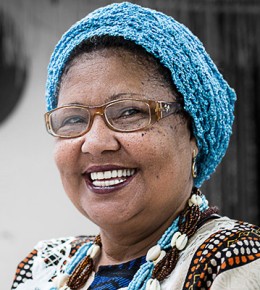
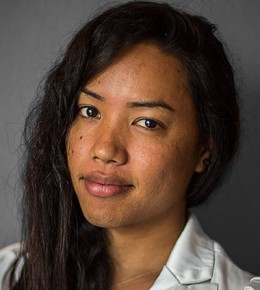
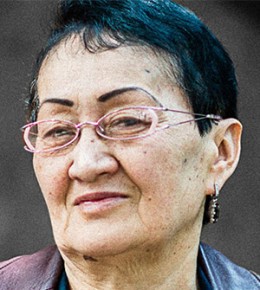
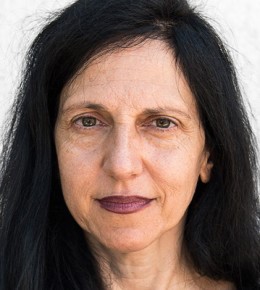
BREAKING NEWS: Ahmed Mansoor was just announced during the ceremony in Geneva as the 2015 MEA Laureate [6 October 2015]. Since 2006, Ahmed Mansoor (United Arab Emirates) has focussed on initiatives concerning freedom of expression, civil and political rights. He successfully campaigned in 2006-2007 to support two people jailed for critical social comments, who were released and the charges dropped. Shortly after, the Prime Minister of UAE issued an order not to jail journalists in relation to their work. Mr Mansoor is one of the few voices within the United Arab Emirates who provides a credible independent assessment of human rights developments. He regularly raises concerns on arbitrary detention, torture, international standards for fair trials, non-independence of the judiciary, and domestic laws that violate international law.
He has faced repeated intimidation and harassment, including imprisonment in 2011 after being convicted of “insulting officials” and sentenced to three years’ in prison, although he was released after eight months. Since being jailed in 2011, he has been denied a passport and banned from travelling. The Martin Ennals Jury has in vain urged the government of the UAE to lift this travel ban and allow him to travel. Martin Ennals Foundation Chair Micheline Calmy-Rey stated “ Ahmed Mansoor continues to pay the price for speaking out on human rights issues in his country, we urge his government to lift the travel ban.” [https://thoolen.wordpress.com/2015/09/15/fly-emirates-if-the-emirs-let-you/]
Ahmed Mansoor’s message (recorded on video before the ceremony):
The Martin Ennals Award for Human Rights Defenders (MEA) is a unique collaboration among ten of the world’s leading human rights organizations to give protection to human rights defenders worldwide. The Jury is composed of the following NGOs:
Martin Ennals Award for Human Rights Defenders
– Amnesty International,
– FIDH,
– Human Rights First,
– HURIDOCS,
– International Service for Human Rights,
– EWDE Germany,
– Front Line Defenders,
– Human Rights Watch,
– International Commission of Jurists,
– World Organisation Against Torture.
The two other finalists received Martin Ennals Prizes:
Robert Sann Aung (Myanmar)
Since 1974, Robert Sann Aung has courageously fought against human rights abuses. He has been repeatedly imprisoned in harsh conditions, physically attacked as well as regularly threatened. He was disbarred from 1993 – 2012. Currently, he represents students detained for peaceful protests.
Asmaou Diallo (Guinea)
Her human rights work started following the events of 28 September 2009 when the Guinean military attacked peaceful demonstrators. She founded l’Association des Parents et Amis des Victimes du 28 septembre 2009 (APIVA), which assists those affected, and supports them to testify in court proceedings.
This one minute trailer by THF is a good introduction to tonight’s MEA ceremony. Starts shortly after 18h00 Geneva time and can be followed on www.martinennalsaward.org.
The Parliamentary Assembly of the Council of Europe has awarded its annual Vaclav Havel Human Rights Prize to veteran Russian activist Ludmilla Alexeeva, 88, at a special ceremony in Strasbourg on the opening day of its fall plenary session on 28 September 2015.
“Ludmilla Alexeeva has inspired many generations of activists in Russia, but also abroad, to commit themselves to the struggle for justice” – PACE President Anne Brasseur, chair of the selection panel, said presenting the award on 28 September. In her youth, Alexeeva gave up an academic career to join the Soviet dissident movement, going on to become a founding member of the Moscow Helsinki Group in 1976. A year later, she was forced to emigrate to the United States. Alexeeva returned to Russia in 1989 and became the International Helsinki Foundation president and later joined the Russian presidential human rights commission. At a demonstration in Moscow’s Triumfalnaya Square in 2010 against restrictions on the freedom of assembly, the by then 82-year-old head of the Moscow Helsinki group, received a severe blow to the head.
Alexeeva told the Assembly that for her receiving the prize was a “recognition of all Russian human rights defenders who work in very hard circumstances”. She also condemned the so-called foreign-agent law adopted in 2012, which she said aimed at “destroying” civil society groups. [Critics say the Russian government is using the foreign-agent law to hound non-governmental organizations that are critical of the Kremlin. As of June, there were 67 organizations deemed as such by Russia’s Ministry of Justice, including Transparency International and the Sakharov Center.]
The 2015 Right Livelihood Awards were announced today in Stockholm:
Three Laureates will share the cash award of SEK 3 million (ca. EUR 320 000):
SHEILA WATT-CLOUTIER (Canada) “for her lifelong work to protect the Inuit of the Arctic and defend their right to maintain their livelihoods and culture, which are acutely threatened by climate change.“
KASHA JACQUELINE NABAGESERA (Uganda) “for her courage and persistence, despite violence and intimidation, in working for the right of LGBTI people to a life free from prejudice and persecution.”Kasha was the Laureate of the 2011 Martin Ennals Award.
GINO STRADA, co-founder of EMERGENCY, (Italy) “for his great humanity and skill in providing outstanding medical and surgical services to the victims of conflict and injustice, while fearlessly addressing the causes of war.“
The 2015 Right Livelihood Honorary Award goes to TONY DE BRUM and THE PEOPLE OF THE MARSHALL ISLANDS “in recognition of their vision and courage to take legal action against the nuclear powers for failing to honour their disarmament obligations under the Nuclear Non-Proliferation Treaty.”
The Awards will be presented at a ceremony in Stockholm on 30 November 2015, hosted by the Society for the Right Livelihood Award in the Swedish Parliament.
For those wanting to submit candidates for the 2016 MEA, please note that the nominations deadline is one month earlier than in the past, i.e. 9 November 2015. Nominations can be submitted electronically at www.martinennalsaward.org
The Jury of the Award is composed of the following NGOs:
On Tuesday 29 September (15h30 – 17h30, Palais des Nations, Room XXII, Geneva), the CMDPDH, Asociación Civil and ISHR organise a side event about the situation for human rights defenders in Mexico. [A Mission of International Observers visited Mexico in November 2015 and will present its conclusions – under the title “In Defense of Life” – to the Mexican Government within the framework of the 30th session of the Human Rights Council.]
Panelists in the event are::
Rosario Figari Layús – Researcher in the Institute for Interdisciplinary Research on Conflict and Violence (IKG) at the University of Bielefeld, Germany.
Carola Hausotter – Coordinador of the German Network for Human Rights in Mexico (Deutschen Menschenrechtskoordination Mexiko)
Ben Leather – Advocacy, Training and Communications Manager of the International Service for Human Rights (ISHR)
Olga Guzmán Vergara – Advocary Director of the Mexican Commission for the Defense and Promotion of Human Rights (CMDPDH)
Ambassador Jorge Lomónaco Tonda – Permanent Representative of Mexico to the UN in Geneva (TBC)
Christina Kokkinakis – Head of Human Rights section from the Permanent Delegation of the European Union to the UN in Geneva
On 18 June 2015, Rachel Ball, Director of Advocacy at the Human Rights Law Centre in Australia, reflects on a cross-regional consultation of human rights defenders facilitated by ISHR:
There’s a game that you sometimes find at amusement arcades called whack-a-mole. Toy moles rise out of their holes at random and the player uses a large mallet to whack the moles on the head and force them back into their holes. A successful player needs vigilance, composure and a quick eye.
For human rights defenders, the protection of civil society space is a lot like a game of whack-a-mole. Threats arise without warning and valuable time, resources and energy are spent opposing them.
Almost one year ago, the Human Rights Council passed a resolution urging States to ‘create and maintain, in law and in practice, a safe and enabling environment in which civil society can operate free from hindrance and insecurity’. In too many cases the Human Rights Council’s resolution has not translated into domestic action and last week in Geneva ISHR convened a group of expert whackers from around the world to share their experiences of threats to civil society space and strategies to counter those threats.
Participants discussed anti-protest laws, restrictions on the establishment and funding of civil society organisations, constraints on the work of journalists, and national security and counter-terrorism laws that unduly restrict freedom of association and assembly. Each of these restrictive practices constitutes a current threat to civil society space in my country, Australia, and it was both troubling to see the regularity with which these laws and policies arise around the world, and encouraging to be exposed to the skill and dedication of human rights defenders working to defeat them.
We discussed and debated strategies for protecting civil society space, including building and maintaining strong coalitions, engaging with UN human rights mechanisms and other international actors, working with Governments and legislatures, strategic litigation, monitoring and reporting and working with the media and social media. We shared stories of success as well as failure.
What was abundantly clear during the ISHR convening was that human rights defenders should not be spending their time whacking moles. Beyond our work protecting civil society space, we are engaged in issues like persecution on the basis of sexual orientation and gender identity, militarisation, sustainable development, climate change and refugee rights, to name a few.
The contribution of civil society actors to human rights challenges like these is vital. As the UN High Commissioner for Human Rights, Zeid Ra’ad Al Hussein, told the Human Rights Council at the opening of its 30th session last week, ‘When ordinary people can share ideas to overcome common problems, the result is better, more healthy, more secure and more sustainable States. It is not treachery to identify gaps, and spotlight ugly truths that hold a country back from being more just and more inclusive. When States limit public freedoms and the independent voices of civic activity, they deny themselves the benefits of public engagement, and undermine national security, national prosperity and our collective progress. Civil society – enabled by the freedoms of expression, association and peaceful assembly – is a valuable partner, not a threat.’
In addition to enabling civil society through the proper protection of freedom of expression, assembly and association, States should make public commitments to support civil society and protect civil society space. Those commitments should be backed up by legal and institutional protection against intimidation and reprisals, support for the establishment and operation of non-government organisations and mechanisms to ensure transparency and accountability.
Human rights defenders will return home from ISHR’s consultation, training and advocacy program with their mallets at the ready, but really it would better if we didn’t have to use them at all.
A bit belatedly, I refer to the interview (19 June 2015) with Alejandro González in the Newsletter of the ISHR. Alejandro is a human rights specialist who works for PODER, an award winning and multi-faceted civil society organisation based in Mexico that helps build the capacities of communities, workers, NGOs, and other civil society groups affected by corporate malfeasance and accompanies their accountability campaigns.
‘We help communities participate in the consultative process. In the end, it is about what communities want. We are not in favour or against the project. We make sure communities know their rights and are aware of the potential positive and negative impacts of the project.’ Free, prior and informed consent of the local communities is needed to pass development projects in indigenous regions of Mexico. Recent reforms, however, have opened the energy sector to both national and international investment. Mexico is currently in a maelstrom of speculation. ‘This is a dangerous situation. Many powerful companies in Mexico have a poor track record in human rights and we are concerned that local communities will lose their power to defend their land rights. Communities affected by gas speculation can either be obliged to sell their land or be forcibly dispossessed. It is vital that we observe, facilitate and publicise these negotiations.’
PODER, together with rural communities, is currently conducting an ex ante human rights impact assessment on extractive projects in Puebla, Mexico. In other states, such as Hidalgo, Oaxaca, and Sonora, PODER conducts participatory research with communities and accompanies their advocacy efforts. In Oaxaca it is part of an international mission to monitor the Free, Prior and Informed Consent process regarding the construction of wind farms by Australian, Dutch, Japanese and Mexican corporations.
‘The government wants to use this case as a model – to set a precedent for all future negotiations. If it goes poorly, the consequences could be devastating … We have met frequently with the Dutch, European Union and other embassies to amplify the voices of local people. We have also conducted extensive research into the companies and provided this information to the community, to help them make informed decisions.’
Standing up to powerful economic actors is dangerous work. In 2013, Héctor Regalado Jiménez, member of the Popular Assembly of the Juchiteco People, was shot and killed after opposing the wind farms. ‘Another activist we were working with died in a suspicious car accident. We still don’t know what happened, but this is a common modus operandi in Mexico. The killers make it look like an accident. Community leaders are frequently subject to death threats and assaults.‘
Since PODER does not directly advocate on land rights issues, Alejandro is not in as much risk as the human rights defenders it supports, though he and his colleagues face increasing surveillance. He believes that a powerful political and corporate élite pose a major challenge to the work of business and human rights defenders across Mexico. ‘There is a small group of families who control most of the market. It is a secretive group who meet with the president and cabinet members behind closed doors. Together they decide the laws and regulations. That’s how they pushed through the reforms that opened up the energy sector.’
To address this lack of transparency in the government and private sector, PODER is involved in online platform such as “Who’s Who Wiki” (rindeucentas.org) and ‘MéxicoLeaks’ – a whistleblowing tool that allows people to send information of public interest through secure technologies that protect the identity of the source. The information received through MéxicoLeaks is then verified, analyzed and published by the partners of the alliance, made up of civil organizations and media outlets. “The investigations that follow allegations communicated via ‘MéxicoLeaks’ are dangerous. In a two-year period, 10 journalists were murdered and 326 attacked. We have seen an increasing use of cyber attacks – as hackers force outlets offline or bombard them with viruses. Any journalist who exposes government corruption can expect to lose his job.”
Despite these adverse conditions, Alejandro is positive that good business practice is in the best interests of businesses. ‘We make corporations aware that human rights violations are a material risk. For example, if a company pollutes a river, there will be mobilisation and litigation against the company as well as a huge attack on their reputation – all of which costs money. Making corporations aware of the cost of violating human rights puts pressure on them to improve their due diligence.‘
‘In Mexico we would like to see a civil society powerful enough to be on equal footing with both the authorities and the private sector. For this you need information, complete transparency in everything the government does and strong accountability mechanisms. The private sector must prioritise human rights with due diligence, and not merely refrain from doing harm, but actively to do good.’
on 21 September 2015 carries an interview with Lira Ismailova, a human rights defender from Kyrgyzstan.
She starts by crediting her mother, Tolekan Ismailova – a celebrated Kyrgyz human rights defender, with influencing her. Lira, previously a lawyer advocating for a wide range of human rights related issues, currently works at Bir Duino Kyrgyzstan – which focuses on defending freedom of association and protecting human rights defenders in Kyrgyzstan.
‘My first position in the field of human rights was with an NGO working for the protection of the rights of internal migrants. I then advocated for the repeal of the death penalty in Kyrgyzstan. I participated in a working group to prepare a draft law for reforming our criminal legislation, and on several reforms for the penitentiary system which included monitoring prisons in Kyrgyzstan.’ Lira’s work on the death penalty was ultimately successful in 2007 when President Bakiyev abolished the death penalty. However, this achievement did not herald a significant practical improvement in the human rights situation in Kyrgyzstan. Instead, since then, it is ‘much more difficult’ for human rights defenders on the ground.
Lira recalls numerous occasions when she and her family had to temporarily leave Kyrgyzstan for safety reasons. Lira highlighted the restrictions imposed on Bir Duino’s operations and recalled that its Kyrgyzstan office has been burgled twice in connection with attacks on ‘nationalists’. Bir Duino’s activities were also ‘supervised’ by authorities during the trial of well-known human rights defender Azimzhan Askarov in 2013 who is currently serving a life sentence in a Kyrgyz prison [https://thoolen.wordpress.com/2015/07/23/fury-about-us-award-for-askarov-in-kyrgyzstan-backlash-or-impact/].
‘We need help from international institutions to raise awareness of the Government’s attempts to implement these restrictive laws and help us to stop these laws from passing in Parliament’
…..According to Lira, it is critical that, among other international mechanisms, the UN Special Rapporteur on the situation of human rights defenders visit Kyrgyzstan. Some of the main aims of such visit would be to observe the effect of Russian-derived legislation on civil society space and support human rights defenders, such as Askarov a defender who needs urgent humanitarian aid.
Lira adamantly talks about what needs to be done in Kyrgyzstan – the Government needs to ensure the protection of human rights defenders in accordance with the UN Declaration on human rights defenders; ensure that national legislation complies with this Declaration, including by repealing legislative barriers to obtaining financial resources, independence, freedom of association, assembly and expression; and create a parliamentary committee on observance of the situation with the human rights defenders.