
has now launched RightDocs [see announcement https://thoolen.wordpress.com/2016/02/25/huridocs-launches-rightdoc-to-improve-access-to-un-human-rights-documents/] You can try it out yourself: #RightDocs. This tool is a work in progress, so in addition to adding new features, the website and experience will improve over time. Your feedback is welcome: feedback@right-docs.org.
Archive for the 'Human Rights Defenders' Category
Human rights resolutions count at RightDocs
March 7, 2016Exceptional response from NGO world on killing of Berta Cáceres
March 7, 2016A group of over 50 international organizations has written to the President of Honduras to express their shock over the recent killing of Berta Cáceres [https://thoolen.wordpress.com/2016/03/03/berta-caceres-human-rights-defender-assassinated-today-in-honduras/], to demand an international investigation and the immediate protection of Gustavo Castro Soto, a Mexican activist, who witnessed her assassination. Here is the letter and signatories in full: Read the rest of this entry »
Statement on Human Rights Defenders that the Observatory would have delivered orally to the UN (if time had allowed)
March 4, 2016Severe time restraints made that several NGOs could not make their oral statement on 4 March 2016 during the Interactive Dialogue with the United Nations Special Rapporteur on the Situation of Human Rights Defenders in the UN Human Rights Council [see: https://thoolen.wordpress.com/2016/02/25/preview-of-the-upcoming-session-of-the-un-human-rights-council/].
Here follows the text of the statement that the World Organisation Against Torture (OMCT) and FIDH, within the framework of the Observatory for the Protection of Human Rights Defenders, would have delivered:
Berta Caceres, human rights defender, assassinated today in Honduras
March 3, 2016A sad day for Honduras and all human rights defenders: today, 3 March 2016, Berta Cáceres was murdered by as yet unknown assailants who broke into her home in the city of La Esperanza in the early hours of the morning. One week prior to her assassination, the defender had denounced the killing of 4 leaders of her community as well as threats against her and other human rights defenders, at a press conference.

Berta Cáceres was one of the most prominent human rights defenders in Honduras and a Lenca indigenous woman who, for the past 20 years, had been defending the territory and rights of the Lenca people. In 1993, she co-founded the Consejo Civico de Organizaciones Populares e Indígenas de Honduras – COPINH (http://www.copinh.org/) (Civic Council of Popular and Indigenous Organisations of Honduras), which led fierce campaigns against illegal logging and mega-projects for their detrimental effects on the rights of indigenous peoples in the country. She faced off – and often won – against illegal loggers, plantation owners, multinational corporations, and dam projects that would cut off food and water supplies to indigenous communities. (e.g. https://thoolen.wordpress.com/2014/01/28/berta-caceres-in-honduras-continues-to-be-harassed-in-spite-of-court-order).
The human rights defender was a finalist for the 2014 Front Line Defenders Award [https://www.frontlinedefenders.org/es/programme/fld-award] and in 2015 she received the Goldman Environmental Prize. She had been a beneficiary of precautionary measures granted by the Inter-American Commission on Human Rights (IACHR) since 2009. Her harassment was followed closely by Front Line and others.
Other human rights defenders (including members of COPINH) have been targeted in the past. The killing of human rights defenders and impunity for the perpetrators have been documented by many organizations. In this blog alone:
“the most dangerous place to be an environmental activist was actually Honduras, according to Global Witness” [https://thoolen.wordpress.com/2015/04/24/killings-of-environmental-human-rights-defenders-up-again-compared-to-last-year/]
Adoption of North Korean Human Rights Act (by South Korea) welcomed by Human Rights Foundation
March 3, 2016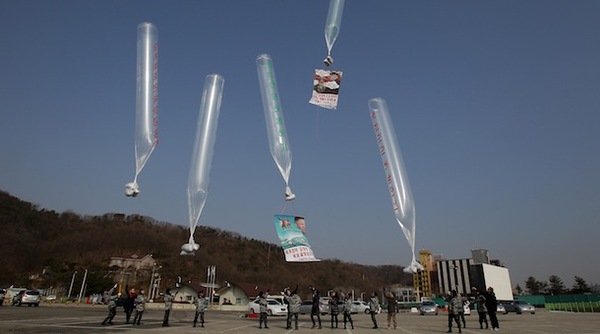
On 2 March 2016) South Korea’s legislature passed the North Korean Human Rights Act. The new law mandates the promotion of freedom in North Korea by funding North Korean defector and and refugee organizations, creating a North Korean human rights foundation, and establishing an archive of human rights violations perpetrated against the North Korean people by the Kim regime. The US-based Human Rights Foundation welcomed the Act as the NGO has advocated for such an action and in 2015 established the Global Coalition for the North Korean Human Rights Act.
“This is an astonishing moment. The Republic of Korea has taken its head out of the sand and has finally confronted the cruelty and horror of the North Korean dictatorship. It is a victory for all who support human rights and human dignity,” said HRF chairman Garry Kasparov. “We in the Global Coalition are delighted that the South Korean government will—for the first time ever—finance the defector organizations that send films, e-books, radio broadcasts, and educational materials to the North Korean people.”
The North Korean Human Rights Act also establishes a public campaign to raise awareness about North Korea’s human rights violations and takes steps to ensure that South Korean humanitarian aid is not misused by the Kim regime. The goal of establishing the human rights archive, inspired by the post-war German model, is to monitor and document the crimes of the North Korean dictatorship. It is vital to note that no such archive or record has ever existed in South Korea.
The law’s passage comes at a time when the rest of the world unanimously agrees on the extent and gravity of the crimes of the North Korean dictatorship. Earlier today, the U.N. Security Council voted 15-0 to toughen sanctions on the regime. “People inside the North will know about the law’s enactment and it will put considerable pressure on the political elite in Pyongyang,” said South Korean politician Kim Moon-soo, who first drafted the law in 2005.
For more information contact: Noemi Gonzalo-Bilbao, (212) 246-8486, noemi@hrf.org
Source: North Korea: HRF Celebrates Overdue South Korean Law Promoting Human Rights
See also: https://thoolen.wordpress.com/2015/05/29/north-korean-defector-ji-seong-ho-in-video-talk/
Human Rights Defender profile: Park Lae-goon from South Korea
March 3, 2016On 2 March 2016 the ISHR published a profile of human rights defender Park Lae-goon who promotes freedom of assembly and association while combating against State impunity. With 28 years of experience, he has been detained multiple times for participating in demonstrations demanding justice. Mr Park has become a symbolic figure fighting for victims of State violence in South Korea. In my next post I will devote attention to the new South Korean Act on Human Rights which aims more on North Korea. Read the rest of this entry »
Important side event on Burundi on 4 March 2016 during UN Human Rights Council
March 2, 2016
DefendDefenders (East and Horn of Africa Human Rights Defenders Project) together with the many NGOs, whose logos are shown above, will host the side event “Crisis in Burundi: Implementing Sustainable Solutions” on 4 March 2016 (15h00 – 17h00), Room XXIV, Palais des Nations, Geneva.
Panelists:
- Michel Forst, UN Special Rapporteur on the situation of Human Rights Defenders
- Pierre Claver Mbonimpa, President of APRODH (and Laureate MEA 2007)
- Tom Gibson, Representative for Burundi and DRC at Protection International
Moderator:
- Hassan Shire, Executive Director of East and Horn of Africa Human Rights Defenders Project.
The situation in Burundi is terrible as is know from the many reports issued already and the December 2015 Special Session of the UN Human Rights Council, which culminated in the adoption of a strong resolution mandating the High Commissioner for Human Rights to deploy a mission by independent experts to visit the country to investigate human rights violations, represents an important step to ensuring greater accountability for violations of fundamental rights in Burundi. However, the Burundian Government’s refusal to facilitate this mission has severely hampered efforts to identify and implement a sustainable resolution to the crisis [https://thoolen.wordpress.com/2016/02/08/what-is-burundi-doing-in-the-un-human-rights-council/]. Although there is now a bit of hope as three investigators are due to visit Burundi for a week from March 1, the Office of the High Commissioner for Human Rights (OHCHR) said in a statement. The three experts — from Algeria, Colombia and South Africa — are members of the UN’s Independent Investigation on Burundi (UNIIB). “Our aim is to help the state fulfil its human rights obligations, ensure accountability for human rights violations and abuses, including by identifying alleged perpetrators,” said Christof Heyns, the UN’s Special Rapporteur on Extrajudicial, Summary of Arbitrary Executions who is one of the investigators. The African Union (AU) said it would increase the number of human rights and military observers deployed. “The AU will deploy 100 human rights observers and 100 military monitors to Burundi to monitor the situation,” a statement on the South African presidency’s website said Saturday.
http://www.timeslive.co.za/africa/2016/02/29/UN-to-send-human-rights-team-to-Burundi
Side event on Protection of human rights defenders in economic, social and cultural rights
March 1, 2016 On Monday 7 March 2016, from 13h30-15h00 in Room XVIII, Palais des Nations, Geneva, there will be a side event:Protection needs of human rights defenders working on economic, social and cultural rights: Challenges and good practice. (see my previous post: https://thoolen.wordpress.com/2016/02/29/regional-update-for-asia/)
The current and previous Special Rapporteurs on the situation of human rights defenders have emphasised the specific risks that defenders working on economic, social and cultural rights face. Whether they are activists fighting corruption or promoting transparency, working on land and environment rights, or defending their right to housing, ESC-rights defenders are among the most isolated and stigmatised defenders. This side event hopes to shed light on the risks faced by economic, social and cultural rights defenders, and draw on the report of the Special Rapporteur presented to the 31st session of the Human Rights Council to present good practices in furthering their protection.
panelists:
• Michel Forst, Special Rapporteur on the situation of human rights defenders
• Navi Pillay, former High Commissioner for Human Rights
• Allo Awol, human rights defender from Eritrea
• Arutchelvan Subramaniams, human rights defender from Malaysia
• Pedro Tzicá, human rights defender from Guatemala
Moderator: Ms Catarina de Albuquerque, Executive Chair of Sanitation and Water for All (SWA) and former UN Special Rapporteur on the right to safe drinking water and sanitation.
Interpretation in English and Spanish will be provided. The event will be webcast live at www.ishr.ch/webcasts
Source: Protection needs of human rights defenders working on economic, social and cultural rights | ISHR
Opening Statement of the UN High Commissioner for Human Rights at the Council’s 31st session
February 29, 2016The Statement of the UN High Commissioner for Human Rights, Zeid Ra’ad Al Hussein, at the 31st session of the Human Rights Council in Geneva, on 29 February 2016 is worth reading (as usual). Some of the highlights are: 
Today we meet against a backdrop of accumulating departures from that body of institutions and laws which States built to codify their behaviour. Gross violations of international human rights law – which clearly will lead to disastrous outcomes – are being greeted with indifference. More and more States appear to believe that the legal architecture of the international system is a menu from which they can pick and choose – trashing what appears to be inconvenient in the short term.
Read the rest of this entry »
 Hans Thoolen on Human Rights Defenders and their awards