Archive for the 'Human Rights Defenders' Category

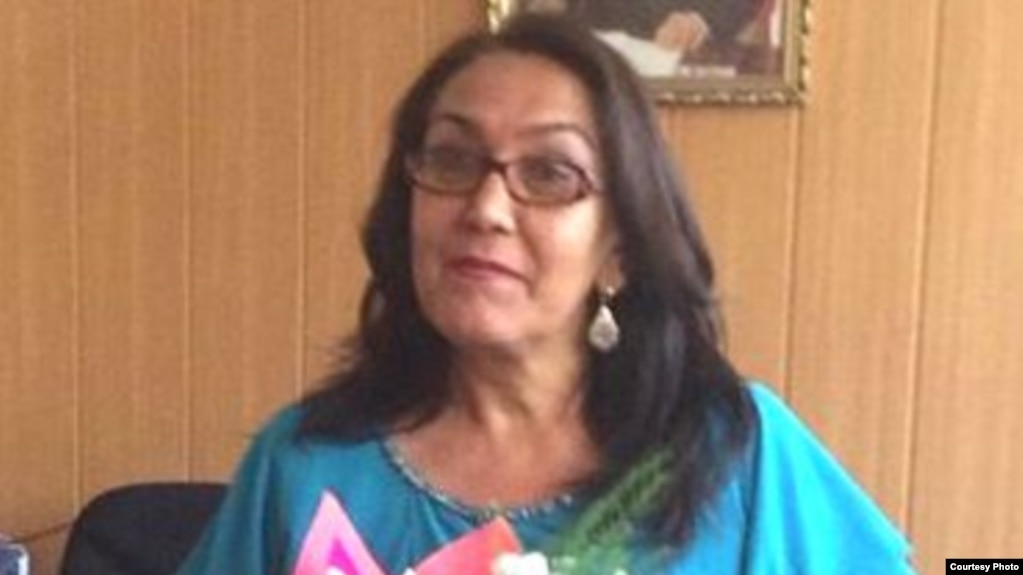
Profile of Human Rights Defender Nadia Ait Zai from Algeria

October 22, 2018

Human Rights Defender Nadia Ait Zai from Algeria works for the rights of women. This is another of the profiles recently published by European External Action Service (EEAS) in the context of the 70th anniversary of the adoption of the Universal Declaration of Human Rights. [see: https://humanrightsdefenders.blog/2018/10/04/chia-wei-chi-first-in-series-of-videos-by-european-external-action-service/].

https://eeas.europa.eu/headquarters/headquarters-homepage/51512/human-rights-defenders-nadia-ait-zai-algeria_en

“On Her Shoulders” tells the story of human rights defender Nadia Murad, 2018 Nobel Peace Prize

October 21, 2018

Nadia Murad, a 23-year-old Yazidi, survived genocide and sexual slavery committed by ISIS. Repeating her story to the world, this ordinary girl finds herself thrust onto the international stage as the voice of her people. The film “On Her Shoulders” tells the story of Nadia Murad, 2018 Nobel Peace Prize winner, human rights activist, and Yazidi survivor of genocide and human trafficking. [see also: https://humanrightsdefenders.blog/2018/10/05/breaking-news-see-which-other-awards-the-2018-nobel-peace-prize-laureates-won-already/]

ON HER SHOULDERS Trailer (2018) Nadia Murad Documentary © 2018 – Oscilloscope

Profile of Human Rights Defender Saja Michael from Lebanon

October 21, 2018

This is Human Rights Defender Saja Michael from Lebanon who works on gender issues. This is another of the profiles recently published by European External Action Service (EEAS) in the context of the 70th anniversary of the adoption of the Universal Declaration of Human Rights. [see: https://humanrightsdefenders.blog/2018/10/04/chia-wei-chi-first-in-series-of-videos-by-european-external-action-service/].

https://eeas.europa.eu/headquarters/headquarters-homepage/51514/human-rights-defenders-saja-michael-lebanon_en

Profile of Human Rights Defender Yésica Sánchez from Mexico

October 20, 2018

This is Human Rights Defender Yésica Sánchez from Mexico who has been involved in the broad struggle for human rights including torture, disappearances and detention with emphasis on indigenous women. This is another of the profiles recently published by European External Action Service (EEAS) in the context of the 70th anniversary of the adoption of the Universal Declaration of Human Rights. [see: https://humanrightsdefenders.blog/2018/10/04/chia-wei-chi-first-in-series-of-videos-by-european-external-action-service/].

https://eeas.europa.eu/headquarters/headquarters-homepage/51515/human-rights-defenders-yésica-sánchez-mexico_en

Novak Djokovic and Rafael Nadal have a chance to score a point for human rights defenders

October 19, 2018

There may  be still a few people who think that human rights and sports are, or should be, separate worlds but that is pipe dream. [just dee some of these earlier posts: https://humanrightsdefenders.blog/tag/sports-and-politics/].

Now Novak Djokovic and Rafael Nadal have been urged to use an upcoming exhibition match in Saudi Arabia as an opportunity to lend their support to human rights causes. The world’s top-two ranked players will square off against one another at Jeddah’s King Abdullah Sports City on 22 December 2018.

While the world is asking itself literally whether Saudi Arabia will get away with the murder of dissident journalist.Jamal Khashoggi, the two tennis players have both said they’re looking forward to visiting the country for the first time – with both men set to pocket more than $1-million for the match.

Amnesty International says the pair’s visit provides a perfect opportunity for the global stars to lend their support to an important cause. “It’s not for us to say which countries should and shouldn’t be hosting sporting competitions, but it’s also clear that countries like Saudi Arabia are well aware of the potential for sport to subtly ‘rebrand’ a country,” Allan Hogarth of Amnesty International told the Times.  “Tweeting support for Saudi Arabia’s brave human rights defenders would be a start.”

On it is not just Khashoggi. For the second time since July, UN human rights experts are calling on Saudi Arabia to “immediately and unconditionally” release all women human rights defenders, including six imprisoned on charges relating to their peaceful defence of human rights. The detained have been charged for being involved in pro-democracy demonstrations, and previously campaigning for the right of women to vote and drive. In late June 2018, a long-standing ban on women driving in Saudi Arabia, was lifted by royal decree, UN News reports.

In a statement on October 12, the group of nine independent experts has condemned the actions of the Saudi authorities in continuing to detain the women rights defenders, “in the strongest possible terms,” calling for their “immediate and unconditional” release.

A group of those indicted – Samar Badawi, Nassima Al-Sadah, Nouf Abdulaziz, Mayya Al-Zahrani, and Hatoon Al-Fassi – are being held in detention, without any channels of communication. The five were particularly active in demonstrations for women’s rights. The group of women also include Israa Al-Ghomghan, who faces possible execution despite being denied representation during her trial, and is being tried in Riyadh’s Specialized Criminal Court, an entity set up for terrorism-related cases.


https://au.sports.yahoo.com/djokovic-nadal-issued-plea-controversial-clash-230456949.html?guccounter=1

https://socialistworker.org/2018/10/15/will-the-saudi-regime-get-away-with-murder

The United Nations human rights office (OHCHR) on July 31, 2018 called on Saudi Arabia to “unconditionally” release all those being held.

https://www.indepthnews.net/index.php/the-world/middle-east-north-africa/2217-un-urges-saudi-arabia-to-release-all-incarcerated-women-human-rights-defenders


Profile of Human Rights Defender Margarita Durán Estragó from Paraguay

October 18, 2018

Human Rights Defender Margarita Durán Estragó from Paraguay is a land rights defender. This is another of the profiles recently published by European External Action Service (EEAS) in the context of the 70th anniversary of the adoption of the Universal Declaration of Human Rights. [see: https://humanrightsdefenders.blog/2018/10/04/chia-wei-chi-first-in-series-of-videos-by-european-external-action-service/].

https://eeas.europa.eu/headquarters/headquarters-homepage/51516/human-rights-defenders-margarita-durán-estragó-paraguay_en

Profile of Human Rights Defender Samussuko in Angola

October 18, 2018

Human Rights Defender Samussuko from Angola is a democracy and human rights activist using hip hop and radio. This is another of the profiles recently published by European External Action Service (EEAS) in the context of the 70th anniversary of the adoption of the Universal Declaration of Human Rights. [see: https://humanrightsdefenders.blog/2018/10/04/chia-wei-chi-first-in-series-of-videos-by-european-external-action-service/].

https://eeas.europa.eu/headquarters/headquarters-homepage/51517/human-rights-defenders-samussuko-angola_en

Michelle Bachelet, new UN High Commissioner for Human Rights, gives major interview

October 18, 2018

In August 2018, Michelle Bachelet, twice-elected President of Chile was confirmed as the new UN High Commissioner for Human Rights, replacing Zeid Ra’ad Al Hussein. [see e.g.: https://humanrightsdefenders.blog/2018/08/22/change-of-high-commissioner-for-human-rights-at-the-un-optimism-warranted/]. Minutes after she was approved, UN chief Antonio Guterres told reporters he was “delighted” by the news of her official appointment, describing Ms. Bachelet, a “pioneer”, has been “as formidable a figure in her native Chile, as she has at the United Nations”. Shortly after assuming office in early September, Ms. Bachelet was in New York for the General Assembly’s high-level general debate. She spoke then with UN News on the rights situation around the world, the priorities for her tenure, and how can rights be better protected. It was published on 17 October 2018.

Bearing in mind her own personal experience of being detained and tortured in Chile, the interview started with a question on how she overcame the hardships she suffered under the military dictatorship of Augusto Pinochet.

UN High Commissioner for Human Rights Michelle Bachelet (file photo) ILO/M. Creuset

Michelle Bachelet: ….there was a period of my life that I really hated what was happening – I had so much rage. But afterwards, I started thinking, “you know what, I do not want this to happen anymore in Chile or in any other country of the world. So, what can I do to contribute, that Chile will be a peaceful, democratic society?” So, I sort of put all my energies on that, and that is why I started working on defence issues to be able to speak to the militaries, because I never thought I was going to be Minister of the Defence or President of the Republic.,,I would say it permitted me to understand that, first of all, lessons learned, and if you really want some objective, and in a possible, constructive way, it can be done.

As the High Commissioner, you have come in a time when human rights are under serious attack globally. What your priorities are going to be?

Michelle Bachelet: …. first of all, of course, my priorities are to do what my mandate tells me to do, to be the voice of the voiceless. But also to engage with governments so they respect human rights, protect people from rights violations, and promote human rights.

….But one of my particular priorities from the Secretary-General is prevention. I am not saying I will succeed on that, maybe not. But I will try to design a system where we can have early warning signs and try to think on early action. …..

Right now, some countries do not want to cooperate with OHCHR or question the worth of the Human Rights Council. How do you plan on bringing everyone together?

Michelle Bachelet: In my opening statement, I spoke about, that consensus could be possible, that we should not lose ourselves in sterile disputes. Of course human rights is a very political thing and you see that here in the General Assembly, in the Security Council, so it is not in the Human Rights Council, by itself.

I mean, countries have their visions, their interests, and sometimes, they are not interested in some issues. But what I have been doing is meeting, not only with the whole council, but with groups of countries in Geneva such as the Group of Latin American and Caribbean countries, the African countries, the Arab countries, the Asia-Pacific countries, the West European and Other countries, the Eastern European countries, speaking but also listening. Because, sometimes, you know what you have to do, but the way you do it can be more successful than others. Sometimes you need to speak out. Sometimes you need to strategize in terms of saying, look, it will work better if we do diplomatic prevention, if we start engaging the government. But today the world is complicated, and it is very polarized in some issues………

This year is the 70th anniversary of the Universal Declaration of Human Rights. What progress do you think has been done in the past 70 years?

Michelle Bachelet: …..Think of 1948: how many countries allowed women to vote, for example; how many respected of freedom of speech. If you think of the different aspects of the human rights, even in more complete things that usually people do not think of as human rights, but they are human rights: on health, on education, on sanitation, on housing. The world today is better than 70 years ago. But having said that, there are a lot of threats, there are a lot of threats for multilateralism, there is a lot of threat and pushback on human rights. …We see a pushback, we see that in some documents, human rights is not mentioned, and when you ask, they say, “it is mainstream.” And if it is mainstreamed, it is fantastic, because everybody’s doing their job. But if it is invisible, mainstream, that is not a good thing. On the other hand we see human rights defenders and civil society having their space shrink. They have been under attack. Journalists have been killed.

So there is a lot of challenges. The only thing I can say is that the struggle for human rights probably will never end, because it is a process where you advance, but there will be always people who want to push back, and that could be governments or that could be armed groups. The task of the UN is to ensure and promote the whole human rights system. And I will do what I have to do about it, but it cannot be only the task of the Office of the High Commissioner for Human Rights, it has to be the task of the whole UN system….

I would like to ask you about protecting those who protect: human rights defenders are often targets of abuse and violence. How can they be better protected?

Michelle Bachelet: Well, the curious thing is that, as we are celebrating the 70th year of the Universal Declaration of Human Rights, we are celebrating 20 years of the Declaration on the Protection of Human Rights Defenders. And in November 2017, a resolution on the protection of human rights defenders was approved unanimously by the General Assembly.  No country voted against it. So, the issue is: on paper things can look very good, but reality is another thing. I think we have the task of making people accountable for the things they have approved. Second, to monitor implementation of those agreements that everybody has made, and engage governments, and in the cases where things are happening, holding them accountable and responsible for the killings, the torture, the detentions of many human rights defenders.

You have been a very important defender of women’s rights. How is that going to continue, as the UN High Commissioner for Human Rights?

Michelle Bachelet: The thing is that, people tend to see OHCHR as only concerned with civil and political rights, and that is not it. The Universal Declaration of Human Rights clearly states the rights for migrants, for children, for women; right to health, to education. It is very comprehensive. Even though I am not intending to replace any other agency, I always speak about gender issues, gender empowerment. This morning I was speaking about women who are women’s human rights defenders, who have been attacked, threatened with rape.

I will be always raising the voice for women, trying to support their capacities, and building partnership with UN Women, as we have spoken with Henrietta Fore, the head of UNICEF to see how we can create synergies. …..

One of the most pressing issues for the entire world is climate change. How are human rights linked to the environment?

Michelle Bachelet: ..There are so many concrete consequences that will be effects in people’s lives and their rights. That is why we also believe that working strongly to combat climate change is a very essential task, including of the High Commissioner. I think also that we need to be more part of the 2030 Agenda for Sustainable Development and how we support the Sustainable Development Goals (SDGs). ..

And climate change is of huge importance, because I have seen places where there is no more water and people who depend agriculture, mainly women, and now have to think how they get their incomes. With climate change, we have seen, and scientists tell us … about worsening natural disasters and extreme weather, forest fires. And all of these will have a lot of consequences for the life of people. It is very important to work very closely on that, too. I completely agree with the Secretary-General when said that this is one of the major, major challenges that we have.

Full interview at: Human Rights

Vietnamese blogger ‘Mother Mushroom’ released

October 18, 2018
Quynh, one of Vietnam's most prominent dissidents, was serving a 10-year-sentence for anti-state propaganda [AP]
Quynh, one of Vietnam’s most prominent dissidents, was serving a 10-year-sentence for anti-state propaganda [AP]

Vietnam has released dissident blogger Nguyen Ngoc Nhu Quynh, also known as “Mother Mushroom“. [https://humanrightsdefenders.blog/2017/07/06/the-kind-of-blogging-that-got-mother-mushroom-10-years-imprisonment-in-vietnam/]. Quynh, 39, was freed from jail and put on a plane to the United States where her mother and children live. She boarded a flight to Houston around noon Wednesday 17 October 2018, said Martin Gemzell, Asia program director for Civil Rights Defenders, a group based in Sweden.

Quynh, one of Vietnam’s most well-known activists, whose recognisable pen name “Me Nam” comes from her daughter’s nickname “mushroom”, was jailed in June 2017.  She is an outspoken critic of Vietnam’s one-party state and gained notoriety with her writing about the environment, politics and deaths in police custody. Quynh came to prominence when she received the Civil Rights Defender of the Year award in 2015 and also the (USA) International Woman of Courage Award in 2017.

The overly broad, ill-defined scope of this law makes it all too easy to quash any kind of dissenting views and to arbitrarily detain individuals who dare to criticize government policies,” former UN High Commissioner for Human Rights Zeid Ra’ad Al Hussein said in 2016.

While the Vietnamese authorities have not given a reason for the release of Quynh, it coincided with a visit to Vietnam by US Secretary of Defence Jim Mattis.  Quynh is the second Vietnamese dissident released this year. A prominent human rights lawyer, Nguyen Van Dai, was released from prison in June and went to Germany.

[See also: https://humanrightsdefenders.blog/2017/11/18/overview-of-recent-campaigning-for-human-rights-defenders-in-vietnam/]

https://www.wral.com/mother-mushroom-vietnamese-activist-is-said-to-be-released/17922631/

https://www.aljazeera.com/news/2018/10/dissident-vietnamese-blogger-mother-mushroom-released-181017100207668.html

Nigerian writer Chimamanda Ngozi Adichie accepts PEN Pinter prize: wants to speak out

October 16, 2018

Chimamanda Ngozi Adichie accepts PEN Pinter prize with call to speak out. Arguing that authors have a duty to ‘call a lie a lie’, the Nigerian novelist also names human rights activist Waleed Abulkhair as the 2018 International Writer of Courage.  in the Guardian of 

Chimamanda Ngozi Adichie pictured at the Women in the World Summit in 2017.
Chimamanda Ngozi Adichie pictured at the Women in the World Summit in 2017. Photograph: Matteo Prandoni/BFA/Rex/Shutterstock

The Nigerian novelist was described by the Jury as “sophisticated beyond measure in her understanding of gender, race, and global inequality”. In her acceptance lecture at the British Library, Adichie said that while writers should not necessarily speak out on political issues, she did not believe “that art is a valid reason for evading the responsibilities of citizenship – which are to think clearly, to remain informed, and, sometimes, to act and speak”.

…The award-winning novelist revealed how she has been criticised in Nigeria for speaking out about its law criminalising homosexuality, and for her efforts to start a “much-needed conversation” about women’s rights in the country….

Adichie said that she did not choose to speak out about social issues because she is a writer. “But my writing gave me a platform to speak about issues that I have always cared about,” she said. “I do not want to use my art as an armour of neutrality behind which to hide. I am a writer and I am a citizen, and I see my speaking out on social issues as a responsibility of citizenship. I am struck by how often this speaking out is met, in Nigeria, not with genuine engagement, whether to agree or disagree, but with a desire to silence me. A journalist once helpfully summed it up for me: people don’t like it when you talk about feminism, they just want you to shut up and write.”

At the ceremony, Adichie named the lawyer and human rights activist Waleed Abulkhair as this year’s International Writer of Courage, a title awarded by the PEN Pinter winner each year. Abulkhair, a founding member of the Monitor of Human Rights in Saudi Arabia .

Waleed Abulkhair pictured in 2012.
Pinterest Waleed Abulkhair pictured in 2012. The Washington Post/Getty Images

Waleed has dedicated his life to holding the Saudi authorities accountable for human rights abuses,” said Adichie. “He has dedicated his life to speaking out, to supporting the victims of those abuses. Waleed, like Harold Pinter, has shown a lucid dedication to telling his truth. But rather than being lauded for this dedication, Waleed has paid a heavy price – 15 years behind bars.” She said she was deeply proud to share the prize with Abulkhair, “and I hope that this small act of solidarity will bring him some comfort, and will remind him that his struggle has not been forgotten, nor will it be in vain.”

Previous recipients of the International writer of courage include Bangladeshi publisher and writer Ahmedur Rashid Chowdhury, also known as Tutul; and Italian investigative journalist Roberto Saviano.

https://www.theguardian.com/books/2018/oct/09/chimamanda-ngozi-adichie-accepts-pen-pinter-prize-with-call-to-speak-out