Archive for the 'Human Rights Defenders' Category

Human rights in the response to HIV: a UN consultation

June 6, 2019

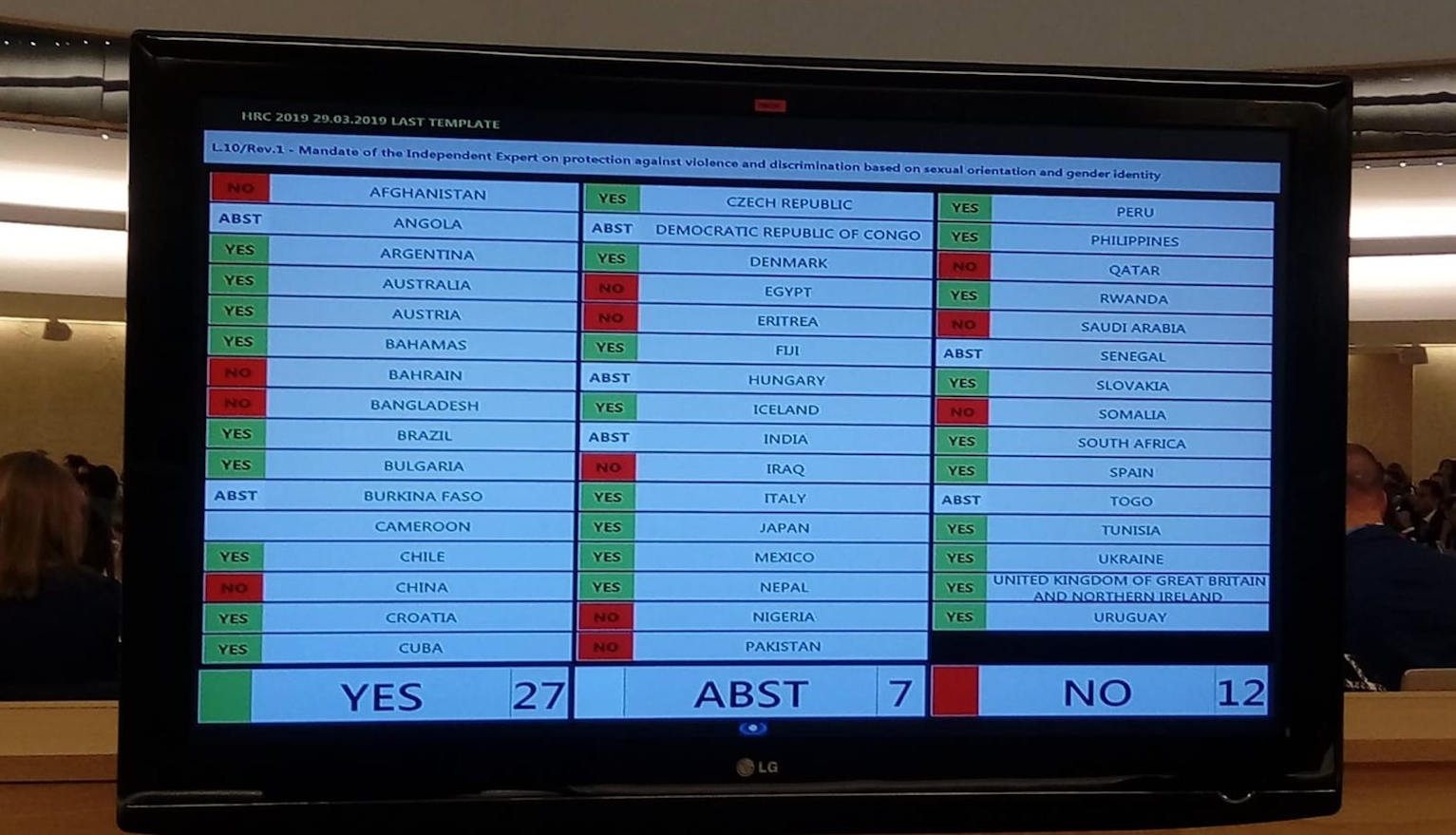
HIV and AIDS used to be a major and controversial topic. It has now moved a bit to the background but is still most relevant. This also shows some of the good work the UN is doing that many people dont know about:

In accordance with Human Rights Council resolution 38/8, a consultation on human rights in the response to HIV was held in Geneva on 12 and 13 February 2019. It was attended by a wide range of stakeholders, including representatives of Member States and of United Nations agencies, funds and programmes, special procedure mandate holders, experts and members of civil society, including persons living with, presumed to be living with, at risk of or affected by HIV. During the consultation, participants examined best practices, evidence, lessons learned and the challenges faced when removing human rights barriers and the promotion of human rights in the response to HIV in regional and subregional strategies. Participants discussed issues and challenges pertaining to the respect for and the promotion of human rights in the response to HIV, with a focus on regional and subregional strategies and best practices. The full report published on 1 May 2019 can be found in the link below. These are the recommendations made at the consultation.

Recommendations

Participants made a number of recommendations during the consultation, particularly with regard to regional and subregional strategies and best practices:

(a)States should remove structural barriers, including discriminatory laws and policies, and apply human rights-based approaches to the response to HIV, putting people living with HIV at the centre of their policies, programmes and practices. In order not to leave anyone behind, States should increase their efforts to reach the most marginalized women and adolescents, key populations vulnerable to HIV, including gay men and other men who have sex with men, sexworkers, people who use drugs, transgender people, and persons in prisons and other closed settings. Communities should be involved in the design, implementation and delivery of policies, programmes and practices.

(b)States should review their laws in accordance with international human rights law. In order to improve the human rights aspect in the response to HIV, States and their parliaments could collaborate at the regional and subregional levels to develop human rights-based normative content to inspire the domestication of laws at the national level. In order to reach Sustainable Development Goal target 3.3 and to leave no one behind, States should adopt legislation, policies and practices that decriminalize sex work, drug use, same-sex relations, and gender identity and expression, and provide access to gender recognition.

(c)In order to improve the effectiveness of the response to HIV, States should strengthen cooperation at the regional, subregional and global levels to support and invest in programmes and services that promote the right to health and the rights of people living with HIV.

(d)Strengthened accountability is vital to ensure that the rights of people living with HIV, including the right to health, are promoted and respected. States should collaborate with regional human rights mechanisms and engage with them in good faith, and follow up on decisions and sentences made by such bodies with a view to effectively implementing them.

(e)National human rights institutions and civil society have an important role to play in strengthening human rights accountability. The shrinking space for civil society is a key driver in leaving behind people living with HIV, particularly key populations. States should respect, protect and promote civil society space, provide an enabling regulatory and funding environment that allows civil society to work at the national, regional and subregional levels, and repeal laws that create barriers to the activities of civil society bodies. Civil society should be empowered to collect data, address human rights violations, participate in policymaking and decision-making, implementation and monitoring, including on issues relating to HIV and the rights of people living with HIV. In order to improve its effectiveness,civil society could cooperate at the regional level on joint advocacy efforts, including with regional mechanisms.

(f)In the current context of shrinking donor funding for HIV and health programmes, including in newly transitioned middle-income States, programmes aimed at removing barriers to human rights can be affected, particularly with regard to the rights of key populations. The retraction of global health funding in States transitioning to middle-income, without corresponding investment by domesticfunds, can lead to the loss of funding for services and rights programmes and advocacy for key populations, making them even more vulnerable. The Human Rights Council could develop guiding principles for health donors, which would be based on human rightsand should be formulated in coordination with UNAIDS and in consultation with States, key populations, communities and donors.

(g)States should review and adopt legislation, programmes and policies to combat stigma and discrimination, violence and abuseagainst people living with or at risk of HIV, with particular attention to key populations. States should work with United Nations agencies, civil society, communities and key populations to invest in programmes, education and other actions to eliminate HIV-related stigma and discrimination in all areas of life, including through the Global Partnership for Action to Eliminate All Forms of HIV-related Stigma and Discrimination. Regional and subregional networks have an important role to play in raising awareness and eliminating stigma and discrimination.

(h)States should ensure that universal health coverage promotes both the health and rights of all persons, including the most marginalized, such as people living with HIV and key populations, and addresseshuman rights barriers to health. States should ensure that human rights, including the right to health of persons living with HIV, are integrated into discussions on universal health coverage, including in the lead-up to the high-level meeting of the General Assembly on universal health coverage and in its outcome document

UN Human Rights Council

Philippines: Human Rights Defenders Protection bill adopted in parliament

June 4, 2019

The House of Representatives in the Philippines on 2 June 2019 passed the proposed Human Rights Defenders Protection bill that should prevent human rights violations and abuses committed against HRDs. Surprsingly all 183 congressmen present at last night’s session voted for House Bill 9199, a consolidation of bills filed by Rep. Edcel Lagman (LP, Albay) and Makabayan Reps. Carlos Isagani Zarate, Antonio Tinio, Emmi de Jesus, Arlene Brosas, Ariel Casilao, and Sarah Jane Elago. A badly needed bill as the Philippines is one of the worst places for HRDs [see e.g.: https://humanrightsdefenders.blog/2018/11/08/and-in-the-philippines-the-killing-of-human-rights-defenders-also-continues-with-benjamin-ramos/]. As always the real question is what wil happen in practice.

The bill guarantees HRD rights and freedoms; mandates the State and public authorities to respect, protect, and fulfill these rights and freedoms; and imposes appropriate sanctions to counter impunity. Lagman said Karapatan Alliance for the Advancement of Human Rights recorded the killing of 697 human rights defenders in the country for the period 2001-2018 while Task Force Detainees of the Philippines documented 76 human rights violations affecting 333 HRDs from September 2013 to September 2016 alone.

IF signed into law, the bill will also create a Human Rights Defenders Protection Committee chaired by a commissioner of the Commission on Human Rights and six members who will be jointly nominated by concerned civil society organizations. HB 9199 is based on the United Nations Declaration on Human Rights Defenders and the Model National Law on the Recognition and Protection of Human Rights Defenders drafted by the International Service for Human Rights.

The bill grants the following rights and freedom to human rights defenders:

  • Right to promote and protect human rights and fundamental freedoms
  • Right to form groups, associations, and organizations
  • Right to solicit, receive, and utilize resources
  • Right to seek, receive, and disseminate information
  • Right to develop and advocate for human rights ideas
  • Right to communicate with non-governmental, governmental, and intergovernmental organizations
  • Rights against vilification
  • Right to access, communicate, and cooperate with international and regional human rights bodies and mechanisms
  • Right to participate in public affairs
  • Right to peaceful assembly
  • Right to represent and advocate
  • Right to freedom movement
  • Right to privacy
  • Freedom from intimidation or reprisal
  • Right to establish a sanctuary for human rights victims and or their families
  • Freedom from defamation and stigmatization
  • Right to exercise cultural rights and to development of personality
  • Right to effective remedy and full reparation

The bill penalizes those who will violate the rights and freedom. Human right defender’s obligations, meanwhile, include conducting investigation; adopting human rights based governance; strengthening protection program; promoting and facilitating human rights education, among others.

http://tempo.com.ph/2019/06/03/house-oks-human-rights-defenders-bill/

https://cnnphilippines.com/news/2019/6/3/house-of-representatives-human-rights-defenders-protection-bill.html

FORUM-ASIA: human rights defenders face severe risks in Asia

June 4, 2019
The latest report by the Asian Forum for Human Rights and Development (FORUM-ASIA) found that human rights defenders in Asia are at high risks. “In Asia, we are witnessing more and more human rights defenders being subjected to increasingly severe forms of violations, particularly killing, simply for defending human rights,” said Sejin Kim, Programme Manager of FORUM-ASIA.

The report titled “Defending In Numbers: Resistance in the Face of Repression exposes 688 cases of human rights violations affecting 4,854 people across 18 different countries in Asia, and analyses current and emerging trends of violations against human rights defenders, including journalists, civil society organisations, advocates and their family members, throughout 2017-2018.

Besides that, the report also reveals that “violations have become more extreme, and the safe space in which human rights defenders can work have increasingly shrunk”. State and non-state actors openly threatened these defenders, something which played a key role in creating a dangerous climate for them. In fact, according to the report, there were 164 cases where physical violence was used against human rights defenders, and 61 of these cases resulted in death. The majority of these cases occurred in the Philippines (48 per cent) and India (25 per cent). Concerningly, most of the perpetrators of these killings remain unknown, a reality which perpetuates impunity in the region…. In the period under review, a staggering 327 cases of judicial harassment were recorded across 17 countries which include the (arbitrary) arrest and detention of human rights defenders; the misuse of the law and the passage of repressive laws aimed at criminalising human rights defenders; and the denial of a fair trial.

..

Although threats and harassment endanger all defenders, but certain groups are particularly targeted like prodemocracy defenders, who are vocal critics of state repression; and land and environmental rights defenders, who are targeted by state and non-state actors competing to access natural resources and/or implement mega-development projects. Women human rights defenders, who challenge gender norms and power structures, also ranked high among the most affected groups. Gender-based violence, including online attacks and harassment, were common tactics used against women human rights defenders.

Human rights defenders face severe risks including killing in Asia, says FORUM-ASIA

Today: Tiananmen Square 30 years ago was ‘correct’ but singing about it still not allowed

June 4, 2019

As many news outlets report today it is 30 years ago that China cracked down on Tiananmen Square. China tries mostly to forget about it and make others forget it about it too. Still, it recenty came out to defend it as the “correct policy”. “That incident was a political turbulence and the central government took measures to stop the turbulence which is a correct policy” Defence minister Wi Fenghe Wei told a regional security forum in Singapore. “The 30 years have proven that China has undergone major changes,” he said, adding that because of the government’s action at that time “China has enjoyed stability and development“. On the other hand Wu Qian, a spokesman for the defence ministry, decried the use of the word “suppression” to describe the crackdown.

But it does cover Chinese rock musician Li Zhi, who has been outspoken and sung songs about social issues including the Tiananmen Square crackdown, and has not been seen for three months. The South China Morning Post of 2 June has a detailed piece on what happened to this singer: His upcoming tour has been cancelled and his social media accounts taken down. Then his music was removed from all of China’s major streaming sites – as if his career had never existed at all. “Now this square is my grave,” Li sang. “Everything is just a dream.”

The disappearance of Li, the musician, has left fans searching for answers. On February 20, the official Weibo social media account for the 40-year-old’s concert tour posted a photograph of its team in front of a truck about to embark on scheduled performances in Sichuan province in China’s southwest. Just two days later, however, the account posted an image of a hand wearing what appeared to be a hospital wrist band and the words: “Very sorry.” The next post, published the same day, announced without explanation that the tour was cancelled and that ticket purchasers would shortly receive a refund. Fans flooded the comment section with wishes for a speedy recovery.

But the suggestion that a health issue was behind the cancellations was later thrown into doubt. A statement published in April by Sichuan’s culture department said it had “urgently halted” concert plans for a “well-known singer with improper conduct” who was previously slated for 23 performances – the same number of concerts which Li had scheduled in the province. It said 18,000 tickets were fully refunded.

..Li’s presence on the Chinese internet was completely erased. An April 21 central government directive ordered all websites to delete any audio or video content relating to five of Li’s songs, according to China Digital Times, an organisation that publishes leaked censorship instructions. The authenticity of the directive could not be independently verified.

“There’s pretty much a consensus” among those working in the industry that Li’s disappearance from public view is due to the sensitive anniversary, said a music industry professional who spoke on condition of anonymity because of fear of government retribution. “He did a number of songs that were considered politically risky, making references to June 4, 1989, and so he’s been out of the picture,” the industry professional said.

Li’s current whereabouts could not be confirmed. His company and record label did not respond to repeated interview requests. Li’s songs alluding to the Tiananmen Square protests – The Square, The Spring of 1990 and The Goddess, in honour of the Goddess of Democracy that students erected – were part of his earlier works. In recent years, the bespectacled singer has avoided making public political statements, focusing more on promoting his performances. In 2015, state-run China Daily newspaper published a profile of Li, describing him as a performer who easily sells out concerts. After years of working as an independent artist, he signed last autumn with Taihe Music Group, a major Chinese record label. Fans who knew Li as a largely apolitical entertainer expressed bewilderment online about his disappearance. Others made veiled references to China’s internet censorship. On Zhihu, a question-and-answer website similar to Quora, one user wrote that people posed questions every day about what might have happened to Li, but these posts always disappeared the next morning “as if nothing had happened at all”.

Another user said: “I don’t dare to say it, nor do I dare to ask.” A fan who has been sharing Li’s music on his personal account spoke on condition of anonymity because he feared his employers would punish him for discussing the subject. “Everyone knows the reason for Li Zhi’s disappearance,” the fan said. “But I’m sorry, I can’t tell you, because I follow China’s laws and also hope that Li Zhi can return.” Quoting one of Li’s lyrics, the fan added: “The world will be all right.” Fans continue to circulate videos of Li’s performances online. His complete discography has been uploaded onto file-sharing websites, with back-up links in case the original ones are shuttered. Some users shared tribute art, including a black T-shirt with the words “improper conduct”. A few years ago, in a performance in Taiwan, Li bounced around on stage, strumming his guitar and repeating a chorus in apparent tribute to the spirit of Chinese propaganda.

Foreign companies are not immune. Apple Music has removed from its Chinese streaming service a song by Hong Kong singer Jacky Cheung Hok-yau that references the Tiananmen crackdown. Tat Ming Pair, a Hong Kong duo, have been deleted entirely from the app. They released a song this month called Remembering is a Crime in memory of the protests.

Music by Tat Ming Pair – Anthony Wong Yiu-ming (left) and Tats Lau Yi-tat – has been deleted from the Apple Music app. Photo: K.Y. Cheng

Wikipedia also announced this month that the online encyclopaedia is no longer accessible in China. While the Chinese-language version has been blocked since 2015, most other languages could previously be viewed, Wikipedia said.

The Human Rights Foundation publised this video about China’s Million Person Muslim Prison Camps:

For the 25th anniversary see: https://humanrightsdefenders.blog/2014/06/13/25-years-tiananmen-celebrated-with-over-100-detentions/

See also: https://humanrightsdefenders.blog/2019/05/31/on-4-june-streets-around-chinese-embassy-to-be-renamed-tiananmen-square/

https://uk.news.yahoo.com/china-says-tiananmen-square-crackdown-1989-correct-policy-093500064.html

https://www.scmp.com/news/china/politics/article/3012782/outspoken-folk-rock-singer-li-zhi-disappears-china-tightens

Trump’s “new” thinking on human rights in foreign policy?

June 3, 2019

President Trump and Mr. Pompeo have raised human rights abuses only sporadically, to pressure adversaries such as Iran and Venezuela, while ignoring gross violations elsewhere, a gaping inconsistency that undercuts the moral leadership of the United States. Of course, human rights are never the only concern in foreign policy and must be balanced against other factors and interests. But it does not require any more “solid definitions” to understand the horrors of Xinjiang province, where China has herded more than 1 million Turkic Uighur Muslims into brainwashing camps to eradicate their culture and language. This ethnic cleansing has come to light during the Trump administration, but its reaction has been tepid.

Do the president and the secretary need any more “solid definitions” in order to object to the methods of Saudi Arabia’s Crown Prince Mohammed bin Salman, whose hit squad was dispatched to Istanbul to kill journalist and Post contributor Jamal Khashoggi? Is the United States having trouble finding a voice to speak out against the abuse of human rights in Turkey, Egypt and Russia because of a lack of definitions — or because of a misplaced desire to butter up the authoritarians who rule them?

“Fresh thinking” is always valuable. But when it comes to human rights, time-tested institutions, principles and tools exist. They just need to be utilized.

One-day Training Workshop on lobbying for HRD protection in the EU context

June 3, 2019

Chris Collier, Human Rights Consultant, is organising a Training Workshop “Lobbying for HRD protection by the EU, EU member states and like-minded countrie”.  The date is 18 June 2019, 09:30 – 17:00 at EuroMed Rights, Rue des Comédiens 22, 1000 Brussels.

This is a one-day, participatory training workshop for HRDs and staff of European and international human rights organizations.

Participants will:

  • Discuss current guidelines and (good) practices of the EU, EU member states and like-minded countries (Norway, Canada, Switzerland) in HRD protection
  • Learn what kind of action to ask the EU, EU MS and like-minded countries to take in different situations and how to approach them to take such action
  • Create action plans to get the EU, EU MS and like-minded countries to take action on specific HRD issues or cases they are dealing with

The training addresses situations in which HRDs face stigmatization, threats, physical attacks, trumped-up charges, unfair trials and other violations.  It covers action by EU/like-minded countries such as public statements, trial observation, raising cases with authorities, public recognition, visits to HRDs offices/areas of work and visas/temporary relocation. [see also an earlier course: https://humanrightsdefenders.blog/2017/01/24/training-workshop-on-protection-of-hrds-by-foreign-governments/]

The language of the workshop is English.  The workshop fee is €300.  Participants are responsible for all costs of participating in the workshop such as travel, accommodation and meals.  The maximum number of participants in the workshop is 10.

Please contact Chris Collier directly if you would you be interested in participating in this workshop or in receiving further information:  tel. +31-(0)6-34936026
mail@chriscollier.nl
http://www.chriscollier.nl

Human rights cities movement or network?

June 2, 2019

The third edition of the #RightsCity conference will be held on June 3 2019 in Montreal, Canada. For more on the background of the Human Rights Cities movement, see: https://en.wikipedia.or/wiki/Human_Rights_City#History_of_the_Human_Rights_Cities_movement. However, how it relates to the human rights cities network I referred to earlier [https://humanrightsdefenders.blog/2018/12/14/the-human-rights-cities-network-the-beginning/], is not totally clear!

This year, particular emphasis has been placed on the role of prominent human rights defenders, journalists and global human rights leaders, and of Canada as well. The conference brings together some of the world’s human rights leaders and thinkers, including: Saudi activist Omar Abdulaziz; Canadian retired lieutenant-general and senator Roméo Dallaire; Iranian women’s rights leader Shaparak Shajarizadeh; Chinese dissident and former political prisoner Yang Jianli; and former special adviser to the UN Secretary-General on the Responsibility to Protect, Jennifer Welsh.

The event is hosted by the Montreal Institute for Genocide and Human Rights Studies at Concordia University, in partnership with the Raoul Wallenberg Centre for Human Rights, Amnesty International, the Canadian International Council and the Centre for International Peace and Security Studies. (The event is expected to be livestreamed via CPAC.)

Here, some of those involved with the event shed light on the human rights issues they believe are most important to address in order to ensure global stability.

1. Where’s our defence of the global institutions and mechanisms to protect human rights? Kyle Matthews, executive director of the Montreal Institute for Genocide and Human Rights Studies
2. Crimes against humanity have been committed in Cameroon. Let’s not turn away. Pearl Eliadis, Canadian lawyer and senior fellow of the Raoul Wallenberg Centre for Human Rights
3. A call for a new generation of Canadian human rights promotion. Arthur Graham, Canadian lawyer and head of the rule of law and human rights department at the OSCE Mission to Serbia
4. Do not underestimate the importance, and fragility, of multinational democracy.  Michael J. Abramowitz, president of Freedom House
5. Above all, the common thread — and need — is fairness. Jeremy Kinsman, Canada’s former ambassador to the European Union and High Commissioner to Britain


On 4 June streets around Chinese embassy to be ‘renamed’ Tiananmen Square

May 31, 2019

Dr Shao Jiang

I have always liked the symbolic act of renaming streets after human rights defenders [see e.g. https://humanrightsdefenders.blog/2018/06/07/ahmed-mansoor-ten-years-jail-for-tweeting-and-a-street-named-after-you/]. Amnesty International activists will ‘rename’ the streets surrounding the Chinese Embassy in London next week to mark the 30th anniversary of the notorious Tiananmen Square crackdown. On Tuesday 4 June (10h00 am), a total of 30 authentic-looking ‘Tiananmen Square’ street signs will be displayed in the streets around the embassy in central London to mark the anniversary. Amnesty UK Director Kate Allen and Shao Jiang – one of the original student protest leaders who was in Tiananmen Square on the night of 4 June – will place a ‘Tiananmen Square’ sign immediately outside the Chinese Embassy building.

https://www.amnesty.org.uk/press-releases/london-streets-around-chinese-embassy-be-renamed-tiananmen-square-anniversary

Two South Sudanese activists who had disappeared two years ago now presumed dead

May 30, 2019

It’s time for Kenya, South Sudan to account for the enforced disappearance of Samuel Dong and Aggrey Idri

As news of the death of Samuel Dong Luak and Aggrey Ezboni Idri circulated recently, I felt extremely saddened.. The enforced disappearance and extrajudicial killing of two outspoken critics of the South Sudanese government, by South Sudanese security services allegedly with the acquiescence of Kenyan authorities, and both states’ continuous denial of responsibilities, signals a worrying trend of disrespect for human life and insecurity for those who dare to speak up and challenge power.

Samuel Dong Luak was a prominent human rights lawyer, Secretary General of the South Sudan Law Society for over ten years, as well as a member of the South Sudan Constitutional Review Commission.

Aggrey Ezboni Idri was an opposition leader, and member of the Sudan People’s Liberation Movement in Opposition (SPLM-IO). In 2013, after receiving death threats for providing legal assistance to the former Secretary General of South Sudan’s governing party, Pagan Amum, who had been accused of “treason” by President Salva Kiir, Dong fled South Sudan and sought refuge in Kenya, where he was granted refugee status. The same year, Aggrey also relocated to Kenya after South Sudan descended into conflict.

The deceased lived with their families in the capital, Nairobi, until they were disappeared on 23 and 24 January 2017, respectively. Amnesty International, the UN Working Group on Enforced or Involuntary Disappearances, and other human rights groups called on the governments of Kenya and South Sudan to reveal the fate or whereabouts of the two men, suspected to be held by Kenyan authorities before deportation. The families of the disappeared also mobilised; petitioning Kenya’s High Court to produce the two men in court, but the petition was dismissed as Kenya denied having them in its custody. The family later asked the police to conduct a thorough investigation, but a final judgment in January 2019 confirmed the dismissal of their petition and ended judicial oversight into police action with regard to the case. Yet, the Court had noted that the police investigation fell short of seeking information from South Sudanese authorities and potential key witnesses.

The fate of Dong and Aggrey remained unknown until April 30,2019, when the UN Panel of Experts on South Sudan circulated a report pointing to the likelihood of their death. The report states that “the Panel has corroborated evidence strongly suggesting” that Dong and Aggrey were kidnapped in Kenya by an arm of South Sudan’s National Security Service (NSS), transferred to Juba, and executed in a NSS detention and training facility in Luri, on January 30, 2017.

In a report published in April 2018, DefendDefenders reported on the role of the NSS in limiting free expression and committing violations against human rights defenders (HRDs) in South Sudan. This case further highlights the unchecked power and impunity enjoyed by South Sudanese security services, which jeopardises possibilities for peace in the context of the revitalised peace agreement signed in September 2018. South Sudan’s conduct blatantly violates human rights standards, including the Declaration on the Protection of All persons from Enforced Disappearances. Moreover, South Sudan continues to retain laws that are inimical to their regional and international human rights obligation. This results in shrinking civic space and democratic practice and killing or exiling of journalists and HRDs.

The alleged acquiescence or cooperation of the government of Kenya violates article 3 of the UN Convention Against Torture, which prohibits returning people to places where they risk being tortured or ill-treated. Kenya ratified it. Dong’s confirmed status as a refugee also commits Kenya to the principle of non-refoulement enshrined in the 1951 Refugee Convention. Worryingly, this does not seem to be an isolated case.

……..
Against these worrying trends, I add my voice to that of other human rights organisations in calling on South Sudanese and Kenyan authorities to establish swift, impartial, independent, transparent and thorough investigations into Dong and Aggrey’s case. Both Kenya and South Sudan are State parties to the African Charter on Human and Peoples’ Rights, and must take all necessary measures to uphold their obligations under the African Charter and other international instruments. South Sudanese authorities must allow the UN Panel of Experts on South Sudan and other monitors to access the site where the killing allegedly took place and all relevant witnesses and information. It is necessary to investigate these events fully, including the chain of command that led from Dong and Aggrey’s disappearance in Nairobi to their alleged execution. Those responsible, irrespective of their rank or standing, need to be held accountable, and the families of the victims must have access to adequate remedies for the losses they suffered.

The African Commission on Human and Peoples’ Rights and other regional and international organs should collectively and strongly ensure that justice and accountability is served in this case. They must demand that Kenya and South Sudan end all enforced disappearances and extrajudicial killings.

Denials, impunity, and attempts at diffusing responsibility cannot stand in front of such serious allegations. More than two years after their disappearance, justice and accountability are due to the families and the communities Dong and Aggrey were forced to leave behind.

COMMENT: Disappearance and extrajudicial killing


Also in USA helping migrants is criminalised: Scot Warren in court on 29 May 2019

May 29, 2019

Not just in Italy [see: https://humanrightsdefenders.blog/2019/05/15/european-governments-should-stop-treating-solidarity-and-compassion-as-a-crime/]. Front LIne Defenders on 28 May 2019 reports that in the United States Scott Warren is facing 20-year prison sentence for “harbouring” migrants.

On 29 May 2019, Scott Warren is due to face a felony trial at the District Court for the District of Arizona. The human rights defender is charged with two counts of “harbouring” migrants in Ajo, Arizona, and one count of “conspiracy to transport and harbour” migrants. If found guilty, he might be sentenced to up to 20 years of imprisonment.

Dr. Scott Warren [https://www.frontlinedefenders.org/en/profile/scott-warren] is a human rights defender working on migration issues in Ajo, Arizona. For over ten years, he has provided humanitarian aid to migrants and asylum seekers who attempt crossing the United States – Mexico border through the Sonora desert. He helped establish the humanitarian aid group No More Deaths or No Más Muertes which provides water and medical aid on migration routes, and documents the deaths of migrants in the desert.

On 29 May 2019 at 9:30am, Scott Warren is due to be tried at the District Court for the District of Arizona for two counts of “harbouring” migrants and one count of “conspiracy to transport and harbour” migrants. On 21 May 2019, the judge assigned to the case rejected a motion to dismiss the indictment. Scott Warren’s lawyers argued that his arrest “arose from selective enforcement of the laws by the Border Patrol” and that he was being targeted specifically for his work in defence of migrants’ rights.

On 17 January 2018, Scott Warren was arrested at a volunteer gathering point known as the “Barn”, located in Ajo, by a convoy of U.S. Border Patrol agents from a specialised anti-smuggling unit. The agents were wearing plain clothes and did not present the human rights defender with a warrant. Earlier on that day, No More Deaths had published a report denouncing the involvement of Border Patrol officers in the destruction of water gallons left by volunteers for migrants crossing the desert. After the publication of the report, Scott Warren gathered evidence of surveillance activities carried out against him by the U.S. Border Patrol.

The arrest of Scott Warren represents an escalation of existing patterns of harassment against humanitarian volunteers and human rights defenders in Arizona. In 2018, officers of the Fish and Wildlife Services cited Scott Warren and other volunteers of No More Deaths for entering the Cabeza Prieta National Wildlife Refuge, one of the most deadly migrant corridors along the Mexico-US border, to provide life-saving aid, including water, food and medical supplies, to migrants crossing the desert.

…..
On recent country visits, Front Line Defenders found that defamation and criminalisation of humanitarian activity is increasing along the migrant caravan routes. Human rights defenders in Mexico and the United States have been detained, harassed and criminalised for the provision of humanitarian aid, including distributing food, water and medical supplies, and operating emergency shelters for migrant families. Moreover, the authorities in the United States have increased efforts towards the criminalisation of all forms of immigration, including through coordinated action with other states in the region.

Front Line Defenders condemns the criminalisation of Scott Warren, as it is believed to be directly motivated by his humanitarian work assisting migrants and documenting their deaths. Front Line Defenders is further concerned about the increased use of the judiciary to target human rights defenders and organisations who assist migrants at the United States – Mexico border, including by selective enforcement of the law.

See latest: https://www.humanrightsfirst.org/press-release/human-rights-first-statement-new-trial-against-arizona-human-rights-defender