On 15 October 2019, Ernie Suggs, reported in the Atlanta Journal-Constitution that the 12th Human Rights Defenders Forum in Atlanta had wrapped up and that former President Jimmy Carter said he’d like to see such defenders honored in a more permanent way at his namesake facility. According to the United Nations, 431 human rights defenders were killed worldwide in 2017. The Carter Center should tell those 431 stories, the former president said. Carter has been calling for the center to increase its presence in the human rights arena. “We ought to have a common place where we can get that information,” he said. “We ought to have a way to communicate with others so that, when people are abused or killed, their stories will be told.” However, there are already some serious projects on this area; see e.g. https://humanrightsdefenders.blog/2017/07/13/stop-the-killings-you-can-help-front-line/ and https://humanrightsdefenders.blog/2019/01/04/progress-report-on-i-defend-rights-project-in-2018/
Karin Ryan, the Carter Center’s senior policy adviser for human rights, said the narratives often get muddled. “The Carter Center has the ability to amplify the stories of human rights defenders, and the Carter Center has a reputation of speaking out and speaking truth to power,” Ryan said. “President Carter believes that we should be doing more and has challenged us to have a more comprehensive plan to get it done. When defenders start dying, what happens to society?”
About 50 activists, peacemakers and community leaders from 28 countries participated in the forum, which focused on “Building Solidarity toward Equality for All.” The group talked about global protection for activists, challenges faced by women fighting for human rights, and the best ways to support civil, economic, political and social rights. “Events like this are special because it makes us appreciate other agents and agencies that are doing good work around the world,” said Bashir Y. Mundi, a native of Nigeria and the director of the Development Initiative of West Africa. “This work can be under-appreciated and challenging, as evident by the stories you hear about the people who paid the ultimate sacrifice and lost their lives and freedom.”
Carter Center Statement from the 2019 Human Rights Defenders Forum:
Forum participants call on local and national governments and international organizations to:
1) Increase efforts to protect activists who are threatened and attacked. Offer activists political, moral,band physical support in times of crisis. Create robust programs to support women activists. Stop impunity for violators—hold accountable those who attack human rights and peace activists.
2) Increase meaningful long-term support for their work. Activists report that the difficult work of movements and civil society organizations is hamperedbydrastic funding cuts by previously reliable sources. In addition to issuingstrong statements about human rights abuses,governmentsshould also provide needed resources and other support. Philanthropic foundations also should increase flexible, long-term support. The Carter Center’s Human Rights Program has created a web-based platform to facilitate ongoing discussions and community building for human rights defenders and peacebuilders at forum.cartercenter.org
Asma Jahangir is rightly considered one of the foremost human rights defenders of our time [see: https://humanrightsdefenders.blog/2018/02/11/asma-jahangir-one-of-the-worlds-most-outstanding-human-rights-defenders-dies-at-age-66/]. So, the two-day ‘Asma Jahangir Conference 2019 – Roadmap for Human Rights’ which concluded in Lahore, Pakistan on 20 October 2019 is fully justified. The News carries a long report on the meeting in which some 120 jurists, politicians, human rights defenders and media people acted as panellists from Pakistan, England, America, Sri Lanka, Bangladesh, Ireland, Sweden and Afghanistan. Thousands of students, attended the sessions. They all resolved to carry forward the legacy of Asma Jahangir, who fought relentlessly against dictatorial forces and always sought due process of law, equality for women and protection of minorities in the country.
(Former) Politicians dominated the panels but other speakers at the sessions paid tribute to Asma Jahangir and appreciated her commitment to human rights with a resolve to uphold the rule of law and struggle for women’s rights. Munaza Hassan spoke of women’s right to inheritance. Daughter of Asma Jahangir and journalist Munizae Jahangir, who conducted the session, said: “It is a rare moment when all political parties are seen on the same platform.” She said that politicians conveniently forget to protect fundamental rights and right to expression when in they assume power. She said: “We are convinced that without freedom of the media, the rule of law and guarantees of security to human rights defenders, neither democracy nor justice, is possible. The main challenge to development of Pakistan and the rights of its citizens is a national security state. Until the national security is subservient, no other initiative in economy, health, education and rule of law can find success.
The day began with a short film on Asma Jahangir receiving the Right Livelihood Award, produced by True Heroes Films, where she spoke of growing expectations of citizens as far as what the governments should deliver. And governments falling ever further behind, internationally this gap of creative impulses of society on one side and governments dragging their feet on the other, has been the key engine of human rights challenges. Despite threats to her life, she spoke of never leaving Pakistan as it is a place where she has received most love and affection.
As a continuation of the discussion on ‘Art inspires politics’, Munizae Jahangir conducted a panel discussion on ‘How women can build bridges for peace in South Asia’. Former foreign minister Hina Rabbani Khar, Afghan politician Fawzia Koofi, human rights lawyer from Sri Lanka Bhavani Fonseka, Swedish Ambassador Ingrid Johansson and former Afghan ambassador to Pakistan Omar Zakhilwal opined that peace in South Asia was a prerequisite to securing women’s fundamental rights and the resources should be directed towards socio-economic areas rather than the military. Human Rights Ambassador of the Kingdom of the Netherlands, H. E. Dr Bahia Tahzib-Lie, Award-winning novelist Mohammad Hanif, Christian Caryl of the Washington Post, Wusat Ullah Khan, Ms Aisha Sarwari and Iqbal Khattak participated in the discussion on the role of social media.
Dr Bahia talked about the centrality of human rights in a thriving democratic society, and also the role of her government in supporting human rights initiatives all-over the world, including Pakistan. Aisha Sarwari talked about how women are systematically excluded from law-making process and, therefore, law-making concerning social media. She said it is essential for the social and economic development of all countries for women to be able to use the media as disruptive technology and end permission culture. Wusat Ullah Khan mentioned that the social media gives space to freedom, but also makes people extremely vulnerable. He said freedom of speech is part of a bouquet – you cannot talk about freedom of speech without talking about right to life and education and freedom of religion.
Iqbal Khattak, country representative of Reporters without Borders (RSF), spoke about the need for digital safety training and how one should protect oneself by disengaging with trolls. He particularly highlighted threats, accusations of blasphemy as threats that should be taken very seriously. He strongly encouraged use of PICA laws for individuals to seek online protection. He also highlighted Pakistan’s considerable investment in controlling social media spaces and vigilance on part of civil society. The Government of Pakistan should take social media as fundamental right.
On fighting the culture of shame and silence, woman rights activist Uzma Noorani, British professor of human rights Ms Siobhan Mullally, provincial Ombudsperson Khyber-Pakhtunkhwa Rukshanda Naz, Pakistan People’s Party leader Nafisa Shah, former chairperson of the Punjab Commission on the Status of Women Fouzia Viqar said that there should be universality of rights, for all excluded communities including women and marginalised remote communities.
..
On ‘Silencing civil society’, Ms Fareeda Shahid moderated the session of Knut Ostby, United Nations Resident and Humanitarian Coordinator for Pakistan. Ms Zohra Yusuf, human rights activist and council member of HRCP, Mohammad Tehsin, convener of Pakistan Civil Society National Forum, law expert Asad Jamal said registered civil society organisations should be allowed to function, 2013 policy of banning CSOs should be challenged. Mass communication needed to change narratives.
This new Amnesty International report, to be published annually, will serve as a regular audit of the performance of the three regional human rights institutions in Africa: the African Commission; the African Child Rights Committee; and the African Court. Beginning with this inaugural review, it will be published every 21 October in commemoration of the adoption of the African Charter on this day in 1981.
African rights bodies are frustrated at every turn by the lack of cooperation and support from African Union (AU) member states who desperately try to undermine their independence and autonomy, according to a new report published by Amnesty International. The new report, The State of African Regional Human Rights Bodies and Mechanisms, found that the continent’s rights bodies are working in harsh conditions whereby their decisions are blatantly ignored and their pleas for proper funding and human resources persistently fall on deaf ears.
“Africa’s human rights bodies are being wilfully subverted. The African Union’s Executive Council must resist these efforts and take its responsibility to monitor and enforce compliance with the decisions of the human rights mechanisms seriously,” said Netsanet Belay, Amnesty International’s Director for Research and Advocacy.
The report offers an assessment of the performance of three of Africa’s regional human rights institutions between January 2018 and June 2019: the African Commission on Human and Peoples’ Rights (African Commission); the African Child Rights Committee; and the African Court.
It found that out of the continent’s 54 countries, five (Comoros, Equatorial Guinea, Guinea Bissau, Sao Tome and Principe and Somalia) have not submitted a single report on the human rights situation in their countries since they ratified the Africa Charter for Human and People’s Rights. Many countries that submitted their human rights reports to the African Commission during the reporting period did so after delays in excess of a decade. Gambia and Eritrea set records by submitting their reports 21 and 19 years late respectively.
In the timeframe in review, the African Commission sent 83 urgent appeals to states over concerns of human rights violations. Of these only 26 (31 percent) received a written response. The African Commission further requested 27 country visits, of which only 13 were authorized in principle, and just five materialized.
Despite facing many stubborn challenges, African human rights bodies registered a relatively impressive record in developing new norms and standards including developing a draft treaty on the rights to social protection and social security. The African Commission also published seminal studies on transitional justice and on human rights in conflicts. The African Court on Human and Peoples’ Rights (African Court) issued 25 decisions. However, only Burkina Faso had fully complied with the court’s decisions by the end of the reporting period. Some countries, including Tanzania, partially complied, while Cote d’Ivoire, Kenya, Libya and Rwanda didn’t comply at all.
“Both the African Commission and the African Court face a chronic backlog problem because of a slow pace in determining cases. They must urgently develop plans to speed up determinations and ensure strict adherence to time limits for parties, especially state parties,” said Netsanet Belay.
The report also highlights an onslaught on human rights defenders in Africa. Between January 2018 and June 2019, appeals for protection of HRDs accounted for 71 percent of all appeals issued to state parties by the African Commission. HRDs in the Democratic Republic of Congo (DRC) and Egypt were the worst hit, the Africa Commission issuing 11 and 10 urgent appeals respectively to their governments. These were closely followed by Burundi with seven urgent appeals, Cameroon and Algeria each with six, and Uganda and Sudan, each with five appeals.
It is extremely alarming that governments across Africa have singled out human rights defenders to try to silence them and bring an end to their activism through brutal attacks, harassment, unlawful arrest and detention. Attacks on human rights defenders are an attack on the rights of all the people whose freedoms they are fighting for.
In consideration of the latest developments in Turkey creating an ever less enabling environment for human rights defenders, with the support of ProtectDefenders.eu Secretariat, five international organizations working in the human rights field established a new grant-making program to provide support to human rights defenders in Turkey. The Comprehensive Support to Human Rights Defenders in Turkey program is funded by the European Union. The project aims to protect human rights defenders at risk, support human rights defender organizations in continuing to carry out their work while strengthening their domestic and international networks and increase their capacities in documenting human rights abuses, access to justice mechanisms and advocating for a more enabling environment for their work in Turkey.
The project is offering two types of grants in order to meet its objectives and address comprehensively human rights defenders’ needs in the country. Protection grants pay for provisions to improve the security and protection of human rights defenders and their organizations at risk through rapid response measures. Institutional support grants are designed to support human rights defender organizations in their work with two components . Core funding aims to ensure that human rights defenders can continue their daily human rights work. Grants for projects and/or activities aim to increase the capacity of human rights defenders in a broad range of areas. Human rights defenders who can benefit from the grant-making program can be individual human rights defenders, registered civil society organizations and unregistered groups, initiatives or networks who can use financial support for their human rights work. The project will give priority to those who are working in the most difficult situations such as remote areas and small cities, those who are specifically targeted for their area of human rights work and those who face obstacles to access funding to maintain their work including women HRDs, LGBTI HRDs, journalists and bloggers, and those denouncing the use of torture or working with survivors of torture. Human rights defenders are invited to submit their proposals starting from today on our website. The call for applications will remain open and ProtectDefenders.eu will welcome applications on a rolling basis. For more information about our grant-making programme, please visit ProtectDefenders.eu Turkey website
The fourth Aurora Prize for Awakening Humanity was awarded on 19 October 2019 to Mirza Dinnayi, Co-Founder and Director of Luftbrücke Irak (Air Bridge Iraq). [see also: https://humanrightsdefenders.blog/2019/05/01/nominees-for-the-2019-aurora-prize-are/] Driven by his passion to save lives, the Yazidi activist has found a way to overcome numerous bureaucratic and logistic obstacles to help the most vulnerable members of the Yazidi community during numerous conflicts in Syria and Iraq. “The recognition of genocide is the first step in order to satisfy the victims,” he told the Thomson Reuters Foundation in a phone interview. The Aurora Forum took place in Yerevan. For more on the million dollar Aurora Prize see: http://www.trueheroesfilms.org/thedigest/awards/aurora-prize-for-awakening-humanity.
Tom Catena, Aurora Humanitarian Initiative Chair and 2017 Aurora Prize Laureate, praised Mirza Dinnayi by saying: “What makes Mirza Dinnayi an outstanding human being is the fact he couldn’t live in good conscience knowing that good people are left behind, that the innocent are suffering. Trying to help others while facing an unspeakable evil can be challenging and frustrating, but he never wavered. I am delighted to congratulate Mirza Dinnayi with being awarded with the Prize and welcome him to the Aurora family.”
Mirza Dinnayi will receive a $1,000,000 grant for support to organizations that have inspired his work. He has chosen to donate the funds to three organizations that provide medical care and rehabilitation to victims of ISIS terror:
Air Bridge Iraq;
SEED Foundation;
Shai Fund.
Working on behalf of the Yazidi community, Mirza Dinnayi has dedicated his whole life to saving the victims of the Iraq war, evacuating women and children from territories controlled by ISIS and providing those tortured and violated with rehabilitation and support. It was Dinnayi who brought to Germany the future Sakharov Prize Laureate Lamya Haji Bashar. Today, she is a renowned human rights activist and has one of Aurora’s scholarships named after her.Previous Aurora Prize Laureates include:
The Aurora Humanitarian Initiative also honored the contributions of the other two 2019 Aurora Humanitarians who received a $50,000 grant each: Zannah Bukar Mustapha, Director and Founder of Future Prowess Islamic Foundation in Nigeria, and Huda Al-Sarari, Yemeni lawyer and human rights defender.
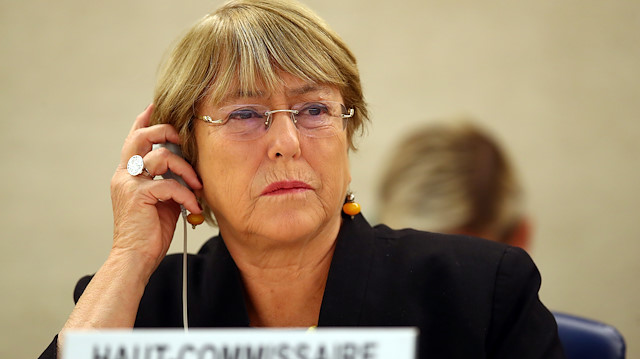
On 18 October 2019 the UN High Commissioner for Human Rights urged Egypt to immediately release scores of citizens who have been arrested in connection with recent anti-government demonstrations in several cities. Civil society groups report more than 2,000 people were detained before, during and after the protests on 20 September, which prompted the UN High Commissioner for Human Rights, Michelle Bachelet, to express concern about reports of lack of due process. On Friday her office reported that the arrests are continuing, with a number of well-known and respected civil society figures affected, some of whom have been accused of terrorism. “Once again, we remind the Egyptian Government that under international law people have a right to protest peacefully, and a right to express their opinions, including on social media. They should never be arrested, detained – let alone charged with serious offences such as terrorism – simply for exercising those rights”, spokesperson Ravina Shamdasani told journalists in Geneva.
The abduction, arbitrary detention and torture of human rights defender and journalist Esraa Abdelfattah is another indication that Egyptian authorities are stepping up brutality against human rights defenders in a bid to ‘terrorize’ critics and opponents, said Amnesty International today. Esraa Abdelfattah was assaulted and abducted by security forces in plainclothes on 12 October. The next day she described to the Supreme State Security Prosecution how she was tortured by officers who beat her, attempted to strangle her and forced her to stand for nearly eight hours. “Esraa Abdelfattah’s account of torture, coming just days after the prominent activist and blogger Alaa Abdel Fattah described a similar ordeal in custody, is an alarming indication that Egypt’s authorities are stepping up their use of brutal tactics to crack down on human rights defenders,” said Najia Bounaim, North Africa Campaigns Director at Amnesty International.
Prominent blogger Alaa Abdel Fattah as well as his lawyer, Mohammed El-Baqer are currently being held at the Tora Maximum Security Prison, south of Cairo. Both have been accused of belonging to a terrorist group, funding terrorism, spreading false news that undermines national security and “using social media to commit publishing offices”, the UN human rights office said. [see also: https://humanrightsdefenders.blog/2019/01/08/bloggers-and-technologists-who-were-forced-offline-in-2018/]
On 28 September the High Commissioner had already urged the “authorities to radically change their approach to any future protests’.
U.N. High Commissioner for Human Rights Michelle Bachelet Photograph: DENIS BALIBOUSE
More than 2,000 people were detained, including lawyers, human rights defenders, political activists, university professors and journalists on 20-21 September, she said. The Egyptian Foreign Ministry spokesperson stressed that there no citizen in Egypt is arrested or prosecuted for carrying out legitimate activities or criticizing the Egyptian government, but for violating the law. He added that the right to peaceful demonstration is guaranteed in accordance with the Constitution and the law. Hafez stressed that the OHCHR report was based on undocumented information, which only leads to falsehoods as the allegations contained in it are based on wrong ideas, and this hasty judgment reflects a lack of professionalism. He added that any actions taken against any person is done in accordance with the law and through sound legal procedures, all carried out with transparency and clarity.
In addition on 3 October 2019 it was reported in the New York Times that a series of sophisticated cyberattacks targeting Egyptian journalists, academics, lawyers, opposition politicians and human rights activists has been traced to Egyptian government offices, a cybersecurity firm has found. The attackers installed software on the targets’ phones that enabled them to read the victims’ files and emails, track their locations, identify who they contacted and when, according to a report to be published Thursday by Check Point Software Technologies, one of the biggest cybersecurity companies in the world, with headquarters just south of San Francisco and in Tel Aviv.
The cyberattack began in 2016, according to the Check Point report. The number of victims is unknown but Check Point identified 33 people, mostly well-known civil society and opposition figures, who had been targeted in one part of the operation. “We discovered a list of victims that included handpicked political and social activists, high-profile journalists and members of nonprofit organizations in Egypt,” said Aseel Kayal, a Check Point analyst.
Several activists targeted by the cyberattack were arrested as part of a crackdown on antigovernment protests. They include Hassan Nafaa, left, a political scientist at Cairo University, and Khaled Dawoud, a former journalist and leader of the secular Constitution Party. CreditAgence France-Presse — Getty Images
“We are witnessing an increase in xenophobia, hate speech, push-backs on women’s equality and the rights of minorities,” warned Michelle Bachelet, United Nations High Commissioner for Human Rights, also highlighting the ever-widening gaps in global wealth and access to resources. Moreover, underfunding has hampered the growing workload of the entire treaty body system, she said. Committees do not have adequate resources to carry out inquiries into grave or systematic violations. This results in a “credibility crisis” for all treaty bodies — and a denial of justice for the victims of human-rights violations.
Among the day’s three other briefers was Obiora Chinedu Okafor, Independent Expert on human rights and international solidarity, who focused on the issue of human-rights based solidarity in global refugee protection. The current refugee “crisis” was not caused by large numbers of refugees, but rather by States’ unwillingness to accept refugees into their countries — evading their responsibilities. Moreover, the rise of extremist political parties is complicating the issue, he said, as the “alternative right” and other racist civil society groups target any kind of solidarity with refugees. Echoing those words, the Russian Federation’s delegate noted that certain extremist political parties are impeding the entry of refugees into the European Union, and that the Independent Expert’s report lay the blame for this squarely at the feet of foreign interference in internal State affairs.
In his presentation, Michel Forst, Special Rapporteur on the situation of human-rights defenders, highlighted that 431 defenders were killed in 2017 and 2018. With that in mind, combating impunity is not only a legal obligation of States, but also a moral one. He further noted that “98 per cent of the killings of rights defenders remain unpunished” and that unless impunity is ended, the violence against them will continue. A zero-tolerance policy towards such attacks must be adopted, and the lack of political will — and of State recognition of rights defenders — addressed. Reacting to those comments, several delegates raised questions about digital attacks on human-rights defenders, with Germany’s representative underscoring that female defenders of human rights often face particular threats, such as the publication of private information. Mr. Forst responded that he has found research by the Special Rapporteur on freedom of association and the Special Rapporteur on freedom of expression helpful in this context, with a particular focus on advocating for social network businesses to provide better protections. To concerns raised by an observer for the State of Palestine and the representative of Georgia, he noted that his subsequent report will make specific proposals to assist defenders living in fragile States, as well as those living in conflict or post-conflict situations. On defenders who live in isolated areas, he said they are often not given sufficient attention by the international community. Ambassadors should leave their capitals and go into these far-flung areas to see where these defenders work, he said. Those who work on sexual and reproductive health and rights often bear the brunt of attacks, while those working on gender identity are harassed and threatened
The Special Rapporteur on the rights to freedom of peaceful assembly and of association, Clément Nyaletsossi Voulé, also presented his report.
..Unfortunately, social media platforms are now a primary tool for coordinated, state-aligned actors to harass, threaten and undermine advocates. Although public shaming, death threats, defamation and disinformation are not unique to the online sphere, the nature of the internet has given them unprecedented potency. Bad actors are able to rapidly deploy their poisoned content on a vast scale. Social media companies have only just begun to recognize, let alone respond, to the problem. Meanwhile, individuals targeted through such coordinated campaigns must painstakingly flag individual pieces of content, navigate opaque corporate structures and attempt to survive the fallout. To address this crisis, companies such as Facebook, Twitter and Youtube must dramatically increase their capacity and will to engage in transparent, context-driven content moderation.
For human rights defenders, the need is urgent. .. Since 2011, the ABA Center for Human Rights (CHR) has ..noted with concern the coordination of “traditional” judicial harassment of defenders by governments, such as frivolous criminal charges or arbitrary detention, with online campaigns of intimidation. State-aligned online disinformation campaigns against individual defenders often precede or coincide with official investigations and criminal charges.
……
While social media companies generally prohibit incitement of violence and hate speech on their platforms, CHR has had to engage in additional advocacy with social media companies requesting the removal of specific pieces of content or accounts that target defenders. This extra advocacy has been required even where the content clearly violates a social media company’s terms of service and despite initial flagging by a defender. The situation is even more difficult where the threatening content is only recognizable with sufficient local and political context. The various platforms all rely on artificial intelligence, to varying degrees, to identify speech that violates their respective community standards. Yet current iterations of artificial intelligence are often unable to adequately evaluate context and intent.
Online intimidation and smear campaigns against defenders often rely on existing societal fault lines to demean and discredit advocates. In Guatemala, CHR recently documented a coordinated social media campaign to defame, harass, intimidate and incite violence against human rights defenders. Several were linked with so-called “net centers,” where users were reportedly paid to amplify hateful content across platforms. Often, the campaigns relied on “coded” language that hark back to Guatemala’s civil war and the genocide of Mayan communities by calling indigenous leaders communists, terrorists and guerrillas.
These terms appear to have largely escaped social media company scrutiny, perhaps because none is a racist slur per se. And yet, the proliferation of these online attacks, as well as the status of those putting out the content, is contributing to a worsening climate of violence and impunity for violence against defenders by specifically alluding to terms used to justify violence against indigenous communities. In 2018 alone, NPR reports that 26 indigenous defenders were murdered in Guatemala. In such a climate, the fear and intimidation felt by those targeted in such campaigns is not hyperbolic but based on their understanding of how violence can be sparked in Guatemala.
In order to address such attacks, social media companies must adopt policies that allow them to designate defenders as temporarily protected groups in countries that are characterized by state-coordinated or state-condoned persecution of activists. This is in line with international law that prohibits states from targeting individuals for serious harm based on their political opinion. To increase their ability to recognize and respond to persecution and online violence against human rights defenders, companies must continue to invest in their context-driven content moderation capacity, including complementing algorithmic monitoring with human content moderators well-versed in local dialects and historical and political context.
Context-driven content moderation should also take into account factors that increase the risk that online behavior will contribute to offline violence by identifying high-risk countries. These factors include a history of intergroup conflict and an overall increase in the number of instances of intergroup violence in the past 12 months; a major national political election in the next 12 months; and significant polarization of political parties along religious, ethnic or racial lines. Countries where these and other risk factors are present call for proactive approaches to identify problematic accounts and coded threats against defenders and marginalized communities, such as those shown in Equality Labs’ “Facebook India” report.
Companies should identify, monitor and be prepared to deplatform key accounts that are consistently putting out denigrating language and targeting human rights defenders. This must go hand in hand with the greater efforts that companies are finally beginning to take to identify coordinated, state-aligned misinformation campaigns. Focusing on the networks of users who abuse the platform, instead of looking solely at how the online abuse affects defenders’ rights online, will also enable companies to more quickly evaluate whether the status of the speaker increases the likelihood that others will take up any implicit call to violence or will be unduly influenced by disinformation.
This abuser-focused approach will also help to decrease the burden on defenders to find and flag individual pieces of content and accounts as problematic. Many of the human rights defenders with whom CHR works are giving up on flagging, a phenomenon we refer to as flagging fatigue. Many have become fatalistic about the level of online harassment they face. This is particularly alarming as advocates targeted online may develop skins so thick that they are no longer able to assess when their actual risk of physical violence has increased.
Finally, it is vital that social media companies pursue, and civil society demand, transparency in content moderation policy and decision-making, in line with the Santa Clara Principles. Put forward in 2018 by a group of academic experts, organizations and advocates committed to freedom of expression online, the principles are meant to guide companies engaged in content moderation and ensure that the enforcement of their policies is “fair, unbiased, proportional and respectful of users’ rights.” In particular, the principles call upon companies to publicly report on the number of posts and accounts taken down or suspended on a regular basis, as well as to provide adequate notice and meaningful appeal to affected users.
CHR routinely supports human rights defenders facing frivolous criminal charges related to their human rights advocacy online or whose accounts and documentation have been taken down absent any clear justification. This contributes to a growing distrust of the companies among the human rights community as apparently arbitrary decisions about content moderation are leaving advocates both over- and under-protected online.
As the U.N. special rapporteur on freedom of expression explained in his 2018 report, content moderation processes must include the ability to appeal the removal, or refusal to remove, content or accounts. Lack of transparency heightens the risk that calls to address the persecution of human rights defenders online will be subverted into justifications for censorship and restrictions on speech that is protected under international human rights law.
A common response when discussing the feasibility of context-driven content moderation is to compare it to reviewing all the grains of sand on a beach. But human rights defenders are not asking for the impossible. We are merely pointing out that some of that sand is radioactive—it glows in the dark, it is lethal, and there is a moral and legal obligation upon those that profit from the beach to deal with it.
Ginna Anderson, senior counsel, joined ABA CHR in 2012. She is responsible for supporting the center’s work to advance the rights of human rights defenders and marginalized dommunities, including lawyers and journalists at risk. She is an expert in health and human rights, media freedom, freedom of expression and fair trial rights. As deputy director of the Justice Defenders Program since 2013, she has managed strategic litigation, fact-finding missions and advocacy campaigns on behalf of human rights defenders facing retaliation for their work in every region of the world
Rasha Younes Researcher, Lesbian, Gay, Bisexual, and Transgender Rights, describes how Lebanon is losing is status as a safe haven for human rights defedners in the Middle East.
Lebanon used to be known as a port in a storm for human rights defenders from the Arabic-speaking world – especially those working on gender and sexuality – to organize freely and without censorship. A major space for this was the annual NEDWA conference, hosted by the Arab Foundation for Freedoms and Equality (AFE).
Even as lesbian, gay, bisexual, and transgender (LGBT) people faced grave human rights violations over the years ranging from murders in Iraq, to jail time and forced anal examinations in Egypt, to rigid censorship of LGBT content in Qatar, Lebanon was a haven where embattled activists could meet at NEDWA to cultivate their movements’ resilience, tactics, and communal healing in the face of adversity. That safe haven in the Middle East no longer exists.
Amid a targeted crackdown against free expression and assembly around gender and sexuality in Lebanon, resulting in an unlawful raid by General Security on the 2018 NEDWA conference and a discriminatory entry ban imposed on non-Lebanese participants, AFE was forced to move its conference outside the Middle East and North Africa region for the first time.
The activists adapted. 200 human rights defenders, artists, and academics from the region gathered in another country. They discussed health, human rights, and movement building. Queer and trans artists from Palestine, Lebanon, and Egypt inspired the conference attendees with performances that reconfigured the meaning of resistance, embodying creative ways to combat state-sponsored repression. Instead of safeguarding much-needed platforms such as NEDWA and celebrating these activists, the Lebanese government chose to forego its international obligations by claiming that the conference “disrupts the security and stability of society,” and collectively sanctioning its participants.
Lebanon’s suppression of LGBT activism is part of a larger crackdown on free speech in the country. Hamed Sinno, the lead singer of the indie band Mashrou’ Leila, whom the Lebanese government censored in July, spoke at this year’s NEDWA conference, condemning Lebanon’s decline as a center for art and tolerance, while reassuring activists that the fight continues. Lebanon should take note: intimidation and threats will not silence the voices of resilient activists who will continue to fight for their right to live and love. By closing its doors on activism, Lebanon is divesting its image as the hub for freedom and diversity in the region.
The UN General Assembly’s Third Committee will run for eight weeks from 1 October to 21 November this year. The International Service for Human Rights, which follows the UN human rights bodies diligently, put out an Alert for this 74th Session on 1 October 2019.
The Third Committee brings together a wide array of Special Procedures mandate holders, including Special Rapporteur, independent experts, and chairs of working groups that are mandated by the Human Rights Council to discuss some of the most pressing human rights concerns and present findings and recommendations to the Third Committee. These findings should in turn play a role in shaping the focus of resolutions negotiated at this session.
Third Committee is expected to consider approximately 60 resolutions on a range of topics, including:
the advancement of women
the rights and protection of children
the rights of refugees
the elimination of racism
self-determination
and social development, amongst others.
ISHR will be closely monitoring the work of the Third Committee as well as relevant developments in the plenary of the General Assembly and will report on key developments. Follow them on Twitter at @ISHRglobal using #UNGA74 for the latest updates.
Overview of Key Resolutions
Human Rights Defenders (Lead Sponsor: Norway) – This year Norway will present the biennial resolution on human rights defenders. One year after the twentieth anniversary of the UN Declaration on Human Rights Defenders, implementation of the Declaration unfortunately remains far from adequate in a number of States. ISHR therefore welcomes the resolution’s continued focus on the Declaration’s implementation and urges States to ensure that the resolution includes calls for concrete activities and mechanisms to monitor and facilitate the implementation of the Declaration and previous resolutions on human rights defenders.
Terrorism and Human Rights (Lead Sponsors: Mexico and Egypt) – The Third Committee will consider a resolution relating to Terrorism and Human Rights. Previous resolutions on the topic have condemned terrorist acts as criminal and unjustifiable, and expressed concerns about their detrimental effects on the enjoyment of all human rights. The resolution is the result of the combination of two previously separate resolutions on the “Protection of human rights and fundamental freedoms while countering terrorism” and the “Effects of Terrorism on the Enjoyment of Human Rights” led by Mexico and Egypt, respectively. Civil society remains concerned that the combined resolution compromises language on State obligations to protect human rights by prioritising the impact of terrorism on human rights. ISHR hopes that language in the original resolution led by Mexico is not compromised and that this resolution upholds State responsibility and the rights of victims.
Safety of Journalists (Lead Sponsors: Greece, Argentina, Austria, Costa Rica and France) – A resolution on the safety of journalists is expected to be advanced at this session. ISHR will be watching this negotiation closely and hopes the resolution will be used to expand, rather than restrict, space for civil society and strengthen protections for human rights defenders.
Several country resolutions are expected again this session. For the 17th year, Canada will present a draft resolution on the Situation of human rights in the Islamic Republic of Iran spotlighting the continued dismal human rights situation and lack of progress over the last year. The European Union will again lead on a resolution on the Democratic People’s Republic of Korea, similarly underlining the lack of human rights progress. Ukraine will again present a draft resolution condemning Russia’s activities in Crimea. Resolutions on the human rights situation in Myanmar and Syria are also expected to be led by the Organisation of Islamic Cooperation and Saudi Arabia respectively.
ISHR remains concerned that China will again attempt to insert the seemingly harmless language of ‘win/win’ language in resolutions, which in fact focuses only on intergovernmental dialogue and cooperation, rather than actual human rights violations or accountability. This language risks shrinking space for civil society and roll back human rights norms across a number of resolutions.
Several resolutions are expected to become battle grounds regarding references to gender, and sexual and reproductive health and rights, including resolutions on the Improvement of the situation of women and girls in rural areas, Violence against women migrant workers, Rights of the Child, The girl child, The human rights to safe drinking water and sanitation,
Elections for the Human Rights Council are set to take place in mid-October as part of the General Assembly. ISHR is once again disappointed that this year a number of regions have presented closed slates. ISHR has published ‘scorecards‘ for each of the States seeking membership. These provide a brief overview of their human rights records, cooperation with civil society, past roles in the Council, and past engagement with UN human rights mechanisms.
Overview of Reports and Dialogues with UN Experts:
The UN Special Procedures – Special Rapporteurs, independent experts, and working groups – will report to the Third Committee and hold interactive ‘dialogues’ with member States. Several of this year’s reports reflect concerns about increased attacks on human rights defenders and emphasise the critical importance of creating and maintaining space for civil society. Click here for a list and schedule of dialogues.
Report of the Special Rapporteur on the Situation of Human Rights Defenders – Combatting the currently widespread impunity for human rights violations that target human rights defenders is, according to Special Rapporteur Michel Forst’s report (A/74/159), “an essential prerequisite to guarantee human rights and to advance towards equal societies that are free from fear and violence.” He outlines a regulatory framework on the right to access to justice, including due diligence in investigations and elaborates on the de facto and legal barriers to access to justice. He offers essential guidelines for ensuring due diligence in the investigation of such violations. Good practices implemented by States and civil society are also described. He will present his report and an interactive dialogue will be held on 15 October 2019 at 3pm.
Report of the Special Rapporteur on the situation of human rights in the Islamic Republic of Iran – At least 32 Iranians have been arrested as a result of viral social media campaigns against compulsory veiling laws, such as the #whitewednesdays and “Girls of Revolution Street.” Human rights lawyer and defender Nasrin Sotoudeh was sentenced to 148 lashes and 38 years in prison last March for defending some of these women. BBC Persian staff have suffered reprisals for engaging with UN human rights mechanisms. These are only some of the attacks on human rights defenders that Special Rapporteur Javaid Rehman flags in his report (A/74/188), which calls on Iran to stop violating the rights of human rights defenders through intimidation, harassment, arbitrary arrest, deprivation of liberty, among other arbitrary sanctions. The Special Rapporteur will present and discuss his report on 23 October 2019 at 10am.
Report of the Independent Expert on protection against violence and discrimination based on sexual orientation and gender identity – In his report (A/74/181), Independent Expert Victor Madrigal-Borloz exposes the ways in which socio-cultural norms and discriminatory laws continue to marginalise and exclude LGBTI persons. In order to become fully inclusive of LGBTI individuals, he stresses that States cannot overlook the “vital role” of partnerships with civil society. He cites a number of partnerships in the fight against HIV/AIDS as particularly strong examples of this. Independent Expert Madrigal-Borloz will present his report and hold an interactive dialogue on 24 October 2019 at 10am.
Report of the Special Rapporteur on the promotion and protection of human rights and fundamental freedoms while countering terrorism – How can States truly integrate human rights into the global fight against terrorism that is increasingly shaped by elusive norms of ‘soft law’? According to Special Rapporteur Fionnuala Ní Aoláin’s report (A/74/335), one of the keys is for States to engage with and create space for civil society, non-governmental organisations, and human rights defenders to participate in the shaping of these counter-terrorism norms. Her report maps out how civil society access to these processes can be transformed from “ad hoc and inconsistent” to consistent and meaningful, ensuring that soft-law counter-terrorism norms are not at odds with human rights. The Special Rapporteur’s report will be presented and discussed on 16 October 2019 at 10am.
Report of the Special Rapporteur on the issue of human rights obligations relating to the enjoyment of a safe, clean, healthy and sustainable environment – Special Rapporteur David R. Boyd clarifies the obligations of States and businesses under a human-rights based approach to climate change in his report (A/74/161). These obligations include providing strong protections for environmental and environmental defenders who work on issues relating to climate change. In addition, the report examines how UN human rights mechanisms can be empowered to better address climate change. The Special Rapporteur will present his report and an interactive dialogue will be held on 24 October 2019 at 3pm.
Report of the Special Rapporteur on Freedom of Religion or Belief – Special Rapporteur Ahmed Shaheed expresses alarm in his report (A/74/358) about the rise of anti-Semitism around the world and the ways in which the underreporting of these hate crimes and lack of mechanisms to monitor them enable anti-Semitic hate crimes. The report finds that a lack of Jewish civil society engagement with UN human rights monitors only exacerbates this issue and calls on States to work more closely with Jewish communities and organisations to create mechanisms that fill this void. Special Rapporteur Shaheed ends his report with the recommendation that the Office of the UN Secretary-General appoint a senior-level focal point specifically responsible for monitoring and engaging with Jewish communities on this issue. He will present his report and hold an interactive dialogue on 17 October 2019 at 3pm.
Report of the Special Rapporteur on violence against women, its causes and consequences – In her report (A/74/137), Special Rapporteur Dubravka Šimonović stresses the need to address mistreatment and violence against women in reproductive health services from a human rights perspective. The report therefore calls for the creation of human rights-based accountability mechanisms and greater State collaboration with civil society organisations to address violence and mistreatment in reproductive and obstetric care. The Special Rapporteur will present her report and hold an interactive dialogue with the Third Committee on 4 October 2019 at 10am.
Venezuela on the Brink: The urgency of an appropriate international response to the crisis, where Eleanor Openshaw will be discussing the implications of Venezuela being re-elected to the Human Rights Council. 2 October at 10am in the Church Center, 777 UN Plaza.
Breakfast reception to mark the launch of URG’s new yourHRC.org Guide to the 2019 Human Rights Council Elections, where Madeleine Sinclair will be discussing ISHR’s ‘scorecards’ for each of the States seeking election to the UN Human Rights Council for 2020- 2022. October 10 at 8:30 am in Conference Room 6, UNHQ.




 Hans Thoolen on Human Rights Defenders and their awards