Archive for the 'Human Rights Defenders' Category

AI and HRW address criminal prosecution of Emir-Usein Kuku, Ethnic Crimean Tatar Human Rights Defender and His Five Co-defendants

June 22, 2020

On 19 June 2020 Human Rights Watch and Amnesty International addressed a joint letter to Russia’s Prosecutor General

….We write to you to express our concern about the unfounded criminal prosecution and imprisonment of Emir-Usein Kuku, an ethnic Crimean Tatar human rights defender from Crimea, and his five co-defendants – Muslim Aliev, Vadim Siruk, Enver Bekirov, Arsen Dzhepparov and Refat Alimov. They were convicted and sentenced on 12 November 2019 to prison terms ranging from seven to 19 years on groundless terror-related charges. On 22 June 2020, their appeal against the decision will be considered by the Military Court of Appeals.

All six men should be immediately and unconditionally released, with their convictions and sentences quashed, and we call on you to take all necessary measures in your authority to ensure this happens. This case exemplifies the persecution of human rights defenders and other activists in Crimea.

Amnesty International considers Emir-Usein Kuku, who has been sentenced to 12 years in prison, and all his co-defendants prisoners of conscience.

The terrorism-related charges against Emir-Usein Kuku and his co-defendants stem from accusations of membership of Hizb ut-Tahrir, an organization banned as “terrorist” in the Russian Federation (Article 205.5 of the Criminal Code of the Russian Federation), but not in Ukraine. All six have also been accused of conspiring to seize power by violent means (Article 278 of the Criminal Code of the Russian Federation).

…..

Emir-Usein Kuku is a member of the Crimean Human Rights Contact Group – a grassroots initiative created to monitor investigations into enforced disappearances in Crimea. As a human rights defender, Emir-Usein Kuku was continually harassed and threatened by the Russian authorities prior to the launch of the criminal proceedings against him, an indication that his prosecution is politically motivated and intended to stop his legitimate human rights activities.

When Emir-Usein Kuku joined the Crimean Human Rights Contact Group in October 2014, his activities soon brought him to the attention of the FSB, and according to him one of their officers unsuccessfully tried to recruit him as an informant on several occasions. The officer allegedly threatened Emir-Usein Kuku with reprisals, including criminal prosecution, for his refusal to cooperate.

On the morning of 20 April 2015, several FSB officers attacked Emir-Usein Kuku from behind while he was on his way to work, and severely beat him. They repeatedly kicked and punched him in the head, torso and kidney area. Then, in front of witnesses, they placed him in a vehicle and drove him to the local FSB headquarters where he was interrogated. He was later released without charge and they brought him back to his house.

On 11 February 2016, FSB officers arrested Emir-Usein Kuku at his house and detained him for questioning. On 12 February, Emir-Usein Kuku was charged under Article 205.5 of the Criminal Code of the Russian Federation (“membership of a terrorist organization”) and placed on remand. Kuku has been in detention since that date – over four years and four months.

On the same day, the FSB detained Muslim Aliev, as well as Vadim Siruk and Enver Bekirov, who are accused of membership of the same group. On 18 April 2016, the FSB detained Arsen Dzhepparov and Refat Alimov as part of the investigation of the same case. All six deny any involvement with Hizb ut-Tahrir and the charges against them.

…… Under international fair trial norms, civilians should not be tried before military courts. We call on you to take all necessary steps to address the human rights violations suffered by Emir- Usein Kuku and his co-defendants, Muslim Aliev, Enver Bekirov, Vadim Siruk, Arsen Dzhepparov and Refat Alimov, including harassment, their transfer from Crimea to the Russian Federation in violation of the international humanitarian law, and their ultimate unsound and wrongful conviction following an unfair trial. Emir-Usein Kuku and his five co-defendants must be immediately and unconditionally released, with their convictions and sentences quashed.

Marie Struthers, Director, Eastern Europe and Central Asia Regional Office, Amnesty International

Hugh Williamson, Director, Europe and Central Asia Division, Human Rights Watch
https://www.hrw.org/news/2020/06/22/joint-letter-human-rights-watch-and-amnesty-international-russias-prosecutor

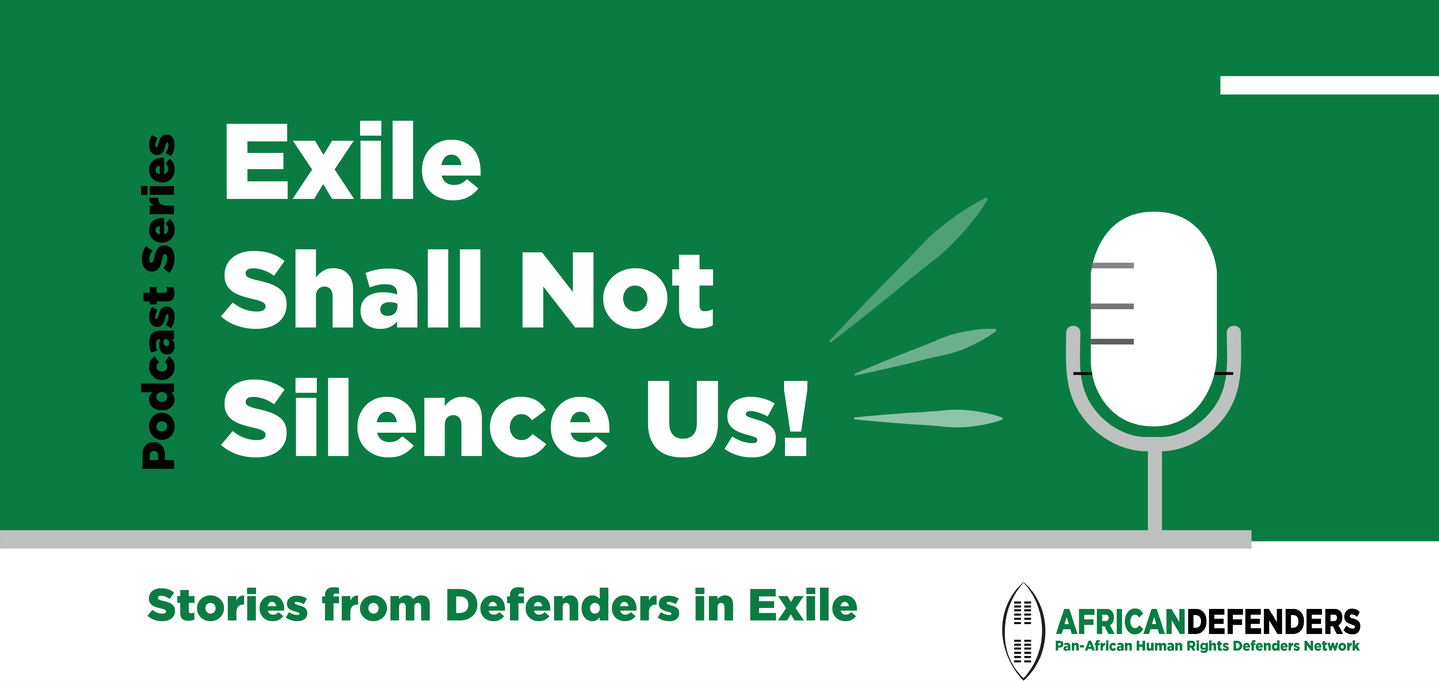
EXILE SHALL NOT SILENCE US!

June 22, 2020

On 19 June, 2020 AfricanDefenders launched a podcast series on African human rights defenders in exile  

“If you have to leave, leave. But refuse to keep quiet. Silencing you is what all oppressive regimes want. Don’t stop defending others because you are outside your country. Defending others is defending ourselves.”  Interview with an African HRD in exile  

Human rights defenders (HRDs) in Africa face grave risks in conducting their invaluable work of promoting the rights of others, protecting the environment, and holding the powerful to account. All too often, they are forced to leave their homes to seek protection, after threats, surveillance, judicial harassment, arbitrary arrests, enforced disappearance, torture, and targeting of colleagues and family members.

Exile impacts every aspect of a person’s life, and no experience of exile is the same. Exiled HRDs face serious challenges in their human rights work, such as losing legitimacy in the eyes of their government and their communities, collecting information remotely in a safe manner, and accessing funding. Many exiled HRDs also continue to face security concerns, worry about the safety of colleagues and family members in their country of origin, and struggle with socio-economic integration in their host country. Exile can also take a toll on their wellbeing and family dynamics.

Yet, the majority of exiled HRDs continue their human rights work, disseminating the information received by monitors on the ground through regional and international advocacy and campaigning, mobilising diaspora communities, and at times (re-)establishing organisations in exile. If authoritarian governments, corrupt leaders, and violent militia groups aimed to silence HRDs by forcing them into exile, their strategy has largely failed.

Based on research that collected the testimonies of more than 120 HRDs, in-depth case studies, and live interviews with four exiled HRDs, Exile Shall Not Silence Us is a podcast series that highlights the professional, security, socio-economic, and psychosocial challenges of HRDs in exile in Africa, but most of all their achievements and resilience strategies.

In episode 1, Cristina Orsini, Senior Programme Officer at AfricanDefenders, gives an overview of the main findings of the research on the situation of African HRDs in exile. Listen to Episode 1

EU’s Ugandan Human Rights Defenders Award 2020 to Aimé Moninga

June 19, 2020

The EU and Norway – on 18 June 2020 – presented their annual Human Rights Defenders Award in Uganda to Mr. Aimé Moninga, in recognition of his ground-breaking work with male survivors of conflict-related sexual violence and abuse. Although it is a national award and therefoe does not figure in THF’s Digest of international human rights awards [see: http://www.trueheroesfilms.org/thedigest], I always refer to them as they are an example of ‘good practice’ by diplomatic missions [see e.g. https://humanrightsdefenders.blog/2018/05/23/two-ugandans-get-eu-human-rights-award-in-uganda/ and https://humanrightsdefenders.blog/2012/01/13/quick-reminder-of-the-eu-guidelines-on-human-rights-defenders/].

Aimé Moninga was nominated for the Human Rights Defenders Award due to his work in support of male survivors of conflict-related sexual violence and his leadership of Men of Hope, a survivors’ association. He has put this difficult and sensitive issue on the policy agenda in an unprecedented way, both on a national and international level, and he is developing a generation of survivors who are prepared to testify in public to their experiences. He was chosen as this year’s award winner from among 50 nominations received from members of the public in Uganda.

Only a few years ago, the problems faced by male victims of sexual violence were barely discussed, even in human rights circles. Being a refugee and a violence survivor himself, Aimé Moninga has managed to mobilise many other survivors to speak. His advocacy efforts have also yielded results. For example, the Ugandan Police Force training curricula now includes references to both female and male victims of sexual abuse and violence. He is also advocating for further legislative changes.

Responding to the announcement, Aimé Moninga said, “This prize is for me and all the survivors of sexual violence, a consideration and a recognition of our struggle against impunity.”

Being an activist is not easy but being a refugee human rights activist in an area of rights that sometimes is not even recognised or acknowledged is indeed the sharp end of activism”, said Mr. Per Lindgärde, the Ambassador of Sweden to Uganda speaking at today’s award ceremony in Kampala.

Mr Attilio Pacifici, Ambassador of the European Union to Uganda also spoke at this morning’s award ceremony. “Human rights are not advanced by themselves, it takes the courage and dedication of women and men, organisations and institutions to advance this agenda and ensure that rights become a lived reality for everyone in society”.

The Human Rights Defenders Award is presented every year by the European Union and Norway to recognise an outstanding contribution by a human rights defender active in Uganda. This year’s award, which is in its 9th year, is also given in memory of the late Hon. Med Kaggwa [see: https://humanrightsdefenders.blog/2019/11/24/ugandan-human-rights-commissioner-med-kaggwa-dies/].

Press Release: Conflict survivor Aimé Moninga wins EU Human Rights Defenders Award 2020

Breaking: EU Court rules against Hungary’s foreign funding law

June 19, 2020

The EU Reporterof 19 June 2020 comes with the good news that on 18 June, the Court of Justice of the European Union (CJEU) recognized that Hungary’s 2017 law “on the Transparency of Organisations Supported from Abroad” (i.e. receiving foreign funds) unduly restricts the freedom of movement of capitals within the European Union (EU) and amounts to unjustified interference with fundamental rights, including respect for private and family life, protection of personal data and freedom of association, as well citizens’ right to participate in public life. [see https://humanrightsdefenders.blog/2018/02/20/250-ngos-address-letter-to-hungarian-parliament-regarding-restriction-on-the-work-of-human-rights-defenders/]

The Observatory for the Protection of Human Rights Defenders (FIDH-OMCT) welcomes this decision and hopes it will put an end to the Hungarian government’s constant attempts to delegitimise civil society organisations and impede their work.

It concerns decision (Case C-78/18, European Commission v. Hungary, Transparency of Associations).

This decision is more than welcome! It strongly asserts that stigmatizing and intimidating NGOs receiving funding from abroad and obstructing their work is not accepted in the European Union,” said Marta Pardavi, Co-Chair of the Hungarian Helsinki Committee (HHC), member organisation of FIDH and of OMCT’s SOS-Torture Network. “Today’s ruling is a victory not only for Hungarian civil society organisations, who have campaigned fiercely against this law since its adoption, but for European civil society as a whole. It is a clear reaffirmation of the fundamental role played by civil society in a democratic State founded on the rule of law.”

Hungary should now withdraw this anti-NGO law and conform with the CJEU’s decision,” added OMCT Secretary General Gerald Staberock.

https://www.eureporter.co/eu-2/2020/06/19/eus-top-court-rules-that-hungarys-anti-ngo-law-unduly-restricts-fundamental-rights

Intimidating break-in into the house of Turkish human rights defender Eren Keskin

June 18, 2020

Unknown perpetrators broke into Human Rights Association (İHD) Co-Chair Eren Keskin‘s house yesterday (June 16) to “threaten and intimidate her”, the association has said in a written statement.

Pretending to be burglars, the perpetrators ransacked the house but did not steal anything, according to the statement. The incident happened when Keskin was not at home and the police came to the house and made examinations. It was found after the police’s examination that a ring was taken and left on the table in the living room in what the İHD said was “a message” to the lawyer.

The incident was directly aimed at “threatening and intimidating” Keskin, according to the association. “She is known for clearly and fearlessly expressing her thoughts. For this reason, she often faces investigations and cases that we can call ‘judicial harassment.

“Our association will make the necessary applications nationally and internationally and will closely pursue the case. We remind the government of its duties with regards to the protection of human rights defenders in Turkey and would like to express that the government will directly be responsible for any unfavorableness that may develop.

See also: https://humanrightsdefenders.blog/2019/05/28/eren-keskin-in-turkey-sentenced-to-prison-and-more-to-come/

https://youtu.be/HOk0ykxtU-s

Rights Defender Eren Keskin Deposed over Her Tweets from Five Years Ago

http://bianet.org/english/human-rights/225874-unknown-perpetrators-break-into-rights-defender-eren-keskin-s-house

https://www.frontlinedefenders.org/en/case/home-human-rights-lawyer-eren-keskin-broken

Iranian human rights defender charged with “dancing in prison” and alleged torturer may escape justice

June 17, 2020
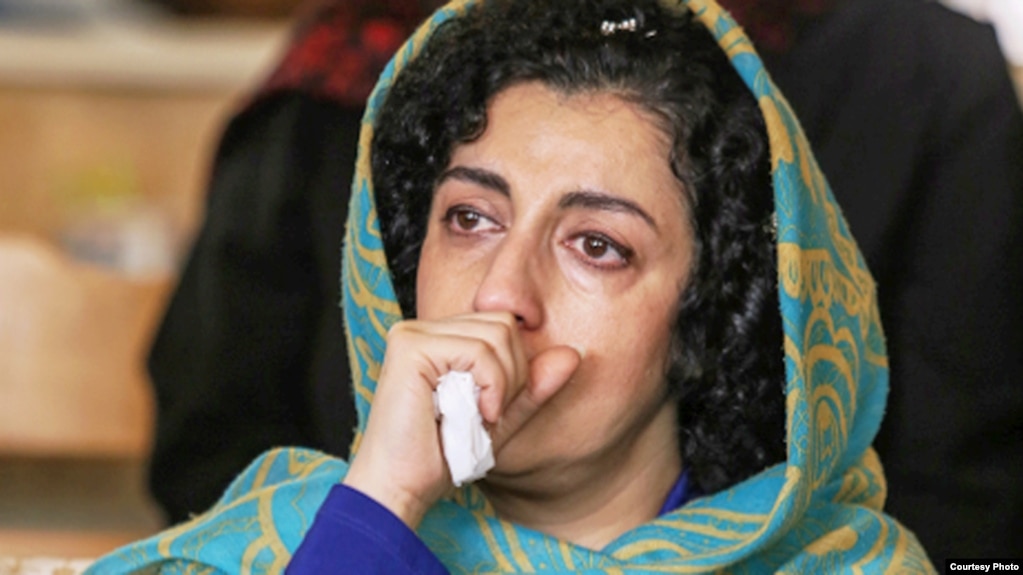
Narges Mohammadi has "serious health problems," her brother says, but is not allowed out of prison to see a doctor.
Narges Mohammadi has “serious health problems,” her brother says, but is not allowed out of prison to see a doctor.

Reporters Without Borders (RSF) has condemned the latest “absurd charge” brought against jailed Iranian journalist and human rights advocate Narges Mohammadi, who has been imprisoned since 2015. On 12 June 2020 RSF urged the UN special rapporteur on the human rights situation in Iran, Javaid Rehman, to “intervene quickly and do everything possible to obtain the release of Iran’s longest-held woman journalist.

In a recent open letter to the Iranian judicial authorities, her brother revealed that she was now accused of “dancing in prison during the days of mourning” commemorating the seventh-century killing of Imam Hussein, a revered figure in Shi’ite Islam. Mehdi Mohammadi, now a refugee in Norway, also wrote that his sister had serious health problems but “was not allowed out of prison to see a doctor, who went to her cell.” “This persecution of Narges Mohammadi is evidence of judicial discrimination at the behest of the Intelligence Ministry and senior justice system officials,” said Reza Moini, the head of RSF’s Iran-Afghanistan desk.

Mohammadi, 47, has been awarded several prestigious prizes, including the Per Anger Prize in 2011 and the APS Sakharov prize in 2017 [see: https://humanrightsdefenders.blog/2017/10/28/imprisoned-human-rights-defender-narges-mohammadi-awarded-aps-sakharov-prize-2018/]. For more information on these and other awards see: http://www.trueheroesfilms.org/thedigest

In the meantime there is also an interesting case of an Iranian judge and former prosecutor who was arrested in Romania by Interpol for rights violations (13 June 2020 Radio Farda)

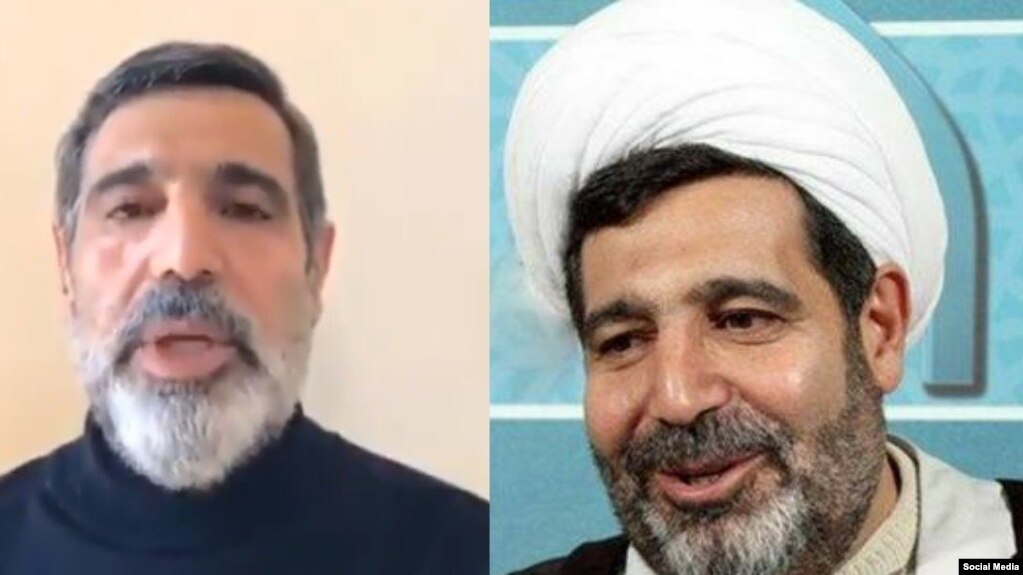
Gholamreza Mansouri, Iranian judge and former prosecutor.

Iran’s Judiciary Spokesman confirmed that Interpol has detained Gholamreza Mansouri in Romania. He is accused of human rights violations by rights defenders, but he is also one of the defendants in a recent sensational corruption case in Iran who fled to Europe. Judiciary spokesman Gholam-Hossein Esmaili said Mansouri’s extradition is not possible now due to coronavirus restrictions but he will be returned to Iran and put on trial for corruption. He also told a local news network that Iran requested the arrest through the Interpol.

Iranian journalists and human rights activists want Mansouri to be put on trial in Germany or another European country for his grave human rights violations including the arrest and torture of journalists. SEE ALSO: Fearsome Prosecutor Of Journalists Accused Of Taking Bribes, Flees Iran

In a tweet on June 11, the Secretary-General of Reporters without Borders urged German authorities not to let him escape justice. Reporters without Borders (RSF) has supported the call of Iranian activists and filed a complaint with Germany’s Federal Public Prosecutor against Mansouri for the arrest and torture of at least 20 journalists in 2013….Mansouri is a highly influential prosecutor and judge notoriously famous for prosecuting journalists and putting them behind bars. In one instance in 2013 he ordered the simultaneous arrest of 20 journalists in one day.

Mansouri’s name came up as one of the recipients of bribes in the first trial session of Akbar Tabari, a former Judiciary deputy. The former judge allegedly received 500,000 euro in bribes from Tabari.

In a video published on social media on June 9, Mansouri claimed that he was abroad for treatment of a serious medical condition and could not return due to the restrictions introduced after the breakout of coronavirus. He did not reveal where he was but said he would go to an Iranian embassy to arrange for his return to defend himself against the corruption charges.

See also; https://iranian.com/2018/02/08/1000-days-counting/

https://www.rferl.org/a/jailed-iranian-journalist-faces-new-absurd-charge/30667834.html

https://en.radiofarda.com/a/iran-prosecutor-wanted-for-corruption-and-rights-violations-arrested-by-interpol/30668621.html

https://www.arabnews.com/node/1689336/middle-east

EU Annual Report on Human Rights and Democracy in the World 2019

June 16, 2020

Courtesy of Reliefweb of 15 Jun 2020, here the introduction to the EU’s annual report on human rights

1. INTRODUCTION

The 2019 EU annual report on human rights and democracy in the world marks the final phase of implementation of the EU Action Plan on Human Rights and Democracy (2015-2019) 1 . It presents the progress achieved to date, by means of a comprehensive set of actions taken by the European External Action Service (EEAS), the European Commission and EU delegations and offices around the world. In 2019, the EU demonstrated once again that it is a reliable, cooperative and principled global player, working for a better world where all human rights are fully protected and respected.

However, in many parts of the world, challenges remain. Human rights defenders (HRDs), journalists and media workers are under threat and attack because of their daily work, civic and democratic space continues to be restricted, women’s and girls’ human rights are being violated, and vulnerable groups are often left behind and exposed to further discrimination and inequality.

Against this background, the international community celebrated in 2019 the 10th anniversary of the Charter of Fundamental Rights, the 30th anniversary of the UN Convention on the Rights of the Child, the 70th anniversary of the Council of Europe and the 100th anniversary of the International Labour Organisation. These anniversaries gave great impetus to the EU’s continuous efforts to translate its legal and policy frameworks on human rights into reality. The EU worked with all partners to turn challenges into opportunities for all human beings, at any time, in any place.

The 21st EU-NGO Forum on Human Rights, held in Brussels on 3-4 December, put the human rights and environment nexus in the spotlight as an emerging challenge and gained unprecedented traction. On 9 December 2019, the Foreign Affairs Council agreed on the political appropriateness of establishing an EU global human rights sanctions regime to tackle serious human rights violations worldwide committed by state and non-state actors.

In 2019, the first ever EU guidelines focusing on economic, social and cultural rights were adopted: the EU Human Rights Guidelines on safe drinking water and sanitation. These guidelines opened new horizons in promoting the indivisibility of civil, political, economic, social and cultural rights. The Council also adopted Guidelines on non-discrimination in external action and revised Guidelines on EU policy towards third countries on torture and other cruel, inhuman or degrading treatment or punishment. Moreover, the Council conclusions on Democracy adopted in October provided a comprehensive framework to advance democratic governance.

This report focuses on thematic issues, using a number of country-specific examples, and aims to be a practical tool for all stakeholders. Reporting on human rights and democracy at country level can be found on the EEAS2 and EU delegations’ webpages.

Download report (PDF | 1.13 MB)

https://reliefweb.int/report/world/eu-annual-report-human-rights-and-democracy-world-2019

Design is a powerful tool but designers need to partner with human rights defenders

June 16, 2020

“Designers should not be portrayed as the heroes of our time” says Bernhard Lenger

Alice Morby in Dezeen Magazine of 26 January 2018 (this is not a typo – I came accross it only recently and thought it contained interesting thoughts as we often feel that there should be more design expertise available to human rights defenders)

Lenger, pictured at Dezeen’s Good Design For A Bad World talk, believes designers can only make a difference if paired with other “changemakers”

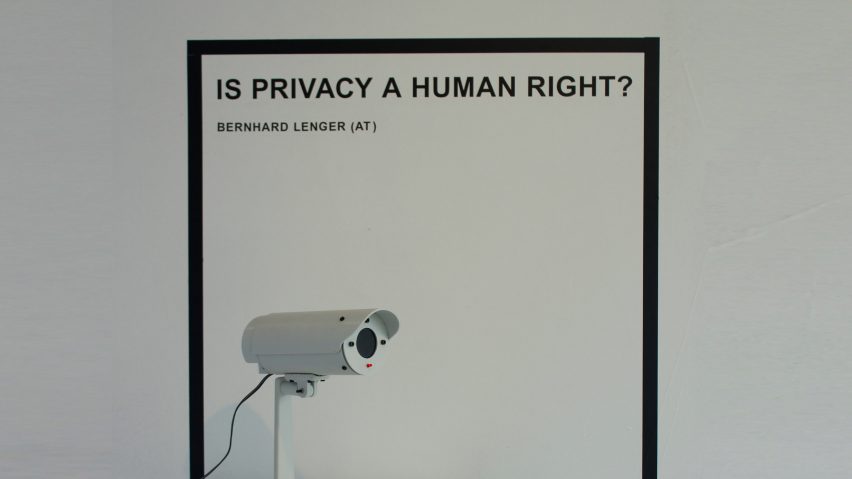
Born in Austria but now based in Eindhoven, Lenger often takes a political stance through his work. We Are Human Rights is the first instalment in his We Are initiative, which he describes as a platform for tackling issues through “design thinking”. Designers can’t solve real-world problems on their own, according to designer Bernhard Lenger, whose latest project sees creatives team up with human-rights defenders to develop tools for change. See: https://humanrightsdefenders.blog/2018/11/09/designers-try-their-hands-at-human-rights-issues-in-seven-countries-sudan-nicaragua-colombia-russia-kenya-mexico-and-burundi/

Think of it as a kind of consultant agency, an organisation that people, governments or NGOs can turn to and get support,” Lenger explained. “By combining the experts in two fields, design and human rights, unique and relevant projects will be the outcome – as the context of the projects is set by the culture and human rights issue of the human rights defender.

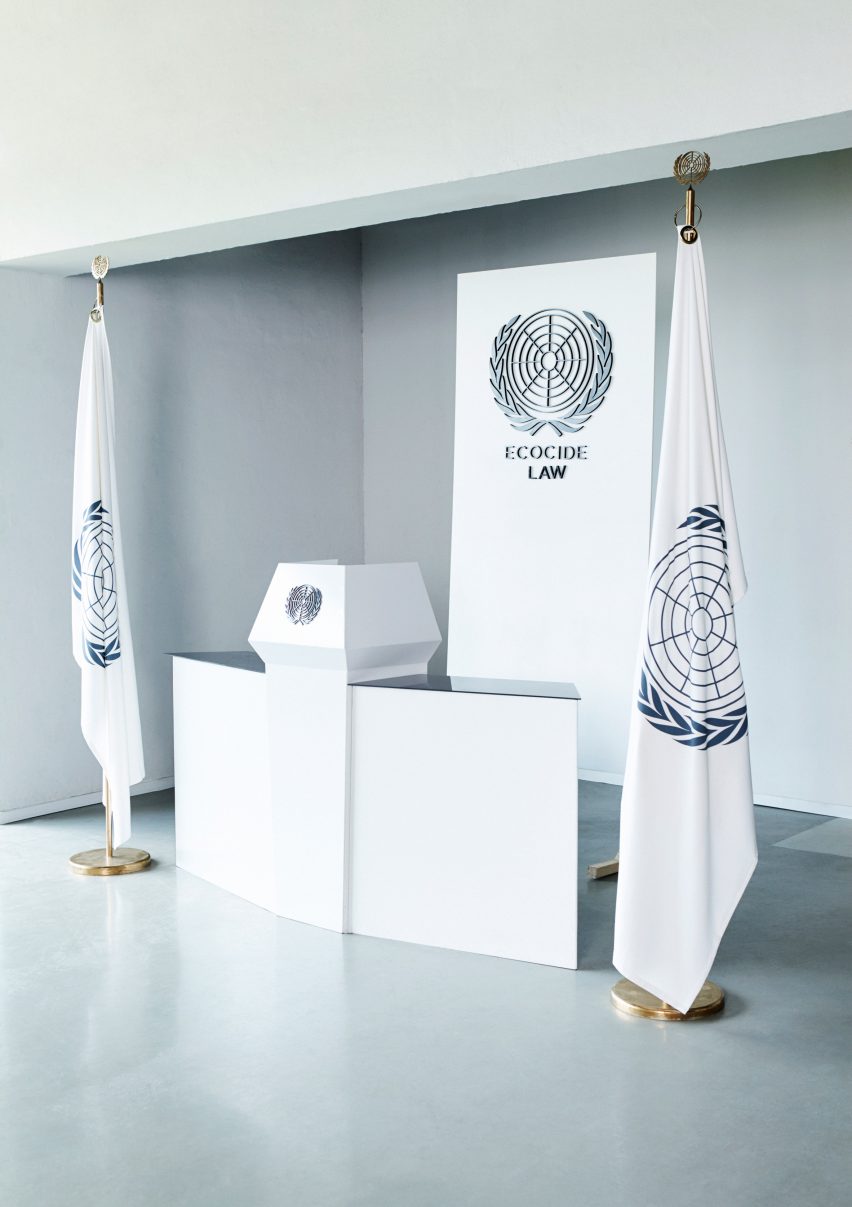
…Lenger was one of the speakers for Dezeen’s Good Design for A Bad World talks programme at Dutch Design Week 2017, where panellists – mainly designers – were invited to discuss how design could help tackle real-world issues. Speaking during a talk focused on pollution, Lenger presented another project he has been involved in, called This is Ecocide. Developed while he was studying at Design Academy Eindhoven, This is Ecocide saw Lenger partner with environmental lawyer Polly Higgins to develop a campaign to make ecocide – the destruction of the environment – illegal.

Lenger often takes a political stance with his work. His previous project, This is Ecocide, saw him try to criminalise the destruction of the environment

This project started with the discovery that ecocide was once recognised by the International Criminal Court as a crime, but was removed. With help from Higgins, he found that this was a result of lobbying from four countries: the USA, the UK, France and the Netherlands. “I was like, what should I do? I was 25 years old graduating from Design Academy, how could I work on a field of international law?” he told the audience.

Young designers are taking on more responsibility

According to Lenger, he isn’t unique in wanting to use to design to solve bigger problems. He said he had noticed a shift in the degree of responsibility felt by young designers. “Some people just want to make pretty things, some feel like there’s something missing if they just make pretty things,” he said.

https://www.dezeen.com/2018/01/26/bernhard-lenger-dutch-design-week-designers-not-heroes-interview/

30 “information heroes” honored by Reporters Without Borders

June 16, 2020

Coronavirus “information heroes” – journalism that saves lives

On 15 June t2020 he NGO Reporters Without Borders (RSF) published a list of 30 coronavirus “information heroes” – 30 journalists, whistleblowers and media outlets whose courage, perseverance or capacity to innovate has helped to circulate reliable and vital information during the Covid-19 pandemic. See the list

Every crisis produces its heroes. Around the world there are journalists, whistleblowers and media outlets that have managed to overcome the barriers to information created since the start of the pandemic. Through their reporting or by means of initiatives that have needed courage, audacity and determination, they have provided access to trustworthy and quality information, helped to resist censorship, and combatted the runaway disinformation that threatens public health.

Some people have taken such big risks to report the reality of the pandemic that they have died as a result, while others have disappeared or have been jailed,” RSF secretary-general Christophe Deloire said. “Prosecuted, attacked, insulted – many have paid a high price for defending the right to information and for combatting the rumours and disinformation that aggravate the consequences of this public health crisis. These new heroes remind us that journalism can save lives. They deserve our attention and admiration.”

The list compiled by RSF, which is not intended to be exhaustive, includes both well-known media figures and people the public have not heard of. Although they come from all five main continents, nearly a third of these 30 heroes are from Asia, where the pandemic originated. Six are from Europe and Central Asia, and the others are from Africa, the Americas and the Middle East.

What most of these heroes have in common is the fact that they revealed information highlighting the pandemic’s gravity or their government’s mismanagement of the crisis. Some are veteran reporters like Ana Lalić in Serbia or combative investigators like Blaž Zgaga in Slovenia, Andjouza Abouheir in Comoros and Sergei Satsukin Belarus. However, others are ordinary citizens who, in response to the urgency and gravity of the public health crisis, decided to blow the whistle with the aim of saving as many lives a possible. It was an eye doctor, Li Wenliang, who first alerted the world to the existence of a fast-spreading disease in December 2019. And it was a lawyer, Chen Qiushi, who posted videos on his blog revealing the chaos in the hospitals in Wuhan, the site of the initial Covid-19 outbreak. Li died of the virus while Chen was forcibly quarantined and never reappeared.

You often pay dearly for the truth. In Venezuela, freelance journalist Darvinson Rojas spent 12 days in prison for a tweet questioning official pandemic figures. In India, newspaper reporter Vijay Vineet is facing a possible six-month jail sentence for reporting that lockdown restrictions forced hungry kids to eat cattle fodder. In Bangladesh, the well-known cartoonist Ahmed Kabir Kishore is facing a possible life sentence for posting cartoons on Facebook about politics during the Covid-19 crisis that alluded, inter alia, to corruption.

Others have avoided prison but can no longer work. After a lengthy and violent police interrogation over an article questioning the Kingdom of Eswatini’s handling of the Covid-19 crisis, Swati Newsweek website editor Eugene Dube had to flee to neighbouring South Africa. Chris Buckley, a Beijing-based reporter for the New York Times, was forced to leave China after spending 76 days in Wuhan at the height of the outbreak. For the first time in 24 years, his visa was not renewed.

Many of these heroes displayed courage in resisting pressure and censorship. They include Caixin, an independent English and Chinese-language media outlet in Beijing whose reporting has questioned the Chinese government’s narrative. For some, such as Afghan reporter Anisseh Shahid, it took courage to simply keep reporting in the field with the threat of infection compounding the threat of a Taliban attack. In the United States, several White House correspondents have distinguished themselves by their perseverance in adversity. Despite constant attacks by President Trump and his aides, they continue week after week to question his handling of the pandemic.

This exceptional crisis has also produced innovative initiatives that have helped to get the facts out and combat disinformation. In Africa, the Ivorian web radio WA FM and the Togolese news site TogoCheck were created to combat rumours and fake news and disseminate trustworthy information that the public can use to protect themselves and their health. In Brazil, alternative media outlets pooled resources to form a “Gabinete de crise” to inform the abandoned inhabitants of Rio de Janeiro’s favelas, while the Wayuri Network’s journalists have risen to the challenge of informing more than 750 indigenous communities in the Amazon. In Russia, 25 media outlets formed Syndicate-100 to make it easier for medical personnel, who have been hit hard by the epidemic, to report problems and alert the public.

Finally, RSF pays a special tribute to journalists in Guayaquil, Ecuador’s business capital and the site of Latin America’s biggest Covid-19 outbreak. The photos of bodies in Guayaquil’s streets have gone around the world. Despite being unprepared and lacking personal protective equipment, the city’s journalists have continued to work and to report in locations with a high infection rate. And this has taken a heavy toll. Thirteen of them have died of the virus.

https://rsf.org/en/news/coronavirus-information-heroes-journalism-saves-lives

see also: https://humanrightsdefenders.blog/2020/04/21/2020-world-press-freedom-index-is-out/

New Report ISHR: Reprisals in the African human rights system

June 16, 2020

On 12 May 2020 ISHR published a new report to the Focal Point on Reprisals of the African Commission on Human and Peoples’ Rights. It demonstrates the need for the ACHPR and States to do more to prevent and ensure accountability for intimidation and reprisals against those who cooperate or seek to cooperate with the African human rights system. (ISHR’s report was prepared in response to the call for submissions to the first annual report of the Focal Point on Reprisals, Commissioner Remy Ngoy Lumbu.)

ISHR’s report documents a disturbing pattern of intimidation and reprisals that must be addressed. Cases of intimidation and reprisals featured in the submission range from States maligning and stigmatising defenders to banning them from travel and detaining them.  ‘Such reprisals violate human rights and fundamental freedoms that regional and international systems are obliged to promote and protect. Moreover, they also seriously impede bodies and mechanisms’ abilities to discharge their mandates effectively, threaten their integrity, and undermine the credibility of their work in the field of human rights’, said Adelaïde Etong Kame, ISHR Africa Programme Manager.  

In Malawi and Cameroon, defenders engaging with the ACHPR are threatened, stigmatised, harassed and attacked. In Burundi, increased monitoring by regional and international human rights mechanisms has been met with increased risk, stigmatisation and harassment of defenders working with the mechanisms. In Mauritania, human rights defenders continue to be vilified by the government and accused of being terrorists. In Egypt, defenders engaging with the African human rights system have been maligned, intimidated, and detained. 

The report also documents how recent hosts of ACHPR sessions, in particular Mauritania and Egypt, have hindered and restricted access to the sessions, through visa denials, intimidation, harassment, and undue restrictions at the sessions themselves. ..

ISHR’s submission also documents undue restrictions on accreditation, namely the case of the Coalition of African Lesbians (CAL), who have had their observer status to the ACHPR withdrawn, in violation of the rights of freedom of expression, association, and unhindered access to and communication with international bodies of CAL and its members, on discriminatory bases.

The primary duty to prevent and remedy reprisals lies with States—who must do more to prevent, investigate and ensure accountability for reprisals. ‘In that regard, the task for the Focal Point and the ACHPR is now to take up these cases and ensure they are addressed with the perpetrating governments. Otherwise, reprisals ‘work’ to dissuade engagement, and perpetrators will be emboldened’, said Etong Kame.  

Ending intimidation and reprisals against those who cooperate with the African human rights system, Submission to the Focal Point on Reprisals of the African Commission on Human and Peoples’ Rights, May 2020.  

https://www.ishr.ch/news/reprisals-new-ishr-report-reprisals-related-engagement-african-human-rights-system-must-be