Archive for the 'Human Rights Defenders' Category

Re-issued: Passionate plea for help in Open Letter by Mona Seif from Egypt about targeting of her family

July 27, 2020

It seems that this post of 27 July 2020 was corrupted; for some reason or another many people could not see the text of the letter itself. So here it is again in full. Please read and tke action on it. Mona Seif – MEA finalist of 2013 – and her family have been targeted by the authorities many times [see https://humanrightsdefenders.blog/2014/08/21/an-exceptional-egyptian-family-of-human-rights-defenders/]

This is an open letter from MONA SEIF asking for your solidarity and support. It is long, but contains crucial details:
My name is Mona Seif, I am an Egyptian HRD. Over the past few weeks the Egyptian regime has been escalating violent targeting of my family. If you are following the news from this art of the world then you know how most of the media platforms have been blocked and many journalists detained, harassed, or pushed into exile. So I am writing to you, hoping you will carry my voice and that of everyone facing injustice here.  
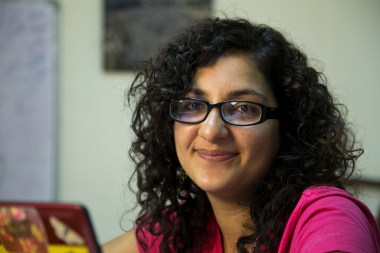
Mona Seif, Egypt – Final Nominee MEA 2013

My brother Alaa Abdel Fattah has been in jail since last September. He was rearrested only 6 months after he got out of prison after completing a full five-years sentence. He has been in maximum security prison for 10 months in horrific conditions and daily violations of his rights, Egyptian laws and prison regulations. For the past months we have filed numerous official complaints, appealed to all sorts of entities here that have jurisdiction over the prison authorities, but none of them made any move to stop the violations or start a serious investigation. None of them made any attempt to bring us just a small bit of our rights. 

On the night of Alaa’s arrival to Tora Maximum security prison 2 he was stripped of his clothes, blind folded, beaten and threatened that “He will never get out of here“, we have submitted an official report to the general prosecutor, we have repeatedly met with the head of his Human Rights adminstration, Alaa went on record in state security prosecution while reviewing his pretrial detention and testified in details on the torture he endured. Until now, not one serious move was taken regarding this horrific incident, and it was an intro to the kind of prison he will be locked in. 

Since the crisis of Covid19 started, the Egyptian MOI has used it as an excuse to tighten the isolation of all prisoners, increase intimidation of prisoners and their families, and escalate in their deprivation of their basic rights. Since March 9th all visits have been completely banned in all prisons all over Egypt, however the families were not offered any alternative form of communication. We were not allowed phone calls with the prisoners, and most prisons are not allowing letters, even though both are explicit rights by the law, not to mention worrying times like these. Some prisoners were trying to get the word out about the deterioration of their health, about fear of Corona in prisons, the lack of proper information to help them understand the toll of the crisis and lack of sanitary measures indifferent  Egypt, the only response the MOI had was clamping down even harder on those prisoners, punishing those who voiced out their concerns, all this while the arrests of more activists is ongoing and the arrest of doctors who talk publicly about their needs, problems and the reality of managing Covid19 within our health system. 

With Alaa in particular, state security seems intent on preventing any sort of communication between us and him, even at times when they are allowing letters from other prisoners. Alaa went on a hunger strike on April12th and they did not even inform us. For a whole month during the covid19 emergency, my brother was on full hunger strike, my mother spent every morning at the prison’s gate and they did not allow us one letter to assure us of his well being.
For every letter received we as a family paid a heavy price. We received a letter after Alaa ended his hunger strike on May 18th, and another on June 6th after my mother camped daily by Tora prison. Then the last one we got was on June 25th after we were violently assaulted and robbed right infront of Tora prison on the watch of their guards,  and only after my younger sister Sanaa was abducted by plainclothed officers while entering the general prosecutor’s office- with her lawyer- to report the violent assault and officially document her injuries. Sanaa is now detained, and we haven’t been allowed any letters from her as well. 

I think I’ve seen alot, I’ve witnessed so many violations committed by the current and previous regimes, but somehow I would have never imagined that a victim of a violent assault would be kidnapped by state security from the gates of the general prosecutor’s office as they are trying to seek his protection and file an official complaint regarding a very public incident like the one we were part of. And it definitely wouldn’t have occured to me that not only the general prosecutor would turn a blind eye on such a grave crime committed at his doorstep, but actually enable them to “legalize”  her detention afterwards. 

Both Sanaa and Alaa are in prison They, and thousands of prisoners, are at risk facing the combined danger of an epidemic and a brutal senseless regime. 
Please speak up on their behalf.. write about them, share their stories, add your name to the petition, or you can directly write a letter to Judge Hany Georgy the Head of Human rights administration at the general prosecutor’s office  hanyfathy70@yahoo.com

 
Every voice counts,
Many thanks
Mona Seif

Links:

Video right after sanaa’s abduction (En subtitles) https://www.facebook.com/watch/?v=40727036690138
Petition FreeAlaa

FreeSanaa

Azerbaijani journalist Khadija Ismail refuses $250,000 ‘prize’ offered by Qatar

July 26, 2020

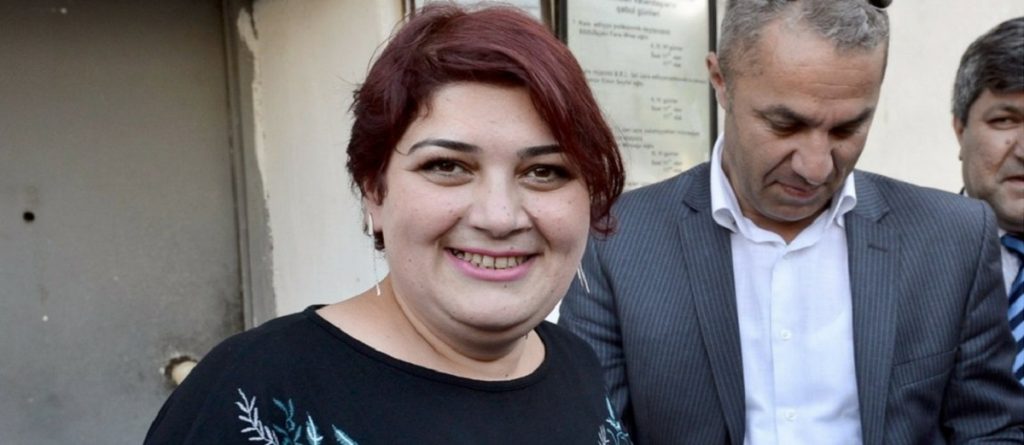
On 26.July 2020 Jam News comes the interesting news that the Azerbaijani investigative journalist Khadija ismayilova has been offered a $250,000 cash award from Qatar’s Rule of Law and Anti-Corruption Centre. After looking into the activities of the centre and discovering the fund was created by the emir of Qatar, who had closed the center for investigative journalism in Qatar, Khadija Ismail declined the award. 

Khadija Ismail

The journalist also added that the reason why the foundation wants to give her the prize is to keep famous journalists under its influence with this award: “Why me? They have been distributing the prize for three years, not a single famous person has yet agreed to receive the prize. It is the famous winners who legitimize such initiatives. I don’t want to sound immodest, but a friend explained to me that they need my name.

I answered them. I said, thank you, I investigated the issue and do not believe in your sincerity, and I do not sell my reputation for money.

Khadija Ismail is engaged in investigative journalism. She was arrested in 2014 and imprisoned for seven years and six months on charges of tax evasion and illegal entrepreneurship. On May 25, 2016, the Supreme Court changed her sentence to a suspended sentence of three and a half years and released her. Now the journalist has a ban on leaving the country. See: https://humanrightsdefenders.blog/2017/11/24/azeri-journalist-khadija-ismayilova-not-allowed-to-come-and-pick-up-her-award-in-stockholm/]

By the decision of the European Court of Human Rights, in this case, the rights of the journalist, protected by Articles 5 (liberty and security of person), 6 (fair trial), 10 (freedom of expression) and 18 (limits on the use of restrictions on rights) of the European Convention were violated.For these violations, the Azerbaijani government as a whole must pay the journalist compensation to the amount of 25,000 euros, but the journalist says that she has not yet received this money.

https://jam-news.net/khadija-ismail-journalist-refuses-prize/

Kyrgyzstan: Activist Askarov dies in prison after decade battling tainted conviction

July 26, 2020

Jul 25, 2020 Rights activist Azimjan Askarov, seen here holding one of his self-portraits in his basement prison cell in February 2012. (Photo: Nate Schenkkan) Rights activist Azimjan Askarov, seen here holding one of his self-portraits in his basement prison cell in February 2012. (Photo: Nate Schenkkan)

EURasia.net of 25 July 2020 gives the sad new that Azimjan Askarov, a celebrated ethnic Uzbek humn rights defender, husband to Hadidja Askarova, has died in prison at the age of 69.

The news of his death on July 25 was confirmed by his longtime friend, supporter and fellow activist Tolekan Ismailova and his lawyer, Valeryan Vakhitov. He had suffered from poor health for much of his 10 years in prison, but his condition worsened significantly in the past two weeks. Vakhitov, who visited Askarov in prison only a few days before his death, said his client had lost his appetite, that his skin “looked yellowish in color,” and that he was unable to move unaided.

On July 24, prison officials dismissed those concerns and the reports of Askarov’s ill-health as “inaccurate information.” [https://www.rferl.org/a/jailed-rights-activist-askarov-transferred-to-different-kyrgyz-prison-amid-reports-of-poor-health/30745718.html]

Although the likelihood of Askarov’s imminent death had been widely anticipated, the actual event has stunned his longtime colleagues and the rights community.

I am devastated. When we saw one another for the last time, they brought him to me in their arms. I told him: ‘Please hang on, we love you,’ and he began crying. He seemed to feel something,” Vakhitov told Kloop news website.

Askarov was arrested on June 15, 2010, in the immediate aftermath of a deadly whirlwind of ethnic unrest in southern Kyrgyzstan that killed hundreds, mostly ethnic Uzbeks.

In the days, weeks and months that followed that bloodshed, security services mainly targeted ethnic Uzbeks for investigations, arrests and systematic harassment. Askarov was among the first to be singled out for this treatment.

He was charged with purported involvement in the killing of a police officer on June 13, 2010, in the southern town of Bazar-Korgon. Immediately after his arrest, Askarov was beaten, subjected to abuse and denied access to his lawyer. He spoke about some of that mistreatment in an interview with Eurasianet in 2012, two years into his life sentence.

“They nearly killed me,” he said, referring to local police. “They held my arms behind my back, and took a weight filled with water, and hit me with it [in the stomach]. They hit me over the head with it so that huge lumps rose up.” He also said he saw witnesses beaten bloody to force them to testify against him….

In 2016, the Office of the United Nations High Commissioner for Human Rights found that Kyrgyzstan had in its treatment of Askarov violated multiple articles of the International Covenant on Civil and Political Rights.

Askarov’s initial criminal trial, as well as subsequent appeals, have been decried by legal experts as miscarriages of justice. Many supposed witnesses were intimidated into giving testimonies and people who would have spoken in his defense were denied that opportunity. Perhaps most ominously, hearings were routinely attended by relatives of the alleged murder victim, who openly threatened Askarov and his legal team with death. This pattern repeated over many years.

But as Philip Shishkin, a journalist, noted in his 2013 book Restless Valley, “of the many interesting things about the case, one detail stands out: the verdict relies heavily on the testimony of a half dozen policemen who had reasons to dislike Askarov even before his alleged participation in the murder of their colleague.”

Much of his 15 years of activism was focused on highlighting and documenting allegations of police abuse in his native Bazar-Korgon, including by some of the officers that then pursued his case…

In one typical rebuttal of criticism from 2015, the Foreign Ministry asserted that “the decision of the court was taken on the basis of undeniable evidence, Askarov’s guilt has been proven in all instances.”

“The Kyrgyz Republic stands for the supremacy of the law. The justice system is an independent branch of power,” the ministry said at the time.

There is strong reason to believe, however, that the government allowed itself to be taken hostage by the same kind of combustible, deeply violence-prone nationalist elements that lay behind the ethnic bloodshed of June 2010. Many notorious criminals have been allowed to walk free from prison in Kyrgyzstan over the decades, but as officials saw it, affording that same treatment to Askarov would have threatened to spark another cycle of unrest, immaterial of the legal particulars.

This reading was all but confirmed in an interview given to Eurasianet in 2018 by Roza Otunbayeva, who was interim president at the time of the ethnic unrest and Askarov’s arrest. Asked about the Askarov case, she evinced regret, but concluded that “it was a decision of our court. And this court’s decision was [upheld].” She did, however, have the authority to issue a pardon, which she declined to do.

“It was a decision that [would] again [have broken] the country,” she told Eurasianet. “I mean, the stability of the country, political consensus within the country was very much bound to such a touchy issue. And it was a very high price.”

See also: https://humanrightsdefenders.blog/2015/07/23/fury-about-us-award-for-askarov-in-kyrgyzstan-backlash-or-impact/.

https://eurasianet.org/kyrgyzstan-activist-askarov-dies-in-prison-after-decade-battling-tainted-conviction

Gulag historian Yury Dmitriyev returns to prison

July 24, 2020
Home

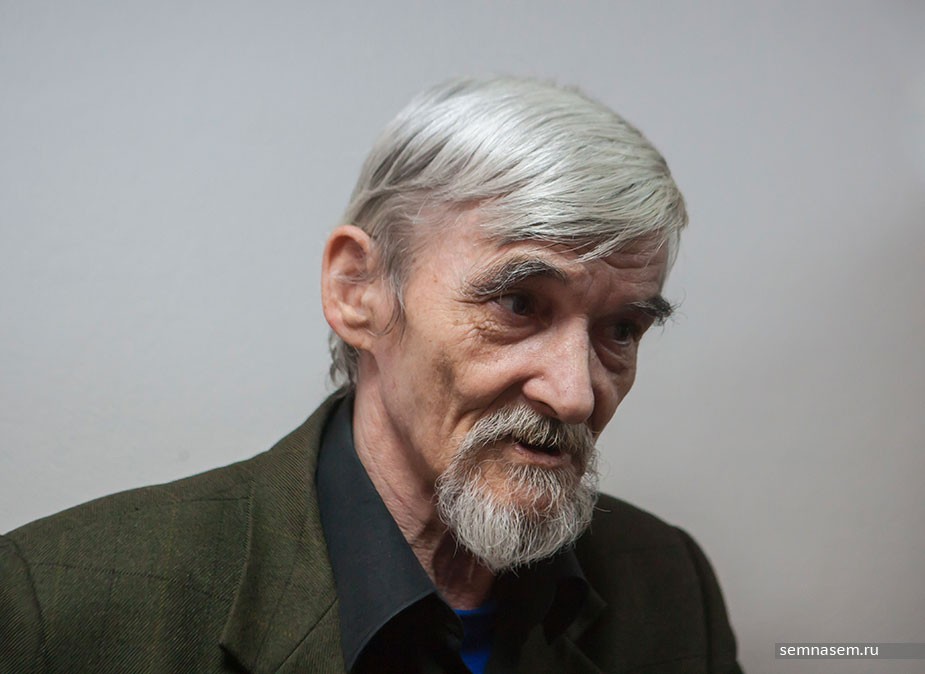
Expert on Stalin atrocities Yury Dmitriyev. Photo: Igor Podgorny, 7×7-journal.ru

The Moscow Times of 22 July 2020 carries a detailed report by Evan Gershkovich on Gulag historian Yury Dmitriyev who has spent decades calling attention to one of the darkest chapters in Russia’s history. He now faces up to 15 years in prison on sexual assault charges in a case his allies say has been trumped up to silence him. Acquitted of child pornography, Yury Dmitriyev now faces charges of sexual assault.

The Moscow Times profiled Dmitriyev in 2018:

Yury Dmitriyev normally hates Moscow. The concrete, the commotion, the pollution. As much as he can, he stays in Karelia, where he was born, raised and has spent his 62 years. In the northwestern region bordering Finland and the Baltic and White Seas, he can usually be found in the woods or in his study, writing.

Yet on a pleasant evening in mid-May, Dmitriyev, a prominent researcher of Soviet crimes, was happy to be in the metropolis. Accompanied by his elder daughter, Yekaterina Klodt, and his lawyer, Viktor Anufriyev, old friends greeted him with grins and tight hugs in a courtyard outside Teatr.doc, a progressive theater, ahead of a human rights awards ceremony.

One month earlier, Dmitriyev had been cleared of child pornography charges. Authorities had detained him in December 2016 after investigators found nude photos of his 11-year old adopted daughter; Dmitriyev said he took the photos to monitor her physical changes as she was prone to illness. From the outset, human rights defenders claimed that the case was fabricated to silence an outspoken activist.

If the arrest came as a shock to those who knew him, so too did his acquittal: Fewer than one percent of criminal defendants in Russia are cleared.

But authorities, human rights defenders now say, weren’t done with the historian just yet. Only a month after the awards night, a judge annulled the April decision, starting the trial anew.

Then, two weeks later, prosecutors brought additional charges to the table: This time they claimed that Dmitriyev had sexually assaulted his daughter. As of late June, the historian was back in jail facing another uphill legal battle, his freedom having been fleeting.

“The new charges are a chance for the prosecution to get it right,” Anufriyev said. “They failed the first time, so officials are giving them another chance to get the job done.”

Digging and documenting

Two decades ago, Dmitriyev discovered a set of mass graves in a Karelian forest containing the bodies of more than 9,500 victims of Josef Stalin’s Great Terror. Poring over KGB documents, the head — and sole employee — of Memorial’s Karelia branch spent the next 20 years documenting each victim’s story.

“What makes Yury unique is that he combines both the digging and the documenting,” said Sergei Krivenko, a colleague of Dmitriyev’s at Memorial and a member of the Presidential Human Rights Council. “Some people work on compiling books of names, some people search for the exact locations of the killings. No one has dedicated themselves to both the way Yury has.”

No one has dedicated themselves to both digging and documenting the way Yuri has.

Those who know Dmitriyev say he toiled everyday. “He’s been doing this work for the past 30 years, and I’m 33,” said Klodt, his elder daughter. “I’m so used to it that, for me, his work is no different than a dentist’s.”

Since the fall of the Soviet Union in 1991, historians say, the state has supported them in locating and memorializing the burial sites of the estimated 15 to 30 million victims of Stalin’s rule. At the location Dmitriyev discovered — Sandarmokh — local authorities helped build roads and erect monuments and aided with an annual gathering at the site.

But in recent years, human rights defenders say, the climate has become less hospitable. Those who spoke with The Moscow Times pointed to a resurgence in Stalin’s popularity as a significant reason: In June last year, Russians voted him the “most outstanding” person in history. In second place was President Vladimir Putin, who has accused the West of “excessive demonization” of the Soviet leader.

Others pointed to a surge in nationalism since 2014, when Russia annexed Crimea and got involved in Ukraine. “There were many foreigners killed at Sandarmokh — Norwegians, Poles, Finns and Ukrainians, including around 200 intellectuals,” Krivenko said. “This is a very important place for Ukrainians especially, and a delegation would visit the site annually.”

Dmitriyev organized the memorial visit every year on Aug. 5. He invited foreign delegations and led discussions, Krivenko said. After the events in Crimea and Ukraine, the discussions often turned to politics.

“I think this is why they went after him,” Krivenko said. He also pointed to an October 2016 decision to add Memorial to a register of “foreign agent” organizations that receive foreign funding. “I think this gave the local siloviki” — officials with ties to law enforcement — “a signal that they could go after us.”

Two months later, in December, Dmitriyev was first arrested.

Prison as a work trip

The day after the awards night, Dmitriyev was invited to speak with human rights students at the Sakharov Center, named after the Nobel Prize-winning human rights activist.

Klodt had come with him and complained that she wasn’t feeling well. “Maybe they should put you in prison for a year too so they can toughen you up,” her father joked.

Quick to laugh, thin and slightly disheveled, Dmitriyev presented an unimposing figure. But when the subject of his work came up, he turned deadly serious.

“I don’t fight the system. That’s a dead end, and I’m already old now,” he told The Moscow Times before the event. “I fight for memory. I fight so anyone who wants to can learn about their relatives, regardless of whether the government wants it or not. These people existed at some point. They worked and loved and had children. I’m for protecting the freedom of private life and of those memories.”

Without those memories, Dmitriyev continued, today’s generation cannot judge whether their government is laudable or acting improperly.

The people I dig up were in the same prison, walked the same halls and were behind the same bars.

“When a person knows the history of their family for multiple generations, they can understand what our state is doing right and what it’s doing wrong,” he said. “Called upon by the state to do this or that, they’ll say, ‘No, my great-grandfather was summoned in the same way and it ended badly for him. So maybe it’ll end badly for me as well.’”

Dmitriyev shrugged at the subject of his time in prison. “I don’t make a great tragedy out of that year,” he said. “I just think of it as a work trip. I’ve gained a better understanding of what my heroes — the people I dig up and write about — were thinking. They were in the same prison, walked the same halls and were behind the same bars.”

More difficult, he said, was being separated from his younger daughter. Dmitriyev himself was adopted, and at some point he decided he wanted to care for an orphaned child too. He hoped he’d be able to talk to her again by the end of the year. “It’s a humane policy by the prosecutor’s office,” he joked. Then he turned serious again: “I can handle it, I’m a tough person. But what about the child? She thinks everyone has abandoned her.”

Into the forest

After Dmitriyev was first arrested, the girl was taken in by her biological grandmother. Klodt said the family and the grandmother maintained regular communication. But when Dmitriyev was acquitted, Klodt said, the grandmother cut off all communication with the family. Then she sent a letter to the prosecution demanding the acquittal be overturned.

Anufriyev, Dmitriyev’s lawyer, believes that local authorities pressured her into writing the letter. He also says that the new charges of sexual assault are founded solely on a June 6 meeting between investigators and the girl during which, Anufriyev says, they coerced her into saying what they wanted. “They say they’re helping the child, but really they’re making her suffer,” he said.

Reached by phone, Tatyana Kordyukova, a spokesperson for the prosecutor’s office, said she couldn’t comment on the case and referred The Moscow Times to the Investigative Committee. The Investigative Committee, in turn, did not respond to requests for comment.

On July 25, the retrial of the first case will begin. The Investigative Committee is currently researching the new charges, a process which could take months. The original charges carry up to 15 years in prison; the new charges up to 20.

This time, though, Anufriyev says Dmitriyev is better prepared. “After his last stint in prison, he now knows that we can fight and win this thing,” he said.

Klodt, too, is ready for the fight. “I’m not constantly hysterical like last time,” she said. “I understand that something needs to be done. I’m not giving up.”

His colleagues say they won’t give up either. When Dmitriyev was first arrested, human rights defenders, artists and writers across the country spoke out for him and wrote letters to Putin. Still, they are sober about the possible outcome.

“This is the atmosphere for us right now,” Krivenko said. He pointed to the case of Oleg Sentsov, a Ukrainian filmmaker accused of terrorism after he had refused to accept the annexation of Crimea, and Memorial colleague Oyub Titiyev, who is also in prison on charges widely believed to be fabricated.

“The only good thing from all this is that the president is showing us how it all happened in the 1930s — how people were blamed, how siloviki read signals from the top,” Krivenko said. “We used to study this in archives, now we see it in real life.”

During his short stint out of prison, Dmitriyev returned to work. Anatoly Razumov, a historian and one of Dmitriyev’s closest friends, stayed at his house from the night before the acquittal was overturned until June 19. The entire time, he says, Dmitriyev worked on a book he had to put off when he was first arrested.

In May, asked if he would return to his work or if he feared doing so would anger certain parties, Dmitriyev was unmoved. “If you’re afraid of wolves, you shouldn’t go into the forest,” he replied.


This article first appeared in The Moscow Times and is republished in a sharing partnership with the Barents Observer.

Asfreeas Jafri wrote interesting opinion on “Majoritarianism”

July 24, 2020

Asfreeas Jafri in Politics, of 14th July, 2020 wrote a fascinating opinion piece which I think deserves more attention. It is mostly about India but has wider implications: for ease of reference here the full text:

One complaint I often get from friends is that I say very “offensive” things online. My Facebook, Twitter, and Instagram, they accuse, are filled with the same sad and angry words against Islamophobia. Although despite my repetitive rants, they continue to ignore the agony of these words.

On July 10, 2020, the Turkish president announced that Hagia Sophia would be a mosque again.

Amongst other things, I am accused of being biased. Also, I am accused to be writing for a vested agenda. Usually, my Hindu friends make these allegations since I write a lot about the persecution of Indian Muslims. However, recently I noticed Muslim friends on social media making the same kind of accusations against those who expressed displeasure at the conversion of Hagia Sofia into a mosque.[ see also: https://humanrightsdefenders.blog/2020/07/06/the-unholy-wisdom-of-invoking-sovereignty/]

A few days back, some of them were irked after being questioned for running a homophobic WhySoProud trend on Twitter. This time the allegation against those Muslims who opposed this conversion is that they are doing this to please “Hindu liberals”.

Those who make these charges are undermining our agency and reason. It is insulting for me to think that what I and several other Muslims write, is not out of our individual agency and free will. When someone as outspoken as Umar Khalid is accused of doing that by several Muslims, I feel that we need to introspect.

The attackers are overlooking Umar’s incisive critique of Islamophobia in the Indian left. Muslims who are opposed to this are being called apologetic. I never pledged allegiance to the new sultan of Turkey. Not calling out Erdogan’s vile actions or political gimmicks does not fill any Muslims with a sense of vicarious guilt, at least in front of people we are allegedly supposed to be pleasing. But to say that those who dislike Erdogan are apologetic is quite irresponsible.

I will any day stand with someone like Umar Khalid who has been a constant ally in the fight against Islamophobia, rather than choosing a faraway ‘Sultan’ who is hardly bothered about the existence of Indian Muslims. It is people like Umar whose strong and sharp words have made young Muslims more unapologetic and bothered about their rights than their predecessors.

The other charge was against those liberals who wanted schools and hospitals on that disputed land, some congress leaders and “practising Hindu atheist” liberals like Dhruv Rathee who had strongly supported the Ayodhya verdict but are now opposed to Erdogan’s move. To many people’s shock, they had claimed that the Ayodhya verdict was respectable to all sides and that it will put a halt to the hate against Muslims. It did not halt. It actually increased.

I agree that this hypocrisy should be called out but when you also support either of the two majoritarian displays of power, are you not a hypocrite too? Also, what about those who have been vehemently opposed to the demolition and protested the SC verdict on Ayodhya? Do they have the right to comment on this?

Some found the comparison of Hagia Sofia with Babri Masjid as problematic. They said that it is not as bad in Turkey as it is in India. Umar rightly asks, ‘are we waiting for it to be that bad?’ Babri was illegally demolished and mobs killed hundreds. The history of these two events is different but what makes the comparison fair is how the Indian and Turkish governments and judiciary ignored the sentiment of the Muslim and Christian minorities. That the majoritarian will become the conscience of the state is starkly similar in both these cases.

As per media reports, Christians were blamed for spreading Coronavirus in Turkey. Consequently, some churches were attacked. The Christian community has faced mysterious disappearances and deaths, attacks and propaganda in recent years.

Turkey’s President Recep Tayyip Erdogan

Recently, a group of Erdogan backed lawyers published an article to “redo” what happened in Armenia. As somebody who often hears Hindutva extremists warning to repeat 2002, which they eventually did in North East Delhi earlier this year, I understand the consequences of these hateful words. The increasing murderous hate attacks on Kurds in Erdogan’s Turkey are known to everybody except those who deny the Armenian genocide.

Erdogan supporters see him as the emperor of the neo-Ottoman empire. The majority rallies behind his brand of Islamic nationalism. Through a constitutional referendum, he has vested immense new authority in himself. Institutions look timid. Rogue opposition is either tamed or jailed. Rivals have been pushed into a tunnel of silence.

The pandemic was used to target the feeble opposition while political prisoners languishing in jails were given no relief. Amnesty International observed that rivals have been targeted using anti-terror laws during the pandemic.

Apart from the political opposition, universities, intellectuals, writers and journalists have invited the severe wrath of the Sultan. Many “Anti-national” academics have lost their jobs in recent years. Many renowned Human rights defenders and lawyers are behind bars.

Ever since the failed coup, suspicion and divisions amongst the Turks has reached new heights. The recent losses in elections, a growing economic crisis and waning popularity of the ruling party are being seen as the reasons behind these desperate populist decisions.

Many wrote that the mosque was “bought” by the Ottomans centuries ago. I did not want to argue about that since copies of the receipt in modern digital font and scanned PDFs of the transaction are easily available on WhatsApp! Several individuals shared stories of Israel, Greece and Spain converting mosques into other structures. This was followed by “where were you then” and whataboutery. Ironically, if you are opposed to what the aforesaid nations did, then you should be opposed to what Turkey did as well.

At the same, I also acknowledge that the western media and academia in the post-cold war world villainised Islam and Muslims. The “Muslim victim” did not fit into the “war on terror” narrative pushed by the west.

The attack on Islam and Muslims did not receive the same kind of recognition or outrage, and was side-lined. Writers like Chomsky and Edward Said have noted the West’s white-washing of its crimes in that part of the world and its malicious contempt for Islam. This has increased anti-West hostility in that region.

A few months ago, I read a blog post while casually scrolling on social media. A young Erdogan critic made a very significant point which I think should be thought about more in the above-mentioned context. He said that as long as the western standards of Human rights will be limited to the people living on the American soil, as long as the west hates on ordinary refugees and working-class innocent Muslims, as long as the occupation and Persecution of Palestine are seen as Israel’s sovereign right, as long as people deny what the US did to ordinary Iraqis, people in the Middle East will continue to invest in defenders who eventually oppress.

In December, while protesting the CAA at Jantar Mantar, I spoke to the Wire and NDTV. That video went viral on social media. It was shared by hundreds of Muslims in Pakistan including actress Mehwish Hayat.

On that thread, many Pakistanis had expressed solidarity with Indian Muslims. I replied to one of the comments, “The best Pakistani Muslims can do in the interest of Indian Muslims is to set a good example for India’s Hindus by treating their minorities well.”

It angered a lot of people. They replied with “Thank you Jinnah” taunts. Many users made the same comments on Indian Muslim handles after the Delhi violence.

What were they actually mocking? They were mocking the fact that Indian Muslims refused to go to Pakistan to be a majority and instead chose to live as a minority in India. This also suggests that they believe minority persecution is natural and that Indian Muslims missed an opportunity to be a persecuting majority. The recent demolition of a Hindu religious structure in Islamabad or the post-Babri demolitions and attack on Hindu religious sites in Pakistan and Bangladesh describe majoritarian solidarity aptly.

On the recent Krishna temple debate, I saw an interesting thread on Twitter where a Pakistani Muslim was explaining it to a Pakistani Hindu that Temples are not essential to the faith20 of Hinduism while mosques are essential to the faith of Islam.

Babri Masjid
People demolishing the Babri Masjid.

In India, the judiciary applied the same principle to say that mosques are not necessary for prayers. This opens a door to another important debate: Are laws merely a manifestation of the majoritarian interpretation of morality and righteousness?

Even in the West, the so-called cradle of secularism, minorities face rampant discrimination and attacks. The recent murder of George Floyd in broad daylight attests to that. The need of the hour is strong debate around majoritarianism. It must gain global momentum.

As long as we are afraid of losing friends and being unpopular, such a debate is not possible. Right now, our only “agenda” is to rattle our people’s numbed conscience. We need to be courageous to be truthful. Sometimes, we have to offend those who like us when we offend others.

When violence becomes an everyday character of society, when irrationality overpowers reasons, when cruelty is seen defence, when injustice flows in a people’s vein, when malice rules their heads, oppression pleases their hearts and vulgarity embeds itself in their “proud” nation’s soul, writers are bound to protest, annoy, and be repetitive in what they write.

https://www.youthkiawaaz.com/2020/07/we-need-a-global-debate-on-majoritarianism/

NEW: “Cypher”: Comics for Human Rights Defenders

July 23, 2020

On 23 July 2020 Front Line Defenders launched the first edition of a very interesting new Monthly Digital Magazine: Cypher – Comics as Eyewitness”.

This project advances the organization’s storytelling and narrative framing work in collaboration with and in support of human rights defenders (HRDs). Working with artists from around the world, including the awardwinning visual storyteller, Beldan Sezen, as creative director, the Magazine will be a monthly publication featuring 3 or 4 stories of HRDs and the challenges they face.
Each month, Front Line Defenders will collaborate with comics artists
from around the world, pairing them with HRDs to develop stories
that portray their work and the challenges, risks and threats they
face. The first edition features stories from:
Kenya (artist: Nomes Dee) – a profile of Ruth Mumbi’s efforts to defend the rights of evicted families in the Kairobangi neighborhood of Nairobi as the COVID-19 pandemic spread; [see also: https://humanrightsdefenders.blog/2015/01/22/human-rights-defenders-in-york-programme-tell-their-story-ruth-mumbi/]
Pakistan (artist: anonymous for security reasons) – the story of the abduction enforced
disappearance of Pakistani HRD Idris Khattak, as told from the perspective of his daughter;
Lebanon (artist: Pascale Ghazaly) – with COVID-19 hitting, ongoing street protests against political and economic corruption and the collapse of the economy, Ethiopian domestic workers found themselves kicked out and abandoned, as even the embassy refused to help; a collective of domestic workers organized critical support;
Brazil (artist: Lyvia Emanuelly ) – transvesti HRD Rosa Luz is a social media and YouTube influencer and rap/hip hop musician; when she used her art to criticize political leaders, she faced intense backlash in the media and from politicians, including death threats, only returning to her public role after a hiatus to ensure her security.

Front Line Defenders comes to this project following a four-year process of developing, producing and disseminating the critically-acclaimed nonfiction graphic novel, La Lucha: The Story of Lucha Castro and Human Rights in Mexico.[see also: https://humanrightsdefenders.blog/2015/04/04/la-lucha-the-story-of-lucha-castro-and-human-rights-in-mexico-new-comics-book-out/

https://www.frontlinedefenders.org/sites/default/files/cypher01final.pdf

US$1 million fund? to support 100 NGOs hit by COVID-19

July 23, 2020

Global leaders and civil society groups are to launch a COVID-19 Grassroots Justice Fund to help marginalised and oppressed communities protect their rights during the pandemic and ensure equitable recovery.

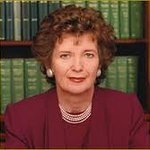
Mary Robinson, Chair of The Elders and former UN High Commissioner for Human Rights, said on 22 July 2020: “COVID-19 has exacerbated the problems of inequality and injustice and made it harder for grassroots organisations to provide much needed support. The COVID-19 Grassroots Justice Fund is a lifeline to these organisations as they adapt to the challenges created by this unprecedented pandemic, and I am proud that The Elders are supporting it with our partners.

Mary Robinson: Profile

The Elders, the Legal Empowerment Network, Namati, Justice For All, Pathfinders and the Fund for Global Human Rights have come together as non-funding partners to assemble the COVID-19 Grassroots Justice Fund, which aims to raise US$1 million to support 100 grassroots justice groups within 12-18 months.

The Legal Empowerment Network will ensure that grantee selection is led by and for grassroots justice leaders. The Fund for Global Human Rights will administer funds, bringing to bear its deep experience channelling resources to grassroots groups around the world. The Pathfinders develop evidence-based strategies for justice for all in a pandemic and will make the case for investing in grassroots justice organisations as part of the pandemic response. The Elders will use their powerful global platform to highlight the vital work of grassroots justice in the pandemic.

A one-time grant will be provided to qualified grassroots justice defenders and aims to help save lives and address the intertwined health, economic and justice crisis. Applications will initially be limited to groups who have already participated in the Legal Empowerment Network’s COVID-19 Justice Challenge and other COVID-19 activities. An open call will be announced in the future to wider groups, depending on availability of funds…

https://www.looktothestars.org/news/19835-new-covid-19-justice-fund-targets-1-million-for-grassroots-groups

Burundi after the “election”: UN and HRW follow up

July 21, 2020

Lisa Schlein reported on 14 July 2020 that UN Investigators are skeptical of reform promises by new President, while HRW sent a letter to the new President Ndayishimiye

Burundi's President Evariste Ndayishimiye gestures to the crowd after his inauguration in Gitega, Burundi Thursday, June 18,…

The U.N. Commission of Inquiry on Burundi is doubting that promises of reform made by Burundi’s newly-elected president will result in hoped-for improvements in the country’s human rights situation. The commission has submitted its report on prevailing conditions in the country to the U.N. Human Rights Council.

The three-member panel welcomes promises of political reconciliation, judicial reform and protection of the population made by President Ndayishimiye, in his inaugural address. But, the chair of the U.N. commission, Doudou Diene, says the president’s comments were full of ambiguities and contradictions. 

For example, he notes the president’s remarks seemed to justify the imposition of restrictions on some public liberties such as freedom of expression, information and assembly under the guise of preserving Burundian culture. 

Speaking on a video link from Paris, he said, “Such remarks are concerning, especially given that the new president’s policies will be implemented by a government composed primarily of the old guard of the late President Nkurunziza’s regime — some of whom are under sanctions for their involvement in grave human rights violations.” 

Burundi's President Pierre Nkurunziza queues at a polling station during the presidential, legislative and communal council…
FILE – Burundi’s President Pierre Nkurunziza queues at a polling station during elections, under the simmering political violence and the growing threat of the coronavirus, in Ngozi, Burundi, May 20, 2020.

President Pierre Nkurunziza died of cardiac arrest on June 8, after a brief hospitalization, while his wife was in Kenya undergoing medical treatment. A number of news outlets report he died of the coronavirus. 

Commission chair Diene says gross, widespread human rights violations continue in Burundi and that it would be premature to make any pronouncements on the possible evolution of the situation under the new government. 

He said, “We solemnly urge the new president of the republic to demonstrate his willingness for change by fully cooperating with the international human rights mechanisms. The immediate release of the four journalists of Iwacu, of human rights defenders … would be a significant gesture of this.” {see: https://humanrightsdefenders.blog/2020/02/05/burundi-elections-start-with-convicting-4-journalists/]

Burundi’s ambassador to the United Nations in Geneva, Renovat Gabu, rejects the commission’s report. He accuses the commission of interfering in the domestic affairs of his country and of slandering and insulting public authorities with the blessing of the U.N. council. 

Human Rights Watch

Letter to President Ndayishimiye: Protecting Human Rights in Burundi, 13 July, 2020

Re: Protecting Human Rights in Burundi

… We have reported on human rights concerns in Burundi since 1995. We are writing to raise important concerns and share our recommendations on steps your government should take to advance and protect human rights in Burundi. We hope that you will address these issues and make the protection and promotion of human rights a top priority throughout your presidency. We urge you to work to make systemic changes to end the violence and abuse, fueled by widespread impunity, that have plagued the country for far too long, especially since 2015.

While we regret the former administration’s withdrawal of Burundi from the International Criminal Court, which took effect in 2017, we are encouraged by the commitments stated in your inaugural speech to reform the judiciary and ensure that all government or other officials who commit offenses are held accountable. Your assurances that measures will be taken to protect victims and witnesses are critical to delivering this promise, as is your commitment to ensuring that corruption will not be tolerated….

To address these challenges and demonstrate a real commitment to promoting rights and turning the page on decades of violence, abuse, mismanagement, and impunity, we urge you to take the following steps during your first year in office:

  1. Remove from security services posts and other executive branches, officials who have been credibly implicated in serious human rights violations, according to reports by the United Nations Commission of Inquiry on Burundi, the UN Human Rights Council, the African Commission on Human and Peoples’ Rights’ fact-finding mission report, and Burundian and international human rights organizations. Ensure that no one who may be subject to criminal or other investigation into human rights abuses is in a position to influence that investigation.
  2. Instruct the security forces, the local administrators, and the Imbonerakure to stop extortion, the use of forced labor, beatings, arbitrary arrests, threats, harassment, and collection of contributions for state-led projects. Order the Imbonerakure and other officials to dismantle all unauthorized roadblocks.
  3. Direct the Justice Ministry to thoroughly and impartially investigate past grave violations of human rights with a view to appropriately prosecuting current and former state security officers and government officials who were responsible for serious criminal offenses. These include National Defense Force and police extrajudicial executions of 47 civilians, members of armed groups and other suspected opponents between December 30, 2014, and January 3, 2015 in Cibitoke province; police use of excessive force in a crackdown on protests in 2015; violence against suspected opponents after the protests; allegations of extrajudicial executions by members of the security forces on December 11, 2015 ; torture and ill treatment of suspected opponents by national intelligence agents and police in since 2015; and extrajudicial executions, enforced disappearances, and arbitrary arrests of suspected opponents by national intelligence agents, police, and Imbonerakure members since 2015, including during the periods leading up to the constitutional referendum in 2018 and the elections held earlier this year.
  4. Ensure a thorough and independent investigation into the crimes and abuses committed by the Imbonerakure. These investigations should lead to fair and transparent prosecutions, and your government should ensure that your party’s youth league is disarmed and not used for any official state security or similar duties.
  5. End all political interference in the judicial system, facilitate victims’ access to justice, and ensure progress on emblematic cases. This should include the immediate and unconditional release of all political prisoners and prisoners jailed for exercising their fundamental rights, including Germain Rukuki, Nestor Nibitanga, Christine Kamikazi, Agnès Ndirubusa, Egide Harerimana, and Térence Mpozenzi
  6. Fully protect everyone’s rights to freedom of expression, assembly, and association in accordance with international standards. Lift the suspension on the operations of independent media and human rights organizations, and ensure journalists and human rights activists who are in exile can return safely. Members and supporters of political parties, Burundian and international journalists, and Burundian and international human rights defenders should be able to conduct their work freely, criticize government policies, and organize peaceful protests without fear of intimidation, reprisals, harassment, arrests, or the excessive use of force by the security forces.
  7. Cooperate with and support regional and international human rights mechanisms and treaties, and act to ensure that Burundian law adequately reflects international human rights commitments. This should include full cooperation with the UN Human Rights Council’s special procedures, including giving the UN Commission of Inquiry on Burundi unfettered access to the country; the resumption of cooperation with the Office of the High Commissioner for Human Rights; finalization of a memorandum of understanding with the African Union’s human rights observer mission and ensuring the observers get unfettered access to the country and its detention facilities; and allow international NGOs to operate without interference.
  8. Ratify the Rome Statute and align national legislation provisions to cooperate promptly and fully with the International Criminal Court as a court of last resort. Cooperate with the ongoing ICC investigations into alleged crimes against humanity committed in Burundi or by nationals of Burundi outside Burundi until 26 October 2017.

https://www.voanews.com/africa/un-investigators-skeptical-reform-promises-new-burundi-president

https://www.hrw.org/news/2020/07/15/letter-president-ndayishimiye-protecting-human-rights-burundi

Four Yemeni journalists under Houthi death sentence

July 21, 2020

As four Yemeni journalists continue to wonder when or whether the Houthi authorities will execute the death sentences they received in April on spying charges, Reporters Without Borders (RSF) calls for international pressure to make the Houthis understand that they will suffer international opprobrium if they do not overturn the sentences.

Before being abducted by the Houthis in 2015, the four journalists played leading roles in a Sanaa-based network of media outlets and Facebook, Twitter, YouTube, Telegram and WhatsApp pages linked to Al-Islah, the Yemeni branch of the Muslim Brotherhood and ruling party in regions controlled by Yemen’s internationally recognized government.

Abdul Khaleq Amran edited the Al-Islah Online website and ran Yemen Revolution Press, a news agency created from several media outlets in 2011. His staff covered the Yemeni civil war, documented crimes committed by the Houthis and interviewed the Houthis’ opponents.

Akram Al-Walidi supervised the staff of the Alrabie-ye.net news website and the government news agency SABA. He gathered information about developments in the fighting from the Al-Islah side, on the basis of reliable sources and with the help of a network of senior political and administrative officials then based in Ma’rib, which was established as the new capital after the Houthi rebels seized Sanaa.

Hareth Humaid, the head of news at Yemen Revolution Press, covered Houthi human rights violations, including abductions and bombardments of civilians. He produced a daily news bulletin with the latest violations. Its last issue was No. 54.

Tawfiq Al-Mansouri worked for the daily newspaper Al-Masdar until it stopped publishing when the Arab coalition intervened in 2015. He then joined Yemen Revolution Press doing layout and graphic design and helping to give form to the various media outlets linked to the agency.

After their abduction in 2015, the four journalists were secretly moved from one prison to another in Sanaa and were subjected to violent interrogations. Torture and repeated blows left all of them with severe physical and psychological aftereffects, according to the Association of Abductees’ Mothers. Amran has a slipped disc. Humaid has suffered loss of vision and has constant migraines. Walidi has chronic digestive problems.

“Every year the world moves one step closer to the universal abolition of the death penalty, but these four veteran journalists are facing the worst of all sentences just for doing their job,” RSF secretary-general Christophe Deloire said.

“Efforts are urgently needed to end their nightmarish plight and return to humanitarian principles in a country where journalists have already paid a heavy price in the war. The Houthis must overturn this decision or face international opprobrium. We ask all those who may have any influence, direct or indirect, on the Houthis to use it to help bring this madness to an end.”

The four were among a total of ten journalists abducted by the Houthis in Sanaa in 2015 on the absurd grounds that they could potentially provide the Arab coalition with information for use in its air strikes. Accused of “collaborating with the enemy,” they were tried by a Houthi Special Criminal Court that is not recognized by the international community.

In its latest annual round-up, RSF reported that a total of 15 journalists were being held hostage in Yemen, most of them by the Houthis. The others were either being held in provinces controlled by the so-called “legitimate government” (such as Muhammad Ali Al-Moqri) on in areas controlled by separatists (such as Saleh Musawa, who has since been released).

As RSF also reported in the 2019 round-up, the conditions in Yemen are nowadays so bad that many journalists have abandoned journalism and have switched to other forms of work. Yemen is ranked 167th out of 180 countries in RSF’s 2020 World Press Freedom Index. See also: https://humanrightsdefenders.blog/2020/05/04/world-press-freedom-day-2020-a-few-more-links/

https://rsf.org/en/news/who-are-four-yemeni-journalists-under-houthi-death-sentence

NGO statement on the achievements and challenges of the 44th session of the UN Human Rights Council

July 21, 2020

Further to my post of yesteday [https://humanrightsdefenders.blog/2020/07/20/un-human-rights-council-concluds-44th-session-and-appoints-four-special-rapporteurs-including-irene-khan/] here a more complete assessment of the result of the 44th session of the UN Human Rights Counccil as seen by the following NGOs: ARTICLE 19, Cairo Institute for Human Rights Studies (CIHRS), and IFEX, and published on 20 July 2020

Hong Kong’s chief executive Carrie Lam on giant screens remotely addressing the opening of the UN Human Rights Council’s 44th session on in Geneva, Switzerland, 30 June 2020, FABRICE COFFRINI/AFP via Getty Images

The 44th session of the HRC resulted in a number of welcome resolutions, on peaceful protests and freedom of opinion and expression among them, and country-specific discussions. However, several States escaped collective scrutiny this session.[see also: https://humanrightsdefenders.blog/2020/06/25/human-rights-defenders-and-the-44th-session-of-the-un-human-rights-council/]

The 44th session of the UN Human Rights Council began with China’s imposition of legislation severely undermining rights and freedoms in Hong Kong. Within days, there were reports of hundreds of arrests, some for crimes that didn’t even exist previously. We welcome efforts during this session by a growing number of States to collectively address China’s sweeping rights abuses, but more is needed. An unprecedented 50 Special Procedures recently expressed concerns at China’s mass violations in Xinjiang, Hong Kong and Tibet, suppression of information in the context of COVID-19, and the targeting of human rights defenders across the country. The Council should heed the call of these UN experts to hold a Special Session and create a mechanism to monitor and document rights violations in the country. No state is beyond international scrutiny. China’s turn has come.

The 44th session also marked an important opportunity to enable those affected directly by human rights violations to speak to the Council through NGO video statements.

Amnesty’s Laith Abu Zeyad addressed the Council remotely from the occupied West Bank where he has been trapped by a punitive travel ban imposed by Israel since October 2019. We call on the Israeli authorities to end all punitive or arbitrary travel bans.

During the interactive dialogue with the Commission of Inquiry on Syria, victims’ associations and families of victims highlighted the human rights violations occurring in detention centers in Syria. We welcome the efforts by some States to underline their demands and welcome the adoption of the Syria resolution on detainees and urge the Syrian government to take all feasible measures to release detainees and provide truth to the families, noting the important pressure needed by Member States to further call for accountability measures for crimes committed in Syria.

Collette Flanagan, Founder of Mothers against Police Brutality, also delivered a powerful video statement at the Council explaining the reality of racist policing in the United States of America. We fully support victims’ families’ appeals to the Council for accountability.

We hope that the High Commissioner’s report on systemic racism, police violence and government responses to antiracism peaceful protests will be the first step in a series of meaningful international accountability measures to fully and independently investigate police killings, to protect and facilitate Black Lives Matter and other protests, and to provide effective remedy and compensation to victims and their families in the United States of America and around the world.

We appreciate the efforts made by the Council Presidency and OHCHR to overcome the challenges of resuming the Council’s work while taking seriously health risks associated with COVID-19, including by increasing remote and online participation. We recommend that remote civil society participation continue and be strengthened for all future sessions of the Council.

Despite these efforts, delays in finalising the session dates and modalities, and subsequent changes in the programme of work, reduced the time CSOs had to prepare and engage meaningfully. This has a disproportionate impact on CSOs not based in Geneva, those based in different time zones and those with less capacity to monitor the live proceedings. Other barriers to civil society participation this session included difficulties to meet the strict technical requirements for uploading video statements, to access resolution drafts and follow informal negotiations remotely, especially from other time zones, as well as a decrease in the overall number of speaking slots available for NGO statements due to the cancellation of general debates this session as an ‘efficiency measure.’

We welcome the joint statement led by the core group on civil society space and endorsed by cross regional States and civil society, which calls on the High Commissioner to ensure that the essential role of civil society, and States’ efforts to protect and promote civil society space, are reflected in the report on impact of the COVID-19 pandemic presented to the 46th Session of the HRC. We urge all States at this Council to recognise and protect the key role that those who defend human rights play.

These last two years have seen unlawful use of force perpetrated by law enforcement against peaceful protesters, protest monitors, journalists worldwide, from the United States of America to Hong Kong, to Chile to France , Kenya to Iraq to Algeria, to India to Lebanon with impunity.

We therefore welcome that the resolution “the promotion and protection of human rights in the context of peaceful protests” was adopted by consensus, and that the Council stood strongly against some proposed amendments which would have weakened it. We also welcome the inclusion in the resolution of a panel during the 48th session to discuss such events and how States can strengthen protections. We urge States to ensure full accountability for such human rights violations as an essential element of the protection of human rights in the context of protests. The current context has accelerated the urgency of protecting online assembly, and we welcome that the resolution reaffirms that peaceful assembly rights guaranteed offline are also guaranteed online. In particular, we also commend the resolution for calling on States to refrain from internet shutdowns and website blocking during protests, while incorporating language on the effects of new and emerging technologies, particularly tools such as facial recognition, international mobile subscriber identity-catchers (“stingrays”) and closed-circuit television.

We welcome that the resolution on “freedom of opinion and expression” contains positive language including on obligations surrounding the right to information, emphasising the importance of measures for encryption and anonymity, and strongly condemning the use of internet shutdowns.. Following the High Commissioner’s statement raising alarm at the abuse of ‘false news’ laws to crackdown on free expression during the COVID-19 pandemic, we also welcome that the resolution stresses that responses to the spread of disinformation and misinformation must be grounded in international human rights law, including the principles of lawfulness, legitimacy, necessity and proportionality. At the same time, we are concerned by the last minute addition of language which focuses on restrictions to freedom of expression, detracting from the purpose of the resolution to promote and protect the right. As we look to the future, it is important that the core group builds on commitments contained in the resolution and elaborate on pressing freedom of expression concerns of the day, particularly for the digital age, such as the issue of surveillance or internet intermediary liability, while refocusing elements of the text.

The current context has not only accelerated the urgency of protecting assembly and access to information, but also the global recognition of the right to a safe, clean, healthy and sustainable environment. We welcome the timely discussions on ”realizing children’s right to a healthy environment” and the concrete suggestions for action from panelists, States, and civil society. The COVID-19 crisis, brought about by animal-to-human viral transmission, has clarified the interlinkages between the health of the planet and the health of all people. We therefore support the UN Secretary General’s call to action on human rights, as well as the High Commissioner’s statement advocating for the global recognition of the human right to a safe, clean, healthy and sustainable environment – already widely reflected at national and regional levels – and ask that the Council adopts a resolution in that sense. We also support the calls made by the Marshall Islands, Climate Vulnerable Forum, and other States of the Pacific particularly affected and threatened by climate change. We now urge the Council to strengthen its role in tackling the climate crisis and its adverse impacts on the realization of human rights by establishing a Special Rapporteur on Human Rights and Climate Change, which will help address the urgency of the situation and amplify the voices of affected communities.

The COVID crisis has also exacerbated discrimination against women and girls. We welcome the adoption by the Council of a strong resolution on multiple and intersecting forms of discrimination against women and girls, which are exacerbated in times of a global pandemic. The text, inter alia, reaffirms the rights to sexual and reproductive health and to bodily autonomy, and emphasizes legal obligations of States to review their legislative frameworks through an intersectional approach. We regret that such a timely topic has been questioned by certain States and that several amendments were put forward on previously agreed language.

The Council discussed several country-specific situations, and renewed the mandates in some situations.

We welcome the renewal of the Special Rapporteur’s mandate and ongoing scrutiny on Belarus. The unprecedented crackdown on human rights defenders, journalists, bloggers and members of the political opposition in recent weeks ahead of the Presidential election in August provide a clear justification for the continued focus, and the need to ensure accountability for Belarus’ actions. With concerns that the violations may increase further over the next few weeks, it is essential that the Council members and observers maintain scrutiny and pressure even after the session has finished.

We welcome the extension of the mandate of the Special Rapporteur on Eritrea. We urge the government to engage, in line with its Council membership obligations, as the Special Rapporteur’s ‘benchmarks for progress’ form a road map for human rights reform in the country.

We welcome the High Commissioner report on the human rights situation in the Philippines which concluded, among other things, that the ongoing killings appear to be widespread and systematic and that “the practical obstacles to accessing justice in the country are almost insurmountable.” We regret that even during this Council session, President Duterte signed an Anti Terrorism Law with broad and vague definition of terrorism and terrorists and other problematic provisions for human rights and rule of law, which we fear will be used to stifle and curtail the rights to freedom of opinion and expression, to freedom of peaceful assembly and of association. Also during this session, in a further attack on press freedom, Philippine Congress rejected the franchise renewal of independent media network ABS-CBN, while prominent journalist Maria Ressa and her news website Rappler continue to face court proceedings and attacks from President Duterte after Ressa’s cyber libel conviction in mid-June. We support the call from a group of Special Procedures to the Council to establish an independent, impartial investigation into human rights violations in the Philippines and urge the Council to establish it at the next session.

The two reports presented to the Council on Venezuela this session further document how lack of judicial independence and other factors perpetuate impunity and prevent access to justice for a wide range of violations of civil, cultural, economic, political, and social rights in the country. We also urge the Council to stand ready to extend, enhance and expand the mandate of the Independent International Fact-Finding Mission when it reports in September.

We also welcome the report of the Special rapporteur on the human rights situation in the Palestinian Territory occupied since 1967 and reiterate his call for States to ensure Israel puts an end to all forms of collective punishment. We also reiterate his call to ensure that the UN database of businesses involved with Israeli settlements becomes a living tool, through sufficient resourcing and annual updating.

We regret, however, that several States have escaped collective scrutiny this session.

We reiterate the UN Special Rapporteur Agnes Callamard’s call to pressure Saudi Arabia to release prisoners of conscience and women human rights defenders and call on all States to sustain the Council’s scrutiny over the situation at the September session.

Despite calls by the High Commissioner for prisoners’ release, Egypt has arrested defenders, journalists, doctors and medical workers for criticizing the government’s COVID-19 response. We recall that all of the defenders that the Special Procedures and the High Commissioner called for their release since September 2019 are still in pre-trial detention. The Supreme State Security Prosecution and ‘Terrorism Circuit courts’ in Egypt, are enabling pre-trial detention as a form of punishment including against human rights defenders and journalists and political opponents, such as Ibrahim Metwally, Mohamed El-Baqer and Esraa Abdel Fattah, Ramy Kamel, Alaa Abdel-Fattah, Patrick Zaky, Ramy Shaat, Eman Al-Helw, Solafa Magdy and Hossam El-Sayed. Once the terrorism circuit courts resumed after they were suspended due to COVID-19, they renewed their detention retroactively without their presence in court. It’s high time the Council holds Egypt accountable.

As highlighted in a joint statement of Special Procedures, we call on the Indian authorities to immediately release HRDs, who include students, activists and protest leaders, arrested for protesting against changes to India’s citizenship laws. Also eleven prominent HRDs continue to be imprisoned under false charges in the Bhima Koregaon case. These activists face unfounded terror charges under draconian laws such as sedition and under the Unlawful Activities (Prevention) Act. While we welcome that Safoora Zargar was granted bail on humanitarian grounds, the others remain at high risk during a COVID-19 pandemic in prisons with not only inadequate sanitary conditions but also limited to no access to legal counsel and family members. A number of activists have tested positive in prison, including Akhil Gogoi and 80-year-old activist Varavara Rao amid a larger wave of infections that have affected many more prisoners across the country. Such charges against protestors, who were exercising their rights to freedom of peaceful assembly must be dropped. We call on this Council to strengthen their demands to the government of India for accountability over the excessive use of force by the police and other State authorities against the demonstrators.

In Algeria, between 30 March and 16 April 2020, the Special rapporteur on freedom of opinion and expression, freedom of peaceful assembly and of association, human rights defenders, issued three urgent appeals in relation to cases involving arbitrary and violent arrests, unfair trials and reprisals against human rights defenders and peaceful activists Olaya Saadi, Karim Tabbou and Slimane Hamitouche. Yet, the Council has been silent with no mention of the crackdown on Algerian civil society, including journalists.

To conclude on a positive note, we welcome the progress in the establishment of the OHCHR country office in Sudan, and call on the international community to continue to provide support where needed to the transitional authorities. While also welcoming their latest reform announcements, we urge the transitional authorities to speed up the transitional process, including reforms within the judiciary and security sectors, in order to answer the renewed calls from protesters for the enjoyment of “freedom, peace and justice” of all in Sudan. We call on the Council to ensure continued monitoring and reporting on Sudan.

https://ifex.org/human-rights-council-ngo-statement-on-the-achievements-and-challenges-of-the-44th-session/