Khine Rola in the Irrawaddy of 22 December 2020 relates what happens when you demonstrate peacefully during international human rights day in Myanmar.
Rakhine State police have opened a case against three activists under Article 19 of the Peaceful Assembly and Procession Law over a human rights demonstration in the state capital, Sittwe, earlier this month.
The three – Ko Min Bar Chay (also known as Ko Than Hla), Ko Naing Naing Tun and Ma Khaing Mrat Thu from the Rakhine Youth New Generation Network — led other protesters to mark Human Rights Day on Dec. 10. The three were detained as they protested on Strand Road in Sittwe and released on bail later that evening.
However, Sittwe Township police chief, Major Zaw Naing, said the three organized the event without seeking approval from the authorities when he filed the charges on Monday. The three insisted that the event was too important to cancel because the authorities failed to grant approval. At the event, the activists held placards calling for human rights, women’s rights and to end terrorism.
The three suspects leave court on December 21. / Khine Rola / The Irrawaddy
Ma Khaing Mrat Thu said: “It was Human Rights Day and Myanmar has ratified the International Human Rights Declaration. What we organized was not a protest but a campaign. We are very sad that the government filed a lawsuit against us instead of appreciating the citizens who respect human rights.”
Ko Zaw Zaw Min, a lawyer at the Arakan Human Rights Defenders and Promoters Association, said: “They just expressed their opinions on Human Rights Day. They should have freedom of expression. They marked the event to protect human rights. Treating such activities as a sensitive issue and taking legal action will only disrupt justice.” The next court hearing is scheduled for December 30.
On December 10th the Norwegian Human Rights Fund celebrated Human Rights Day. Many have been heavily impacted by the #COVID19 pandemic, and others face even more risks for defending their #rights now than before. In this video, six human rights defenders (such as Ruki Fernando, Norma Ledezma and Asha Kowtal) from different countries (India, Sri lanka, Thailand, Mexico and Colombia) share their thoughts on the importance of the fight for human rights.
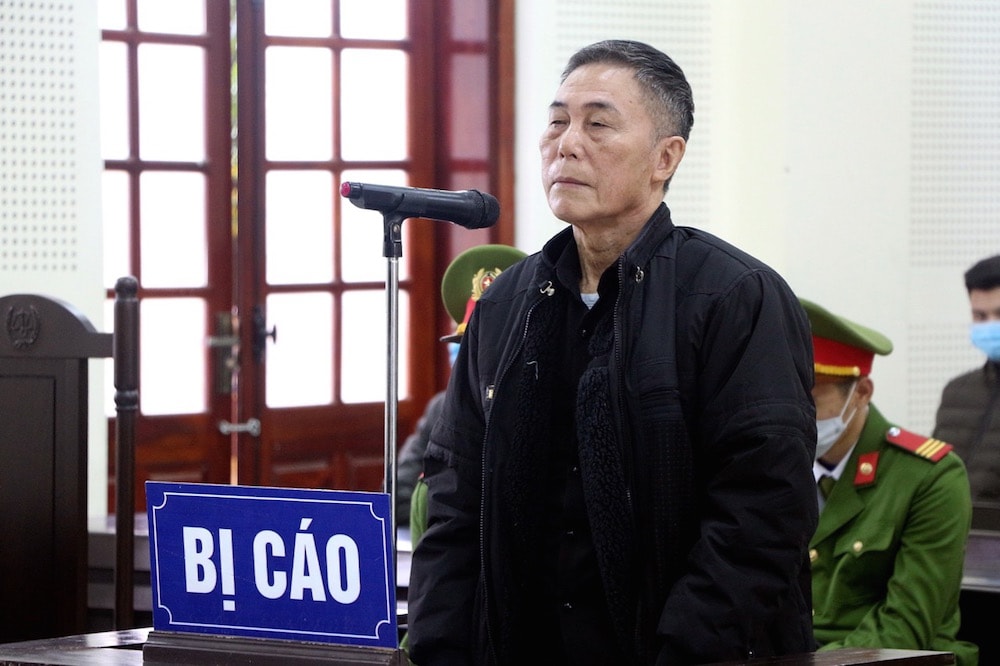
PEN America reported on 17 December 2020 that writer Tran Duc Thach was sentenced to 12 years in Vietnamese prison.
This picture taken and released by the Vietnam News Agency on 15 December 2020 shows Vietnamese writer Tran Duc Thach during his court trial in Nghe An province, as he was sentenced to 12 years in jail. -/Vietnam News Agency/AFP via Getty Images
Vietnamese writer Tran Duc Thach was convicted on charges of subversion under Article 109 of the country’s criminal code. He was arrested in April for Facebook posts criticizing corruption in government and human rights abuses in the country.
Poet, blogger, and human rights defender Tran Duc Thach was sentenced to 12 years in prison and three years probation. PEN America condemned the sentencing today as a repressive attack on free expression in the country. “This is a shocking and shameful outcome in a case that never should have been brought to trial in the first place. Thach should be celebrated for his civic engagement and advocacy, not subjected to mistreatment and imprisonment,” said James Tager, deputy director of free expression research and policy at PEN America. “This draconian sentence is another blatant violation of basic human rights and stifling of freedom of expression by the Vietnamese state in the name of national security. We call for his immediate and unconditional release.”
Thach was initially arrested on April 23 for “activities against the people’s government.” Authorities reportedly used several Facebook posts he published criticizing government corruption and human rights violations as the primary implicating evidence. During the trial, provincial prosecutors claimed that Thach’s activism and writings “threatened social stability, encroached upon national independence and socialism, reduced people’s trust in the political institution of the state of Vietnam, and infringed upon national security and social safety and order.”
Thach is a prolific writer, whose work includes his 1988 novel Doi Ban Tu (Two Companions in Prison), his memoir Ho Chon Nguoi Am Anh (A Haunting Collective Grave), and his poetry collection Dieu Chua Thay (Things Still Untold). His writing commonly deals with human rights issues within Vietnam. Thach is also co-founder of the Brotherhood for Democracy, a civil society group that has been repeatedly targeted by authorities for their activism, with several members of the group apprehended in recent years. Thach has faced repeated harassment for his writing and his activism.
Thach is just one of those who has been targeted by the Vietnamese government’s heightened campaign against internet personalities, rights advocates, and independent journalists, a campaign that has become more pronounced in the run-up to the country’s 13th National Congress scheduled for January 2021. According to the NGO Vietnam Human Rights Defenders, there have been 17 subversion-based convictions this year alone while 31 individuals are currently held in pre-trial detention. Additionally, the government has leveraged the pandemic to arrest dissidents on the pretext of public security and stifling COVID-related disinformation.
“Their appointment would undermine the rule of law and U.S. credibility around the world. It would be a callous rebuke to… all those who care about human rights and the protection of basic dignity.” writes Brett Wilkins in Common Dreams of 21 December 2020.
Anti-torture activists and advocates are urging President-elect Joe Biden to avoid nominating torture apologist Michael Morell for CIA director. (Photo: Justin Norman/Flickr/cc)
Survivors of torture by U.S. or proxy forces and their advocates on Monday issued an open letter urging President-elect Joe Biden not to nominate torture apologist Michael Morell for CIA director, and calling on the Senate to reject the nomination of Avril Haines for director of national intelligence.
The letter—which was also sent to members of the Senate Intelligence Committee as well as to Biden and Vice President-elect Kamala Harris—was organized by Marcy Winograd of Progressive Democrats of America, Medea Benjamin of CodePink, and Jeremy Varon of Witness Against Torture.
In addition to those three activists, signatories to the letter include:
Mansoor Adayafi, a Yemeni author imprisoned without charge or trial for 14 years in the U.S. military prison at Guantánamo Bay, Cuba.
Djamel Ameziane, an Algerian refugee and artist who was jailed without charge in Guantánamo for 11 years.
Moazzam Begg, a British Pakistani imprisoned at the U.S. airbase at Bagram, Afghanistan—where he says he witnessed Americans murder two detainees—and then, for three years at Guantánamo Bay before being released without charge.
Sister Dianna Ortiz, a missionary from New Mexico serving during the Guatemalan Civil War who in 1989 was kidnapped, raped, and tortured—she says under the supervision of an American operative—by agents of the genocidal U.S.-backed regime.
Col. Lawrence Wilkerson, a U.S. Army whistleblower who a decade ago revealed that former President George W. Bush and senior members of his Cabinet knew that most of the men and boys imprisoned at Guantánamo were innocent but kept them locked up anyway.
John Kiriakou, a CIA whistleblower who was prosecuted and jailed for nearly two years by the Obama administration for exposing U.S. torture.
“We believe that the record of Morell and Haines disqualifies them from directing intelligence agencies,” assert the letter’s signers, who in addition to those mentioned above include some two dozen other activists and advocates. “Their appointment would undermine the rule of law and U.S. credibility around the world. It would be a callous rebuke to people like ourselves and all those who care about human rights and the protection of basic dignity.”
“Morell, a CIA analyst under Bush and both deputy and acting CIA director under Obama, has defended the agency’s ‘enhanced interrogation’ practices,” the letter notes. “These included waterboarding, physical beatings, sleep deprivation, stress positions, and sexual humiliation.”
The letter also opposes the confirmation of Biden DNI nominee Haines, who “overruled the CIA inspector general by choosing not to punish agency personnel accused of hacking into the Senate Intelligence Committee’s computers during their investigation into the CIA’s use of torture.”
“In addition, Haines was part of the team that redacted the Senate Intelligence Committee’s landmark 6,000-page report on torture, reducing the public portion to a 500-page summary,” the authors write. They add:
Haines also supported Trump’s nomination of Gina Haspel for CIA director. Supervising a CIA black site in Thailand in 2002, Haspel was directly implicated in CIA torture. She later drafted the memo authorizing the destruction of the CIA videotapes. Like Morell, Haines has worked both to defend torture and surpress evidence of it. She too, is incompatible with the stated aim of the Biden-Harris administration to restore integrity and respect for the rule of law to government.
“The new administration must show the American people and the world that it acknowledges past disturbing U.S. conduct and will ensure that such abuses never recur,” the letter states. “To do that, it needs intelligence leaders who have neither condoned torture nor whitewashed the CIA’s ugly record of using torture.”
“That is why we urge President-elect Biden not to nominate Mike Morell for director of the CIA and the Senate to reject the nomination of Avril Haines for director of national intelligence,” it concludes. “The people of the United States and the world deserve better.”
Today – 19 December 2020 – marks one year since the Government of the Maldives arbitrarily shut down the longest serving human rights group in the country, the Maldivian Democracy Network (MDN) and arbitrarily confiscated all of its funds. Since then, the Government has not reversed any of its unconstitutional actions related to the dissolution of MDN.
We remind the Government of the Maldives that Article 30(b) of the country’s Constitution guarantees the right to establish societies and non-governmental organisations (NGOs). Article 43 affords everyone the right to fair administrative action that adheres to basic fairness and procedural propriety. MDN has been deprived of these rights through arbitrary action taken without due process.
An administrative decision was taken based on allegations of a criminal offence, depriving the organisation and the human rights defenders involved of their right to appeal in the criminal and civil processes initiated by the Government of the Maldives. The right to appeal is guaranteed by Article 56 of the Constitution. Furthermore, the organisation has not been given the right of reply or to defend itself against what is widely seen as a biased decision based on the interpretation of an academic research.
We are disappointed that the Parliament of the Maldives has refused to investigate the matter and hold the government accountable. We urge the Parliament not to use its mandate selectively, and call on it to conduct its affairs equally, uphold the Constitution and the rule of law.
The Government of the Maldives, by taking arbitrary and unconstitutional actions to silence civil society, has set a dangerous precedent that has resulted in a violent witch-hunt of human rights defenders and civil society organisations. We call on President Ibrahim Mohamed Solih to conduct a fair and open enquiry into these deplorable actions and stop the harassment of the human rights community in the Maldives, as several United Nations Member States recommended during the third Universal Periodic Review of the Maldives in November 2020[1].
Signed by:
The Asian Forum on Human Rights and Development (FORUM-ASIA)
CIVICUS
The International Federation for Human Rights (FIDH),
The Commonwealth Human Rights Initiative (CHRI)
The Maldivian Democracy Network (MDN) is a non-partisan civil society organisation based in the Canton of Geneva, Switzerland, operating under the Swiss civil code. MDN, registered in the Maldives from 2006 until December 2019, was one of the longest-running human rights groups in the country until the Government of Maldives forcefully shut down the organisation.
Jason Kelley in the Electronic Frontier Foundation (EFF) of 17 December 2020 summarizes a joint statement by over 30 NGOs saying that the platform policies and content moderation procedures of the tech giants now too often lead to the silencing and erasure of critical voices from across the region. Arbitrary and non-transparent account suspension and removal of political and dissenting speech has become so frequent and systematic in the area that it cannot be dismissed as isolated incidents or the result of transitory errors in automated decision-making.
This year is the tenth anniversary of what became known as the “Arab Spring”, in which activists and citizens across the Middle East and North Africa (MENA) used social media to document the conditions in which they lived, to push for political change and social justice, and to draw the world’s attention to their movement. For many, it was the first time they had seen how the Internet could have a role to play in pushing for human rights across the world. Emerging social media platforms like Facebook, Twitter and YouTube all basked in the reflected glory of press coverage that centered their part in the protests: often to the exclusion of those who were actually on the streets. The years after the uprisings failed to live up to the optimism of the time. Offline, the authoritarian backlash against the democratic protests has meant that many of those who fought for justice a decade ago, are still fighting now.
The letter asks for several concrete measures to ensure that users across the region are treated fairly and are able to express themselves freely:
Do not engage in arbitrary or unfair discrimination.
Invest in the regional expertise to develop and implement context-based content moderation decisions aligned with human rights frameworks.
Pay special attention to cases arising from war and conflict zones.
Preserve restricted content related to cases arising from war and conflict zones.
Content moderation policies are not only critical to ensuring robust political debate. They are key to expanding and protecting human rights. Ten years out from those powerful protests, it’s clear that authoritarian and repressive regimes will do everything in their power to stop free and open expression. Platforms have an obligation to note and act on the effects content moderation has on oppressed communities, in MENA and elsewhere. [see also: https://humanrightsdefenders.blog/2020/06/03/more-on-facebook-and-twitter-and-content-moderation/]
In 2012, Mark Zuckerberg, CEO and Founder of Facebook, wrote
By giving people the power to share, we are starting to see people make their voices heard on a different scale from what has historically been possible. These voices will increase in number and volume. They cannot be ignored. Over time, we expect governments will become more responsive to issues and concerns raised directly by all their people rather than through intermediaries controlled by a select few.
Instead, governments around the world have chosen authoritarianism, and platforms have contributed to the repression. It’s time for that to end.
Read the full letter demanding that Facebook, Twitter, and YouTube stop silencing critical voices from the Middle East and North Africa, reproduced below:
17 December 2020
Open Letter to Facebook, Twitter, and YouTube: Stop silencing critical voices from the Middle East and North Africa
Ten years ago today, 26-year old Tunisian street vendor Mohamed Bouazizi set himself on fire in protest over injustice and state marginalization, igniting mass uprisings in Tunisia, Egypt, and other countries across the Middle East and North Africa.
As we mark the 10th anniversary of the Arab Spring, we, the undersigned activists, journalists, and human rights organizations, have come together to voice our frustration and dismay at how platform policies and content moderation procedures all too often lead to the silencing and erasure of critical voices from marginalized and oppressed communities across the Middle East and North Africa.
The Arab Spring is historic for many reasons, and one of its outstanding legacies is how activists and citizens have used social media to push for political change and social justice, cementing the internet as an essential enabler of human rights in the digital age.
Social media companies boast of the role they play in connecting people. As Mark Zuckerberg famously wrote in his 2012 Founder’s Letter:
“By giving people the power to share, we are starting to see people make their voices heard on a different scale from what has historically been possible. These voices will increase in number and volume. They cannot be ignored. Over time, we expect governments will become more responsive to issues and concerns raised directly by all their people rather than through intermediaries controlled by a select few.”
Zuckerberg’s prediction was wrong. Instead, more governments around the world have chosen authoritarianism, and platforms have contributed to their repression by making deals with oppressive heads of state; opening doors to dictators; and censoring key activists, journalists, and other changemakers throughout the Middle East and North Africa, sometimes at the behest of other governments:
Syria: In early 2020, Syrian activists launched a campaign to denounce Facebook’s decision to take down/disable thousands of anti-Assad accounts and pages that documented war crimes since 2011, under the pretext of removing terrorist content. Despite the appeal, a number of those accounts remain suspended. Similarly, Syrians have documented how YouTube is literally erasing their history.
Palestine: Palestinian activists and social media users have been campaigning since 2016 to raise awareness around social media companies’ censorial practices. In May 2020, at least 52 Facebook accounts of Palestinian activists and journalists were suspended, and more have since been restricted. Twitter suspended the account of a verified media agency, Quds News Network, reportedly on suspicion that the agency was linked to terrorist groups. Requests to Twitter to look into the matter have gone unanswered. Palestinian social media users have also expressed concern numerous times about discriminatory platform policies.
Egypt: In early October 2019, Twitter suspended en masse the accounts of Egyptian dissidents living in Egypt and across the diaspora, directly following the eruption of anti-Sisi protests in Egypt. Twitter suspended the account of one activist with over 350,000 followers in December 2017, and the account still has yet to be restored. The same activist’s Facebook account was also suspended in November 2017 and restored only after international intervention. YouTube removed his account earlier in 2007.
Examples such as these are far too numerous, and they contribute to the widely shared perception among activists and users in MENA and the Global South that these platforms do not care about them, and often fail to protect human rights defenders when concerns are raised.
Arbitrary and non-transparent account suspension and removal of political and dissenting speech has become so frequent and systematic that they cannot be dismissed as isolated incidents or the result of transitory errors in automated decision-making.
While Facebook and Twitter can be swift in responding to public outcry from activists or private advocacy by human rights organizations (particularly in the United States and Europe), in most cases responses to advocates in the MENA region leave much to be desired. End-users are frequently not informed of which rule they violated, and are not provided a means to appeal to a human moderator.
Remedy and redress should not be a privilege reserved for those who have access to power or can make their voices heard. The status quo cannot continue.
The MENA region has one of the world’s worst records on freedom of expression, and social media remains critical for helping people connect, organize, and document human rights violations and abuses.
We urge you to not be complicit in censorship and erasure of oppressed communities’ narratives and histories, and we ask you to implement the following measures to ensure that users across the region are treated fairly and are able to express themselves freely:
Do not engage in arbitrary or unfair discrimination. Actively engage with local users, activists, human rights experts, academics, and civil society from the MENA region to review grievances. Regional political, social, cultural context(s) and nuances must be factored in when implementing, developing, and revising policies, products and services.
Invest in the necessary local and regional expertise to develop and implement context-based content moderation decisions aligned with human rights frameworks in the MENA region. A bare minimum would be to hire content moderators who understand the various and diverse dialects and spoken Arabic in the twenty-two Arab states. Those moderators should be provided with the support they need to do their job safely, healthily, and in consultation with their peers, including senior management.
Pay special attention to cases arising from war and conflict zones to ensure content moderation decisions do not unfairly target marginalized communities. For example, documentation of human rights abuses and violations is a legitimate activity distinct from disseminating or glorifying terrorist or extremist content. As noted in a recent letter to the Global Internet Forum to Counter Terrorism, more transparency is needed regarding definitions and moderation of terrorist and violent extremist (TVEC) content
Preserve restricted content related to cases arising from war and conflict zones that Facebook makes unavailable, as it could serve as evidence for victims and organizations seeking to hold perpetrators accountable. Ensure that such content is made available to international and national judicial authorities without undue delay.
Public apologies for technical errors are not sufficient when erroneous content moderation decisions are not changed. Companies must provide greater transparency, notice, and offer meaningful and timely appeals for users. The Santa Clara Principles on Transparency and Accountability in Content Moderation, which Facebook, Twitter, and YouTube endorsed in 2019, offer a baseline set of guidelines that must be immediately implemented.
Signed,
Access Now Arabic Network for Human Rights Information — ANHRI Article 19 Association for Progressive Communications — APC Association Tunisienne de Prévention Positive Avaaz Cairo Institute for Human Rights Studies (CIHRS) The Computational Propaganda Project Daaarb — News — website Egyptian Initiative for Personal Rights Electronic Frontier Foundation Euro-Mediterranean Human Rights Monitor Global Voices Gulf Centre for Human Rights (GCHR) Hossam el-Hamalawy, journalist and member of the Egyptian Revolutionary Socialists Organization Humena for Human Rights and Civic Engagement IFEX Ilam- Media Center For Arab Palestinians In Israel ImpACT International for Human Rights Policies Initiative Mawjoudin pour l’égalité Iraqi Network for Social Media – INSMnetwork I WATCH Organisation (Transparency International — Tunisia) Khaled Elbalshy – Daaarb website – Editor in Chief Mahmoud Ghazayel, Independent Marlena Wisniak, European Center for Not-for-Profit Law Masaar — Technology and Law Community Michael Karanicolas, Wikimedia/Yale Law School Initiative on Intermediaries and Information Mohamed Suliman, Internet activist My.Kali magazine — Middle East and North Africa Palestine Digital Rights Coalition (PDRC) The Palestine Institute for Public Diplomacy Pen Iraq Quds News Network Ranking Digital Rights Rima Sghaier, Independent Sada Social Center Skyline International for Human Rights SMEX Syrian Center for Media and Freedom of Expression (SCM) The Tahrir Institute for Middle East Policy (TIMEP) Taraaz Temi Lasade-Anderson, Digital Action WITNESS Vigilance Association for Democracy and the Civic State — Tunisia 7amleh – The Arab Center for the Advancement of Social Media
The Hong Kong Free Press comes on 17 December 2020 with the AFP story that the UN Special Raporteur Mary Lawlor slammed a years-long crackdown on rights defenders and lawyers in China, highlighting the case of one attorney who disappeared after revealing he was tortured in detention.
Mary Lawlor, the UN Special Rapporteur on the situation of human rights defenders, warned in a statement endorsed by seven other UN rights experts, that a clampdown that began more than five years ago aimed at courtroom critics of Communist authorities was continuing unabated.
In her statement, Lawlor pointed to the recent arrest and “enforced disappearance” of activist and attorney Chang Weiping as emblematic of Beijing’s efforts to silence lawyers who speak out about the deterioration of human rights in the country.
He was held on suspicion of “subversion of state power” and his licence was annulled, she said. Just days after he posted a video online in October describing the torture and ill-treatment he was allegedly subjected to during his detention, he was detained again and returned to RSDL in retaliation for his video. “Since then, the defender’s whereabouts remain unknown, his lawyers have been unable to contact him and no charges have been brought against him,” Wednesday’s statement said.
“Fundamental human rights are not a threat to any government or society, and neither are the individuals who defend those rights,” she added. “I urge the Chinese authorities to release at once Chang Weiping and all other detained and disappeared human rights defenders.”
Not surprisingly The reaction by China was swift and tough: “By using misinformation, relevant (UN) mandate holders blatantly smear China,” Liu Yuyin, a spokesman at the Chinese mission in Geneva, said in a statement issued 16 December. As for Chang’s case, Liu insisted his “legitimate rights were fully protected.” Chang “was subject to criminal coercive measures by the public security organ in Shanxi Province on October 22, 2020, on suspicion of criminal offences.”
The remarks by Lawlor and other UN experts about the lawyer’s case, Liu warned, “seriously (violate) the spirit of the rule of law and fully exposes their bias against China.”
TRT World published a summary of a report by the South Asia Collective “India and Pakistan no different on how they treat minorities”. Please note that Turkish Radio and Television Corporation is the national public broadcaster of Turkey. One looks there in vain for information on human rights violations in Turkey itself. Still the report referred to (produced with the financial support of the European Union and the Norwegian Agency for Development Cooperation) is of interest:
The past ten years have been abysmal for minorities and civil rights activists in South Asian countries including India, Pakistan and Sri Lanka, according to the South Asia State of Minorities Report 2020.
Governments have introduced repressive laws that curb freedom of expression, persecute journalists and bar people from organising peaceful demonstrations, says the report published by the South Asia Collective, an international group of activists and NGOs. Some laws disproportionately target minorities such as Muslims in India and Sri Lanka, and Christians in Pakistan. One policy that transcends almost all the regional governments is their attempt to restrict the role of NGOs – especially if they receive funding from abroad.
India, where minorities have faced state-sanctioned violence since the Hindu nationalist Bharatiya Janata Party (BJP) was re-elected last year, has handicapped foreign NGOs by setting limits on how they can spend money received from international donors. Most of the affected NGOs are the ones that work in areas which highlight abuse of power, government indifference towards the plight of minorities, and the brutality of security forces. [see also: https://humanrightsdefenders.blog/2020/07/06/istanbul-court-jails-four-human-rights-defenders-on-terror-charges-seven-acquitted/]
New Delhi’s discriminatory amendment to citizenship law has further alienated India’s Muslims. (AP Archive)
Other policy changes such as requiring NGOs to register with income tax authorities every five years are a similar tool of “administrative harassment”. ..
The intimidation is not limited to NGOs as journalists reporting on creeping BJP authoritarianism often feel the wrath of the state. “…between 25 March and 31 May 2020, at least 55 Indian journalists faced arrest, physical assaults, destruction of property, threats or registration of FIRs (police reports),” the report said.
New Delhi increasingly relies on internet controls to curb dissent. Internet shutdowns jumped to 106 in 2019 from only six in 2014 as authorities used different laws to control the flow of information. Kashmir faced a complete internet blackout for months after the Muslim-majority region’s nominal autonomy was withdrawn last year…
India is also using the draconian Unlawful Activities Prevention Act to target Dalits, a caste of Hindus who face widespread discrimination under the country’s hierarchical caste system… Changes in the Citizenship Act that target Muslim migrants and the brutal police reponse to subsequent protests — in which 22 people were shot dead in Utter Pradesh state in a single day — further illustrate the worsening status of minorities in India.
In neighbouring Pakistan, India’s archrival, minorities and those activists trying to help them, fare no better.
“NGOs and INGOs (international NGOs) are subject to extensive regulation involving multiple, lengthy procedures of registration, security clearance, and approvals for funding,” the report said.
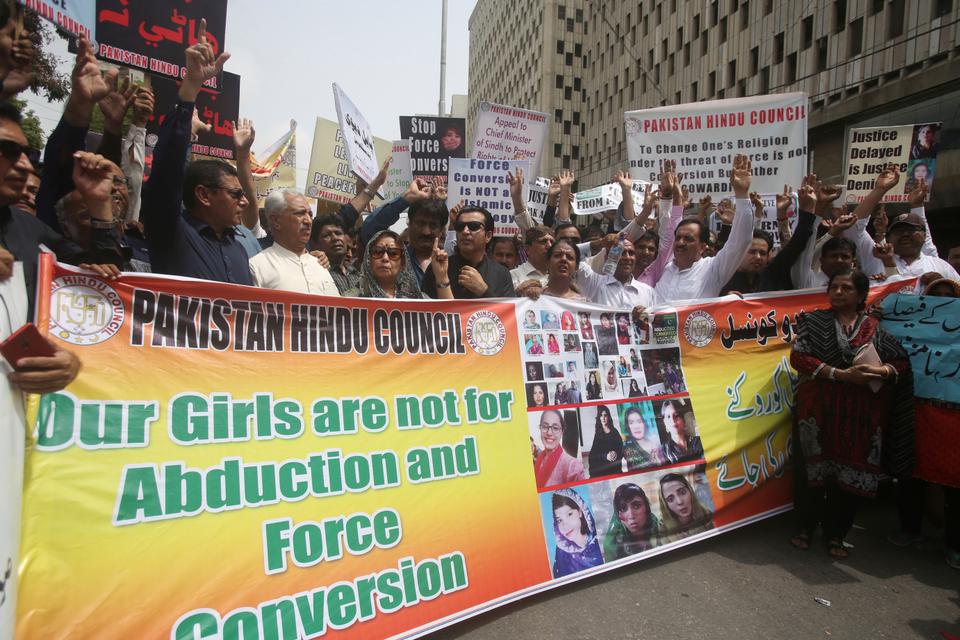
The Christians and Hindus in Pakistan regularly complain that young girls are forced to convert to Islam. (AP Archive)
In recent years, Islamabad has increased vigilance on NGOs which it fears might be working on a foreign agenda to promote dissent. What will particularly bother Pakistan’s policymakers is the report’s focus on how the country’s Blasphemy Law, meant to protect religious sentiments, continues to be misused against minorities.
“In reality, the law explicitly discriminates against Ahmadiyas since parts of it criminalise public expression of Ahmadiya beliefs and prohibit Ahmadiyas from calling themselves Muslims, praying in Muslim sites of worship and propagating their faith.” Just this week, a report by the United States Commission on International Rights Freedom pointed out that Pakistan accounts for nearly half of the incidents of mob violence against alleged blasphemers.
At times, people accused of blasphemy are killed in court in front of police and lawyers. Christians, another minority, are frequently targeted while authorities do little to protect them. For instance, a church constructed in the Toba Tek Singh district of Punjab province had to be sealed in 2016 after local Muslims agitated against it. This alienation doesn’t stop at the places of worship – young Chrsitan students are continuously harassed by their peers to convert to Islam, the report said.
Similarly, Sri Lanka witnessed rising levels of intolerance towards minorities in recent years, especially as successive governments tried to pacify extremist Buddhists to garner their votes. Muslims in Sri Lanka have felt a wave of discrimination and official apathy after the suicide attacks that killed more than 200 people last year. “After the Easter attacks, Muslims, particularly a large number of Muslim men, were arrested seemingly without reasonable cause.” Jingoistic government-aligned media has helped paint Muslims as the villain in Sri Lanka.
“The incitement of hatred and vitriol by media outlets continues unabated. For example, Muslim Covid-19 patients were identified by their faith, unlike other patients, and blamed by the media for spreading coronavirus.”
On Wednesday, 16 December 2020 Débora Leão and Suraj K. Sazawal published an opinion piece in IPS entitled: “USA Downgraded as Civil Liberties Deteriorate Across the Americas” (Débora Leão is a Civic Space Researcher at CIVICUS, the global civil society alliance. She has a Master of Public Policy degree. Prior to joining CIVICUS, Débora worked on advocacy and research related to civic participation, urban development and climate justice. Suraj K. Sazawal serves on the board to Defending Rights & Dissent and is co-author of ‘Civil Society Under Strain’, the first book to explore how the War on Terror impacted civil society and hurt humanitarian aid.
Protests in New York City against racism and police violence, following the death of George Floyd. Credit: UN Photo/Evan Schneider
Few images better illustrate the recent decline in civil liberties in the United States than that of peaceful protesters near the White House being violently dispersed so Donald Trump could stage a photo-op. Moments before the president emerged from his bunker on June 1 to hold a bible outside a boarded-up church, federal officers indiscriminately fired tear gas at people who had gathered in Lafayette Park to protest about the police killing of George Floyd. This was far from an isolated incident: nationwide protests against systemic racism and police brutality have been met with widespread police violence.
Since May, the CIVICUS Monitor, an online platform that tracks fundamental freedoms across 196 countries, documented dozens of incidents where law enforcement officers, dressed in riot gear and armed with military grade-equipment, responded to Black Lives Matter protests with excessive force. These include officers driving vehicles at crowds of protesters and firing tear gas canisters and other projectiles at unarmed people, leaving at least 20 people partially blinded.
Throughout the year, journalists and health workers, clearly marked as such while covering the protests, have been harassed and assaulted. In one incident caught on live TV, a news reporter and camera operator from Louisville, Kentucky were shot by police with pepper balls while covering protests over the police killing of Breona Taylor.
This sustained repression of protests and an increased crackdown on fundamental freedoms led to the USA’s civic space rating being downgraded from ‘narrowed’ to ‘obstructed’ in CIVICUS new report, People Power Under Attack 2020.
This disproportionate response by law enforcement officers to protesters goes beyond what is acceptable practice when policing protests, even during an emergency. Under international law, people have a right to assemble freely. Any restrictions to this right must be proportionate and necessary to address an emergency or reestablish public order.
While recent brutality against protests for racial justice is concerning, the decline in basic freedoms in the USA began before this crackdown. The repression seen in 2020 was preceded by a wave of legislation limiting people’s rights to protest.
In recent years, several states enacted restrictive laws which, for example, criminalise protests near so-called critical infrastructure like oil pipelines, or limit demonstrations on school and university campuses. Increased penalties for trespassing and property damage are designed to intimidate and punish climate justice activists and organisations that speak out against fossil fuels.
In the wake of Black Lives Matter protests, some of the ‘anti-protest’ bills introduced this year seem particularly cruel, for instance, by proposing to make people convicted of minor federal offences during protests ineligible for pandemic-related unemployment benefits.
Growing disregard for protest rights underscores wider intolerance for dissent. In parallel with restrictions on the freedom of peaceful assembly, the USA also saw an increase in attacks against the media, even before Black Lives Matter demonstrations erupted. Over the past three years, the CIVICUS Monitor has documented the frequent harassment of journalists by the authorities and civilians while covering political rallies or when conducting interviews.
Correspondents critical of the Trump administration or reporting on the humanitarian crisis in the USA/Mexico border region sometimes faced retaliation; documents obtained by ‘NBC 7 Investigates’ in 2019 showed the US government created a database of journalists who covered the migrant caravan and activists who were part of it, in some cases placing alerts on their passports.
In January 2020 a journalist was barred from accompanying Secretary of State Mike Pompeo in an official trip to Europe after Pompeo objected to the questions by another reporter from the same outlet.
The harsh treatment of people wanting to express themselves and the decline of civil liberties is part of a broader global decline in fundamental freedoms. Our new report shows less than four percent of the world’s population live in countries that respect the freedoms of association, peaceful assembly and expression.
Each country’s civic space is rated in one of five categories: ‘open, ‘narrowed, ‘obstructed,’ ‘restricted,’ or ‘closed’. The USA was one of 11 countries downgraded from its previous rating.
Another recent example may be that on 15 December 2020 five independent UN human rights experts expressed serious concern over the arrest and charges brought against an indigenous leader (Nicholas Tilsen, human rights defender of the Oglala-Lakȟóta Sioux Nation), for peacefully protesting a political rally held last July at Mount Rushmore National Memorial, located on treaty lands of the Great Sioux Nation.
Violations of protest rights were common across the region, with detention of protesters and excessive use of force among the top five violations of civic freedoms recorded this year. In addition, the Americas continue to be a dangerous place for those who dare to stand up for fundamental rights: across the world, 60 percent of human rights defenders killed in 2020 came from this region.
The authorities must engage with civil society and human rights defenders to create an environment where they are able to fulfil their vital roles and hold officials accountable.
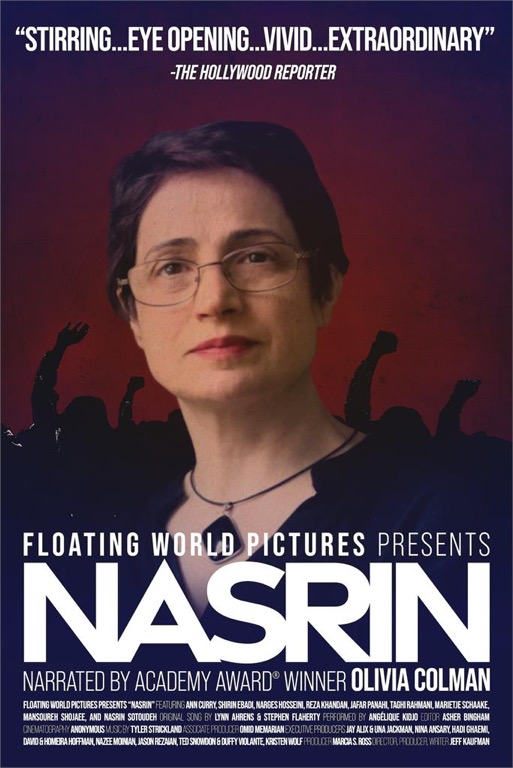
On 16 December 2020 Arab News carries an interview with Filmmaker Jeff Kaufman who tells of his admiration forNasrin Sotoudeh and the activists who shot his documentary in secret inside Iran over a two-year period, ending in June 2018.
It is one thing to criticize the brutality of the Iranian regime from outside of the country; it is quite another to do so from within, under constant surveillance by the nation’s secret police or even from the inside of a prison cell. Yet that is exactly what Nasrin Sotoudeh has been doing for most of her life. As a lawyer she fought for the rights of dissidents who dare to condemn the oppressive actions of Iran’s religious rulers. See e.g.: https://humanrightsdefenders.blog/tag/nasrin-sotoudeh/
Her poignant and inspirational story is told in a new feature-length documentary film that was secretly recorded inside Iran. “Nasrin,” which is narrated by Oscar-winning British actress Olivia Coleman, reveals how a woman who was one of her country’s leading lawyers, fighting to preserve freedom of speech and human rights, was torn from the arms of her husband and two children by Iran’s secret police and locked up.
“Nasrin Sotoudeh is one of the most remarkable human-rights activists on the planet,” said Emmy-nominated filmmaker Jeff Kaufman, the film’s producer, director and writer.
Kaufman explained that his film aims to show international audiences the reality of life as an Iranian in modern-day Iran. “(The film) profiles Nasrin and her work but we also really wanted to bring alive the rich culture of Iran and show that there is a difference between the leadership of that country and the people of that country,” he said.
“Rather than release Nasrin, they sent her to another prison where she contracted COVID herself and she (was sent) home on a temporary health leave, having both COVID-19 and a heart condition,” he added. “She was told that health leave would stay active for a while but last week she was abruptly sent back and is in prison now.”
“Nasrin” will be available to stream online from 18 December. Visit www.NasrinFilm.com for more details and to watch the trailer.




 Hans Thoolen on Human Rights Defenders and their awards