Archive for the 'Human Rights Defenders' Category

Call for independent investigation into Rwandan singer Kizito Mihigo’s death

February 16, 2021

On 17 February 2021, 10 human rights NGOs addressed an Open letter to all Commonwealth Heads of Government

Excellencies,

Re: Call for independent investigation into Rwandan singer Kizito Mihigo’s death 

On the one-year anniversary of the death of popular gospel singer and peace activist, Kizito Mihigo, civil society organizations around the world are calling on the Rwandan authorities to allow an independent, impartial, and effective investigation into his death in custody. As your governments prepare to attend the Commonwealth Heads of Government Meeting in Kigali in June, we are writing to ask you to engage with your counterparts in the Rwandan government in support of this call.

On February 14, 2020, the Rwanda Investigation Bureau (RIB) confirmed that Mihigo had been arrested close to the border, accused of attempting to illegally cross into Burundi, joining “terrorist” groups and of corruption, as well breaching the terms of his release from prison in 2018. Just days later, on February 17, 2020, Rwanda National Police announced that Mihigo had been found dead in his police cell in Kigali at 5 am that morning, in an alleged suicide. See: https://thedigestapp.trueheroesfilms.org/laureates/f8f64eb0-a9b5-40b2-a5f5-ccfb52168854/edit

However, there are reasons to doubt this version of events. In Rwanda, dissidents and critical voices are often the target of threats, judicial harassment, and arbitrary arrest. In recent years, several opposition members and journalists have gone missing or been found dead in suspicious circumstances. After he released a song in 2014 expressing compassion for victims of the genocide and of other violence, understood as a reference to the crimes committed by the ruling Rwandan Patriotic Front as it took control of the country in 1994, Mihigo was threatened, detained incommunicado, and imprisoned for several years. After his release in 2018, and up to the days before his death, Mihigo informed contacts that he was being threatened to give false testimony against political opponents of the government and wanted to flee the country because he feared for his safety. The news of Mihigo’s death caused shockwaves in Rwanda and beyond. Before falling out of favour with the government in 2014, Mihigo had played a prominent role in Rwandan public life including helping to compose the new national anthem in 2001 and regularly performing at official functions. A genocide survivor himself, Mihigo’s work to promote reconciliation received equally widespread recognition; in 2011, for example, First Lady Jeannette Kagame presented him with a Celebrating Young Rwandan Achievers award in honour of his work.

On the day that Mihigo’s death was announced, and before an independent investigation could have been conducted, RIB spokesperson Marie-Michelle Umuhoza told local media that Mihigo had “strangled himself” with his bedsheets, had displayed “unusual behavior” while in custody, and had refused to speak with investigators, his lawyer and his family. On February 26, citing an autopsy report, the National Public Prosecution Authority concluded that Mihigo’s death “resulted from suicide by hanging” and said that it would not pursue criminal charges…

Mihigo is one of several detainees to have died in suspicious circumstances while in detention in Rwanda over the last several years. Independent, impartial and effective investigations capable of leading to credible prosecutions are essential to deter future violations and to promote accountability, justice, and the rule of law, and failure to conduct such investigations is a violation of the state’s obligations under the right to life. 

To ensure justice for Mihigo’s death, Rwandan authorities should allow an independent body to carry out an impartial, thorough and transparent investigation.

In the Commonwealth Charter of 2013, member states reaffirmed their core values and principles, including upholding human rights, freedom of expression, the rule of law and the role of civil society. Holding the CHOGM summit in Rwanda without addressing the absence of progress by Rwandan authorities towards accountability for human rights concerns more generally, and Mihigo’s death in particular, casts serious doubts on the Commonwealth’s human rights commitments.

For the sake of human rights in Rwanda and the integrity of the Commonwealth, we urge you to support the call on the Rwandan authorities to allow an independent, impartial, and effective investigation into Mihigo’s death in custody.

https://drive.google.com/file/d/1zpA3pj8un5cRPt0VEKKJaNex9CjDPwyc/view

Prominent human rights defender Eren Keskin given six-year jail sentence in Turkey

February 16, 2021

I have been prosecuted many times and jailed for my thoughts. I’m still here. I’m not going anywhere’ – Eren Keskin tweeted after she was sentenced.

Amnesty International has condemned the sentencing of four Turkish human rights defenders on “terrorism-related” in a case involving Özgür Gündem – a daily newspaper that was closed down in 2016. Eren Keskin, a prominent human rights defender and lawyer in Turkey – was sentenced to six years in jail for supposed “membership of an armed terrorist organisation”. See: https://www.trueheroesfilms.org/thedigest/laureates/BFDBB222-0FE0-32BF-ADD6-4D342A315C22

Zana Kaya, the newspaper’s editor-in-chief was sentenced to one year and 13 months in prison for “making propaganda for a terrorist organisation.” Özgür Gündem’s former publisher, Kemal Sancılı and the newspaper’s managing editor İnan Kızılkaya have been sentenced to six years and three months in prison for “being a member of an armed terrorist organisation” – the same sentence as Eren Keskin’s.

All four remain at liberty pending their appeals. This case is latest where anti-terrorism laws used to criminalise legitimate and peaceful activity in Turkey. Milena Buyum, Turkey Campaigner at Amnesty International said: “Today a human rights lawyer who has spoken out against injustice for more than three decades, has become the victim of injustice herself.

Eren Keskin has dedicated her life to defending the rights of women, prisoners and fought for justice for the families of the disappeared. This verdict is yet another shocking example of anti-terrorism laws being used to criminalise legitimate, peaceful activities.See also: https://humanrightsdefenders.blog/2019/05/12/martin-ennals-award-finalist-eren-keskin-honoured-in-ankara/

https://www.amnesty.org.uk/press-releases/turkey-human-rights-lawyer-eren-keskin-given-six-year-jail-sentence-terrorism

Homes of 25 journalists and human rights defenders in Belarus searched

February 16, 2021

Belarusian opposition leader Svyatlana Tsikhanouskaya has condemned ongoing mass searches of homes of journalists and rights defenders across the country. At least 25 homes of journalists, rights activists, and their relatives in Minsk and other towns and cities were searched by police and security service officers on February 16. The offices of the Vyasna (Spring) human rights center in Minsk [see https://www.trueheroesfilms.org/thedigest/laureates/7b5ccf60-bf81-11ea-b6a7-3533a3c74ec1] and the headquarters of the Association of Belarusian Journalists were also searched.

Tsikhanouskaya issued a statement on Telegram, saying that those who are looking for “criminals” among journalists and rights defenders should look for criminals among themselves.

This is the real crisis. In its attempt to cling to power, the regime is repressing those who are defending human rights. As long as this continues, all Belarusians are in danger,” Tsikhanouskaya’s statement says, adding, “Belarusians know how to solve this crisis.

“With such measures [Belarusian President Alyaksandr] Lukashenka is gathering material for his own trial in an international court together with his associates. We have already forwarded information to the European Union and the United Nations Human Rights Council, asking them to undertake corresponding measures,” Tsikhanouskaya continued.

Tsikhanouskaya, who ran for president after her husband was jailed while trying to mount a candidacy of his own, left the country for Lithuania shortly after the election due to security concerns. See: https://www.trueheroesfilms.org/thedigest/laureates/b5785052-8efa-42e7-8508-d6de0a8c1b3d

Several protesters have been killed in the violence and some rights organizations say there is credible evidence of torture being used against some of those detained. see also: https://humanrightsdefenders.blog/2020/09/19/procedural-wrangling-by-dicatorships-does-not-stop-human-rights-council-adopting-resolution-in-belarus/

https://www.rferl.org/a/tsikhanouskaya-condemns-searches-journalists-rights-defenders/31105551.html

Afghanistan: 65 media workers and rights defenders killed since 2018

February 15, 2021

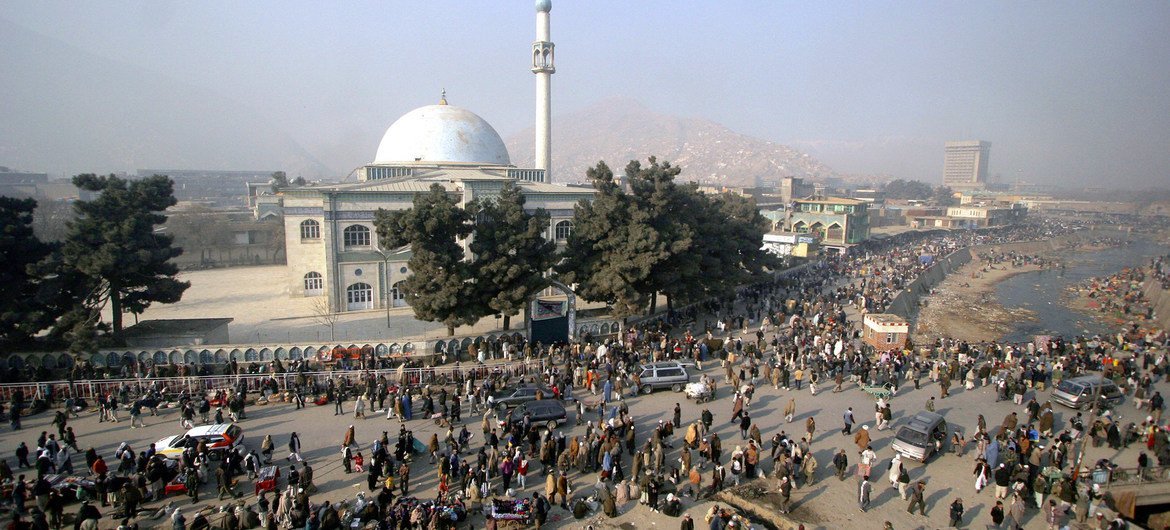
UNAMA/Freshta DuniaThe Pul-e-Kheshti Mosque in Kabul, Afghanistan. (file photo) 15 February 2021Human Rights

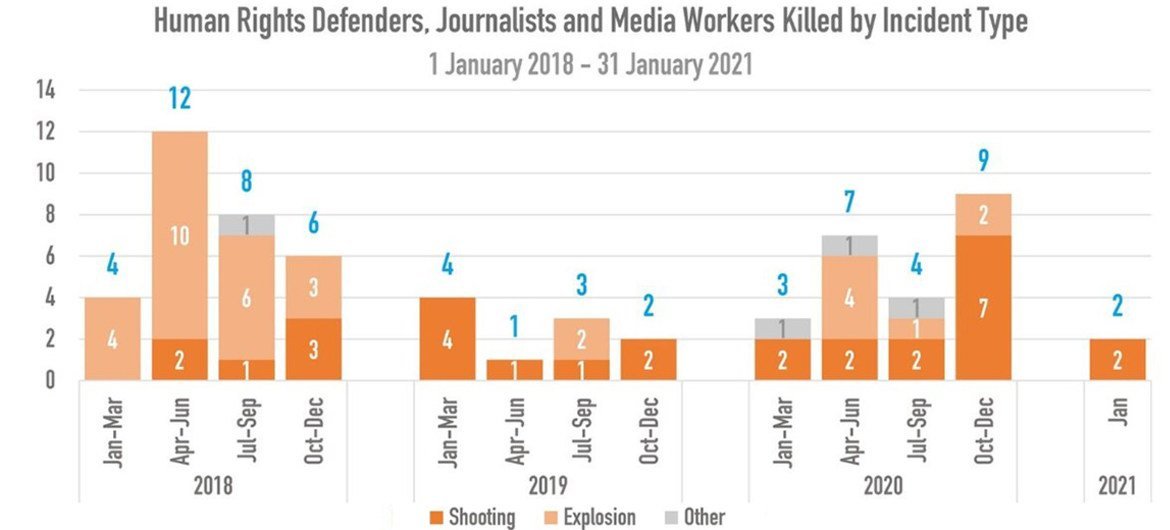
On 15 February 2021 the UN reported that 65 journalists, media professionals and human rights defenders were killed in Afghanistan between 1 January 2018 and 31 January 2021, with 11 losing their lives since the start of peace negotiations last September. 

This trend, combined with the absence of claims of responsibility, has generated a climate of fear among the population”, the UN Assistance Mission in Afghanistan (UNAMA) said in a news release, announcing the findings from its latest report

The violence, the Mission said, resulted in contraction of the human rights and media space, with many professionals exercising self-censorship in their work, quitting their jobs, and leaving their homes, communities – and even the country – in hope it will improve their safety.  See also: https://humanrightsdefenders.blog/2019/11/26/afghanistan-human-rights-defenders-targeted-but-fearless/. The Digest of Human Rights Laureates lists some 20 defenders: https://www.trueheroesfilms.org/thedigest

“The killings have had the broader impact across society of also diminishing expectations around efforts towards peace”, UNAMA added. 

The special report Killings of Human Rights Defender and Media Professionals also documented “changing patterns” of attacks.  The most recent wave, that of intentional, premeditated and deliberate targeting of individuals with perpetrators remaining anonymous contrasts to previous years, UNAMA said. In the past, such deaths were mainly as a result of proximity of individuals to attacks by organized armed groups, mainly the Islamic State in the Levant-Khorasan-Province (ISIL-KP), involving the use of improvised explosive devices (IEDs). See also: https://humanrightsdefenders.blog/2020/06/30/car-bomb-kills-two-human-rights-workers-in-afghanistan/

The report underscored the role of all actors in preventing such killings and intimidation, promoting accountability and preventing impunity. Investigations into killings must be independent, impartial, prompt, thorough, effective, credible and transparent, it urged, adding that the prosecution of suspected perpetrators should strictly follow due process and fair trial standards.   

Deborah Lyons, Special Representative of the Secretary-General for Afghanistan and the head of UNAMA, underscored the importance of media professionals and human rights activists. 

The voices of human rights defenders and the media are critical for any open and decent society. At a time when dialogue and an end to the conflict through talks and political settlement should be the focus, the voices from human rights and the media need to be heard more than ever before, instead they are being silenced”, she said. 

The Afghan people need and deserve a flourishing civic space – a society where people can think, write and voice their views openly, without fear”, Ms. Lyons added  UNAMA reportHuman rights defenders, journalists and media workers killed by incident type
Recommendations 

Among its recommendations, the report called on the Government to put in place an adequate preventive framework, including special protective and proactive security measures for rights defenders, journalists and media workers subject to threats or other types of intimidation.  

It urged the Taliban to adopt, publicize and enforce policies that prohibit the killings of human rights defenders, journalists and media workers, as well as to repeal existing and refrain from new policies that limit civic space. 

The report also called on the international community to continue to engage with rights defenders, journalists and media workers at risk and increase support to programs that provide security, travel, financial, capacity building and other assistance to them.

It also called on non-state actors to stop all killings of human rights defenders, journalists and media workers, in accordance with international human rights and humanitarian law. 

Killings of Human Rights Defender and Media Professionals

HRW blasts Colombia over human rights defenders’ murders

February 15, 2021
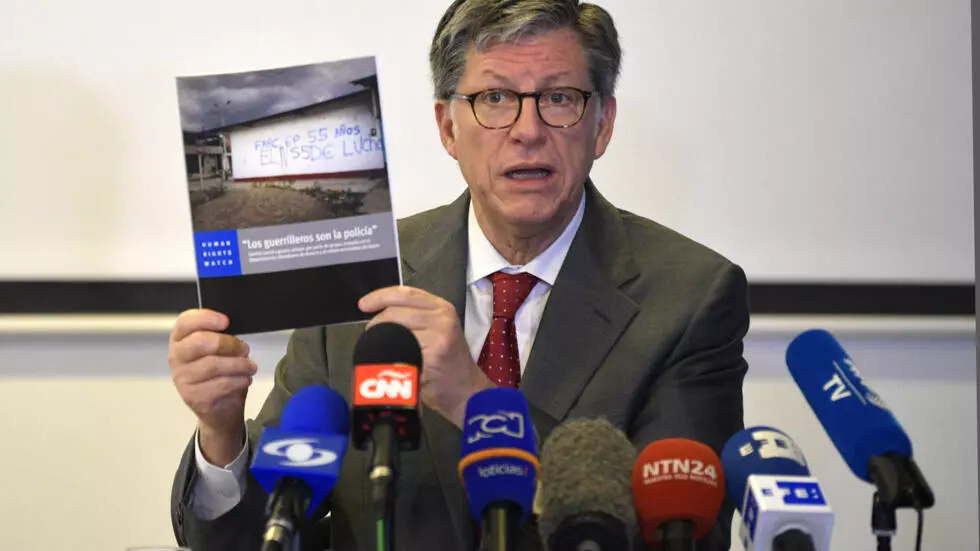
Jose Miguel Vivanco, HRW director for the Americas, accuses the Colombian government of failing to act on the murders of rights activists
Jose Miguel Vivanco, HRW director for the Americas, accuses the Colombian government of failing to act on the murders of rights activists Raul ARBOLEDA AFP

Human Rights Watch on Wednesday 10 Febuary 2021 hit out at Colombia’s government over the rising number of human rights defenders and activists being murdered in the South American country.

Since the 2016 peace accord that ended half a century of fighting between government forces and the Revolutionary Armed Forces of Colombia (FARC), an increasing number of civil society leaders have been killed each year. But “the government has acted slowly and weakly in the implementation of policies to prevent these murders,” HRW said in a statement.

Despite Colombia suffering the largest number of such murders on the continent, “the government’s response has been more focussed on making speeches and announcements than adopting measures that will have an impact in the territories” affected by the violence, said Jose Miguel Vivanco, HRW director for the Americas.

In 2016, 61 civil society leaders were killed, a number that increased to 84 in 2017, 115 in 2018, 108 in 2019 and 133 in 2020, according to UN figures, some of which have yet to be verified. See also: https://humanrightsdefenders.blog/2020/01/20/colombia-21-january-2020-civil-society-begins-a-much-needed-patriotic-march/

Behind the wave of violence targeting advocates are National Liberation Army Marxist rebels, dissident FARC guerrillas and right-wing paramilitaries, as well as armed drug-trafficking groups. They are fighting each other over access to lucrative cocaine and illegal mining markets.

HRW says most victims were murdered as reprisals for opposing drug-trafficking in their territories, allegedly collaborating with the army or supporting the replacement of illegal coca plantations with legal ones. The digest of Human Rights Laureates lists 50 HRDs in Colombia. See: https://www.trueheroesfilms.org/thedigest

https://www.france24.com/en/live-news/20210210-hrw-blasts-colombian-govt-over-rights-activists-murders

DR Congo should reopen inquiry into murder of Floribert Chebeya

February 12, 2021
A man wearing a T-shirt with portraits of Floribert Chebeya and Fidèle Bazana attends the trial in Kinshasa on April 30, 2013 of policemen accused of killing the two men in 2010.
A man wearing a T-shirt with portraits of Floribert Chebeya and Fidèle Bazana attends the trial in Kinshasa on April 30, 2013 of policemen accused of killing the two men in 2010. © 2013 Junior D. Kannah/AFP via Getty Images

On 11 February 2021 Human Rights Watch stated that The Democratic Republic of Congo government should reopen its investigation into the 2010 double murder of the leading human rights defender Floribert Chebeya and his driver, Fidèle Bazana, following new revelations about the case. Amid allegations reported by international media outlets that the murders were carried out on the orders of the police chief at that time, Gen. John Numbi, Human Rights Watch called for a credible, impartial, and independent inquiry.

On February 8, 2021, in radio interviews with Radio France Internationale (RFI) and Deutsche Welle, two Congolese police officers in exile admitted to taking part in the murders of Chebeya and Bazana on the premises of police headquarters on June 1, 2010 and provided a detailed account of the murder. At a meeting in April 2019, President Felix Tshisekedi personally told Chebeya’s wife and human rights groups that he was committed to conducting an impartial investigation into the murder.

President Tshisekedi should put his words about investigating the Chebeya murder into action,” said Thomas Fessy, senior Congo researcher at Human Rights Watch. “The latest revelations show the need for a new inquiry and present the best chance to see that justice is done.

On June 1, 2010, Chebeya received a telephone call asking him to attend a meeting at General Numbi’s office. The next day, the police said that Chebeya had been found dead in his car in the Mont Ngafula area of Kinshasa, the capital. The body of his driver, Bazana, is still missing.

Speaking to RFI and Deutsche Welle from an undisclosed location abroad, the former police drivers Hergil Ilunga and Alain Kayeye revealed details about the plan to kill Chebeya and how it was carried out. They alleged that police officers asphyxiated Chebeya and Bazana, one after the other, in different police vehicles at the police headquarters.

They admitted to taking part in the murders and covering them up on the orders of Col. Daniel Mukalay, then the police intelligence chief, and Christian Ngoy, then the commander of the feared Simba battalion. The two former drivers said that both senior officers were acting upon Numbi’s instructions.

Ilunga and Kayeye said they would be ready to face justice if their safety were guaranteed. They claimed to have fled Congo in late 2020 for fear of their lives as Numbi was allegedly looking to kill them.

Chebeya was among Congo’s most vocal human rights defenders, regularly exposing abuses by the country’s security services and successive governments over many years. He was threatened and intimidated repeatedly by Congolese authorities because of his work. He received the now defunct Reebok award: https://www.trueheroesfilms.org/thedigest/laureates/BA601D45-292F-61CB-530A-17FE52D5F974

Following a widely criticized trial by a military court – with a first verdict in June 2011 and an appeal decision in September 2015 – four police officers were found guilty of murdering Chebeya and Bazana. Ngoy, along with Paul Mwilambwe and Jacques Mugabo, were tried in absentia and sentenced to death. Mukalay, the highest-ranking officer on trial, was sentenced to 15 years in prison and is currently serving his sentence at Kinshasa’s central prison. The military court also found the Congolese government at fault and ordered it to pay damages to the families of both victims.

When the trial began in November 2010, Numbi, then police inspector general, was presented to the court as a witness even though he was widely suspected to be behind the murders. In 2014, one of the fugitives, Mwilambwe, resurfaced in Senegal, where he accused Numbi of orchestrating the murders. Senegalese authorities opened an investigation and Mwilambwe was indicted in January 2015. But the proceedings stalled, and the investigation is ongoing in Senegal. Mwilambwe, a presumed key witness, has since moved to Belgium and has also said he was ready to stand trial. [https://humanrightsdefenders.blog/2015/01/13/indictment-in-senegal-a-breakthrough-in-the-congolese-chebeya-bazana-case/]

On September 3, 2020, Ngoy was arrested in Lubumbashi and immediately transferred to Ndolo military prison in Kinshasa for possession of illegal weapons. Following his arrest, Congolese human rights organizations said that the authorities should reopen the Chebeya case.

Following these new revelations, over 100 Congolese human rights groups called for the immediate arrest of Gen. Numbi and the reopening of Chebeya’s case. Ambassadors in Congo from the EU, Belgium, and the US have also all publicly backed reopening the inquiry. The United Nations Joint Human Rights Office said it was “available to assist the judiciary in shedding light on the despicable murder of Chebeya and Bazana.”

“The Chebeya and Bazana families have yet to learn the full truth and obtain justice for the gruesome killings of their loved ones,” Fessy said. “With these new revelations, the Congolese government needs to act. The judiciary should provide safe conditions to hear those who have come forward while General Numbi and other senior officials implicated in the murders should be fully and fairly investigated.”

Note the latest: https://www.theafricareport.com/74437/drc-general-john-numbi-implicated-in-the-chebeya-case-has-fled-the-country/

https://www.hrw.org/news/2021/02/11/dr-congo-reopen-inquiry-prominent-activists-murder

Breaking news: Yu Wensheng, Chinese human rights lawyer, is Martin Ennals Laureate 2021!

February 11, 2021

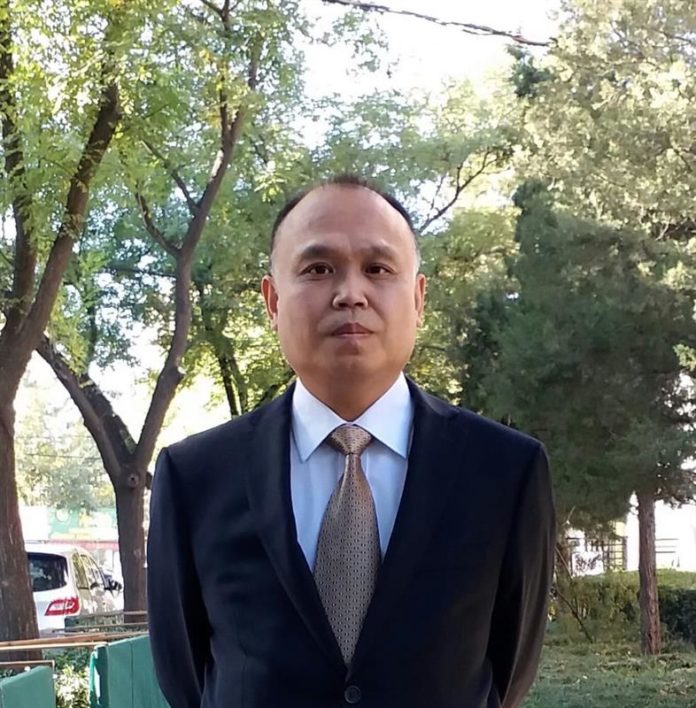
Yu Wensheng, a lawyer from China, was just announced as the laureate of the Martin Ennals Award for Human Rights Defenders 2021 during an on-line ceremony broadcast from Geneva. [https://humanrightsdefenders.blog/2021/02/11/reminder-in-a-few-hours-starts-the-martin-ennals-award-ceremony-2021/]

Yu was just another corporate lawyer in a fast-rising Chinese economy. But when he decided to take on human rights cases and ask for constitutional reform in his country, he drew the ire of one of the most powerful regimes in the world. Yu has been detained, harassed, and convicted in secret. While in custody, he has been tortured and denied medical care and family visits. His wife, Xu Yan, who Yu has not seen in person for 3 years, herself has become an icon. She has taken up the mantel of human rights defense and is currently studying law. Yu’s fight for due process has completely upended his life. [https://humanrightsdefenders.blog/2021/01/21/mea-nominee-yu-wensheng-in-poor-health-after-years-in-prison/]

Let us hope that China will behave a bit more moderately in response this time {see e.g. https://humanrightsdefenders.blog/2020/08/29/chinese-sensitivity-again-on-display-re-human-rights-awards/]

https://www.scmp.com/news/world/article/3121512/jailed-chinese-lawyer-yu-wensheng-wins-international-human-rights-award

Vitit Muntarbhorn proposed as new Special Rapporteur on the situation of human rights in Cambodia

February 11, 2021

A Thai scholar, Vitit Muntarbhorn, has been proposed for appointment as the new Special Rapporteur on the situation of human rights in Cambodia by president of the United Nations Human Rights Council Nazhat Shameem Khan.

Muntarbhorn was listed in the candidates proposed for the six vacancies of special procedure mandate holders scheduled to be filled at the 46th session of the Human Rights Council, according to a letter from Shameem Khan on Monday.

If the 46th session of the Human Rights Council approves, Muntarbhorn will be appointed as the UN Special Rapporteur on Human Rights Situation for Cambodia, replacing Rhona Smith, whose tenure ended in January.

Cambodian Human Rights Committee (CHRC) spokesman Chin Malin said Cambodia will welcome and work with whomever is selected as the Special Rapporteur.

Muntarbhorn was designated in September 2016 as the first UN independent expert on violence and discrimination based on sexual orientation and gender identity by the Human Rights Council. He is an international law professor..

He is currently a professor emeritus of law at the Chulalongkorn University in Bangkok, having taught international law, human rights, the law of regional organisations, migration and refugee law, child rights, international humanitarian law and European Union law. He was awarded the Unesco Human Rights Education Prize in 2004. [see: https://www.trueheroesfilms.org/thedigest/laureates/DB1D6BB8-85F5-7BBA-A715-5DA728579021]

Muntarbhorn has served on many United Nations bodies. He was formally the United Nations Special Rapporteur on the situation of human rights in South Korea. He has also been Special Rapporteur of the UN Commission on Human Rights on the sale of children, child prostitution and child pornography.

Reminder: in a few hours starts the Martin Ennals Award ceremony 2021

February 11, 2021

Nothing can stop us from celebrating human rights defenders!

On-line February 11, 2021 at 18h (UTC+1): Celebration of the 2021 Martin Ennals Award Finalists:

Soltan Achilova, Republic of Turkmenistan

Loujain AlHathloul, Kingdom of Saudi Arabia (who was just released from jail https://humanrightsdefenders.blog/2021/02/09/will-loujain-al-hathloul-be-released-on-thursday-11-february/]

Yu Wensheng, People’s Republic of China

See also: https://humanrightsdefenders.blog/2021/01/18/%e2%80%8b%e2%80%8bmartin-ennals-award-finalists-2021-announced/

With cartoons by Patrick Chappatte, music by Gaspard Sommer and choreography by the Ballet Junior of Genève. An evening hosted by the journalist Catherine Sommer – in French and English – and broadcast on https://www.martinennalsaward.org/


Mary Lawlor opinion: Time for action, the role of human rights defenders in crisis and in a just recovery

February 11, 2021

On 4 February 2021 the Business and Human Rights Resource Centre published an opinion piece by Mary Lawlor, the UN Special Rapporteur on Human rights Defenders:

Human rights defenders (HRDs) all over the world face continuous harassment, threats and intimidation, with some even getting killed in response to their work protecting and defending human rights. Since the start of the COVID-19 pandemic, attacks against HRDs have continued with many facing greater risks as some governments misuse the situation to further curtail civil rights, deny participation in public decision-making, and deploy state forces to repress legitimate, peaceful protests and obstruct access to justice.

Many of these attacks are related to business activities. In 2019, the United Nations High Commissioner for Human Rights (OHCHR) documented the killing of 357 HRDs, half of whom worked on land rights, protection of the environment, minority rights and indigenous people rights. These violations are often carried out in the context of extractive industries, energy production, agro-industrial development and other business activities. When human rights are under threat from business activities, HRDs stand up and put themselves at risk to protect these rights and their communities. For an overview of all such HRDs, see: https://www.trueheroesfilms.org/thedigest

A landmark example is that of HRD Mungunkhun Dulmaa in Mongolia. In 2017, the Mongolian Government entered into a mining agreement with Steppe Gold, a Canadian gold mining company. The local community complained about the environmental impact of the agreement, the associated gold mine, and allocation of land to step-mines – lands which had been used by the community for generations. In 2018, members of the affected community staged a protest and were attacked by private security guards, hired by the company. When Ms. Dulmaa tried to video-record the assault as evidence she was detained, beaten and sexually harassed, and the video was deleted from her phone. A year later, when she attempted to report the incident to local police, Ms. Dulmaa received death threats via text, warning her to stop her work. Here, the lack of engagement by companies with potentially affected communities is blatant. In 2020, my predecessor and the UN Working Group on business and human rights sent a communication regarding Ms. Dulmaa’s case to both the Mongolian Government and the company, but neither responded. This signals a real lack of accountability. If we really want to ‘build back better’ and achieve a just recovery, human rights and HRDs need to become a priority for both states and business.

Five steps companies should take to address risks to HRDs in the context of just recovery:

  1. Implement the UN Guiding Principles on Business and Human Rights (UNGPs) through adequate engagement with rightsholders. A recent report from Trinity College, Dublin on 50 large companies and 10 states showed that companies either don’t know or don’t care about the UNGPs. A key part of the implementation of UNGPs is engagement with potentially affected rightsholders and their representatives, including independent trade unions and other civil society organisations. So far, this is not happening: for example, in the Know the Chain benchmark, all companies scored zero on their efforts to support freedom of association. This must change if we want to ‘build back better’: from the earliest possible stage of each project and throughout their supply chains, companies need to engage with potentially affected communities, workers and HRDs representing and supporting them. This needs to include critical voices and companies must give due consideration to the possible objections of HRDs, even if these may render their work and projects more costly, less profitable or even less viable.
  2. Free, prior and informed consent (FPIC) from affected communities, especially indigenous ones, is non-negotiable. It is an essential part of the effective due diligence called for in the UNGPs and a platform to prevent conflict. HRDs, typically leaders in their communities, can help business develop the kind of precise, contextualised understanding of local situations they need if they intend to prevent and address the potential threats to human rights arising from their activities. In assessing risk, both companies and investors, and the social auditors they hire to help them do so, should give adequate weight to independent civil society and community-level information and evidence. This is fundamental when considering actions for just recovery.
  3. This engagement with HRDs and rightsholders must continue for the duration of any business project, because opinions can change over time. Therefore, companies need to constantly keep their door open to HRDs and their input.
  4. Companies should create public HRDs policies and processes. Business needs to commit to the recognition of communities, HRDs and trade unions as partners by systematically including them in human rights policies and due diligence. They need to commit to a zero-tolerance approach to violence in their supply chains, and enforceable agreements with unions, and consistently prevent, monitor and address risks HRDs face in them.
  5. Companies should also stand with HRDs when they are attacked and release public statements denouncing threats and attacks. Such steps should be taken in consultation with HRDs themselves to increase effective actions that prevent harm and most importantly build trust with HRDs and local communities.

It must be acknowledged some private businesses are already taking positive steps when it comes to protecting HRDs, but most of them do not. This is extremely disappointing and indicates a very strong need for mandatory human rights and environmental due diligence (HREDD). As the UN Special Rapporteur on the situation of HRDs, I strongly support the growing momentum worldwide for mandatory HREDD, and advocate for an early inclusion of rightsholders and HRDs in the legislative process. These laws need to ensure access to justice and the right to an effective remedy, include a business duty to conduct effective, meaningful and informed consultations, and introduce robust safeguards for HRDs and whistle-blowers. An uncritical return to business-as-usual in the post-pandemic period would only perpetuate the deep inequalities between companies, workers and local communities, whereas we have a precious opportunity to reimagine and rebuild an economy that serves and respects the rights of all its participants.

https://www.business-humanrights.org/en/