Archive for the 'Human Rights Defenders' Category

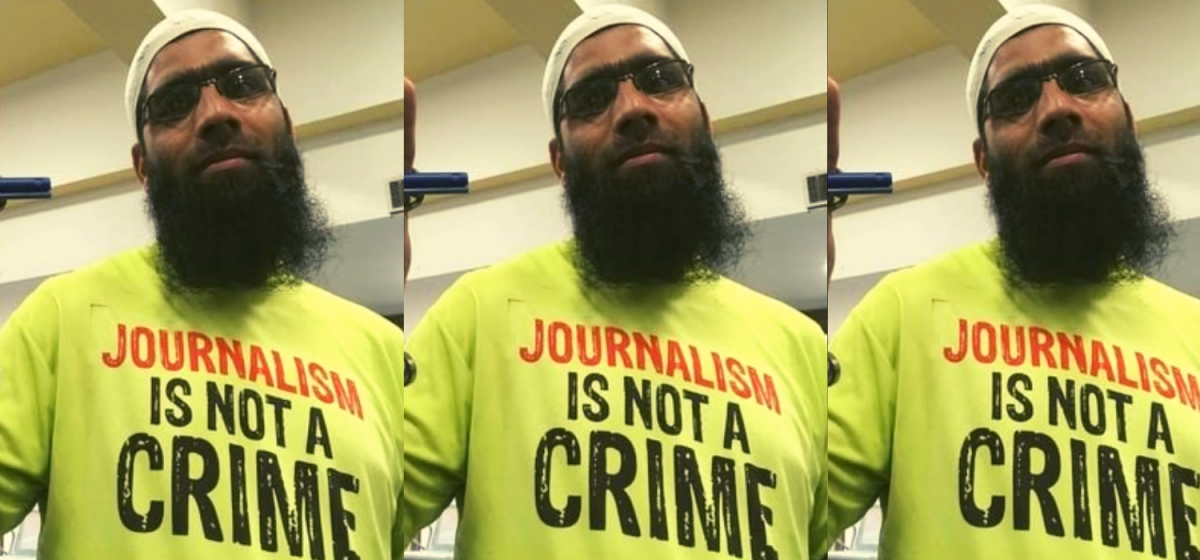
Profile in Persecution: Hasan Radhi AlBaqali

March 3, 2021

Americans for Democracy and Human Rights in Bahrain (ADHRB) posted on 18 the following profile on Hasan Radhi AlBaqali who was a 28-year-old security personnel at a private company when he was arrested by Omani authorities on 22 February 2016 at Muscat Airport Oman based on Bahrain’s allegations, via INTERPOL, that he was a fugitive from justice. During his detention, he was subjected to torture and to several human rights violations. Recently, his health condition has been deteriorating, and he has not been provided with adequate medical care. He is currently held in Jau Prison.

At the end of 2012, Hasan left Bahrain into exile. While being in exile between 2012 and 2016, he was convicted in absentia with: 1) Disturbing the peace, 2) rioting, 3) placement of objects resembling explosive devices, 4) arson, 5) possession and fabrication of combustible or explosive materials, 6) possession of arms, 7) travelling to Iran to receive military training, and 8) membership in a terrorist cell. Consequently, he was sentenced in absentia to nearly 100 years in prison. It is believed that Hasan’s conviction was due to his peaceful participation in the 2011 pro-democracy protests in Bahrain.

On 22 February 2016, airport security officers at Muscat Airport Oman arrested Hasan based on Bahrain’s allegations, via INTERPOL, that he was a fugitive from justice. Then, he was turned over to Bahraini security forces, who put him aboard one of their private planes, drugged him via several injections which knocked him unconscious, and flew him back to Bahrain. His personal belongings including phone, money, passport, and national ID card were taken from him en route and have not since been returned to him or his family. After arriving in Bahrain, Hasan was transferred to the Criminal Investigations Directorate (CID) building in Adliya.

From the date of arrest till the next day, 23 February, Hasan was subject to enforced disappearance until 10 p.m. of 23 February when he was able to call his family, telling them that he was in the CID building. The family received this call after multiple attempts to reach him through the Omani Embassy and through several human rights organizations.

Hasan was interrogated for 15 days between the CID and Building 15 of Jau Prison, where he was tortured by National Security Agency (NSA) officers and CID officers in order to give a false confession. He was beaten on his head, neck, and stomach, subjected to electric shocks to his testicles, placed naked in a cold room and submerged in cold water, deprived from sleep, and threatened with his life and wife. As a result, he confessed to the charges attributed to him. During this period, Hasan’s lawyer was unable to attend the interrogations, and Hasan was unable to meet his parents. Instead, he was able to only call them four times during this entire period, where the duration of each call was less than one minute.

Hasan was prevented from attending his trial, and he was brought to court once but was forced to remain in the police vehicle outside under the pretext that there were not enough police officers present to guard him inside the courtroom. Consequently, he was convicted in November 2016 of attempting to kill a policeman, although he was outside Bahrain when this incident happened. Therefore, he was sentenced to an additional 7 years in prison. Hasan appealed his sentence, and on 2 February 2017, the Appeals Court reduced his sentence from seven years to five years. On 15 May 2018, in an unfair mass trial that involved 138 individuals, the Bahraini Fourth High Criminal Court convicted Hasan of: 1) training to the use of firearms and explosive devices for terrorist purposes, (2) possession of firearms without a license and using them for purposes contrary to safety and public order for terrorist aims, and (3) the charge of joining a terrorist group, Zulfiqar Brigades, whose purpose violates the provisions of the constitution. Consequently, he was sentenced to another 7 years in prison, in addition to the revocation of his nationality.

In November 2016, following the issuance of the seven-year sentence against him, Hasan was subjected to a second and more severe round of torture. He was beaten on his head, stomach, and waist, and he was repeatedly electroshocked on his testicles. This torture led to a severe deterioration in Hasan’s health. He suffered from loss of focus due to frequent head injuries, severe injury to his testicles as he began to urinate blood, and chronic abdominal pain.

At that point, the Office of the Public Prosecutor (PPO) ordered that he be examined at Salmaniya hospital. The decision may have been motivated by the fact that Hasan’s sister filed complaints with both the Office of the Ombudsman and the Special Investigations Unit. An examination at the hospital on 19 November 2016 found that he had suffered “testicular trauma,” with edematic swelling of the left testicle and epididymis to more than one third larger than the normal size. He was removed from the hospital and returned to prison before he could complete a proper course of treatment, and the family has not been given full access to his hospital records. The PPO insists that the medical records should stay under their custody and that if the family wants any medical information they should seek it through the prosecutor’s office. Throughout this second round of interrogations, Hasan was also denied access to an attorney, was not allowed to receive visits from his family, and his phone calls to family were limited to a single minute.

Recently, Hasan’s health has been deteriorating since the injuries sustained from torture were not treated properly. He was seeing blood in his urine and feces as well as feeling severe pain in his stomach, kidneys, and bladder. In light of this, in the beginning of January, he was taken to an appointment in the Military Hospital and did the PCR test ahead of a surgery for varicose in his testicles which was scheduled for the third week of January 2021. However, instead of being returned to Building 14 and placed in isolation, he was taken to solitary confinement in the isolation building, Building 15 of Jau Prison. He was not informed of the steps to be followed ahead of the surgery, leaving him with no knowledge about his situation. Additionally, he was not given any medication to ease the pain he was feeling. Finally, within the closed cell, he could not know day from night and as such could not pray. These conditions took a psychological toll on Hasan since the pain, coupled with the isolation and lack of knowledge about his fate, brought him to the point of hysteria. Furthermore, he had been prohibited from contacting his family since his transfer, therefore making him forcibly disappeared. He was only able to call them on 16 January after going on a hunger strike in order to pressure authorities to grant him the right to call. In that call, he explained to them what occurred over the last two weeks and requested that they contact governmental bodies in order to alleviate his suffering. Although the family did contact the Ombudsman Office, because they are not routinely informed about his medical situation, they could not provide all the relevant information.

Hasan’s arrest, confiscation of his belongings, torture, unfair mass trial, denial of medical treatment, and enforced disappearance violate both the Bahraini Constitution as well as international obligations to which Bahrain is party, namely, the Convention against Torture and Other Cruel, Inhuman or Degrading Treatment or Punishment (CAT), the International Convention on Civil and Political Rights (ICCPR), and the International Covenant on Economic, Social and Cultural Rights (ICESCR). Since Hasan was arrested for political reasons and given that his conviction depended on forced false confessions, we can conclude that he is arbitrarily detained by Bahraini authorities.

Accordingly, Americans for Democracy & Human Rights in Bahrain (ADHRB) calls on Bahraini authorities to uphold their human rights obligations by investigating all allegations of torture, enforced disappearance, and denial of proper medical treatment to ensure accountability. ADHRB also demands that Hasan be provided with the required medical treatment for all the injuries and health problems resulting from torture within safe and healthy conditions. ADHRB reiterates its demand for Bahraini authorities to release Hasan immediately, along with all political prisoners that were tried based on confessions taken under torture.

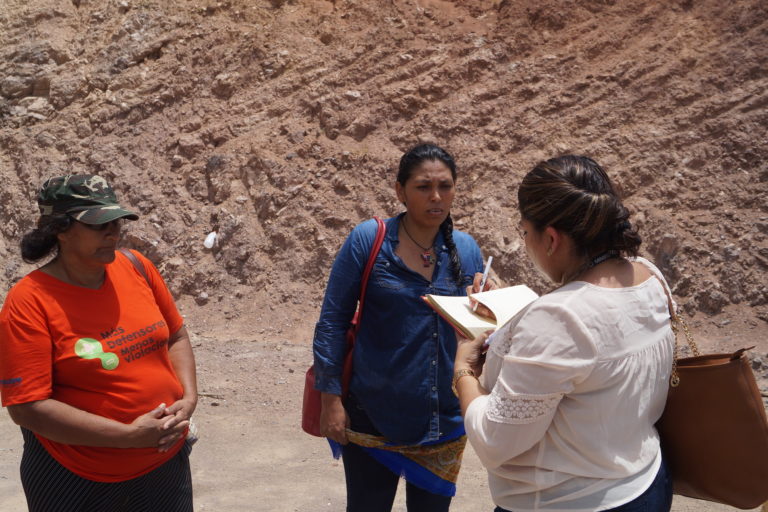
Colombia accounts for half the number of all environmental defenders murdered in 2020

March 3, 2021

On 2 March 2021 Mongabay writes about the terrible situation that of the 331 murders of environmental defenders registered worldwide in 2020, Colombia had the most murders at 177.

Impunity still reigns when it comes to the murders of human rights defenders around the world, according to the Front Line Defenders organization, in its global analysis of 2020. The analysis examined 331 homicides of leaders who fight for the defense of the land, the environment, Indigenous peoples, women and the LGBTIQ community. Of these, 177 cases occurred in Colombia.

During the COVID-19 pandemic, defenders have been exposed not only to the day-to-day risks they face from their work and the virus, but also to pressure from governments to control information. Not all of these HRDs are recognized, but the Digest counts some 50 laureates from Colombia [see https://www.trueheroesfilms.org/thedigest]

Many of those killed, the report states, supported communities in their fight against COVID-19 , worked on food security issues, access to medical care and were critical of governments. For Front Line Defenders , the health crisis increased risks, especially for women defenders, leaders of the LGBTIQ community and vulnerable populations such as refugees, migrants and sex workers.

Fidel Heras Cruz traded the tranquility of a simple, quiet life for the front line of the fight against economic powers that threaten the environment. Photo: Courtesy COPUDEVER.

For Shirley Muñoz, who coordinates information systems for the Somos Defensores de Colombia, the pandemic made the state abandonment more evident. Colombia accounts for 53% of all rights defenders cases globally in 2020.

“In many territories, the control of the pandemic was exercised by illegal armed groups through fear and threats, and defenders had to be locked up in their homes, which made them more at risk,” Muñoz said in an interview with Mongabay Latam. A large number of the murders that we verified were committed in or near the defenders’ homes.”

Front Line Defenders believes that cases may continue to increase as verifications of allegations are made, and that upcoming figures from Somos Defensores de Colombia will bring the final number of deaths in 2020 higher.

According to Front Line Defenders, 69% of the murders that occurred last year occurred against leaders who worked in defense of the land, the environment and the rights of Indigenous peoples.

Report authors point out that the Intergovernmental Platform for Biodiversity and Ecosystem Services (IPBES) has emphasized that the loss of biodiversity could put world food security at risk and Indigenous communities play a fundamental role in the conservation of ecosystems. Since 2017, Front Line Defenders has registered 327 murders of defenders of the rights of Indigenous peoples in the world.

They tried to kidnap Irma Lemus (center) on her journey into exile. Photo: Radio Progreso.

In Colombia, violence has been particularly directed against those who participate in the implementation of the Peace Agreement with the guerrillas of the Revolutionary Armed Forces of Colombia (Farc), those who are part of the initiatives to replace drug crops, and those who oppose natural resources extraction projects.

In addition to homicides, Front Line Defenders also recorded the most common types of human rights violations, which in the case of Latin America are physical attacks (27%), detentions and arrests (19%), harassment (13%), legal actions against leaders (13%), and smear campaigns (7%) .

The report notes that many defenders who were detained were also exposed to an increased risk of contracting COVID-19. Even though many countries allowed the release of prisoners due to the pandemic, according to the report, defenders were not among those released despite serving sentences for “non-violent crimes.”

In the case of Colombia, it is likely that the number of attacks on defenders reported in 2020 has dropped, but this does not mean – warns Muñoz – that the violence has. The reason is that during the pandemic it is presumed that there is a large under-registration since many organizations in charge of registering this type of human rights violations were not able to monitor the territories. So, Muñoz concludes, “there were attacks, but not all of them were recorded.”

Javier Francisco Parra was shot dead in the municipality of La Macarena, Meta, Colombia. Photo: Cormacarena.

Front Line Defenders stresses that direct human rights violations were compounded by restrictive legislation that was introduced in response to the pandemic. “Several other laws were passed designed to limit the ability of human rights defenders and civil society to function well and safely. […] Other governments, including Peru, Honduras, Mexico and Panama, allowed development, deforestation and mining projects to continue despite economic closures, ”the report indicates.

Human rights defenders not only have to protect themselves from physical attacks and murder, but also from digital attacks.

In 2020, a team of Front Line Defenders protection coordinators received 304 requests for support for the following reasons: 26% received threats via social media such as Facebook, Twitter and Instagram; 16% were hacked or had their social media accounts compromised; 11% reported telephone surveillance; another 11% reported physical monitoring and 9% said that devices with important information were confiscated or stolen from them.

More than a quarter of those most affected by this type of attack are human rights defenders (17%); rights of the land, the environment and Indigenous peoples (16%). Front Line Defenders claims it received dozens of reports of online gatherings – especially from LGBTIQ groups, feminists and black advocates – that were infiltrated by attackers taking advantage of security breaches

https://www.washingtonpost.com/opinions/2021/03/02/colombia-biden-violence-cauca-duque-peace-farc/

Mary Lawlor addresses Lawlessness in case of Berta Caceres and other HRDs

March 3, 2021

On 2 March 2021, Mary Lawlor – the UN’s Special Rapporteur on Human Rights Defenders – wrote for Amnesty International “Five years after Berta Cáceres was murdered, states are still failing to protect human rights defenders". With the presentation of Mary Lawlor's report to the UN Human Rights Council coming up this week, the piece is worth reading in full:

It’s five years today since environmental human rights defender Berta Cáceres was murdered in her home in Honduras. [see: https://www.trueheroesfilms.org/thedigest/laureates/2AD0CEE4-80CB-3234-04B4-F2ED7ACBE6C5]

She was one of hundreds of human rights defenders killed that year because of their peaceful work, and hundreds more defenders have been killed every year since. Those responsible are rarely brought to justice. Although some have been convicted of Berta Cáceres’ killing, others believed to have been involved have still not been brought to account. [see: https://humanrightsdefenders.blog/2020/06/10/nina-lakhanis-who-killed-berta-caceres-reviewed/]

It’s a familiar and continuing story, in Honduras and across the world, where those responsible for the murder of a human rights defender often enjoy impunity. This week I am presenting my latest report to the United National Human Rights Council in Geneva, and it is on the killings of human rights defenders and the threats that often precede them.

At least 281 human rights defenders were killed in 2019, with a similar number expected to be recorded for 2020. Unless radical, immediate action is taken we can expect hundreds more murders again this year.

Since 2015, at least 1,323 defenders have been killed. While Latin America is consistently the most affected region, and environmental human rights defenders like Berta Cáceres often the most targeted, it is a worldwide issue. At least 281 human rights defenders were killed in 2019, with a similar number expected to be recorded for 2020

Between 2015 to 2019, human rights defenders were killed in at least 64 countries, that’s a third of all U.N. member states. Those collecting the data agree that underreporting is a common problem. The number of defenders killed is likely significantly higher than the figures we have.

We know that on every continent, in cities and the countryside, in democracies and dictatorships, governments and other forces threatened and killed human rights defenders. Many, like Berta Cáceres, are killed in the context of large business projects.

Why do so many governments and others kill human rights defenders working peacefully for the rights of others? Partly because they can, safe in the knowledge that there is unlikely to be the political will to punish the perpetrators.

While some states, particularly those with high numbers of such killings, have established dedicated protection mechanisms to prevent and respond to risks and attacks against human rights defenders, defenders often complain that the mechanisms are under-resourced.

And in too many cases, businesses are also shirking their responsibilities to prevent attacks on defenders or are even responsible for the attacks.

These murders are not random acts of violence that come out of nowhere. Many of the killings are preceded by threats. As Amnesty International noted, Berta Cáceres’ murder “was a tragedy waiting to happen,” and she had “repeatedly denounced aggression and death threats against her. They had increased as she campaigned against the construction of a hydroelectric dam project called Agua Zarca and the impact it would have on the territory of the Lenca Indigenous people.”

And yet her government failed to protect her, as so many governments fail to protect their defenders. Since I took up this mandate in May last year I have spoken to hundreds of human rights defenders. Many have told me about their real fears of being murdered, and have shown me death threats made against them, often in public.

They tell me how some threats shouted in person, posted on social media, delivered in phone calls or text messages, or in written notes pushed under a door. Some are threatened by being included on published hit lists, receiving a message passed through an intermediary or having their houses graffitied. Others are sent pictures through the mail showing that they or their families have been under long-term surveillance, while others are told their family members will be killed. It’s not that complicated. It’s up to states to find the political will to prevent killings by responding better to threats against human rights defenders, and to hold murderers to account

I’ve been told by defenders about a coffin being delivered to the office of an NGO; a bullet being left on a dining room table in their home; edited pictures of them being posted on Twitter, showing them having been attacked with axes or knives; and an animal head being tied to the door of their organization’s office.

Those advocating for lesbian, gay, bisexual, transgender and intersex rights, and women and transgender human rights defenders, are often attacked with gendered threats, and targeted because of who they are as well as what they do. Women and LGBTI people demanding rights in a patriarchal, racist, or discriminatory contexts often suffer specific forms of attack, including sexual violence, smears and stigmatisation.

The murders of human rights defenders are not inevitable, many are signalled in advance, and yet governments fail, year after year, to provide enough resources to prevent them, and fail, year after year, to hold the murderers to account. In fact, states should not only end impunity but also publicly applaud the vital contribution that human rights make to societies.

This week I’ll again remind the U.N. that their members are failing in their moral and legal obligations to prevent the killings of human rights defenders. It’s no use for government officials to wring their hands and agree that the murder of Berta Cáceres and other defenders is a terrible problem and that someone should do something about it.

It’s not that complicated. It’s up to states to find the political will to prevent killings by responding better to threats against human rights defenders, and to hold murderers to account.

https://www.amnesty.org/en/latest/news/2021/03/asesinato-berta-caceres-estados-siguen-sin-proteger-defensores/

Call for nominations for the 2021 Lawyers for Lawyers Award

March 2, 2021

The Lawyers for Lawyers Award aims to honour lawyers who have made significant contributions to the protection of the rule of law and human rights in challenging environments. Through the bi-annual Award, Lawyers for Lawyers generates public recognition for the work and outstanding achievements of lawyers at risk. See for the award and its laureates: https://www.trueheroesfilms.org/thedigest/awards/B40861B3-0BE3-4CAF-A417-BC4F976E9CB0

Nominations must be submitted using the nomination form here. Please send the complete nomination form, including the required attached documents to info@lawyersforlawyers.nl or lawyersforlawyers@protonmail.com.

The closing date for submission of nominations is16 April 2021.

See also: https://humanrightsdefenders.blog/2014/04/24/lawyers-for-lawyers-raises-the-alarm-filipino-lawyers-at-risk/

Will ASEAN governments gather the courage to do something for Myanmar at their meeting today?

March 2, 2021

On 1 March 2021 Asian Forum for Human Rights and Development (FORUM-ASIA) and its members from Myanmar, namely Progressive Voice and Equality Myanmar, published a joint statement calling on the ASEAN Foreign Ministers Meeting (AFMM) of 2 March to take genuine and meaningful actions to call out the horrific acts of the Myanmar military and to explore a possibility to generate a regional response to address the situation,’ .

The ASEAN response to the crisis must align with UN Human Rights Council’s stance on rejecting the coup, de-escalating the military junta’s brutality, ensuring the safety of those who oppose the military as well as ensuring the fulfilment of their rights, and imposing targeted economic sanctions against military leaders, military-linked entities and cronies,’ said Shamini Darshni Kaliemuthu, FORUM-ASIA’s Executive Director.

Since the Myanmar military illegitimately seized power, the Assistance Association for Political Prisoners has documented at least 1,132 people to have been arbitrarily arrested, charged or sentenced. On 28 February alone, the military’s deliberate acts of extreme violence against peaceful protesters had killed 18 people and wounded at least 30…

On 19 February 2021, 69 civil society organisations across Southeast Asia issued ASEAN an open letter to demand a response to the situation in Myanmar. They called for ASEAN to urge the military junta to immediately and unconditionally release all those detained, refrain from using violence against protesters, and ensure the safety and security of people in Myanmar, including pro-democracy activist, human rights defenders, journalists and youth protesters.

ASEAN’s response must comply with the Myanmar’s peoples’ aspiration and the stance made by civil society in the region,’ said Aung Myo Min, Equality Myanmar’s Executive Director.

While the groups acknowledged efforts made by ASEAN on addressing the situation in Myanmar, through a statement from the ASEAN Chairman, individual Member States as well as the statements from four individual representatives from Indonesia, Malaysia, Singapore, and Thailand to the ASEAN Intergovernmental Commission on Human Rights (AICHR), uncertainty remains if the regional body’s actions will reflect the will of the people of Myanmar. It also remains to be seen if the responses from the UN Security Council and international mechanisms addressing the urgent situation in Myanmar are taken into account. Given the severity of the situation, the fact that five ASEAN Member States, namely Brunei Darussalam, Cambodia, Laos, Philippines, Vietnam,  are either unwilling to ‘interfere’ or demonstrate persistent silence under the pretext of respecting Myanmar’s ‘internal affairs’, is alarming…

The groups reiterate that the decreasing trust in ASEAN are attributed to its failure to meet this crucial moment, take action, and its persistent silence and weak position on addressing the prolonged crises in Myanmar, including the Rohingya crisis perpetrated by the same military regime that has unlawfully seized power.

‘Finding a solution that aligns with the will of the people of Myanmar and international mechanisms to meaningfully address the situation and recognise Myanmar people’s brave and unwavering sacrifices to restore democracy, rule of law and protection of their human rights and dignity are essential to regain the public’s  trust in ASEAN,’ said Nang Zun Moe, Progressive Voice’s Executive Director.

For a PDF version of this statement, please click here.

https://www.forum-asia.org/?p=33992

Christiane Amanpour, Jeff Kaufman and Jason Rezaian talk about the film Nasrin

March 2, 2021

Washington Post Live on 2 March 2021 published a fascinating insight into the making of the film Nasrin [see https://humanrightsdefenders.blog/2020/12/16/new-film-nasrin-about-the-iranian-human-rights-defender/]. Nasrin Sotoudeh is one of the most recognised human rights laureates in the Digest with 7 major awards: https://www.trueheroesfilms.org/thedigest/laureates/848465FE-22DF-4CAF-928F-7931B2D7A499

The transcript is verbatim and long, so you would have to follow the link at the bottom of the post to get the full story. Here just some excerpts:

MR. IGNATIUS: So, we have with us Christiane Amanpour, the international anchor for CNN; Jeff Kaufman, who is the producer and writer of this film; and my colleague, Jason Rezaian, who is our Tehran bureau chief.

MR. IGNATIUS: If I could ask Jeff to begin by telling us a little bit about Nasrin, her career as a human rights activist, how you came to make this documentary about her.AD

When we first reached out to Nasrin about doing a documentary about her life and work, there was a trust-building process through friends, and one of the things that she shared with us was a strong interest in having her story really be a story about so many others. We had known Nasrin’s work for years, and one of the things I loved about Nasrin is she is a Muslim woman who often reached out on behalf of other faiths and other backgrounds to support people in need. And I thought that that was such a powerful message for our own country as well. As a matter of fact, I think everything about Nasrin is a powerful message for democracy and mutual respect in this country and around the world.

So, when Nasrin said yes, we could do a film with her, she worked out sort of a complicated process. I couldn’t go to Iran because of past work I had done, and it wouldn’t have made sense to have a big American crew show up in Tehran anyway. So, we worked with these really remarkable, talented, and courageous individuals who followed Nasrin around from both working with at-risk clients, to protests, to art galleries, theaters, bookstores. It was a thrill for us to sort of be there with them, and we are so happy to be able to bring her story to you.

MR. IGNATIUS: Jeff, if I could ask, one of the most powerful things about this film is the footage from inside Iran. Did the people who were shooting this footage for you run personal risks? And I worry that some of them may have, themselves, been subject to arrest or difficulties with the authorities.

MR. KAUFMAN: No one has been subject to arrest or difficulties with authorities because of the film itself, but because they are also activists and believed that their work can push society forward, they have put themselves, on occasion, at risk for that.

We–Marcia and I, so often throughout the production of this film, would say to Nasrin and her husband, Reza, you know, we will stop at any moment if you feel this puts you or anyone else at risk. That was always our largest concern. And we did the whole film in secret, didn’t even fundraise in public, because we wanted to keep as much privacy for them as possible during the process. And even when we were editing, we said to Nasrin and Reza, “Hey, we will stop now if you think this is a concern.” But they felt–you know, Nasrin has this wonderful quote. She says, “Our children must not inherit silence.” And she will say over and over again, as do other human rights advocates, that repressive governments, they use pressure and force and intimidation to make people quiet, and Nasrin refuses to have her voice muffled. So, we are proud that the film can help amplify that voice.

I just want to add that I got a message from Nasrin’s husband this morning. I had asked if there was a message from Nasrin. And he said two things. He said that the cell she is in now, just so you know, is an 8-foot by 13-foot cell that has 12 beds in it, bunkbeds. And it is a low ceiling, there’s no windows, and very little access to clean water. So that is the conditions that she is living in right now.

MR. IGNATIUS: Let me ask Christiane. Christiane, I think you have interviewed Nasrin in the past and you have interviewed many other courageous men and women who have taken these risks to stand up for human rights. What it is that motivates a special person like Nasrin, in your experience?

MS. AMANPOUR: Well, you know, I’m shaking my head because I am just so horrified at what her husband, Reza, has described as her latest terrible conditions inside a political prison, where she is not a political person. And I think this is what also really, for me, has been emblematic of all the human rights defenders who I have interviewed around the world. I haven’t had the pleasure of interviewing Nasrin, but I have had the pleasure of interviewing Shirin Ebadi, who as you remember also was a human rights lawyer in Iran. She also cannot go back to Iran. She was the first Iranian to win the Nobel Prize, and I covered the stories that she, and the cases that got her that Nobel Prize. And I know the risk that comes with it, and I know that they are not strictly speaking party political.AD

And I think this is one thing that came across in Jeff and Marcia’s film, and we talked about it when we did the interview. She is not being political. She is not talking about tearing down the regime or wanting any kind of regime change. She is just talking about basic, fundamental rights for the people of Iran, mostly in her case women and children, but some young men as well, under their own constitution. It is not like she is going out saying and taking cases to court that she is trying to try under Western law or whatever. It is under their own constitution. And this is what makes everybody, and certainly me, so angry that this is what has happened to her, this incredible woman.

I think what makes them take those risks, David, is that they truly believe in human rights. They truly believe in the dignity of each and every individual, and–this is important–they truly believe and want to hold their own governments accountable to the promises that those governments made. As I said, Nasrin defends cases based on the Islamic law in Iran, of the Islamic Republic, based on the promises that that regime made to the people 40 years ago, when the revolution started. And you can see that they have completely reneged on those promises, and that is why people like her are so utterly important.

MR. IGNATIUS: Jason, you were imprisoned in the same prison where Nasrin is being held today. As Christiane said, the reports from her husband, Reza, her conditions are horrifying. You have been there. Maybe you could just describe for our audience a little bit of what that prison is like, what it feels like to be there, the feelings that go through the many, many dozens, hundreds of people who are being held there unjustly.

MR. REZAIAN: Well, thank you for the question, David, and for the opportunity, and thank you to all three of you for taking part in this, and for David and Christiane for supporting me and my family while I was locked up in Evin Prison, which is a big reason why this film has been so important for me to get involved with.

I think that the reality of the political prisoner system in Iran, Christiane makes a very important point. I wasn’t a political prisoner, either. I was just a reporter doing my job. But our arrests and our detentions are very much politicized events.AD

The intention of our jailers is to really break us, to make us hopeless, to disassociate ourselves from society, and in Nasrin’s case, they have failed miserably. I did have the opportunity to interview Nasrin once, in 2013. It was a couple of months after Hassan Rouhani was elected president, and there was the hope that there would be more moderate attitude from the leadership in Tehran.

And ahead of his first trip to the UNGA, they released Nasrin, and my wife and I, who was working for Bloomberg at the time, visited Reza and Nasrin and their children in their home, on that very first day that she was released. And although she was relieved and happy to be back with her family, she made it clear that she was not at all satisfied that she had been released, because so many of her colleagues and friends and other innocent people were being held in prison.

And I think for someone like her, I imagine one of the most frustrating things about her experience would be that she understands the laws that she is trying to uphold much better than the people who are implementing them and using them against her, and I think that for that reason she is an incredible example and hero to so many.AD

And I just think that, you know, I want everybody to understand that Iranian woman are the backbone of that country. There is no doubt about it. They really, really are. Unlike women in many parts of the Islamic world, the Iranian women have been very strong, very mobilized, very much part of society, as you can see. Nasrin and Shirin and the others don’t just emerge out of nowhere. It is a long, long tradition. And I think it is great that Jeff is showing this, and I think it’s great that the world needs to understand it. And if I might just say also, you know, the first female to win a field mathematics medal was an Iranian-American.

So, there is a huge amount of success by Iranian women around the world, and that is why I think it is really important to show what Iranian woman are trying to do for their own girls and women and for their rights in their own country, and what an incredible hard, hard job it is, and how much personal risk they take.

And I also want to pay tribute to the journalists, as Jeff said. At the beginning of the film, he said, “I pay tribute to all the camera people and the crews, who I cannot name.” He explained why. But it is really important to understand that this story is being told despite the massive crackdown, and I think that is fantastic….

MR. IGNATIUS: So, Jeff, I want to ask you about one of the really moving parts of this film, and that is the footage of Nasrin’s husband, Reza, who has stood by her unflinchingly, supporting her, believing in her. He seems like a remarkable person. The fact that you were in touch with him today is especially moving to me. Tell our audience a little bit about Reza, Nasrin’s husband, and why he has been such a supporter of his wife’s cause and commitment.

MR. KAUFMAN: I will. I am so glad you asked. One of the reasons we wanted to do this film, besides profiling Nasrin, was because we wanted to fight back on the demonization of Iran and the demonization of Islam, that is being used too often for political purposes in this country, and no one has a better way to do that than Nasrin and Reza.

I think this film is an example that we can overcome obstacles from great distances, and even technological imitations, but sometimes it’s difficult.

I asked Reza, Nasrin’s husband, if Nasrin had any message to share for this conversation, and I got a note from him this morning. These are Nasrin’s words through Reza. Nasrin said, “What occupies my thoughts the most is those who are on Death Row here in Gharchak Prison. Right now, there are 17 women on Death Row facing imminent execution.” And she closed by saying, “I am hoping for an end to the death penalty across the world.”

So, you know, there’s Nasrin facing enormous pressure and difficulties, but as usual she is not thinking about herself. She is thinking about others and she is trying to push her country forward.

Jason, let me ask you, as someone who was imprisoned unjustly, whose cause was taken up by your newspaper and by many, many thousands of Americans, what difference you think that public pressure from the United States, from world public opinion, made in your ultimately being released?

MR. REZAIAN: So, I think it made a huge amount of difference in my case. And oftentimes when we are talking about foreign nationals being held hostage in Iran, usually they are dual nationals, and, you know, Iran tries to suppress this information of our second nationality as much as possible. For me, it became clear, as my case was being brought up more and more, my treatment by my captors got better and better. And I realized, at some point during the process of going on trial in Iran’s Revolutionary Court, I don’t think I need to tell anybody that’s in the conversation with me but maybe some folks at home listening should know that if you ever find yourself on trial in a court with “revolutionary” in its name, you don’t have a good chance of winning.

But I realized that my real case was in the case of international public opinion, and the more people who kind of pushed for my release, the more involved the U.S. government got, and so much of that started, first and foremost, with my family, very early on with my imprisonment. My mom went on Christiane’s show and talked about my situation. And our colleagues at The Washington Post, who didn’t let a day go by without raising my case.

So now, you know, when I’m contacted by the families of people who are being held in prison in Iran, unfortunately there are five Americans being held at this very moment, and I’m in touch with every one of those families, I tell each one of them, make as much noise as you possibly can, and when your loved one gets out, they will thank you for it. And time and again, when people have been released, that I have written about, they contact me and say, “Thank you for making sure that I wasn’t forgotten about.” And my attitude is, what kind of hypocrite would I be if, after getting all the support that I got, that I didn’t pay it forward by helping people who have had their voices silenced?

MR. IGNATIUS: I hope we made a little noise today on Nasrin’s behalf. We are unfortunately out of time, but I want to close by thanking our guests, Christiane Amanpour from CNN, Jeff Kaufman, in particular, who made this extraordinary film, and my colleague, Jason Rezaian. You can watch “NASRIN,” this powerful, upsetting film, in the USA and Canada now on demand. International audiences can stream the film starting in a week, on March 8….

https://www.washingtonpost.com/washington-post-live/2021/03/01/transcript-nasrin-conversation-with-christiane-amanpour-jeff-kaufman-jason-rezaian/

A new tool to champion human rights defenders

March 2, 2021

Pip Cook published on 2 March 2021 a piece in Geneva Solutions which is hard to ignore for me in view of my own participation in it: the Digest: “A new tool to champion human rights defenders“. [see also:https://humanrightsdefenders.blog/2021/02/02/digest-of-laureates-ready-this-blog-changes-orientation/]

From left to right: Neri Colmenares, Abdul Aziz Muhamat, Juwairiya Mohideen, Nemonte Nenquimo and Intisar Al-Amyal. (True Heroes Films)

A new online tool has been launched to champion human rights defenders and bring greater recognition to their work. Launched this month by True Heroes Films, a Geneva-based media organisation which uses digital storytelling to raise the profile of human rights defenders around the world, the Digest of Human Rights Awards includes over 2,800 winners of 220 prestigious awards.

The Digest, while raising awareness about the work of human rights defenders, also  aims to serve as a useful tool for both the media and the human rights world to go beyond the often fleeting publicity that surrounds award ceremonies and ensure their work is not forgotten.

Hans Thoolen, co-founder of True Heroes and the Martin Ennals Award, told Geneva Solutions that the idea for the digest came out of a research project he undertook in 2013 into the value of human rights awards.

Awards help bring greater recognition to a cause, boosting an individual’s profile and granting them greater protection, be it through prize money or the support of NGOs. However, many awards remain relatively unheard of and receive very little publicity, which Thoolen said is “absolutely crucial” to their value.

Journalists are incorporated into the broad human rights movement. Without publicity, human rights defenders would be working mostly for nothing,” said Thoolen. “They need public attention for their cause and what they are trying to change. Without it, nobody would know what they are doing.

In fact, the Digest reveals journalists make up the largest professional group of award recipients, with more than 400 laureates from the media. The database also provides images of the laureates and biographies of their life and work, as well as details of the awards themselves.

Human rights awards generally try to achieve three main objectives,” explained Thoolen. “One is recognition at a psychological level, which should not be underestimated. Many human rights defenders are not very popular in their own society, sometimes not even within their own family, so when they get recognition that can be a very important boost to their mental health.

The value of awards also lies in “concrete support”, be it in the form of prize money or training opportunities, or the chance to connect with others working in the same field. They also provide protection for the laureates, which is another reason publicity is essential – to make it known that the world is watching. Although this publicity can bring with it some risks, Thoolen explains that his long career working in the human rights world has shown him that these are outweighed by the benefits.

The feedback we get from lawyers is always the same: the [human rights defenders] have already taken enormous risks by going public. They are not afraid, and clearly the publicity helps them.

Showcasing the work of thousands of people from all different backgrounds, championing everything from women’s rights to freedom of speech, Thoolen also hopes the Digest will serve as a “hall of fame” for role models to inspire the next generation of human rights defenders.

Most people get into human rights work when they’re hit by something, but usually it’s not by reading the Universal Declaration of Human Rights,” said Thoolen. “What inspires people is seeing and hearing a person: a human rights defender. They are the entry point into the much broader human rights movement.

The piece then gives some recent winners of prestigious human rights awards featured in the Digest:

Abdul Aziz Muhamat – Martin Ennals Award, 2019. 

Juwairiya Mohideen – The Front Line Defenders Award, 2020. 

Nemonte Nenquimo – Goldman Environment Award, 2020.

Mohammad Mosaed – International Press Freedom Awards and Deutsche Welle’s Freedom of Speech, 2020. . 

Rugiati Turay – Theodor Haecker Prize, 2020. 

Intisar Al-Amyal – Per Anger Prize, 2020. 

Clooney Foundation for Justice to observe trial of Kashmiri journalist Aasif Sultan

March 2, 2021

On 25 February, 2021 the Clooney Foundation for Justice announced it will monitor the trial of award-winning Kashmiri journalist Aasif Sultan who has been detained in Kashmir for over two and a half years and faces the death penalty if convicted. [See https://humanrightsdefenders.blog/2020/02/15/trialwatch-finds-its-feet-in-2019/.

Sultan is a journalist who wrote stories about human rights and political issues for the Kashmir Narrator. He has been imprisoned since his arrest in August 2018 and was only indicted 5 months later. He is now charged with supporting a terrorist group (the Hizbul Mujahideen) and conspiring to kill a police officer, and if convicted after trial, faces the death penalty. Press and human rights organizations believe the charges actually stem from Sultan’s coverage of a Kashmiri militant killed by Indian security forces, whose killing set off anti-government demonstrations in Kashmir in July 2016. The indictment cites Sultan’s social media posts and possession of letter pads of the Hizbul Mujahideen in his home as evidence of his involvement with the banned group. According to the Committee to Protect Journalists (CPJ), after CPJ called for Sultan’s release in The Washington Post, the Jammu and Kashmir police responded on Twitter that Sultan was not being held for his work but for “hatching a criminal conspiracy, harbouring and supporting terrorists who martyred a police constable.”

Sultan, who has received the John Aubuchon Press Freedom Award from the American National Press Club in 2019, featured in TIME magazine’s 10 ‘Most Urgent’ cases of threats to press freedom around the world last year.

Sultan’s trial is restarting after multiple delays by the State, including absences by key prosecution witnesses,and again afterthe2 019 revocation of Jammu and Kashmir’s semi-autonomous status. He is one of a number of journalists in Kashmir who appear to have been detained, investigated, and/or prosecuted in connection with their journalistic activities under Indian counterterrorism and related laws. Detained for over two and a half years in Kashmir Central Jail, where COVID cases have been mounting since the summer of 2020, Sultan’s next bail hearing is scheduled for February 26, 2021. The Clooney Foundation for Justice calls on the authorities to ensure that Sultan’s bail hearing is conducted in accordance with international human rights law and any proceedings against him respect his human rights, including his right to a fair trial and to freedom of expression.

https://thewire.in/media/clooney-foundation-to-monitor-trial-of-kashmiri-journalist-detained-for-over-2-years

Nominations for the Tipperary Peace Award 2021 are now welcome

March 1, 2021


Because of the situation with Covid it has not been possible to have any award presentation in 2020. With restrictions easing later this year it should be possible to have an award presentation sometime in 2021. Therefore, the Tipperary Peace Convention is now seeking nominations for the 2019/2020 Award. For more on this and other peace awards that are regularly given to human rights defenders see: https://www.trueheroesfilms.org/thedigest/awards/291021c0-8f0b-11e7-a9a3-e7b866ab493f.

https://humanrightsdefenders.blog/2020/01/13/malala-yousafzai-a-lot-more-awards-than-the-un-thinks/


Nominations can be submitted by E-Mail to: martinquinns@eircom.net or alternatively by post to the Hon. Secretary, Tipperary Peace Convention, 18 Father Matthew Street, Tipperary Town, Co. Tipperary. The aim of the Tipperary Peace Award is to recognise those who work tirelessly in countries around the world to end conflict and war, to facilitate reconciliation and peace making efforts, to provide humanitarian support and to campaign for justice and equality.


If you think that you know of someone who should be nominated then please do so today and include a brief resume to include the reason why you consider the person/s should receive the Award.

https://www.tipperarylive.ie/news/newsletter-tipperary/612362/nominations-sought-for-tipperary-international-peace-award.html

What can human rights defenders expect from diplomatic support? – the case of the UK

February 25, 2021

On Wednesday 24 February 2021 Megan Thornberry writes about a report by the University of York and others concluding that human rights defenders have been at increased risk during pandemic, and calls for UK government to provide better protection.

There is a dearth of serious and quantitative research into how human rights defenders experience diplomatic support and interest in their work. So, this report – published by Amnesty International UK and the Center for Applied Human Rights, in collaboration with the Law Society of England and Wales, Peace Brigades International UK, Bond and other NGOs – is most welcome.

Research by the University’s Centre for Applied Human Rights (CAHR) and Amnesty International UK shows that during the COVID-19 pandemic, 94 per cent of human rights defenders interviewed reported face threats, death threats, abuse, and harassment.

It is reported that only 6 per cent of these activists, including lawyers, journalists, women’s rights defenders, and LGBTQ+ activists, received support from the UK government.

Researchers interviewed 82 human rights defenders from seven countries about their experiences with UK government support:

  • 40% had contacted the UK government embassy as part of their work in the last two years, where as 70% had contacted other embassies
  • 75% could not recall a time in which their resident country’s UK embassy had spoken out in support of specific at-risk human rights defenders
  • 31% had been in contacted by their UK embassy seeking to further its knowledge about the struggles for human rights

The report highlights the increased threats to LGBTQ+ rights during the pandemic, as poor job security has driven many to return to unsafe and unaccepting hometowns in order to live with family. Particularly in countries such as Russia and the Philippines, this has placed LGBTQ+ activists at a higher risk of abuse. LGBTQ+ activists have also reported an increase in discrimination towards LGBTQ+ groups due to their being blamed for the pandemic.

Dr Piergiuseppe Parisi, a research associate at the Human Rights Defender Hub at CAHR and direct contributor to the report, said: “Human rights defenders are active agents of positive change. The UK should make sure that they are recognised as such, that they have the means to carry on with their crucial work and that they have access to rapid response protection mechanisms when they are in danger.”

Kate Allen, Director of Amnesty International UK, said: “The UK government has pledged to stand up for human rights defenders around the world. We now need to see words turned into action. The UK’s voice has power. It’s time to use it and to be a world leader.”

https://nouse.co.uk/2021/02/24/human-rights-defenders-have-been-silenced-during-the-pandemic-says-york-report