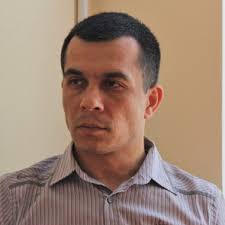
esponding to the news that Crimean lawyer Emil Kurbedinovwas detained by the de-facto authorities in Russian-occupied Crimea and is now facing charges for a Facebook post he made five years ago, Marie Struthers, Amnesty International’s Director for Eastern Europe and Central Asia said: “Following yesterday’s arrest of prominent human rights defender Lev Ponomarev in Moscow, the detention of Emil Kurbedinov is the second time in two days that a human rights defender has been thrown behind bars over a Facebook post….The similarities of these two cases are obvious, even if they are not directly related. Both men are prominent members of the human rights community and both have been deliberately targeted by Russian authorities for this very reason. See also:
Background: Emil Kurbedinov, a human rights defender and lawyer for a number of Crimean Tatar activists prosecuted by the Russian authorities, was detained on 6 December by Russian Interior Ministry officers on his way from home to his office in the Crimean capital Simferopol. He faces charges under the Russian law forbidding “propaganda or public demonstration of Nazi or other extremist attributes or symbols”, on account of his 2013 Facebook post on a Hizb ut-Tahrir event in Simferopol published a year before Russia occupied the peninsula. A number of groups and organizations which legally exist in Ukraine, including Hizb ut-Tahrir, are banned in Russia. On 5 December, a court in Moscow sentenced 77-year-old human rights activist Lev Ponomarev to 25 days in administrative detention for a Facebook post.
On Monday 26 November 2018 Ana Quiros, Maria Jesus Ara, Beatriz Huber and Ana Ara were called in to immigration. Quiros was then taken to the El Chipote interrogation prison and subsequently driven to the Costa Rica border. The Havana Times of 27 November carries a long piece on this. “Daniel Ortega and Rosario Murillo’s regime has just raised the level of their harassment against feminist movements, in a day of abuses that culminated on Monday with the expulsion from the country of feminist leader Ana Quiros” write Juan Carlos Bow.
Quiros is a Costa Rican and Nicaragua dual citizen who has lived in Nicaragua for more than 40 years – the entirety of her adult life. Along with Quiros, three European women living in the City of Matagalpa for decades, were also cited by immigration without any explanation to appear on Monday at their offices, where they were held for hours and then had their permanent residency revoked. The authorities refused to allow them to be accompanied by lawyers or human rights defenders.
The Ara sisters are Spanish and Huber is Swiss, all had current permanent residency status. Quiros was born in Costa Rica and is a Nicaraguan national since February 1997. All are part of the national feminist movement that has criticized the repression of the Ortega regime and its responsibility for the death of at least 325 Nicaraguans.
Last week the regime blocked activities of the feminist movement to commemorate the International Day for the Elimination of Violence against Women, which is held annually on November 25th.
Before presenting herself at Immigration, Quiros offered a press conference in which she stated that “the dictatorship must be clear that we are going to continue raising our voices, saying strongly that we want a free homeland in which to live.” “I chose to be Nicaraguan and I feel I have the right to demand that my rights be protected, to demand that in Nicaragua there be peace, justice and freedom, and to repudiate the abuses and arbitrariness that they have committed: the murders, the prison and the kidnapping of all those Nicaraguan brothers and sisters, who only want and are asking for a better Nicaragua, a Nicaragua where we all fit, where no one feels that they are above anyone else,” said Quiros.
This is the second time that a government tries to silence the critical voice of Quiros, who is a specialist in public health. In 2000, the administration of Arnoldo Alemán tried to strip Quiros of her Nicaraguan nationality, after she publicly pointed out the acts of corruption of the liberal party president.
Vilma Nunez, of the Cenidh, lamented the expulsion of Quiros noting that the Ortega government has exceeded its intolerance against everything that annoys and bothers it. “…Nuñez said that the citation of Quiros and the other three feminists “has no legal value because it did not state why they are being called in.” ….Nunez said that in order to revoke someone’s citizenship, a trial must first be held, which has not occurred in this case.
To celebrate the voices and actions of human rights defenders from Ireland and around the world, leading human rights organisations [Front Line Defenders, National LGBT Federation, the Irish Council for Civil Liberties, the National Women’s Council of Ireland, Fighting Words & LASC] have once again come together to bring a weekend with interactive workshops, panel discussions, artistic performances: Dublin Human Rights Festival 2018, 23-24 November 2018. If only more countries would be able to organize things at this scale! Read the rest of this entry »
Chinese authorities must immediately and unconditionally release citizen journalist and human rights defender Huang Qi, a group of 14 NGOs (and not the least, see below) said on November 5, 2018. Huang Qi (黄琦), the founder and director of 64 Tianwang Human Rights Center, is not receiving adequate medical care in detention and his health has seriously deteriorated, according to his lawyer who visited him on October 23. Huang’s condition is so serious that there is an immediate threat to his life. [see also: https://humanrightsdefenders.blog/2016/12/01/rsfs-press-freedom-prize-2016-goes-to-the-64-tianwang-website-in-china/]
The Chinese government must immediately and unconditionally release Huang, who has been detained solely for the peaceful exercise of his right to freedom of expression, and end its policy of denying prompt medical treatment to prisoners of conscience. Several human rights defenders and ethnic and religious minorities have died in detention in recent years due to a lack of prompt medical treatment, including Liu Xiaobo, Cao Shunli [see: https://humanrightsdefenders.blog/2015/03/27/china-or-the-un-must-ensure-independent-investigation-into-death-of-cao-shunli/], Yang Tongyan, and Tenzin Delek Rinpoche, intensifying fears that Huang Qi might suffer the same fate without urgent intervention.
Authorities have repeatedly rejected applications for release on medical bail despite Huang’s heath condition continuing to deteriorate. He faces charges of “illegally providing state secrets to foreign entities” and “leaking state secrets” due to his work with 64 Tianwang Human Rights Center, which documents and publishes reports on enforced disappearances, trafficking, human rights violations and complaints against government officials. Huang faces the possibility of life imprisonment. His 85-year-old mother has been campaigning for his release, fearing he may die in prison. Last month two of his associates received suspended prison sentences and were released, but authorities have continued to hold Huang. The UN Working Group on Arbitrary Detention issued an opinion in April 2018 that declared Huang’s detention arbitrary, but the Chinese government continues to ignore the Working Group’s recommendation that Huang be released and compensated.
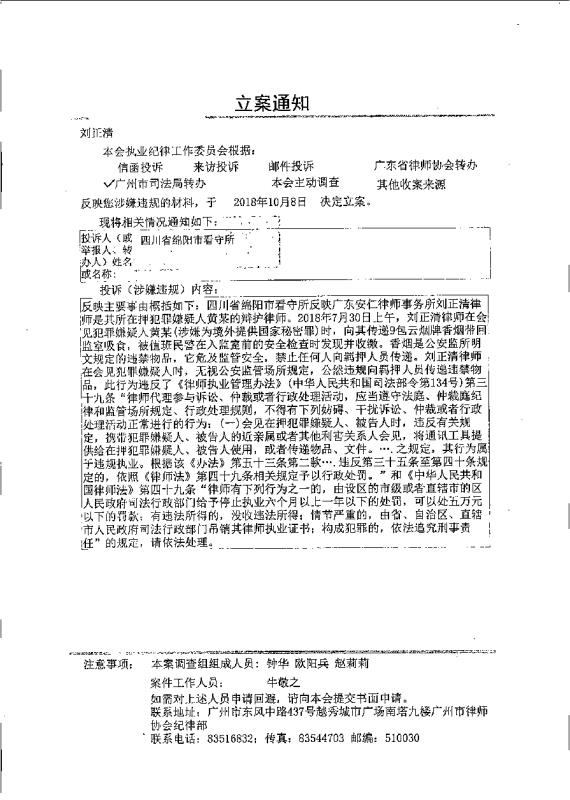
Lawyers representing Huang Qi have also faced retaliation. One of his lawyers, Sui Muqing, was disbarred in February 2018 for defending human rights defenders, such as Huang. [https://www.frontlinedefenders.org/en/case/human-rights-lawyer-sui-muqing-disbarred] Huang’s current lawyer, Liu Zhengqing, received a notice in October that he is under investigation for giving Huang cigarettes during a meeting in July. Liu faces suspension of his law license or a large fine.
On 3 October 2018 a number of NGOs published a Joint Statement on Ukraine deploying the many attacks against Human Rights Defenders:
More than 50 attacks on activists and human rights defenders in Ukraine have been recorded by local human rights organisations in just the last nine months, Amnesty International, Human Rights Watch, Freedom House and Front Line Defenders said today. Those under attack include people working to defend the rights of lesbian, gay, bisexual, and transgender (LGBT) people, protect the environment, and campaign against corruption.
The organisations criticised the lack of effective investigations into these incidents and of prosecutions of those responsible, which heightens the risk to human rights defenders and sends a message that the authorities tolerate such attacks and assaults. Recently, the prosecutor general suggested that civil society activists brought the attacks on themselves <https://www.pravda.com.ua/news/2018/09/27/7193378/>for criticising the authorities, giving an impression that human rights defenders can be openly targeted.
In most cases, the attacks have targeted individuals or groups that campaign against corruption in the local community, shine a light on the operation of local government and businesses, or defend people’s rights. The purpose of such attacks is clear: to silence activists and human rights defenders and to discourage others from speaking out against injustice and standing up for human rights.
Two recent examples of the kind of vicious attacks that have yet to be effectively investigated took place on 22 September, in Odessa and Kryvyi Rih. Oleh Mikhaylyk, an anti-corruption activist, was shot in Odessa, in southern Ukraine, and remains in the hospital. Mikhaylyk had campaigned with the Syla Lyudei (People’s Power) movement against illegal construction in Odessa. Three hundred kilometers away, in Kryvyi Rih, unidentified assailants broke into the home of Artem Moroka after he criticised the local police on Facebook. The assailants severely beat him, breaking his nose, Moroka told Ukrainian human rights monitors.
In June, an environmental activist, Mykola Bychko, was found dead under suspicious circumstances in a village in Kharkiv region. Villagers found Bychko hanged in the woods near the village of Eskhar on June 5. The local police initially started a suicide investigation, but have yet to investigate the possibility that he was killed in connection with his activism. At the time, Bychko was documenting the pollution of a local river, allegedly caused by a nearby waste treatment plant.A lawyer representing Bychko’s family questioned the conduct of the local police for ignoring the possibility that this was an intentional killing, and for allegedly intentionally delaying the investigation. The lawyer told Freedom House that police lost relevant evidence from the site where Bychko’s body was found, such as the rope from the improvised gallows. The authorities have also not pursued allegations that Bychko had received threats related to his documentation work, such as questioning people from the waste treatment plant.
On July 31, an unidentified assailant threw acid on Kateryna Handzyuk, a local council member who monitored police activities, in Kherson. ……….
The Ukrainian authorities should take effective steps to prevent further threats and attacks against activists and human rights defenders, and ensure prompt, thorough, impartial and independent investigations into such threats and attacks and bring those responsible to justice in fair trials.
The Interior Ministry, the National Police, the prosecutor general’s office, and other relevant institutions should explicitly recognise the important work of human rights defenders in protecting human rights and uncovering corruption. The authorities should publicly denounce any threats and attacks against human rights defenders. They should take decisive measures to ensure that government critics can work in a safe and enabling environment in which they can exercise the rights to freedom of expression, peaceful assembly and association, and conduct their activities without fear of reprisals.
The UN human rights experts did so in the context of terrorism charges – under the Unlawful Activities Prevention Act (UAPA) – laid against 10 human rights defendersworking with India’s poorest and most marginalised communities, including the Dalits, and urged authorities to ensure their cases are promptly heard in line with international law. All were arrested in June in connection with investigations into a public meeting organised a day before the 200th anniversary of the commemoration of a battle at Bhima-Koregaon, an important cultural event and a symbol of Dalit empowerment. Police subsequently claimed that the human rights defenders had links with ‘unlawful organisations’. “We are concerned that terrorism charges brought in connection with the commemoration of Bhima-Koregaon are being used to silence human rights defenders who promote and protect the rights of India’s Dalit, indigenous, and tribal communities,” the UN experts said. “We are very concerned about the charges against the human rights defenders and the continuing detention of nine of them,” the UN experts said. “All have been active in peacefully defending human rights, including those of marginalised and minority communities, political prisoners, and women, and their arrests appear to be directly related to their human rights work.
In June2018 Front Line Defenders listed as some of these:
Rona Wilson <https://www.frontlinedefenders.org/en/profile/rona-wilson>is a member of the Committee for the Release of Political Prisoners (CRPP), which has campaigned against the Unlawful Activities (Prevention) Act and other repressive laws.
On 5 July 2018, Front Line reported that human rights lawyer Advocate Sudha Bhardwaj released a statement refuting the false allegations and defamatory statements levelled against her by Arnab Goswami, news anchor and managing director of Republic TV. In a program that aired on 4 July 2018, Arnab Goswami alleged that the human rights defender was linked to Maoists. (https://www.frontlinedefenders.org/en/profile/sudha-bhardwaj). Sudha Bhardwaj firmly denied that the letter was written by her, and refuted the false allegations as defamatory and hurtful. She also expressed incredulity at the fact that the source of the letter had not been revealed, and that the letter had surfaced at the studio. She believes that the malicious and fabricated attack on her is a result of a press conference she had addressed in Delhi on 6 June 2018, condemning the arrest of Advocate Surendra Gadling. Front Line adds that This smear campaign comes as a part of an ongoing crackdown against human rights lawyers in India, especially those who work with Adivasi people and Dalits. Front Line Defenders condemns the smear campaign against human rights defender Sudha Bhardwaj, which it considers to be in retaliation to her legitimate and peaceful human rights work. Front Line Defenders expresses its concern for the security of Sudha Bhardwaj, particularly as the inflammatory allegations may motivate judicial harassment or other forms of retaliation.
Front Line Defenders is deeply saddened by the death of human rights defender Vitaly (Vito) Safarov, who passed away on 30 September 2018 in Tbilisi, Georgia.
Vitaly first got involved in human rights work in 2013 when he became a trainer in a multicultural camp for children in Georgia. He then worked for the Georgian NGO “Centre for Participation and Development” as a trainer of youth programs. For the past two years, Vitaly was a part of the Tbilisi Shelter Initiative that provides human rights defenders from across the region with a safe space, rest, medical aid and capacity-building programs. He accompanied defenders from different countries and backgrounds on a daily basis, helping them to adapt during their stay in Tbilisi and to benefit from the Shelter’s programs.
Svetlana Anokhina, journalist from Dagestan, who stayed at the Tbilisi shelter commented: “He took care of me during my three-month stay. When I arrived, I was told: here is Vitaly and he is your case manager. 20 minutes later, he became simply Vito to me. If someone asked what he meant to me and I could not explain, I responded: “Just imagine that you have a younger brother who you would call when you are having Internet connection problems; or if you need to go somewhere but you are too tired; or if you are in a hospital and don’t know who you should turn to; or if you are just feeling bad. Vitaly always responded in such a way to these problems that he would leave you feeling much better”.
Front Line Defenders’ Protection Coordinator and Board member of Tbilisi Shelter, Maria Chichtchenkova said: “At Front Line Defenders we were privileged to collaborate with Vitaly Safarov on many projects for human rights defenders at risk. He was especially involved in our work on digital security. He had a deep commitment to working with and for HRDs of all cultures, being himself of Jewish and Yazidi roots. He had a great sense of humour, which was sometimes quite dark, but he always showed incredible kindness and tenderness to people. One of our colleagues referred to him as “Vito, defender of defenders” and that’s exactly who he was.”
Vitaly Safarov will be missed and remembered by so many people.
One of the most admirable human rights defenders in the world, IranianNasrin Sotoudeh, has gone on hunger strike, Front Line Defenders reports on 25 August 2018. This time in protest against her judicial harassment and the continuing pressure which is being exerted on her family, relatives and friends. The defender was arrested in June and has been in the women’s ward of Evin Prison since.
On 25 August 2018, human rights defender Nasrin Sotoudeh began a hunger strike in protest against her judicial harassment and the continuing pressure which is being exerted on her family, relatives and friends. The next day, the Assistant Prosecutor and two other judicial authorities filed three new charges against her for “urging a referendum,” “assisting in the formation of house churches” and “organising protest rallies”. The human rights defender believes that these charges have been filed as a result of her failure to attend a court hearing on 15 August 2018, when she was sentenced to five years in prison in absentia for “propaganda against the state”, “assembly against national security” and “espionage”. The defender has lodged an appeal against these convictions. On 18 August 2018, at approximately 8 a.m., three agents of Iran’s Intelligence Ministry, holding a warrant from Branch 7 of the Revolutionary Court in Evin Prison, raided Nasrin Sotoudeh’s house while her children were asleep. The agents also raided the house of her sister-in-law. It is believed that the agents were searching for objects related to the defender’s human rights work, such as badges reading “I oppose the compulsory Hijab”.
“The defenders we’re honouring today work in some of the most dangerous areas of the world, sacrificing their own security to peacefully demand justice and human rights for their communities,” said Andrew Anderson, Executive Director of Front Line Defenders, as he announced the winners in Dublin.
—-
Nurcan Baysal, Turkey – Regional Winner for Europe & Central Asia & Global Laureate
Nurcan is a Kurdish journalist and human rights defender based in Diyarbakir. When the government launched a military offensive in the south-east in 2016, Nurcan spent months visiting Kurdish villages under bombardment, documenting human rights violations, and stopping to help families who’d lost everything in the conflict. Her writings are known for their critical focus on voice women living under the bombardment. When the authorities launched a military operation in Afrin, Nurcan took to social media to demand peace and condemn the violent assault. She was detained for speaking against the violence, and although later released she now faces up to 3 years in jail in a separate case related to her writing. Nurcan, according to authorities’ absurd claims, had “spread propaganda for armed terrorist organizations … and a call for provocative actions.” In addition to her reporting, Nurcan has also co-founded several NGOs, set up a camp to help Yazidi women fleeing the Islamic State, and been a key voice in countless reconciliation programs in the region. [see also: http://bianet.org/english/human-rights/197288-kurdish-journalist-baysal-wins-frontline-defenders-human-rights-prize]
Soni Sori, India – Regional Winner for Asia
Soni Sori is an indigenous and women’s rights defender in the militarised Bastar region of Chattisghar, India, where state-backed paramilitary forces are waging a violent campaign against local Adivasi tribes in the name of combating an armed Maoist insurgency. Soni documents and advocates against violence perpetrated by the paramilitary and police forces, which includes razing villages, burning homes, raping local women, and torturing and sexually assaulting tribes people detained without cause. Soni has also defended a number of educational centres from destruction by Maoist groups. In retaliation for her work, security forces detained and tortured Soni, pushing stones inside of her body and assaulting her for hours. Years later, men attacked her with acid and threatened to do the same to her daughter if she did not cease her advocacy on behalf of tribeswomen raped by the security forces. She has refused to stop her work, and continues to travel into the Maoist regions to speak with survivors of the ongoing conflict. [see also: https://feminisminindia.com/2018/05/18/soni-sori-wins-front-line-defenders-award/] and https://humanrightsdefenders.blog/2016/02/23/human-rights-defenders-in-india-democracy-is-not-enough/
Peaceful Resistance of the Micro-Region of Ixquisis, Guatemala – Regional Winner for the Americas
La Resistencia Pacífica de la Microregión de Ixquisis formed in response to grave rights violations committed in the name of economic advancement in Guatemala. The government has authorised destructive mining and hydroelectric mega-projects in the region despite the widespread opposite from the 59 villages and 7 communities in the municipality. HRDs in the Peaceful Resistance risk their lives to defend the territory. In 2016 alone, there were more than 75 reported attacks against HRDs in the Peaceful Resistance including killings, shootings, harassment, and defamation campaigns.
LUCHA, DRC – Regional Winner for Africa
LUCHA is a non-partisan youth movement formed in eastern Democratic Republic of Congo that struggles against chronic corruption and impunity in the DRC. Initially focused on
local issues like access to drinking water, electricity, and youth unemployment, in just 6 years the movement has developed into an extensive national-level network of powerful social organisers. Peaceful protests and demonstrations led by LUCHA are routinely attacked by authorities. In October 2017, 5 young protests were killed during a LUCHA-organised demonstration, and many of their members and leaders having been arrested and detained during peaceful assemblies. The Congolese national intelligence agency has detained several members, who have endured physical and psychological abuse in detention.
Hassan Bouras – Regional Winner for the Middle East & North Africa
Hassan Bouras is a journalist, blogger, leading member of the Algerian League of Human Rights, and founding member of the Rejection Front, a coalition against fracking to extract shale gas in Algeria. His reporting on both corruption and torture in Algeria spans more than two decades and because of this work he has been repeatedly targeted by Algerian authorities. He has continued his writing and advocacy despite years of judicial harassment, arbitrary detentions, violent raids on his home, and imprisonment.