Archive for the 'books' Category

New ProtectDefenders.eu study reveals urgent need for increased funding and support for human rights defenders

June 14, 2024

In the study The Landscape of Public International Funding for Human Rights Defenders, released on 12 June 2024, ProtectDefenders.eu sheds light on the critical challenges faced by human rights defenders (HRDs) worldwide, specifically focusing on their financing by public actors.

The research, which combines an analysis of financial data over a period of four years with interviews, investigations, and input from defenders, underscores the pressing need for greater financial support and resources to safeguard the invaluable work of human rights defenders in promoting and protecting human rights globally.

The ProtectDefenders.eu study reveals and documents a concerning trend: while the need for support for HRDs has never been greater, funding levels have stagnated, with only marginal increases observed over the examined period. Despite rhetoric emphasising the importance of prioritising human rights prioritisation, the actual allocation of resources has failed to keep pace with the deteriorating global situation, representing a mere 0.11% of total Official Development Assistance (ODA) annually.

Key findings from the study include:

  • Disparity in funding: While some donors have demonstrated a strong commitment to supporting HRDs, others have allocated minimal resources, with wide variations observed among donor contributions. This disparity is also evident among different groups of defenders and thematic areas, as well as in funding dynamics by region, with a concerning decrease in attention to the MENA region
  • Challenges in accessing funds: HRDs continue to face obstacles in accessing international funds, including restrictive funding requirements and bureaucratic hurdles
  • Need for core funding: There is a critical need for core, flexible, and sustainable funding to enable HRDs to effectively carry out their vital work
  • Lack in localisation efforts: The study emphasises the importance of localising HRD protection programs and ensuring that funding reaches grassroots organisations and movements.

This research underscores the urgent need for action to better support human rights defenders and is a call to action for donors, policymakers, and stakeholders to stand in solidarity with human rights defenders,” said Gerald Staberock, Chair of the Board of ProtectDefenders.eu and Secretary-General of the World Organisation against Torture. “HRDs play a vital role in advancing human rights and democracy worldwide, yet they continue to face increasing risks and challenges. It is imperative that donors and stakeholders heed the recommendations outlined in this study to ensure that HRDs receive the support they need to carry out their crucial work.”

In response to these findings, the study presents a series of detailed recommendations aimed at addressing the funding gap and improving support for HRDs. These recommendations include increasing overall funding levels, reducing restrictions on grants, enhancing political and diplomatic support, and investing in donors’ own capacities to better understand the needs and contexts of HRDs.

ProtectDefenders.eu issues a clear call to all donors and public actors to urgently address this situation. Specifically, the demands include:

  1. Increase in public funding: Advocating for an increase in public funding for HRDs from 0.11% to 0.5% for the period 2025-2028.
  2. Building trust through core grants: Urging for more core grants with reduced restrictions, audits, lower result expectations, and extended support horizons.
  3. Directing more grants locally: Advocating for a higher proportion of grants to be allocated to local NGOs to ensure funding reaches grassroots organizations and movements.
  4. Establishment of HRD principles for regranting: Calling upon the community of donors and financiers of HRD work to establish HRD Principles for Regranting, outlining guidelines for more effective and equitable distribution of funds.

The full report, along with its recommendations, can be accessed here.

https://protectdefenders.eu/projects/research-institutional-funding-human-rights-defenders/

https://www.omct.org/en/resources/news-releases/new-protectdefenders-eu-study-reveals-urgent-need-for-increased-funding-and-support-for-human-rights-defenders

Q&A: Transnational Repression

June 14, 2024

On 12 June 2024, Human Rights Watch published a useful, short “questions-and-answers” document which outlines key questions on the global trend of transnational repression. 

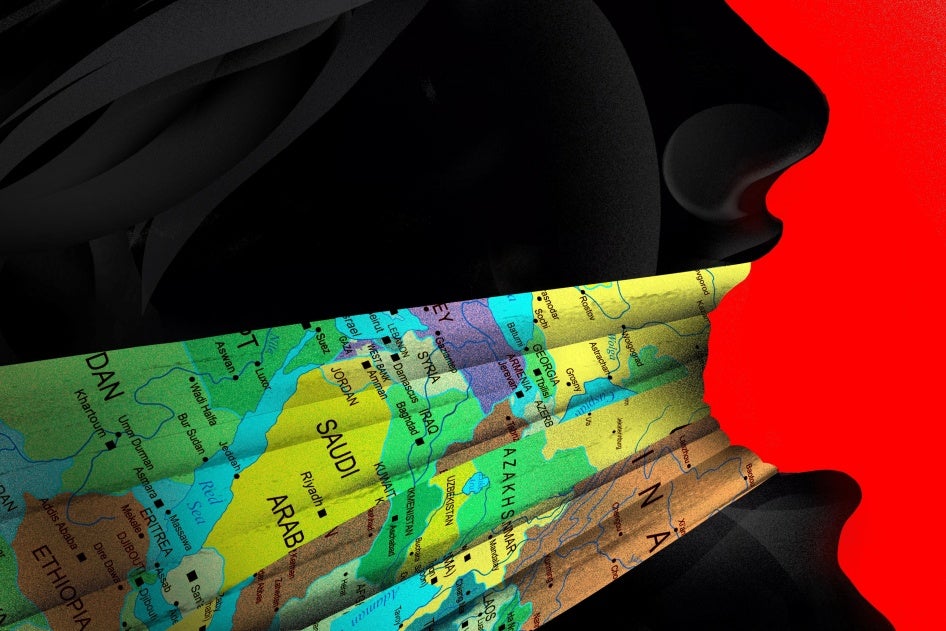
Illustration of a map being used to bind someone's mouth
© 2024 Brian Stauffer for Human Rights Watch
  1. What is transnational repression?
  2. What tactics are used?
  3. Is transnational repression a new phenomenon?  
  4. Where is transnational repression happening? 
  5. Do only “repressive” states commit transnational repression?
  6. Are steps being taken to recognize and address transnational repression? 
  7. What should be done? 

What is transnational repression?

The term “transnational repression” is increasingly used to refer to state actors reaching beyond their borders to suppress or stifle dissent by targeting human rights defenders, journalists, government critics and opposition activists, academics and others, in violation of their human rights. Particularly vulnerable are nationals or former nationals, members of diaspora communities and those living in exile. Many are asylum seekers or refugees in their place of exile, while others may be at risk of extradition or forced return. Back home, a person’s family members and friends may also be targeted, by way of retribution and with the aim of silencing a relative in exile or forcing their return.

Transnational repression can have far-reaching consequences, including a chilling effect on the rights to freedom of expression and association. While there is no formal legal definition, the framing of transnational repression, which encompasses a wide range of rights abuses, allows us to better understand it and propose victim-centered responses.

What tactics are used?

Documented tactics of transnational repression include killings, abductions, enforced disappearances, unlawful removals, online harassment, the use of digital surveillance including spyware, targeting of relatives, and the abuse of consular services.  Interpol’s Red Notice system has also been used as a tool of transnational repression, to facilitate unlawful extraditions. Interpol has made advances in improving its vetting systems, yet governments continue to abuse the Red Notice system by publishing unlawful notices seeking citizens who have fled abroad on spurious charges. This leaves targets vulnerable to arrest and return to their country of origin to be mistreated, even after they have fled to seek safety abroad.

Is transnational repression a new phenomenon?

No, the practice of governments violating human rights beyond their borders is not new. Civil society organizations have been documenting such abuses for decades. What is new, however, is the growing recognition of transnational repression as more than a collection of grave incidents, but also as an increasing phenomenon of global concern, requiring global responses. What is also new is the increasing access to and use of sophisticated technology to harass, threaten, surveil and track people no matter where they are. This makes the reach of transnational repression even more pervasive. 

Where is transnational repression happening? 

Transnational repression is a global phenomenon. Cases have been documented in countries and regions around the world. The use of technology such as spyware increases the reach of transnational repression, essentially turning an infected device, such as a mobile phone, into a portable surveillance tool, allowing targeted individuals to be spied on and tracked around the world. 

Do only “repressive” states commit transnational repression?

While many authoritarian states resort to repressive tactics beyond their own borders, any government that seeks to silence dissent by targeting critics abroad is committing transnational repression. Democratic governments have also contributed to cases of transnational repression, for example through the provision of spyware, collaborating with repressive governments to deny visas or facilitate returns, or relying upon flawed Interpol Red Notices that expose targeted individuals to risk.

Are steps being taken to recognize and address transnational repression? 

Increasingly, human rights organizations, UN experts and states are documenting and taking steps to address transnational repression.

For example, Freedom House has published several reports on transnational repression and maintains an online resource documenting incidents globally. Human Rights Watch has published reports, including one outlining cases of transnational repression globally and another focusing on Southeast Asia. Amnesty International has published a report on transnational repression in Europe. Many other nongovernmental organizations are increasingly producing research and reports on the issue. In her report on journalists in exile, the UN Special Rapporteur on freedom of expression dedicated a chapter to transnational repression. The UN High Commissioner for Human Rights used the term in a June 2024 statement.

Certain governments are increasingly aware of the harms posed by transnational repression. Some are passing legislation to address the problem, while others are signing joint statements or raising transnational repression in international forums. However, government responses are often piecemeal, and a more cohesive and coordinated approach is needed. 

What should be done? 

Governments should speak out and condemn all cases of transnational repression, including by their friends and allies. They should take tangible steps to address transnational repression, including by adopting rights-respecting legal frameworks and policies to address it. Governments should put victims at the forefront of their response to these forms of repression. They should be particularly mindful of the risks and fears experienced by refugee and asylum communities. They should investigate and appropriately prosecute those responsible. Interpol should continue to improve vetting process by subjecting governments with a poor human rights record to more scrutiny when they submit Red Notices. Interpol should be transparent on which governments are continually abusing the Red Notice system, and limit their access to the database.  

At the international level, more can be done to integrate transnational repression within existing human rights reporting, and to mandate dedicated reporting on cases of transnational repression, trends, and steps needed to address it.

see also: https://humanrightsdefenders.blog/2024/03/19/transnational-repression-human-rights-watch-and-other-reports/

https://www.hrw.org/news/2024/06/12/qa-transnational-repression

NHRF Annual Report for 2023

June 4, 2024

In the NHRF Annual Report for 2023, you will find comprehensive information on the NHRF’s activities and the remarkable work carried out by its grantee partners throughout the year.

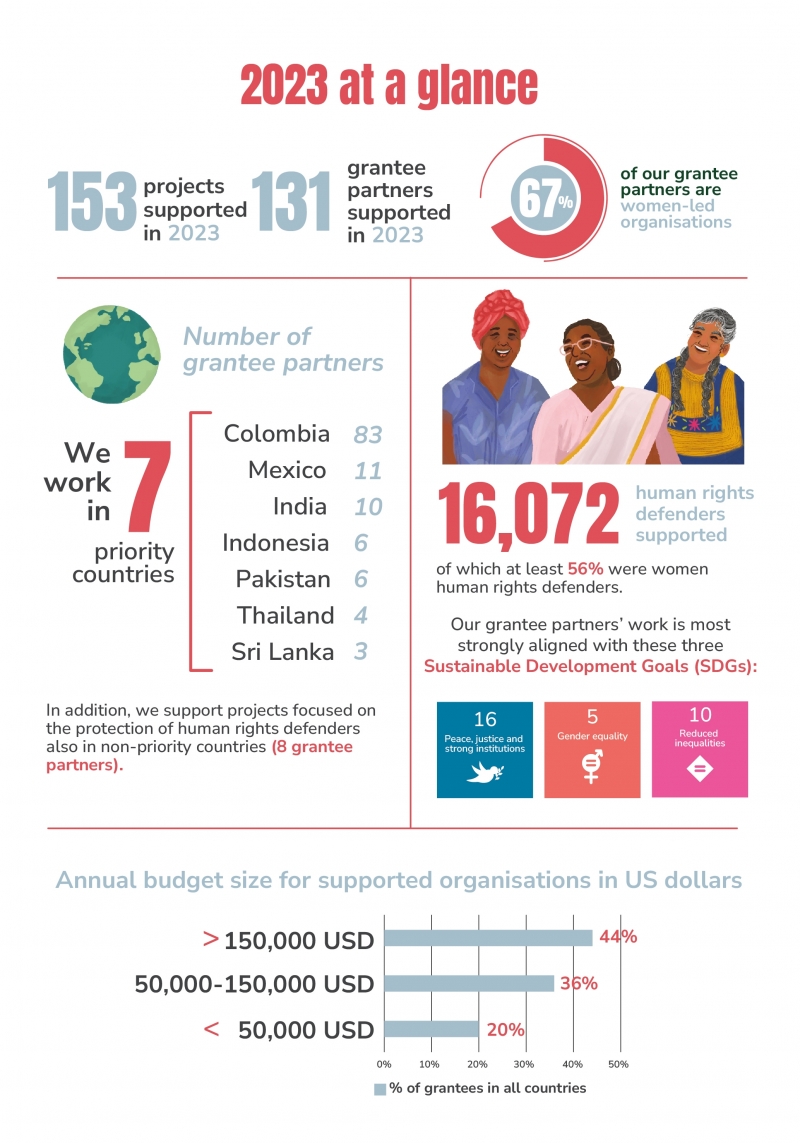
In 2023, NHRF supported 153 projects and 131 grantee partners in 7 priority countries. Through these projects, 16,072 human rights defenders were supported, of which at least 56% were women human rights defenders.

Scroll down this page to read the full annual report or open it here. You will find annual reports from previous years at the end of this page.

Image
Image

https://nhrf.no/our-impact/annual-reports

Front Line Defenders launches Global Analysis 2023/24 on human rights defenders

May 22, 2024

On 22 May 2024 Front Line Defenders launched its Global Analysis 2023/24 on the situation of human rights defenders (HRDs) at risk around the world, an in-depth annual publication detailing the variety of risks, threats and attacks faced by HRDs around the world.

The Global Analysis gives a panorama of the threats faced by HRDs in all regions of the world. Despite an assault on human rights and the rule of law in many countries, human rights defenders (HRDs) showed remarkable courage and persistence in advocating for more democratic, just and inclusive societies in 2023. [see also: https://humanrightsdefenders.blog/2023/04/04/front-line-defenders-just-published-its-global-analysis-2022-new-record-of-over-400-killings-in-one-year/]

At least 300 HRDs killed in 28 countries

The report also reveals statistics gathered and verified by the HRD Memorial initiative – which Front Line Defenders coordinates – documenting the killings of at least 300 HRDs in 28 countries in 2023. Almost a third of those killed (31%) were Indigenous people’s rights defenders. This brings the total documented killings of HRDs in the last decade to nearly 3,000.

This appalling wave of attacks on human rights defenders is a direct result of an international human rights framework left in tatters and governments’ double standards when it comes to respecting human rights,” said Alan Glasgow, Executive Director of Front Line Defenders. “A quarter decade after the UN adopted a Declaration on human rights defenders, not enough progress has been made to ensure defenders are valued and protected. In this time, thousands of defenders have paid with their lives and many more face ongoing attacks and intimidation for their peaceful work. Urgent action is needed to change this.

Wide-ranging risks to HRDs

Globally, the violation most commonly cited by HRDs was arbitrary arrest/detention (15%), followed by legal action (13%), continuing an ongoing trend of criminalisation as the most-reported risk. This was followed by death threats (10.2%), surveillance (9.8%) and physical attacks (8.5%). Trans and non gender-conforming HRDs reported slightly higher rates of physical attacks, and a much greater risk of smear campaigns. Globally, the five most targeted areas of human rights defence were: LGBTIQ+ rights (10.2%); Women’s rights (9.7%); Human rights movements (8.5%); Indigenous peoples’ rights (7.1%); and Human rights documentation (5.2%).

The statistics in the Global Analysis are derived from Front Line Defenders’ casework and approved grant applications between 1 January and 31 December 2023. The statistics are based on 1,538 reported violations in 105 countries. Front Line Defenders documents multiple violations per case or grant, as this is the reality of the situation for human rights defenders. For more details on how these and the HRD Memorial data are gathered, please refer to the Methodology section at the end of the report.

Download the full Global Analysis 2023/24

https://www.frontlinedefenders.org/en/resource-publication/global-analysis-202324

US State Department 2023 country reports

May 4, 2024

US State Department highlights human rights concerns globally in 2023 country reports

On 2 May 2023 Angelica Dino in the Canadian Lawyer summarizes the latest annual Country Reports on Human Rights Practices, released by the U.S. Department of State on the 75th anniversary of the UN Universal Declaration of Human Rights (UDHR).

The Human Rights Report evaluated the status of internationally recognized individual, civil, political, and worker rights in nearly 200 countries and territories, leveraging insights from various sources, including government agencies, NGOs, and media. According to the State Department, this documentation serves as a critical tool in connecting U.S. diplomatic and foreign aid efforts to the foundational American values of human rights protection and promotion.

The release coincides with the third Summit for Democracy, led this year by the Republic of Korea. The summit emphasizes a collective international effort to strengthen democratic governance and address human rights abuses. Its goals include expanding media freedom, enhancing women’s rights, combating corruption, and ensuring that technology supports democratic processes rather than acting as a tool of repression.

This year’s report detailed significant human rights violations across several countries, with stark abuses noted in Russia’s ongoing conflict in Ukraine. Russian military actions have been characterized by violent assaults on civilians, with extensive documentation of crimes potentially amounting to crimes against humanity. The report also highlighted the forced transfer and assimilation of Ukrainian children into Russian territories, marking a severe violation of international law.

Further, the report raised concerns about the human rights situations in Sudan, where both government and paramilitary forces have committed war crimes, and in Uganda, which has enacted severe anti-LGBTQI+ legislation. The ongoing conflict between Israel and Hamas also drew attention, with the report calling for adherence to international law and protection of civilians amidst military actions.

In Iran, the regime’s crackdown on dissent extended beyond its borders, posing grave risks to its citizens both domestically and internationally. Similarly, the report condemned the Taliban’s discriminatory actions against women and girls in Afghanistan, which starkly undermined their societal roles and freedoms.

Conversely, the report identified positive strides in several nations. Notably, Kenya has upheld freedom of expression for LGBTQI+ individuals, and Estonia and Slovenia have recognized marriage equality. Additionally, labour reforms in Mexico have empowered workers to improve conditions and assert their rights more effectively.

Secretary of State Anthony Blinken emphasized the report’s role and expressed hope that the findings will support and inspire human rights defenders globally. “I hope that the honest and public assessments of human rights abuses, as well as the reports of progress, reflected in these pages give strength to these brave individuals across the globe who often put their lives at risk to improve conditions in their own countries, and, ultimately, make the world a freer, safer place for us all,” Blinken said.

see also: https://humanrightsdefenders.blog/2022/04/14/us-state-departments-report-2021-is-out/

https://www.canadianlawyermag.com/news/international/us-state-department-highlights-human-rights-concerns-globally-in-2023-country-reports/385900

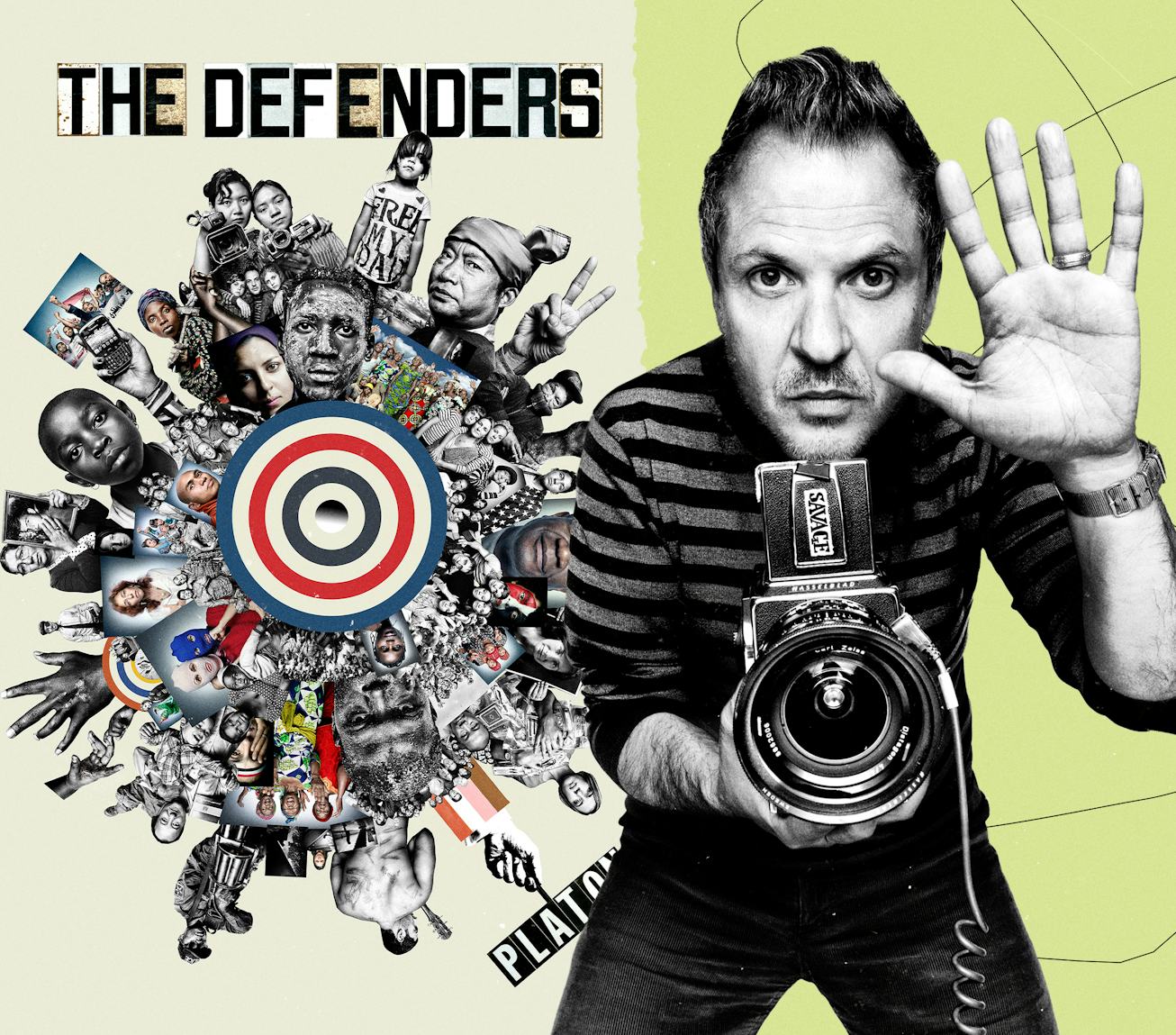
Platon releases photo book ‘The Defenders: Heroes of the Global Fight for Human Rights’

May 3, 2024
Platon ‘The Defenders’ Photography Book Interview 2024

On 2 May 2024 NYLON posted about famous photographer Platon. [see also: https://humanrightsdefenders.blog/2023/03/30/a-multimedia-collaboration-between-photographer-platon-and-unhcr-launched/ and https://humanrightsdefenders.blog/2015/02/25/photographer-platon-speaks-about-human-rights-in-indiana-wells-on-february-27/]

Fifteen years ago, Human Rights Watch approached celebrity portrait photographer Platon with a pitch: They wanted him to help educate the public on the human rights crisis in Myanmar by capturing imagery of the people there. The trip swerved the trajectory of Platon’s career, putting him on a years-long path of putting a face to those affected by and fighting against human rights violations. Now, Platon is releasing those photographs in an ambitious book titled The Defenders: Heroes of the Global Fight for Human Rights, which is accompanied by a major exhibition of portraits at UTA Artists Space in Los Angeles, on view from May 3 to 25.

You photograph them the way you photograph celebrities and world leaders and models,” Platon says of his subjects in Myanmar. “I photographed them not as victims; I photographed them as powerful, resilient human beings who refuse to be broken.” When he returned from Myanmar, he went to The New Yorker and urged them to publish the photos; after those ran, the media began “seeing human rights defenders and activists as heroes,” he says. “It was a different mindset.

In 2013, Platon formed his own human rights foundation, which gave him the resources to document the Egyptian Revolution, as well as to Russia, where he photographed dissidents under Vladimir Putin’s regime. He went to the Democratic Republic of the Congo, capturing images of people fighting against sexual violence. He spent a whole year crossing the Mexican-American border, taking photos of families torn apart by immigration policy. The Defenders is a compilation of all this work over the last 15 years.

“I’ve spent so much time in front of powerful people,” Platon says. “They say I’ve photographed more world leaders than anyone in history now. I’ve seen dandruff on world leaders. I see if they’re nervous and their eyelids flutter. I feel their pulse. People ask me a lot what I think power is. I think power is something that, if you are lucky to acquire any at all, you have to share it. You have to use it to help others.

https://www.nylon.com/life/platon-the-defenders-photography-book-interview-2024

https://www.thepeoplesportfolio.org/about

About Access Now’s Digital Security Helpline

April 30, 2024

On 25 April 2024 Access Now published a piece about “Visualizing the Digital Security Helpline’s recent impact”

Access Now’s Digital Security Helpline works to support civil society members at risk, so they can safely and securely continue their work to uphold democracy and human rights. Here are a few highlights of the Helpline’s work in 2023. [see also: https://humanrightsdefenders.blog/2021/06/29/joint-statement-by-u-n-rapporteurs-emphasizes-digital-rights-as-top-priority-to-rebuild-civic-space/]

Last year, the Helpline received a total of 3,709 requests for digital security assistance. 

To put this in perspective, the Helpline received 10,000 requests in total between 2014 and 2021, but more than double that number in the three years that followed. 

Helpline Cases

Most (82%) of the cases we dealt with in 2023 were reactive in nature, meaning they related to unfolding incidents or emergencies that required beneficiaries to take rapid measures to strengthen their digital security. The remaining 18% were preventative, whereby beneficiaries preemptively sought out digital security advice, tools, and solutions.

In recent years, the Helpline has been investing in our ability to operate 24/7, 365 days a year, and to deliver more substantial and engaged forms of support. For instance, we’ve been conducting analysis of advanced threats and producing collaborative research in places such as Armenia, Serbia, and Jordan

In 2023, the regional distribution of cases was as follows:

Helpline Case distribution by region

Our work supports a wide spectrum of civil society stakeholders; from individual activists, human rights defenders, and members of marginalized communities, to journalists and media workers. For it to be as impactful as possible, we work closely with the wider digital security community, through networks like CiviCERT. This allows us to deliver adequate support to each of our beneficiary groups, which were distributed as follows in 2023:

Helpline Beneficiaries by category

In 2024, the Helpline will continue improving and increasing how we collaborate with activist groups around the world, as well as working to meet the evolving needs of the global rapid response community. If you are a member of civil society in need of digital security assistance, you can find details about how to get in touch on our website page

ProtectDefenders.eu publishes annual report “REACHING FURTHER”

April 30, 2024

04224-(1920x1080px)-Annual-Report-PD-v01-Reaching-Further

On 25 April 2024, ProtectDefenders.eu, the European Union (EU) Human Rights Defenders Mechanism, presented its comprehensive annual report entitled “REACHING FURTHER,” covering the period November 2022 – October 2023. This report illustrates the support provided and efforts made by ProtectDefenders.eu to support human rights defenders (HRDs) around the world, and especially to reach those who are the most at risk.

In November 2022, ProtectDefenders.eu entered the third phase of its implementation, marking a milestone in its commitment to safeguarding human rights defenders worldwide. Throughout the first year of this new phase, the renewed and consolidated EU HRD Mechanism has provided direct protection, support, and empowerment to over 6,700 at-risk HRDs, with a particular focus on those facing the highest risks. Notably, 50% of beneficiaries were young defenders, and 58% identified as women human rights defenders (WHRDs), trans-male, trans-female, genderqueer, or gender non-conforming individuals.

Despite facing extraordinary challenges amidst protracted crises globally, ProtectDefenders.eu has demonstrated remarkable effectiveness, efficiency, and adaptability in addressing the pressing needs of HRDs. The mechanism has extended support not only to individual defenders but also to their families, communities, and organizations. This comprehensive support, including financial aid, technical assistance, and guidance, has been delivered through collaboration among consortium partners, showcasing flexibility, creativity, and responsiveness in the face of evolving challenges.

ProtectDefenders.eu has actively responded to increased requests for protection support amid protracted crises in various regions, including Belarus, Myanmar, Afghanistan, Nicaragua, Sudan, Tanzania, and beyond. Emergency protection measures have been consistently provided, alongside investments in the capacity and resilience of human rights organisations and communities. The international temporary relocation system supported by ProtectDefenders.eu, including through the Shelter Initiatives program, further exemplifies the mechanism’s commitment to HRD safety.

Through reactive and preventative advocacy efforts, ProtectDefenders.eu has achieved multiple successes globally, pioneering a collective advocacy approach on shared concerns such as international funding for HRDs and EU visas. The enhanced coordination among consortium partners has facilitated continuous improvements and innovation, addressing challenges faced by HRDs and organizations at risk more effectively.

Moreover, significant progress has been made in enhancing outreach efforts to new groups, including young defenders and those with disabilities. Increased collaboration with local actors, context-specific support, and prioritized coordination have extended the impact of ProtectDefenders.eu widely, with 93% of supported organizations not affiliated with consortium partners.

Looking ahead, ProtectDefenders.eu will remain particularly committed to fulfilling its protection mandate by addressing comprehensively the unique vulnerabilities and barriers faced by HRDs with disabilities. The EU HRD mechanism will actively engage in finding innovative solutions to ensure their protection, inclusion, and access to resources.

Read the full ProtectDefenders.eu Report: REACHING FURTHER on our website.

Amnesty’s annual State of the World’s Human Rights report 2023 is out

April 25, 2024
  • Powerful governments cast humanity into an era devoid of effective international rule of law, with civilians in conflicts paying the highest price
  • Rapidly changing artificial intelligence is left to create fertile ground for racism, discrimination and division in landmark year for public elections
  • Standing against these abuses, people the world over mobilized in unprecedented numbers, demanding human rights protection and respect for our common humanity

The world is reaping a harvest of terrifying consequences from escalating conflict and the near breakdown of international law, said Amnesty International as it launched its annual The State of the World’s Human Rights report, delivering an assessment of human rights in 155 countries.

Amnesty International also warned that the breakdown of the rule of law is likely to accelerate with rapid advancement in artificial intelligence (AI) which, coupled with the dominance of Big Tech, risks a “supercharging” of human rights violations if regulation continues to lag behind advances.

Amnesty International’s report paints a dismal picture of alarming human rights repression and prolific international rule-breaking, all in the midst of deepening global inequality, superpowers vying for supremacy and an escalating climate crisis,” said Amnesty International’s Secretary General, Agnès Callamard. 

“Israel’s flagrant disregard for international law is compounded by the failures of its allies to stop the indescribable civilian bloodshed meted out in Gaza. Many of those allies were the very architects of that post-World War Two system of law. Alongside Russia’s ongoing aggression against Ukraine, the growing number of armed conflicts, and massive human rights violations witnessed, for example, in Sudan, Ethiopia and Myanmar – the global rule-based order is at risk of decimation.”

Lawlessness, discrimination and impunity in conflicts and elsewhere have been enabled by unchecked use of new and familiar technologies which are now routinely weaponized by military, political and corporate actors. Big Tech’s platforms have stoked conflict. Spyware and mass surveillance tools are used to encroach on fundamental rights and freedoms, while governments are deploying automated tools targeting the most marginalized groups in society.

“In an increasingly precarious world, unregulated proliferation and deployment of technologies such as generative AI, facial recognition and spyware are poised to be a pernicious foe – scaling up and supercharging violations of international law and human rights to exceptional levels,” said Agnès Callamard.

“During a landmark year of elections and in the face of the increasingly powerful anti-regulation lobby driven and financed by Big Tech actors, these rogue and unregulated technological advances pose an enormous threat to us all. They can be weaponized to discriminate, disinform and divide.”

Read more about Amnesty researchers’ biggest human rights concerns for 2023/24.

Amnesty International’s report paints a dismal picture of alarming human rights repression and prolific international rule-breaking, all in the midst of deepening global inequality, superpowers vying for supremacy and an escalating climate crisis. Amnesty International’s Secretary General, Agnès Callamard

Rwanda: Human Rights Watch’ Archives March 1993 – December 1994 digitized and public

April 4, 2024

A crowd of mostly Tutsi civilians, seeking protection against Hutu militiamen, sit in the Sainte Famille Catholic church in the then-government controlled part of Kigali, listening to a member of the security services address them. Over several months, ma

On 2 April, 2024 Human Rights Watch made part of its Rwanda Archives public in digital form.

Human Rights Watch has been documenting and exposing human rights violations in Rwanda since the early 1990s. Its senior adviser in the Africa division, Alison Des Forges, one of the world’s foremost experts on Rwanda, dedicated her career to the struggle for human rights in the Great Lakes region of Africa, and to Rwanda in particular. In the period leading up to the 1994 genocide, she worked tirelessly to alert world powers to the impending crisis in Rwanda. Few would listen. By the time the genocidal forces had unleashed their sinister program and the world had awakened to the full horror that was unfolding in Rwanda, it was too late. The killings in Rwanda increased as a civil war in Burundi waged on. The violence in Burundi, also based on ethnic divisions between Hutu and Tutsi ethnic groups, lasted from 1993 until 2005.

Des Forges’s efforts did not stop when the genocide ended. She continued to painstakingly gather information on the killings, rapes, and other horrific crimes, which she compiled into what has become one of the main reference books on the Rwandan genocide: “Leave None to Tell the Story: Genocide in Rwanda”, a 500-page account of the genocide published jointly by Human Rights Watch and the International Federation of Human Rights (FIDH) in 1999. 

Des Forges testified as an expert witness in 11 trials at the United Nations International Criminal Tribunal for Rwanda (ICTR) in Arusha, Tanzania, as well as in domestic court proceedings involving Rwandan genocide suspects in several countries.

Des Forges campaigned vigorously for justice for the genocide until her tragic death in a plane crash in the US on February 12, 2009. She also documented human rights abuses by the new government of Rwanda after the genocide and advocated for accountability for all abuses, past and present.

Thirty years after the genocide, Human Rights Watch has begun the process of digitizing and making available some of Des Forges’s archives. The documents summarized below are some of those that remained in Human Rights Watch possession after Des Forges’s death and help shed light on efforts by Des Forges and others to warn about, and then attempt to stop, the genocide. These are just a selection of the many documents in the archives; others will not be published at this time for a variety of reasons. The private exchanges, letters, statements, and reports below do not purport to be a comprehensive account of the work of Human Rights Watch and others at the time, as it is likely documents are missing from the archive.

See also: https://www.trueheroesfilms.org/thedigest/awards/F42005AB-6691-4C7F-BA0D-1999D2279EA2

https://www.hrw.org/news/2024/04/02/human-rights-watch-rwanda-archives