The populist upsurge in the emerging democracies of Eastern Europe and in established democracies like the United States has exposed the political vulnerability of rule of law as a cornerstone of liberal democracy. It is not just in authoritarian populist states that the independence of judges and the authority of law have come under attack in the name of a majoritarian conception of democracy. This suggests that the rule of law has always stood in a relation of tension with other principles of democracy, including majority rule and an independent media. The lecture explores these renewed political pressures on rule of law using contemporary examples drawn from the US, the UK and Hungary. [for some of my posts on populism, see: https://humanrightsdefenders.blog/tag/populism/]
Tuesday 26 February 2019, 18:30 – 20:00 in the Auditorium IVAN PICTET | Maison de la Paix, Geneva
Michael Ignatieff is the Rector and President of Central European University in Budapest. His major publications are The Needs of Strangers (1984), Scar Tissue (1992), Isaiah Berlin (1998), The Rights Revolution (2000), Human Rights as Politics and Idolatry (2001), The Lesser Evil: Political Ethics in an Age of Terror (2004), Fire and Ashes: Success and Failure in Politics (2013), and The Ordinary Virtues: Moral Order in a Divided World (2017). [see also: https://humanrightsdefenders.blog/2019/02/08/11825/]
The lecture will be moderated by Shalini Randeria, Professor of Social Anthropology and Sociology at the Graduate Institute, Director of the Albert Hirschman Centre on Democracy and Rector of the Institut für die Wissenschaften vom Menschen Institute (IWM) in Vienna.
Freedom House‘s annual report 2019, which in fact covers 2018!, is out. It concludes that in 2018Freedom in the Worldrecorded the 13th consecutive year of decline in global freedom. The reversal has spanned a variety of countries in every region, from long-standing democracies like the United States to consolidated authoritarian regimes like China and Russia. The overall losses are still shallow compared with the gains of the late 20th century, but the pattern is consistent and ominous. The report concludes with a special chapter on the US (see below). For other annual reports 2018, see: https://humanrightsdefenders.blog/tag/annual-report-2018/.
In states that were already authoritarian, earning Not Free designations from Freedom House, governments have increasingly shed the thin façade of democratic practice that they established in previous decades, when international incentives and pressure for reform were stronger. More authoritarian powers are now banning opposition groups or jailing their leaders, dispensing with term limits, and tightening the screws on any independent media that remain. Meanwhile, many countries that democratized after the end of the Cold War have regressed in the face of rampant corruption, antiliberal populist movements, and breakdowns in the rule of law. Most troublingly, even long-standing democracies have been shaken by populist political forces that reject basic principles like the separation of powers and target minorities for discriminatory treatment.
Some light shined through these gathering clouds in 2018. Surprising improvements in individual countries—including Malaysia, Armenia, Ethiopia, Angola, and Ecuador—show that democracy has enduring appeal as a means of holding leaders accountable and creating the conditions for a better life. Even in the countries of Europe and North America where democratic institutions are under pressure, dynamic civic movements for justice and inclusion continue to build on the achievements of their predecessors, expanding the scope of what citizens can and should expect from democracy. The promise of democracy remains real and powerful. Not only defending it but broadening its reach is one of the great causes of our time.
THE WAVE OF DEMOCRATIZATION ROLLS BACK
The end of the Cold War accelerated a dramatic wave of democratization that began as early as the 1970s. The fall of the Berlin Wall in 1989 and the Soviet Union’s collapse in 1991 cleared the way for the formation or restoration of liberal democratic institutions not only in Eastern Europe, but also in the Americas, sub-Saharan Africa, and Asia. Between 1988 and 2005, the percentage of countries ranked Not Free in Freedom in the World dropped by almost 14 points (from 37 to 23 percent), while the share of Free countries grew (from 36 to 46 percent). This surge of progress has now begun to roll back. Between 2005 and 2018, the share of Not Free countries rose to 26 percent, while the share of Free countries declined to 44 percent.
The reversals may be a result of the euphoric expansion of the 1990s and early 2000s. As that momentum has worn off, many countries have struggled to accommodate the political swings and contentious debates intrinsic to democracy. Rapidly erected democratic institutions have come under sustained attack in nations that remain economically fragile or are still riven by deep-seated class or ethnic conflicts. Of the 23 countries that suffered a negative status change over the past 13 years (moving from Free to Partly Free, or Partly Free to Not Free), almost two-thirds (61 percent) had earned a positive status change after 1988. For example, Hungary, which became Free in 1990, fell back to Partly Free this year after five consecutive years of decline and 13 years without improvement.
AN EBB TIDE IN ESTABLISHED DEMOCRACIES
With the post–Cold War transition period now over, another shift in the global order is challenging long-standing democracies, from within and without. A crisis of confidence in these societies has intensified, with many citizens expressing doubts that democracy still serves their interests. Of the 41 countries that were consistently ranked Free from 1985 to 2005, 22 have registered net score declines in the last five years.
The crisis is linked to a changing balance of power at the global level. The share of international power held by highly industrialized democracies is dwindling as the clout of China, India, and other newly industrialized economies increases. China’s rise is the most stunning, with GDP per capita increasing by 16 times from 1990 to 2017. The shift has been driven by a new phase of globalization that unlocked enormous wealth around the world. The distribution of benefits has been highly uneven, however, with most accruing to either the wealthiest on a global scale or to workers in industrializing countries. Low- and medium-skilled workers in long-industrialized democracies have gained relatively little from the expansion, as stable, well-paying jobs have been lost to a combination of foreign competition and technological change.
These developments have contributed to increasing anger and anxiety in Europe and the United States over economic inequality and loss of personal status. The center of the political spectrum, which dominated politics in the established democracies as the changes unfolded, failed to adequately address the disruption and dislocation they caused. This created political opportunities for new competitors on the left and right, who were able to cast existing elites as complicit in or benefiting from the erosion of citizens’ living standards and national traditions.
So far it has been antiliberal populist movements of the far right—those that emphasize national sovereignty, are hostile to immigration, and reject constitutional checks on the will of the majority—that have been most effective at seizing the open political space. In countries from Italy to Sweden, antiliberal politicians have shifted the terms of debate and won elections by promoting an exclusionary national identity as a means for frustrated majorities to gird themselves against a changing global and domestic order. By building alliances with or outright capturing mainstream parties on the right, antiliberals have been able to launch attacks on the institutions designed to protect minorities against abuses and prevent monopolization of power. Victories for antiliberal movements in Europe and the United States in recent years have emboldened their counterparts around the world, as seen most recently in the election of Jair Bolsonaro as president of Brazil.
These movements damage democracies internally through their dismissive attitude toward core civil and political rights, and they weaken the cause of democracy around the world with their unilateralist reflexes. For example, antiliberal leaders’ attacks on the media have contributed to increasing polarization of the press, including political control over state broadcasters, and to growing physical threats against journalists in their countries. At the same time, such attacks have provided cover for authoritarian leaders abroad, who now commonly cry “fake news” when squelching critical coverage.
Similarly, punitive approaches to immigration are resulting in human rights abuses by democracies—such as Australia’s indefinite confinement of seaborne migrants in squalid camps on the remote island of Nauru, the separation of migrant children from their detained parents by the United States, or the detention of migrants by Libyan militias at the behest of Italy—that in turn offer excuses for more aggressive policies towards migrants and refugees elsewhere in the world. Populist politicians’ appeals to “unique” or “traditional” national values in democracies threaten the protection of individual rights as a universal value, which allows authoritarian states to justify much more egregious human rights violations. And by unilaterally assailing international institutions like the United Nations or the International Criminal Court without putting forward serious alternatives, antiliberal governments weaken the capacity of the international system to constrain the behavior of China and other authoritarian powers.
The gravity of the threat to global freedom requires the United States to shore up and expand its alliances with fellow democracies and deepen its own commitment to the values they share. Only a united front among the world’s democratic nations—and a defense of democracy as a universal right rather than the historical inheritance of a few Western societies—can roll back the world’s current authoritarian and antiliberal trends. By contrast, a withdrawal of the United States from global engagement on behalf of democracy, and a shift to transactional or mercenary relations with allies and rivals alike, will only accelerate the decline of democratic norms.
THE COSTS OF FALTERING LEADERSHIP
There should be no illusions about what the deterioration of established democracies could mean for the cause of freedom globally. Neither America nor its most powerful allies have ever been perfect models—the United States ranks behind 51 of the 87 Free countries in Freedom in the World—and their commitment to democratic governance overseas has always competed with other priorities. But the post-Soviet wave of democratization did produce lasting gains and came in no small part because of support and encouragement from the United States and other leading democratic nations. Despite the regression in many newly democratized countries described above, two-thirds of the countries whose freedom status improved between 1988 and 2005 have maintained their new status to date.
That major democracies are now flagging in their efforts, or even working in the opposite direction, is cause for real alarm. The truth is that democracy needs defending, and as traditional champions like the United States stumble, core democratic norms meant to ensure peace, prosperity, and freedom for all people are under serious threat around the world.
For example, elections are being hollowed out as autocracies find ways to control their results while sustaining a veneer of competitive balloting. Polls in which the outcome is shaped by coercion, fraud, gerrymandering, or other manipulation are increasingly common. Freedom House’s indicators for elections have declined at twice the rate of overall score totals globally during the last three years.
In a related phenomenon, the principle of term limits for executives, which have a long provenance in democracies but spread around the world after the end of the Cold War, is weakening. According to Freedom House’s data, leaders in 34 countries have tried to revise term limits—and have been successful 31 times—since the 13-year global decline began. Attacks on term limits have been especially prominent in Africa, Latin America, and the former Soviet Union.
Freedom of expression has come under sustained attack, through both assaults on the press and encroachments on the speech rights of ordinary citizens. Freedom in the World data show freedom of expression declining each year over the last 13 years, with sharper drops since 2012. This year, press freedom scores fell in four out of six regions in the world. Flagrant violations, like the imprisonment of journalists Wa Lone and Kyaw Soe Oo for their investigative reporting in Myanmar, have become more widespread. Even more stark have been the declines in personal expression, as governments have cracked down on critical discussion among citizens, especially online. The explosion of criminal cases for “insulting the president” in Turkey—more than 20,000 investigations and 6,000 prosecutions in 2017 alone—is one of the most glaring examples of this global trend.
The offensive against freedom of expression is being supercharged by a new and more effective form of digital authoritarianism. As documented in Freedom House’s most recent Freedom on the Net. report, China is now exporting its model of comprehensive internet censorship and surveillance around the world, offering trainings, seminars, and study trips as well as advanced equipment that takes advantage of artificial intelligence and facial recognition technologies. As the internet takes on the role of a virtual public sphere, and as the cost of sophisticated surveillance declines, Beijing’s desire and capacity to spread totalitarian models of digitally enabled social control pose a major risk to democracy worldwide.
Another norm under siege is protection of the rights of migrants and refugees, including the rights to due process, to freedom from discrimination, and to seek asylum. All countries have the legitimate authority to regulate migration, but they must do so in line with international human rights standards and without violating the fundamental principles of justice provided by their own laws and constitutions. Antiliberal populist leaders have increasingly demonized immigrants and asylum seekers and targeted them for discriminatory treatment, often using them as scapegoats to marginalize any political opponents who come to their defense. In Freedom in the World, eight democracies have suffered score declines in the past four years alone due to their treatment of migrants. With some 257 million people estimated to be in migration around the world, the persistent assault on the rights of migrants is a significant threat to human rights and a potential catalyst for other attacks on democratic safeguards.
In addition to mistreating those who arrive in their territory in search of work or protection, a growing number of governments are reaching beyond their borders to target expatriates, exiles, and diasporas. Freedom House found 24 countries around the world—including heavyweights like Russia, China, Turkey, Iran, and Saudi Arabia—that have recently targeted political dissidents abroad with practices such as harassment, extradition requests, kidnapping, and even assassination. Saudi Arabia’s murder of journalist Jamal Khashoggi in Turkey put a spotlight on authoritarian regimes’ aggressive pursuit of prominent critics. Turkey itself, which has sought to keep Khashoggi’s murder on the front pages, has by its own account captured 104 of its citizens from 21 countries over the last two years in a global crackdown on perceived enemies of the state. Beijing’s growing apparatus for policing opinions and enforcing its views among Chinese citizens and communities overseas has led to outcomes including the forced repatriation of Uighurs from countries where they sought safety and the surveillance of Chinese students at foreign universities. Interpol’s notification system has become a tool for authoritarian governments to detain and harass citizens in exile. The normalization of such transnational violence and harassment would not just shut down the last refuges for organized opposition to many repressive regimes. It would also contribute to a broader breakdown in international law and order, a world of borderless persecution in which any country could be a hunting ground for spies and assassins dispatched by tyrants looking to crush dissent.
Most disturbingly, Freedom House’s global survey shows that ethnic cleansing is a growing trend. In 2005, Freedom in the World reduced the scores of just three countries for ethnic cleansing or other egregious efforts to alter the ethnic composition of their territory; this number has since grown to 11, and in some cases the scale or intensity of such activities has increased over time as well. In Syria and Myanmar, hundreds of thousands of civilians from certain ethnic and religious groups have been killed or displaced as world powers either fail to respond adequately or facilitate the violence. Russia’s occupation of Crimea has included targeted repression of Crimean Tatars and those who insist on maintaining their Ukrainian identity. China’s mass internment of Uighurs and other Muslims—with some 800,000 to 2 million people held arbitrarily in “reeducation” camps—can only be interpreted as a superpower’s attempt to annihilate the distinct identities of minority groups.
Even in a time of new threats to democracy, social movements around the world are expanding the scope of democratic inclusion. They are part of a multigenerational transformation in how the rights of women, of ethnic, sexual, and religious minorities, of migrants, and of people with disabilities are recognized and upheld in practice—not least in places where they were already constitutionally enshrined. Authoritarian and antiliberal actors fear these movements for justice and participation because they challenge unfair concentrations of status and power. The transformation may still be fragile and incomplete, but its underlying drive—to make good on the 20th century’s promise of universal human rights and democratic institutions—is profound.
In this sense, the current moment contains not only danger, but also opportunity for democracy. Those committed to human rights and democratic governance should not limit themselves to a wary defense of the status quo. Instead we should throw ourselves into projects intended to renew national and international orders, to make protections for human dignity even more just and more comprehensive, including for workers whose lives are disrupted by technological and economic change. Democracy requires continuous effort to thrive, and a constant willingness to broaden and deepen the application of its principles. The future of democracy depends on our ability to show that it is more than a set of bare-minimum defenses against the worst abuses of tyrants—it is a guarantee of the freedom to choose and live out one’s own destiny. We must demonstrate that the full promise of democracy can be realized, and recognize that no one else will do it for us.
There are length chapters on the following regions:
ASIA-PACIFIC: MILITARY INFLUENCE AND PERSECUTION OF MINORITIES
MIDDLE EAST AND NORTH AFRICA: REPRESSION GROWS AS DEMOCRACIES STUMBLE
SUB-SAHARAN AFRICA: HISTORIC OPENINGS OFFSET BY CREEPING RESTRICTIONS ELSEWHERE
There is a special and uneasily frank section on “The Struggle Comes Home: Attacks on Democracy in the United States” by By Mike Abramowitz the President of Freedom House
U.S. President Donald Trump Photo credit: Kevin Dietsch-Pool/Getty Images.
….And just as we have called out foreign leaders for undermining democratic norms in their countries, we must draw attention to the same sorts of warning signs in our own country. It is in keeping with our mission, and given the irreplaceable role of the United States as a champion of global freedom, it is a priority we cannot afford to ignore.
The great challenges facing US democracy did not commence with the inauguration of President Donald Trump. Intensifying political polarization, declining economic mobility, the outsized influence of special interests, and the diminished influence of fact-based reporting in favor of bellicose partisan media were all problems afflicting the health of American democracy well before 2017. Previous presidents have contributed to the pressure on our system by infringing on the rights of American citizens. Surveillance programs such as the bulk collection of communications metadata, initially undertaken by the George W. Bush administration, and the Obama administration’s overzealous crackdown on press leaks are two cases in point.
At the midpoint of his term, however, there remains little question that President Trump exerts an influence on American politics that is straining our core values and testing the stability of our constitutional system. No president in living memory has shown less respect for its tenets, norms, and principles. Trump has assailed essential institutions and traditions including the separation of powers, a free press, an independent judiciary, the impartial delivery of justice, safeguards against corruption, and most disturbingly, the legitimacy of elections. Congress, a coequal branch of government, has too frequently failed to push back against these attacks with meaningful oversight and other defenses.
We recognize the right of freely elected presidents and lawmakers to set immigration policy, adopt different levels of regulation and taxation, and pursue other legitimate aims related to national security. But they must do so according to rules designed to protect individual rights and ensure the long-term survival of the democratic system. There are no ends that justify nondemocratic means.
… While the United States suffered an unusual three-point drop on Freedom in the World’s 100-point scale for 2017, there was no additional net decline for 2018, and the total score of 86 still places the country firmly in the report’s Free category.
….The United States has already been weakened by declines in the rule of law, the conduct of elections, and safeguards against corruption, among other important indicators measured by Freedom in the World. The current overall US score puts American democracy closer to struggling counterparts like Croatia than to traditional peers such as Germany or the United Kingdom.
……In any democracy, it is the role of independent judges and prosecutors to defend the supremacy and continuity of constitutional law against excesses by elected officials, to ensure that individual rights are not abused by hostile majorities or other powerful interests, and to prevent the politicization of justice so that competing parties can alternate in office without fear of unfair retribution. While not without problems, the United States has enjoyed a strong tradition of respect for the rule of law.
President Trump has repeatedly shown disdain for this tradition. Late in 2018, after a federal judge blocked the administration’s plan to consider asylum claims only from those who cross the border at official ports of entry, the president said, “This was an Obama judge. And I’ll tell you what, it’s not going to happen like this anymore.”
The president has since urged the Department of Justice to prosecute his political opponents and critics. He has used his pardon power to reward political and ideological allies and encourage targets of criminal investigations to refuse cooperation with the government. He has expressed contempt for witnesses who are cooperating with law enforcement in cases that could harm his interests and praised those who remain silent. His administration’s harsh policies on immigrants and asylum seekers have restricted their rights, belittled our nation’s core ideals, and seriously compromised equal treatment under the law. In October 2018, the president went so far as to claim that he could unilaterally overturn the constitutional guarantee of birthright citizenship…
The president’s attacks on the judiciary and law enforcement, echoed by media allies, are eroding the public’s trust in the third branch of government and the rule of law. Without that trust, the outright politicization of justice could well ensue, threatening the very stability of our democracy. Any American is free to contest the wisdom of a judge’s ruling, but no one—least of all the president—should challenge the authority of the courts themselves or use threats and incentives to pervert the legal process.
This is followed by chapters on
DEMONIZING THE PRESS
SELF-DEALING AND CONFLICTS OF INTEREST
ATTACKING THE LEGITIMACY OF ELECTIONS
THE THREAT TO AMERICAN IDEALS ABROAD
NEITHER DESPAIR NOR COMPLACENCY: Ours is a well-established and resilient democracy, and we can see the effect of its antibodies on the viruses infecting it. The judiciary has repeatedly checked the power of the president, and the press has exposed his actions to public scrutiny. Protests and other forms of civic mobilization against administration policies are large and robust. More people turned out for the midterm elections than in previous years, and there is a growing awareness of the threat that authoritarian practices pose to Americans.
Yet the pressure on our system is as serious as any experienced in living memory. We cannot take for granted that institutional bulwarks against abuse of power will retain their strength, or that our democracy will endure perpetually. Rarely has the need to defend its rules and norms been more urgent. Congress must perform more scrupulous oversight of the administration than it has to date. The courts must continue to resist pressures on their independence. The media must maintain their vigorous reporting even as they defend their constitutional prerogatives. And citizens, including Americans who are typically reluctant to engage in the public square, must be alert to new infringements on their rights and the rule of law, and demand that their elected representatives protect democratic values at home and abroad.
Freedom House will also be watching and speaking out in defense of US democracy. When leaders like Mohammed bin Salman or Victor Orbán take actions that threaten human liberty, it is our mission to document their abuses and condemn them. We must do no less when the threats come from closer to home.
Every year the UN Secretary General publishes a Report on Reprisals against Human Rights Defenders. On 5 February 2019 Rene Wadlow (President of the Association of World Citizens) summarized it for Global Solutions, lists the main culprits and calls for more action by the NGO community.
On 23 January 2019, the U.N. Secretary-General Antonio Guterres in a statement listed States which had carried out reprisals or intimidation including killings, torture, and arbitrary arrests against individuals cooperating with the United Nations on human rights issues. He said, “The world owes it to these brave people standing up for human rights, who have responded to requests to provide information and to engage with the United Nations to ensure their rights to participate is respected. Punishing individuals for cooperating with the United Nations is a shameful practice that everyone must do more to stamp out.” …“Governments frequently charged human rights activists with terrorism or blamed them for cooperating with foreign entities or damaging the state’s reputation of security.”…
The information (provided mostly by NGOs) is collected at the U.N. High Commissioner’s Office in Geneva and is evaluated to see if the information fits into a pattern of continuing human rights violations or if it is an individual event.
Wadlow presents the States listed by broad geographic region rather than all together in alphabetical order as they are in the U.N. statement as other States in each region may also have human rights violation issues, often inter-related to the State named. Thus, the list of States is only those which the U.N. is aware that there have been reprisals against individuals who have given information to the U.N. units.
Middle East
Bahrain, Egypt, Israel, Saudi Arabia, Morocco
Africa
Cameroon, Democratic Republic of Congo, Djibouti, Mali, Rwanda, South Sudan
Asia
China, India, Maldives, Myanmar, Philippines, Thailand
Latin America
Colombia, Cuba, Guatemala, Guyana, Honduras, Trinidad and Tobago, Venezuela
Europe
Hungary, Russian Federation
Central Asia
Kyrgyzstan, Turkmenistan
The impact and increasingly higher profile of human rights informants has left them more and more exposed to a high risk of harassment, repression, arbitrary detention and extra-judicial executions. Governments are not the only actors. Depending on the country, there can be gangs, militias, paramilitary and other non-governmental groups who also menace people thought to be giving information to the U.N. or to international human rights organizations
The publication by the U.N. of its list is done with the hope that governments themselves will take positive action to protect. In some countries, internal security services or police-related “death squads” may act without the knowledge of the highest authorities of the State. In other States, there is little repression that does not come on orders of the higher authorities. There is a need for representatives of NGOs and also the media to be alert, especially for violations in States which are not otherwise in the news. Active networking remains crucial.
On 14 January 2019 the Middle East Eye reported that former UN High Commissioner, Mary Robinson, has confirmed she will not attend a Dubai literary festival in response to a call from academics and authors for the United Arab Emirates to release detained human rights activist Ahmed Mansoor. In a statement to The Guardian, the Mary Robinson Foundation said: “In response to the open letter received by the Guardian, Mrs Robinson has advised the organisers that she will not be attending the literature festival.” [see my: https://humanrightsdefenders.blog/2019/01/02/happy-new-year-but-not-for-ahmed-mansoor-and-nabeel-rajab-in-the-gulf-monarchies/]
The letter, organised by the International Campaign for Freedom in the UAE (ICFUAE), calls on the Emirati authorities to “immediately and unconditionally release prisoner of conscience Ahmed Mansoor“. It was signed by academics, activists, British politicians, and comedians, including linguist Noam Chomsky and actor Stephen Fry.
Joe Odell, a campaigns manager for ICFUAE, said: “We urgently call on other attendees to follow suit. The festival claims to celebrate freedom of expression, yet so many in the UAE have been detained for exercising this very right,” Other prominent writers billed to speak at the festival include Oxford University professor Peter Frankopan, Canadian novelist Douglas Coupland, and author Ian Rankin.
Robinson’s decision to withdraw from the festival may also be linked to a controversy surrounding her in relation to Sheikha Latifa al-Maktoum, the daughter of the Emirati Prime Minister.
The Syrian Network for Human Rights (SNHR) is a non-profit non-governmental human rights organization that was founded in June 2011 in light of the systematic rise of violations of human rights in Syria. SNHR aims to support the preserving and defending of victims’ right and consequently accounting process, achieve justice and peace, raise the awareness of the Syrian people in regard to their civil and political rights, and amass efforts and capacities in the context of stopping violations of human rights in Syria. The Syrian Human Rights Network works primarily on monitoring and documenting violations in Syria, and publishes research and reports related to such violations, as well as visual evidence from its investigations, such as photos, maps, graphs and infographics, in addition to working on advocacy and mobilization to defend the rights of victims, for justice and accountability in Syria. It also contributes to progress towards achieving justice and accountability in Syria.
SNHR is a member of the International Coalition for the Responsibility to Protect (ICR2P), a member of the Euro-Mediterranean Human Rights Network, a founding member and a member of the executive committee of the Transitional Justice Coordination Group (TJCG), and a partner with the Euro-Mediterranean Human Rights Monitor. Additionally, SNHR collaborates closely with the Office of the United Nations High Commissioner for Human Rights (OHCHR), the Independent International Commission of Inquiry on the Syrian Arab Republic (COI), which was established by the United Nations Human Rights Council, and with a number of international human rights organization such as Amnesty International, Human Rights Watch, Reporters Without Borders, Al Karama organization, and The Syrian Campaign, In addition to a number of local Syrian organizations.
In 2018, 321 defenders in 27 countries were targeted and killed for their work – the highest number ever on record – according to data collected by Front Line Defenders. More than three-quarters of these, 77% of the total number of activists killed, were defending land, environmental or indigenous peoples’ rights, often in the context of extractive industries and state-aligned mega-projects. [see also: https://humanrightsdefenders.blog/2018/04/28/annual-reports-2017-by-front-line-defenders/]
Front Line Defenders reports that the murders of HRDs were not isolated events, but were preceded by judicial harassment, threats and physical attacks. At least 49% of those killed had previously received a specific death threat, and in an additional 43% of killings there had been general threats made to HRDs in the area. In the vast majority of cases, HRDs did not receive the necessary protection and support from state authorities from the time they reported threats to the time they were murdered.
According to the Front Line Defenders Global Analysis 2018, in addition to the threats experienced by male colleagues, WHRDs face gendered and sexualized attacks from both state and non-state actors, as well as from within their own human rights movements. Such violations include removal from public or high-ranking positions in NGOs, trade unions, and political societies; smear campaigns questioning their commitment to their families; sexual assault and rape; militarized violence; and the harassment and targeting of their children. In Saudi Arabia, authorities arrested, sexually assaulted, and tortured WHRDs who led the successful campaign for the abolition of the driving ban in 2018. Despite these attacks and the ongoing threats to stay silent, WHRDs in Saudi Arabia, as well as their family members, have publicly reported and condemned the abuses and are receiving unprecedented national, regional, and international visibility for their activism.
In addition to physical attacks and torture, the Front Line Defenders Global Analysis 2018 highlights the continuing trend towards restrictive legislation aimed at stifling the powerful work of HRDs and WHRDs, including:
A Digital Security Act in Bangladesh carrying a 14-year sentence for using digital media to “cause damage to the state”;
Retrospective legislation in Xinjiang province, China, legalising the use of “re-education” camps for the minority Uyghur population, including HRDs;
Anti-terror legislation in Nicaragua widening the definition of terrorism to include those accused of damaging property, leading to dozens of arrests of protesters now facing terrorism charges and 20 years in prison.
Front Line Defenders Digital Protection Team responded to a high number of reports from Brazil, Egypt, Guatemala, Honduras, Iraq, Mexico, Nicaragua and Venezuela in 2018. According to the Global Analysis, authorities around the world frequently used phone and email surveillance to target LGBTI+ defenders, WHRDs and environmental activists in particular. The report notes that in Tanzania, Pakistan, Russia, Malaysia, Nicaragua, Turkey, and many countries in MENA, governments claimed that HRDs were threatening “national security” as an excuse for censoring and blocking NGO websites.
Despite the severe and sometimes life-threatening risks faced by HRDs and WHRDs, Global Analysis 2018 highlights a number of major success achieved by HRDs and WHRDs in 2018, including:
The critical and leading role played by HRDs in securing The Escazu Agreement, now signed by 24 states in Latin America and the Caribbean, which stipulates a participatory approach to environmental projects and the mitigation of conflicts;
The monumental vote for reproductive rights in Ireland, secured through the extensive, decades-long campaigning of Irish WHRDs in the face of defamation, smear campaigns, and threats;
The Coalition of Women Leaders for the Environment and Sustainable Development in the Democratic Republic of Congo (DRC), who successfully campaigned for a province-wide decree in Equateur protecting women’s land and forest rights.
In response to attacks against HRDs in 2018, Front Line Defenders is working with HRDs to promote their security with a range of protection programming. In addition to risk management and digital protection trainings, advocacy at the national, international, and EU level, emergency relocation, Front Line Defenders provided nearly 550 protection grants to activists at risk in 2018. Front Line Defenders also works with HRDs to devise visibility campaigns to counteract the defamation and smear campaigns that put them at risk.
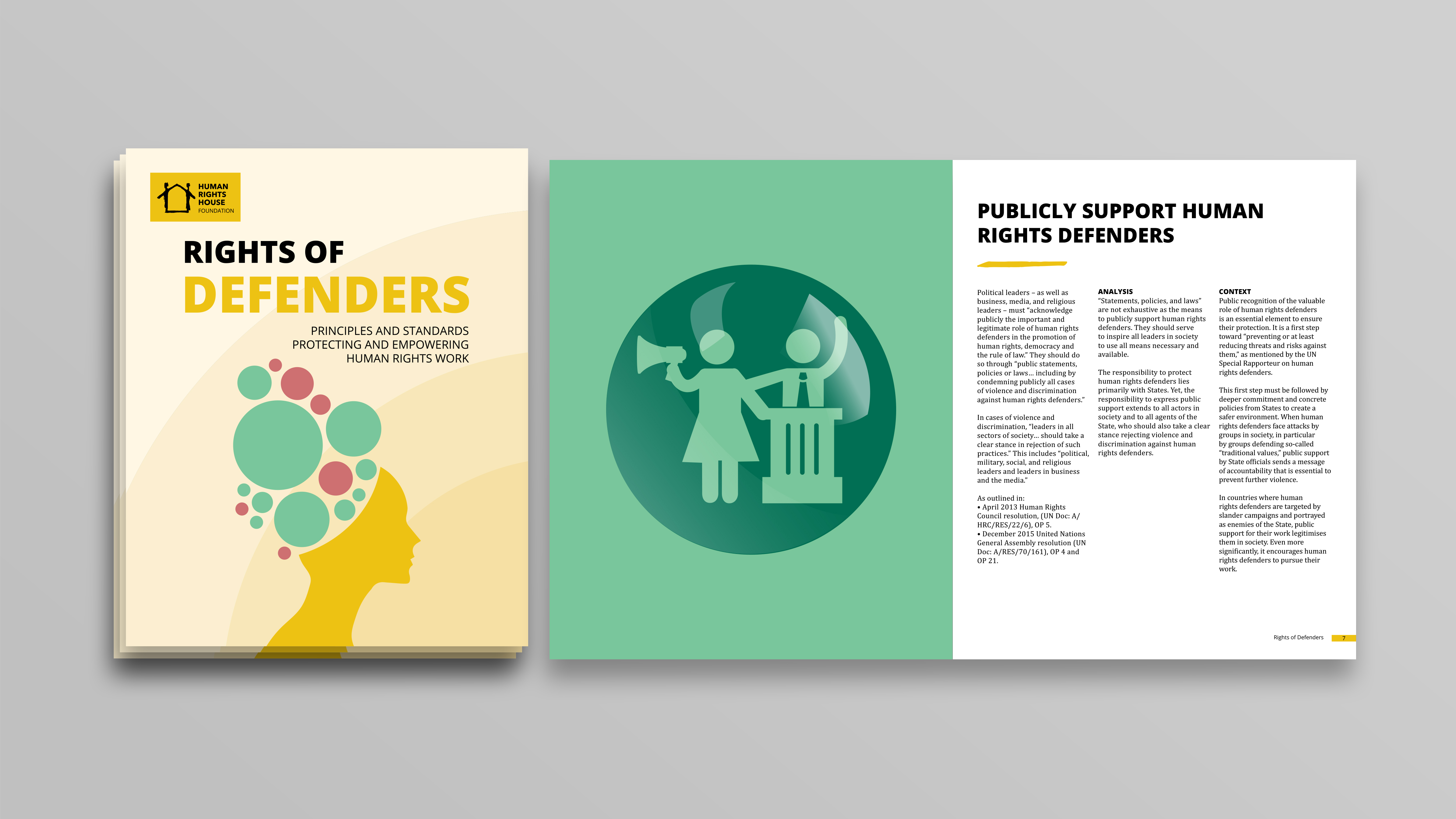
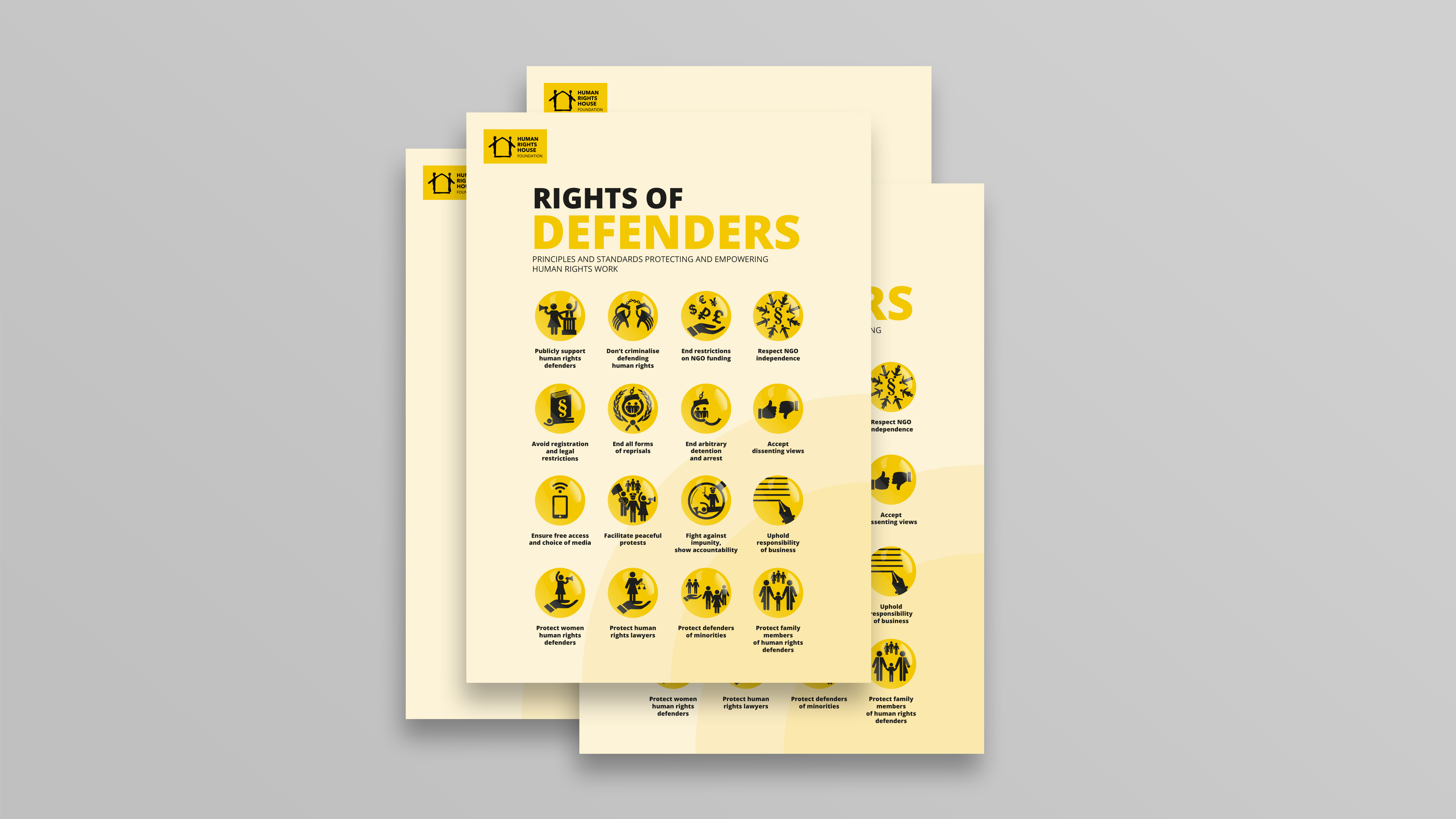
“Rights of Defenders” aims to promote understanding of international standards that protect and empower human rights defenders.The project is inspired by the 20th anniversary year of the landmark 1998 Declaration on Human Rights Defenders.
Rights of Defenders
For implementation of international standards to be effective, it is essential that human rights defenders know and understand their rights. The Rights of Defenders project promotes and builds understanding of international standards and provides clear, accessible, and targeted insight into the standards and the context that surrounds them. As part of the project, HRHF has developed tools and resources for defenders to disseminate standards nationally, engage with authorities and hold them accountable to the commitments they make internationally, and initiate national conversations on the importance of defenders and their work.
The Rights of Defenders resources – developed by Human Rights Houses and HRHF– promote and build an understanding of international standards and provide clear, accessible, and targeted insight into the standards and the context that surrounds them. The aim is to provide resources to help defenders to disseminate standards nationally, engage with authorities and hold them accountable to the commitments they make internationally, and initiate national conversations on the importance of defenders and their work.
These resources are currently available in English, Russian, and Georgian. Human Rights Houses and HRHF are in the process of translating the booklet and other related materials into other languages. These will be published on this page when available. We currently expect translations into Armenian, Croatian, Tatar, and Ukrainian.
Booklet: Rights of Defenders
The Rights of Defenders booklet is divided into 16 standards, inspired by the strong content of landmark resolutions on human rights defenders and their work, adopted at the United Nations and Council of Europe. It condenses the main points of each standard as outlined in the resolutions. The standards confer both positive and negative obligations – whether it is action or refraining from an action. They are illustrated in red or green respectively to illustrate these obligations. The booklet also provides analysis to inform the interpretation and implementation of these standards. This is inspired by the commentary of experts such as UN Special Rapporteurs and by the experience of HRHF and Human Rights Houses in Western and Eastern Europe, Balkans, and the Caucasus. Further, to give context, the booklet outlines the trends affecting each standard and provides recommendations for their implementation.
References and sources In most cases, defenders may only need the main points of each standard together with analysis and context, as provided in the booklet. Yet there may be other occasions that require more detailed information. Our companion document provides sources and in-depth referencing to the full language of the resolutions.
Rights of Defenders Poster: 16 international standards protecting and empowering human rights defenders.
The Rights of Defenders poster promotes the 16 international standards outlined in the booklet. It aims to help promote and raise awareness of these standards.
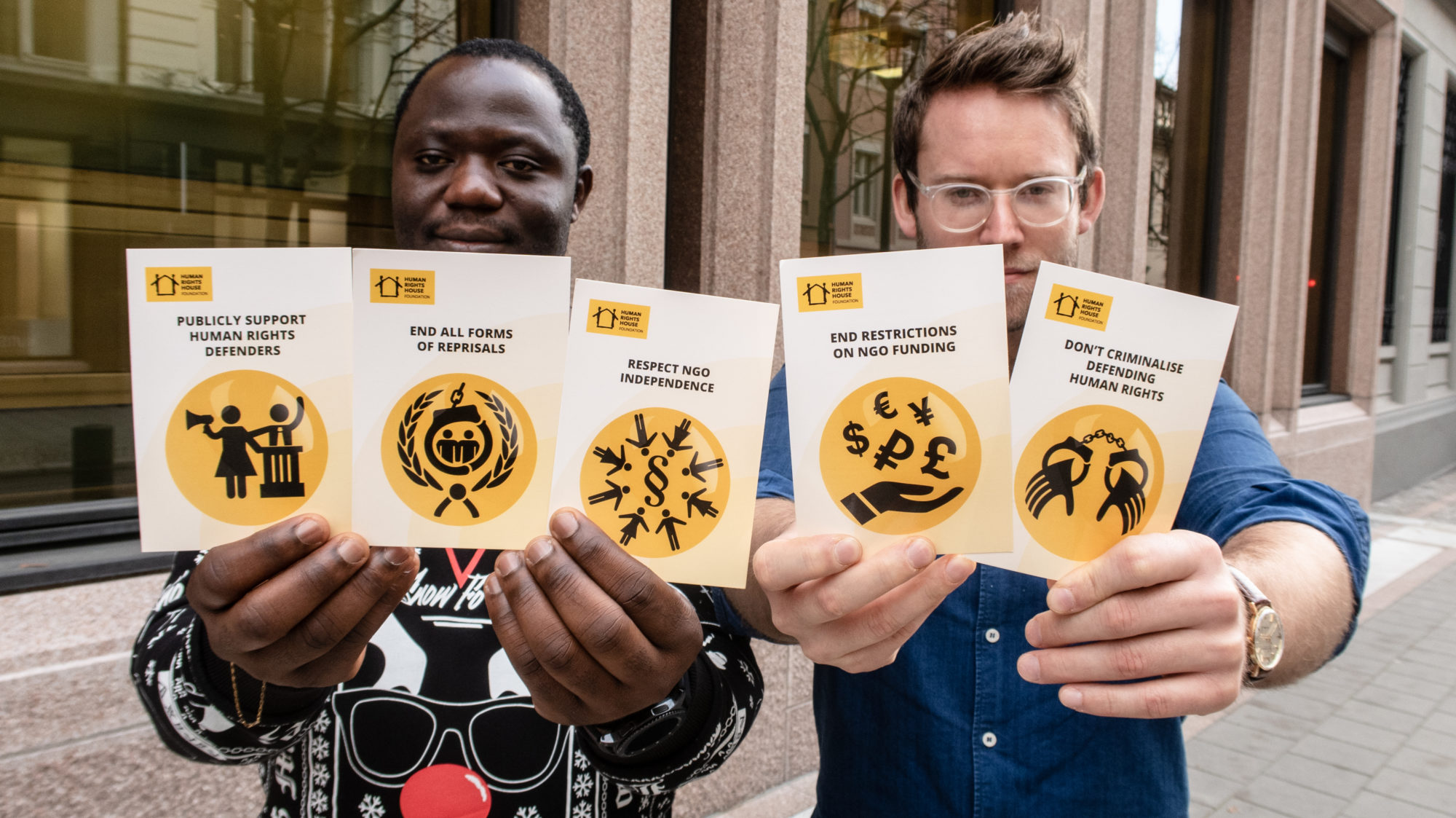
Rights of Defenders Postcards, each highlighting an international standard protecting and empowering human rights defenders.
The Rights of Defenders postcards are a tool to promote and raise awareness of the standards that are most relevant to a particularly country or situation. They are designed to be printed A6, but also work at other sizes. Postcards with five of the most prominent standards are available to download below, though on request we can provide postcards for any of the 16 standards featured in the booklet.
Tibetans in Sydney celebrate Nobel Peace Prize Day and Int’l Human Rights Day.
Hundreds of Tibetans and supporters across New South Wales gathered at Forestville to celebrate the 29th anniversary of the conferment of Noble Peace Prize to the spiritual leader of Tibet, His Holiness the 14th Dalai Lama….Speakers also reminded that 10 December is international human rights day. This must provide the opportunity for us to recall the continuing violation of human rights in Tibet.
2. In the Hong Kong Free Press of 16 December Kong Tsung-gan lists the best human rights books, October to December 2018: The 14 books are set in Argentina, China, Guatemala, India, Israel, Mexico, Niger, Northern Ireland, Palestine (3), Russia, South Sudan, the United States (4), and globally. They deal with the following human rights issues: activism and nonviolent struggle, arbitrary detention, censorship and propaganda, children’s rights, rights of civilians in conflict, corruption, democracy and dictatorship, right to education, enforced disappearance, equality, extrajudicial killings, genocide, human rights defenders, indigenous peoples’ rights, labour rights, land rights, the right to life, nonviolent protest, prisoners’ rights, racism and discrimination, the right of self-determination, sexual violence and harassment, slavery, torture, war crimes, and women’s rights.
3. “For People of Faith, 70-Year-Old Human Rights Document Holds Special Meaning“. Under this title Nelu Burcea, the Seventh-day Adventist Church’s liaison to the United Nations, reflects that “seventy years ago this week, the international community entered into a groundbreaking agreement to uphold a set of shared principles and values that would guide humanity as it moved into the future. …….For me, as a person of faith, Article 18 of the Declaration holds special significance……Although Article 18 deals specifically with religious freedom, it is not an isolated, stand-alone human right. It is inextricably bound up with many other fundamental freedoms, such as the freedom of assembly, freedom of thought, freedom of speech, and so on. As a Seventh-day Adventist I would suggest that there is an earlier, even more fundamental expression of Article 18. As I read the Bible, I learn that we are all born free and equal; that every human being is endowed with the spark of Divine by his or her Creator; that every man, woman, and child stands equal before God in value and dignity. Even more, Scripture teaches us that every person has the personal right—indeed, the obligation—to choose freely whether or not to worship God and follow His will.”
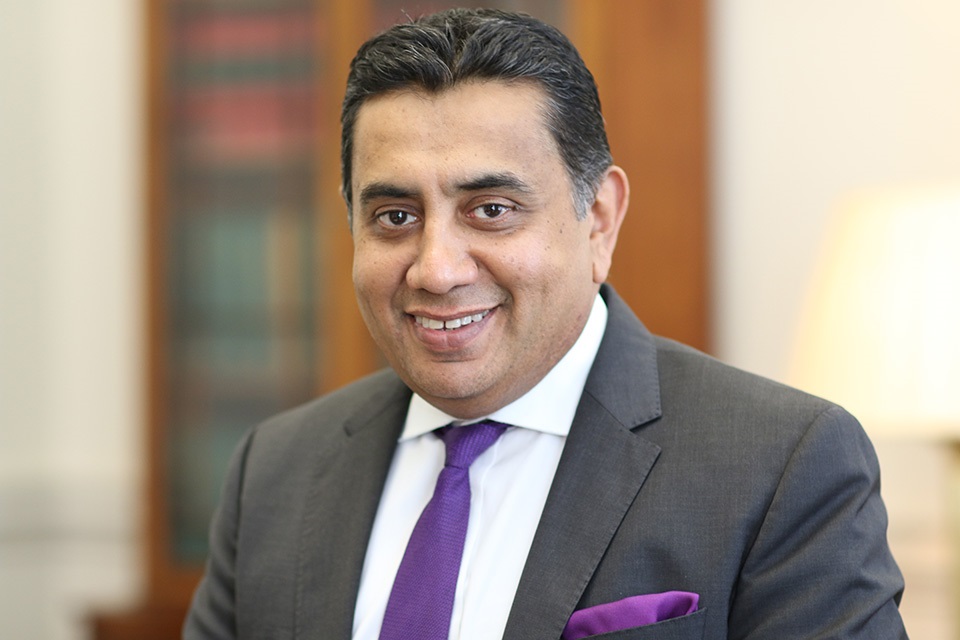
4. Lord Ahmad of Wimbledon delivered a speech at the Amnesty International Annual Human Rights Day Reception on 12 December 2018. Through the link below you can get the transcript of the speech, exactly as it was delivered.
….The area of Human Rights is something I believe in very passionately and take very seriously, and therefore not withstanding other events – and there are a few others going on today – it is important that we show our commitment, not just through events like this, but through collaborative and collective action on this important agenda. It should not matter who you are, where you are, what country, what age, what gender, what faith, what creed, what colour – no matter who you are, wherever you are our collective responsibility on this important agenda is clear. Therefore, I am delighted to support, amongst other human rights defender organisations, the sterling work done by Amnesty International around the world, and Kate, thank you for this opportunity to allow me to come and share some of my thoughts…
Threats to Human Rights Defenders
Indeed, as we look at 70 years on from the Human Rights declaration, there are 300 Human Rights Defenders have been murdered this year alone. Why? For defending the human rights of others – that is crucial. That is 300 families shattered. 300 communities shocked and living in fear. And many thousands of ordinary people robbed of a brave and committed advocates, close friends and family. For every one of those killed, there are many, many more thousands locked up, attacked and threatened. …These incredibly courageous people ..put themselves at risk to defend the rights that matter to us all, and that is why, here at the Foreign and Commonwealth Office, I and others that work with me make it a priority that we put human rights and Human Rights Defenders at the heart of our work. We learn from them. We not only advocate for them, we seek to also protect and strengthen the work they do – we must continue to strengthen the work we do in this area…. Over the past year, I have done this on many occasions during overseas visits, including in Iraq, Algeria, Egypt and Indonesia, to name but a few. It is so important, as we are defending the right to Freedom of Religion or Belief, we should not do so alone; it is the responsibility of us collectively, to promote and respect those who hold different religious beliefs, or no religious beliefs whatsoever, but collectively stand up for their right to do just that – not just internationally, but when we see challenges at home, we should stand up. As we approach Christmas in a year of goodwill – good to remember at this particular time. It is important that we do, and it is an area that I have been looking at very closely, and as we look at Freedom of Religion or Belief, we also recognise that there are many people, because of their Christian faith around the world who won’t be able to celebrate, who will not be able to have the family dinners, who will not be able to go to church to worship in the way they wish to do – a poignant moment to reflect on.
There Are No Dead Here is a deep dive into key human rights cases that exposed the murderous nexus between right-wing paramilitaries, drug lords, and Colombia’s military and political establishment. Through dogged reporting, in part as a Human Rights Watch researcher, McFarland unravels the links that led to the murders of Colombian rights investigators by powerful interests that reached as high as military leadership and even the Colombian presidency.
First awarded in 2008, the Méndez Human Rights Book Award honors the best current, fiction or non-fiction book published in English on human rights, democracy, and social justice in contemporary Latin America. The books are evaluated by a panel of expert judges drawn from academia, journalism, and public policy circles.
6. The Human Rights Centre held an event in Burao to observe Human Rights Day. Burao is the second largest city in Somaliland and is located in the eastern part of the country. Regional and district administration officials including the regional coordinator of ministries of Justice, Employment and Social Affairs, Religious Affairs, and Burao district officials attended the celebration with community members, IDPs, youth activist and civil society activists. ‘We warmly welcome the celebration. It is the first time such event is held in our city, Burao. We are thanking Human Rights Centre for coming to here,’ the secretary of Burao local government, Osman Shiekh, said. ‘Somaliland constitution upholds human rights. We have to all work toward its realization,…..At the same time, HRC celebrated with the law students of the University of Hargeisa. Human rights defenders and activists encouraged the students to advocate for human rights and raise awareness. Students, activists, academics and other members of the public attended the event…..This year also marks the 20-year anniversary of the United Nations Declaration on Human Rights Defenders. Human rights defenders endure tremendous pressure and intimidations. The marking will elevate their work and will call on the government of Somaliland to respect the work of human rights defenders as recognized in the United Nations Declaration on Human Rights Defenders.
On 11 December 2018 the European Parliament published “Rule of law and human rights in Cuba and Venezuela and EU engagement”, done by external authors Par ENGSTROM and Giulia BONACQUISTI.
The European Parliament (EP) has consistently followed the situation in Cuba and Venezuela. It has expressed its support for human rights defenders and democracy with the award of the Sakharov prize to Cuban activists on three occasions (2002, 2005, 2010), and to Venezuela’s Democratic Opposition in 2017 [see: https://humanrightsdefenders.blog/2017/10/27/european-parliaments-sakharov-prize-awarded-to-venezuela-opposition/]. In line with this engagement, a workshop on human rights and rule of law in both countries was held on 6 September 2018, in Brussels, at the request of the EP’s Subcommittee on Human Rights (DROI). Dr. Par Engstrom (University College London) presented the first draft of an independent study analysing the main human rights developments in Cuba and Venezuela since 2014 and the EU’s response. The paper, which focused specifically on the Sakharov laureates, was discussed with Members and other experts, including from the UN Office of the High Commissioner for Human Rights, the European External Action Service and the European Commission. During the lively discussion, there was broad agreement with the description of major trends in the human rights situation in the two countries. Critical comments and controversial issues related to the impact of the government’s repression of the Venezuelan opposition, the need to consider not only civil and political but also economic and social rights, the effectiveness of sanctions against Venezuela and the potential role of the Sakharov Prize. Observations and comments made during the workshop fed into the final version of the study, which is also included in this report.


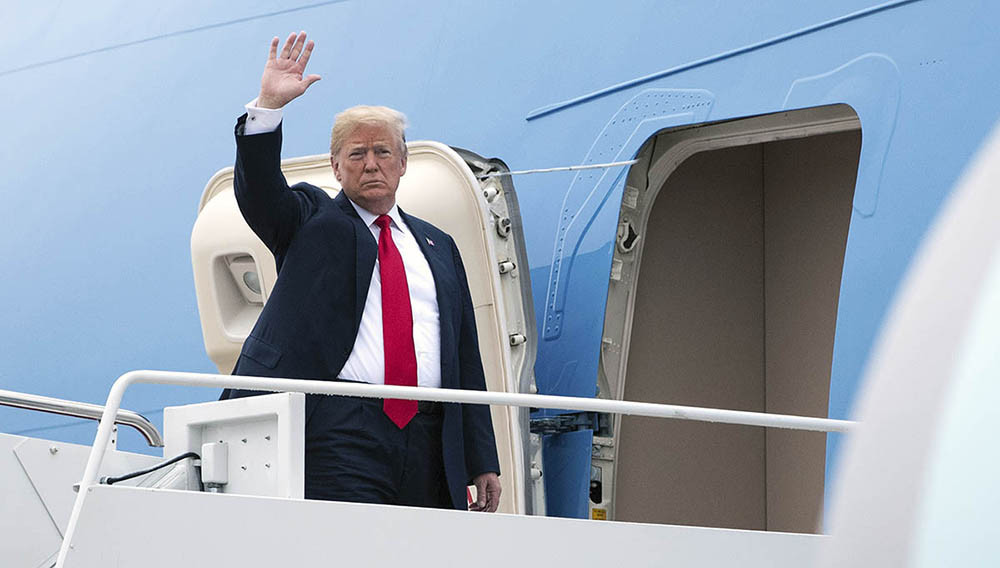 U.S. President Donald Trump Photo credit: Kevin Dietsch-Pool/Getty Images.


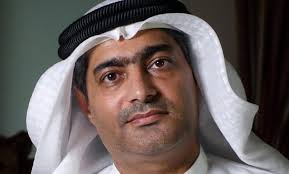 On 14 January 2019 the Middle East Eye reported that former UN High Commissioner, Mary Robinson, has confirmed she will not attend a Dubai literary festival in response to a call from academics and authors for the United Arab Emirates to release detained human rights activist Ahmed Mansoor. In a statement to The Guardian, the Mary Robinson Foundation said: “In response to the open letter received by the Guardian, Mrs Robinson has advised the organisers that she will not be attending the literature festival.” [see my: https://humanrightsdefenders.blog/2019/01/02/happy-new-year-but-not-for-ahmed-mansoor-and-nabeel-rajab-in-the-gulf-monarchies/]



 5. The
  Hans Thoolen on Human Rights Defenders and their awards