Author Archive
June 7, 2014
Yesterday, 6 June 2014, the UN and media reported that the U.N. Secretary-General Ban Ki-moon has proposed that Jordans U.N. ambassador, Prince Zeid Raad Zeid al-Hussein, as the new United Nations High Commissioner for Human Rights (to replace Navi Pillay who leaves in August after serving a second term). The General Assembly still has to approve, but usually no announcement is made unless there is already agreement.
Prince Zeid is generally well-liked as a diplomat and has established a solid reputation. He is a graduate of Johns Hopkins University and Cambridge University, has previously served as Jordans ambassador to the United States and Mexico. He was also a political affairs officer in UNPROFOR, the U.N. peacekeeping mission in the former Yugoslavia during the Balkan conflict.
Still, after a two women High Commissioners with broad experience in human rights and proven independence as judges before their appointments, it is fair to ask what human rights defenders can expect from this shift back towards a High Commissioner chosen for more diplomatic skills (as was the first one José Ayala-Lasso in 1994). Anyway, the only thing is to wait and see how he works out in practice. After all, another Prince, Sadruddin Aga Khan served as United Nations High Commissioner for Refugees from 1966 to 1978, and was excellent.
Posted in human rights, Human Rights Defenders, OHCHR, UN | 2 Comments »
Tags: appointment, Ban Ki-moon, Navanethem Pillay, Navi Pillay, Prince Zeid, Prince Zeid Raad Zeid al-Hussein, Sadruddin Aga Khan, the new United Nations High Commissioner for Human Rights, UN, UN High Commissioner for Human Rights
June 6, 2014

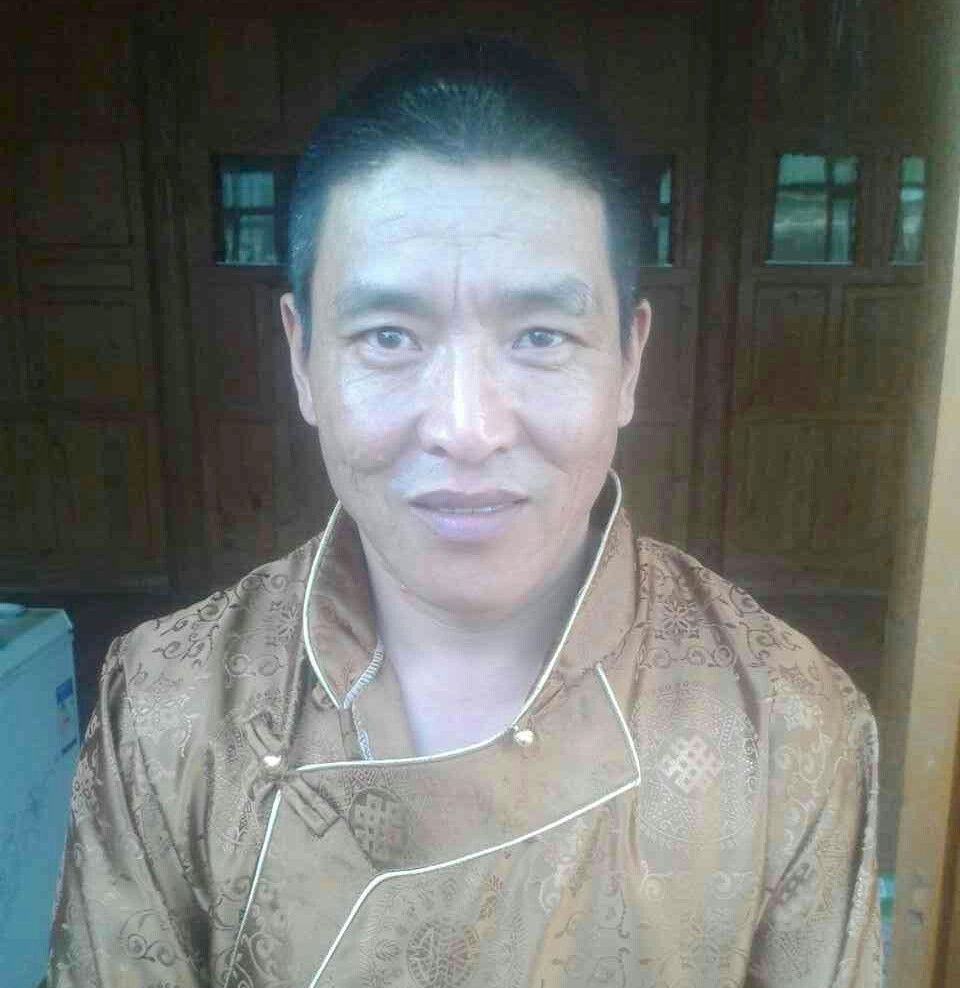
On 5 June 2014 Dhondup Wangchen, the imprisoned Tibetan video-activist, was released from prison in Qinghai’s provincial capital Xining, China, after serving a six-year sentence. In a phone call to Gyaljong Tsetrin, cousin and president of Filming For Tibet, living in Switzerland, a very emotional Dhondup Wangchen said: “At this moment, I feel that everything inside me is in a sea of tears. I hope to recover my health soon. I would like to express my feeling of deepest gratitude for all the support I received while in prison and I want to be reunited with my family.”
Lhamo Tso, wife of the imprisoned filmmaker who was granted US asylum in 2012 and now lives in San Francisco, is overjoyed: “Six years of injustice and painful counting the days ended today. It is a day of unbelievable joy for his parents in Dharamsala, our children and myself. We look forward to be reunited as a family.”
Gyaljong Tsetrin, his cousin and co-producer of “Leaving Fear Behind”, said after talking him to: “Though Dhondup is still under the control of the Chinese authorities I am very relieved that he finally could leave prison and has now the possibility to consult a doctor.” The self-taught cameraman and video-activist travelled across Tibet with his assistant Golog Jigme in 2007/2008. His film “Leaving Fear Behind” (28 min.) has been translated into a dozen languages and has been screened in more than 30 countries worldwide. Golog Jigme recently just arrived in India after a spectacular escape from Tibet. Dhondup Wangchen has been given awards by various NGOs, such as Committee to Protect Journalists, for his courageous work making the documentary “Leaving Fear Behind” and his case was the focal point of many campaigns of international human rights groups such as Amnesty International and Reporters without Borders. Government representatives around the world have brought up his case in their talks with their Chinese counterparts.
Tibetan Filmmaker Dhondup Wangchen Released from Prison.
Posted in AI, films, human rights, Human Rights Defenders, RSF | Leave a Comment »
Tags: AI, awards, China, Committee to Protect Journalists, Dhondup Wangchen, Documentary film, film makers, Filming For Tibet, free, Golog Jigme, Gyaljong Tsetrin, Human rights defender, human rights films, images, jail, Leaving Fear Behind, prison, Reporters without Borders, Tibet, Tibetans
June 6, 2014
A court in Uzbekistan ordered the release of a human rights defender on medical grounds on 31 May 2014. The Uzbek government should now meaningfully investigate credible allegations that Abdurasul Khudoynazarov was tortured and denied appropriate medical care in prison, and allow him to resume his human rights work.
via Uzbekistan: Critically Ill Activist Freed | Eurasia Review.
Posted in human rights, Human Rights Defenders | Leave a Comment »
Tags: Abdurasul Khudoynazarov, Eurasia Review, free, Human rights defender, medical, prison sentence, release, torture, Uzbekistan
June 6, 2014
The ISHR Monitor of June 2014 contains a good wrap-up of the situation regarding reprisals against Human Rights Defenders written by Eleanor Openshaw under the title: “Reprisals: States must reduce unacceptable human cost of cooperating with UN”.
‘Regrettably, reprisals against persons cooperating with the United Nations, its mechanisms and representatives in the field of human rights continue. ...’ said UN Secretary-General Ban Ki-moon in 2013. In response, the UN Human Rights Council adopted a landmark resolution in September 2013 calling on the Secretary-General to designate a UN-wide senior focal point to combat reprisals. Regrettably, Human Rights Council resolution 24/24 was blocked by the UN General Assembly in New York in December 2013, but NGOs are now calling again on States to revisit the issue as a matter of priority. “The disappearance, arbitrary detention, ill-treatment and death of human rights defender Cao Shunli in retaliation for her efforts to hold China to account for its human rights record at the UN is just one example among many of the unacceptable human cost of cooperating with the UN,’ said Ms Openshaw.
A number of positive recent developments (referred to in earlier blog posts [https://thoolen.wordpress.com/tag/reprisals/]) include a May 2014 decision by the African Commission on Human and Peoples’ Rights in Angola to appoint its own focal point, and a joint statement delivered by Botswana on behalf of 56 States in Geneva in March 2014 recognising that ‘the current response by the UN and the member States in addressing reprisals is inadequate’ and calling on them to ‘address cases of reprisals through a more effective and coordinated approach.‘
‘With the opportunity for the General Assembly to revisit the issue in September, NGOs are urging States to transfer the political will shown on this issue in Angola and Geneva to New York, and achieve an outcome that challenges impunity for the perpetrators of reprisals and increases protection for human rights defenders and others who engage with the UN human rights system,‘ Openshaw said (Program and Advocacy Manager, e.openshaw[at]ishr.ch).
The statement was signed by a coalition of 12 leading international and regional NGOs (of which 8 are members of the MEA Jury or Regional Panel):
- Amnesty International
- Association for the Prevention of Torture (APT)
- Asian Forum for Human Rights and Development (FORUM-ASIA)
- Cairo Institute for Human Rights Studies
- Commonwealth Human Rights Initiative
- Conectas Direitos Humanos
- Human Rights House Foundation
- Human Rights Watch
- International Commission of Jurists
- International Federation for Human Rights (FIDH)
- International Service for Human Rights
- World Organisation Against Torture (OMCT)
full article: Reprisals: States must reduce unacceptable human cost of cooperating with UN | ISHR.
Posted in human rights, Human Rights Defenders, MEA, UN | 1 Comment »
Tags: anti-reprisals focal point, Cao Shunli, coalition, human rights, Human Rights Council, Human Rights Defenders, MEA, reprisals, retaliation, UN, UN General Assembly, UN Human Rights Council, UN Resolution
June 5, 2014
This week, Global Partners have published the first in their series of “Travel Guides” to the digital world: Internet Policy and Governance for Human Rights Defenders which Becky Hogge authored under contract to them last year.

The aim of the guide is to entice human rights defenders from the Global South to participate in the discussions happening now around our rights online. But it should also serve as a useful introduction to the technologies that underpin the ‘net and the people who can affect our lives online, from governments to corporations, hackers, hacktivists and everything in between.
Global Partners introduces the book as follows: How the internet operates and is governed affects the rights of users – a new field from which human rights expertise is currently absent. Civil society groups at the table are fighting an unequal fight, and urgently need the strength and depth that the human rights community can bring. It is time for human rights defenders to familiarise themselves with the internet, and prepare to defend human rights online. The typesetting and illustrations are by Tactical Studios.
The volume is released Creative Commons and you can download a free .pdf version: https://barefoottechie.files.wordpress.com/2014/06/travel-guide-to-the-digital-worlds.pdf.
Posted in books, human rights, Human Rights Defenders | 1 Comment »
Tags: Becky Hogge, book, creative commons, digital security, documentation, global Partners, Human Rights Defenders, information technology, internet, Internet Policy and Governance for Human Rights Defenders
June 4, 2014
In TransConflict of 4 June 2014, Edgar Khachatryan writes a thoughtful piece on the “foreign agents” law and especially how Russia tries to expert this tool to silence human rights defenders to other countries, such as Armenia.
“I am sure that Russia should declare its presence in the information sphere of Armenia more actively. There is no doubt about it. However, other methods should be used to neutralize the NGOs which stick a wedge in the Armenian-Russian relations. By the way, Russia has adopted a law which clearly defines the activities of NGOs” – announced Russian ambassador to Armenia, Ivan Volinkin. Earlier this year, on 12 April, the same Volinkin announced in Yerevan that Russia will halt any attempts at aggressive intervention of third parties in the domestic affairs of its friendly states “in an effort to instil ideas alien to their mind soul”.
After briefly analyzing the Russian law and its application (at least 3 NGOs have already been affected: ‘Women of the Don’ ‘Memorial Anti-Discrimination Centre’ and the ‘Center for Social Policy and Gender Studies’), the author draws the conclusion that it is clear what effective interference the Russian Ambassador to Armenia is referring to. There is no doubt that human rights, democracy and peacebuilding seem alien and dangerous to the Russian authorities. By presenting the activities of human rights defenders as a betrayal of the nation and its values, the authorities are trying to silence those who think differently.
Ambassador Volinkin has called upon the Armenian authorities to use the ‘Russian experience’ in order to appease civil groups in Armenia. Moreover, the Ambassador warns that Russia itself will prevent the spread of such ‘alien’ ideologies in partner countries. A number of NGOs in Armenia qualified Volinkin’s announcements as a violation of accepted diplomatic norms and gross interference in the internal affairs of Armenia.
Claims made by NGOs the Armenian authorities to hold the Russian Ambassador to account fell on a deaf ear: the Ministry of Foreign Affairs announced that they do not see any validity to the claims. Thus, the threat that the civil groups opposed by the authorities will be silenced with the ‘power of law’ is becoming more tangible. The phrase “keep silent or confess that you are a foreign agent!” may soon become an acceptable idea in Armenia too.
Edgar Khachatryan is the director of Peace Dialogue, a member of the Global Coalition for Conflict Transformation.
Russia – keep silent or confess that you are a foreign agent | TransConflict.
For older posts on the foreign agents issue: https://thoolen.wordpress.com/tag/foreign-agent/
Posted in human rights, Human Rights Defenders | Leave a Comment »
Tags: Armenia, Civil society, Edgar Khachatryan, Foreign agent, foreign agent law, foreign agents, funding restrictions, Human Rights Defenders, Ivan Volinkin, NGOs, Russia, TransConflict
June 4, 2014
The 23 defendants, including four human rights defenders, charged in Cambodia were released on 30 May, 2014. Their release comes after the Court which had convicted the defendants but suspended their sentences that ranged from six months to four and half years imprisonment together with heavy fines. They were arrested in early January during a lethal clampdown by security forces charged with bringing an end to mass protests by garment workers and pro-opposition party supporters. Local and international groups have welcomed the release of the 23. However, they express their disappointment regarding the initial convictions and subsequent sentences. The trial was also heavily criticised for lacking due process.
via Civil Rights Defenders – Cambodia: Human rights defenders released with suspended sentences.
https://thoolen.wordpress.com/2014/01/08/week-of-action-against-crackdown-on-cambodian-garment-workers-10-january/
Posted in Civil Rights Defenders (NGO), human rights, Human Rights Defenders | Leave a Comment »
Tags: Cambodia, Civil Rights Defenders, defendants, fair trial, freedom to demonstrate, garment workers, Human Rights Defenders, peaceful protest, security forces, Sentence (law)
June 3, 2014
 Brussels-based NGO Protection International will be running the third edition of its online course “Security and Protection Management for Human Rights Defenders and Social Organisations”. The course will be in English, French and Spanish, in the period 14 July 2014 – 5 October 2014. For more information: http://protectioninternational.org/2013/09/11/new-e-learning-course-on-security-and-protection-management-for-hrd-and-social-organisations/
Posted in human rights, Human Rights Defenders, Protection International | Leave a Comment »
Tags: Brussels, Human Rights Defenders, Knowledge Management, management, NGO 'Protection International, online course, protection, security, Social Organisations, training course
June 3, 2014

Konstantina (or Kostadinka) Kuneva – originating from Bulgaria – was severely wounded in December 2008 after a man threw sulphuric acid in her face as she was returning home from work. Kuneva, a history graduate, took up work in the cleaning sector in 2003, two years after moving to Greece with her child. The attack was linked to her union activities in representing cleaning personnel. As a result of the attack she lost her sight in one eye and has limited vision in the other. Her vocal chords and trachea were also seriously damaged. Kuneva received almost 165,000 preferences in the European Parliament election, and is now a Member. In a website statement she said that she is “deeply moved” at being elected and vowed to use her time in the European Parliament to continue her “struggle at another level, from which I will be able to help more people”. There is certainly racism in Greece, but there are also marvelous examples of the contrary.
Posted in human rights | Leave a Comment »
Tags: acid attacks, attack, Bulgaria, European Parliament, Greece, Konstantina, Konstantina Kuneva, Kostadinka, MEP, trade unionists, woman human rights defender
June 2, 2014
The Guardian of 1 June 2014 contains a long and fascinating interview with Nasrin Sotoudeh, the Iranian lawyer who won the Sacharov Prize and was a Final Nominee of the MEA in 2012. The now freed Iranian human rights lawyer – in an interview with Simon Tisdall – speaks out in a moving way about why she is a human rights defender and how she coped with the separation from her family. The title of the piece: ‘I’ve a bad feeling about the women I left behind’ is telling of her concern for others.

(Nasrin Sotoudeh with her son, Nima, after being freed from prison last year. Photograph: Behrouz Mehri/AFP/Getty Images)
“Nasrin Sotoudeh’s seven-year-old son, Nima, wants to go out to play. His mother, the leading Iranian human rights lawyer whose arbitrary imprisonment in 2010 sparked an international campaign to free her, has been talking for ages. Nima is bored. At the door to their apartment in north-west Tehran, Nasrin takes Nima in her arms. The boy stands on tip-toe to embrace his mother. They hold each other for a minute or more. It is as though the two cannot bear to be separated..…….”. For more: Freed Iranian rights lawyer: Ive a bad feeling about the women I left behind | World news | theguardian.com.
other posts on Nasrin: https://thoolen.wordpress.com/tag/nasrin-sotoudeh/
Posted in human rights, Human Rights Defenders, MEA | Leave a Comment »
Tags: detention, Final Nominee MEA 2012, human rights awards, Human Rights Defenders, human rights lawyer, hungerstrike, Iran, Iranian human rights, MEA, Nasrin Sotoudeh, Nasrine Sotoudeh, Sacharov, Simon Tisdall, the Guardian, woman human rights defender


 Hans Thoolen on Human Rights Defenders and their awards