Author Archive

Indigenous human rights defender Victoria Maladaeva from Russia

November 6, 2024

Indigenous communities must have better political representations to ensure our rights are protected both constitutionally and in practice,‘ says Victoria Maladaeva, and Indigenous peoples’ rights defender from Russia. Victoria was also a participant in ISHR’s Women Rights Advocacy Week this year. She spoke to ISHR about her work and goals.

Hello Victoria, thanks for accepting to tell us your story. Can you briefly introduce yourself and your work?

Sure! I’m a Buryat anti-war decolonial activist, co-founder of the Indigenous of Russia Foundation.

What inspired you to become involved in the defence of human rights?

Since the full-scale Russian invasion of Ukraine, Indigenous peoples, particularly Buryat, have been hit the hardest. I wanted to help my people, fight the Russian propaganda and raise awareness about systemic colonial oppression and discrimination faced by Indigenous people and ethnic minorities in the Russian Federation.

What would Russia and your community look like in the future if you achieved your goals, if the future you are fighting for became a reality?

The country needs a large-scale transformation— political, economic, and cultural. Indigenous communities must have better political representations to ensure our rights are protected both constitutionally and in practice. Genuine democratic reforms involve fundamental rights for self-determination and autonomy where Indigenous peoples gain control of their land and resources. Putin’s constitution’s amendments to national Republics must be reversed, our languages must be mandatory in all schools, universities, and institutions where Indigenous communities live. 

How do you think your work is helping make that future come true?

I’m advocating for the rights of Indigenous peoples with international stakeholders and institutions to raise awareness about issues faced by our communities and spreading awareness, producing documentaries, and mobilising diasporas. 

Have you been the target of threats or attempts at reprisals because of your work?

Unfortunately, yes. There have been threats because of my anti-war activism and for shedding light on the disproportionate mobilisation in the Republic of Buryatia. For some reason, my colleagues and I were denied participation in the UN Permanent Forum on Indigenous Issues. I would like to believe this was a mistake and that there was no influence from the Russian delegation at the UN.

Do you have a message for the UN and the international community?

Russia needs decolonisation and de-imperialisation. Without revising the past and acknowledging colonial wars (not only in Ukraine) and discrimination, there can be no bright future for Russia—free and democratic. The international and anti-imperialist community should acknowledge that the Russian government is not for any anti-colonial movement. Stand in solidarity with independent Indigenous activists!

https://ishr.ch/defender-stories/human-rights-defenders-story-victoria-maladaeva-from-russia

Save the date: MARTIN ENNALS AWARD 2024

November 5, 2024

Thirty two years ago, I and some other good friends of Martin Ennals decided to create an award in the name of this human rights pioneer [see: https://youtu.be/tAhUi2gOHmU?si=6RxI5TduzLfLeJym]. I am very proud and happy that in two weeks time I wil be in Geneva to participate in the 30th edition of the award ceremony. I very much hope that many others wil be able to join, in person or via the live-stream.

The Award was given out for the first time in 1994 to recognize, promote and protect human rights defenders at risk or from under-reported contexts. It culminates every year in a public ceremony in Geneva, co-hosted with the City of Geneva. Over the years, the Award has offered defenders a platform to issues that are of global concern and the connections to steer the movement for human rights and larger freedoms.

The Jury has recognized 53 defenders in the past 30 years, from 37 countries and from all walks of life: lawyers, journalists, academics, medical practitioners, religious practitioners, housewives, students and grassroots activists. Their voices have illustrated some of the most important human rights demands of the past decades: free and fair justice for violations committed by security forces; access to information and freedom of expression to denounce repressive practices and authorities; the fight against gender discrimination and the importance of women’s full and equal participation in society; the essential role of civil society in conflict and post conflict resolution; the role of businesses in exploiting natural resources against the rights to land of indigenous people; or the role of global powers in the violations of the right to life of migrants.

The 2024 Martin Ennals Award continues the legacy and will honour two outstanding human rights defenders who have made it their life mission to protect human rights in their communities and countries despite evolving in deeply repressive environments.

A public discussion with Jury members later in the evening of ceremony will also be the opportunity to showcase the issues that will shape the future of the Award.

Get to know the 2024 Laureates by joining our traditional Award ceremony on Thursday 21 November at 18:30 CET, in Salle communale de Plainpalais, Rue de Carouge 52, Geneva.

The ceremony, co-hosted together with the City of Geneva, is the opportunity to learn about the two 2024 Laureates: who they are, their aspirations and what they have been doing to bring human rights at the forefront. Their inspiring stories illustrate key human rights struggles that the world needs to hear, for peace, dignity and equality of all. The Award ceremony will be followed by a cocktail offered by the City of Geneva.

Register here

You cannot join in person? We got you! The ceremony and the debate will be livestreamed on our media platforms.

JURY INSIGHTS

A public discussion on current global issues

Festivities will continue on Thursday 21 November with a late-night discussion to celebrate the 30th anniversary of the Martin Ennals Award. Since 1994, it is the careful deliberations of the Jury that have led to the recognition of some of the most outstanding human rights defenders and organisations. The Foundation is pleased to offer a special opportunity to listen in the inner thoughts of leading organisations on the state of human rights in the world and how to reclaim them.

The one-hour discussion will start at 21:15 CET in Salle communale de Plainpalais, after the cocktail, and will be the occasion for a young human rights defender to ask everyone’s most burning questions!

How tough childhood thrust Rachael Mwikali into activism

October 27, 2024

GORDON OSEN on 24 October 2024 in the Star of Kenya published a warm portrait of Rachael Mwikali who, born and bred in Mathare slums, has come face to face with discrimination and abuse.

When you watch Rachael Mwikali do her activism, you may dismiss her as an antagonistic feminist and a rebel without a cause. Not so. At proximity, the globally recognised champion of sexual and reproductive health rights and women is a warm and compassionate personality whose work is fired up by empathy.

She told the Star during an interview on the sidelines of the annual meeting of the African Commission on Human and People’s Rights in Banjul, The Gambia, that at the age of 13, a man 10 years older than her sexually abused her. “The saddest part is the community did not protect me. In fact, they blamed me for engaging in sex at a young age,” she said.

“I learnt to speak up for myself and others who may not have the courage.” Her reward, she says, is when the marginalised get justice. At the heart of her campaign is turning women’s perceived vulnerability and weaknesses into strengths.

Through her organisation Coalition for Grassroots Human Rights Defenders, she champions for intersectionality as well. When El Nino ravaged Mathare slums this year, Mwikali started a community kitchen that would make up to 500 hot meals per day.

She is also part of the #EndFemicideKE. Her agitation has seen her count her losses and keep some wins. In 2016, aged 24, Mwikali was named the Lobbyist for Change by a Swedish non-governmental organisation known as We Effect. She also sits on the Amnesty International board, the Royal Denish Embassy Youth Sounding board and the Youth Advisory board of the Kingdom of Netherlands. She is also the chairperson of the Human Rights Defenders Awards in Kenya which recognises activists at the frontline of human rights protection. The awards are given annually by the Defenders Coalition.

[https://trueheroesfilms.org/thedigest/awards/8D7E476D-A61A-4912-8CFE-97707A3C1A73]

Asked about what motivates her and what she considers a win, Mwikali says she dreams of having many more passionate women standing up for their rights, and championing for an equal society

https://www.the-star.co.ke/news/2024-10-24-how-rachael-mwikalis-tough-childhood-thrust-her-into-activism

Hope and defiance abound as Dublin event hosts 100 human rights defenders

October 27, 2024

At a time of unprecedented backlash against them, dozens of the most at-risk human rights defenders (HRDs) from all regions of the world will come together with dignitaries and civil society leaders in Dublin for three days from 23-25 October at Front Line Defenders’ flagship event, the Dublin Platform. This is Front Line Defenders’ 12th Platform, bringing together around 100 HRDs from close to 100 different countries.

First held in 2002, previous Dublin Platforms have given HRDs from almost every country the opportunity to share strategies for advocacy and protection, build solidarity with colleagues around the world, and network with high-level decision makers.

Human rights defenders represent the best of the human spirit. They steadfastly champion the human rights of others, often at great personal risk, to push for fairer, more just societies,” said Alan Glasgow, Executive Director of Front Line Defenders.

“But the challenges they face are enormous. For their courageous work, human rights defenders are often targeted with the worst forms of violence, surveillance, criminalisation and other repression.

The dignitaries addressing this year’s Platform will include: Volker Türk, UN High Commissioner for Human Rights; Mary Lawlor, UN Special Rapporteur on the situation of human rights defenders; Michael O’Flaherty, Commissioner for Human Rights of the Council of Europe; and Seán Fleming, Minister of State in Ireland’s Department of Foreign Affairs. https://www.ohchr.org/en/statements-and-speeches/2024/10/human-rights-defenders-are-oxygen-human-rights-ecosystem

Among the HRDs attending the Dublin Platform are LGBTIQ+ rights defenders; Indigenous, land and environmental rights defenders; women human rights defenders; journalists facing threats and persecution; those fighting against corruption and corporate abuse, and those working on a range of other issues.

The HRDs taking part in the Platform face a wide range of risks, from digital surveillance and online harassment, to death threats and violent attacks, to criminalisation and vilification through smear campaigns. Some work in extremely challenging circumstances amid armed conflicts, crackdowns and other large-scale crises. Front Line Defenders documents the wide array of risks faced by HRDs in its Global Analysis, published annually.

The HRDs in attendance will also attend a special tribute at the HRD Memorial monument in Dublin’s Iveagh Gardens, to commemorate the hundreds of their colleagues around the world who are killed every year for their peaceful work. According to the HRD Memorial initiative – which Front Line Defenders coordinates – at least 300 HRDs across 28 countries were killed in 2023

https://www.frontlinedefenders.org/en/statement-report/hope-and-defiance-abound-dublin-event-hosts-around-100-human-rights-defenders

Venezuela’s opposition wins top EU human rights award

October 27, 2024
Opposition Leader Maria Corina Machado Speaks After Presidential Election
Democratic leader María Corina Machado and exiled presidential candidate Edmundo González won the top human rights award for representing all Venezuelans who are “fighting for the restoration of freedom and democracy.” | Marcelo Perez del Carpio/Getty Images

The European Parliament on Thursday 24 October 2024 awarded the Sakharov Prize to Venezuela’s opposition leaders. Democratic leader María Corina Machado and exiled presidential candidate Edmundo González won the top human rights award for representing all Venezuelans who are “fighting for the restoration of freedom and democracy.”

The Venezuelan opposition leaders were nominated by the center-right European People’s Party (EPP) and the hard-right European Conservatives and Reformists (ECR). The far-right Patriots group rallied behind them after their original candidate, tech billionaire Elon Musk, failed to make the shortlist for the prestigious prize.

After Venezuela’s elections in late July, in which incumbent socialist President Nicolás Maduro declared victory for another term, the European Union’s foreign service said it would not recognize the results because the government had failed to release supporting voting records from polling stations. 

The authoritarian Maduro’s disputed declaration of victory sparked massive opposition protests and a violent government crackdown that left more than two dozen people dead and nearly 200 injured.

Later, presidential candidate González — who fled to Madrid during the crackdown — was recognized by the European Parliament as the country’s legitimate leader.

For more on the Sakharov Prize for Freedom of Thought and its laureates see: https://trueheroesfilms.org/thedigest/awards/BDE3E41A-8706-42F1-A6C5-ECBBC4CDB449

Two other finalists made the shortlist. One was Gubad Ibadoghlu, a jailed Azerbaijani dissident and critic of the fossil fuel industry nominated by the Greens. The other finalist was a joint nomination of Israeli and Palestinian peace organizations Women Wage Peace and Women of the Sun. The groups, who announced a partnership in 2022, were nominated by the Socialists and the Renew group.

https://www.politico.eu/article/eu-human-rights-award-venezuela-opposition-maria-corina-machado-edmundo-gonzalez-nicolas-maduro/

https://www.europarl.europa.eu/news/en/press-room/20241017IPR24738/maria-corina-machado-and-edmundo-gonzalez-urrutia-awarded-2024-sakharov-prize

see: https://www.lapatilla.com/2024/10/26/at-least-900-people-arrested-after-venezuelas-post-election-protests-are-being-held-in-tocoron-prison/

Write for Rights 2024 to start soon

October 26, 2024

Every year, people from around the world take part in Amnesty International’s Write for Rights campaign. It’s a really easy way to make a big difference by doing something “little”. It doesn’t take much time – all you need to do is write a letter, send a post or sign a petition.

Since Write for Rights started in 2001, millions of people have changed the lives of those whose human rights have been taken away. In fact, over the past 20 years more than 56 million actions have been taken, while over 100 people featured in our campaign have seen a positive outcome in their case. For this years toolkit see:

https://www.amnesty.org.au/write-for-rights-2024-activist-toolkit/

This year’s campaign will feature nine individuals and groups from all around the world. From a TikToker in Angola to a women’s rights defender in Saudi Arabia, these inspiring people are connected because their human rights have been violated.

For results from the recent past: Meet three incredible people whose lives have been changed for the better and find out what people power means to them.

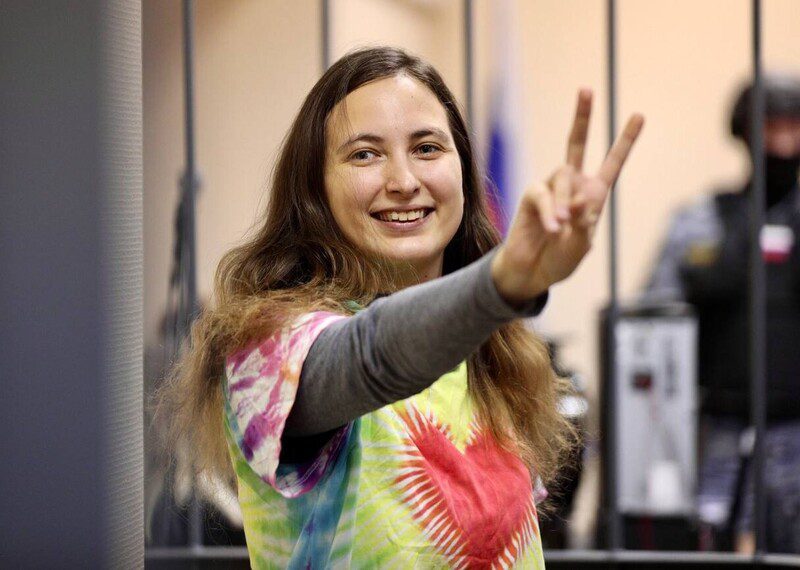
After huge public campaigning, artist and anti-war activist Aleksandra (Sasha) Skochilenko was freed in a historic prisoner swap in August 2024. The deal was brokered between Russia and Belarus on the one hand and Germany, Norway, Poland, Slovenia and the USA on the other.

Woman in rainbow tie-dye tshirt smiles and makes a v / peace hand gesture.
Aleksandra Skochilenko on the day of sentencing, November 16, 2023.

Rita Karasartova is a human rights defender and expert in civic governance from Kyrgyzstan. For over a decade she dedicated her life to providing independent legal advice, helping people whose rights had been violated. Charged with attempting to “violently overthrow the government”, which carries a maximum sentence of 15 years’ imprisonment, Rita and 21 other defendants were acquitted on 14 June 2024.   

In August 2017, Myanmar’s military unleashed a deadly crackdown on Rohingya Muslims – an ethnic minority who have faced decades of severe state-sponsored discrimination in Myanmar. Over 620,000 Rohingya fled to Bangladesh after security forces unleashed a campaign of violence, killing an unknown number of Rohingya; raping Rohingya women and girls; laying landmines; and burning entire Rohingya villages.  

Fearing for their lives, then 17-year-old Maung Sawyeddollah and his family walked 15 days to Bangladesh, where they reached Cox’s Bazar refugee camps. Fuelled by his desire to become a lawyer, Sawyeddollah wanted to seek justice for the suffering around him.

Alongside his studies, he started a campaign calling for Facebook’s owner, Meta, to take responsibility for the way its algorithms amplified anti-Rohingya incitement on the Facebook platform, fuelling the Myanmar military’s violence.  

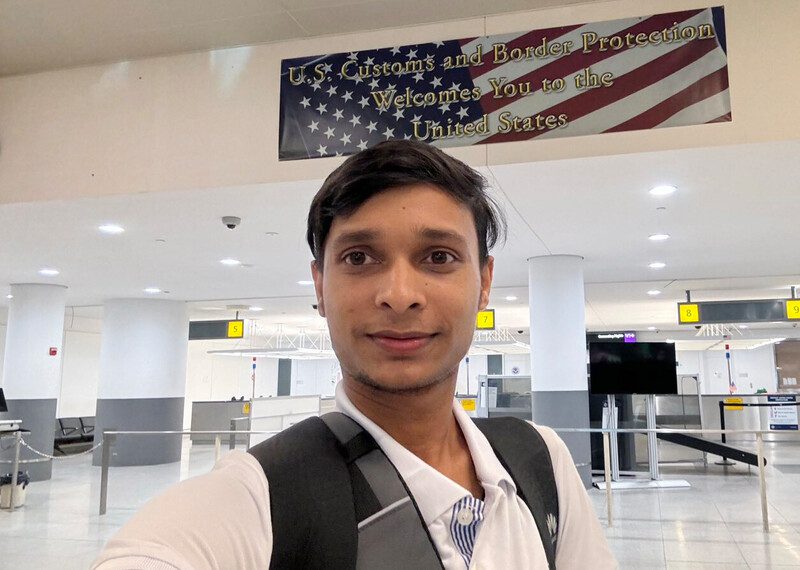
In 2023 Sawyeddollah was facing serious security risks in the refugee camps. Together with partners Victim Advocates International and Dev.tv, Amnesty International put together resources to help ensure Sawyeddollah’s safety. Through Amnesty’s Global Relief Team he was provided with urgent financial assistance to support his security needs throughout the year. In August 2024, Sawyeddollah was granted a student visa and moved to the USA to study. He landed in New York City on 19 August 2024, and he is now an international student at New York University.

Young person wearing a backpack taking a selfie in a US airport.
Maung Sawyeddollah, in New York, USA, 2024.

Open Global Rights on creating pathways for environmental defenders in the trickiest places

October 26, 2024

Grassroots environmental defenders are building a variety of strategic, community-based approaches to environmental justice. Global actors can do more to support their work write Rebecca Iwerks & Ye Yinth & Otto Saki on 14 October 2024 in Open Global Rights.

Fighting for land, environmental, and climate justice is risky. Global Witness annually reminds us of the staggering number of people who are killed for defending their land—over 2,100 since 2012. And lethality is only the tip of the iceberg, one of a multitude of violent tactics that people face when they speak up for their community. [see also: https://humanrightsdefenders.blog/2024/09/18/global-witness-2023-2024-annual-report-violent-erasure-of-land-and-environmental-defenders/]

The last few years have seen encouraging steps to respond through global and regional policy. National governments have started to make specific commitments to protect environmental rights defenders, deeming it necessary to address the climate crisis. The Escazu agreement in Latin America has explicit requirements for the state protection of environmental rights defenders. [NOTE: On 16 October 2024 civil society in the Americas has issued an urgent call to accelerate the implementation of the Plan of Action on Human Rights Defenders, of the Escazú Agreement, adopted five months ago].Just this month, the UNFCCC Supervisory Body for Article 6.4 and the UN Secretary General’s Panel on Critical Energy Transition Minerals showed how global bodies can incorporate the protection of environmental rights defenders directly into climate policy. More broadly, hundreds of organizations have pooled their efforts to end retaliation against environmental defenders through the ALLIED network.

What do we do while we wait for momentum to build and for policy to translate into practice? We can draw hope from thoughtful, strategic examples of grassroots legal empowerment. Throughout the world, legal empowerment advocates—people helping individuals and groups know, use, and shape the law with the support of community paralegals—are assisting communities in registering their land, stopping corporate pollution of their water, and negotiating fair land use deals even in the most difficult places. 

Last year, we examined the experiences of environmental defenders who were able to continue their work in repressed environments, using tenets of legal empowerment to find pathways to justice in ways that reduce their risk. Here’s what we saw:

  1. Building community power.
  2. Changing paths to remedy.
  3. Building relationships with allies. …..
  4. Knowing, using, and shaping the law to respond to security concerns.

How do we super-charge support for this subtle, effective protection alternative? 

While grassroots justice advocates are continuing to seek remedies in tricky places, global actors can do more to support them. The primary shift that can support this type of innovative risk response is to provide flexible, unrestricted funding directly to grassroots justice advocates, whether through philanthropy or from pooled private sector funds that facilitate independent legal and technical support. Flexible funding allows the practitioners to shift their plans as pathways become riskier; it also allows them to invest in security equipment that may not clearly fit into a project-driven budget. Openness to different types of reporting can allow grassroots justice advocates to make decisions about what information is safest for them to reveal without concerns about financial security.

Secondly, those who influence global frameworks, such as the UN Sustainable Development Goals and the United Nations Framework Convention on Climate Change (UNFCCC), can do more to incorporate the security of environmental rights defenders into these frameworks. For example, the security of environmental rights defenders is integral to the access to justice encompassed by Sustainable Development Goal 16, and progress on that issue should be included in all SDG 16 reporting. Within the UNFCCC, the language protecting defenders from Article 6.4 Supervisory Body and the Secretary General’s Panel on Critical Energy Transition Minerals should be mirrored throughout climate policy frameworks and resourced during their implementation. 

While the actions against environmental defenders are shocking, there are significant steps the rights community can take now to support grassroots actors moving forward.

https://www.openglobalrights.org/creating-pathways-to-land-and-environmental-justice-in-the-trickiest-places/

Human rights defender Melani Gunathilaka from Sri Lanka

October 23, 2024

Melani Gunathilaka is a woman human rights defender and environmental activist from Sri Lanka. She told ISHR about how her experiences in the 2022 protest movement that culminated in the removal of Sri Lanka’s president led her to take action for human rights and she shared her hopes for her country’s future in the wake of its recent presidential elections.

The Women Human Rights Advocacy Week, hosted by ISHR, Just Associates (JASS), Peace Brigades International (PBI), Forum Asia, Amnesty International, and the Women Human Rights Defenders International Coalition (WHRD-IC) gathered 11 accomplished women environmental defenders and Indigenous leaders from ten countries.

https://ishr.ch/defender-stories/human-rights-defenders-story-melani-gunathilaka-from-sri-lanka

Brazilian nun Rosita Milesi is the Laureate of the 2024 UNHCR Nansen Refugee Award

October 22, 2024

A Brazilian nun who has helped refugees and migrants for 40 years on Wednesday won the Nansen prize awarded every year by the U.N. High Commission for Refugees for outstanding work to protect internally displaced and stateless people.

Sister Rosita Milesi, 79, is a member of the Catholic order of the Scalabrini nuns, who are renowned for their service to refugees worldwide. Her parents were poor farmers from an Italian background in southern Brazil, and she became a nun at 19.

As a lawyer, social worker and activist, Milesi championed the rights and dignity of refugees and migrants of different nationalities in Brazil for four decades.

https://www.trueheroesfilms.org/thedigest/awards/CC584D13-474F-4BB3-A585-B448A42BB673

She is the second Brazilian to receive the award. Former Sao Paulo Archbishop Dom Paulo Evaristo Arns won the prize in 1985.

Milesi leads the Migration and Human Rights Institute (IMDH) in Brasilia, through which she has helped thousands of forced migrants and displaced people access essential services such as shelter, healthcare, education and legal assistance.

She coordinates RedeMIR, a national network of 60 organizations that operates throughout Brazil, including in remote border regions, to support refugees and migrants.

https://www.unhcr.org/news/press-releases/five-trailblazing-women-win-unhcr-s-nansen-refugee-awards-their-life-changing

https://www.reuters.com/world/americas/brazilian-nun-awarded-un-refugee-prize-work-with-migrants-2024-10-09/

Prominent Baluch human rights defender stopped from attending TIME event in US and then assaulted

October 22, 2024

Front Line Defenders call for the Pakistani authorities to be held accountable for their mistreatment and abuse of prominent Baloch woman human rights defender Dr. Mahrang Baloch and other human rights defenders accompanying her in Karachi, on 8 October 2024. The woman human rights defender was attacked by Sindh police while she was returning from the Karachi’s Jinnah international airport after immigration authorities denied her permission to leave the country.

Dr. Mahrang Baloch is a woman human rights defender and a staunch advocate for the rights of the ethnic Baloch community in Pakistan. She has campaigned peacefully against systemic violations including extra judicial killings, enforced disappearances, arbitrary detentions and custodial torture in Balochistan. Human rights defenders speaking out against state violence, especially seeking to hold the military and intelligence agencies accountable, undertake significant risks – against themselves and their families.

On 7 October 2024, Pakistani authorities prevented Dr. Mahrang Baloch from leaving the country. The woman human rights defender was to attend an event in New York organized by TIME which had named her in the TIME100 Next 2024 List recognizing her human rights work. Unfortunately immigration officers at the Karachi airport withheld her passport for several hours and denied her permission to board her flight without any legal basis or reasoning. Dr. Mahrang Baloch finally left the airport at around midnight after she recovered her passport. Shortly after, her vehicle was intercepted by a group of officers from the Sindh police on the old airport road in close proximity to the airport. Police brutally beat and abused Dr. Mahrang Baloch and several other human rights defenders including Sammi Deen Baloch. Police illegally seized Dr. Mahrang’s passport and mobile phone. They also took the vehicle keys, leaving the human rights defenders stranded on a deserted road at late hours in the night.

Reprisals including restrictions on travel are common in Pakistan, especially for those who speak out against state repression. In August 2024, Sammi Deen Baloch, the Front Line Defenders award winner for 2024 was prevented from traveling to Geneva for an advocacy mission to highlight human rights issues in Balochistan. The attack on Dr. Mahrang Baloch is not an isolated incident. It spotlights what many human rights defenders in Pakistan face as punishment for their work. Human rights defenders from oppressed communities such as the Baloch are especially targeted. State response to peaceful campaigns by the Baloch Yakjehti Committee (Baloch Solidarity Committee) has been to suppress protests and campaigns with brute force and repressive measures including criminalization.

https://www.frontlinedefenders.org/en/statement-report/pakistan-woman-human-rights-defender-dr-mahrang-baloch-prevented-leaving-pakistan

https://www.rferl.org/a/pakistan-baloch-baluch-rights-travel-ban/33151431.html