Author Archive

Profile of Putla: a 75-year-old indigenous rights defender in Cambodia

May 16, 2019

….if you drive two and a half hours West of Cambodia’s capital Phnom Penh, you reach a community consisting of five small villages with a total population of around 1,350 people. They are the last members of the indigenous Souy people, who until recently, lived peacefully on their ancestral land. This is where the indigenous rights defender Putla has lived most of her life – except when she was forced to move away by Pol Pot’s Khmer Rouge regime in 1979.

Today, she is a 75-year-old woman whose skin has been tainted by the sun and from a hard life. She is a tiny woman, not more than 150 centimeters tall, and often dresses in the Souy people’s traditional black cloth. Putla is a woman who looks fragile at first sight – but this impression only lasts until she starts to speak, or until you look into her eyes. She has a strong and crisp voice, and her eyes reflect the hardships that she has endured in her life. She is a very warm woman who often finishes her tirades with heartfelt laughter. Read the rest of this entry »

Call for applications by human rights defenders at risk to participate in Shelter City, Netherlands

May 16, 2019

Please distribute this Call for temporary relocation in 2019 to human rights defenders who need it.

Justice and Peace Netherlands is launching a new call for human rights defenders at risk to participate in the Shelter City initiative around September 2019. The deadline to apply is 31 May 2019.  Shelter City offers human rights defenders (HRDs) at risk a possibility for rest and respite by letting them escape temporarily from a threatening situation. The initiative can benefit human rights defenders that are threatened or under intense pressure due to their work. Shelter City is an initiative coordinated by Justice and Peace Netherlands together with  municipalities in the Netherlands, local partners, and the Dutch Ministry of Foreign Affairs.
How does Shelter City work?
Through temporary relocation, human rights defenders will be offered a shelter for 3 months in one of the Shelter Cities in the Netherlands, during which they can rest, continue their work in safety, build up capacity (including a one-week compulsory training on security), extend their network and raise awareness about the situation in their country. Activities can include meetings with NGOs and public authorities, public lectures, rest or leisure, treatment for work-related problems, continuing working on human rights in their country, raising awareness of human rights among the Dutch public or participating in local initiatives organised by the municipality and/or the host organisation. At the end of the programme, participants are expected to return with new tools and energy to carry out their work at home. A monthly stipend sufficient to cover costs of living, accommodation, health insurance, visa and return flight tickets to The Netherlands are provided. In addition, personal accompaniment is provided to the participant.
Who can apply for Shelter City?
For the purposes of Shelter City, the term HRD is intended to refer to the broad range of activists, journalists, scholars, writers, artists, political figures, lawyers, civil rights defenders, independent media professionals, civil society members, and others working to advance human rights and democracy peacefully around the world.
Applicants must fulfil the following conditions:
In order to be eligible to the Shelter City programme, HRDs must meet the following conditions:

  1. They implement a non-violent approach in their work;
  2. They are threatened or otherwise under pressure due to their work;
  3. They should be able to be relocated for a period of maximum 3 months. Limited spots are available for people who are not able to stay for the full 3 months;
  4. They are willing and able to return to their country of origin after 3 months;
  5. They are willing to speak publicly about their experience or about human rights in their country to the extent that their security situation allows;
  6. They have a conversational level* of English (limited spots are available for French or Spanish speaking HRDs);
  7. They are willing and able to come to The Netherlands without accompaniment of family members;
  8. They have a valid passport (with no less than six months of validity) or be willing to carry out the procedures for its issuance. Justice and Peace covers the costs of issuing a passport and / or visa (if applicable);
  9. They are not subjected to any measure or judicial prohibition of leaving the country;
  10. They are willing to begin their stay in The Netherlands around September 2019.

To apply or submit the application of a human rights defender, please fill in the form by clicking ‘Apply Now’ below.Application forms must be completed by 31 May 2019, at 23:59 CET (Central European Time). An independent commission will select the participants.
Apply Now for Shelter City 2019 <https://form.jotformeu.com/91282390458361>
Note that the selected human rights defenders will not be automatically allowed into the Shelter City programme as Justice and Peace is not in control of issuing the required visas to enter the Netherlands. For more information, please contact us at sheltercity@justiceandpeace.nl

For last year’s call, see: https://humanrightsdefenders.blog/2018/11/13/shelter-city-netherlands-new-call-for-temporary-relocation-in-2019/

European governments should stop treating solidarity and compassion as a crime

May 15, 2019

Two recent cases of criminalization of human rights defenders in Europe helping people at sea:

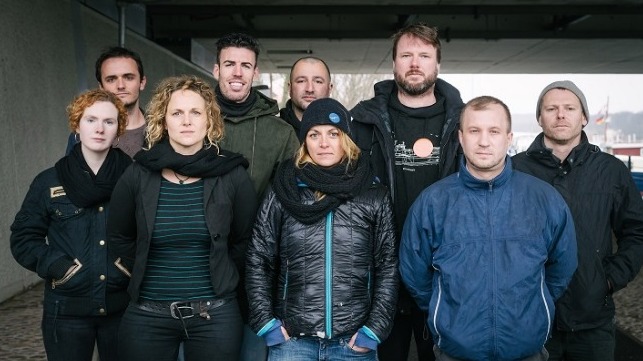
Iuventa crew
Iuventa crew

On 13 May 2019 MarEx  reported that the crew of the rescue ship Iuventa operated by the German NGO Jugend Rettet has received the Swiss Paul Grüninger human rights award for saving the lives of around 14,000 of men, women and children in the central Mediterranean. For more on this award, see: http://www.trueheroesfilms.org/thedigest/awards/paul-grueninger-award

The award is seen as a statement against the criminalization of those helping people at sea and comes whilst the crew is under criminal investigations in Italy for “aiding and abetting illegal immigration.” They face up to 20 years in prison and fines of 15,000 Euro ($16,900) per saved person. The prize money of 50,000 Swiss francs contributes to the defense.

The Iuventa was the first rescue vessel seized in Italy in August 2017. Captain Dariush was master of the Iuventa for three voyages off the Libyan coast: “We’re being charged for saving lives. This is absurd,” he said. “It is European politicians who block any safe way for people in need, so we had to act.

The crew says: “Although we have to stand trial, it is us who accuses Europe. We accuse European politicians of turning their backs on people in need. We accuse the E.U. of collaborating with regimes who violate human rights.” The Italian public prosecutor’s office has been investigating the crew for almost two years. Covert investigators claim to have observed the Iuventa crew cooperating with smugglers. However, the NGO claims that scientists at Goldsmiths, University of London have said there is no evidence for this. “They have compared the accusations of the Italian police with all available data, meteorological measurements, logbooks and recordings of the Reuters agency. In their study for Forensic Architecture, they conclude that the allegations are false.” The trial is expected to begin in autumn, and it is expected that charges will be brought against the 10 crew members. It is a precedent for Europe, says lead lawyer Nicola Canestrini: “This trial will show whether Europe can continue to stand for fundamental rights and solidarity in the world.

——–

Tom Ciotkowski is facing up to five years in prison and a fine of up to 7,500 Euros on trumped up charges. In July 2018, he was observing French riot police preventing volunteers from distributing food to migrants and refugees in Calais. He was charged with contempt and assault after he challenged the violent actions of a policeman against another volunteer. “Tom Ciotkowski is a compassionate young volunteer who was taking action to support migrants and refugees when he was arrested. He has committed no crime and is being unjustly targeted for documenting the abusive behaviour of the police in Calais,” said Amnesty International’s Senior Campaigner on Migration Maria Serrano.

Tom’s case is sadly emblematic of the harassment, intimidation and attacks that human rights defenders supporting migrants and refugees face at the hands of police in Calais. His case also reflects a wider European trend of criminalizing acts of solidarity, as a way of discouraging others from standing up for human rights. We need courageous, compassionate people like Tom more than ever

[BACKGROUND At the end of July 2018, Tom Ciotkowski was observing French riot police ID-checking volunteers who were trying to distribute food to migrants and refugees. He recorded on his mobile phone an official pushing and kicking a volunteer. When Tom complained about the behaviour of the police, an officer approached him and another female volunteer, who he hit with a baton. When Tom asked the officer for his identification number and told the policeman not to hit women, he was pushed hard by an officer and fell backwards over a metal barrier separating the pavement from the road. As Tom fell backwards, a passing lorry narrowly missed him. He was then arrested, put in custody for 36 hours and charged with contempt and assault (“outrage et violence”). In May 2019, Tom filed a complaint against the police officer who pushed him and against other officers who provided reports stating false facts against Tom to support his arrest and prosecution.]

See also: https://humanrightsdefenders.blog/2018/12/02/un-experts-consider-human-rights-defenders-in-italy-under-threat/

Essex university uses human rights award to raise awareness among youth

May 15, 2019
Students from Manningtree High School after winning the Human Rights Prize with Emma Berry, gallery manager at Art Exchange and Katya Al Khateeb from the university's Human Rights Centre
Students from Manningtree High School after winning the Human Rights Prize with Emma Berry, gallery manager at Art Exchange and Katya Al Khateeb from the university’s Human Rights Centre

Nothing world shocking but good to see how human rights awards can be used at the national level to inspire students:

The University of Essex’s annual Human Rights Prize is open to secondary schools and sixth form colleges and aims to highlight human rights issues and empower young people to stand up for others. Manningtree High School students spent a day on campus in December as part of the project. They heard bite-size lectures from human rights experts, visited a marketplace in the Hex – staffed by representatives from Amnesty International, Hope Not Hate and Refugee Action Colchester – and brainstormed ideas with visual artist Jane Frederick and poet Luke Wright.

They then split into smaller groups to develop their creative projects over the next ten weeks. The students’ final presentations, delivered to an audience at Essex Business School, showcased the campaigns staged in their own schools, which featured videos, photography, dance and poetry. A spokesman for Manningtree High School said: “As part of their work, the group planned in detail and decided to visit Highfields Primary to work with Year 5’s on human rights.,,On our return to the university, loaded with props and a well-rehearsed presentation, our students excelled.

https://www.harwichandmanningtreestandard.co.uk/news/17638711.manningtree-school-scoops-human-rights-award/

2019 Laureates of the Vaclac Havel Prize for Creative Dissent announced

May 15, 2019

Today, 15 May 2019, the Human Rights Foundation (HRF) announced the three recipients of the 2019 Václav Havel International Prize for Creative Dissent. For more on this and other awards, see: http://www.trueheroesfilms.org/thedigest/awards/vaclav-havel-prize-for-creative-dissent. The laureates are Ramy Essam, an Egyptian musician in exile, Rap Against Dictatorship, an anti-authoritarian musical group from Thailand, and Rayma Suprani, a Venezuelan political cartoonist. More on these exceptional artists: Read the rest of this entry »

George Clooney: one man shows also carry risks..

May 14, 2019

I mentioned in a positive way George Clooney’s action in the human rights area, recently re Brunei [https://humanrightsdefenders.blog/2019/04/04/brunei-back-to-the-middle-ages-will-hotel-boycott-work/]. I believe his ‘instincts’ are good but there is always a danger with basically a ‘one-person’ outfit that there is insuffcient networking/research and that individual words trump wise statements. Michael Taylor for Reuters reports on 14 May 2019 that “George Clooney misfires among LGBT+ activists over ‘warning shot’ to Brunei neighbours“.  The key issue is that some Indonesian and Malaysian human rights defenders think that their countries – which have a modicum of democratic process compared to Brunei – should not be tarred with the same brush.

Oscar-winning actor George Clooney was criticised by LGBT+ activists after he called a boycott of luxury hotels owned by Brunei a “warning shot” to Indonesia and Malaysia should they consider introducing similar anti-gay laws.  “It sends a warning shot over to countries like Indonesia and Malaysia – who are also considering these laws – that the business people, the big banks, those guys are going to say ‘don’t even get into that business’.

But Clooney’s remarks sparked an online backlash as critics and regional LGBT+ activists pointed out major differences between Brunei and its Islamic neighbours. “I call on George Clooney and Hollywood to listen and work together with local activists and human rights defenders on the ground,” Numan Afifi, president of the LGBT+ advocacy PELANGI Campaign in Malaysia, told the Thomson Reuters Foundation. “Local activists have been putting their lives at risk on the ground working, for years,” Afifi said. “His statement, while well-meaning, might also be counterproductive for our case.”

Dede Oetomo, one of Indonesia’s most prominent LGBT+ activists and founder of LGBT+ rights group GAYa NUSANTARA, also questioned Clooney’s comments. “Malaysia and Indonesia are larger entities and have some democratic processes that although not perfect, they work,” Oetomo said. “Pressure from within is more possible in both countries, though it is frustratingly slow and protracted.”

http://news.trust.org//item/20190514105512-1ox5t/


Beyond WhatsApp and NSO – how human rights defenders are targeted by cyberattacks

May 14, 2019
Several reports have shown Israeli technology being used by Gulf states against their own citizens (AFP/File photo)

NSO Group has been under increased scrutiny after a series of reports about the ways in which its spyware programme has been used against prominent human rights activists. Last year, a report by CitizenLab, a group at the University of Toronto, showed that human rights defenders in Saudi Arabia, the United Arab Emirates and Bahrain were targeted with the software.

In October, US whistleblower Edward Snowden said Pegasus had been used by the Saudi authorities to surveil journalist Jamal Khashoggi before his death. “They are the worst of the worst,” Snowden said of the firm. Amnesty International said in August that a staffer’s phone was infected with the Pegasus software via a WhatsApp message.

——-

Friedhelm Weinberg‘s piece of 1 May is almost prescient and contains good, broader advice:

When activists open their inboxes, they find more than the standard spam messages telling them they’ve finally won the lottery. Instead, they receive highly sophisticated emails that look like they are real, purport to be from friends and invite them to meetings that are actually happening. The catch is: at one point the emails will attempt to trick them.

1. Phishing for accounts, not compliments

In 2017, the Citizen Lab at the University of Toronto and the Egyptian Initiative for Personal Rights, documented what they called the “Nile Phish” campaign, a set of emails luring activists into giving access to their most sensitive accounts – email and file-sharing tools in the cloud. The Seoul-based Transitional Justice Working Group recently warned on its Facebook page about a very similar campaign. As attacks like these have mounted in recent years, civil society activists have come together to defend themselves, support each other and document what is happening. The Rarenet is a global group of individuals and organizations that provides emergency support for activists – but together it also works to educate civil society actors to dodge attacks before damage is done. The Internet Freedom Festival is a gathering dedicated to supporting people at risk online, bringing together more than 1,000 people from across the globe. The emails from campaigns like Nile Phish may be cunning and carefully crafted to target individual activists.. – they are not cutting-edge technology. Protection is stunningly simple: do nothing. Simply don’t click the link and enter information – as hard as it is when you are promised something in return.

Often digital security is about being calm and controlled as much as it is about being savvy in the digital sphere. And that is precisely what makes it difficult for passionate and stressed activists!

2. The million-dollar virus

Unfortunately, calm is not always enough. Activists have also been targeted with sophisticated spyware that is incredibly expensive to procure and difficult to spot. Ahmed Mansoor, a human-rights defender from the United Arab Emirates, received messages with malware (commonly known as computer viruses) that cost one million dollars on the grey market, where unethical hackers and spyware firms meet. See also: https://humanrightsdefenders.blog/2016/08/29/apple-tackles-iphone-one-tap-spyware-flaws-after-mea-laureate-discovers-hacking-attempt/]

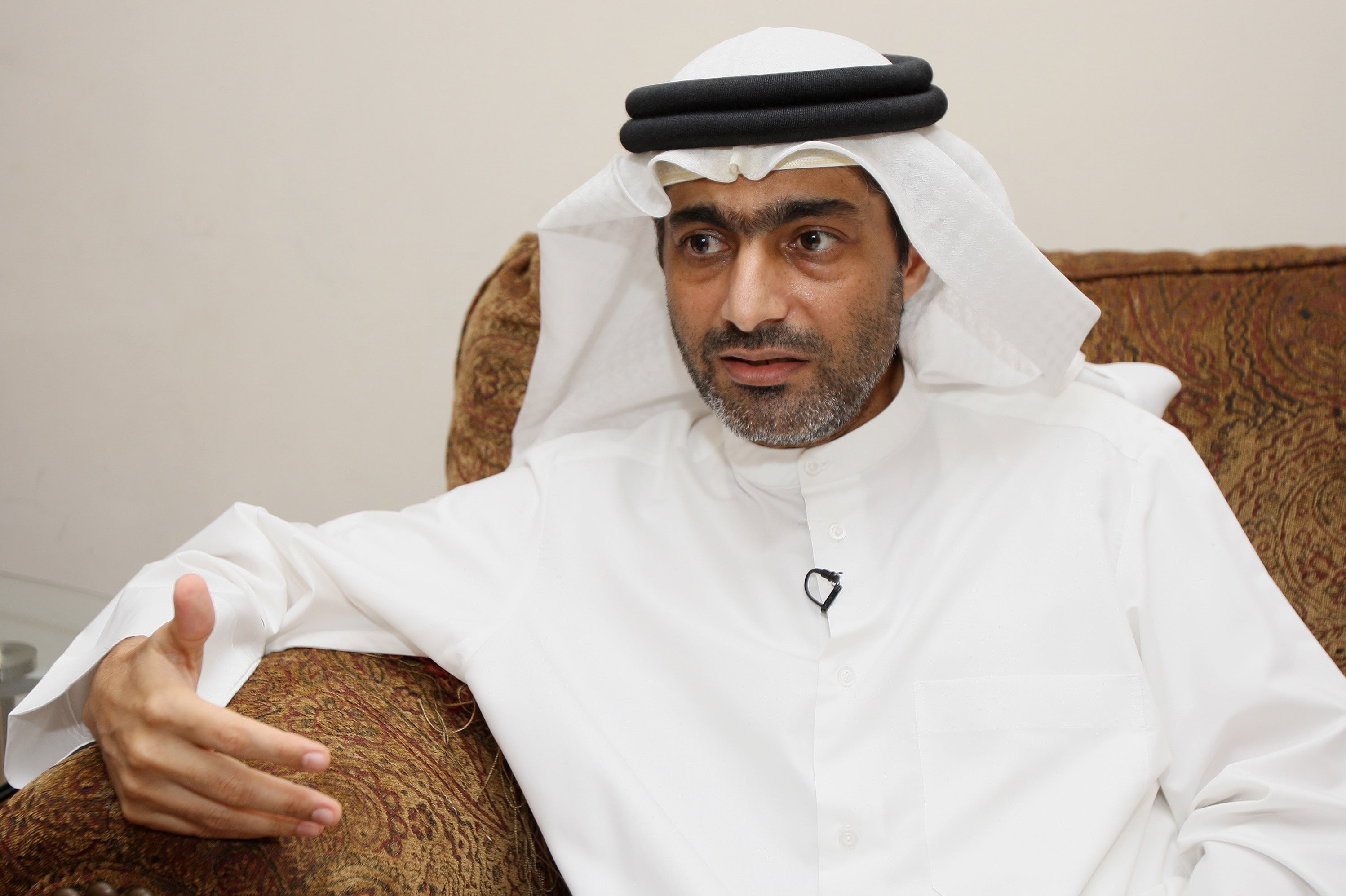
Rights defender Ahmed Mansoor in Dubai in 2011, a day after he was pardoned following a conviction for insulting UAE leaders. He is now in prison once more.

Rights defender Ahmed Mansoor in Dubai in 2011. Image: Reuters/Nikhil Monteiro

3. Shutting down real news with fake readers

Both phishing and malware are attacks directed against the messengers, but there are also attacks against the message itself. This is typically achieved by directing hordes of fake readers to the real news – that is, by sending so many requests through bot visitors to websites that the servers break down under the load. Commonly referred to as “denial of service” attacks, these bot armies have also earned their own response from civil society. Specialised packages from Virtual Road or Deflect sort fake visitors from real ones to make sure the message stays up.


A chart showing how distributed denial of service (DDoS) attacks have grown over time.

How distributed denial of service (DDoS) attacks have grown. Image: Kinsta.com; data from EasyDNS

Recently, these companies also started investigating who is behind these attacks– a notoriously difficult task, because it is so easy to hide traces online. Interestingly, whenever Virtual Road were so confident in their findings that they publicly named attackers, the attacks stopped. Immediately. Online, as offline, one of the most effective ways to ensure that attacks end is to name the offenders, whether they are cocky kids or governments seeking to stiffle dissent. But more important than shaming attackers is supporting civil society’s resilience and capacity to weather the storms. For this, digital leadership, trusted networks and creative collaborations between technologists and governments will pave the way to an internet where the vulnerable are protected and spaces for activism are thriving.

——–

UK issues call for applications for funding human rights defenders work

May 14, 2019

On 13 May 2019 the UK Mission to the United Nations in New York issued a call for Programme Fund bids for the fiscal year 2019-2020.

placeholder

The UK Mission to the United Nations in New York is running an open call for project bids for funding under the Foreign and Commonwealth Office’s International Programme in support of the UK Government’s objectives at the UN in New York on Freedom of Religion or Belief and Human Rights Defenders. Funding will be available for ODA-eligible projects running between 1 April 2019 and 31 March 2020. Bids will be accepted from civil society, including NGOs and think tanks, as well as international organisations, including UN offices, agencies, funds and programmes. As a first step, interested parties must submit a written expression of interest to uk@un.intby Tuesday 21 May.

For more information on the programme, guidance for bidding, and additional deadlines, see the Programme Fund form below.

UN WEB TV: panel on human rights defenders and business

May 14, 2019
Panel on Safeguarding human rights defenders – Forum on Business and Human Rights 2018

On 27 November 2018 there was panel on “Safeguarding human rights defenders: new efforts and tackling growing threats” during the  Forum on Business and Human Rights. It is a bit old hat, but I wanted to show it as a good example of what is nowadays to be found on the internet as ‘on demand video’.

Brief description of the session :
The need for enhancing protection of human rights defenders who speak up against business-related human rights impacts is a standing item on the Forum’s agenda. This session led by the UN Working Group in collaboration with NGOs consists of two parts:
1. The first part of the session will be dedicated to showcasing new efforts to strengthen corporate respect and support for human rights defenders. Presentations will be brief, but meant to highlight encouraging initiatives and action.
2. The second part of the session will focus on the growing trend of criminalization and legal harassment of defenders who speak up against business-related impacts and identify concrete action to be taken by governments, business and others to address it. The panel aims to identify what “human rights due diligence” is needed and what are some of the practical considerations for preventing that companies become involved in criminalization and legal harassment of defenders who engage in legitimate efforts to address potential and actual adverse impacts. This will include identifying steps to be taken by:
•home States
•host States
•companies that cause negative impacts and who are the main targets of criticism
•companies that have business relationships to those causing the abuse (typically transnational corporations and their responsibility to address impacts in their supply chain)
•investors
•companies that invest in contexts where criminalization of human rights defenders is a salient issue

Moderator/ Introductory Remark…
•Michael Ineichen, Programme Director, International services for Human Rights
•Anita Ramasastry, Member, UN Working Group on Business and Human Rights

Speakers
•Brittany Benowitz, Chief Counsel, ABA Center for Human Rights
•Vaewrin Buangern, Community member from Lampang Province, Northern Thailand, Community member from Lampang Province, Northern Thailand
•Bennett Freeman, author of “Shared Space Under Pressure: Business Support for Civic Freedoms and Human Rights Defenders”, author of “Shared Space Under Pressure: Business Support for Civic Freedoms and Human Rights Defenders”
•Andreas Graf, Human Rights Manager, Sustainability & Diversity Department, FIFA
•Johanna Molina Miranda, Researcher on Human Rights and Business, CREER Lawyer, Specialist in International Law of Human Rights and International Humanitarian Law with studies in Politics and International Security and currently studying for a Masters in Public International Law.
•Mohammad Nayyeri, Legal Advisor and Program Manager, Justice for Iran
•Ana Sandoval, Peaceful Resistance “La Puya”, Guatemala, Peaceful Resistance “La Puya”, Guatemala
•Clément Nyaletsossi Voule, UN Special Rapporteur on Rights to Freedom of Peaceful Assembly and of Association

(Forum on Business and Human Rights)

Winners of the 2019 Goldman Environmental Prize

May 13, 2019
This year is the 30th anniversary of the Goldman Environmental Prize which honors grassroots environmental heroes from six continental regions: Europe, Asia, North America, Central and South America, Africa, and island nations. For more more on this and other awards, see: http://www.trueheroesfilms.org/thedigest/awards/goldman-environmental-prize .This year’s winners are Alfred Brownell from Liberia, Bayarjargal Agvaantseren from Mongolia, Ana Colovic Lesoska from North Macedonia, Jacqueline Evans from the Cook Islands, Alberto Curamil from Chile, and Linda Garcia from the United States. The winners were honored at the San Francisco Opera House in California, U.S., on 29 April 2019

https://news.mongabay.com/2019/04/meet-the-winners-of-the-2019-goldman-environmental-prize/

Goldman Prize winner survives armed attack on Afro-Colombian social leaders