Author Archive

Rasmus Alenius Boserup new Executive Director of EuroMed Rights

May 21, 2019

On 16 May 2019 the NGO EuroMed Rights announced that it has appointed Rasmus Alenius Boserup as its new Executive Director. He will assume the position on 1 June, 2019, succeeding Marc Schade-Poulsen, who will take up a position as consultant and research fellow at the University of Roskilde.

A Danish national, Rasmus Alenius Boserup has a background in social science research and organisation management. Until 2019, he worked as Senior Researcher at the Danish Institute for International Studies focusing on power and politics in the Middle East and North Africa. Prior to this, he served as Executive Director of the Danish-Egyptian Dialogue Institute in Cairo from 2008 to 2011. An expert and opinion writer in Danish and international media, Boserup holds a doctoral degree in culture and civilisation from École des Hautes Études en Sciences Sociales in Paris and a PhD degree in Arabic Studies from the University of Copenhagen.

Boserup said: “I look forward to take up the position with EuroMed Rights. I have followed the network since its creation in 1997 and have collaborated with several of its outstanding member organisations in the South and in the North.”  “Today we face numerous worrying trends in the Euro-Mediterranean region. The crumbling of the liberal order and rise of international authoritarianism add fuel to populism and illiberalism in Europe. And it further emboldens repressive and autocratic leaders in the Middle East and North African. Under these urgent conditions, I look forward to engage fully in promoting and defending human rights and democracy as a part of a prestigious organisation like EuroMed Rights.”

EuroMed Rights President Wadih Al-Asmaradded: “We are pleased to have Rasmus on board and look forward to leveraging his expertise in steering EuroMed Rights forward. Our network has grown to occupy a strategically important position while Marc Schade-Poulsen held the position of Executive Director and we are eager to capitalise on this with Rasmus Alenius Boserup”.

https://mailchi.mp/euromedrights/euromed-rights-appoints-new-executive-director?e=1209ebd6d8

Profile of Chinese human rights Defender Teng Biao

May 20, 2019
China Digitial Times (CDT) is expanding its wiki to include short biographies of , cartoonists, , and other people pushing for change in China. The wiki is a work in progress. Here the case of Teng Biao, of whom I wrote earlier in 2015: https://humanrightsdefenders.blog/2015/03/17/stop-dancing-with-dictators-says-chinese-human-rights-defender-teng-biao/.

. (Source: Wikipedia)

Teng Biao, born on August 2, 1973 in Jilin Province, is a human rights lawyer, activist, and former professor who is dedicated to exposing China’s human rights abuses and fighting against its use of the death penalty. After being repeatedly detained for his work, Teng moved to the U.S. in 2014, where he has continued his life’s work as a visiting scholar at institutions such as Princeton, Harvard, and New York University.

Teng obtained his Doctor of Law from Beijing University in 2002 before joining the faculty of the China University of Political Science and Law as a lecturer. He later served as a visiting scholar at the Chinese University of Hong Kong and Yale University. He swiftly entered the fore of high-profile legal cases, including but certainly not limited to the Sun Zhigang incident in 2003, serving as counsel for activists Chen Guangcheng and Hu Jia, and death penalty cases such as the Leping case in Jiangxi Province.

Prior to moving to the U.S. in 2014, Teng was subject to multiple instances of police harassment. In 2008, he was detained for two days before being released following widespread calls from both domestic and foreign advocates; in 2010, he was detained for visiting a human rights lawyer under house arrest; in 2011, as those in China began to call for their own Jasmine Revolution, he was detained for ten weeks; in 2013, he was detained for attending Hu Jia’s birthday dinner.

In 2014, Teng relocated to the U.S., where he has continued observing and criticizing Chinese government practices. These include presenting a sobering view on the true nature of Xi Jinping’s corruption crackdown, expressing concern for detained fellow rights lawyer Jiang Tianyong, and calling for President Obama to pressure China on human rights at his last G20 summit appearance.

Teng again roused attention in 2016 when the American Bar Association abruptly cancelled publication of his book “Darkness Before Dawn,” a detailing of his 11-year career as a rights defender in China. The cancellation has been one of many cases of foreign entities who have either bowed to Chinese pressure for fear of upsetting the Chinese government or proactively curried favor for the sake of economic gain.

Over the course of his career, Teng has spearheaded multiple initiatives. He has co-founded two NGOs: Beijing’s China Against the Death Penalty, and the Open Constitution Initiative (Gongmeng), an organization composed of lawyers and academics that advocates for the rule of law in China. From the U.S., Teng co-founded the China Human Rights Accountability Center alongside rights defenders such as Zhou Fengsuo and Chen Guangcheng following the passage of the Global Magnitsky Human Rights Accountability Act under the Obama Administration. The act authorized the president to sanction foreign individuals who commit human rights violations or are engaged in significant levels of corruption. The Center aims to help the U.S. to enforce the Act and introduce similar legislation in other democratic countries.

Teng has been awarded the Human Rights Prize of the French Republic (2007), the NED Democracy Award (2008), Human Rights Watch Hellman/Hammett Grant (2010), Prize for Outstanding Democracy Activist (China Democracy Education Foundation, 2011), and the Religious Freedom and Rule of Law Defender Award (2012).

Entry written by Lisbeth.

Person of the Week: Teng Biao

Profile of Alfred Brownell, Liberian human rights defender for more than 20 years

May 20, 2019

Under the title “This Liberian lawyer has withstood presidents, multinationals and militias” Front Page Africa on Line published on 3 May 2019 an extensive profile of Alfred Brownell.

Twenty-two years ago Alfred Brownell could see a problem. The government of his country, Liberia, was awarding contracts for the exploitation of natural resources without consulting local communities; forest and mineral resources were being taken away with no questions asked. “It was at a time when a very notorious company called OTC and many other companies were cutting down the forest for timber and no benefit was going back to the people,” Brownell says.

Then a law student in the capital, Monrovia, Brownell challenged President Charles Taylor and his government on the operations of OTC – the Oriental Timber Company. The company was later found to be involved in arms smuggling, Taylor is in prison for war crimes and crimes against humanity – and Alfred Brownell has just been awarded the African Goldman Environmental Prize for 2019 at a ceremony in San Francisco. see: https://humanrightsdefenders.blog/2019/05/13/winners-of-the-2019-goldman-environmental-prize/]. Brownell’s organisation, Green Advocates, has become a household name in Liberia as a champion of customary rights to land and natural resources for indigenous communities. He is helping thousands of people around the country to fight multinational companies and regain their rights.

Sowing seeds

In 2003 when the war to oust Taylor was raging in Monrovia, Brownell had just graduated with a degree in Environmental Law from Tulane Law School in New Orleans, Louisiana, the previous year. Green Advocates was still an idea and Brownell had no money – only a vision.. The Fund for Global Human Rights gave Green Advocates its first seed money in 2003 of $10,000 after Brownell returned to Liberia following the ouster of Taylor and Green Advocates began operations from a tiny office in Monrovia. “We did not have a bank account; we were not a formal organisation,” recalls Brownell.

“The Fund for Global Human Rights had a lot of confidence in me. They awarded me the grant even without a formal structure in place.” John Kabia works for The Fund for Global Human Rights as programme officer for thematic initiatives. He has worked closely with Green Advocates over the years and says that the lack of a track record meant that the Fund was taking a risk, but it was a risk worth taking. “We feel at the Fund that our very reason for being is taking those smart risks, because that is the only way you can identify and support new and emerging actors and new ideas,” he says.

He says it is convenient for international donor organisations to support groups they already know. The threshold for approving support is set very high, making it difficult for small and emerging groups like Green Advocates to gain recognition and support to advance their work. However, seed funding can provide an organisation the necessary credibility and opportunities it needs to attract support from other funders and partners. “Often times if people are given the opportunity and investment to turn their ideas into reality, you’d be amazed by what they can do. I think the example is Alfred and Green Advocates,” he says. “Seeing how Alfred and the communities have mobilised and successfully pushed for major policy and legal reform is impressive. I think that type of smart risk-taking is what many other donors and development partners should be taking on.”

But for such risks to be sustainable, Kabia noted that it is critical for seed funding not to be a one-off, short-term support. “Change doesn’t happen overnight,” he says. “Long-term and capacity-building support needs to accompany an initial seed grant in order for promising organisations to thrive and reach their full potential.”

Big concessions, big government

Back in 2003, Liberia was just emerging from conflict and Brownell knew that the country lacked expertise on land and natural resources governance.

“It was sad to see a country with a natural-resource-endowed economy [where] its lawyers were not learning anything about natural resources or environmental laws,” says Brownell. “I said we have to use the law to help our people.”

“When I graduated, we worked to set up Green Advocates to provide support to the poor, marginalised, vulnerable, who had no voice. To focus our effort on creating policies to protect people through advocacy and campaigning for regulations.”

In 2005, Brownell partnered with over a dozen other local organisations and took on the transitional government of Liberia headed by the late Charles Gyude Bryant. It was the first post-war challenge to the government of Liberia by rights groups. The government had awarded contracts to a Chinese company for the shipment of iron ore from the port of Buchanan against the wishes of the citizens. A subpoena was issued by the Supreme Court of Liberia to stop it, but the government defied the court and shipped the ore anyway.

After successfully challenging a government contract to ship iron ore from the port of Buchanan against the wishes of local people, Brownell and Green Advocates began to expand their work. Both the government and the companies that profited from concessions to exploit Liberia’s natural resources began to see them as a threat. Green Advocates was involved in massive public sensitisation about land rights across the country, and started taking on companies as huge as the US tyre and rubber multinational Firestone, the Malaysian palm oil giant Sime Darby and Golden Agri-Resources, the world’s largest oil palm conglomerate – not to mention the government of Liberia itself.

One of the biggest cases involved Firestone, Liberia’s largest and oldest rubber concession-holder. For 75 years it had dumped all its waste into the Farmington River in the community of Owens Grove. That blatantly violated Liberian laws prohibiting the discharge of waste into the water system. Green Advocates filed complaints that led Firestone to create a waste treatment facility after almost a century of operations. The organisation also partnered with other rights groups in a US lawsuit that accused Firestone of using child labour. After six years of litigation Firestone won that case, but significantly the judge ruled that companies can be sued in the US for human rights abuses outside the country. In addition, Firestone was forced to introduce reforms that addressed the root causes of child labour in its plantation. This included reducing the quotas for workers, to prevent them having to bring their children to work, and building more schools within its concession area.

Doing it for the people

By this time Brownell was at odds with Ellen Johnson Sirleaf, who had become president in 2006. As Africa’s first elected female head of state she had won admirers around the world; in 2011 she shared the Nobel Peace Prize. But her international eulogists turned a blind eye to some dubious actions at home: by 2010 her government had awarded massive amounts of land to agriculture companies through a ‘backdoor’ scheme, despite agreeing to landmark land reform.

“You’re talking about 300,000 hectares of forest land without consulting the people” says Brownell. “There was no mapping or surveying to know where the land was, who grew what on the land or what the cultural impact was on the people.”

Brownell says that Green Advocates’ first grant from the Fund for Global Human Rights, and the organisation’s ongoing support over 16 years, has given other funders confidence to provide revenue that has supported other projects. For instance, Green Advocates has also gone on to establish the Alliance for Rural Democracy and the Natural Resources Women Platform, and was key to the formation of the Mano River Union Civil Society Natural Resource Rights and Governance Platform, which now covers eight west African countries.

The fight gets real

As Brownell was fighting to help communities understand their rights to the land and push companies to reform and make policies that would benefit the local population in the concession areas, he also faced a battle of his own. A battle for personal safety.

Brownell and his staff came near death on several occasions while on their many trips in rural areas. On one occasion, in Tarjuwon, Sinoe County, people had complained that Golden Veroleum Liberia had decided to construct an oil mill on a site that was used for annual religious worship. They resisted and Green Advocates was called in to help. Brownell and his colleagues went to Sinoe to see what was happening. On their way to the area, the team came under attack from militia that Brownell believes were working for the company.

The men, dressed in company security uniforms, had set up a roadblock. They were ex-combatants armed with machetes and sticks, according to Brownell. Brownell and his colleagues resigned themselves to death – until the intervention of the town chief.

“I had given up and was just praying to God. I had no idea how we were going to get out of there because we were completely surrounded by these men,” he says.

“We knew that the attack against us in Tarjuwon was not just the company. We think the government was also very complicit in those attacks to try to eliminate us,” he says. Brownell says the Liberian government has been behind several attacks, and felt his organisation was standing in the way of its development objectives. The government did not take kindly to Green Advocates trying to enlighten people on their right to the land and natural resources.

Francis Colee is head of programmes at Green Advocates and has worked on several court cases on land rights issues brought against the Liberian government. He says the government sometimes brands the organisation as anti-development, but its focus is to ensure good investment that protects the rights of people and not alter their livelihood.

“We have argued that it is good that we have investment, but we have also argued that we need to ensure a delicate balance between the protection of human rights, the environment and the investment,” says Colee.

“In most cases, what we have seen is that the project-targeted communities end up becoming worse off than they were before the coming of the investment.”

In 2016, the government accused Brownell of refusing to help give testimony in the trial of the Dutch businessman Guus Kouwenhoven, the former head of the Oriental Timber Corporation – Brownell’s first case. The Green Advocates office in Monrovia was raided and ransacked by plain-clothes police officers. Some of the staff were arrested. The police even went to his home and arrested his uncle when Brownell himself could not be found.

“It was a ploy to get me. They use the criminal justice system to threaten people,” he says.

“They made Liberia very unsafe for me when they started threatening me and so I was forced to flee with my family to come [to the US]. President Sirleaf has directly threatened me, in my face, ‘I will charge you with sedition’.”

In a strongly worded letter to the president of Liberia, the Observatory for the Protection of Human Rights Defenders condemned the attacks on Brownell, and through the support of the Fund for Global Human Rights and other groups he fled the country with his wife and children. He now serves as an associate research professor at Northeastern University School of Law in Boston. Green Advocates’ work in Liberia continues, even with Brownell in the US, through support from a team of dedicated local activists and Green Advocates staff.

Land rights at last

Despite the challenges, Green Advocates has helped ensure Liberia passed sweeping land reform legislation in 2018. Local communities now have the exclusive right to possess and use land for different purposes, and to lease it.

But there is still a long way to go in terms of actual impact on land rights despite these reforms, says Simpson Snoh, who represents the Alliance for Rural Democracy, a Liberian non-governmental body working closely with Green Advocates. Green Advocates is in the process of taking the message to the people, and helping to translate laws into action.

“After years of securing rights for its community partners,” says Brownell, “Green Advocates is currently exploring options for translating these rights into economic opportunities to address not just the bread-and-butter issues these communities face, but a business and development model that can co-exist with nature.”

Snoh says that with funding, local organisations can move quickly to help communities that are facing serious human rights abuses from multinational companies and governments. This is because community-based groups best understand the needs of the communities more and what the issues are.

Brownell echoes Snoh’s sentiments. He believes that international funders should be able to bet their money on local organisations like Green Advocates, just as The Fund for Global Human Rights did when the organisation was still just an idea. He feels Green Advocates has been able to enlighten the people on their basic human right – the right to own land.

“The government’s perception that there was free land or open spaces where they could give concessions to companies was a complete false assumption. All these years the government had lied,” he says.

“The future of Liberia is never ever going to be with massive foreign investment through transnational corporations coming to Liberia. Liberia’s future comes from its own people.”

This article is part of an editorial partnership with the Fund for Global Human Rights.

This Liberian lawyer has withstood presidents, multinationals and militias


Lack of funds forces lack of oversight by UN

May 20, 2019
wrting for IPS on 20 May 2019 relates that the “    

The Geneva-based Office of the UN High Commissioner for Human Rights (OHCHR) says six of the UN’s 10 treaty bodies are being forced to cancel their sessions this year due to financial reasons. The situation has been described as “an unprecedented consequence of some UN member States delaying payments due to the Organisation.” Anna-Karin Holmlund, Senior UN Advocate at Amnesty International, told IPS: “Amnesty is deeply concerned by member states’ delay in paying their assessed contributions, which will have a direct effect on the ability of the UN to carry out its vital human rights work.” By 10 May, only 44 UN member states – out of 193 — had paid all their assessments due, with the United States owing the largest amount.

The OHCHR said last week the cancellations meant that reviews already scheduled with member states, as well as consideration of complaints by individual victims of serious human rights violations — including torture, extra-judicial killings, enforced disappearances -– will not take place as scheduled. “The cancellation of sessions will also have numerous other negative consequences, and will seriously undermine the system of protections which States themselves have put in place over decades,” said a statement released by the OHCHR.

The chairpersons of the 10 Committees are deeply concerned about the practical consequences of cancelling these sessions and have sent a letter to the UN Secretary General and the High Commissioner for Human Rights, requesting they, together with Member States, explore ways of addressing this situation, “as a matter of urgency.”..

http://www.ipsnews.net/2019/05/uns-mandate-protect-human-rights-takes-another-hit/

Gwangju Human Rights Award 2019 to Philippine Carino and Indonesian choir

May 19, 2019

For those – like me – who missed the announcement  of the winners of the Gwangju human rights awards 2019, here a belated post.  [For more on this award see:http://trueheroesfilms.org/thedigest/awards/gwangju-prize-for-human-rights]. The winner is the Philippine human rights defender Joanna Carino.

This undated photo, released by the May 18 Memorial Foundation on April 15, 2019, shows Joanna Carino, a Philippine activist championing the rights of indigenous peoples. (Yonhap)

The Jury said “Carino has created a great sensation for her unyielding strife and sacrifice in fighting against suppression and made a favorable impression on many citizens and activists today.

The biennial special award went to Indonesia’s Dialita Choir, made up of women whose parents, relatives and friends were captured, tortured and exiled during the 1965-1966 communist purge in the Southeast Asian country. The members of Dialita co-initiate social change through singing performances. The award ceremony was on 18 May 2019 as part of events to mark the 39th anniversary of the democratic uprising. Hundreds of citizens were killed in the southwestern city during protests against the military junta of Gen. Chun Doo-hwan in May 1980.

Aachen Peace Prize to Ukrainian journalist Kotsaba severely contested

May 19, 2019

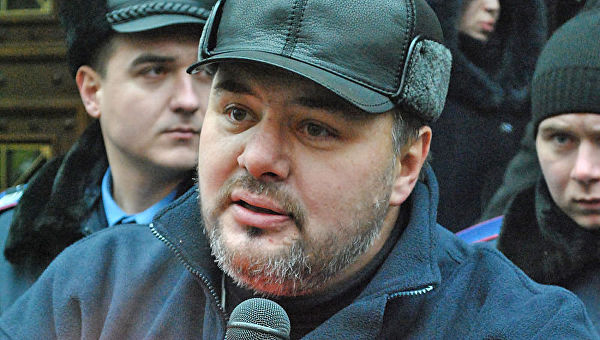
Ruslan Kotsaba Photo Mykola Vasylechko, RIA Novosti

This piece express grave doubt on the decision to award the 2019 Aachen Peace Prize to Ukrainian journalist and  blogger Ruslan Kotsaba because of a shocking anti-Semitic video posted by Kotsaba in 2011. People interested should judge for themselves, so here the full article:

The video certainly contains deeply offensive hate speech, yet it is by no means the only reason why the choice of Kotsaba seems bafflingly inappropriate. The award might possibly have seemed a little more understandable had it been given back in 2015, shortly after Kotsaba was arrested on ‘state treason’ charges.  His claim to a peace prize would still have been doubted by those familiar with his highly misleading reports on the war in Donbas, however his unwarranted prosecution and 14 months’ imprisonment  were over a video opposing mobilization.

It seems he was first nominated in 2015, but was not chosen.  In 2019, however, the Aachen Peace Prize general assembly decided that Kotsaba was an appropriate laureate for a prize given to a person or group “who campaigns for peace and a civic resolution of conflict”.

According to Lea Heuser, a member of the Peace Prize Executive Committee, Kotsaba was nominated by one of its members “who is familiar with the situation in Ukraine”.  This was almost certainly Andrej Hunko, a Bundestag deputy from the Linke Party, known for his ‘humanitarian mission’ to the self-proclaimed  ‘Donetsk people’s republic’ and very one-sided statements about the conflict in Donbas. Hunko also campaigns actively for closer German relations with Russia and for recognition of Crimea as ‘Russian’.

Heuser explained that Kotsaba was first nominated on the basis of his claim to have become a pacifist after what he saw at the front (in Donbas).  She asserts that “he does not take one side in the conflict and advocates for concessions and dialogue”. It is also claimed on the peace prize’s website that Kotsaba “unlike most of his colleagues tried to objectively cover events in the east of Ukraine which he has called “a civic war and fratricidal”.

This has been the standard line taken by Hunko and other politicians, from various European far-right or left-wing parties, when visiting the so-called Donbas ‘republics’ or Russian-occupied Crimea.   Such visits are invariably used by their official hosts and by Russia as propaganda.  This is unsurprising since their guests can be relied upon to only criticize the Ukrainian Armed Forces and Kyiv.

While Kotsaba’s position is more complex, it would be very hard to describe his presentation of events in Donbas, Odesa, Crimea or in Ukraine in general as objective.

In some cases, he pushes toxic lies which are known to have prompted young men to go and fight in Donbas.  He invariably follows Russia’s lead in claiming that the people who died in the Trade Union building fire in Odesa on 2 May 2014 were deliberately burned to death by “Ukrainian radicals”.  Russia has repeatedly demonstrated that it is aware of the substantial research refuting such claims carried out by the 2 May Group, a respected bipartisan initiative formed by journalists, scientists and civic activists, and presented here in RussianEnglish and in German, as well as by the Council of Europe’s International Advisory Panel.  It is impossible to believe that Kotsaba is not aware that he is presenting a story that has been debunked.

Kotsaba’s coverage of the war in Donbas is equally one-sided.  He is certainly entitled to his own opinion on the conflict, however his claim that he is objectively presenting two sides of the story is simply untrue.

One of the most contentious areas is, of course, Kotsaba’s repeated assertion (for example, here)  that the conflict in Donbas is a civil war, and denial of Russia’s and Russians’ active role. Speaking on the Russian state-controlled Rossiya 24 channel on 27 June 2014,  Kotsaba claimed that he had not seen any Chechen fighters and assumes there are none. He does stress that he personally did not see any and this cannot be either proven nor refuted.  The problem is that, by the time he was saying this, there was ample video footage and witness accounts making it quite clear that there were a suspiciously large number of Chechens and other Russian citizens fighting in this alleged ‘civil war’.  Kotsaba has also chosen to ignore the fact that the war essentially began after heavily armed and trained fighters seized control of Sloviansk on 12 April 2014 under the leadership of (officially) former Russian military intelligence officer Igor Girkin.  He later admitted that his men had provoked the conflict in Donbas.  “The first shots, albeit in the air, were from the rebels, carried out by our unit”.  Girkin and the leader of ‘DPR’ were only hurriedly replaced by Ukrainians after the downing of Malaysian airliner MH17 by a Russian BUK missile on 17 July 2014.

Kotsaba’s claim to Rossiya 24 that he had been invited by a local Luhansk television channel which was trying to follow journalist standards, sounds admirable but deviates seriously from the truth.  The first thing that happened when militants seized control of an area was that all Ukrainian channels were replaced by Russian, or pro-Russian channels.   Later in the interview, Kotsaba was asked why other Ukrainian journalists were not in these areas.  He claimed that this was that they still needed to develop to reach world standards and “tell the truth”.   Although some of the many journalists seized, tortured and / or imprisoned by the militants (Yehor Vorobyov; Dmytro Potekhin; Serhiy Sakadynskyv;  Nastya Stanko; Maria Varfolomeyeva and many others) post-dated this interview, there were already multiple accounts of other abductions, such as that of Viacheslav Bondarenko and Maxim Osovsky.  Two journalists Stanislav Aseyev and Oleh Halaziuk remained imprisoned now in ‘DPR’ precisely because they wrote the truth about life in the supposed ‘republic’.  Kotsaba is silent about them, as he is about other people held hostage.

Unlike Kotsaba, there are very many journalists and activists who have repeatedly given the lie to Kotsaba’s claim that the conflict in Donbas is a civil war.  These are only a few of the many indications of Russia’s major involvement that Kotsaba never addresses.

In August 2014, Wojciech Bojanowski from the Polish TVN 24 posted huge amounts of footage in Russia’s Rostov oblast, close to the militants-controlled part of the border with Ukraine. It clearly shows Russian armed personnel carriers, artillery and anti-aircraft weapons turning onto a road leading to the border.  Artyleria, wozy opancerzone i broń przeciwlotnicza. Ruchy Rosjan przed kamerą TVN24  (four separate clips)

Bojanowski acknowledges that there are no photos of the actual crossing, however there is a steady flow of vehicles to the border and shots taken by the militants where you can see, for example, a BTR-80a transporter which the Ukrainian military do not have.  The next day, Aug 19 Bojanowski reported further movement towards the border, with many trucks this time carrying tanks.  On Aug 22, NATO reported  that the Russian military had moved artillery units manned by Russian personnel inside Ukrainian territory and had been using them to fire at Ukrainian forces.

In 2018, the OSCE’s Monitoring Mission in Ukraine reported multiple examples of Russian military equipment being transported into Ukraine by night on dirt roads away from any border crossing (details here and in the links provided).

It was just days after the TV24 footage in August 2014 that the Russian newspaper Vedomosti asked: “Is Russia fighting in Ukraine, and if so, on what grounds?  If not, then who is lying in the freshly-dug graves, and who is giving testimony to the Ukrainian Security Service?”

More information about those first Russian military deaths here.  It is believed that an entire Russian paratrooper regiment from Pskov was probably killed in late August.

While Moscow has always denied this, young Russian soldiers have preferred to be imprisoned for having gone absent without leave rather than agree to fight in Donbas.

The amount of evidence confirming Russia’s decisive military role in the war is overwhelming.  Dr Igor Sutyagin, in a briefing paper for the Royal United Services Institute [RUSI] on Russian forces in Ukraine writes that the “first phase of large-scale incursions by regular Russian troops commenced on 11 August 2014 and has involved a substantial array of forces (see Table 1)”.  He put the figure for direct Russian military personnel as up to “10 thousand at the peak of direct Russian involvement in the middle of December 2014.”  All of this is on another country’s territory without any declaration of war.

Considerable evidence of shelling from Russia is mentioned by Sutyagin, and has since been set out in a report by the International Partnership for Human Rights, and also by Bellingcat in a report entitled ‘Putin’s undeclared war’.

Kotsaba does not mention or try to challenge any of the above-mentioned facts.  His narrative about civil war and the need for ‘dialogue’ is, accordingly, based on manipulation and deceit.

German peace prize to Ukrainian journalist Kotsaba is discredited by the Russian lies he parrots, not just his anti-Semitism

https://en.wikipedia.org/wiki/StopFake
Debate in Kenya: are human rights defenders always credible?

May 17, 2019

In Kenya (and other countries) there have been efforts in the media to cast doubt on credibility of human rights defenders, sometimes implying that they are just ‘guns for hire’, seek advantages for themselves or are bought to demonstrate. On 15 May2019  the Star in Kenya run an article on the topic:

Activists protest outside Kibos Sugar and Allied Industries over pollution

Activists protest outside Kibos Sugar and Allied Industries over pollution  Image: MAURICE ALAL

…However, sector players told the Star that while there are a few elements doing activism with ulterior motives and pursuing self-gratification, the movement in the country is sound, focused, selfless and professional. Popular activist Boniface Mwangi told the Star that “Kenyans suffer from Stockholm syndrome, falling in love with their oppressors and attacking those that fight for them”. “I find the notion of celebrity activism, mostly thrown at me, very offensive. I’m a pretty young person who is a photojournalist. I have been shot at, beaten, tortured and harassed many times while doing activism for causes that I don’t even benefit from,” he said on phone. He added, “In my latest arrest, the National Intelligence Service tracked me using my phone. That means they have all the information about me, including that of my alleged sponsors. They could have unleashed all this. All serious people who caused impact through their activism like Martin Luther King and Wangari Maathai were denigrated but praised later.”

Ndung’u Wainaina, a veteran human rights and governance activist, told the Star that rights activism in the country in the modern times is largely not based on foundational philosophy as was the case in the 80s and 90s. “It is true there are briefcase entities and individuals in the human rights defence world whose actions are not based on any value system or persuasion. They are out for self-gain,” Wainaina said. “There is a need for strong visionaries grounded on firm principles for effective activism,” he said. For example, he said, Prof Wangari Maathai became renowned as a crusader for environmental justice because of her consistency and ability to carve a niche for herself in that area.

But Al Amin Kimathi acknowledged that a pocket of dubious activism exists “but they are fringe, in a minority.” He said there are countless genuine activists pursuing issues that improve people’s lives at great personal cost. “Most of us earn our living doing all sorts of other things and put the earnings in our activism. That’s my situation. I work far away from media most of the time, giving myself as an example of so many colleagues,” he said, adding that the notion of celebrity activism is “a creation of the media obsessed with the stars.”

Hussein Khalid, the executive director of Haki Africa, a Coast-based human rights organisation, told the Star that the majority of activists in the country are driven by a passion for justice to the helpless rather than money and fame. “As a lawyer, I could make much more money and be more famous taking up big, high-profile cases. But I choose to remain at Haki Africa to serve the meek and poor in society,” he said. He dismissed the notion that most activists are shallow with a huge appetite for money and media attention.

Kenya National Coalition of Human Rights Defenders chairman Kamau Ngugi told the Star that like every sector, there are always rogue elements but “who are very few“. He said there has been a systematic agenda targeted at denigrating and criminalising the place of human rights activism and journalists in the country.

Demas Kiprono, campaign manager at Amnesty International, told the Star that genuine activism has been the cog for positive change and reforms in the country “which detractors are not happy about”. “The celebrity narrative is a counter-narrative created by those opposed to human rights in order to de-legitimise human rights work. They conveniently leave out the fact that activists have secured justice, dignity and a voice for the downtrodden in society,” he said.

https://www.the-star.co.ke/news/2019-05-15-celebrity-activists-tainting-image-say-human-rights-defenders/

Breaking news: 2019 Front Line Defenders Award to 5 LGBTI Human Rights Defenders

May 17, 2019

Call for nominations for Aurora Prize 2020 now open

May 16, 2019


Nominations are open for the 2020 Aurora Prize for Awakening Humanity. For more information on this and other awards see: http://www.trueheroesfilms.org/thedigest/awards/aurora-prize-for-awakening-humanity. Every year the Aurora Humanitarian Initiative grants a US $1,000,000 award to the Laureate who receives a unique opportunity to continue the cycle of giving by supporting the organizations that have inspired their humanitarian work. Read the rest of this entry »