Author Archive

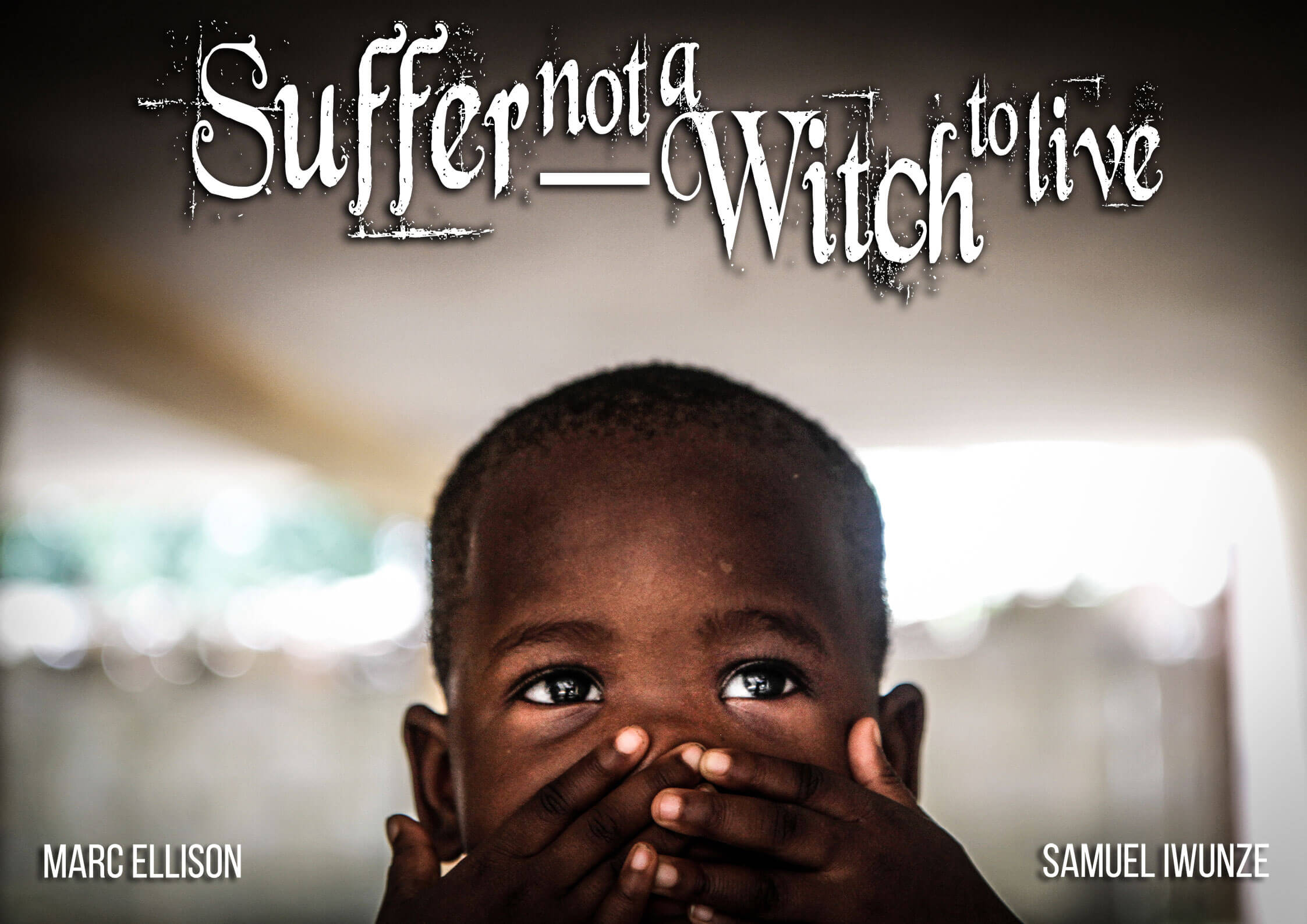
‘Lost Childhoods’ – an interactive graphic novel exposing child abuse in Nigeria – awarded at BAFTA

June 20, 2019
Journalist-photographer Marc Ellison receiving the award in London on Monday evening [One Media World]

The winning entry – Lost Childhoods: How Nigeria’s Fear of Child ‘Witchcraft’ Ruins Young Lives – was praised on Monday for its interactive investigation into the practice of branding children and young adolescents as “witches”. “Combining graphic novel imagery with film, this highly accessible piece effectively covers a major human rights issue,” One World Media organisers said from the awards gala at London’s British Academy of Film and Television Arts (BAFTA).

Blamed for family illness, sudden financial loss or other misfortunes, the children are often beaten, locked into cages, branded with hot knives or made to undergo costly “exorcisms” performed by so-called “prophets” in local churches. With little choice but to flee, many children end up as drug addicts and living in rubbish dumps or on the streets.

AJLabs teamed up with journalist-photographer Marc Ellison and Nigerian illustrator Samuel Iwunze to unearth the facts of this under-reported story. Working meticulously with local fixers, NGOs and child psychologists, Ellison was able to expose the practice that has taken hold in parts of the Niger Delta and that has partially been fuelled by myths propagated by the Nigerian film industry.

Lost Childhoods employs a mix of visual and textual formats, including comic/graphic novel illustrations to preserve anonymity and portray past events. Carlos Van Meek, Al Jazeera’s director of Digital Innovation and Programming, said, “This story, in particular, is a skilful weave of investigations, videos, photos and illustrations that brings to light disturbing physical, emotional and religious abuse against children. Our goal is – and always will be – to make an impact that leads to positive change at the local and international level.”

As further testament to the production, AJLabs worked with NGOs to translate the graphic novel into local languages for distribution within communities, schools and churches in Nigeria, in an attempt to educate people and end the practice of scapegoating innocent children and branding them as witches.

Nigeria witchcraft

NEWS: UN expert, Agnes Callamard, says Saudi Arabia is responsible for ‘extrajudicial’ killing of Khashoggi and calls it ‘international crime’.

June 19, 2019
The UN rapporteur believes that the killing of Khashoggi constitutes an international crime [File: Sedad Suna/EPA-EFE]

Saudi journalist Jamal Khashoggi was killed by Saudi agents inside the Saudi consulate in Istanbul on 2 October 2018 says UN extrajudicial executions investigator Agnes Callamard in her report which was released on Wednesday 19 June 2019. She said Khashoggi’s death “constituted an extrajudicial killing for which the State of the Kingdom of Saudi Arabia is responsible”. Al Jazeera published the Executive Summary (see below), while Rob Berschinski of Human Rights First calls on Congress to pursue accountability for his murder. “Callamard’s report underscores that there will be no justice for Jamal Khashoggi unless Congress steps up. Saudi leaders have made it clear that they intend to get away with murder. President Trump has made it clear that he values arms sales over the killing and dismemberment of a U.S. resident. Congress must make it clear that it will not let this stand,”. He added that “the Senate has passed aunanimous resolution that found, based on U.S. intelligence, that Crown Prince Mohammed bin Salman is responsible for Khashoggi’s murder. Republican and Democratic House leaders have called for accountability. Now is the time for action, not words.”

See also: https://humanrightsdefenders.blog/2019/03/18/jamal-khashoggi-murder-the-plot-thickens/

——–

Executive summary

State Responsibilities

1.   Mr. Khashoggi’s killing constituted an extrajudicial killing for which the State of the Kingdom of Saudi Arabia is responsible. His attempted kidnapping would also constitute a violation under international human rights law. From the perspective of international human rights law, State responsibility is not a question of, for example, which of the State officials ordered Mr. Khashoggi’s death; whether one or more ordered a kidnapping that was botched and then became an accidental killing; or whether the officers acted on their own initiative or ultra vires.

2.   The killing of Mr. Khashoggi further constituted a violation of the Vienna Convention on Consular Relations (thereafter VCCR) and of the prohibition against the extra-territorial use of force in time of peace (customary law and UN Charter). In killing a journalist, the State of Saudi Arabia also committed an act inconsistent with a core tenet of the United Nations, the protection of freedom of expression.  As such, it can be credibly argued that it used force extra-territorially in a manner “inconsistent with the Purposes of the United Nations.”

3.   Further, the circumstances of the killing of Mr. Khashoggi may constitute an act of torture under the terms of the Convention Against Torture, ratified by Saudi Arabia. Finally, the killing of Mr. Khashoggi may also constitute to this date an enforced disappearance since the location of his remains has not been established.

Individual liability

4.   The Special Rapporteur has determined that there is credible evidence, warranting further investigation of high-level Saudi Officials’ individual liability, including the Crown Prince’s.  She warns against a disproportionate emphasis on identifying who ordered the crime, pointing out that the search for justice and accountability is not singularly dependent on finding a smoking gun and the person holding it. The search is also, if not primarily, about identifying those who, in the context of the commission of a violation, have abused, or failed to fulfill, the responsibilities of their positions of authority. 

Duty to investigate and consular immunity

5.   The Special Rapporteur has found that both the investigations conducted by Saudi Arabia and Turkey failed to meet international standards regarding the investigation into unlawful deaths.

6.   Saudi officials were present in the Saudi consulate and residence in Istanbul from 6 to 15 October during which time they presumably investigated the killing. However, the Special Rapporteur was not provided with any information regarding the evidence they may have collected during this period. The Saudi Public Prosecution made public a few of their findings on 15 November but the statement was light on details, limiting itself to a few general allegations. Other statements regarding the actions and responsibilities of specific individuals were a welcomed step. However, the Special Rapporteur notes that some of the individuals allegedly referenced in these statements and the identity of 11 perpetrators currently on trial do not match. Further, the Saudi authorities have yet to disclose the whereabouts of the remains of Mr. Khashoggi.

7.   The Special Rapporteur found that under the terms of the VCCR, Saudi authorities were under no legal obligation to grant access to the Consular premises to the Turkish investigators. However, Saudi Arabia was under an international obligation to cooperate with the Turkish authorities in the investigation of the killing of Mr. Khashoggi. Such cooperation necessarily demanded that they gave access to the consulate to the Turkish authorities in a prompt and effective fashion and in good faith. Consular immunity was never intended to enable impunity. 

8.   The Special Rapporteur found credible evidence pointing to the crime scenes having been thoroughly, even forensically, cleaned. These indicate that the Saudi investigation was not conducted in good faith, and that it may amount to obstructing justice. 

9.   Turkish investigators, accompanied by Saudi investigators, only had access to the Consulate on the 15th October for 6 hours and to the Consul’ residence on 17th October for around thirteen hours, where they also had to search the whole consular vehicle fleet. Their scientific and forensic inquiries were limited to “swabbing” and they were not allowed to drain a well located in the residence. The limitations imposed by Saudi Arabia on the Turkish investigation cannot be justified by the need to protect Consular operations.

10.  Turkish investigators decided not to search the Saudi Consulate without proper authorization from the Saudi authorities. The Special Rapporteur found that this was the appropriate way to proceed: creating an exception to the VCCR grounded inviolability of the Saudi Consular premises for the purpose of an investigation would have been unnecessary and disproportionate.

11.   She also found that Turkey’s fear over an escalation of the situation and retribution meant that the consular residences or consular cars were also not searched without permission even though they are not protected by the VCCR.

12.   The Special Rapporteur regrets that it appears no international body or other State came forward with an offer to “mediate” between the two parties to negotiate prompt and effective access to the crime scene.  This could have been done to also help de-escalate the crisis, protect equally the VCCR and human rights, and address as well the fear of retaliation. Instead, it appears that other Member States pondered rather only their own national and strategic interests. The United Nations either considered it had no evident means of intervention or elected not to intervene. In retrospect, it is evident that the ultimate casualty of these considerations was justice and accountability for Jamal Khashoggi.

Duty to protect and to warn

13.   On the basis of credible information at her disposal, the Special Rapporteur has concluded that there is insufficient evidence to suggest that either Turkey or the United States knew, or ought to have known, of a real and imminent or foreseeable threat to Mr. Khashoggi’s life. There was credible evidence to suggest that, had Mr. Khashoggi returned to Saudi Arabia, or been lured there, he would have been detained, possibly disappeared, and harmed. These risks were not linked to his life or presence in his countries of residence, namely the US or Turkey.  She did not secure credible evidence that US authorities had intercepted the Saudi Crown Prince’s communications or that such intercepts had been assessed before the time of the killing of Mr. Khashoggi.

14.   The killing of Mr. Khashoggi has highlighted the vulnerabilities of dissidents living abroad, and the risks they are facing of covert actions by the authorities of their countries of origin or non-State actors associated to them. The States of the countries where they have found residence or exile are under an obligation to respect their human rights, and protect them against violence by the States of the countries they have escaped from.  This obligation should entail, namely:

(a)   The duty to protect is triggered whenever Governments know or ought to know of a real and immediate threat or risk to someone’s life;

(b)   Such an obligation to protect includes, but is not limited to, a duty to warn the individual of an imminent threat to their life

(c)   The obligation to protect, including the duty to warn, is imposed on all Governments agencies and institutions, and thus includes Intelligence Agencies

(d)   The obligation to protect applies regardless of the status of citizen or alien on the territories of the State.

(e)   The obligation to protect, including the duty to warn, demands that risks assessment take into account whether some individuals may be particularly at risk because of their identity or activities, such as journalists or human rights defenders.

(f)    The obligation to protect, including the duty to warn, may be triggered extra-territorially, whenever States exercise power or effective control over individual’s enjoyment of the right to life.

Duty to prosecute and reparations

15.  The Kingdom of Saudi Arabia has taken timid steps towards addressing its State responsibilities in terms of prosecution and reparation. But these stop short of what is required under international law. The accountability gap is all the more worrying given that it concerns a crime that has received an unprecedented level of attention and outcry internationally, including official public condemnation the world over.

16.  The on-going trial in Saudi Arabia of 11 suspects in the killing of Mr. Khashoggi, while an important step towards accountability, fails to meet procedural and substantive standards. The trial is held behind closed doors; the identity of those charged has not been released nor is the identity of those facing the death penalty. At the time of writing, at least one of those identified as responsible for the planning and organizing of the execution of Mr. Khashoggi has not been charged. 

17.  The Government of Saudi Arabia has invited representatives of Turkey and of the permanent members of the Security Council to attend at least some of the hearings.  However, the Special Rapporteur has been told that this trial observation was conditional upon agreement to not disclose its details. Trial observation under those conditions cannot provide credible validation of the proceedings or of the investigation itself. It is particularly concerning that, given the identity of the observers, the institution of the UN Security Council itself has been made complicit in what may well amount to a miscarriage of justice. 

18.  In view of her concerns regarding the trial of the 11 suspects in Saudi Arabia, the Special Rapporteur calls for the suspension of the trial.

19.  To date the Saudi State has failed to offer public recognition of its responsibility for the killing of Mr. Khashoggi and it has failed to offer an apology to Mr. Khashoggi’s family, friends and colleagues for his death and for the manner in which he was killed. The Special Rapporteur obtained information regarding a financial package offered to the children of Mr. Jamal Khashoggi but it is questionable whether such package amounts to compensation under international human rights law. 

20.  The restructuring of the Intelligence Services announced by King Salman is insufficient. There has been no subsequent information elaborating on the impact of the restructuring (or any other measures) on the decision-making, training, and codes of ethics of the Security Agencies, to name a few issues of concern.  Instead, one would expect the Kingdom of Saudi Arabia to demonstrate non-repetition including by releasing all individuals imprisoned for the peaceful expression of their opinion and belief; investigating all allegations of torture and lethal use of force in formal and informal places of detention; investigating all allegations of enforced disappearances and making public the whereabouts of individuals disappeared. It should also undertake an in-depth assessment of the actors, institutions and circumstances that made it possible for the execution of Mr. Khashoggi to be carried forward and identify the reforms required to ensure non-repetition.

Universal jurisdiction

21.  The Special Rapporteur believes that the killing of Mr Kashoggi constitutes an international crime over which States should claim universal jurisdiction. The killing of Mr. Khashoggi is a violation of a jus cogen norm. It violates the VCCR and the prohibition against the extraterritorial use of force in times of peace. The circumstances of the execution may amount to an act of torture under the Convention Against Torture. It is a continuing case of enforced disappearance since the remains of Mr. Khashoggi have not been located. It concerns a journalist in self-imposed exile. His execution has an enduring international impact.

Accountability

22.  The Special Rapporteur is concerned that legal accountability for the execution of Mr. Khashoggi is being made difficult to obtain. The trial underway in Saudi Arabia will not deliver credible accountability. Turkey has not initiated proceedings yet and hopes for credible accountability are weak in a country with such a track record of imprisonment of journalists. Jurisdictional challenges and the impossibility of conducting a trial in absentia mean that a trial in the US will face many challenges. The Special Rapporteur makes a number of proposals for how some of these issues may be addressed while warning that no one proposal on its own will deliver credible accountability.

23.  The Special Rapporteur emphasizes that the search for accountability and justice should include other means, including political, diplomatic, financial, symbolic. Actions to celebrate and recall the life of Jamal Khashoggi have an important part to play in ensuring public accountability for his execution.


https://www.humanrightsfirst.org/press-release/un-khashoggi-report-call-action

https://www.aljazeera.com/news/2019/06/khashoggi-executive-summary-callamard-report-190619105102019.html

Cartooning in the doldrums? Cartooning Award 2019 seeks nominations!

June 19, 2019

Last week the New York Times announced that it would no longer carry [https://www.nytimes.com/2019/06/10/business/international-new-york-times-political-cartoons.html] political cartoons in its international edition. The outcry was loud but also accompanied by other voices such as on 16 June 2019 “The point is that globalisation and information technology have changed the business of cartooning. Cartoonists wedded to the old-school, in-house ways of the 20th century can throw tantrums about free speech as much as they like. If they do not recognise the way the world has changed – and is changing – then they will be left behind as their profession moves forward. History is not on their side. Just as 18th-century copperplate engravings were replaced by lithograph prints, and standalone caricatures were replaced by cartoons in 19th-century humour magazines, and they in turn by 20th-century newspaper cartoons, the web cartoon has well and truly arrived in the 21st century.“[http://theconversation.com/the-new-york-times-ends-daily-political-cartoons-but-its-not-the-death-of-the-art-form-118754]

In the meantime, Cartoonists Rights Network International seeks nominations for its twenty-fourth Courage in Editorial Cartooning Award. Read the rest of this entry »

UN Strategy and Plan of Action on Hate Speech launched

June 19, 2019
The Strategy and Plan of Action guides all United Nations entities, at Headquarters and in the field, to do their part to address hate speech. The Strategy and Plan of Action calls for stronger support to Member States as well as stronger engagement with private companies, civil society and media. It is consistent with and supports other key agendas of the United Nations, including the Sustainable Development Goals, the Sustaining Peace resolutions and the promotion and protection of human rights.  The Strategy provides ideas on how to address the root causes and drivers of hate speech and how to reduce its impact on societies.

Controversial spyware company promises to respect human rights…in the future

June 19, 2019

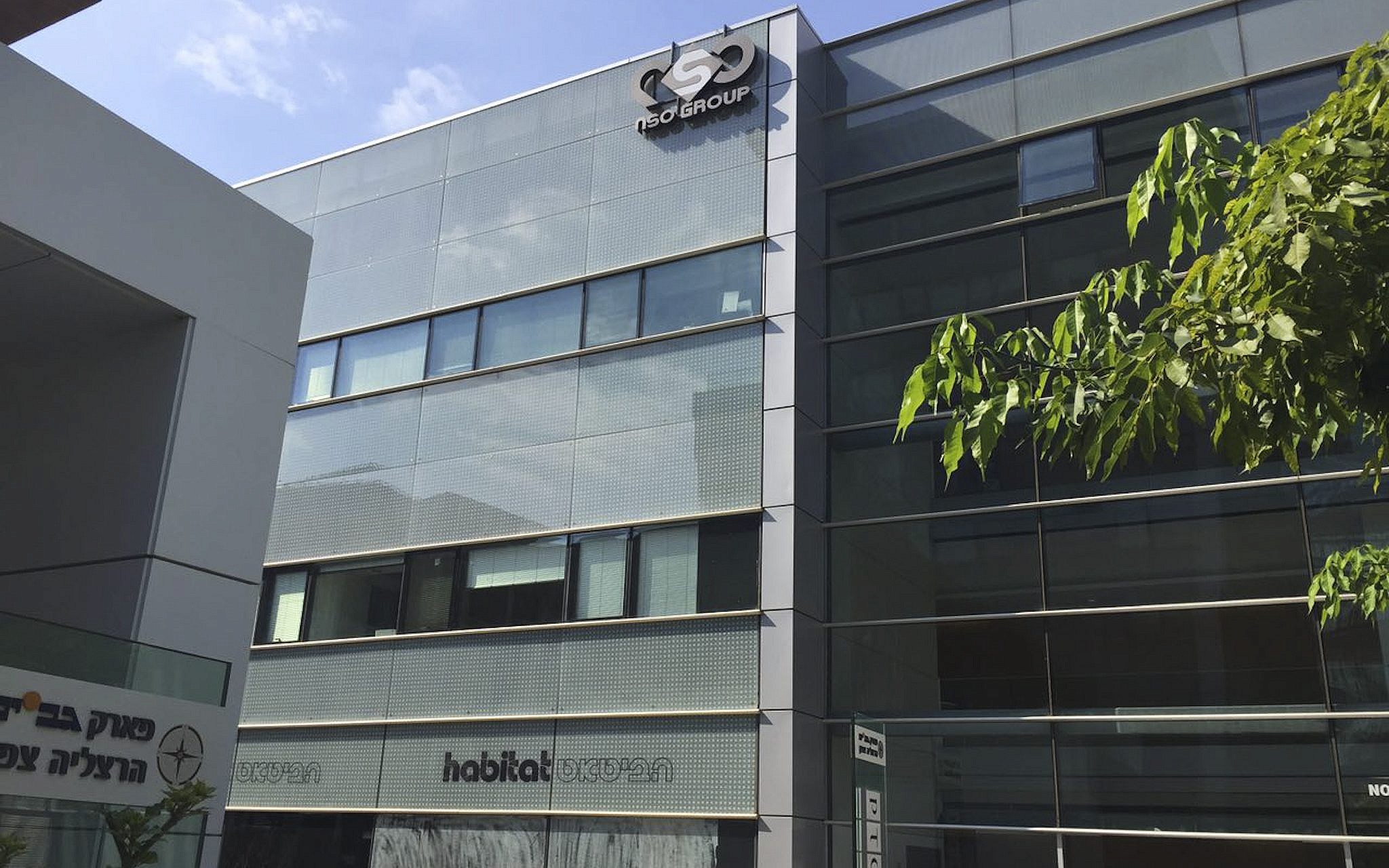
This photo from August 25, 2016, shows the logo of the Israeli NSO Group company on a building in Herzliya, Israel. (AP Photo/Daniella Cheslow)

This photo from August 25, 2016, shows the logo of the Israeli NSO Group company on a building in Herzliya, Israel. (AP Photo/Daniella Cheslow)

Newspapers report that controversial Israeli spyware developer NSO Group will in the coming months move towards greater transparency and align itself fully with the UN Guiding Principles on Business and Human Rights, the company’s owners said over the weekend. [see also: https://humanrightsdefenders.blog/2019/02/19/novalpina-urged-to-come-clean-about-targeting-human-rights-defenders/]

Private equity firm Novalpina, which acquired a majority stake in NSO Group in February, said that within 90 days it would “establish at NSO a new benchmark for transparency and respect for human rights.” It said it sought “a significant enhancement of respect for human rights to be built into NSO’s governance policies and operating procedures and into the products sold under licence to intelligence and law enforcement agencies.

The company has always stated that it provides its software to governments for the sole purpose of fighting terrorism and crime, but human rights defenders and NGOs have claimed the company’s technology has been used by repressive governments to spy on them. Most notably, the spyware was allegedly used in connection with the gruesome killing of Saudi journalist Jamal Khashoggi, who was dismembered in the Saudi consulate in Istanbul last year and whose body has never been found.

Last month London-based Amnesty International, together with other human rights activists, filed a petition to the District Court in Tel Aviv to compel Israel’s Defense Ministry to revoke the export license it granted to the company that Amnesty said has been used “in chilling attacks on human rights defenders around the world.”

On Friday the Guardian reported that Yana Peel, a well-known campaigner for human rights and a prominent figure in London’s art scene, is a co-owner of NSO, as she has a stake in Novalpina, co-founded by her husband Stephen Peel. Peel told the Guardian she has no involvement in the operations or decisions of Novalpina, which is managed by my husband, Stephen Peel, and his partners and added that the Guardian’s view of NSO was “quite misinformed.”

And Citizen Lab is far from re-assured:  https://citizenlab.ca/2019/06/letter-to-novalpina-regarding-statement-on-un-guiding-principles/…

https://www.timesofisrael.com/controversial-nso-group-to-adopt-policy-of-closer-respect-for-human-rights/

https://www.theguardian.com/world/2019/jun/18/whatsapp-spyware-israel-cyber-weapons-company-novalpina-capital-statement

Sports and Politics: Minsk 2019 apes Baku 2015 and with similar results

June 17, 2019

Belarus news, Alexander Lukashenko, European Games 2019, European Games Minsk, European Games Baku, Belarus human rights, Belarus press freedom, sports and human rights, European Olympic Committee, corruption in sport

Minsk, Belarus, 05/09/2019 © Tricky_Shark / Shutterstock

The second edition of the European Games is set to kick off on June 21 2019 in Minsk, Belarus. Events covering 15 different sports, from archery to sambo, will be contested over nine days. The 10 disciplines recognized as Olympic sports are especially important because they serve as qualifications for Tokyo 2020. Belarus finds itself trying to oversee a successful international sporting event while at the same time dismissing condemnation of its domestic political situation.

International organizations such as the United Nations, Amnesty International and Human Rights Watch routinely criticize the human rights conditions in Belarus. Actions such as peaceful protests and membership in opposition organizations are basically criminalized under Belarusian law. Access to websites critical of the government is routinely denied, and press freedom curtailed. To add to this, Belarus remains the last country in Europe to employ the death penalty. These issues once again have risen to the fore when Belarus was selected to host the European Games that are thought to represent a different political culture.

These views are echoed by Human Rights Watch, which strongly pushed the European Olympic Committees (EOC) for assurances that journalists can carry out their work unhindered during the games. For its part, the EOC states that it will appoint special observers to ensure press freedom, but critics contend this is not enough. Key questions remain about the conditions for journalists when the games are over, and whether the EOC will ensure action if serious issues arise. The German Olympic Sports Confederation (DOSB) went so far as to contemplate a boycott of the 2019 European Games. It was a half-hearted idea, as the DOSB viewed the maneuver as a last resort rather than an actionable response to the situation in Belarus. In the end, the requirement for athletes to achieve qualifications for the Tokyo Olympics quashed any sort of political activism.

Further, the Sports and Rights Alliance — a coalition of leading NGOs, sports organizations and trade unions — petitioned for positive advancements for Belorussian human rights prior to the commencement of this year’s games. It alleges that the EOC overlooks duties established in the Olympic Charter to protect human rights and dignity. At the recent Olympism in Action Forum, which focused on the relation of human rights and sport, David Grevemberg, chief executive of the Commonwealth Games Federation, stated that “You’re judged by the company you keep and what you stand for.”..

Azerbaijan hosted the first European Games in Baku in 2015. [see: https://humanrightsdefenders.blog/2015/06/12/baku-games-starting-today-with-avalanche-of-human-rights-criticism/] It is apparent that the past experience of 2015 had little effect on the EOC, and that the organization will not shift its mandate to accommodate the demands put forward by human rights defenders. Baku 2015 provides a template and numerous lessons for Minsk 2019. In the case that Minsk can put on a well-managed spectacle with memorable moments of sporting excellence, human rights concerns will not overshadow the Belarusian edition of the European Games.

.,… Lukashenko explained that “Visitors should get positive impressions of their stay in Belarus, in Minsk, and should take these impressions back home.” The president often refers to the 2014 Sochi Winter Olympics and how the event improved opinions about Russia prior to the ensuing scandals linked to the Kremlin. Lukashenko knows there is a tough task ahead of him in regard to the human rights lobby and criticism of his strongman style of governance. However, the EOC’s president, Janez Kocijančič, firmly stated that any human rights concerns would not overshadow the competition, and that it is not in the dominion of the sports committee to influence domestic politics of host nations. This is a reaffirmation that sport is to be kept separate from politics and goes neatly along with Lukashenko’s retorts to criticism…

It is naive to believe that sport and politics are separate, as much as EOC and Belarusian officials insist on that principle. While the actual sporting activities are guided by apolitical rules, both the atmosphere and the message of large-scale events are inherently political. Hosting duties bring international scrutiny of human rights offences, while the country anticipates a public relations makeover. Both require diplomatic nuance and managed interactions with the regional community. Thus, levels of political involvement are apparent….

International sporting events held in countries with tainted human rights records often become lighting rods in the global community. It is of great importance to highlight these issues and to focus attention on states that regularly infringe upon basic freedoms. However, little perceptible success has been achieved by international NGOs advising boycotts or protective mechanisms by the umbrella organizations responsible for the events — in this case the EOC.

It is a difficult task to shift the development and implementation of a large-scale multidisciplinary event with a lot invested in its success on all sides. Campaigns need to expand their reach beyond those involved in the human rights movement who are already aware of calls to action. Social engagement must overcome the collective excitement over sport.

……

It seems that sport governing bodies struggle with achieving a balance between spectacle and sport. This issue will continue to complicate the relationship between athletics and politics, as liberal democracies balk at the cost of hosting such events, while states with debatable democratic records seek legitimacy from the international community. Sports diplomacy delivers this through soft power.

See on this tipic also: https://humanrightsdefenders.blog/2019/02/01/sports-and-human-rights-focus-on-sports-washing-big-names-play-for-big-money/

The views expressed in this article are the author’s own and do not necessarily reflect Fair Observer’s editorial policy.

Belarus Understands the Diplomatic Power of Sport

Speech by Commissioner Dunja Mijatović at RightsCon 2019, Tunis, about digital security

June 17, 2019

Council of Europe Commissioner for human rights, Dunja Mijatović, gave a speech at the world’s leading summit on human rights in the digital age, RightsCon 2019, in Tunis, on 11 June 2019:

…A recent article of the New York Times from the city of Kashgar showed the extent to which the Chinese authorities are using facial recognition and snooping technologies to keep a tight control of the Muslim community.  If you think that this does not concern you because it is happening far away, you would be terribly wrong. The Chinese experiment bears a great significance for all of us. It shows to what extent the cozy relations between technology companies and state security agencies can harm us. This has become particularly acute as part of states response to terrorist threats and attacks. States around the world have increased their surveillance arsenal, not always to the benefit of our safety. On the contrary, in several occasions they used it to silence criticism, restrict free assembly, snoop into our private life, or control individuals or minorities.

An illustration of this comes from human rights defenders. If in the past human rights defenders have been ahead of states in using technological progress to expose human rights abuses, now they are facing a backlash. As we speak, states and non-state actors are intercepting their communications, intrude their personal data, trace their digital footprint. States are using technologies to learn about human rights defenders’ plans or upcoming campaigns; to find or fabricate information that can help intimidate, incriminate or destroy their reputation; or to learn about their networks and sources.

This concerns us all. At stake here is the society we want to live in and bequeath to the next generations. Technology should maximise our freedoms and rights – and keep those in power accountable.

To get there we need to strengthen the connections among us and crowdsource human rights protection, promotion and engagement. An important step in that direction would be to provide more support, funding and digital literacy training to human rights defenders. It is also crucial that the private sector and state authorities uphold human rights standards in the designing and implementation of all technological tools.

Living in an increasingly digital world does not mean living artificial lives with artificial liberties. Our rights must be real, all the time.

We all must resist the current backlash and persist in demanding more human rights protection, more transparency and more accountability in the digital world.

https://www.coe.int/en/web/commissioner/-/2019-speech-by-dunja-mijatovic-council-of-europe-commissioner-for-human-rights-at-the-world-s-leading-summit-on-human-rights-in-the-digital-age-rights

Global Alliance for Torture-Free Trade: another step towards a binding instrument

June 17, 2019

The Global Alliance for Torture-Free Trade was launched in September 2017 under the leadership of Argentina, the European Union, and Mongolia. Today, the Global Alliance has over 60-member states that have proclaimed their determination to end international trade in instruments of torture and capital punishment. The Alliance is now introducing a draft resolution before the United Nations General Assembly with a view to adopt a legally binding instrument. A public panel event was held on 14 June 2019 in the Maison de la Paix in Geneva with experts from academia, policy practitioners, representatives from member states, civil society, and the interested public, to take stock of the developments leading to the creation of the Alliance and the prospects and challenges of adopting and implementing a global ban on tools of torture.

Panel discussion

  • Cecilia Malmström, European Union Commissioner for Trade
  • Barbara Bernath, Secretary General, Association for the Prevention of Torture
  • Andrew Clapham, Professor of International Law, the Graduate Institute, Geneva
  • Michael Crowley, Research Associate, Omega Research Foundation, and Project Coordinator of the Bradford Non-Lethal Weapons Research Project, University of Bradford
  • Gerald Staberock, Secretary General, World Organisation Against Torture

Moderators

  • Nico Krisch, Co-Director, Global Governance Centre, and Professor of International Law, the Graduate Institute, Geneva
  • Ezgi Yildiz, Postdoctoral Researcher, Global Governance Centre, the Graduate Institute, Geneva

This conference was organised with the support of the Global Governance Centre and is part of the EU Lecture Series “Europe Tomorrow”.

https://graduateinstitute.ch/communications/events/norm-making-banning-global-trade-tools-torture

Social media councils – an answer to problems of content moderation and distribution??

June 17, 2019

In the running debate on the pros and cons of information technology, and it complex relation to freedom of information, the NGO Article 19 comes on 11 june 2019 with an interesting proposal “Social Media Councils“.

Social Media Councils: Consultation - Digital

In today’s world, dominant tech companies hold a considerable degree of control over what their users see or hear on a daily basis. Current practices of content moderation on social media offer very little in terms of transparency and virtually no remedy to individual users. The impact that content moderation and distribution (in other words, the composition of users’ feeds and the accessibility and visibility of content on social media) has on the public sphere is not yet fully understood, but legitimate concerns have been expressed, especially in relation to platforms that operate at such a level of market dominance that they can exert decisive influence on public debates.

This raises questions in relation to international laws on freedom of expression and has become a major issue for democratic societies. There are legitimate motives of concern that motivate various efforts to address this issue, particularly regarding the capacity of giant social media platforms to influence the public sphere. However, as with many modern communication technologies, the benefits that individuals and societies derive from the existence of these platforms should not be ignored. The responsibilities of the largest social media companies are currently being debated in legislative, policy and academic circles across the globe, but many of the numerous initiatives that are put forward do not sufficiently account for the protection of freedom of expression.

In this consultation paper, ARTICLE 19 outlines a roadmap for the creation of what we have called Social Media Councils (SMCs), a model for a multi-stakeholder accountability mechanism for content moderation on social media. SMCs aim to provide an open, transparent, accountable and participatory forum to address content moderation issues on social media platforms on the basis of international standards on human rights. The Social Media Council model puts forward a voluntary approach to the oversight of content moderation: participants (social media platforms and all stakeholders) sign up to a mechanism that does not create legal obligations. Its strength and efficiency rely on voluntary compliance by platforms, whose commitment, when signing up, will be to respect and execute the SMC’s decisions (or recommendations) in good faith.

With this document, we present these different options and submit them to a public consultation. The key issues we seek to address through this consultation are:

  • Substantive standards: could SMCs apply international standards directly or should they apply a ‘Code of Human Rights Principles for Content Moderation’?
  • Functions of SMCs: should SMCs have a purely advisory role or should they be able to review individual cases?
  • Global or national: should SMCs be created at the national level or should there be one global SMC?
  • Subject-matter jurisdiction: should SMCs deal with all content moderation decisions of social media companies, or should they have a more specialised area of focus, for example a particular type of content?

The consultation also seeks input on a number of technical issues that will be present in any configuration of the SMC, such as:

  1. Constitution process
  2. Structure
  3. Geographic jurisdiction (for a national SMC)
  4. Rules of procedure (if the SMC is an appeals mechanism)
  5. Funding

An important dimension of the Social Media Council concept is that the proposed structure has no exact precedent: the issue of online content moderation presents a new and challenging area. Only with a certain degree of creativity can the complexity of the issues raised by the creation of this new mechanism be solved.

ARTICLE 19’s objective is to ensure that decisions on these core questions and the solutions to practical problems sought by this initiative are compatible with the requirements of international human rights standards, and are shaped by a diverse range of expertise and perspectives.

Read the consultation paper

Complete the consultation survey

https://www.article19.org/resources/social-media-councils-consultation/

NGO joint letter to UN Human Rights Council about Belarus

June 16, 2019
Five international human rights organisations (see below), urge the UN Human Rights Council to maintain scrutiny on the human rights situation in Belarus, including by ensuring the renewal of the mandate of the Special Rapporteur and seeking preventive measures to ensure against an increase in human rights violations ahead of upcoming Parliamentary and Presidential elections in Belarus.