Author Archive

Amnesty feels forced to shut down its India office under govenment pressure

September 29, 2020

On 29 September 2020, it was announced that Amnesty International has shut down its India operations, alleging ‘a ‘witch-hunt’ by the Government
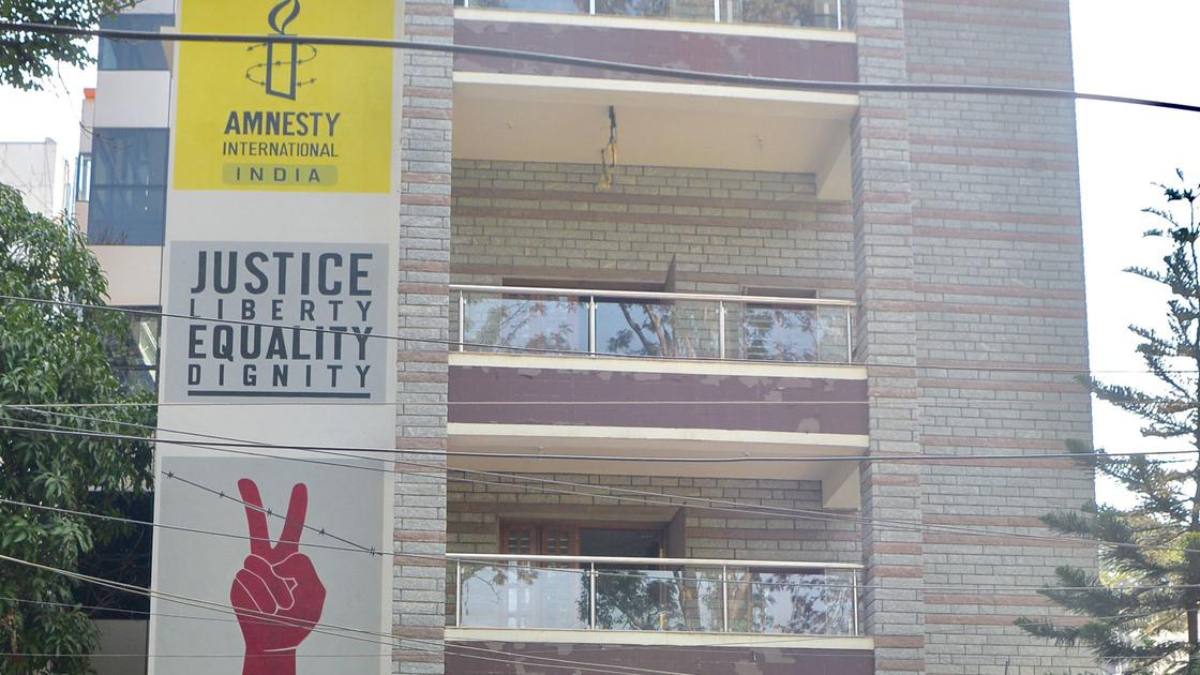
Amnesty India shuts operations

The complete freezing of Amnesty International India’s bank accounts by the Government of India which it came to know on 10 September 2020, brings all the work being done by the organization to a grinding halt. The organisation has been compelled to let go of its staff in India and pause all its ongoing campaign and research work. This is latest in the incessant witch-hunt of human rights organizations by the Government of India over unfounded and motivated allegations, Amnesty International India said today. See below the CHRONOLOGY OF ATTACKS AND HARASSMENT OF AI INDIA, starting in October 2018:

The continuing crackdown on Amnesty International India over the last two years and the complete freezing of bank accounts is not accidental. The constant harassment by government agencies including the Enforcement Directorate is a result of our unequivocal calls for transparency in the government, more recently for accountability of the Delhi police and the Government of India regarding the grave human rights violations in the Delhi riots and Jammu & Kashmir. For a movement that has done nothing but raises its voices against injustice, this latest attack is akin to freezing dissent,” said Avinash Kumar, Executive Director of Amnesty International India.

Amnesty International India stands in full compliance with all applicable Indian and international laws. For human rights work in India, it operates through a distinct model of raising funds domestically. More than four million Indians have supported Amnesty International India’s work in the last eight years and around 100,000 Indians have made financial contributions. These contributions evidently cannot have any relation with the Foreign Contribution (Regulation) Act, 2010. The fact that the Government is now portraying this lawful fundraising model as money-laundering is evidence that the overbroad legal framework is maliciously activated when human rights activists and groups challenge the government’s grave inactions and excesses.

The attacks on Amnesty International India and other outspoken human rights organizations, activists and human rights defenders is only an extension of the various repressive policies and sustained assault by the government on those who speak truth to power. “Treating human rights organisations like criminal enterprises and dissenting individuals as criminals without any credible evidence is a deliberate attempt by the Enforcement Directorate and Government of India to stoke a climate of fear and dismantle the critical voices in India. It reeks of fear and repression, ignores the human cost to this crackdown particularly during a pandemic and violates people’s basic rights to freedom of speech and expression, assembly, and association guaranteed by the Indian Constitution and international human rights law. Instead, as a global power and a member of the United Nations Human Rights Council, India must fearlessly welcome calls for accountability and justice,” said Avinash Kumar.

See also: https://humanrightsdefenders.blog/2020/09/15/lawyers-are-the-frontline-warriors-and-defenders-of-the-rule-of-law/

——

BACKGROUND: CHRONOLOGY OF ATTACKS AND HARASSMENT OF AMNESTY INTERNATIONAL INDIA:

  1. On 25 October 2018, Amnesty International India endured a 10-hour-long raid as a group of officers from the Enforcement Directorate (ED), a financial investigation agency under the Ministry of Finance, entered its premises and locked the gates behind them. Most of the information and documents that were demanded during the search were already available in the public domain or filed with the relevant government authorities. The residence of a Director was also raided.
  2. Immediately after the raid, the bank accounts were also frozen by the ED. As a result, Amnesty International India was forced to let go of a number of its staff, adversely affecting its work in India including with the marginalised communities. Despite the ongoing investigations and before the framing of charges, the Government of India started a smear campaign against Amnesty International India in the country through selective leaking of documents gathered by the ED, to government-aligned media outlets. This resulted in a malicious media trial against the organization.
  3. In early 2019, the Department of Income Tax started sending investigative letters to more than 30 small regular donors. Apparently, the department did not find any irregularities but the process adversely affected the fundraising campaigns of Amnesty International India.
  4. In June 2019, Amnesty International India was denied permission to hold the press conference launch in Srinagar to release its third ‘Lawless Law’ report on the misuse and abuse of Public Safety Act in Jammu and Kashmir. It was forced to digitally release it.
  5. On 22 October 2019, Amnesty International testified at the US Congressional hearing on the situation of human rights in South Asia with a specific focus on Jammu and Kashmir since the unilateral abrogation of Article 370 of the Constitution of India.
  6. On 15 November 2019, two weeks after the testimony and amid rumours of impending arrests of the organization’s top officials, the offices of Amnesty International India and the residence of one of its directors were raided again by the CBI. The raids were conducted on the basis of a First Information Report filed by the Ministry of Home Affairs over unsubstantiated allegations of suspected violations of Foreign Contribution Regulation Act. It suggested investigations be launched under other laws like the Prevention of Money Laundering Act.
  7. On 13 April 2020, Amnesty International India called on the Uttar Pradesh Government to stop its intimidation of journalists through use of repressive laws during a pandemic. On 15 April 2020, the Cyber Crime Police Station, Lucknow, Uttar Pradesh notified Twitter to furnish information about Amnesty International India’s Twitter account @AIIndia which the organization uses to monitor and analyse developments in international human rights law and Indian constitutional and criminal law related to human rights issues.
  8. On 5 August 2020, marking the first anniversary of the abrogation of Article 370 of the Constitution of India, Amnesty International India released an update on the situation of human rights in Jammu and Kashmir.
  9. On 28 August 2020, marking the six-month anniversary of the riots that took place in North-East Delhi in February 2020, Amnesty International India released an investigative brief on the complicity of Delhi police in the riots which claimed the lives of at least 53 people, mostly from the minority Muslim community.
  10. The release of the two publications has provided fresh impetus to the establishment to harass and intimidate Amnesty International India through its investigative agencies.
  11. On 10 September 2020 Amnesty International India came to know that all its bank accounts were completely frozen by the Enforcement Directorate bringing most of the work of the human rights organization to a grinding halt.

see also:

https://www.newsx.com/national/amnesty-shuts-india-operations-alleges-witch-hunt-by-government.html

What can funders do for Human Rights Defenders during COVID-19?

September 29, 2020

 David Mattingly in Open Global Rights asks: “What Kind of Support Do Human Rights Defenders Need During COVID-19?“. The details are worth it:


…as governments grapple to provide relief, local organizations and activists are playing a critical role in responding to the pandemic. But they continue to face increased restrictions, threats, and attacks intended to curtail activism and stifle dissent—and they urgently need sufficient resources and political support from the international philanthropic community to continue their efforts.  The Fund for Global Human Rights initiated a COVID-19 impact survey to assess the challenges and opportunities that emerged for civil society over the first three months of the pandemic. Drawing on a deep global network of frontline activists and organizations from more than twenty countries, the Fund surveyed over 200 grantee human rights organizations in late April and early May to better understand how the pandemic has impacted their work. [see: https://humanrightsdefenders.blog/2020/07/23/us1-million-fund-to-support-100-ngos-hit-by-covid-19/]

The survey offers valuable insights into how the activism landscape has changed—and what kind of support is necessary to sustain human rights work through this period of global crisis and beyond. Despite the challenging circumstances, frontline activists are demonstrating remarkable resilience and pivoting to respond differently to community needs. 

Nearly half of the survey’s respondents reported that they were still able to engage in their core work areas, like advocating for LGBTQ equality or defending Indigenous peoples’ land and resource rights. And 40% of respondents said that they were able to continue some core activities while also taking on new areas of work such as monitoring government actions in response to the pandemic, documenting the impact of COVID-19 on their constituencies, or providing community education on health and safety. Remarkably, 11% of respondents said that they had engaged entirely with these new areas of work or activities, which  they had not previously carried out, in order to address the pandemic. A minimal number of respondents—only 3%—answered that they were unable to continue working, and none expected to shut down entirely. 

Despite this largely positive outlook, the picture is likely to change over time as groups learn of more lost funding, donors shift priorities, and the public health crisis deepens across new geographies. This change is already taking place as activists working with historically marginalized groups—including Indigenous peoples and religious, ethnic, and racial minorities disproportionately impacted by COVID-19—have seen firsthand.

Around the world, botched or wanting pandemic responses have highlighted deep cracks in global and domestic systems—from massive disruptions in the transnational food supply chain to marginalized workers being excluded from government assistance programs. Human rights activists have demonstrated their capacity to redirect their resources and balance short-term—and often life-or-death—priorities with their longer-term goals. Thanks to this capacity for adaptation and responsiveness, civil society is poised to meet this moment of reckoning. 

However, human rights defenders are working under tremendous pressure. The pandemic has generated new priorities and urgencies, even as the immense challenges of frontline activism have multiplied. 

From Hungary to Brazil, governments have taken advantage of lockdowns and emergency measures to close civic spaces, curb fundamental freedoms, and stifle opposition. And in an effort to consolidate power, authoritarian or populist leaders are abusing prudent health and safety restrictions to specifically target human rights defenders. Nearly half of survey respondents reported that they had already been targeted by restrictions, curfews, or containment measures.

In Honduras, several prominent activists were arrested on trumped-up charges related to the pandemic, many of whom were attacked or jailed without access to legal recourse. Over 50% of survey respondents reported challenges to the normal functioning of protection mechanisms for human rights defenders.

In addition to these mounting dangers, survey respondents reported that infrastructure issues—including lost funding (37 respondents), sick staff (10 respondents), and reduced staff due to budget cuts (25 respondents)—were impacting their work. A quarter of respondents reported that technical difficulties, such as the lack of reliable internet or access to banks, pose a major challenge. Others mentioned dealing with impacts to their personal well-being, looking after sick family, or lacking access to critical supplies as paramount difficulties—an important reminder that human rights defenders are vulnerable to the same systemic inequalities they fight to overcome.

The imperative for human rights groups to demonstrate their relevance by addressing their community’s needs is made crystal clear by the impacts of the pandemic, which cut across areas of economic and social rights, health rights, migrants’ rights, and beyond. As they fill gaps in governments’ pandemic responses and fight for those most vulnerable to receive the resources and attention they need, frontline groups have the opportunity to continue expanding their grassroots constituencies by demonstrating their value to more people.

In recent years, the international human rights movement has been in a process of rethinking its role and strategies, and the pandemic is accelerating this reflection. This kind of crisis—and the myriad effects reported by survey respondents—begs funders to consider how they balance being nimble, adaptive, and reactive to emergencies such as COVID-19 with the values and strategy of long-term support and movement building.

These examples and data demonstrate the importance but also the effectiveness of partnering with frontline groups that are rooted in their communities and well-positioned to continue their critical, long-term work even as they adapt to shifting priorities. As funders, we must trust our frontline partners to assess their communities’ greatest needs and offer the flexibility to pivot amid a crisis. This means flexible funding, of course, but it also entails support for holistic security and wellness, and emergency funds and political support for activists that are targeted.

As different groups learn to navigate this new operating environment, it is critical that funders make space for cross-regional and intersectional exchanges, following the lead and priority of frontline activists, to compare  strategies, share learning, and foster solidarity.

More than 70% of survey respondents said they had explored or considered engaging with other groups working on similar issues and were interested in connecting with their peers. But with nearly a quarter indicating they have unreliable internet, funders must play a greater role in providing tech support and the means to collaborate. 

The Fund’s COVID-19 impact survey set out to answer the same question activists ask every day: what does our community need? The answers were a heartening reaffirmation of the resilience of civil society, as well as a pertinent reminder that, in times of crisis, our support must meet the demands of the moment.  

The pandemic is accelerating the need for adaptation and, as funders, we should take our cue from how local rights groups are nimbly pivoting to address both immediate and longer-term needs. As grassroots activists and advocates overcome mounting adversities to offer life-changing support in a historic moment of global turmoil, funders must learn, adapt, and evolve alongside them.

https://www.openglobalrights.org/what-kind-of-support-do-human-rights-activists-need-during-covid-19/

Turns out State Department did lie about revoking award to Finnish journalist

September 29, 2020

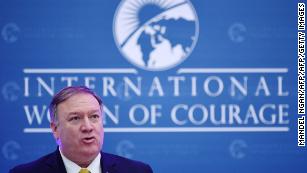
Back in March 2019 I reported on the US State Department revoking an award to a Finnish journalist [https://humanrightsdefenders.blog/2019/03/12/one-journalist-who-did-not-get-the-women-of-courage-award-but-almost/], but saying it was done in error. Now the State Department’s Office of Inspector General has established that it was done – as suspected already – because of the journalist had posted critically on President Donald Trump.

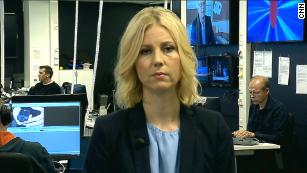
Finnish journalist speaks out after Trump administration cancels 'Courage' award

After a Foreign Policy report suggested that the State Department may have retaliated against her because of her criticism Trump on social media, then-State Department deputy spokesperson Robert Palladino asserted it was a miscommunication and that she had been “incorrectly notified” of her award. He called it a “regrettable error,” saying Aro actually “had not” been a finalist. However, the 16-page OIG report found that Aro’s social media posts were the only reason her award was rescinded. “Indeed, every person OIG interviewed in connection with this matter acknowledged that had (the Secretary’s Office of Global Women’s Issues) not highlighted her social media posts as problematic, Ms. Aro would have received the IWOC Award,” it states. Asked about the findings of the report, Aro told CNN Friday, “In my heart I feel like an international woman of courage. That the Trump administration can’t take away from me.” The release of the report comes more than a year after a group of Democratic senators on the Senate Foreign Relations Committee requested an OIG probe into the circumstances of Aro’s award being revoked. Sen. Bob Menendez, the ranking member on the committee, said in a statement Friday that the “State Department owes Ms. Aro an apology.”
..
Moreover, the report found that the State Department had provided false information to the press and Congress to explain why the award had been rescinded. Officials from the department’s Bureau of European and Eurasian Affairs “told OIG that they disagreed with the language in the talking points and press statements suggesting that Ms. Aro was incorrectly notified and was not an awardee,” the report says. In a briefing with the Senate Foreign Relations Committee in March 2019, the acting director of the Office of Global Women’s Issues said “not really” when asked if Aro’s social media posts played a role in the department’s decision and the ambassador claimed he was not “worried” about Aro’s social media posts. The “Department’s statements during this briefing do not align with the internal discussions that occurred at the time the decision was made to rescind Ms. Aro’s selection. OIG found no documentary evidence to corroborate the Department’s claims during the briefing with congressional staff,” the report states. “Also, Department officials from (the Secretary’s Office of Global Women’s Issues), (the Bureau of European and Eurasian Affairs), and Embassy Helsinki all told OIG that, had Ms. Aro’s social media content not come to light, she would have received the award.”

New documents raise questions over State Dept. move to rescind honor for Trump critic

Menendez said in his statement Friday that the report “confirmed that Secretary Pompeo’s Department misled the public and Congress about why it rescinded Ms. Aro’s award, covering up that her social media posts were the reason the award was withdrawn. The Trump administration also drafted talking points that falsely stated Ms. Aro had never been selected as a recipient.” “Secretary Pompeo should have honored a courageous journalist willing to stand up to Kremlin propaganda. Instead, his department sought to stifle dissent to avoid upsetting a President who, day after day, tries to take pages out of Putin’s playbook,” the New Jersey Democrat said.

Kenneth Roth speaks plainly on international human rights: China a violator and US “unprincipled”

September 29, 2020
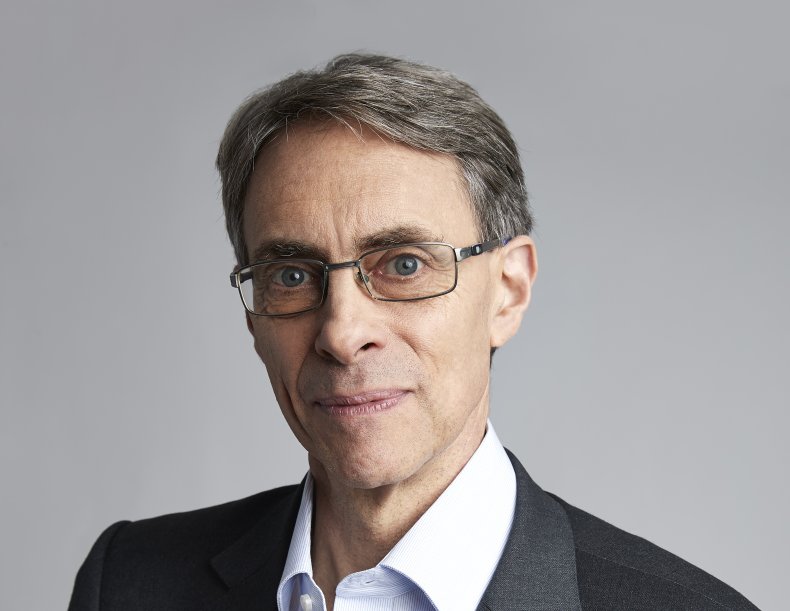
In Newsweek of 21 September 2020 did an interview with Kenneth Roth who has spent 27 years as the executive director of Human Rights Watch (HRW) in which he warns that China poses a threat to the global human rights system, that U.S. is no longer to be relied on as a supporter of human rights and how this has left a void, emboldening autocrats who have used the pandemic to undermine democratic societies.

China and the threat it poses to human rights both at home and around the world is a huge issue,” he says, identifying the current period as the darkest in China’s history when it comes to human rights since the Tiananmen Square massacre in 1989. More than a million Uighur Muslims have been put in internment camps in the country’s Xinjiang province, According to the United Nations (U.N.). China says the camps serve as “re-education” centers designed to combat extremism, but those who have managed to escape share stories of forced labor, torture, medical experiments and rape. Roth says: “The Uighurs are the most severe example of worsening repression under Xi Jinping (China’s prime minister). It’s quite clear that this is the darkest moment in China in human rights terms since the massacre of Tiananmen Square protesters in 1989, the Uyghurs have been the most grievous sufferers of that where a million or more have been detained essentially to force them to abandon Islam and their culture.” The worsening repression doesn’t just extend to minorities, it’s something Roth says we can see also occurring in Hong Kong and Tibet as well as against China’s own population more widely.

There is no independent civil society,” he says. “There is no independent media, human rights defenders are routinely imprisoned. There is a complete lockdown on any organized public dissent and that is just across the board, not just minority population areas. China’s also building this so-called social credit system which is designed to condition access to various governmental benefits on one’s social reliability. So it’s using high-tech tools to control the population.“…

….

On the human rights challenges facing Europe, Roth expresses particular concern about the situation in Belarus, where the man dubbed “Europe’s last dictator“, Alexander Lukashenko, is facing widespread protests over a disputed election. Lukashenko has been in power since 1994, with the government frequently accused of repressing the opposition….

Kenneth Roth
Kenneth Roth, executive director of Human Rights Watch

He also thinks India‘s Prime Minister Modi has got away with what he calls his systematic discrimination against the country’s 172 million Muslims because of the West’s desire to tap into Indian markets and use it as a counterweight against China, which Newsweek will be reporting on in the coming days.

Roth is highly critical of the Trump administration, accusing the president’s foreign policy of being driven by the guiding principle of “self-glorification” and only speaking out in defense of human rights when the offending country is a perceived adversary.

Trump is utterly uninterested in calling out any human rights violation by anybody other than a handful of perceived adversaries, China, Venezuela, Iran, Nicaragua and Cuba and that’s about it, which is a completely unprincipled approach to human rights which does not attract any adherence and greatly weakens the force of US intervention,” he says. “Human Rights Watch has been living with Trump for four years now and we have already stopped relying on the U.S. as anything like a principled supporter of human rights.”

With the U.S. increasingly withdrawing from the world stage and with the European Union not really filling the void, as he says, is there a new approach to the defense of human rights emerging?

See also: https://humanrightsdefenders.blog/2019/01/19/are-human-rights-defenders-making-a-comeback-kenneth-roth-thinks-so/

https://www.newsweek.com/human-rights-china-u-s-foreign-policy-trump-democracy-europe-human-rights-watch-1533239

Nasrin Sotoudeh ends her hunger strike as UN experts write joint letter

September 27, 2020
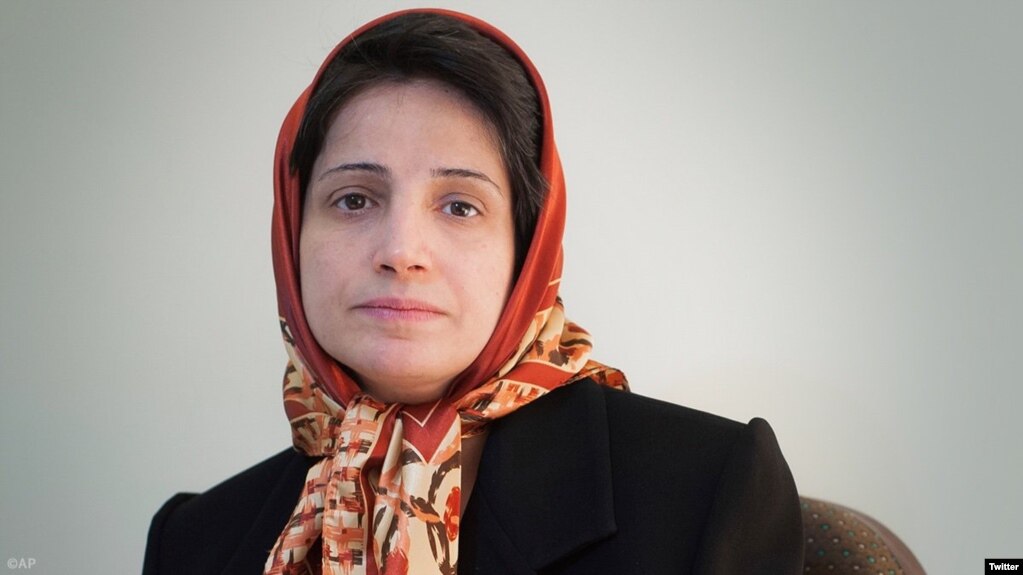
Iranian human rights lawyer Nasrin Sotoudeh

Sotoudeh had been on a hunger strike in Tehran’s Evin prison since August 11 to protest the risk that political prisoners in Iran face amid the coronavirus pandemic. [see also: https://humanrightsdefenders.blog/2020/09/06/german-judges-give-their-human-rights-award-to-iranian-human-rights-lawyer-nasrin-sotoudeh/%5D

On September 19, she was taken to hospital for a serious heart condition. But four days later, she was taken back to Evin prison, triggering disbelief from UN independent experts among others.

“It is unfathomable that the Iranian authorities would return Ms. Sotoudeh to prison where she is at heightened risk to COVID-19, as well as with her serious heart condition,” the experts said.

We urge the authorities to immediately reverse this decision, accept her requests to recuperate at home before undergoing a heart procedure, and allow her to freely choose her own medical treatment,” they added in a statement.

The experts echoed Sotoudeh’s call for the Iranian authorities to grant temporary release to human rights defenders, lawyers, dual and foreign nationals, prisoners of conscience, political prisoners, and all other individuals detained without sufficient legal basis during the COVID-19 pandemic.

47 countries called on Iran to “protect the human rights of all its citizens and release all political prisoners and arbitrarily detained” in a Friday session of the UN Human Rights Council, according to a German diplomat, Susanne Baumann:

Susanne Baumann
@GERMANYonUN
Joint Statement on the dire human rights situation in Iran today in the Human Rights Council #HRC45, presented by Germany on behalf of 47 countries. We call on Iran to protect the human rights of all its citizens and release all political prisoners & arbitrarily detained.
———

https://www.rferl.org/a/jailed-iranian-human-rights-defender-ends-hunger-strike-as-health-deteriorates/30859117.html

https://www.rudaw.net/english/middleeast/iran/26092020

https://www.scoop.co.nz/stories/WO2009/S00203/iran-human-rights-lawyer-nasrin-sotoudeh-must-be-freed-for-treatment-say-un-experts.htm

Timtik sisters in Turkey share 2020 Ludovic Trarieux Prize

September 26, 2020

This year’s Ludovic Trarieux International Human Rights Prize has been granted to arrested lawyers Barkın Timtik and her sister lawyer Ebru Timtik, who lost her life on a death fast for a fair trial.

See: https://humanrightsdefenders.blog/2020/08/29/human-rights-defender-ebru-timtik-dies-in-istanbul-hospital-after-238-days-hungerstrike/

For more on this and other awards for human rights lawyers, see: https://www.trueheroesfilms.org/thedigest/award/7C413DBA-E6F6-425A-AF9E-E49AE17D7921

For last year, see: https://humanrightsdefenders.blog/2019/10/22/2019-ludovic-trarieux-international-human-rights-award-goes-to-rommel-duran-castellanos-of-colombia/

—–

http://bianet.org/english/human-rights/231534-ludovic-trarieux-human-rights-prize-awarded-to-lawyers-barkin-and-ebru-timtik

Read more at: https://www.deccanherald.com/international/posthumous-award-for-turkish-lawyer-who-died-on-hunger-strike-892583.html

Duterte speech at General Asembly tries to divert attention from killings by discrediting NGOs

September 25, 2020

Human rights watchdog Karapatan decried what they called as vilification against human rights defenders by President Rodrigo Duterte. During his recorded speech at the 75th United Nation’s General (UNGA) Assembly on 23 September Duterte claimed, “A number of interest groups have weaponized human rights; some well-meaning, others ill-intentioned.” He claimed further that “the Philippines will continue to protect the human rights of the Filipino people, only that there are groups trying to discredit the functioning institutions and mechanisms in a democratic country.

In reaction, Cristina Palabay, secretary general of Karapatan said that Duterte, “is posturing in making desperate pleas before the international community that is growing increasingly critical of his human rights record and tyrannical rule.” “Duterte’s empty promise to ‘continue’ protecting the rights of Filipinos is betrayed when Duterte himself, just a few seconds later, continued to justify the drug war and the terror-tagging of human rights defenders, reiterating his administration’s distorted reasoning that the said campaigns are in protection of human life and the accusation that human rights groups and advocates are ‘weaponizing’ human rights,” Palabay said in a statement. [see also: https://www.frontlinedefenders.org/en/case/threats-against-cristina-palabay]

Bagong Alyansang Makabayan (Bayan) Secretary General Renato Reyes Jr. said Duterte’s accusations against human rights workers is a blanket denial of human crisis in the Philippines. “Duterte would rather discredit human rights defenders and institutions than acknowledge that there are extrajudicial killings and other violations in the Philippines. He continues to deny what the whole world has already come to recognize,” said Reyes in a statement.

Just last week, the European Parliament expressed support to the human rights defenders in the Philippines. They also condemned the recent killings of activists in the country and called for accountability of the perpetrators. The United Nations Special Procedures also expressed solidarity with Filipino human rights defenders.

Duterte also said in his speech that “To move forward, open dialogue and constructive engagement with the United Nations is the key.” However, Palabay reiterated that the Duterte government did not even allow the UN High Commissioner for Human Rights and UN Special Rapporteurs to conduct an in-country investigation on the killings under the government’s campaign against illegal drugs and other human rights violations. Palabay added, “Their (UN bodies) requests for such are met with threats of violence, wild accusations of foreign meddling, and demeaning insults. The Philippine government even rejected most of the findings and recommendations of the recent report of the Office of the High Commissioner on Human Rights and is currently finding ways to evade independent investigation at the UN Human Rights Council.”

Reyes also said that Duterte’s statement about engaging the UN is “empty rhetoric as it merely aims to blunt international criticism of his human rights record.

Meanwhile, a resolution on the Philippines is now being discussed at the UN Human Rights Council. A draft of the resolution was presented by the Iceland and the Philippines at the HRC 45th regular session according to Civicus, a global alliance of civil society organizations and activists.

Different progressive groups in the Philippines are calling to end all political killings and other rights violations under President Duterte during Martial Law commemoration last Sept. 21. (Photo by Carlo Manalansan/Bulatlat)

Human rights defenders have been calling for independent investigation on human rights violations in the Philippines. This call was reiterated during an online forum led by Civicus on Tuesday,22 September.

Laila Matar, deputy director for UN at Human Rights Watch said at the minimum, the HRC resolution “need to be stripped of all government propaganda.”It also has to make sure that the OHCHR would continue in monitoring and reporting comprehensively on the human rights situation and report also through interactive dialogues at the HRC so that the international community would have a chance to truly address human rights violations in the country,” Matar said.

See also: https://humanrightsdefenders.blog/2020/08/22/the-killing-of-randy-echanis-and-zara-alvarez-put-the-philippines-under-more-pressure/

‘Weaponizing human rights?’ | Rights group refutes Duterte’s ‘lies’ at the UN assembly

Rafto Prize for 2020 goes to the Egyptian Commission for Rights and Freedoms (ECRF)

September 25, 2020

The Rafto Prize for 2020 is awarded the Egyptian Commission for Rights and Freedoms (ECRF) for their persistence in bravely resisting Egypt´s state of fear. For more on this award see: https://www.trueheroesfilms.org/thedigest/award/A5043D5E-68F5-43DF-B84D-C9EF21976B18

ECRF documents, reports and raises awareness about the grave human rights violations in Egypt and beyond, and provides legal support to victims of human rights abuses. Almost ten years since the Arab Spring, it is more pressing than ever to focus on the alarming state of basic human rights in the Middle East. ECRF was founded by Mohamed Lotfy and Ahmed Abdallah in the wake of the coup d’état in 2013. In a relatively short time ECRF has grown to a team of more than 50 lawyers and researchers as well as about 1000 volunteers. The aim of their work is to provide non-partisan support to human rights defenders. Despite working under extremely harsh conditions, the ECRF uses the parts of Egypt’s judiciary, which are still functioning, to defend human rights for political prisoners, prosecuted human rights activists and protestors and victims of disappearances and torture. In this state of fear, the work of ECRF stands out as a beacon of hope for human rights.

Enforced Disappearances

The ECRF works at ground level across Egypt, using peaceful and legal means. The organization conducts extensive documentation, monitoring and analysis of human rights violations. To do this, ECRF’s lawyers and researchers meet with victims, collect testimonies and analyse documents and court verdicts. ECRF has emergency hotlines where relatives and friends can report on arbitrary arrests, and receives on daily basis cases of enforced disappearance. The campaign “Stop Enforced Disappearances” documented 2723 cases over a five-year period. Through the documentation of cases, campaigning and legal aid, the ECRF has contributed to several reappearances. They use the documentation in court defences, as a basis for reports, policy papers, for advocacy, press statements and in social media campaigns to raise awareness around human rights issues. [see also: https://humanrightsdefenders.blog/2019/11/28/egyptian-human-rights-defender-ibrahim-ezz-eldin-reappears-after-167-days/]

Egypt’s state of fear

After a political crisis in 2013, the Egyptian army took control again and General Abdel Fattah el-Sisi has since ruled as president. Under his leadership, the worrying human rights situation in Egypt has deteriorated to a degree not seen before.

Government security forces frequently conduct mass arrests and enforced disappearances, and critical voices are detained incommunicado for long periods of time. Thousands of political opponents, including children, have been arrested in sweeping campaigns. The prisoners are often held in overcrowded prisons in poor conditions, without access to satisfactory medical care.

The regime has dramatically narrowed the space for civil society and dissent by imposinga number of restrictions on the population such as travel bans, targeting human rights defenders and a range of repressive measures. In August 2019, President el-Sisi approved a law that severely restricts NGOs’ independence. His government uses the “war on terrorism” as a disguise to conceal their abuses. In April 2017, the government declared a state of emergency, which gave the security forces unchecked powers. In 2019 the government passed constitutional amendments that consolidated the authoritarian rule, once again undermining the rule of law.

https://www.rafto.no/the-rafto-prize/the-rafto-prize-2020-to

Geneva Roadmap for environmental defenders

September 25, 2020

This session aims to explore how civil society organizations can use the UN Resolution A/HRC/40/L.22/. The session also intends to discuss the “ Road Map to Geneva” which was created in April of this year to facilitate international engagement on processes that support defenders at the national and international level. Join us as we highlight the work of the new Special Rapporteur on Human Rights Defenders and her vision as well as provide a practical list of events that can move the agenda forward.

Speakers

  • Ms. Mary Lawlor, Special Rapporteur on the situation of human rights defenders
  • Peter Bille Larsen, University of Geneva
  • Enteng Bautista, National coordinator of Kalikasan People’s Network for the Environment, Philippines

https://www.wri.org/events/2020/09/implementation-human-rights-council-resolution-ahrc40

Three nominees for European Parliament’s Sakharov Prize announced

September 21, 2020
Last year’s winner Jewher Ilham receives the Prize on behalf of her father, Ilham Tohti. © European Parliament

The European Parliamenthas announced its long-list of nominees for the annual Sakharov Prize. The nominees for this year’s prize, announced at last week’s plenary session of the Parliament, are:

  • Two nominations for the democratic opposition in Belarus, represented on the one hand by the Coordination Council, an initiative of political and civil society figures, and on the other by Sviatlana Tsikhanouska, an activist and politician whose defeat in this year’s presidential election led to accusations of fraud against the winner, Alexander Lukashenko. Tsikhanouska is also a member of the Coordination Council.
  • Monsignor Najeeb Moussa Michaeel, Archbishop of Mosul in Iraq who ensured the evacuation of Christians, Syriacs and Chaldeans to Iraqi Kurdistan when Islamic State arrived in the city in 2014, and who safeguarded more than 800 historic manuscripts dating from the 13th to the 19th century.
  • Guapinol activists and Berta Caceres in Honduras. The Guapinol activists have been imprisoned after taking part in a peaceful protest against a polluting mining company in Tocoa, Honduras. Berta Caceras was assassinated in 2016, and was a land-rights activist and protestor against illegal logging and land-grabbing from indigenous peoples in Honduras.
  • Finally, Polish LGBTI activists Jakub Gawron, Paulina Pajak, Paweł Preneta and Kamil Maczuga who founded the website Atlas of Hate, monitoring the implementation by local municipalities to the anti-LGBTI legislation introduced by the national government. This year five of the municipalities sued Gawron, Pajak and Preneta, demanding financial compensation for loss of reputation.

For more on this and similar awards, see:https://www.trueheroesfilms.org/thedigest/award/BDE3E41A-8706-42F1-A6C5-ECBBC4CDB449

At the end of the month, the foreign affairs and development committees and the human rights subcommittee of the Parliament will announce their shortlist of three finalists. On 22 October the Conference of Presidents – consisting of the President of the European Parliament and the leaders of the political groups – will announce the winner.

The Prize itself will be awarded at a ceremony in the European Parliament in Strasbourg on 16 December.

See also: https://humanrightsdefenders.blog/2019/10/26/universal-human-rights-apply-to-ilham-tohti-china-and-eu-disagree/

https://www.brusselstimes.com/news/eu-affairs/131996/nominees-for-european-parliaments-sakharov-prize-announced/