Following up on my post from yesterday [https://humanrightsdefenders.blog/2020/11/25/loujain-al-hathloul-to-stand-trial-in-saudi-arabia-today/] Amnesty International reported on 25 November 2020 that a Saudi Arabian judge has decided to transfer human rights defender Loujain al-Hathloul’s case to Saudi Arabia’s Specialized Criminal Court (SCC), an institution used to silence dissent and notorious for issuing lengthy prison sentences following seriously flawed trials
Author Archive
A Tool Kit for Human Rights in Business Education
November 26, 2020Just beginning to take shape, the field of business and human rights (BHR) promises to become an important element of teaching and research at leading business schools. As part of the effort to accelerate the evolution of this area, the Global Network of Business Schools was founded in 2017 by the Center for Business and Human Rights at New York University’s Stern School of Business, the Alliance Manchester Business School at the University of Manchester, and the Geneva School of Economics and Management at the University of Geneva. This network now comprises 39 business schools. More information about the network’s annual meeting and activities can be found here: https://bhr.stern.nyu.edu/global-busi-ness-school-network. On a parallel track, the larger Global Business School Network (GBSN), which connects more than 100 leading business schools from 50 countries to improve access to quality and locally relevant management education for the developing world, is an essential partner in this effort. Many of the schools in the GBSN orbit are located in the global South, where many human rights issues are playing out in real time. Adding human rights to the business school curriculum provides an exciting opportunity for new forms of collaboration among these schools and their counterparts in Europe and North America. GBSN is well-positioned to serve as a resource and community for schools implementing recommendations in this toolkit
About this tool kit edited by Dorothée Baumann-Pauly, Michael Posner and Dan LeClair: Representatives from a number of business school, both professors and administrators, have worked jointly to assemble this tool kit. It includes information and resources explaining the increasing relevance of human rights in a business school context and provides resources that can be helpful to those in other business schools who wish to become involved. Specifically, this document provides an overview of readily available teaching resources, research outlets, and various ways of institutionalizing human rights at business schools. It includes contributions from representatives of schools that are already including human rights in classes, public programs, and research. These testimonies highlight some of the key building blocks for successfully integrating human rights into the business curriculum. The appendix provides a list of contacts at key business schools that stand ready to offer you further advice on how to initiate a human rights program at schools.
WEBINAR: Situation of Indigenous Human Rights Defenders in the Asian region
November 26, 2020One often thinks that indigenous issues play mostly in the Americas but the Webinar on Strengthening the Protection of Indigenous Peoples in Asia: “Situation of Indigenous Human Rights Defenders in the Asian region and the responsibility of Business Enterprises to respect Human Rights” show another picture.

Date and time: 26 November 2020, 14.00 -15.30 ICT
Location: Virtual
Duration: 1 hour and 30 minutes
“Suppression of the right to freedom of association and attacks against and criminalization of indigenous human rights and environmental defenders across the region are closely linked to large-scale development projects and, in certain subregions, to conservation efforts. Threats against indigenous human rights defenders are exacerbated by the intensifying global competition over natural resources and by increasing militarization where State and non-State actors collude to grab indigenous lands for profit.”
– Report of the Special Rapporteur on the rights of indigenous peoples Regional consultation on the rights of indigenous peoples in Asia September 2020
Download for more details information
Loujain al-Hathloul to stand trial in Saudi Arabia today
November 25, 2020As I have been following the case of Loujain al-Hathloul regularly [see https://humanrightsdefenders.blog/tag/loujain-al-hathloul/] I think it is important to report that she will appear in a Saudi court today Wednesday 25 November 2020, more than two years after she was first detained in a crackdown on human rights defenders.
 Lina al-Hathloul, whose sister Loujain is being held by Saudi authorities, speaks at the 10th Anniversary Women In The World Summit at David H. Koch Theater at Lincoln Center on April 10, 2019, in New York City. Photo by Photo by Mike Coppola/Getty Images.
“We were just announced that @LoujainHathloul has a trial tomorrow,” her sister, Lina al-Hathloul, tweeted Tuesday.
The conservative Gulf kingdom insists that Hathloul and the others are detained over national security concerns. Saudi Minister of State for Foreign Affairs Adel Jubeir told CNN last week that Hathloul’s fate “was up to the courts.”
“The idea that she and her friends were detained because they advocated women’s driving is preposterous,” said Jubeir.
Hathloul’s court date was scheduled for March but was postponed indefinitely amid what Saudi officials said were coronavirus concerns. On Oct. 26, she began a hunger strike to protest her treatment in prison and lack of regular contact with her parents.
Amnesty International urged Riyadh to allow diplomats and journalists to attend the trial. The rights group also called for Hathloul to be given access to her parents, and to a lawyer so she can prepare an adequate defense.
“In light of the women rights activists reporting having been tortured or otherwise ill-treated in detention, we also have concerns about the admissibility of any ‘evidence’ that might be submitted in court tomorrow,” Lynn Maalouf, Amnesty’s deputy Middle East and North Africa director, said in a statement.
“The only just outcome for this trial would be the immediate and unconditional release of Loujain al-Hathloul,” Maalouf said.
On Tuesday, a group of 29 organizations issued a letter to the president of Saudi Arabia’s Human Rights Commission, Awwad Al-Awwad, expressing their concern over the “continued arbitrary detention of women’s rights defenders.”
Hathloul’s expected court appearance comes days after Saudi Arabia wrapped up its hosting duties for this year’s Group of 20 summit, of which women’s empowerment was a theme. Ahead of the virtual gathering, a coalition of human rights organizations sought to draw attention to what they say is an increase in repression under Crown Prince Mohammed bin Salman.
Amazon Forest Defender Osvalinda winner Edelstam Prize 2020
November 25, 2020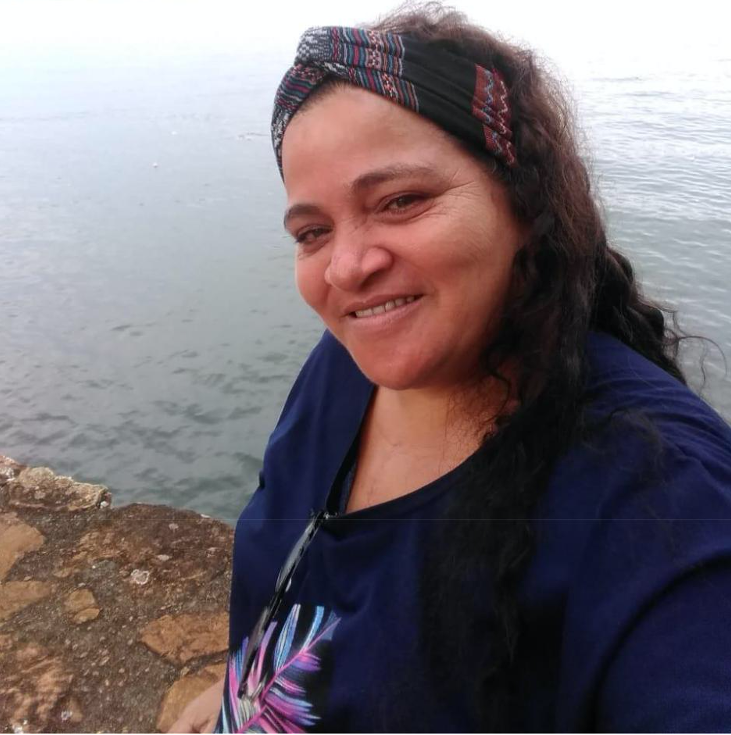
The Edelstam Prize 2020 is awarded to Osvalinda Marcelino Alves Pereira from the Amazon rainforest territory in Brazil for outstanding contributions and exceptional courage. She has fearlessly and continuously been reporting to federal authorities illegal logging of the forest in the Areia region. For more on this and similar awards, see: https://www.trueheroesfilms.org/thedigest/award/CAA00E38-C320-41E0-9FD4-B3BF3DC0D54F
Mrs. Osvalinda Alves Pereira from Pará in Brazil is an Amazon rainforest defender and community organizer who puts herself at great risk in defending the forest and its population. Defending the forest from illegal logging is very dangerous, as laws are rarely enforced against the perpetrators of the abuses. Criminal logging networks deploy men to protect their illegal activities and intimidate, threaten and kill those who obstruct their activities which are causing the deforestation and destruction of the Amazon rainforest.
Osvalinda Alves Pereira and her husband, Mr. Daniel Alves Pereira, have received numerous threats for nearly a decade from criminal networks involved in illegal logging in the state of Pará. For more than 18 months they have been in hiding, with the support of the Federal Program to Protect Human Rights Defenders, Journalists, and Environmental Defenders; however, they are now back in Pará as they feel that, even if the security is not strong enough, they have to continue their work within the rainforest areas where the illegal logging is taking place.
“The courageous activity of Mrs. Osvalinda in reporting illegal logging of the Amazon rainforest despite constant threats and in standing up for her convictions in times when justice is required sets an important example for the resilience needed to protect and defend our environment. Brazil has signed the Paris Agreement on Climate Change and has committed to eliminate illegal deforestation in the Amazon by 2030. However, authorities are failing to implement and enforce environmental laws in the Amazon, which heavily undermines the work to protect the forest,” says Caroline Edelstam, Chair of the Edelstam Prize Jury and co-founder of the Edelstam Foundation
Large farmers involved in illegal logging often use land-reform settlements where poor farmers have small plots to have access to the nearby protected forests. Osvalinda Alves Pereira founded the Areia II Women’s Association to develop sustainable organic agriculture and to reforest areas where logging has occurred. She is a local leader of the Areia Settlement Project, which is geographically situated as a gateway to three major conservation units: the Trairao National Forest, the Riozinho de Afrisio Extractive Reserve, and the Jamanxim National Park, which are areas of great interest to illegal loggers. Pará is today the state with the highest reported number of conflicts over land and resources.
In spite of offers of bribes and persistent threats, Osvalinda Alves Pereira has courageously continued to report the activities of the illegal loggers. Criminal networks are engaged in the large-scale extraction, processing, and sale of timber, illegal land seizures, as well as illegal mining in the Amazon. They employ armed men to intimidate the local population. The vast majority of threats and attacks against forest defenders is never properly investigated or punished. As a consequence, forest defenders are at great risk, and Osvalinda Alves Pereira fears for her life.
“It is important to find ways to enforce national and international law and promote accountability for serious abuses of human rights. In this case, Brazil, should be able to provide protection to forest defenders who receive death threats. Impunity is not an option. The international community also has a responsibility to uphold justice and ensure the protection of victims and defenders of the forest, including both environmental enforcement officials and members of the Indigenous and other local communities, and to uphold the principle that nobody is above the law. This year, nearly 8000 square kilometres have been deforested,” says Caroline Edelstam, Chair of the Edelstam Prize Jury.
The prize will be awarded during a live-streamed ceremony tomorrow, the 24th of November at 5 pm CET, 2020 on http://www.edelstam.org
https://www.hrw.org/news/2020/11/23/brazilian-forest-defenders-are-not-alone
b
New call for applications for Human Rights Defenders at risk to participate in Shelter City Netherlands
November 24, 2020Justice and Peace Netherlands is launching a new call for applications for at risk Human Rights Defenders to participate in Shelter City. The deadline for applications is 10 December 2020. Please be aware that special conditions apply because of the COVID-19 situation.
Shelter City provides temporary safe and inspiring spaces for human rights defenders (HRDs) at risk where they re-energise, receive tailor-made support and engage with allies. Shelter City offers the HRD a shelter for three months, during which they will rest, gain new skills, extend their network and raise awareness about the situation in their country. At the end of the programme, participants are expected to return with new tools and energy to carry out their work at home.
From March 2021 onwards, several cities in the Netherlands will receive HRDs for a period of three months.
- Participants might be requested to self-quarantine for 10 days upon arrival in the Netherlands (Shelter City programme will be adapted accordingly) and to take other preventive measures due to COVID-19 (including a COVID-19 test before travelling to the Netherlands.
- Applicants must fulfil the following conditions in order to be eligible for Shelter City:
- They implement a non-violent approach in their work;
- They are threatened or otherwise under pressure due to their work;
- They should be able to be relocated for a period of maximum 3 months. Limited spots are available for people who are not able to stay for the full 3 months;
- They are willing and able to return to their country of origin after 3 months;
- They are willing to speak publicly about their experience or about human rights in their country to the extent that their security situation allows;
- They have a conversational level* of English (limited spots are available for French or Spanish speaking HRDs);
- They are willing and able to come to The Netherlands without accompaniment of family members;
- They have a valid passport (with no less than six months of validity) or be willing to carry out the procedures for its issuance. Justice and Peace covers the costs of issuing a passport and / or visa (if applicable);
- They are not subjected to any measure or judicial prohibition of leaving the country;
- They are willing to begin their stay in The Netherlands around March 2021.
To apply or submit the application of a human rights defender: <https://form.jotform.com/JPNL/SC2021-01_EN. An independent commission will select the participants. For more information, please contact us at sheltercityATjusticeandpeace.nl. - For last year’s call, see: https://humanrightsdefenders.blog/tag/shelter-city-program/
Save the date: Martin Ennals Award ceremony on 11 February 2021
November 24, 2020Under the slogan “Nothing can stop us from celebrating human rights defenders!” the Martin Ennals Foundation and the City of Geneva invite you to join in an unforgettable evening dedicated to protecting human rights and honoring three exceptional human rights defenders.

Stay tuned for the announcement of the 3 Finalists on 18 January 2021.
If you want to be kept informed of the 2021 edition CLICK HERE
The event will be livestreamed from Geneva and worldwide locations.
75th Anniversary UN: Phil Lynch of the ISHR reflects
November 24, 2020Our shared quest for equality, dignity and a healthy planet continues
On 20 October 2020 Phil Lynch, who as director of the International Service for Human Rights has enormous experience, reflects on the important role the UN still plays in making the world a better and fairer place:

We are all part of the one human family. We share a common humanity and strive to meet common needs – we all want to learn, to have peace and good health, to provide for our families and loved ones, and to live free and dignified lives, without discrimination on any grounds. We might not always agree on how to achieve these things, but there is far more that unites us than divides us.
That’s why it’s so important that we have places like the United Nations, where we can come together to talk, work through our differences and find solutions to our shared challenges.
This week marks the 75th anniversary of when the UN Charter entered into effect and the United Nations officially came into being.
In the decades that have followed, the UN has played a vital role in maintaining peace and security by helping to resolve conflict and harnessing our collective knowhow to confront everything from health and humanitarian emergencies to gender inequality. The UN has also been a vital space for civil society and communities to testify against injustice, confront power, challenge impunity, demand accountability, and push for change.
It’s by no means a perfect organisation, but without a shadow of a doubt the world today is a far better, fairer, healthier and safer one than it would be without the UN. This is due in no small part to the importance the UN places on the protection and promotion of human rights.
No matter who we are or where we live, our lives are better when we treat each other fairly and with respect. That’s what human rights are all about – making sure that values like freedom, equality and solidarity are at the heart of our decisions and are reflected in behaviours and laws around the world.
Unfortunately, sometimes laws passed by governments are repressive or not sufficiently protecting us, in particular the most vulnerable among us. And companies may act in ways that put their profit first, at the expense of human rights. . Often it takes people and communities to hold powerful politicians and corporations to account and make sure that everyone can benefit from the human rights and freedoms that we are all meant to share.
Human rights defenders are the people that work to make this happen.
These are the people that speak out against injustices like systemic racism, sexism or the climate crisis and who work on the frontlines with communities to find solutions and advocate for better ways of doing things. These are the people who make sure that, as humanity advances, no one is left behind.
It’s of the utmost importance that human rights defenders have a seat at the table so they can give voice to the concerns and ideas of the people impacted by the very policies, practices and objectives being discussed at the UN.
Unfortunately, some governments – concerned about facing criticism – try to lock human rights defenders out of the conversations. Worse still, in some countries, the government or groups with powerful vested interests harass or discredit people who defend human rights. In some countries, they are beaten up, imprisoned and even killed.
As the UN’s Secretary-General, Antonio Guterres, recently told the General Assembly, the UN is only as strong as its members’ commitment to its ideals and each other.
There is no way we can advance the UN’s noble aims if we continue to let members get away with human rights violations and reprisals against people who defend human rights. The duty falls to all member States and their diplomats to uphold the very principles at the heart of the UN’s mission – peace, equality, dignity and healthy planet – and the promise that their country has made to support that mission.
At the International Service for Human Rights, we help human rights defenders access the UN system so their voices are heard. We build their capacity on the frontlines and at the UN. We work to strengthen the UN’s human rights systems and we seek justice and accountability for human rights violations.
As we celebrate 75 years of the UN, we know the world is facing many challenges, but as we’ve done so many times in the past, we can, we must and we will find our way through them – and that is always done best when we do it together acting with care and solidarity.
The pursuit of peace, equality, dignity and a healthy planet continues. Thanks for being a part of it.
Good read: Special Issue on the Olympic Movement through a human rights lens
November 22, 2020![The human rights of athletes : special issue / Galea, Natalie... [et al.] | Galea, Natalie](https://library.olympic.org/ui/skins/CIOL/portal/front/images/General/DocType/ENUM_MEDIUM.png "More info on 'The human rights of athletes : special issue / Galea, Natalie... [et al.]'")
This edition of “Human rights defender” examines the Olympic Movement through a human rights lens. The magazine was planned to be released on time for the Tokyo 2020 Olympics which were postponed due to COVID-19. With athletes taking a more public stand as human rights defenders, the authors thought the issue was still timely:
Why athlete rights should be at the core of sport / Mary Harvey.
The heavy toll of achieving ‘sport for all’ in Afghanistan / Khalida Popal, interviewed by Natalie Galea.
Bahrain’s athletes rewarded with prison sentences / Fatima Yazbek.
Athletes first? The right to health and safety in postponing the Tokyo Olympic Games / Han Xiao.
A response from the International Olympic Committee.
Superhumans or sitting ducks? examining the gaps in elite athletes’ knowledge and understanding of their rights in sport / Yetsa A. Tuakli-Wosornu.
Embedding the human rights of athletes / Brendan Schwab.
Going beyond the ‘feel-good-factor’ to achieve equality in para-sport / Katie Kelly.
The human right of Olympic athletes to earn a living / Maximilian Klein.
The story in her own words / Annet Negesa.
In search of a safer playing field and gender justice in sport / Payoshni Mitra.
The unlevel global playing field of gender eligibility regulation in sport / Madeleine Pape.
A fist of freedom or a fist of iron? rule 50 and the Olympic paradox / Stanis Elsborg.
Sports activism, the gentle way / Sabrina Filzmoser, interviewed by Gabrielle Dunlevy.
 Hans Thoolen on Human Rights Defenders and their awards