Author Archive

Report of the Special Rapporteur on the situation of human rights defenders, Mary Lawlor, at the 46th session of the Human Rights Council

August 23, 2021

Courtesy of Reliefweb, here the reference to “States in denial: the long-term detention of human rights defenders – Report of the Special Rapporteur on the situation of human rights defenders, Mary Lawlor” (A/76/143), posted 19 Aug 2021 Originally published 19 July 2021.

Summary

In the present report, the Special Rapporteur on the situation of human rights defenders, Mary Lawlor, analyses the situation of human rights defenders in long – term detention, serving sentences of 10 years or longer. The Special Rapporteur draws attention to underlying factors that contribute to the phenomenon of detaining human rights defenders for lengthy periods as a result of their legitimate human rights activities. The report contains examples of individual cases of human rights defenders serving long-term prison sentences. She makes recommendations to relevant stakeholders to halt and reverse these trends and suggests ways to prevent this from happening in the future. [see also; https://humanrightsdefenders.blog/2021/05/20/special-rapporteur-mary-lawlor-starts-new-website/]

1. Introduction

  1. In December 2015, woman human rights defender Lodkham Thammavong was 1 of some 30 people who protested outside the Lao Embassy in Bangkok to express their concern over the Lao Government’s alleged human rights violations.
  2. Three months later, when she returned to the Lao People’s Democratic Republic, she and two other human rights defenders, Soukane Chaithad and Somphone Phimmasone, were arrested by Lao police.
  3. The Special Rapporteur has received credible information that they were not informed of the charges against them and no arrest warrants were presented at the time of arrest or afterward. Ms. Thammavong and the others were reportedly forced to make false confessions, paraded on national television to apologize for being traitors and denied their rights to legal representation.
  4. A year later, in March 2017, after an unfair trial, Ms. Thammavong was found guilty of “treason to the nation, propaganda against the State, and gatherings tied at causing social disorder”. She was sentenced to 12 years in prison. Mr. Chaithad and Mr. Phimmasone were also convicted on the same charges, and given 16 and 20 years, respectively.
  5. At the time of writing, Ms. Thammavong is currently being held in Tan Piao Prison, located around 60 km from Vientiane, making family visits difficult. She is said to be lacking access to water and still has had no access to legal counsel.
  6. Unfortunately, such attacks on human rights defenders are not rare. Hundreds of human rights defenders across the world are serving long prison sentences after being convicted on fabricated charges following unfair trials. Many, like Ms. Thammavong, were denied adequate legal representation.
  7. The Special Rapporteur has monitored numerous cases of defenders serving more than 10 years in prison, and of many other defenders facing charges for which they could be sentenced to similarly long terms. Many, like Ms. Thammavong, have been sentenced under vague and ill-defined charges often relating to treason, subversion or terrorism.
  8. Many are held in harsh conditions, and/or have been forced to confess to crimes they did not commit. Some suffer from ill health and are deprived of adequate medical attention. Some are also denied regular access to their families. Some are at risk of being sentenced to death, and some have died in jail while serving long sentences.
  9. In the present report, the Special Rapporteur on the situation of human rights defenders, Mary Lawlor, intends to show that the issue of the long-term detention of human rights defenders is extensive, that there are many commonalities in the methods used to unjustly jail them and that many Member States – including some who are members of the Human Rights Council, or who aim at being a member – consistently deny they are holding defenders in jail. She advises States on how to prevent further such attacks on defenders and recommends that all human rights defenders be immediately and unconditionally released from jail.
  10. The full extent of this problem is not known. Human rights defenders are serving long terms in detention on every continent, but there are very likely many more cases than those featured in the present report that have not been brought to the Special Rapporteur’s attention.
  11. The cases included here are only those where consent has been obtained directly from the defenders themselves, or from their families or representatives. Many other cases are also known to the Special Rapporteur, but are not included in the report for various reasons, including where it was not possible to obtain consent or where highlighting cases would risk making the situation of the defenders worse. Some defenders were jailed so long ago that their cases have faded from public view and no longer feature in many advocacy efforts. This can also make consent and information more difficult to obtain.
  12. There is a wide range of defenders serving long terms in detention. Some are labour leaders, some are lawyers, others are journalists. Some are jailed for defending article 21 of the Universal Declaration of Human Rights, which outlines the right for people to vote in elections. Others are targeted for peacefully advocating for democratic reform, or for exposing deficiencies in governance. The Special Rapporteur reiterates that peacefully defending these and other rights that States have promised to safeguard is never a crime.
  13. Some defenders have been targeted and jailed in reprisal for their engagement, or intended engagement, with United Nations mechanisms. Some are famous, winners of international awards for their work, with prominent international profiles, while others are relatively unknown, even within their country. Some hold dual nationalities and are citizens of countries other than the one in which they are jailed.
  14. Some defenders have been convicted in mass trials and some have been sentenced in absentia. Some defenders sentenced to long terms in jail are living in exile, unable to return to their country for fear of arrest. Others are kept in long periods of pretrial detention, not knowing if or when they will face charges that could send them to prison for long terms.
  15. Other defenders are seized and nothing is heard from or about them for many years. Not all are held by Governments. Some, like Syrian woman human rights defender Razan Zaitouneh, are believed to have been taken by militia groups. There has been no news of her current whereabouts for years.
  16. Other human rights defenders sentenced to long terms in jail die in custody. Human rights defender Azimjan Askarov was unjustly sentenced to prison in 2010 in Kyrgyzstan, and he was still in prison 10 years later with serious medical problems. Despite appeals from the mandate holder, the United Nations, the European Union and the Organization for Security and Cooperation in Europe to the authorities for his release on health grounds, he died in detention in 2020.
  17. The Special Rapporteur notes there is often a flurry of attention and activity around a case when a human rights defender is arrested or convicted, sometimes accompanied by intense international media coverage and advocacy from foreign governments and United Nations mechanisms. But even with the most prominent defenders, attention typically fades over the years as fresh cases demand the attention and resources of non-governmental organizations (NGOs), independent United Nations experts and interested Governments.
  18. Many defenders serving long sentences feel forgotten or abandoned.
  19. The effect of the long-term detention of defenders can be devastating – to themselves, to their families, to their communities and to the civil societies to which they belong. Just fighting a legal case can exhaust a defenders’ resources, and that of their NGO. Indeed, this damage to them and their work is often the motivation for their being targeted.
  20. States will recall that in her first report to the General Assembly in 2020 (A/75/165), the Special Rapporteur outlined her priorities for the mandate, which included a focus on “defenders serving long terms in prison”. She believes States should have confronted this enduring problem long ago. Some States have ignored years of appeals to stop jailing human rights defenders and still refuse to release those they currently hold in detention.
  21. The Special Rapporteur is instructed under the mandate to study developments and challenges on the right to promote and protect human rights and seek, receive and respond to information on the situation of human rights defenders, and to recommend effective strategies to better protect human rights defenders.
  22. One simple piece of advice for States to better protect human rights defenders is not to put them in prison for long terms for peacefully defending the rights of others.
  23. Many States sentence human rights defenders to long terms in prison because they want to, and because they can. They want to because they are unhappy with defenders exposing corruption, pointing out human rights violations or highlighting other deficiencies in governance.
  24. Jailing defenders does not always silence them, and some continue to defend rights while in detention, but States often use this method of attack against human rights defenders to crush peaceful dissent.
  25. States can do this because they ignore international treaties they have committed to, often with negligible international consequences. They enable themselves to jail human rights defenders by passing vague laws, often in the name of national security or countering terrorism, by staging sham trials that fail meet international standards, by torturing defenders into making false confessions and by lying about the work of human rights defenders.
  26. Some States contest that those jailed are not defenders but subversives, traitors or terrorists. The Special Rapporteur knows the difference, and she respectfully reminds States that her long years of experience in identifying who is a human rights defender – and who is not – is partly why she was entrusted with this mandate. The Special Rapporteur is keen to discuss individual cases with States to better explain why those in detention referred to in the present report are human rights defenders.
  27. Despite the many detailed cases regularly presented to Member States of human rights defenders currently serving long jail terms, the Special Rapporteur notes that in response to her call to Member States for submissions to the present report, not one State acknowledged holding any human rights defender in long-term detention.
  28. Many States have for many years used this method of attack against human rights defenders. The Special Rapporteur’s predecessors in this mandate have, since the mandate was established 20 years ago, repeatedly recommended that States not use unfair trials or security legislation as a pretext for jailing, or otherwise attacking, human rights defenders.
  29. In 2001, Hina Jilani, the first mandate holder on the situation of human rights defenders, in her first report to the then Commission on Human Rights, stated that: “The situation of human rights defenders … and their sentencing after unfair trials will be a matter of serious concern for the Special Representative” (E/CN.4/2001/94, para. 89 (f)).
  30. Despite regular, detailed updates to Member States from the Special Rapporteur on human rights defenders over many years about this unjust practice, defenders are still routinely subjected to unfair trials, after which many are sentenced to long terms in prison.
  31. In her most recent report to the Human Rights Council, presented earlier this year (A/HRC/46/35), the Special Rapporteur focused on the killing of human rights defenders. She identified a lack of political will from Member States to hold the perpetrators accountable as a key driver of the murders. In the case of long-term detention of defenders, it is less the absence of political will to prevent this abuse, but rather the active presence of a political will in States to target defenders.
  32. Some representatives of Member States have told the Special Rapporteur, in response to her raising the case of an unfair trial, that they cannot interfere in their countries’ independent judicial process. While the Special Rapporteur respects the principle of judicial independence, she cannot be silent when a criminal justice system falls short of international standards and is used to unjustly jail human rights defenders.
  33. In 2003, Ms. Jilani told Member States: “When human rights defenders are arrested, detained and/or prosecuted under security legislation, the process should be fully transparent. The charges on which the arrest and detention are based should be made public and explained in a sufficiently complete manner that the veracity of their substance can be independently verified” (A/58/380, para. 71).
  34. Many States are still failing this test of transparency and continue to consign human rights defenders to long years of misery in prison.
  35. While those mechanisms which enable long-term, unjust detention, including torture, unfair trials and the gross misrepresentation of the work of those peacefully defending the rights of others, should be addressed, the fundamental reason that defenders are held in long-term detention is because of the political will in States to do so.
  36. Targeting human rights defenders with long jail terms is never acceptable, and it is a red line no State should cross. It is immoral, illegal, inexcusable and dishonourable. This practice exposes States’ lack of resolution to fulfil the international standards they have committed to uphold. Consigning those who peacefully defend human rights to prison raises serious questions about States’ intentions to abide by the international agreements they have signed.

https://reliefweb.int/report/world/states-denial-long-term-detention-human-rights-defenders-report-special-rapporteur

The Human Rights Measurement Initiative (HRMI)

August 23, 2021

On 12 August 2021, The open Society Foundations published a piece on a grantee of the Open Society Foundations: Rights Tracker a project to measure the rights’ performance of governments
Data can motivate change. This is the mantra of the Human Rights Measurement Initiative (HRMI), a nonprofit research group that has launched Rights Tracker to measure the rights performance of governments. Open Society’s Borislav Petranov spoke to Anne-Marie Brook of HRMI about this initiative. See also: https://humanrightsdefenders.blog/tag/human-rights-measurement-initiative-hrmi/

Tell us more about the Rights Tracker. Why do you think a tool like this is needed? How do you hope people will use it?

Our vision is a world where countries are competing to see who can treat people the best. Leaders and other decision-makers already have lots of statistics on things like GDP growth. In producing the Rights Tracker we want to make sure they also have robust data on how countries are treating people.

Advocates, journalists, government officials, and others can all think of the Rights Tracker as a set of independent scorecards on how well countries are doing. My hope is that they will take the opportunity to re-think the way they have always done things and consider how data can lead to new approaches to achieving their goals.

For example, human rights advocates and journalists often do incredible work documenting specific human rights violations. The stories they tell can be very powerful, but they could be made even more powerful by pairing them with data. For instance, they might want to highlight that a particular story is just one example of a much more systemic pattern of human rights violations.

All of us who have been to school know that receiving a report card can be both nerve-wracking and exciting. What have I done well on? Where could I do better that I might not have already thought of? We want our data to be helpful tools for improvement.

In creating a tool like this, what is your greatest ambition? And what is your largest concern?

Our greatest ambition is a world where all people are able to live their lives to their fullest potential, and HRMI is no longer needed!

In the more foreseeable future, we want to measure all rights set out in international human rights law, for all countries in the world, and for the data to be actively used every day, in every country, to help bring about improvements in the lives of people.

My largest concern is for the safety of human rights defenders worldwide, many of whom are contributing their knowledge to our dataset via our annual expert survey. I have incredible admiration and respect for these brave people who often put their own safety, and that of their families, at risk in order to stand up for what is right. At HRMI we take data security extremely seriously and do all we can to magnify the voices of these people, in spaces they may not otherwise be able to reach while protecting their anonymity.

A lot of the concerns about indices and rankings have focused on perceived difficulties in applying methodologies that will produce reliable results: how is HRMI handling this challenge?

It is very important to us that the country scores we produce are equally well accepted by the academic measurement community (who peer-review our methodologies) and human rights practitioners, who need to see that our country scores accurately represent what they see happening on the ground. So far, we are getting the thumbs up from both groups.

To achieve this, we use co-design techniques—particularly for the ongoing development of our expert survey and the Rights Tracker. For example, every year we run user testing sessions via Zoom, where we ask a user to speak out loud to one of the HRMI team as they interact with our tools. It is incredible how much we learn from this “fly on the wall” experience. Everyone who participates in one of these sessions is helping to co-design these key products.

Our economic and social rights methodology is equally innovative. The SERF (Social and Economic Rights Fulfillment) index methodology we use—developed by HRMI co-founder Susan Randolph, and her colleagues—has won two important prizes, including the prestigious Grawemeyer Award for Ideas for Improving World Order.

Looking ahead, how do you see this work developing? 

We have two key priorities looking ahead:

  • To achieve global coverage with our expert survey. We already have a sprinkling of countries across every region of the world, and we are now filling out the gaps region by region, as funding is secured. All countries in the Pacific region are already included, and our current focus is on completing coverage across Asia. Next year we will be adding India and China, at which point we will be covering over half the world’s population. We already have global coverage of the five economic and social rights we measure.
  • To build the momentum of HRMI data being used for impact. We work hard to equip civil society and journalists with accessible data tools. We also expect to see significant data uptake by the private sector. Our data can feed into ESG (Environmental, Social, and Governance) investment analysis, geopolitical advisory services, and international policy consulting. Watch this space!

https://www.opensocietyfoundations.org/voices/q-and-a-how-does-your-government-score-on-rights

ASEAN Human Rights Advocacy Academy 2021: how to apply

August 20, 2021

What is the ASEAN Human Rights Advocacy Academy?

The ASEAN Human Rights Advocacy Academy is a 15-hour online capacity building workshop (spread into weekly sessions) for young activists and professionals in Southeast Asia on effective human rights advocacy in ASEAN.

Organised by FORUM-ASIA, the Academy will bring together the expertise of human rights practitioners and provide necessary tools to enhance participants’ knowledge on the role of ASEAN and its human rights mechanisms.

What will participants learn?

  • Human rights situation in ASEAN
  • ASEAN human rights framework
  • Best practices and case studies on human rights mechanisms
  • Advocacy strategy

Programme Duration: 2 to 30 September 2021, 2-5 PM every Thursday (GMT+7)

Platform: Zoom

Who can apply?

  • Southeast Asian and Timor Leste nationals in their junior and mid-level career (those with 2 to 5 years of relevant experience working in NGOs, Think Tanks, academic institutions, non-profit and social enterpreneurship collectives) and working in the fields of social justice, human rights, peace and conflict, and democracy in Southeast Asia (local, national, or regional level)
  • Those with two to five years experience in the above-mentioned fields;
  • Have prior knowledge and engagement with ASEAN and its human rights mechanism (can be in terms of activism, research, and other means of engagement);
  • Those who do not have prior knowledge and engagement with ASEAN (e.g. university students) will need to demonstrate how participating in  the Academy will contribute to their work or associated organisations towards advancing human rights in the region;
  • Excellent command of English, both spoken and written.
  • All qualified individuals regardless of age, race, colour, sex, gender orientation, religion, national origin, disability, or veteran status are encouraged to apply.

How can you apply?

To register for the workshop, kindly fill up the necessary information and submit your CV (maximum 3 pages) through this link: https://bit.ly/ASEANHRAcademy

Deadline of Submission

23 August 2021, midnight (GMT+7)

For inquiries about the Academy,  please email us at ea-aseanATforum-asia.org

https://www.forum-asia.org/?p=35520

Sex workers fighting for human rights among world’s most at risk activists

August 20, 2021

On 12 August 2021 Front Line Defenders came out with an unique report saying rights defenders working in sex industry face ‘targeted attacks’ around the world. The same day Sarah Johnson devoted a piece to it in the Guardian:

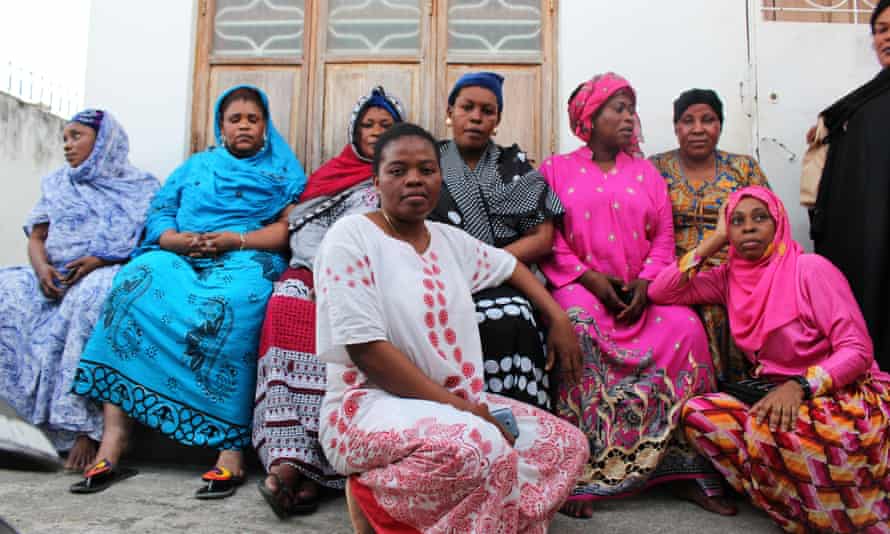
Sex worker rights defenders from Yosoa in Zanzibar, Tanzania. Yosoa conduct health outreach and provide support after police, client or family violence.

Sex worker rights defenders from Yosoa in Zanzibar, Tanzania. Yosoa do health outreach work and provide support after police, client or family violence. Photograph: Erin Kilbride/Front Line DefendersRights and freedom is supported by

Humanity United

Sex worker activists are among the most at risk defenders of human rights in the world, facing multiple threats and violent attacks, an extensive investigation has found.

The research, published today by human rights organisation Front Line Defenders, found that their visibility as sex workers who are advocates for their communities’ rights makes them more vulnerable to the violations routinely suffered by sex workers. In addition, they face unique, targeted abuse for their human rights work.

Drawing on the experience of 300 individuals in Tanzania, Kyrgyzstan, El Salvador and Myanmar, the report focuses oncases of sexual assault, threats from managers and clients, raids on homes and offices, physical attacks and police surveillance endured by sex workers undertaking human rights work.

The services the activists provide to fellow sex workers include: negotiating access to brothels, conducting gender rights training, offering legal and health counselling, reporting experiences of violence, and campaigning for freedom of movement and free choice of employment for those seeking to leave sex work.

Erin Kilbride, research and visibility coordinator at Front Line Defenders and lead author of the report, said: “Sex worker rights defenders take extreme personal risks to protect their communities’ rights to access justice, healthcare, housing and food, while responding to the immediate threats of police and domestic violence, discrimination, criminalisation and structural poverty.”

Often these activists were the only people able and willing to provide health education in locations in which sex was sold, the report found. They ensured treatment for sex workers who would otherwise be left with crippling injuries and life-threatening illnesses.

Activists’ role in creating community networks and defending sex workers’ right to assemble were also highlighted in the repot. “Coming together, even in private, is a radical, resistant, and dangerous act for defenders whose very identities are criminalised,” it said.

Defenders interviewed said they had been subjected to violations above and beyond what are typical for sex workers in their area. These included torture in prison, threats by name on the street, targeted abuse on social media and demands for sex in exchange for an advocacy meeting with a police commissioner. They also faced attacks from clients….

In Tanzania, sexual assaults in detention by the police have become a common occurrence for sex workers. They are often forced to perform sex acts in exchange for release. But human rights defenders have also been forced to perform sexual acts in order to secure other sex workers’ release. If they refuse, they are often tortured. One woman was given electric shocks after she refused to perform sex acts during a one-week detention related to her human rights work.

In El Salvador and other countries, physical attacks by clients and managers began after they learned about a sex worker’s activism, said the report.

In Myanmar, police followed activists to brothels to conduct raids duringhuman rights trainings. Some activists had been forced to change where they sell sex because police surveillance increased after they became known for their human rights work.Advertisement

Activists were often belittled at police stations in front of the sex workers they had tried to help. Htut, an outreach worker for Aye Myanmar Association, a network of sex workers, said: “[The police] let us in to the stations but then use rude words, take money from us, insult us, embarrass us, and made me feel bad about myself. It feels like they want to prove to the other sex workers that being an advocate is a humiliating thing.”

In Kyrgyzstan, sex workers have been paid or threatened by the police to help entrap rights defenders when they go to an area to distribute health supplies.

Despite the overwhelming evidence that sex worker activists have been under threat for their human rights work, much of it is dismissed by people ranging from the police to their own families, who assume such attacks are a result of being a sex worker.

Kilbride said: “Human rights defenders who are sex workers themselves are the best, and sometimes the only, activists and communities workers qualified and capable of accessing the most dangerous locations in which people sell sex.

The targeted attacks they experience – ranging from sexual assault in detention to raids on their homes and offices – are indicators of how powerful their human rights work is.”

https://www.theguardian.com/global-development/2021/aug/12/sex-workers-fighting-for-human-rights-among-worlds-most-at-risk-activists

https://www.frontlinedefenders.org/en/statement-report/first-global-report-sex-worker-rights-defenders-risk

UN experts demand release of human rights defender Dawit Isaak, imprisoned without trial in Eritrea since 2001

August 19, 2021

On 18 August 2021 UN experts demanded the release of journalist and human rights defender Dawit Isaak, imprisoned without trial in Eritrea since 2001, amid uncertainty about whether he is even still alive.

To this day, Dawit Isaak has never been charged with a crime, spent a day in court or spoken to his lawyer,” said Mary Lawlor, UN Special Rapporteur on the situation of human rights defenders. “The level to which the Eritrean Government is ignoring Mr. Isaak’s basic, fundamental human rights is appalling. He must be released at once.”

In the first years of his detention, “we received information that Mr. Isaak was often taken to hospital, which was concerning in itself,” Lawlor said, “Now we receive no news, and that’s worse. We fear for his life. At an absolute minimum, Eritrea must immediately present evidence that he is alive and well.”

Dawit Isaak, 56, a dual Swedish-Eritrean national, established one of Eritrea’s first independent media outlets in the 1990s, the Setit newspaper. In May 2001, it published open letters written by a group of politicians known as the G15 urging the Government to hold open elections and implement a newly drafted Constitution. With the world’s attention diverted by the September 11 terrorist attacks, Mr. Isaak was arrested on 23 September 2001.

According to a credible source, Mr. Isaak was alive in September 2020, the first sign of life in seven years. He is reportedly being held in Eiraeiro prison, a detention centre infamous for its conditions, where torture is allegedly common practice and where many inmates have reportedly died in custody.

The enforced disappearance of Mr. Isaak for almost two decades is extremely concerning,” said Mohamed Abdelsalam Babiker, Special Rapporteur on Eritrea. “The Government of Eritrea has not confirmed his whereabouts or provided any solid evidence about his state of health in all these years. It has denied torture allegations but has not allowed anyone to visit Mr. Isaak.

Lawlor said she had rarely witnessed such disregard for human life as she documents cases of human rights defenders in long-term detention around the world.

“Locking up human rights defenders for long periods of time may feel like a guarantee against internal scrutiny,” Lawlor said. “But we have not forgotten.”

Mr. Isaak’s work has been recognised by a number of prestigious awards, including UNESCO’s Freedom of Press Award {see: https://www.trueheroesfilms.org/thedigest/laureates/9329f937-0d8b-4543-8664-2263e968adbf] and he was a finalist for the Sakharov Award in 2017

The Special Procedures mandate holders are in contact with the Eritrean authorities on this matter.

The experts’ call is endorsed by: Ms. Tlaleng Mofokeng, Special Rapporteur on the right to physical and mental health; the Working Group on Enforced or Involuntary Disappearances: Mr. Tae-Ung Baik (Chair), Mr. Henrikas Mickevičius (Vice Chair), Ms. Aua Balde, Ms. Gabriella Citroni and Mr. Luciano Hazan; and Mr. Morris Tidball-Binz, Special Rapporteur on extrajudicial, summary or arbitrary executions.

https://www.miragenews.com/un-experts-demand-release-of-human-rights-615941/

Rida Faraj Fraitis, Libyan government staffer, abducted – UN Libya mission ‘deeply concerned’

August 19, 2021

Rida Faraj Fraitis, is Chief of Staff for the First Deputy Prime Minister of the Government of National Unity (GNU), the UN-backed administration that since March, has been leading a new unified Libyan push towards ending years of civil conflict and division. Up until this year, the oil-rich nation was split between the former Government of National Accord based in Tripoli, and a rival administration based in the east. In recent weeks, progress towards new democratic elections in December has stalled, despite wide-ranging and on-going negotiations continuing.

Mr. Fraitis was taken along with a colleague, on 2 August, following a visit to GNU premises in Tripoli: “The fate and whereabouts of both Mr. Fraitis and his colleague remain unknown and UNSMIL fears for their safety and security”, the mission said in a statement.  

The Mission expresses further concern about individuals who have taken on roles in support of Libya’s democratic transition and State institutions being targeted in this manner which has serious implications for the peace and reconciliation process and for the full unification of national institutions”, the statement continued.

UNSMIL said that it has documented several cases of illegal arrests and detention, enforced disappearances, as well as torture. The mission has also recorded cases of extrajudicial killings of citizens, officials, journalists, civil society members and human rights defenders, in the past year. See also: https://humanrightsdefenders.blog/2020/11/12/libyan-human-rights-defender-hanan-al-barassi-gunned-down-in-benghazi/

The Mission is now calling on Libyan authorities to fully investigate all alleged violations of international human rights law, and international humanitarian law.

Libya must end the entrenched culture of impunity in the country”, stressed Mr. Kubis. 

Three UN workers killed following Benghazi car bomb attack, as Security Council meets in emergency session, honours their ‘ultimate sacrifice’

https://news.un.org/en/story/2021/08/1097512

Human right defender Sergei Kovalev died

August 19, 2021

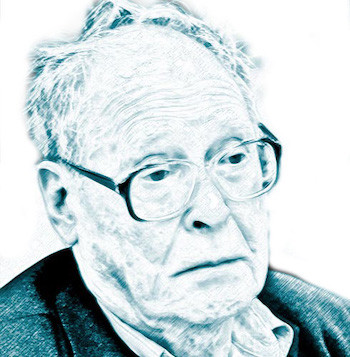
One of Russia’s most famous human rights defenders and former Soviet dissident, Sergei Kovalev, died aged 91 on Monday 9 August 2021 his family said. He won 9 international human rights awards, see: https://www.trueheroesfilms.org/thedigest/laureates/7B15D0E9-FDB2-4727-B94F-AA261BDB92D9

Kovalev was a biologist who became one of the leading members of the USSR’s pro-democracy movement. He was held for years in Soviet labour camps for his activism. After the collapse of the Soviet Union, he became a fierce critic of Moscow’s war in Chechnya and warned against democratic backsliding when President Vladimir Putin came to power in 2000.

His son Ivan Kovalev said on Facebook that his father died “in his sleep” in the early hours of Monday morning.

Russian rights group Memorial, which Kovalev co-founded, said he was “faithful to the idea of human rights always and in everything — in war and peace, in politics and every day life”.

The leading rights organisation — which has been labelled a “foreign agent” by Russian authorities under a controversial law — said Kovalev had campaigned for human rights since the 1960s. See also: https://humanrightsdefenders.blog/2013/04/26/russia-pursues-its-policy-of-labeling-human-rights-defenders-as-foreign-agents/

As a biology student, Kovalev had dreamed of devoting himself exclusively to science.

But he changed his mind after the arrests of dissident writers Yuli Daniel and Andrei Sinyavsky.

“I then understood that it was not possible to only be in science,” he said. “It would have been shameful.”

In 1968, Kovalev was fired from his job at a Moscow university laboratory for joining the Action Group for the Defence of Human Rights in the USSR — considered to be the Soviet Union’s first rights group.

He then grew close to the dissident academic Andrei Sakharov.

Kovalev was part of a group of dissidents writing the “Chronicle of Current Events”, an underground typed bulletin that reported on human rights violations in the USSR.

It reported the arrests and psychiatric internments of the Soviet regime’s opponents and on the situation in its labour camps.

He was arrested in 1974, accused of spreading “anti-Soviet propaganda” and sentenced to seven years in a Gulag camp, followed by three years of house arrest in the icy Siberian region of Kolyma.

He was only allowed to return to Moscow in 1987, thanks to the perestroika reforms launched by Soviet leader Mikhail Gorbachev.

He went on to help found Memorial, which recorded testimonies of Soviet political repression.

Kovalev was one of the few Soviet dissidents that entered post-USSR politics.

He contributed to writing Russia’s new constitution and was elected a parliamentary deputy twice.

In 1994, he was appointed as chairman of President Boris Yeltsin’s human rights commission in 1994. But he was forced to give up the post two years later for his outspoken criticism of Russia’s brutal intervention in the Chechen conflict.

Kovalev also criticised the political system created by Putin, from the beginning of the former KGB spy’s long rule. “A controlled democracy is being created in our country that seeks to create problems for ‘enemies inside as well as outside’,” he said in 2001, a year after Putin was inaugurated as president.

In 2014, he called on Western countries to “stop Russian expansion” into Ukraine after Moscow annexed Kiev’s Crimea peninsula.

According to Kovalev, the West had made “too many concessions” to Russia.

He also criticised Russian opposition leaders, whom he accused of being pragmatists without strong moral convictions. “I belong to the camp of idealists in politics,” he said.

https://www.france24.com/en/live-news/20210809-soviet-dissident-sergei-kovalev-dies

https://today.rtl.lu/news/world/a/1768110.html

https://www.hrw.org/news/2021/08/09/human-rights-watch-mourns-death-sergei-kovalev

https://www.theguardian.com/world/2021/aug/09/sergei-kovalev-soviet-dissident-who-clashed-with-yeltsin-putin-dies-aged-91

Positioning China as THE threat, overlooks the bigger issues within democracies

August 7, 2021

Zack Beauchamp in VOX of 28 July 2021 makes a strong but perhaps controversial plea that “In the fight for democracy’s future, Indian and American politics is more important than anything China is doing“:

Donald Trump and Narendra Modi shaking hands while standing in front of US and Indian flags.
Donald Trump and Narendra Modi.

One of the emerging tenets of the Biden presidency is that the United States and China are locked in ideological conflict over the fate of democracy.

In March, during his first press conference as president, he declared that “this is a battle between the utility of democracies in the 21st century and autocracies.” In April, during his first address to a joint session of Congress, he labeled this struggle “the central challenge of the age” — and that China’s Xi Jinping is “deadly earnest about becoming the most significant, consequential nation in the world.”

More recently, in last week’s CNN town hall, he warned that Xi “truly believes that the 21st century will be determined by oligarchs, [that] democracies cannot function in the 21st century. The argument is, because things are moving so rapidly, so, so rapidly that you can’t pull together a nation that is divided to get a consensus on acting quickly.”

Inasmuch as there is a Biden doctrine, the notion that the US needs to protect democracy from China’s authoritarian model is at the center of it. “Biden’s administration [is] framing the contest as a confrontation of values, with America and its democratic allies standing against the model of authoritarian repression that China seeks to impose on the rest of the world,” Yaroslav Trofimov writes in the Wall Street Journal.

Biden’s thinking captures an important insight: that the struggle over democracy’s fate will be one of the defining conflicts of the 21st century. But his analysis is crucially flawed in one respect: China is not an especially important reason why democracy is currently under threat — and centering it is not only wrong, but potentially dangerous.

In countries where democracy is at real risk of collapse or even outright defeated — places like India, Brazil, Hungary, Israel, and, yes, the United States — the real drivers of democratic collapse are domestic. Far-right parties are taking advantage of ethno-religious divides and public distrust in the political establishment to win electorally — and then twist the rules to entrench their own hold on power. Leaders of these factions, like former US President Donald Trump and Indian Prime Minister Narendra Modi, aid and abet each other’s anti-democratic politics.

More traditional authoritarian states, even powerful ones like China or Russia, have thus far played at best marginal roles in this struggle.

“Much of the recent global democratic backsliding has little to do with China,” Thomas Carothers and Frances Brown, two leading experts on democracy, write in a recent Foreign Affairs essay. “An overriding focus on countering China and Russia risks crowding out policies to address the many other factors fueling democracy’s global decline.”

This misdiagnosis has real policy stakes. Leaning into competition with China could lead the US to excuse anti-democratic behavior by important partners, like Modi or the Philippines’ Rodrigo Duterte, in a manner reminiscent of US relations with anti-communist dictators during the Cold War. Moreover, too much emphasis on competition with China could distract from the place where Biden has the most power to affect democracy’s fate — the home front, an area in which voting rights advocates increasingly see him as indefensibly complacent.

There are real problems associated with China’s rise. Its increasing military belligerence, predatory economic practices, and horrific human rights abuses in places like Xinjiang are all very serious concerns. But the fact that China is the source of many real issues doesn’t mean it’s the source of democratic erosion worldwide — and positioning it as such will do little to advance the democratic cause.

Democracies are rotting from within, not without

In his public rhetoric, Biden often argues that the US needs to prove that democracy “works” — that it can “get something done,” as he said last week — in order to outcompete the Chinese model.

While he hasn’t spelled out the nature of this competition all that precisely, the concern seems to center on Chinese policy success: that its rapid economic growth and authoritarian ability to make swift policy changes will inspire political copycats unless democracies prove that they can also deliver real benefits for their citizens.

“I believe we are in the midst of an historic and fundamental debate about the future direction of our world,” the president wrote in a March letter outlining his national security strategy. “There are those who argue that, given all the challenges we face, autocracy is the best way forward. And there are those who understand that democracy is essential to meeting all the challenges of our changing world.”

But at this point, the fear of Chinese political competition is mostly hypothetical. While the Chinese government and state media frequently tout the superiority of its political model to American-style democracy, there’s little evidence that these efforts are all that influential globally — and certainly not in the countries where democracy is most at risk.

A look back at the Soviet Union, the last major challenge to the hegemony of liberal democracy, is telling. ln ideological terms, there’s no comparison: Soviet communism was a far more powerful model than Chinese authoritarian state capitalism is today.

CHINA-BEIJING-XI JINPING-JULY 1 MEDAL-AWARD CEREMONY (CN)
Xi Jinping.

Marxist ideals inspired revolutionary Communist movements and governments around the globe, successfully toppling Western-backed governments in countries ranging from Cuba to Vietnam to China itself. By contrast, there are vanishingly few foreign governments or even political parties today openly vowing to emulate modern China. While the Soviets had the Iron Curtain in Europe, modern China’s most notable client state is North Korea — perhaps the most isolated and mistrusted government on the planet.

In the countries that observers worry most about — established democratic states experiencing “backsliding” toward authoritarianism — Chinese influence is minimal at best.

In backsliding democracies, authoritarian-inclined leaders win and hold power through the electoral system for domestic reasons. Corruption scandals in India and Hungary, violent crime in the Philippines, a racist backlash against America’s first Black president: These are some of the key factors in the rise of authoritarian populists, and they weren’t created or even significantly promoted by China.

Elected authoritarians still bill themselves as defenders of democracy while in power — even after they start undermining the electoral system with tactics like extreme gerrymandering and takeovers of state election agencies. Their political appeal isn’t grounded in an overt rejection of democracy in favor of a Chinese model, but rather a claim to be taking democracy back from corrupt elites in the name of the “true” people, typically defined in ethno-nationalist terms.

The ideology driving modern democratic decline is vastly different from the sort that China promotes at home and through official state media. It represents a home-grown challenge inside the democratic world, rather than an externally stoked, Cold War-style threat.

That’s not to say China does nothing to undermine democracy outside its borders. It has, for example, exported surveillance technology and provided training in “cybersecurity” for foreign officials that amount to teaching them tools for controlling public opinion — underscoring its role as a global pioneer in using technology to repress dissent.

Yet even in this area, China’s influence can easily be overstated. Backsliding countries typically do not ban websites outright or arrest online dissidents in the way China does. Instead, they rely on spreading misinformation and other more subtle uses of state power. When they do use more traditional authoritarian tools, they often don’t need China’s help in doing so — as shown by recent reporting on Israel’s NSO Group, a company with close links to the Israeli state that sold spy software to India and Hungary (whose governments allegedly used it to surveil journalists and opposition figures).

In his recent book The Rise of Digital Repression, Carnegie Endowment scholar Steven Feldstein attempts to systematically document the use of digital tools and tactics for undermining democracy around the world. He found that while such practices were indeed becoming more widespread, this is largely due to domestic factors in authoritarian and backsliding countries rather than Chinese influence.

“China really wasn’t pushing this technology any more so than other countries were pushing advanced technology or censorship technologies,” he told me in an interview earlier this year. “What I saw — when I spoke on the ground to intelligence officials, government officials, and others — was that there were many other factors at play that were much more determinative in terms of whether they would choose to purchase a surveillance system or use it than just the fact that China was trying to market it.”

The problem with blaming China for democracy’s crisis

Biden and his team recognize that many of the challenges to democracy have domestic roots. But in casting the rise of anti-democratic populism as part of a grander ideological struggle against an authoritarian Chinese model, they conflate two distinct phenomena — and risk making some significant policy errors.

Again, an analogy to the Cold War is helpful here. One of the most grievous errors of America’s containment policy was its repeated willingness to align itself with anti-communist dictators. The perceived need to stop the expansion of Soviet influence consistently trumped America’s commitment to democracy — with horrific consequences for the people of Iran, Argentina, Indonesia, and Bangladesh (to name just a handful of examples from a very long list).

The more China is treated like the new Soviet Union — the principal ideological threat to democracy whose influence must be curtailed — the more likely the US is to repeat that mistake.

Take India, for example. In the past six months, Biden has courted Modi’s government as a potential counterweight to China. “There are few relationships in the world that are more vital than one between the U.S. and India. We are the world’s two leading democracies,” Secretary of State Antony Blinken said in a July 28 press conference in New Delhi.

Yet this is an Indian government that has assailed the rights of its Muslim citizens, strong-armed US social media companies into removing critical posts, and arrested a leading protest figure. Earlier this year, V-Dem — a research group behind the leading academic metric of democracy — announced that India under Modi was an “electoral autocracy,” rather than a true democracy. It’s easy to see how an emphasis on China could lead to these problems getting swept under the rug.

“There has long been a bipartisan consensus in Washington that India is a critical ally in its attempt to check Chinese influence in Asia,” the Indian intellectual Pankaj Mishra wrote in a June Bloomberg column. “In overlooking the Modi government’s excesses, Biden probably counts on support from a US foreign policy establishment invested more in realpolitik than human rights.”

If you take the notion that democracy’s crisis is emerging from within seriously, then it follows that very best thing that Biden could do for democracy’s global future has nothing to do with China or even foreign policy. It’s arresting creeping authoritarianism at home.

Black Voters Matter Protest
Cliff Albright, co-founder of Black Voters Matter, and Rep. Hank Johnson (D-GA) are arrested during a protest to support voting rights outside of Hart Senate Office Building on Thursday, July 22, 2021.

Biden has acknowledged this at times, writing in his March letter that his global strategy “begins with the revitalization of our most fundamental advantage: our democracy.” And yet that urgency hasn’t translated into action — legislation necessary to safeguard American democracy from the GOP’s increasingly anti-democratic politics appears stalled out. Biden, for his part, has refused to publicly endorse more aggressive action to break the logjam — like abolishing the filibuster for voting rights bills.

The New York Times recently reported that “in private calls with voting rights groups and civil rights leaders, White House officials and close allies of the president have expressed confidence that it is possible to ‘out-organize voter suppression’” — an implausible claim that reflects an administration that, according to activists, has “largely accepted the Republican restrictions as baked in and is now dedicating more of its effort to juicing Democratic turnout.”

Shoring up American democracy after the recent attacks it has suffered should be the top priority of any US government concerned with democracy’s global fate. But for all of Biden’s lofty language about out-competing China and winning the future for democracy, there’s a striking lack of urgency when it comes to the perhaps the most important backsliding country — his own.

In this sense, China has very little influence over the future of democracy globally. The key battles are happening not in the South China Sea or the Taiwan Strait, but in the legislatures of New Delhi and Washington. If there really is to be a grand struggle for democracy’s survival in the 21st century, it needs to start there.

https://www.vox.com/policy-and-politics/22590777/biden-china-democracy-voting-india-doctrine

Saturday Mothers charged in Istanbul

August 7, 2021

On 12 July 2021, the case against the 46 human rights defenders and activists, which includes the families of the disappeared and supporters continued at the Istanbul 21st Criminal Court of First Instance. They were charged with violating the Law on Assemblies and Demonstrations for “unarmed participation in an unauthorised assembly and refusal to disperse after warnings” (Article 32 of the Law 2911). The case was filed following the violent arrest of the 46 people and one minor by the police during the 700th gathering of the Saturday Mothers/People on 25 August 2018.

On 18 November 2020, an Istanbul court of first instance filed a lawsuit against 46 people who were arrested on 25 August 2018 during the violent police intervention at the 700th gathering of Saturday Mothers/People in Istanbul’s Galatasaray Square.

On 25 August 2018, police forcibly dispersed the Saturday Mothers’ weekly vigil and detained 47 protesters, including families of the victims of enforced disappearances in the 90s. The detained protesters were released from police custody later that day.

About the situation:

On 12 July 2021, the case against the 46 human rights defenders and activists, which includes the families of the disappeared and supporters of Saturday Mothers/People, continued at the Istanbul 21st Criminal Court of First Instance. They were charged with violating the Law on Assemblies and Demonstrations for “unarmed participation in an unauthorised assembly and refusal to disperse after warnings” (Article 32 of the Law 2911). The case was filed following the violent arrest of the 46 people and one minor by the police during the 700th gathering of the Saturday Mothers/People on 25 August 2018.

On 18 November 2020, an Istanbul court of first instance filed a lawsuit against 46 people who were arrested on 25 August 2018 during the violent police intervention at the 700th gathering of Saturday Mothers/People in Istanbul’s Galatasaray Square.

On 25 August 2018, police forcibly dispersed the Saturday Mothers’ weekly vigil and detained 47 protesters, including families of the victims of enforced disappearances in the 90s. The detained protesters were released from police custody later that day.

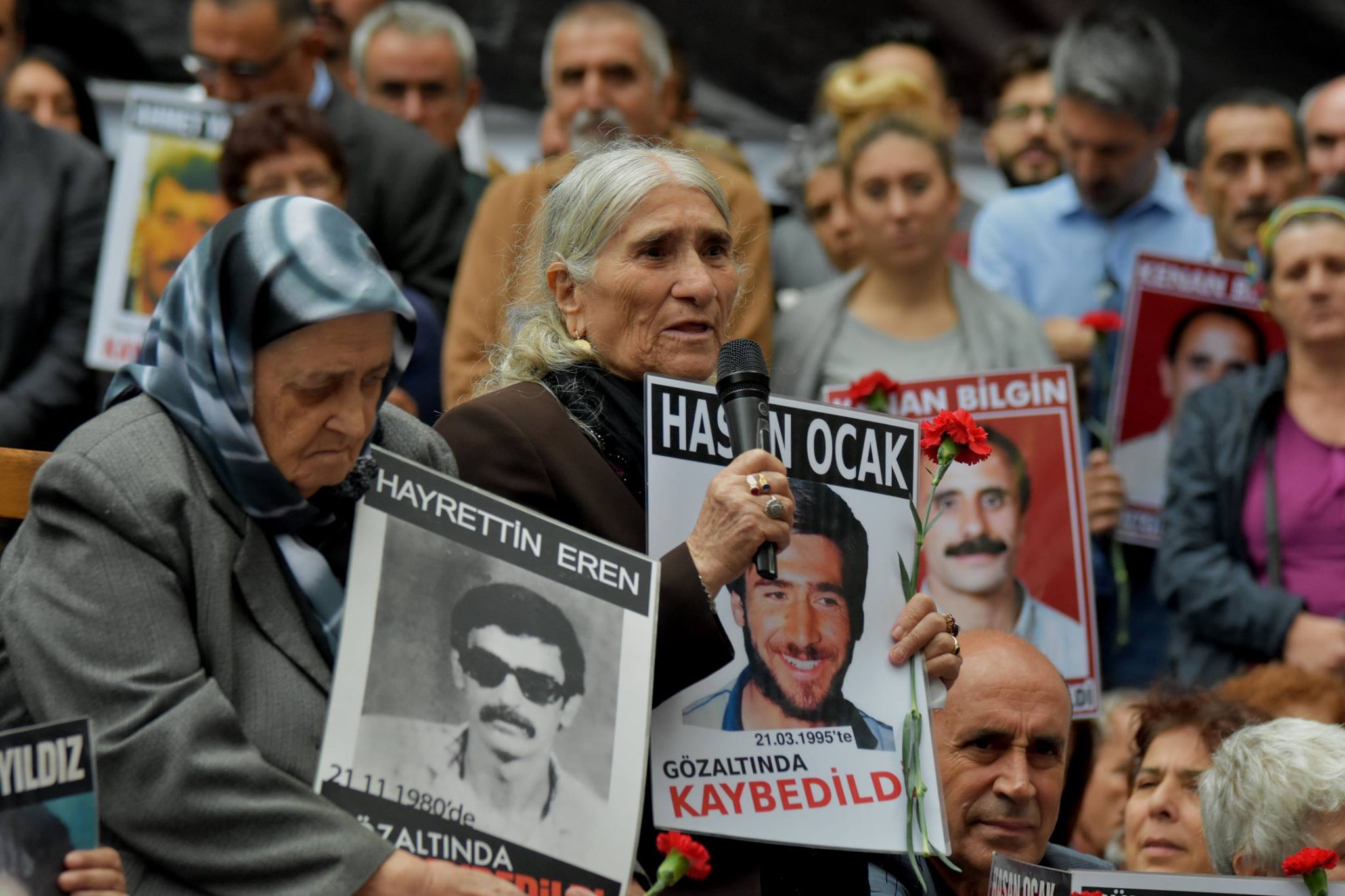
Cumartesi Anneleri/İnsanları: Saturday Mothers/People is a human rights group, comprised of human rights defenders and families of victims of enforced disappearance in Turkey in the 1990s. They began organising weekly vigils at Galatasaray Square after the detention of Hasan Ocak on 21 March 1995 and the subsequent discovery of his tortured body in a common grave. Human rights defenders and the families of the victims gathered in Galatasaray Square for the first time on 27 May 1995, demanding an end to enforced disappearances, seeking information on the whereabouts of those who have disappeared and justice for the victims. See: https://en.wikipedia.org/wiki/Saturday_Mothers

In the meatime in Malta, two Turkish mothers who were jailed and separated from their young sons for using forged passports have been freed as Court overturned their prison sentence. The women, Rabia Yavuz, 27, and Muzekka Deneri, 29, have been fighting to be reunited with their sons – aged two and four – after being sentenced to six months in prison. 

The two women were freed on Friday afternoon after having ear.lier this week filed an appeal against the ‘disproportionate and excessive’ punishment. They admitted to using fake travel documents, saying they could not return to their country because of political persecution. Moreover, the two women, who were separated from their sons, are in the process of applying for asylum.

https://www.frontlinedefenders.org/en/case/saturday-motherspeople-court-second-hearing

https://timesofmalta.com/articles/view/court-to-decide-whether-to-free-turkish-mothers-today.891802

Results of 47th session of the Human Rights Council

August 7, 2021

The ISHR and 17 other organisations (see below for their names) share reflections on the key outcomes of the 47th session of the UN Human Rights Council, as well as the missed opportunities to address key issues and situations. See also: https://humanrightsdefenders.blog/2021/06/22/key-issues-affecting-hrds-in-47th-session-of-un-human-rights-council-june-2021/

CIVIL SOCIETY PARTICIPATION

We deplore the systemic underfunding of the UN human rights system and the drive for so-called efficiency, including the cancellation of general debates in June, which are a vital part of the agenda by which NGOs can address the Council without restrictions. We call for the reinstatement of general debates at all sessions, with the option of civil society participation through video statements.  We welcome the focus of the civil society space resolution on the critical role played by civil society in the COVID-19 response, and the existential threats to civil society engendered or exacerbated by the pandemic. For the resolution to fulfil its goal, States must now take action to address these threats; while we welcome the broad support indicated by a consensus text, this cannot come at the cost of initiatives that will protect and support civil society.

HUMAN RIGHTS ONLINE

We welcome a resolution on the promotion, protection and enjoyment of human rights on the Internet and its thematic focus on bridging digital divides, an issue which has become ever-important during the COVID-19 pandemic. We urge all States to implement the resolution by taking concrete measures to enhance Internet accessibility and affordability and by ceasing Internet shutdowns and other disruptions, such as website blocking and filtering and network throttling. In future iterations of the text, we encourage the core group to go further in mentioning concrete examples that could be explored by States in adopting alternative models for expanding accessibility, such as the sharing of infrastructure and community networks.  We welcome the resolution on new and emerging digital technologies and human rights, which aims to promote a greater role for human rights in technical standard-setting processes for new and emerging digital technologies, and in the policies of States and businesses. While aspects of the resolution risk perpetuating “technology solutionism”, we welcome that it places a stronger focus on the human rights impacts of new and emerging digital technologies since the previous version of the resolution, such as introducing new language reiterating the importance of respecting and promoting human rights in the conception, design, use, development, further deployment and impact assessments of such technologies.

GENDER EQUALITY AND NON-DISCRIMINATION

We are concerned by the increasing number of amendments and attempts to weaken the texts. We are particularly concerned by the continued resistance of many States to previously adopted texts and States’ willful misinterpretation of key concepts related in resolutions on human rights in the context of HIV and AIDS, accelerating efforts to eliminate all forms of violence against women and girls: preventing and responding to all forms of violence against women and girls with disabilities and preventable maternal mortality and morbidity and human rights on maternal morbidities. We deplore the instrumentalising of women’s rights and sexual and reproductive health and rights. We encourage States to center the rights of people most affected and adopt strong texts on these resolutions. We welcome the resolution on menstrual hygiene management, human rights and gender equality as the first step in addressing deep-rooted stigma and discrimination. We urge all States to address the root causes for the discrimination and stigma on menstruation and its impact.

RACIAL JUSTICE AND EQUALITY

The High Commissioner’s report highlighted the long-overdue need to confront legacies of slavery, the transatlantic trade in enslaved Africans and colonialism and to seek reparatory justice. We welcome the historic consensus decision, led by the Africa Group, to adopt a resolution mandating an independent international expert mechanism to address systemic racism and promote racial justice and equality for Africans and people of African descent. The adoption of this resolution is testament to the resilience, bravery and commitment of victims, their families, their representatives and anti-racism defenders globally. We deplore efforts by some Western States, particularly former colonial powers, to weaken the text and urge them to now cooperate fully with the mechanism to dismantle systemic racism, ensure accountability and reparations for past and present gross human rights violations against Black people, end impunity for racialized State violence and address the root causes, especially the legacies of enslavement, colonialism, and the transatlantic trade in enslaved Africans.

MIGRANTS RIGHTS

Whilst we welcome the return of a resolution on human rights of migrants, we deplore the continued failure of the Council to respond meaningfully to the severity and global scale of human rights violations at international borders including connected to pushbacks. International borders are not and must not be treated as places outside of international human rights law. Migrants are not and must not be treated as people outside of international human rights law. Expressions of deep concern in interactive dialogues must be translated into action on independent monitoring and accountability.

ARMS TRANSFERS AND HUMAN RIGHTS

We welcome the resolution on the impact of arms transfers on human rights and its focus on children and youth. However, we note with concern the resistance of the Council to meaningfully focus on legal arms transfers beyond those diverted, unregulated or illicitly transferred. The Council should be concerned with all negative human rights impacts of arms transfers, without focusing only on those stemming from diversion and unregulated or illicit trade.

CLIMATE CHANGE

We are disappointed that the resolution on human rights and climate change fails to establish a new Special Rapporteur. However, we welcome the increasing cross regional support for a new mandate. It is a matter of urgent priority for the Council to establish it this year.

COUNTRY SPECIFIC SITUATIONS

ALGERIA

While special procedures, the OHCHR and multiple States have recognized the intensifying Algerian authorities’ crackdown on freedom of association and expression, the Council failed to act to protect Algerians striving to advance human rights and democracy.

BELARUS

We welcome the renewal of the mandate of the UN Special Rapporteur on Belarus. Given the ongoing human rights crisis in Belarus, the mandate complements the OHCHR Examination in ensuring continuous monitoring of the situation, and the mandate remains an accessible and safe channel for Belarusian civil society to deliver diverse and up-to-date information from within the country.

CHINA

The Council has once again failed to respond meaningfully to grave human rights violations committed by Chinese authorities. We reiterate our call on the High Commissioner and member States to take decisive action toward accountability.

COLOMBIA

We are disappointed that few States made mention of the use of excessive force against protestors in a context of serious human rights violations, including systemic racism, and urge greater resolve in support of the right to freedom of peaceful assembly in the country and globally

ETHIOPIA

The resolution on Ethiopia’s Tigray region, albeit modest in its scope and language, ensures much-needed international scrutiny and public discussions on one of Africa’s worst human rights crises. We urge the Ethiopian government to engage ahead of HRC48.

ERITREA

We welcome the extension of the mandate of the Special Rapporteur on Eritrea, as scrutiny for violations committed at home and in Tigray is vital.

NICARAGUA

We warmly welcome the joint statement delivered by Canada on behalf of 59 States, on harassment and detention of journalists, human rights defenders, and presidential pre-candidates, urging Nicaragua to engage with the international community and take meaningful steps for free and fair elections. States should closely monitor the implementation of resolution 46/2, and send a strong collective message to Nicaragua at the 48th session of the Council, as the Council should ‘urgently consider all measures within its power’ to strengthen human rights protection in the country.

PALESTINE

We welcome the Special Rapporteur’s report that “Israeli settlements are the engine of this forever occupation, and amount to a war crime,” emphasizing that settler colonialism infringes on “the right of the indigenous population […] to be free from racial and ethnic discrimination and apartheid.” We also reiterate his recommendation to the High Commissioner “to regularly update the database of businesses involved in settlements, in accordance with Human Rights Council resolution 31/36.”

THE PHILIPPINES

While acknowledging the signing of the Joint Human Rights Programme with the UN OHCHR, the Government of the Philippines fails to address the long-standing issues on law enforcement and accountability institutions, including in the context of war on drugs. We continue to urge the Council to launch the long-overdue independent and transparent investigation on the on-going human rights violations.

SYRIA

We welcome mounting recognition for the need to establish a mechanism to reveal the fate and whereabouts of the missing in Syria, including by UN member states during the interactive dialogue on Syria, and the adoption of the resolution on Syria addressing the issue of the missing and emphasizing the centrality of victim participation, building on the momentum created by the Syrian Charter for Truth and Justice.

VENEZUELA

In the context of the recent arbitrary detention of 3 defenders from NGO Fundaredes, we welcome the denunciation by several States of persistent restrictions on civil society and again for visits of Special Rapporteurs to be accepted and accelerated.

*American Civil Liberties Union, Association for Progressive Communications, Cairo Institute for Human Rights Studies, Centro de Estudios Legales y Sociales (CELS), Center for Reproductive Rights, Child Rights Connect, CIVICUS: World Alliance for Citizen Participation, Commonwealth Human Rights Initiative, Conectas Direitos Humanos, Egyptian Initiative for Personal Rights, FIDH, Franciscans International, Human Rights House Foundation, International Bar Association’s Human Rights Institute, International Commission of Jurists, International Lesbian and Gay Association, International Service for Human Rights, US Human Rights Network

https://ishr.ch/latest-updates/hrc47-civil-society-presents-key-takeaways-from-human-rights-council/