Posts Tagged ‘Zeid Ra’ad Al Hussein’

How utterly wrong a Chinese newspaper commentary can be…

May 14, 2015

Zhu Junqing, writing in the Shanghai Daily of 13 May 2015, is the prime example of how distorted the Chinese government’s view of the international human rights regime is. Under the title: “U.S. needs to work on own human rights record first before blaming others“, the author quite rightly points to the UN Human Rights Council findings on 11 May and the comments by UN High Commissioner for Human Rights, Zeid Ra’ad Al Hussein, which conclude that there a lot of human right problems remain unresolved in the USA (including excessive use of force by law enforcement agencies, racial, religious and sex discrimination, Guantanamo Bay detention, migrant rights, environmental issues and counterterrorism practices). Also he recalls correctly that the United States is one of the two countries in the world that have not ratified the UN Convention on the Rights of the Child, and is reluctant on other international instruments.

But then the article draws exactly the wrong conclusion. Instead of appreciating the UN’s courage to tackle a superpower, it call the USA the “ultimate human rights judge” (why??) and concludes that this “self-proclaimed human rights watchdog, needs to examine itself critically and improve its own human rights record before [!] blaming other countries for their violations”. Since “no country is perfect in its human rights record,” as Chinese Foreign Ministry Spokesperson Hua Chunying put it, “any country with human rights defects should work hard to resolve its own problems and improve its own human rights record before casting the first stone”.

Yep, that it the solution! Nobody criticizes anybody and we are all happy. The more obvious and consistent solution does not even get mentioned: IF the USA can be criticized, WHY is China so fearful and retaliates regularly against human rights defenders? [e.g. https://thoolen.wordpress.com/2014/03/20/china-in-the-un-human-rights-council-manages-to-silence-cao-shunli-as-well-as-ngos/ ].

China’s own extraordinary sensitivity to ‘interference’ of any level into what it considers its domestic affairs is well-known. I touched upon this hot’ topic’ in my own 2011 article “The international human rights movement: not perfect, but a lot better than many governments think” in the book ‘NGOs in China and Europe’ (exceptionally also published in Chinese!): Yuwen Li (ed), Ashgate, 2011, pp 287-304 (ISBN: 978-1-4094-1959-4).

Commentary: U.S. needs to work on own human rights record first before blaming others | Shanghai Daily.

High Commissioner leaves Burundi and the repression goes up…

April 29, 2015

High Commissioner for Human Rights Zeid Ra’ad Al Hussein (second left) at a roundtable discussion during his mission to Burundi.Photo: UN Electoral Observation Mission in Burundi (MENUB)
The UN High Commissioner for Human Rights left Burundi on 15 April with a final exhortation that “Burundian parties must choose the path to democracy and the rule of law“. Only a week later the authorities increased their crackdown on dissent to silence those who oppose a third term for the President.
This is a critical moment in Burundi’s history,” said UN High Commissioner for Human Rights Zeid Ra’ad Al Hussein during his mission to Burundi. “Its future may well depend on which path is chosen by individual politicians and their supporters, as well as various key authorities, over the next few weeks.”… “And history – and possibly national or international courts – will judge those who kill, bribe or intimidate their way to power.

He pointed out that recent events were of great concern, with tensions rising sharply over the past few months as the elections approach, reportedly stoked by an increase in politically motivated harassment, intimidation and acts of violence, as well as a reported rise in hate speech. He pointed to “extreme examples of hate speech” heard at a pro-Government political rally in Bujumbura and several examples of attacks on and intimidation of journalists, human rights defenders and opposition politicians.

“I will put it bluntly,” he said “As I prepared for this mission, I talked to many knowledgeable people, within and outside the UN, in Geneva and New York. They were all, without exception, alarmed about the direction the country appears to be taking. The Secretary-General has signalled his concerns, and so has the Security Council.”

He cited the main cause for concern as the pro-Government militia called the Imbonerakure, which he said appeared to be operating increasingly aggressively and with total impunity. People were fleeing the country, with up to 1,000 people per day crossing into Rwanda, and many of those leaving telling UN officials that their reason for leaving is fear of the Imbonerakure.

Mr. Zeid said the Government needed to send a clear message that extremism and impunity would no longer prevail and he added that all political demonstrations needed to be treated equally and in accordance with international laws and standards relating to freedom of assembly. Opposition politicians needed to play a part, too, refraining from inflation or exaggeration of facts to whip up anti-Government support and feed a climate of fear. They also needed to ensure that their supporters protest peacefully, and do not indulge in hate speech or react violently to perceived provocations. He said he had held several meetings since arriving in Burundi on Sunday, including with the country’s top officials, as well as civil society organizations, the National Human Rights Institution (CNIDH), foreign diplomats, opposition politicians, and key State institutions such as the Truth and Reconciliation Commission, the Independent National Electoral Commission, and the President of the Constitutional Court. “During the course of these meetings and discussions, it was very clear that many people here are also extremely worried,” …. “Ultimately, it is the authorities who have the obligation to protect all citizens and residents from intimidation and violence committed by any individual or group. They must also accept that criticism is a vital element of democracy, not a threat that must be crushed.”

A week later Front Line Defenders and the African defenders network EHAHRDP reported inter alia:

  • a clampdown on human rights defenders and journalists by Burundian authorities in connection with ongoing protests against President Nkurunziza’s bid for a third term widely deemed unconstitutional by Burundi’s civil society (with AP reporting 6 people killed at demonstrations over the weekend)
  • on 27 April 2015, human rights defender Pierre Claver Mbonimpa was arrested and released a day later without charge after being held in police custody approximately 48 hours [Pierre Claver Mbonimpa, Laureate of the MEA 2007, is the President of the Burundi Association for the Promotion of Human Rights (APRODH). He is also a member of the coalition “Halt to Nkurunziza’s third term”, a peaceful campaign which was launched in January 2015 by several civil organisations to oppose a third presidential term].  In May 2014, Pierre Claver Mbonimpa was also arrested and much later released [https://thoolen.wordpress.com/2014/09/30/news-from-burundi-release-of-human-rights-defender-pierre-claver-mbonimpa/].
  • an arrest warrant seems also to have been issued against human rights defenders Messrs Pacifique Nininahazwe and Vital Nshimirimana from the Forum for the Strenghtening of Civil Society (FORSC), who are perceived as leading organisers of the campaign against the Nkurunziza’s third term.
  • state authorities forcibly closed the Bujumbura and Ngozi offices of the African Public Radio (Radio Publique Africaine – RPA), a private radio station of Burundi known for dealing with human rights-related issues
  • 0n Monday morning, police forcibly closed the Media Synergy Press Conference that was taking place at Maison de la Presse in Bujumbura.

The risks facing human rights defenders in Burundi, as well as the wider civilian population, are now at critical proportions,” said EHAHRDP’s director Hassan Shire.

https://thoolen.wordpress.com/2014/11/25/special-rapporteur-in-burundi-respect-the-work-of-human-rights-defenders-like-mbonimpa/

http://www.defenddefenders.org/2015/04/burundi-unprecedented-state-assault-on-human-rights-defenders-and-journalists/

United Nations News Centre – UN rights chief urges Burundi’s politicians to pick right path at ‘critical moment’ in country’s history.

UN Human Rights Commissioner speaks out over Katie Hopkins ‘cockroaches’ column in the Sun

April 27, 2015

I hope that this reaction by the UN High Commissioner for Human Rights was widely disseminated. For those who missed it – and to illustrate why an independent Office is needed [https://thoolen.wordpress.com/2015/04/07/joint-inspection-unit-on-human-rights-not-so-innocent-as-it-sounds/] – here is how Zeid Ra’ad Al Hussein has criticised the UK tabloid Sun for allowing Katie Hopkins to describe migrants as ‘cockroaches‘ in a recent column. Read the rest of this entry »

Sergio Vieira de Mello Debate 2015 on 12 March in Geneva

February 12, 2015
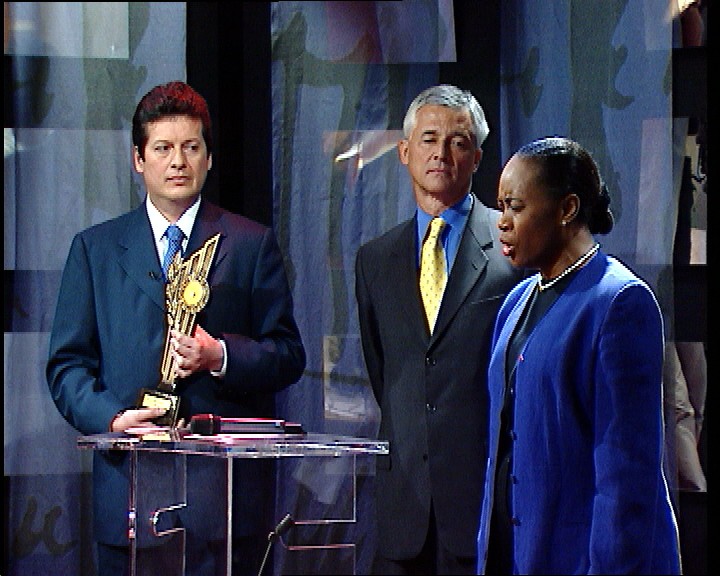
Barbara Hendricks at MEA ceremony 2003 with late Sergio Vieira de Mello and Alirio Uribe Munoz

Barbara Hendricks at MEA ceremony 2003 with late Sergio Vieira de Mello and Alirio Uribe Munoz

On 12 March 2015 will take place the Annual Sergio Vieira de Mello Debate in the Palais des Nations, Assembly Hall, Geneva. Starts at 18h30.

Speakers are the two High Commissioners, Zeid Raad al Hussein and Antonio Guterres, as well as Christiane Amanpour of CNN.

for more info, see: Annual debate 2015 – Save the date!.

Last year the speaker was Ramos Horta: https://thoolen.wordpress.com/2014/05/02/jose-ramos-horta-delivers-2014-sergio-vieira-de-mello-lecture/

Another passionate plea by UN High Commissioner for better education and global leadership

February 6, 2015


High Commissioner Zeid Ra’ad Al Hussein delivers his speech at the United States Holocaust Memorial Museum. Credit: U.S. Holocaust Memorial Museum | Photo: Miriam Lomaskin

In an impressive speech on 5 February 2015 at the Holocaust Memorial Museum in Washington, D.C. – one week after the 70th anniversary of the liberation of Auschwitz – Mr. Zeid Ra’ad Al Hussein emphasized that education devoid of a strong universal human rights component can be next to worthless, especially in a crisis. “What good was it to humanity that…eight out of 15 people who planned the Holocaust at Wannsee in 1942 held PhDs?” he asked. “In the years after the Holocaust, specific treaties were negotiated to cement into law obligations to protect human rights. Countries the world over accepted them – and now alas, all too frequently, they ignore them in practice.” While it has been 70 years since the liberation of Auschwitz extermination camp, some of the processes used by the Nazis to carry out humanity’s largest organized destruction are being implemented again today by Islamic State of Iraq and the Levant (ISIL), explained Mr. Zeid.

This logic is abundant around the world today: I torture because a war justifies it. I spy on my citizens because terrorism, repulsive as it is, requires it. I don’t want new immigrants, or I discriminate against minorities, because our communal identity or my way of life is being threatened as never before. I kill others, because others will kill me – and so it goes, on and on.

Since the world cannot afford “sinking into a state of paralyzing shock…the task is to strengthen our ethics, clarity, openness of thought, and moral courage,” calling for new battle lines to combat extremism – based on the struggle for minds.

Children need to learn what bigotry and chauvinism are…they need to learn that blind obedience can be exploited by authority figures for wicked ends. They should learn that they are not an exception because of where they were born, how they look, what passport they carry, or the social class, caste or creed of their parents; they should learn that no one is intrinsically superior to her or his fellow human beings,” said Mr. Zeid.

The world needs “profound and inspiring” leaders who fully observe human rights and humanitarian law and all the treaties drafted to end discrimination, poverty, war, “with no excuses.”

It is obvious, Mr. Zeid continued, that forceful reprisals against atrocities – including “the savage burning of my compatriot the pilot Mu’ath al Kassassbeh” by ISIL – have had limited impact. Leaders must adopt a “battle-line based on ideas,” to speak out against Takfiri ideology (when one believer apostasies another believer and condemns them as impure). The movement to end that dangerous ideology must be waged by Muslim leaders and Muslim countries, he said.

Just bombing them or choking off their financing has clearly not worked…for these groups have only proliferated and grown in strength,” he said. “The space for dissent in many countries is collapsing under the weight of either poorly-thought out, or indeed, exploitative, counter-terrorism strategies.”

Few crises erupt without warning, he continued. Extremist ideas and violence manifest from years of tyranny, inequalities, fear and bad governance. They build up over years – even decades – of human rights grievances and the denial of basic economic and social rights. He insisted that atrocities can be prevented and extremism curbed through better, human rights-based global leadership and a fundamental rethink of education. “Surely we now know, from bitter experience, that human rights are the only meaningful rampart against barbarity.”

United Nations News Centre – In Washington, UN rights chief says atrocities can be prevented through better global leadership.

UN High Commissioner for Human Rights writes about Women’s Human Rights Defenders

December 8, 2014
UN HCHR Al Hussein

On 5 December 2014, Zeid Ra’ad Al Hussein, United Nations High Commissioner for Human Rights, wrote a piece in the Huffington Post in which he eloquently calls on all to ‘Stand in Solidarity With Courageous Women’s Human Rights Defenders’. 

In the article he explains that his Office has decided to launch a campaign to pay tribute to women and men who defy stereotypes and fight for women’s human rights. The campaign runs from Human Rights Day, December 10 this year, to International Women’s Day, March 8, 2015. We encourage everyone to join the ranks of these strong and inspiring advocates, on social media (#reflect2protect) and on the ground. Below the text in full:


Almost two decades ago, in Beijing, 189 countries made a commitment to achieve equality for women, in practice and in law, so that all women could at last fully enjoy their rights and freedoms as equal human beings.

They adopted a comprehensive and ambitious plan to guarantee women the same rights as men to be educated and develop their potential. The same rights as men to choose their profession. The same rights to lead communities and nations and make choices about their own lives without fear of violence or reprisal. No longer would hundreds of thousands of women die every year in childbirth because of health care policies and systems that neglected their care. No longer would women earn considerably less than men. No longer would discriminatory laws govern marriage, land, property and inheritance.

In the years that followed, the world has witnessed tremendous progress: the number of women in the work force has increased; there is almost gender parity in schooling at the primary level; the maternal mortality ratio declined by almost 50 percent; and more women are in leadership positions. Importantly, governments talk about women’s rights as human rights, and women’s rights and gender equality are acknowledged as legitimate and indispensable goals.

However, the world is still far from the vision articulated in Beijing. Approximately 1 in 3 women throughout the world will experience physical and/or sexual violence in their lifetime. Less than a quarter of parliamentarians in the world are women. In over 50 countries there is no legal protection for women against domestic violence. Almost 300,000 women and girls died in 2013 from causes related to pregnancy and childbirth. Approximately 1 in 3 married women aged 20 to 24 were child brides. In many parts of the world, women and girls cannot make decisions on their most private matters — sexuality, marriage, children. Girls and women who pursue their own life choices are still murdered by their own families in the dishonorable practice of so-called honor killings. All of our societies remain affected by stereotypes based on the inferiority of women, which often denigrate, humiliate and sexualize them.

Today we have the responsibility to protect the progress made in the past 20 years and address the remaining challenges. In doing so, we must recognize the vital role of women who defend human rights, often at great risk to themselves and their families precisely because they are viewed as stepping outside socially prescriptive gender stereotypes. We must recognize the role of all people, women and men, who publicly call for gender equality and often, as a result, find themselves the victim of archaic and patriarchal, but powerful, threats to their reputations, their work and even their lives. These extraordinary individuals — women’s human rights defenders — operate in hostile environments, where arguments of cultural relativism are common and often against the background of the rise of extremist, misogynistic groups, which threaten to dismantle the gains of the past.

Attacks against women who stand up to demand their human rights and individuals who advocate for gender equality are often designed to keep women in their “place.” In some areas of the world, women who participate in public demonstrations are told to go home to take care of their children. Consider the recent example of a newspaper publishing naked photos of a woman, claiming she was a well-known activist — an attack designed to shame this defender into silence. In other places, when women claim their right to affordable modern methods of contraception, they are labelled as prostitutes in smear campaigns seeking to undermine their credibility. Online attacks against those who speak for women’s human rights and gender equality by so-called “trolls” — who threaten heinous crimes — are increasingly reported.

These attacks have a common thread — they rely on gender stereotypes and deeply entrenched discriminatory social norms in an attempt to silence those who challenge the age-old system of gender inequality. However, these defenders will not be silenced, and we must stand in solidarity with them against these cowardly attacks.

This is why my Office has decided to launch a campaign to pay tribute to women and men who defy stereotypes and fight for women’s human rights. The campaign runs from Human Rights Day, December 10 this year, to International Women’s Day, March 8, 2015. We encourage everyone to join the ranks of these strong and inspiring advocates, on social media and on the ground.

As we approach the 20-year anniversary of Beijing, discrimination and violence against women, and the stereotypes that confine them into narrowly fixed roles must end. Women have the right to make their own decisions about their lives and their bodies. Guaranteeing and implementing these rights are non-negotiable obligations of all States. Women human rights defenders were instrumental in securing the ambitious program laid out in Beijing. Their work, their activism and their courage deserve our recognition, our support and our respect.”

Stand in Solidarity With Courageous Womens Human Rights Defenders | UN Women.

Retaliation now reaches even Human Rights Commissioners in the Maldives: UN deeply concerned

October 19, 2014

(Ravina Shamsadani, Spokesperson for the Office of the UN High Commissioner for Human Rights. Photo: UN Multimedia)

On 17 October 2014 the United Nations High Commissioner for Human Rights felt duty bound to express deep concern about a criminal case initiated by the Supreme Court of the Maldives against members of the country’s own official Human Rights Commission!

The Office of the High Commissioner for Human Rights (OHCHR), noted that five members of the Human Rights Commission of the Maldives were now facing “serious criminal charges” following the submission of their written contribution to their country’s second Universal Periodic Review (UPR), presented to the UN Human Rights Council (the actual UPR of the Maldives is scheduled to be held between April and May 2015). “The Government has a responsibility to ensure a safe operating space for the Commission and for civil society actors in the country, so that they are able to coöperate with UN human rights mechanisms without fear of reprisals.” the spokesperson stated.

[It is not the first time the Supreme Court of the Maldives has come under rebuke from OHCHR. In 2013, former High Commissioner for Human Rights Navi Pillay called for reforms to the judiciary to safeguard the rule of law following the Supreme Court’s repeated interventions in the presidential election process in the Maldives which, she said, were undermining the country’s democracy. In that specific case, the Court had nullified the first round of the election on the basis of irregularities in the process, despite conclusions by national and international observers that the election was free and fair.]

United Nations News Centre – Maldives: UN ‘deeply concerned’ as Supreme Court prosecutes rights advocates.

Mexican laureate MEA, Alejandra Ancheita, pictured with UN High Commissioner

October 15, 2014

I have written about this wonderful woman, the Laureate 2014 of the MEA, before but did not yet have this nice picture with the UN High Commissioner for Human Rights Zeid [https://thoolen.wordpress.com/2014/10/10/dont-miss-the-high-commissioners-words-at-mea-2014-ceremony/]


See more at: http://www.ohchr.org/EN/NewsEvents/Pages/MartinEnnals2014.aspx#sthash.Y5CTi7Ug.dpuf

Mexican attorney receives top human rights defender award.

Don’t miss the High Commissioner’s words at MEA 2014 ceremony

October 10, 2014

The ceremony of the Martin Ennals Award 2014 is over (7 October 2014). It was again very impressive to hear and see 3 courageous Human Rights Defenders being honored. Some 450 people (my estimate) gave standing ovations to the 3 nominees whose work was shown in impressive films produced for the occasion. The film portraits are already available on the website: http://www.martinennalsaward.org where there is also a short summary of the whole evening.

Martin Ennals Award for Human Rights Defenders

Martin Ennals Award for Human Rights Defenders

Especially the film on Chinese HRD Cao Shunli is a masterpiece given that the film makers had almost no images to work with due to the modesty of the human rights defender as well as her untimely death in detention only 2 days after her nomination in March 2014.

The internet has buzzed with congratulations and encouragements to the other two nominees, Adilur from Bangladesh and Alejandra Ancheita from Mexico. The latter became ultimately the Laureate [see https://thoolen.wordpress.com/2014/10/07/breaking-news-alejandra-ancheita-is-the-2014-mea-laureate/#more-5648 ].

One of the nicest surprises was the address by Zeid Ra’ad Al Hussein, the United Nations High Commissioner for Human Rights at one of his first public appearances outside the UN. UN HCHR Al Hussein The High Commissioner gave a moving and almost poetic description of the sorry state of affairs left to human rights defenders to correct: He said inter alia: Read the rest of this entry »

High Commissioner for Human Rights, Zeid Ra’ad Al-Hussein, to hand out MEA on 7 October

October 3, 2014

Reminder: Martin Ennals Award 2014 to be announced at Ceremony in Geneva on 18:00, 7 October, at Uni Dufour. Watch live on: www.martinennalsaward.org

2014 poster MEA Geneva


for more detail on the nominees: https://thoolen.wordpress.com/2014/06/22/announcement-ceremony-of-the-martin-ennals-award-2014-on-7-october/