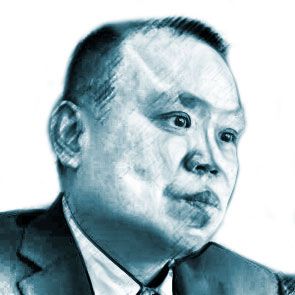
Posts Tagged ‘Yu Wensheng’

Yu Wensheng’s appeal rejected by Chinese court

January 8, 2025

Responding to the rejection of Chinese human rights lawyer see also:s appeal against his three-year prison sentence for “inciting subversion of state power”, Amnesty International’s Interim Regional Deputy Director for Research Kate Schuetze said on 6 January, 2025: “The charges against Yu Wensheng and his wife, activist Xu Yan – who was convicted of the same offence – are entirely baseless. They reveal the authorities’ inability to provide any legitimate justification for their imprisonment.

“The Chinese government has used Yu’s online comments and his numerous international human rights awards as an excuse to label him a threat to national security. But all this really demonstrates is Beijing’s deep fear of human rights defenders who dare to dissent.

“Yu Wensheng and Xu Yan have been imprisoned solely for exercising their right to freedom of expression and they must be released immediately and unconditionally.”

Yu Wensheng is the winner of the 2021 Martin Ennals Award. [https://www.trueheroesfilms.org/thedigest/laureates/69fc7057-b583-40c3-b6fa-b8603531248e]

See also: https://humanrightsdefenders.blog/tag/yu-wensheng/

JOINT NGO LETTER asks to suspend EU-CHINA HUMAN RIGHTS DIALOGUE 2024

June 17, 2024

On 12 June 2024, a group of important NGOs addressed the following letter to Josep Borrell, EU High Representative for Foreign Affairs:

We, the undersigned civil society organisations, are writing to reiterate our request for the European Union to suspend its human rights dialogue with China, and to consider other, more impactful measures at the EU’s disposal to address the Chinese government’s assault on human rights at home and abroad.

While appreciative of the open and frank discussion and engagement with the EEAS in preparation of each round of human rights dialogue with China, we regret that the EU continues this exercise despite its amply proven ineffectiveness over 38 rounds. While the EU raises concerns during these dialogues, it knows that the Chinese government will not acknowledge abuses, will not undertake any effort to secure accountability, and will not be persuaded to undertake any policy or legislative action to comply with China’s international human rights obligations. The EU’s reluctance to establish any measurable benchmark of progress, or even to establish clearly defined objectives beyond having a dialogue, exacerbates the ineffectiveness of this exercise.

This year’s human rights dialogue would also entail EU officials sitting down with authorities in Beijing to “engage… through dialogue and cooperation” on human rights, days after the 35th anniversary of the Tiananmen massacre.

Since Xi Jinping came to power in 2013, the Chinese government has intensified its crackdown on dissent, harassing and imprisoning human rights defenders and activists including the Swedish bookseller Gui Minhai, the Uyghur economist and Sakharov Prize laureate Ilham Tohti [7 human rights awards, see: https://www.trueheroesfilms.org/thedigest/laureates/37AE7DC4-16DB-51E9-4CF8-AB0828AEF491], the Hong-Kong barrister and human rights activist Chow Hang-tung and human rights lawyers Yu Wensheng and his wife Xu Yan, who were arrested a little over a year ago on their way to meet with the EU delegation [see: https://www.trueheroesfilms.org/thedigest/laureates/69fc7057-b583-40c3-b6fa-b8603531248e and https://humanrightsdefenders.blog/2023/07/12/new-wave-of-repression-against-human-rights-lawyers-unleashed-in-china/]. The Chinese government has committed egregious violations against Uyghur and other Turkic communities in Xinjiang/The Uyghur Region, which a report of the UN High Commissioner for Human Rights in August 2022 stated “may constitute international crimes, in particular crimes against humanity.” Beijing has also intensified its repression in Tibet, while in Hong Kong the creation of a new national security architecture at Beijing’s behest has severely restricted the rights and freedoms long enjoyed by Hong Kong’s people.

Beijing’s foreign policy has also been increasingly detrimental to human rights, both in the region and beyond. The Chinese government continues to support highly abusive governments, to challenge international efforts to secure accountability for grave abuses, and to intensify efforts to undermine the international human rights system and rewrite its norms. The Chinese government has also engaged in increasingly brazen transnational repression – abuses committed outside its borders – including in EU countries.

The EU has already suspended human rights dialogues with highly repressive countries such as Russia, Syria, Belarus, and Myanmar, among others, in light of the nature, scale and pervasiveness of their authorities’ human rights abuses and violations of international law. The Chinese government has committed serious crimes amounting to crimes against humanity. It has long been evident that the human rights dialogue is not an appropriate nor an effective tool to address them. There is no reason to expect the 39th round will prove more beneficial to the rights of people in China than the previous 38. The EU and its member states should pursue different, more effective actions to press the Chinese government to end its crimes against humanity and other serious violations – and to hold accountable those responsible for failing to do so.

We have long been suggesting alternative action, latest in this February 2023 letter. We stand ready to discuss these and other options with you any time.

Signatories:
Amnesty International
Front Line Defenders
Human Rights Watch
International Service for Human Rights
World Uyghur Congress

https://www.frontlinedefenders.org/en/statement-report/joint-public-civil-society-letter-eu-china-human-rights-dialogue-2024

and see https://www.ucanews.com/news/jailing-of-chinese-metoo-journalist-upsets-rights-groups/105431

https://www.aol.com/news/eu-urges-china-stop-human-145953152.html

https://www.reuters.com/world/china/eu-urges-china-stop-human-rights-crackdown-2024-06-17/

Human rights lawyer Gao Zhisheng and the practice of enforced disappearances: joint letter

September 5, 2023

We, the undersigned organizations, call on the Chinese authorities to immediately and unconditionally release prominent human rights lawyer Gao Zhisheng ahead of the sixth anniversary of his disappearance on August 13. 

And as we near “The International Day of the Disappeared” on August 30, we also condemn the Chinese government’s use of enforced disappearances as a tactic to silence and control activists, religious practitioners, Uyghurs and Tibetans, and even high-profile celebrities, entrepreneurs, and government officials. [see also: https://humanrightsdefenders.blog/2022/08/31/enforced-disappearances-in-china/]

Gao Zhisheng was one of the first human rights lawyers to emerge in the early 2000s and he became an important leader of China’s rights defense movement. He took on cases to help migrant workers and defend spiritual practitioners, including Falun Gong adherents and Christians. Gao wrote open letters to China’s top political leadership to call attention to the plight of Falun Gong practitioners and the abuse he had suffered while defending them. 

In 2006, Gao was sentenced to three years in prison on the charge of “inciting subversion of state power,” and after being released on parole, he was repeatedly disappeared for extended periods and tortured by police between 2007 and 2011. In December 2011, state media reported that Gao had been imprisoned in the Uyghur region to serve out his sentence after violating terms of his parole. He was then released in 2014 but remained under house arrest.

Gao’s relatives in China, as well as fellow rights lawyers and activists, who previously remained in contact with him, have not heard from him since August 13, 2017. Ever since then, Chinese authorities have, implausibly, claimed that Gao is not under any “criminal coercive measures.”   

Over the past six years, Gao has effectively remained in a state of enforced disappearance. 

Gao Zhisheng’s wife, Geng He, although living in the United States, has continued to advocate for him, pleading with the Chinese government to allow the world to “see him if he’s alive, or see his corpse if he’s dead”. Most recently, she has demanded that he be put on trial if he is guilty, and at the very least, that his lawyers should be allowed to meet with him and family members should have videoconferences. 

However, the Chinese government has not provided Geng He with even this minimum amount of information. 

On several occasions United Nations bodies and human rights experts have sought information about Gao Zhisheng’s status, but the Chinese government has refused to clarify his situation. Most recently, in 2020, the Chinese government responded to a letter from six UN Special Rapporteurs by claiming that, “In August 2014 Mr. Gao was released, having served his sentence. Since his release, the public security authorities have not taken any coercive measures against him.”

Gao Zhisheng’s case has been treated under the humanitarian mandate of the UN Working Group on Enforced or Involuntary Disappearances (case no. 10002630). The UN Working Group on Arbitrary Detention had also previously issued an opinion in 2010 stating that Gao’s detention was arbitrary under international law and calling for his immediate release, but Gao has remained under control of the authorities ever since.

Enforced disappearances of other human rights defenders

While Gao Zhisheng’s case is arguably the most famous and well-documented case of prolonged enforced disappearance in blatant violation of international law, there are several other noteworthy cases: 

Former human rights lawyer Yu Wensheng and his wife Xu Yan were detained in April 2023 as they were taking the subway to attend an event at the European Delegation in Beijing. They have been arrested and charged with “inciting subversion of state power,” but authorities have prevented lawyers from visiting them, and their 18-year-old son is under “house arrest.”  See also: https://humanrightsdefenders.blog/tag/yu-wensheng/

Human rights activist Jia Pin has been missing since September 24, 2022. He was last known to have been traveling to Beihai City in Guangxi. His friends do not know where he is, although some speculate that he may have been taken away by Henan provincial police.

Protester Peng Lifa, was taken away by authorities on October 13, 2022 after engaging in a one-man protest on the Sitong Bridge in Haidian District in Beijing against China’s stringent COVID measures and against the rule of Xi Jinping. There have been no reports about where Peng Lifa is being held.

Jiangsu-based human rights defender Tao Hong has been a victim of enforced disappearance since September 9, 2022, after she signed a open petition showing concern for the death of Mao Lihui, a petitioner who police claimed died via self-immolation while detained in a hotel. Before being detained, Tao Hong told friends on WeChat that she “absolutely wouldn’t commit suicide” – as a pre-emptive warning not to believe authorities should she mysteriously turn up dead.

Journalist Yang Zewei, who goes by the pen name Qiao Xinxin, was presumably taken away in Laos on May 31 by what is believed to have been a joint Chinese and Laotian policing effort. Earlier in the year he had launched a campaign to urge for the dismantling of the Great Firewall, an action he labeled as the #BanGFW movement. Before being detained Yang had tweeted that authorities were harassing his relatives in his hometown, and he also declared that he would not commit suicide in detention. On August 8 it was confirmed that he had been returned to China and was being held at the Hengyang Detention Center in Hunan.

Falun Gong practitioners Chen Yang (陈阳) and Cao Zhimin from Hunan province have been held incommunicado since October 2020, after being detained when studying spiritual scriptures with fellow believers. Yang had previously been jailed for four years for his activism and Cao had been held with her five-year-old daughter at an extralegal detention facility in 2010. According to the couple’s daughter, now a teenager studying in the United States, relatives in China have been unable to meet with them since their detention and lawyers hired were stopped from representing the couple. They are believed to have been sentenced to prison in November 2022, but the length of sentence remains unknown, no formal notification was sent to the family, and no news is available on their condition in custody. 

Enforced disappearances of Uyghurs and Tibetans

The Chinese Communist Party, composed solely of Han Chinese officials at the highest levels of decision making, continues to use systemic enforced disappearances of non-Han groups to control, intimidate, and silence them. See: https://humanrightsdefenders.blog/2023/08/18/un-experts-demand-detailed-information-on-nine-tibetan-environment-defenders/

In the Xinjiang Uyghur Autonomous Region (XUAR), also known as the Uyghur region or East Turkistan by Uyghurs, there likely remain hundreds of thousands of Uyghurs who are subjected to arbitrary detention and enforced disappearance through the legal system. In 2022, the Xinjiang High People’s Procuratorate, stated that 540,826 people had been prosecuted in the region since 2017. In November 2022, the UN Committee on the Elimination of Racial Discrimination (CERD) urged China to “immediately release all individuals arbitrarily detained in the XUAR, and to provide relatives of those detained or disappeared with detailed information about their status and well-being.”

As the UN Office of the High Commissioner for Human Rights (OHCHR) has noted, there is almost no public data about the criminal justice system in the region since 2020 and the government has not made public criminal verdicts or provided relevant information to the OHCHR. Furthermore, as a UN Working Group on Arbitrary Detention (WGAD) opinion noted in a 2022 decision finding that three Uyghurs – Qurban Mamut, Ekpar Asat and Gulshan Abbas – had been arbitrarily detained and were victims of enforced disappearance, no verdicts were ever made public and the Chinese government did not respond to the UN with any information regarding the proceedings, “it is unclear if they have indeed stood trial at all.”  In another case from 2022, the WGAD issued an opinion that found that Abdurashid Tohti, Tajigul Qadir, Ametjan Abdurashid and Mohamed Ali Abdurashid had been arbitrarily detained. The Chinese government refused to provide any information about the detention and or of any legal proceedings against them, and the WGAD was “disturbed at the total secrecy which appears to surround the fate and whereabouts” of the four people.

In Tibet, the Panchen Lama, Gedhun Choekyi Nyima, has been missing since May 17, 1995.  In 2022, UN human rights experts have raised their concerns regarding the arrest, detention and subsequent enforced disappearance of Tibetan writer Mr. Lobsang Lhundup (pen name of Dhi Lhaden), musician Mr. Lhundrup Drakpa, and teacher Ms. Rinchen Kyi, in connection with their cultural activities advocating for Tibetan language and culture. Dhi Lhaden and Rinchen Kyi were subsequently released.

On August 10, UN experts urged Chinese authorities to provide clarification on the situation regarding nine imprisoned Tibetan environmental human rights defenders, including information about why they were imprisoned, where they were detained, and their current health conditions. The nine defenders are Anya Sengdra, Dorjee Daktal, Kelsang Choklang, Dhongye, Rinchen Namdol, Tsultrim Gonpo, Jangchup Ngodup, Sogru Abhu and Namesy. 

Disappearances as a form of governance [see also: https://humanrightsdefenders.blog/2022/08/31/enforced-disappearances-in-china/]

Even powerful and famous people in China are not immune to becoming victims of disappearances: 

..

More broadly, the Chinese authorities appeared to have increasingly adopted disappearances as a form of governance. In 2012, the government amended the Criminal Procedure Law to allow for the police to hold suspects in non-detention facilities for up to six months, depriving those investigated for national security crimes of access to lawyers, family members, or other detainees – a practice known as “residential surveillance in a designated location” (RSDL). The government continues to use RSDL, despite numerous UN independent experts urging its abolition because it is a form of secret detention and enforced disappearance, and therefore incompatible with China’s human rights obligations and despite countless cases of torture and other ill-treatment occurring in RSDL having been exposed. 

In 2018, the National Supervision Law created a “retention in custody” (or liuzhi) system to subject Chinese Communist Party members and public employees to incommunicado detention for up to six months for disciplinary infractions and alleged dereliction of duty, including, but not limited to, corruption. The system is run by a non-judicial, non-law enforcement body, the National Supervision Commission (NSC) and precedes formal detention and arrest. 

As humanity approaches the 75th anniversary of the Universal Declaration of Human Rights (UDHR), we urge the Chinese government to take seriously the fundamental principles of human rights enshrined in the UDHR.

Unconditionally and immediately free Gao Zhisheng, and all others who are victims of enforced disappearance, and pending that release, allow for Geng He and other family members as well as Gao Zhisheng’s lawyers to communicate with him through in-person visits and/or videoconferencing.

Provide other relatives of those detained or disappeared with detailed information about their status and well-being.

End the practice of enforced disappearance, which gravely impacts some of the core rights articulated in the UDHR, such as the right not to be subjected to torture, the right not to be subjected to arbitrary arrest or detention, and even the right to life. 

Abolish RSDL (Articles 72-75 of the Criminal Procedure Law) and liuzhi (Article 22 of the National Supervision Law), and any other laws and regulations providing for practices tantamount to enforced disappearance.

Cosigned by, in alphabetical order:

ARTICLE 19

Campaign For Uyghurs

China Aid

China Against the Death Penalty (CADP)

Chinese Human Rights Defenders (CHRD)

Christian Solidarity Worldwide (CSW)

Committee for Freedom in Hong Kong Foundation

Dialogue China

European Criminal Bar Association 

FIDH – International Federation for Human Rights

Freedom House

Friends of Falun Gong (FoFG)

Front Line Defenders

Hans Gaasbeek, Coordinator of the Foundation Day of the Endangered Lawyer

Human Rights in China (HRIC)

Human Rights Now

Humanitarian China

International Association of People’s Lawyers (IAPL) Monitoring Committee on Attacks on Lawyers

International Observatory for Lawyers in Danger (OIAD) 

International Service for Human Rights (ISHR)

Judicial Reform Foundation

Lawyers’ Rights Watch Canada 

New School for Democracy Association

PEN America

PEN International

Safeguard Defenders

Symone Gaasbeek-Wielinga, President of the Dutch League for Human Rights

Taipei Bar Association Human Rights Committee 

Taiwan Bar Association Human Rights Protection Committee

Taiwan Support China Human Rights Lawyers Network

Tencho Gyatso, President of The International Campaign for Tibet 

Tibetan Centre for Human Rights and Democracy 

The Rights Practice

The World Uyghur Congress (WUC)

Uyghur Human Rights Project (UHRP)

https://www.frontlinedefenders.org/en/statement-report/release-human-rights-lawyer-gao-zhisheng-and-end-practice-enforced-disappearances
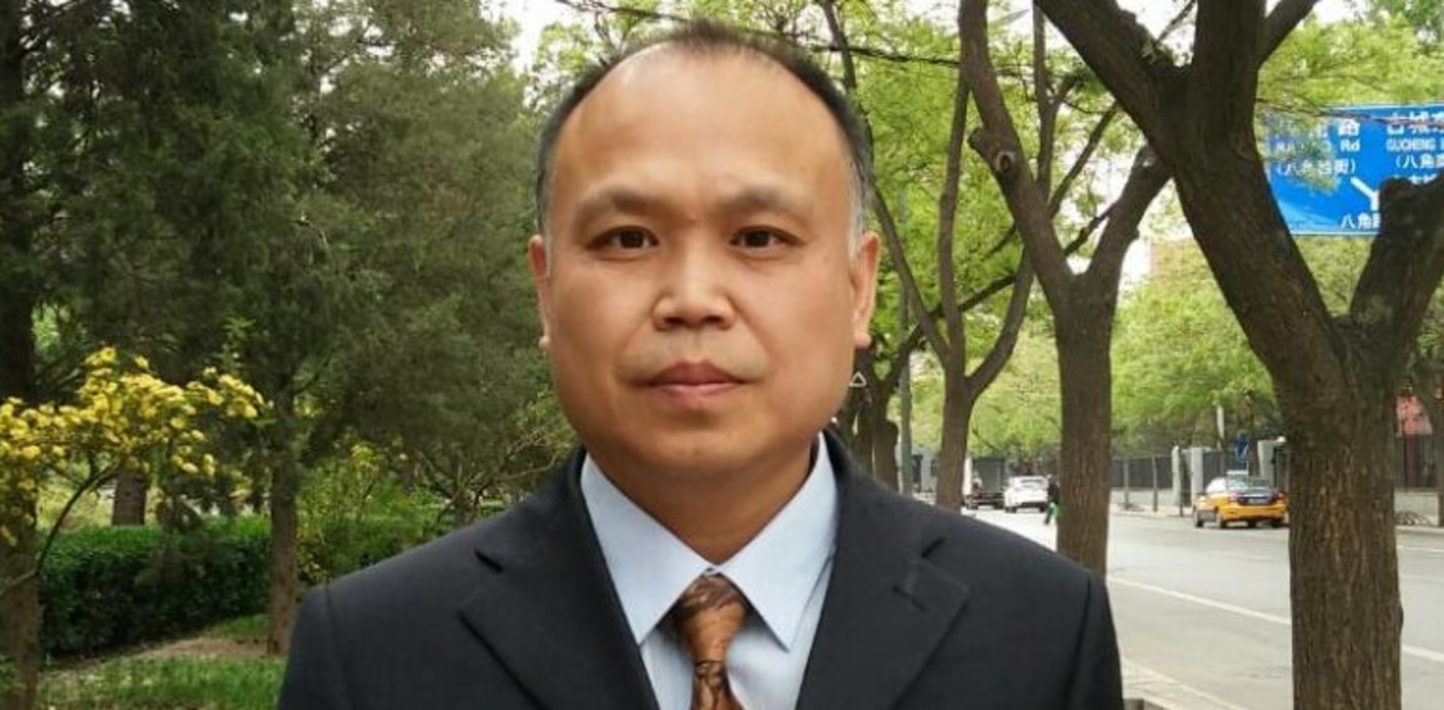
New wave of repression against human rights lawyers unleashed in China

July 12, 2023

In a joint statement published today, over 60 human rights organisations {such as the ISHR}, bar associations, scholars and Chinese human rights activists in exile urge global attention to the Chinese government’s new wave of repression against human rights lawyers unfolding over the past three months.

Human rights lawyers are a cornerstone of China’s human rights movement. From Uyghurs, Tibetans and Hong Kongers, to religious minorities, LGBTQI and feminist advocates, journalists, and political dissidents: human rights lawyers defend the full spectrum of civil society. They accompany and empower the most vulnerable against land evictions, discrimination, health scandals, or extra-legal detention. They embody the promise of rule of law and hold the government accountable to its commitments under China’s constitution, laws, and the international human rights treaties it has ratified. They ensure that no one is left behind.

As a result of this work, for many years and particularly since the round-up of over 300 human rights lawyers and legal assistants in the days following July 9, 2015 – an episode known as the 709 crackdown -, this profession has been ‘effectively criminalised in China,’ according to UN experts.

This year alone, Chinese authorities have passed harsh sentences on national security grounds of ‘subversion of State power’ against three lawyers who had attended a private gathering: Xu Zhiyong (14 years), Ding Jiaxi (12 years) and Chang Weiping (3.5 years). [see: https://humanrightsdefenders.blog/2023/04/11/xu-zhiyong-and-ding-jiaxi-two-human-rights-defenders-in-china-sentenced/]Xu’s partner, feminist activist Li Qiaochu was also recently put on trial behind closed doors, being denied both a lawyer and access to healthcare.[see also: https://www.netherlandsandyou.nl/latest-news/news/2022/12/09/index]

Previously, lawyer Yu Wensheng – recipient of the 2021 Martin Ennals Award for Human Rights Defenders – and his wife Xu Yan had also been arrested on their way to the Delegation of the European Union in Beijing, over a year after Yu’s release. See: https://www.trueheroesfilms.org/thedigest/laureates/69fc7057-b583-40c3-b6fa-b8603531248e

China’s abuse of national security to target lawyers has been growingly mimicked in Hong Kong, where Chow Hang-tung and Albert Ho are awaiting trial under the territory’s overbroad National Security Law.

Beyond arrests, authorities are also increasingly using travel bans and enforced disappearances – including through a criminal procedure known as ‘Residential Surveillance at a Designated Location’ (RSDL) – to intimidate and silence human rights lawyers. Lawyer Li Heping and his family were intercepted at Chengdu airport in June this year, while lawyer Tang Jitian was detained for 398 days for attempting to attend a Human Rights Day celebration in December 2021. For RSDL, see: https://humanrightsdefenders.blog/tag/residential-surveillance-at-a-designated-location-rsdl/

Released lawyers increasingly face disbarment, while their relatives, including underage children, are subjected to unrelenting harassment from the authorities. In recent months, Beijing-based lawyer Wang Quanzhang and his family have been forced to move 13 times, reporting constant threats and repeated cuts to their gas and electricity supply.

Human rights lawyers are one of the last avenues left to Chinese citizens seeking justice for the trampling of their most basic rights. Without sustained global pressure, the government will ramp up its campaign to imprison, disbar or silence these critical advocates for a more equal, just and rights-respecting China.

Raphael Viana David, ISHR’s China Programme Manager

Detained human rights lawyers are constantly subject to physical and psychological torture and ill-treatment in pre-trial detention and prison. They are routinely denied contact with their relatives and access to medical care, despite critical health issues. The government impedes family-appointed lawyers from accessing court documents and representing victims, instead imposing government-appointed lawyers whose identities are not disclosed or refuse to communicate with relatives. Detained lawyers are often convicted during sham closed-door trials, without notification to families nor disclosure of court verdicts for prolonged periods.

My husband Ding Jiaxi and his colleagues always fought for what’s right, despite knowing they risked being disappeared, tortured, disbarred. Their bravery is only equalled by their moral commitment to defending the rights of the most vulnerable, enshrined in China’s constitution and international treaties. Their sacrifice cannot be in vain: governments should stand with China’s human rights lawyers.

Sophie Luo Shengchun, human rights activist and wife of Ding Jiaxi

The UN Working Group on Arbitrary Detention has determined that China has a ‘systemic problem with arbitrary detention which amounts to a serious violation of international law.’

Against this new wave of repression, which has been known as the ‘709 crackdown 2.0’, the 63 signatories call on the international community to urge the Chinese government to:

  • Put an end to its crackdown on human rights lawyers and defenders;
  • Immediately and unconditionally release all those arbitrarily detained;
  • Amend laws and regulations, including national security legislation, its Criminal Law and Criminal Procedure Law, to bring them into full compliance with international human rights standards; and meaningfully cooperate with the United Nations human rights bodies to that end.

Full statement here in English and Chinese

https://ishr.ch/latest-updates/china-unleashing-new-wave-of-repression-against-human-rights-lawyers-global-response-needed/

https://thediplomat.com/2023/07/8-years-after-709-persecution-of-chinese-human-rights-lawyers-continues/

Human Rights Defenders issues at the 53rd Session of the UN Human Rights Council

June 20, 2023

The 53rd session of the UN Human Rights Council started 19 June (to end on 14 July 2023). Thanks to the – as usual – excellent documentation prepared by the International Service for Human Rights (ISHR) I will highlight the themes mostly affecting HRDs.

To stay up-to-date you can follow @ISHRglobal and #HRC53 on Twitter, and look out for its Human Rights Council Monitor. During the session, follow the live-updated programme of work on Sched.

See also: https://humanrightsdefenders.blog/2023/05/09/hrc52-civil-society-presents-key-takeaways-from-human-rights-council/

Here are some highlights of the session’s thematic discussions

Human rights of migrants

The Council will consider a resolution on the human rights of migrants this session, where a big problem is the criminalisation of the provision of solidarity and support, including rescues at sea, by migrant rights defenders.

Reprisals

..States raising cases is an important aspect of seeking accountability and ending impunity for acts of reprisal and intimidation against defenders engaging with the UN. It can also send a powerful message of solidarity to defenders, supporting and sustaining their work in repressive environments.

This month ISHR launched a new campaign regarding five cases. ISHR urges States to raise these cases in their statements:

  • Anexa Alfred Cunningham (Nicaragua), a Miskitu Indigenous leader, woman human rights defender, lawyer and expert on Indigenous peoples rights from Nicaragua, who has been denied entry back into her country since July 2022, when she participated in a session of a group of United Nations experts on the rights of Indigenous Peoples. States should demand that Anexa be permitted to return to her country, community and family and enabled to continue her work safely and without restriction.
  • Vanessa Mendoza (Andorra), a psychologist and the president of Associació Stop Violències, which focuses on gender-based violence, sexual and reproductive rights, and advocates for safe and legal abortion in Andorra. After engaging with CEDAW in 2019, Vanessa was charged with ‘slander with publicity’, ‘slander against the co-princes’ and ‘crimes against the prestige of the institutions’. She has been indicted for the alleged “crimes against the prestige of the institutions” involving a potentially heavy fine (up to 30,000 euros) and a criminal record if convicted. States should demand that the authorities in Andorra unconditionally drop all charges against Vanessa and amend laws which violate the rights to freedom of expression and association.
  • Kadar Abdi Ibrahim (Djibouti) is a human rights defender and journalist from Djibouti. He is also the Secretary-General of the political party Movement for Democracy and Freedom (MoDEL). Days after returning from Geneva, where Kadar carried out advocacy activities ahead of Djibouti’s Universal Periodic Review (UPR), intelligence service agents raided his house and confiscated his passport. He has thus been banned from travel for five years. States should call on the authorities in Djibouti to lift the travel ban and return Kadar’s passport immediately and unconditionally.
  • Hong Kong civil society (Hong Kong): Until 2020, civil society in Hong Kong was vibrant and had engaged consistently and constructively with the UN. This engagement came to a screeching halt after the imposition by Beijing of the National Security Law for Hong Kong (NSL), which entered into force on 1 July 2020. States should urge the Hong Kong authorities to repeal the offensive National Security Law and desist from criminalizing cooperation with the UN and other work to defend human rights.
  • Maryam al-Balushi and Amina al-Abduli (United Arab Emirates), Amina Al-Abdouli used to work as a school teacher. She was advocating for the Arab Spring and the Syrian uprising. She is a mother of five. Maryam Al Balushi was a student at the College of Technology. They were arrested for their human rights work, and held in incommunicado detention, tortured and forced into self-incriminatory confessions. After the UN Special Procedures mandate holders sent a letter to the UAE authorities raising concerns about their torture and ill treatment in detention in 2019, the UAE charged Amina and Maryam with three additional crimes. The UN Working Group on Arbitrary Detention found their detention arbitrary and a clear case of reprisals for communicating with Special Procedures. In April 2021, a court sentenced them to three additional years of prison for “publishing false information that disturbs the public order”. States should demand that authorities in the UAE immediately and unconditionally release Maryam and Amina and provide them with reparations for their arbitrary detention and ill-treatment.

Other thematic reports

At this 53rd session, the Council will discuss a range of civil, political, economic, social and cultural rights through dedicated debates with the mandate holders and the High Commissioner, including:

  • The Special Rapporteur on the rights to freedom of peaceful assembly and of association
  • The Independent Expert on protection against violence and discrimination based on sexual orientation and gender identity
  • The Special Rapporteur on the right to freedom of expression
  • The Special Rapporteur on the right to health
  • The Special Rapporteur on extrajudicial, summary of arbitrary executions
  • The Special Rapporteur on promotion and protection of human rights in the context of climate change
  • The Special Rapporteur on contemporary forms of racism, racial discrimination, xenophobia and related intolerance
  • The Working Group on the issue of human rights and transnational corporations and other business enterprises
  • The High Commissioner on the importance of casualty recording for the promotion and protection of human rights
  • The Special Adviser to the Secretary-General on the Prevention of Genocide

In addition, the Council will hold dedicated debates on the rights of specific groups including:

  • The Working Group on discrimination against women and girls
  • The Special Rapporteur on violence against women and girls, its causes and consequences
  • The Special Rapporteur on the human rights of migrants
  • The Special Rapporteur on trafficking in persons, especially women and children
  • The Special Rapporteur on independence of judges and lawyers

#HRC53 | Country-specific developments

Afghanistan

The Human Rights Council will hold its Enhanced Interactive Dialogue on Afghanistan, with the Special Rapporteur on the situation in Afghanistan and the Working Group on Discrimination against Women in Law and Practice. The joint report of the two mandates follows up from an urgent debate held last year on the situation of women and girls in the country. Their visit to the country concluded that there exist manifestations of systemic discrimination violating human rights and fundamental freedoms in both public and private lives. ISHR has joined many around the world to argue that the situation amounts to gender apartheid, and welcomes the call of the two mandate holders to develop normative standards and tools to address this as “an institutionalised system of discrimination, segregation, humiliation and exclusion of women and girls”. The gravity and severity is urgent, and requires that States act on the ongoing calls by Afghan civil society to establish an accountability mechanism for crimes against humanity.

Algeria

On 15 June, fifteen activists and peaceful protesters will face trial in Algiers on the basis of unfounded charges which include ‘enrolment in a terrorist or subversive organisation active abroad or in Algeria’ and ‘propaganda likely to harm the national interest, of foreign origin or inspiration’. The activists were arrested between 23 and 27 April 2021, and arbitrarily prosecuted within one criminal case. If convicted of these charges, they face a prison sentence of up to twenty years. This case includes HRDs Kaddour Chouicha, Jamila Loukil and Said Boudour who were members of the LADDH before its dissolution by the Administrative Court of Algiers following a complaint filed by the Interior Ministry on 29 June 2022.  We urge States to monitor the prosecution closely, including by attending the trial. We also urge States to demand that Algeria, a HRC member, end its crackdown on human rights defenders and civil society organisations, amend laws used to silence peaceful dissent and stifle civil society, and immediately and unconditionally release arbitrarily detained human rights defenders.

China

The recent findings of the Committee on Economic, Social and Cultural Rights in March, the Committee on the Elimination of Discrimination against Women in May, and the seven key benchmarks on Xinjiang by 15 Special Rapporteurs add up to wide range of UN expert voices that have collectively raised profound concern at the Chinese government’s treatment of Uyghurs, Tibetans, Hong Kongers and HRDs in mainland China. Seldom has the gap between the breadth of UN documentation on crimes against humanity and other grave violations and the lack of action by the Human Rights Council in response to such overwhelming evidence been so flagrant: the Council’s credibility is at stake. ISHR calls on the Council to promptly adopt a resolution requesting updated information on the human rights situation in Xinjiang, and a dialogue among all stakeholders on the matter. Governments from all regions should avoid selectivity, put an end to China’s exceptionalism, and provide a meaningful response to atrocity crimes on the basis of impartial UN-corroborated information.

The recent convictions of prominent rights defenders Ding Jiaxi and Xu Zhiyong to 12 and 14 years in jail respectively, and the recent detention of 2022 Martin Ennals awardee Yu Wensheng and his wife Xu Yan for ‘subversion of State power’ a year after his release, point to the need for sustained attention to the fate of HRDs in China. States should address in a joint statement the abuse of national security and other root causes of violations that commonly affect Uyghurs, Tibetans, Hong Kongers and mainland Chinese HRDs. States should also ask for the prompt release of human rights defenders, including human rights lawyers Chang Weiping, Yu Wensheng and Ding Jiaxi, legal scholar Xu Zhiyong, feminist activists Huang Xueqin and Li Qiaochu, Uyghur doctor Gulshan Abbas, Hong Kong lawyer Chow Hang-tung, and Tibetan climate activist A-nya Sengdra.

Egypt

Since the joint statement delivered by States in March 2021 at the HRC, there has been no significant improvement in the human rights situation in Egypt despite the launching of the national human rights strategy and the national dialogue. The Egyptian government has failed to address, adequately or at all, the repeated serious concerns expressed by several UN Special Procedures over the broad and expansive definition of “terrorism”, which enables the conflation of civil disobedience and peaceful criticism with “terrorism”. The Human Rights Committee raised its concerns “that these laws are used, in combination with restrictive legislation on fundamental freedoms, to silence actual or perceived critics of the Government, including peaceful protesters, lawyers, journalists, political opponents and human rights defenders”. Egyptian and international civil society organisations have been calling on the HRC to establish a monitoring and reporting mechanism on the human rights situation in Egypt, applying objective criteria and in light of the Egyptian government’s absolute lack of genuine will to acknowledge, let alone address, the country’s deep-rooted human rights crisis.

Israel and OPT

Civil society continues to call on the OHCHR to implement, in full, the mandate provided by HRC resolution 31/36 of March 2016 with regards to the UN database of businesses involved in Israel’s illegal settlement industry. The resolution mandated the release of a report containing the names of the companies involved in Israel’s settlement enterprise, to be annually updated. The initial report containing a list of 112 companies was released by the OHCHR in February 2020, three years after the mandated release date and despite undue political pressure. Since then, the UN database has not been updated. UN member states should continue to call on the OHCHR to implement the mandate in full and publish an annual update, as this represents a question of credibility of the Office of the High Commissioner and the Council.

The Commission of Inquiry on the Occupied Palestinian Territory, including East Jerusalem, and Israel will present its second report to the Council on 20 June. Member states should continue to support the work of the CoI to investigate the root causes of the situation in line with its mandate with a view to putting an end to 75 years of denial of the Palestinian’s people inalienable rights to self-determination and return. As the Palestinian people commemorate 75 years of Nakba (the destruction of Palestinian homeland and society), the CoI needs to address the root causes of the situation, including by investigating the ongoing denial of the Palestinian people’s right to self-determination and the return of refugees, as well as the ongoing forcible displacement of Palestinians on both sides of the Green Line in the context of Israel’s imposition of a system of colonial apartheid.

In addition, on 10 July, the Council will hold an interactive dialogue with the Special Rapporteur on the situation of human rights in the Palestinian territories occupied since 1967.

Saudi Arabia

In light of the ongoing diplomatic rehabilitation of crown prince and de facto ruler Mohammed bin Salman, the Saudi authorities’ brazen repression continues to intensify, as ALQST has documented. Some notable recent trends include, but are not limited to: the further harsh sentencing of activists for peaceful social media use, such as women activists Salma al-Shehab (27 years), Fatima al-Shawarbi (30 years and six months) and Sukaynah al-Aithan (40 years); the ongoing detention of prisoners of conscience beyond the expiry of their sentences, some of whom continue to be held incommunicado such as human rights defenders Mohammed al-Qahtani and Essa al-Nukheifi, and; regressive developments in relation to the death penalty, including a wave of new death sentences passed and a surge in executions (47 individuals were executed from March-May 2023), raising concerns for those currently on death row, including several young men at risk for crimes they allegedly committed as minors. We call on the HRC to respond to the calls of NGOs from around the world to create a monitoring and reporting mechanism on the ever-deteriorating human rights situation in Saudi Arabia.

Nicaragua

Continued attention should be paid by States at the HRC to the steadily worsening situation in Nicaragua. On 2 June, the spokesperson for the UN High Commissioner for Human Rights raised ‘growing concerns that the authorities in Nicaragua are actively silencing any critical or dissenting voices in the country and are using the justice system to this end’. The OHCHR reports 63 individuals arbitrarily detained in May alone, with 55 charged with ‘conspiracy to undermine national integrity’ and ‘spreading false news’ within one single night, without access to a lawyer of their choosing. States should express support for the monitoring and investigation work of the OHCHR and the Group of Human Rights Experts on Nicaragua (GHREN), and call on the Nicaraguan government to release the remaining 46 political prisoners, revoke its decision to strip deported political prisoners off their nationality, and take meaningful measures to prevent, address and investigate violence by armed settlers against Indigenous Peoples and Afro-descendants.

Russia

Russia’s war of aggression against Ukraine has also been accompanied by a domestic war of repression against human rights defenders, independent journalists and political dissent. Most recently, Russia has adopted a sweeping new law criminalising assistance to or cooperation with a range of international bodies, including the International Criminal Court, ad hoc tribunals, foreign courts and arguably even the UN Human Rights Council itself. This law is manifestly incompatible with the right to communicate and cooperate with international bodies, and a flagrant and institutionalised case of reprisal. With Russian authorities having been found by a UN-mandated Commission of Inquiry to be possibly responsible for crimes against humanity and war crimes, and having a closed and highly repressive environment for civil society (ranking 17/100 in the CIVICUS Monitor), Russia is plainly unfit to be elected to the UN Human Rights Council and should be regarded as an illegitimate candidate. States should support and cooperate with the mandate of the new Special Rapporteur on the human rights situation in Russia, as well as with the Commission of Inquiry into human rights violations and abuses associated with Russia’s illegal war of aggression against Ukraine.

Sudan

Since the beginning of the war in Sudan on 15 April 2023, increasing numbers of Sudanese WHRDs are receiving threats and subject to grave danger. WHRDs are facing challenges in evacuating from Sudan and face further protection risks in neighboring countries. Sudanese women groups and WHRDs are risking their lives to provide support, solidarity, and report on the rising numbers of sexual and gender-based violence crimes. Many survivors are trapped in fighting areas unable to access support, and the occupation of hospitals by RSF is hindering women’s access to health services. The Council must urgently establish an international investigation in Sudan with sufficient resources, including to investigate the threats and reprisals against WHRDs for their work, and to document sexual and gender-based violence. During the debate with the High Commissioner and designated expert on Sudan on 19 June, we urge States to condemn sexual and gender-based violence (SGBV). States should highlight the impacts of the war on women and girls, including sexual and reproductive health as well as lack of support services for survivors of SGBV. States should reaffirm the importance of participation of women and their demands, and amplify the critical work of WHRDs on the ground despite the imminent risks to their lives and safety. States should also condemn the increasing threats against WHRDs and demand their effective protection.

Venezuela

On 5 July, the High Commissioner will present his report on the human rights situation in Venezuela, which will include an assessment of the level of implementation of UN recommendations already made to the State. The Council focus on Venezuela remains critical at a time when some States’ efforts to normalize relations with Venezuela risk erasing human rights from key agendas. Council members and observers should actively engage in the interactive dialogue with the High Commissioner to make evident that the human rights situation in the country remains at the heart of their concerns. The human rights and humanitarian situation in the country remains grave. Human rights defenders face ongoing and potentially increasing restrictions. We urge States to:

  • Express concern about the NGO bill, sitting with the Venezuelan National Assembly, and call for it to be withdrawn. The potential implications of this bill are to drastically shrink civic space, including by criminalising the work of human rights defenders;
  • Call for the release of all those detained arbitrarily – including defender Javier Tarazona who has been held since July 2021 and whose state of health is deteriorating;
  • Call for the rights of human rights defenders and journalists to be respected including during electoral periods, with a mind to Presidential elections next year; and
  • Call on Venezuela to engage fully with all UN agencies and mechanisms, including OHCHR, and develop a clear plan for the implementation of UN human rights recommendations made to it.

Tunisia

Civil society organisations have raised alarm at the escalating pattern of human rights violations and the rapidly worsening situation in Tunisia following President Kais Saied’s power grab on 25 July 2021 leading to the erosion of the rule of law, attacks on the independence of the judiciary, a crackdown on peaceful political opposition and abusive use of “counter-terrorism” law, as well as attacks on freedom of expression. The High Commissioner has addressed the deteriorating situation in the three latest global updates to the HRC. Special Procedures issued at least 8 communications in less than one year addressing attacks against the independence of the judiciary, as well as attacks against freedom of expression and assembly. Despite the fact that in 2011 Tunisia extended a standing invitation to all UN Special Procedures, and received 16 visits by UN Special Procedures since, Tunisia’s recent postponement of the visit of the Special Rapporteur on the independence of judges and lawyers, is another sign of Tunisia disengaging from international human rights mechanisms and declining levels of cooperation. The upcoming session provides a window of opportunity for the Council to exercise its prevention mandate and address the situation before the imminent risk of closure of civic space in Tunisia and regress in Tunisia’s engagement with the HRC and its mechanisms is complete.  

Syria

On 5 July, the Council will hold an interactive dialogue with the Commission of Inquiry on Syria. In a report to the Human Rights Council in 2021, the Commission of Inquiry on Syria called for the establishment of a mechanism to reveal the fate of the missing and disappeared. On 28 March 2023, during the 77th session of the UN General Assembly, the Secretary-General and UN High Commissioner for Human Rights briefed UN Member States on the situation of the missing in Syria, and the findings of the study conducted by the Secretary-General as mandated by Resolution UNGA 76/228. The study concluded that in order to address the situation of the missing in Syria and its impact on families’ lives, it is necessary to create an institution to reveal the fate and whereabouts of the disappeared and to provide support to their families. As discussions are taking place in the UNGA to adopt a resolution establishing a humanitarian institution to reveal the fate and whereabouts of the disappeared, civil society, led by the Truth and Justice Charter, urges States to support the families of the missing to know the truth about the fate and whereabouts of their loved ones by voting in favour of the resolution at the UNGA.

Other country situations

The High Commissioner will present the annual report on 19 June. The Council will hold an interactive dialogue on the High Commissioner’s annual report on 20 June 2023. The Council will hold debates on and is expected to consider resolutions addressing a range of country situations, in some instances involving the renewal of the relevant expert mandates. These include:

  • Interactive Dialogue with the Special Rapporteur on Eritrea
  • Interactive Dialogues with the High Commissioner and the Special Rapporteur on Myanmar
  • Interactive Dialogue with the Special Rapporteur on Burundi
  • Interactive Dialogue with the High Commissioner on Ukraine
  • Interactive Dialogue with the Special Rapporteur on Belarus
  • Interactive Dialogue with the Fact-Finding Mission on Iran
  • Interactive Dialogue with the Independent Expert on Central African Republic

Appointment of mandate holders

The President of the Human Rights Council has proposed candidates for the following mandates:

  1. Special Rapporteur on minority issues (Mr Nicolas Levrat, Switzerland)
  2. Special Rapporteur on the human rights of migrants (Ms Anna Triandafyllidou, Greece)
  3. Special Rapporteur on the promotion and protection of human rights and fundamental freedoms while countering terrorism (Mr Ben Saul, Australia).

Resolutions to be presented to the Council’s 53rd session

At the organisational meeting on 5 June the following resolutions (selected) were announced (States leading the resolution in brackets):

  1. Human rights situation in Syria (Germany, France, Italy, Jordan, Netherlands, Qatar, Turkey, USA, UK)
  2. New and emerging digital technologies and human rights (Austria, Brazil, Denmark, South Korea, Morocco, Singapore)
  3. Civil society space (Chile, Ireland, Japan, Sierra Leone, Tunisia)
  4. Independence and impartiality of the judiciary, jurors and assessors, and the independence of lawyers – mandate renewal (Australia, Botswana, Hungary, Maldives, Mexico, Thailand)
  5. Human rights of migrants (Mexico)
  6. Mandate of the Special Rapporteur on the situation of human rights in Belarus mandate renewal (EU)
  7. Mandate of the Special Rapporteur on the human rights situation in Eritrea mandate renewal (EU)
  8. Business and human rights – mandate renewal (Russian Federation, Ghana, Argentina and Switzerland)
  9. Extrajudicial, summary or arbitrary executions mandate renewal (Finland, Sweden)
  10. Situation of human rights of Rohiynga muslims and other minorities in Myanmar (Pakistan on behalf of OIC)

Adoption of Universal Periodic Review (UPR) reports

During this session, the Council will adopt the UPR working group reports on Argentina, Benin, Czechia, Gabon, Ghana, Guatemala, Japan, Pakistan, Peru, Republic of Korea, Sri Lanka, Switzerland and Zambia.

Panel discussions

During each Council session, panel discussions are held to provide member States and NGOs with opportunities to hear from subject-matter experts and raise questions. 5 panel discussions are scheduled for this upcoming session:

  1. Panel discussion on the measures necessary to find durable solutions to the Rohingya crisis and to end all forms of human rights violations and abuses against Rohingya Muslims and other minorities in Myanmar
  2. Annual full-day discussion on the human rights of women [accessible panel]. Theme: Gender-based violence against women and girls in public and political life
  3. Annual full-day discussion on the human rights of women [accessible panel]. Theme: Social protection: women’s participation and leadership
  4. Annual panel discussion on the adverse impacts of climate change on human rights [accessible panel]. Theme: Adverse impact of climate change on the full realisation of the right to food
  5. Panel discussion on the role of digital, media and information literacy in the promotion and enjoyment of the right to freedom of opinion and expression [accessible panel]

https://ishr.ch/latest-updates/hrc53-key-issues-on-agenda-of-june-2023-session-of-the-human-rights-council/

https://www.reuters.com/world/asia-pacific/un-rights-chief-seeks-establish-presence-china-india-2023-06-19/

Yu Wensheng and Xu Yan detained again in China

April 24, 2023

On 18 April 2023 CHRD called on the Chinese government to immediately release human rights lawyer Yu Wensheng and his wife Xu Yan, who have been criminally detained and denied access to lawyers of their choice. CHRD also calls on the Chinese government to end its de facto house arrest of Yu Wensheng and Xu Yan’s 18-year-old son. CHRD urges the EU, EU member states, the US, UN bodies, and other member of the international community to forcefully condemn the Chinese government’s detention of Yu Wensheng and Xu Yan. See also: https://humanrightsdefenders.blog/2022/03/03/breaking-news-mea-laureate-yu-wensheng-released/

On April 13 at approximately 4:00 pm, human rights lawyer Yu Wensheng and his wife Xu Yan left their home in Beijing to travel by subway to attend an event at the European Delegation. They were invited to an event with the EU’s Ambassador to China Jorge Toledo Albiñana according to Politico.  

However, Yu and Xu were prevented from accessing the subway by four plainclothes police officers. One of the officers, a state security police officer, told them that they were being summoned to a police station, which Yu Wensheng announced on Twitter. The four police officers took them to the Shijingshan Bajiao police station. Human rights lawyers Wang QuanzhangLi Heping, and Bao Longjun were also harassed by authorities during this period.

The EU Delegation to China tweeted on April 13, “We demand their immediate, unconditional release. We have lodged a protest with MFA [China’s Ministry of Foreign Affairs] against this unacceptable treatment.

According to Rights and Livelihood Watch, on April 15 in the evening, approximately seven police officers came to Yu Wensheng and Xu Yan’s home, and they orally read a criminal detention notice to the couple’s son, who had just turned 18 years old. The pair were criminally detained on the charge of “picking quarrels and provoking trouble.” Police would not allow the son to take photos, nor would they give him the criminal detention notice. Also, even though no warrant was presented, police proceeded to search the home and carried off many items.

On April 16, two lawyers, Song Yusheng and Peng Jian, paid a visit to Yu and Xu’s son to bring him fruit, and fill out paperwork to obtain legal status to represent Yu and Xu.  There were two people guarding the door of Yu and Xu’s home. Lawyer Song knocked on the door, and it was answered by the son, but the lawyer saw that in the home there were also two officers inside, one plainclothes and one wearing a uniform. The plainclothes officer, who said his name was Lu Kai, asked what they wanted. The lawyers said that they were there to visit the son and have him sign an agreement (委托书) to entrust them as lawyers. However, the plainclothes police officers said that Yu Wensheng told them that he “doesn’t want to have lawyers at this stage” and that Xu Yan had already found two lawyers.

Yu Wensheng’s detention may also be related to his condemnation of the sentencing of Xu Zhiyong and Ding Jiaxi, two prominent pro-democracy figures. On April 12, Yu Wensheng wrote on Twitter that he had been visited at his home by Shijingshan police for a tweet he had sent out on April 9 that said, “[I] strongly condemn the Chinese authorities heavy sentence of scholar Xu Zhiyong to 14 years and of Lawyer Ding Jiaxi to 12 years! I pay my respects to Xu Zhiyong and Ding Jiaxi, who have worked hard in the struggle for freedom, democracy, human rights, and the rule of law. I believe that one day the Dream of a Beautiful China will be realized.

In March 2022, Yu Wensheng was released from prison after serving four years and three months on the charge of “inciting subversion of state power.” Yu was taken away by police in 2018 the day after he released an open letter recommending changes to China’s Constitution, including a call for elections and the creation of an oversight system for the Chinese Communist Party.

The Chinese government has put heightened pressure on human rights award winners. Yu Wensheng was the recipient of the prestigious Martin Ennals Award in 2021 [see: https://www.trueheroesfilms.org/thedigest/laureates/69fc7057-b583-40c3-b6fa-b8603531248e] and the winner of the Franco-German Prize for Human Rights and the Rule of Law in 2018. Previous winners of awards have been subjected to extra-legal abuse. While Nobel Peace Prize Laureate Liu Xiaobo was at one point granted “medical parole,” he was not allowed the freedom of movement to seek medical treatment outside of China and died in de facto state custody. Likewise, Hu Jia, a prominent human rights defender and winner of the Sakharov Prize for Freedom of Thought in 2008, was prevented from seeing his dying father in his final days. Hu Jia was deprived of his liberty and “forcibly traveled” starting from March 4 of this year. Being “traveled” is a common tactic used by state security officers to ensure journalists at the annual March Two Sessions meetings or other “sensitive” political events do not talk to dissidents. Hu Jia’s father passed away from pancreatic cancer on March 9, 2023. 

The Chinese government is preventing defendants in sensitive cases from having lawyers of their own choice and instead mandating government-approved lawyers in order to prevent real legal defense. On February 10, 2023, digital rights activist Ruan Xiaohuan was sentenced to seven years in prison on the charge of “inciting subversion of state power.” His wife, Ms. Bei, wanted to hire an experienced lawyer for the appeals stage, and so she went to Beijing to talk with Shang Baojun. However, upon landing in Beijing, she was taken away by eight Shanghai police. Meanwhile lawyer Shang Baojun tried to visit Ruan at the Yangpu Detention Center in Shanghai, but staff there would not allow for the visit since they claimed that Ruan already had two legal aid lawyers. 

https://www.feedspot.com/fo/2238712/fe/4614987?hash=feed/fof_fo_2238712__f_4614987?dd=7644857710522777

Breaking news: MEA laureate Yu Wensheng released

March 3, 2022

On 1 March 2022, EFE reported that Chinese human rights lawyer Yu Wensheng, sentenced to 4 years in 2020 for “inciting subversion of state power,” was released Tuesday from prison in the eastern city of Nanjing, according to a Twitter post by his wife Xu Yan. Yu Wensheng was on a train bound for Beijing according to his wife, who awaits him at a hotel in the capital.

Could it be that campaigns help? See: https://humanrightsdefenders.blog/2022/02/17/campaign-to-free-chinese-human-rights-lawyer-yu-wensheng/ and https://mailchi.mp/3165601cacf1/749qlxejj6-33417?e=d1945ebb90

Yu, winner of the Martin Ennals Award in 2021 for championing human rights, had been in prison since his arrest in January 2018 while taking his son to school. See: https://humanrightsdefenders.blog/2021/02/11/breaking-news-yu-wensheng-chinese-human-rights-lawyer-is-martin-ennals-laureate-2021/

During the few meetings with his lawyer, Yu has claimed to have suffered torture and mistreatment during his confinement that may have caused him to lose part of the mobility of his right hand.

Campaign to free Chinese human rights lawyer Yu Wensheng

February 17, 2022

ISHR, the Martin Ennals Foundation and eight other major human rights groups urge in a joint statement the Chinese government to ensure lawyer Yu Wensheng is able to leave Nanjing Prison on March 1st, and freely reunite with his family in Beijing.

The signatory organisations also called in the joint statement for sustained attention on the growing risks and threats his wife, Xu Yan, faces for advocating for his rights and release. 

A Laureate of the 2021 Martin Ennals Award, Yu Wensheng is a leading figure among human rights lawyers in China. He has fearlessly taken on a number of sensitive cases and issues, joining litigations on air pollution advocating for a constitutional government. See also: https://www.trueheroesfilms.org/thedigest/laureates/69fc7057-b583-40c3-b6fa-b8603531248e

For this, the authorities revoked his legal license on 16 January, 2018. Three days later, he was forcibly disappeared, a day after publishing an open letter calling for constitutional reform. He was put on trial in secret on 9 May 2019, but his wife, Xu Yan, was only informed of his four-years jail sentence in June 2020.

Yu Wensheng is expected to leave prison in Nanjing on 1 March 2022, after being detained for 50 months, which should mark the end of his sentence for ‘inciting subversion of State power’. As early as May 2019, UN experts concluded his detention was arbitrary and called on the government to release him. Ever since, a number of government and UN experts have called for his release.

The signatories of the joint statement express grave concern that Yu Wensheng may be put under a de facto home arrest, severely restricted in his movements and communication, and unable to reunite with his family in Beijing.

Human rights lawyers have endured such restrictions upon leaving prison on grounds of a supplemental sentence of ‘deprivation of political rights’, in a phenomenon known as ‘non-release release’. In September 2019, UN experts condemned the use of this practice against lawyer Jiang Tianyong as ‘gratuitously punitive and legally unjustified’.

IThe signatory organisations urge the Chinese authorities to: 

  • Ensure that Yu Wensheng is able to reunite with his family in Beijing on 1 March, to exercise his rights to move and communicate freely, and that he is not subjected to surveillance and harassment. He must also be able to resume his legal work without restrictions;
  • Put an end to the surveillance and harassment of Yu Wensheng’s family; 
  • Guarantee in all circumstances that all lawyers in China, including human rights lawyers, are able to carry out their legitimate professional duties without fear of reprisals and free of restrictions.

You can add your own voice by filling out the form in: https://ishr.ch/latest-updates/on-march-1st-chinese-lawyer-yu-wensheng-must-be-fully-free/

Read the full statement https://ishr.ch/wp-content/uploads/2022/02/Joint-NGO-statement-on-YWS_English-1.pdf

https://mailchi.mp/ishr/749qlxejj6-33409?e=d1945ebb90

Xu Yan, the wife of Yu Wensheng, sets up a legal aid firm

November 8, 2021

The wife of Yu Wensheng, a jailed human rights lawyer, has set up a legal firm to help persons struggling with China’s justice system. Xu Yan’s husband is currently serving a four-year sentence on the charges of ‘incitement to subvert state authority.’ “My husband will be allowed to return home in around four months, but his law licence will be cancelled. This will have a significant impact on his profession as well as our family,” Yan was quoted as saying by Radio Free Asia. [see also: https://humanrightsdefenders.blog/2021/06/24/martin-ennals-foundation-reaches-out-today/] Notably, he had received the Martin Ennals Award 2021 for his work as a human rights defender earlier this year. [see: https://www.trueheroesfilms.org/thedigest/laureates/69fc7057-b583-40c3-b6fa-b8603531248e]

According to Radio Free Asia, the Martin Ennals Foundation labelled Yu “one of the best-known and most intrepid human rights campaigners” in China, noting that he had been subjected to arbitrary arrest, a secret trial, and the revocation of his law licence.

https://www.republicworld.com/world-news/china/china-jailed-human-rights-lawyers-wife-establishes-legal-firm-to-help-people.html

https://www.bignewsnetwork.com/news/271623682/china-jailed-human-rights-lawyer-wife-sets-up-legal-consultancy-to-help-people

Key issues affecting HRDs in 47th session of UN Human Rights Council (June 2021)

June 22, 2021

The 47th session of the UN Human Rights Council will take place from 21 June to 15 July 2021. The ISHR has again issued its very helpful overview of key issues and below is an extract of those affecting human rights defenders most directly. For a wrap-up of the previous session, see: https://humanrightsdefenders.blog/2021/03/29/wrap-up-46th-session-of-un-human-rights-council-with-key-resolutions-on-belarus-and-myanmar-and-more/

Modalities of participation in HRC47

According to the Bureau minutes of 2 and 4 June 2021, the extraordinary modalities for the 47th session should be similar to the modalities applied during the 46th session.

Thematic areas of interest:

Sexual orientation and gender identity

The Independent Expert on protection against violence and discrimination based on sexual orientation and gender identity will present his report, followed by an interactive dialogue on 24 June. The report seeks to document how particular narratives on gender are being used to fuel violence and discrimination based on sexual orientation and gender identity. In the report, the Expert examines how the incorporation of comprehensive gender theory enables more accurate and appropriate consideration of dynamics of negation and stigma, and the key role of law, public policy and access to justice in promoting either continuity of injustice or social change.

The report highlights the mandate’s position in relation to current narratives and constructions through which the application of gender frameworks, especially its promise for gender equality across diverse persons, is challenged; and build on gender concepts and feminist analysis to further substantiate the mandate’s understanding of root causes and dynamics of violence and discrimination based on sexual orientation and gender identity.

This report will be presented in the context of high levels of violence against trans and gender nonconforming people and those defending their rights. Beyond this, the COVID-19 pandemic has disproportionately impacted trans and gender nonconforming people and those defending their rights worldwide, especially those most marginalised.

Systemic racism, police brutality and violence against peaceful protests in the United States and globally

The High Commissioner will present the comprehensive report of Resolution 43/1 to the Council on 12 July followed by an interactive dialogue. ISHR previously joined 171 families of victims of police violence in the United States and over 270 civil society organisations from more than 40 countries in calling on the Council to establish an independent commission of inquiry into police killings of Black men and women, as well as violent law enforcement responses to protests in the United States….

The Council should ensure the establishment of robust international accountability mechanisms which would further support and complement, not undermine, efforts to dismantle systemic racism in the United States and globally, especially in the context of police violence against Black people.

Business and human rights

June 2021 marks the tenth anniversary of the unanimous endorsement by the Council of the United Nations Guiding Principles on Business and Human Rights (UNGPs). The Guiding Principles have become one of the key frameworks for private business to carry out their responsibility to respect human rights, for States to discharge their obligations under international law in relation to business activities, and for civil society and human rights defenders to utilise the UNGPs to demand structural changes in the way companies operate internationally. Human rights need to be an essential element of how businesses design their operations. After 10 years, we have the chance to look back and into the future with a critical eye. In that regard, a ‘Roadmap for the Next Decade’ will be presented by the UN Working Group on Business and Human Rights this month. ISHR continues to work with the UN, civil society and progressive companies to protect and promote the work of human rights defenders.

In tandem with its annual report, the UN Working Group will also present in June a long-awaited guidance document on business and human rights defenders based on the UNGPs. The ‘United Nations Guidance on the role of the Guiding Principles for engaging with, safeguarding and ensuring respect for the rights of human rights defenders’ was supported and informed by ISHR and partners, and builds on the experiences gathered through the Business Network on Civic Freedoms and Human Rights Defenders, an initiative ISHR co-founded with the Business and Human Rights Resource Centre. This document will become a key instrument for civil society, businesses and States in ensuring that human rights defenders are protected and recognised as essential actors in maintaining rule of law and a functioning shared civic space. 

The Working Group on the issue of human rights and transnational corporations and other business enterprises will present its reports, followed by an interactive dialogue, on 29 June. [see also: https://humanrightsdefenders.blog/2020/09/30/business-and-human-rights-updated-list-of-companies-supporting-hrds/]

Reprisals

On this topic see also: https://humanrightsdefenders.blog/2021/05/06/un-action-on-reprisals-towards-greater-impact/

During the 42nd session, the Council adopted a resolution which listed key trends such as the patterns of reprisals, increasing self-censorship, the use of national security arguments and counter-terrorism strategies by States as justification for blocking access to the UN. The resolution also acknowledged the specific risks to individuals in vulnerable situations or belonging to marginalised groups, and called on the UN to implement gender-responsive policies to end reprisals. The Council called on States to combat impunity and to report back to it on how they are preventing reprisals, both online and offline.

Item 5 of the Human Rights Council’s agenda provides a key opportunity for States to raise concerns about reprisals, and for governments involved in existing cases to provide an update to the Council on any investigation or action taken toward accountability to be carried out.

During the organisational meeting held on 7 June, the President of the Council stressed the importance of ensuring the safety of those participating in the Council’s work, and the obligation of States to prevent intimidation or reprisals.

ISHR recently launched a study analysing 709 reprisals cases and situations documented by the UN Secretary-General between 2010 and 2020 and looked at trends and patterns in the kinds of cases documented by the UNSG, how these cases have been followed up on over time, and whether reprisal victims consider the UN’s response effective. Among other things, the study found that nearly half the countries serving on the Council have been cited for perpetrating reprisals. The study also found that the HRC Presidency appears to have been conspicuously inactive on intimidation and reprisals, despite the overall growing numbers of cases that are reported by the UNSG – including on individuals’ or groups’ engagement with the HRC – and despite the Presidency’s legal obligation to address such violations. The study found that the HRC Presidency took publicly reported action in only 6 percent of cases or situations where individuals or organisations had engaged with the HRC. Not only is this a particularly poor record in its own right, it also compares badly with other UN actors.

In line with previous calls, ISHR expects the President of the Human Rights Council to publicly identify and denounce specific instances of reprisals by issuing formal statements, conducting press-briefings, corresponding directly with the State concerned, publicly releasing such correspondence, and insisting on undertakings from the State concerned to investigate, hold the perpetrators accountable and report back to the Council on action taken.

Other thematic reports

At this 47th session, the Council will have dedicated debates with the mandate holders and the High Commissioner, including interactive dialogues with:

  • The High Commissioner on State response to pandemics 
  • The Special Rapporteur on the right to housing
  • The Special Rapporteur on the right of everyone to the enjoyment of the highest attainable standard of physical and mental health 
  • The Independent Expert on human rights and international solidarity
  • The Special Rapporteur on the right to education 
  • The Special Rapporteur on extreme poverty and human rights 
  • The Special Rapporteur on extrajudicial, summary or arbitrary executions 
  • The Special Rapporteur on the rights to freedom of peaceful assembly and of association 
  • The Special Rapporteur on the promotion and protection of the right to freedom of opinion and expression 
  • The Working Group on arbitrary detention on its study on drug policies
  • The Special Rapporteur on the right to privacy 

In addition, the Council will hold dedicated debates on the rights of specific groups including:

  • The Special Rapporteur on the human rights of migrants 
  • The Special Rapporteur on the human rights of internally displaced persons 
  • The Special Adviser on Prevention of Genocide 
  • The Working Group on discrimination against women and girls 
  • The Special Rapporteur on violence against women, its causes and consequences 
  • The Special Rapporteur on trafficking in persons, especially women and children
  • The Special Rapporteur on the independence of judges and lawyers 
  • The Special Rapporetur on the elimination of discrimination against persons affected by leprosy and their family members 

Country-specific developments

China 

One year after the UN Special Procedures issued a sweeping statement  calling for the international community to take ‘decisive action’ on the human rights situation in China, much more remains to be done. Calls are growing for more clear and timely reporting from the UN, including the High Commissioner for Human Rights and her Office, on the repressive policies and practices targeting Uyghurs and other Turkic Muslims. At the same time, worrying news continues about violations of cultural rights of Tibetans, while Hong Kong’s democratic institutions – and its people – have suffered a series of blows from legislative, policy and legal decision targeting pro-democracy leaders. For the first time since 1989, peaceful public demonstrations to commemorate the massacre on Tiananmen Square were prohibited. 

Against this context, ISHR urges States to speak out firmly against the lack of accountability for the Chinese government in light of substantial evidence of violations, including crimes against humanity. In so doing, it is essential to recognise the systemic and structural nature of these violations: to highlight the dire situation for Uyghurs, Tibetans and other minority groups; pro-democracy civil society leaders, lawyers and legislators in Hong Kong; and human rights defenders like lawyer and Martin Ennals Award winner Yu Wensheng [see: https://www.trueheroesfilms.org/thedigest/laureates/69fc7057-b583-40c3-b6fa-b8603531248e] and anti-discrimination activists like the Changsha 3. No matter its position or influence, China must be held to the same high standards as any other Council member. See also; https://humanrightsdefenders.blog/2020/12/18/chinas-continuing-crackdown-on-human-rights-lawyers-shocking-say-un-experts/

Egypt

At the 46th session of the Council, over 30 States led by Finland urged Egypt to end its repression of human rights defenders, LGBTI persons, journalists, politicians and lawyers under the guise of countering-terrorism. The joint State statement ended years of a lack of collective action at the Council on Egypt, despite the sharply deteriorating human rights situation in the country. Egypt must answers these calls, starting by releasing the thousands arbitrarily detained, protecting those in custody from torture and other ill-treatment, and ending the crackdown on peaceful activists. The UN Working Group on Arbitrary Detention has previously concluded that arbitrary detention is a systematic problem in Egypt and the Committee against Torture has concluded that torture is a systematic practice in Egypt. To date, Egypt has failed to address all the concerns expressed by States, the High Commissioner and Special Procedures, despite repeated calls on the government, including most recently by over 60 NGOs. ISHR joined over 100 NGOs from across the world in urging the Council to establish a monitoring and reporting mechanism on Egypt and will continue to do so until there is meaningful and sustained improvement in the country’s human rights situation.

Saudi Arabia

This session will mark two years since the Special Rapporteur on extrajudicial, summary or arbitrary executions presented to the Council the investigation into the unlawful death of Saudi journalist Jamal Khashoggi, and yet no meaningful steps towards accountability have been taken by the Saudi authorities. The Special Rapporteur called on Saudi Arabia to “demonstrate non-repetition by: releasing all individuals imprisoned for the peaceful expression of their opinion and belief; independently investigating all allegations of torture and lethal use of force in formal and informal places of detention; and independently investigating all allegations of enforced disappearances and making public the whereabouts of individuals disappeared”. To date, Saudi Arabia has refused to address these key concerns, which were also raised by over 40 States at the Council in March 2019, September 2019 and September 2020, further demonstrating its lack of political will to genuinely improve the human rights situation and to engage constructively with the Council. The sentencing and subsequent release of several women’s rights activists highlights the importance of the Council’s scrutiny which must be sustained in order to secure meaningful, concrete, and systematic gains. We recall that the Special Rapporteur also called on Member States to support resolutions that seek to ensure or strengthen accountability for the execution of Khashoggi. ISHR reiterates its call on the Council to establish a monitoring and reporting mechanism on the human rights situation in Saudi Arabia.

Colombia  

After more than a month of strikes and street protests in Colombia, which have seen protestors killed at the hands of law enforcement officers and civilians, and human rights defenders covering the events threatened and attacked, the Council session provides States with the opportunity to take action. States must call on Colombia to respect the human rights of its people – including the right to freedom of peaceful assembly – and address the underlying causes of the protests, including violations of economic, social and cultural rights, inequality and racial discrimination. This situation of violence and non-compliance with all standards of the use of force has had a particular impact on the Afro-descendant population. Specific calls from Colombian civil society include for OHCHR to investigate and report on the protests in the country including gather statistical data on the facts that threaten the human rights of Afro-Colombian people; for the High Commissioner to visit Colombia when possible; and for Colombia to open its doors to a range of Special Rapporteurs to allow for ongoing monitoring and reporting. The High Commissioner, who has made a statement on the situation in the country, will present her annual report at the start of the session and it is hoped and expected that Colombia will feature as a country of concern. [see also: https://humanrightsdefenders.blog/2020/01/20/colombia-21-january-2020-civil-society-begins-a-much-needed-patriotic-march/]

Nicaragua 

Last March, the Council renewed its resolution on the human rights situation in Nicaragua, which strengthened the High Commissioner’s office monitoring and reporting mandate, by including an interim oral update with recommendations in the context of upcoming national elections. Despite the resolution’s clear calls on the Government to repeal recently adopted laws that harshly restrict civic space, stop targeting human rights defenders and journalists, and urgently implement reforms to ensure free and credible elections, the Nicaraguan authorities have acted in the opposite direction. While UN experts ‘deplore spate of attacks and arrests of human rights defenders’, the OHCHR publicly expressed their deep concern that ‘Nicaragua’s chances of holding free and genuine elections on 7 November are diminishing as a result of measures taken by authorities against political parties, candidates and independent journalists, which further restrict the civic and democratic space’. As the High Commissioner will present her oral update on Nicaragua on 22 June, States should call on Nicaragua to urgently reverse course and implement the recommendations from resolution 46/2, in particular to guarantee the enjoyment of the rights to freedom of information, expression, association and assembly, and the right to take part in the conduct of public affairs; and to swiftly put an end to the harassment (including the judicial harassment) and detention of journalists and ex-members of the Violeta Chamorro Foundation and Confidencial media outlet. 

Venezuela

Venezuela will be back on the Council’s agenda with OHCHR providing an update on the situation of human rights in the country, including in regard to UN recommendations (5 July).  Recent positive developments in the country, including the nomination to the National Electoral Council of individuals supported by a broad swathe of civil society, are offset by continuing human rights and humanitarian crises. The UN’s recommendations to Venezuela are numerous, wide-ranging and largely ignored. States must use opportunities at the Council to press home the importance of those recommendations being heeded. ISHR looks forward to making a statement during the dialogue, focusing in on levels of implementation of recommendations. Given that reprisals against Venezuelan defenders have been common over recent years – with cases cited in eight of the Secretary General’s reports on cooperation with the UN since 2010 – it is essential that States speak out in support of civil society engagement and that the UN define a preventative strategy to ensure defenders’ protection. 

Burundi

On 30 June 2020, the Supreme Court of Burundi set aside the ruling by the Appeals Court to uphold the 32-year sentence in Rukuki’s case and ordered a second appeal hearing, citing violations to his right to a fair trial. This second appeal hearing took place 8 months later on 24 March 2021 in Ngozi prison, where he is currently detained. According to the Burundian Code of Criminal Procedure, following the hearing the Court has 30 days to return a verdict on the case, but this verdict is still pending nearly 60 days later. This delay clearly demonstrates a lack of due process in the case of the internationally recognised human rights defender and political prisoner. In an open letter, a group of civil society organisations denounced the dysfunctioning of judicial proceedings in the country. After confirming the 32 years sentence of defender Germain Rukuki, Burundi continues its crackdown against civil society. Germain Rukuki has now spent nearly 4 years in prison. He has already waited an additional 30 days for this final verdict to be announced without any legal reason; he should not have to wait any longer. In addition to ensuring the continued work of the Commission of Inquiry on Burundi, members of the Council need to call on Burundi to demonstrate their commitment to respect the independence of the judiciary and comply fully with the fair trial obligations of Burundi under international law and announce the verdict in this case without any further delay.  [see also: https://humanrightsdefenders.blog/2019/03/29/ngo-statement-condemns-new-irregularities-in-the-case-of-germain-rukuki-burundi/]

The Council will consider reports on and is expected to consider resolutions addressing a range of country situations, in some instances involving the renewal of the relevant expert mandates. These include:

  • Interactive Dialogue with the SR on the situation of human rights in Eritrea
  • Oral update by the High Commissioner on the situation of human rights in Nicaragua
  • Interactive Dialogue with the SR on the situation of human rights in Belarus 
  • Interactive Dialogue with the Commission of Inquiry on the Syrian Arab Republic 
  • Interactive Dialogue with the High Commissioner on the human rights situation of Rohingya Muslims and other minorities in Myanmar and Interactive Dialogue with the SR on the situation of human rights in Myanmar 
  • Interactive Dialogue with the SR on the situation of human rights in the Palestinian Territories occupied since 1967 
  • Interactive Dialogue with the High Commissioner on Ukraine  and interim report of the Secretary-General on human rights in Crimea 
  • Interactive Dialogue with the Independent Expert on the situation of human rights in the Central African Republic

Council programme, appointments and resolutions

During the organisational meeting for the 47th session held on 7 June the President of the Human Rights Council presented the programme of work. It includes seven panel discussions. States also announced at least 22 proposed resolutions. Read here the reports presented this session. 

The President of the Human Rights Council will propose seven candidates for the following sevent mandates: 

  1. The Independent Expert on the enjoyment of human rights by persons with albinism; 
  2. The Special Rapporteur on the right to privacy;
  3. The Special Rapporteur on violence against women, its causes and consequences; 
  4. Two members of the Working Group of Experts on People of African Descent (one from Asia-Pacific States and one from Eastern European States); 
  5. A member of the Working Group on Enforced or Involuntary Disappearances, from Western European and other States; 
  6. The Independent Expert on the effects of foreign debt and other related international financial obligations of States on the full enjoyment of all human rights, particularly economic, social and cultural rights 

As of 8 June, however, the recommended candidates list was only available for four of the above positions, due to challenges among the Consultative Group, the five individuals appointed from each UN region to interview and shortlist candidates. It is critical that the process overcome such delays, so as to avoid any protection gaps arising from a failure to appoint a new mandate holder.

Resolutions to be presented to the Council’s 47th session

The following resolutions were announced (States leading the resolution in brackets):

  1. Menstrual hygiene, human rights and gender equality (Africa Group)
  2. Elimination of harmful practices (Africa Group)
  3. Cooperation with and assistance to Ukraine in the field of human rights (Ukraine) 
  4. Situation of human rights of Rohingya Muslims and other minorities in Myanmar (OIC) 
  5. The protection of human rights in the context of human immunodeficiency virus (HIV) and acquired immunodeficiency syndrome (AIDS) (Brazil, Colombia, Mozambique, Portugal, Thailand)
  6. The human rights situation in the Syrian Arab Republic, on missing persons and enforced disappearances (France, Germany, Italy, Jordan, Kuwait, Netherlands, Qatar, Turkey, United Kingdom of Great Britain and Northern Ireland, United States of America)
  7. The human rights situation in Belarus, mandate renewal (EU)
  8. The human rights situation in Eritrea, mandate renewal (EU) 
  9. Negative impact of corruption on the enjoyment of human rights ( Austria, Argentina, Brazil, Ethiopia, Indonesia, Morocco, Poland, United Kingdom of Great Britain and Northern Ireland)
  10. Enhancement of international cooperation in the field of human rights (Azerbaijan on behalf of NAM)
  11. New and emerging digital technologies and human rights (Austria, Brazil, Denmark, Morocco, Republic of Korea, Singapore)
  12. Human rights of migrants (Mexico)
  13. Impact of arms transfers on human rights (Ecuador, Peru)
  14. Civil society space (Chile, Ireland, Japan, Sierra Leone, Tunisia)
  15. Realizing the equal enjoyment of the right to education by every girl (UAE, UK)
  16. Preventable maternal mortality and morbidity (Colombia, New Zealand, Estonia) 
  17. The promotion, protection and enjoyment of human rights on the Internet (Brazil, Nigeria, Sweden, Tunisia, United States of America)
  18. Accelerating efforts to eliminate all forms of violence against women (Canada)
  19. Right to education (Portugal)

Adoption of Universal Periodic Review (UPR) reports

During this session, the Council will adopt the UPR working group reports on Federated States of Micronesia, Lebanon, Mauritania, Saint Kitts and Nevis, Australia, Saint Lucia, Nepal, Oman, Austria, Myanmar, Rwanda, Georgia, Sao Tome and Principe and Nauru.

ISHR supports human rights defenders in their interaction with the UPR. We publish and submit briefing papers regarding the situation facing human rights defenders in some States under review and advocate for the UPR to be used as a mechanism to support and protect human rights defenders on the ground. 

Panel discussions

During each Council session, panel discussions are held to provide member States and NGOs with opportunities to hear from subject-matter experts and raise questions. Seven panel discussions are scheduled for this upcoming session:

  1. High-level panel discussion on the multisectoral prevention of and response to female genital mutilation
  2. Panel discussion on the tenth anniversary of the Guiding Principles on Business and Human Rights
  3. Panel discussion on the human rights of older persons in the context of climate change [accessible panel]
  4. Annual full-day discussion on the human rights of women, one on violence against women and girls with disabilities, and another on gender-equal socioeconomic recovery from the COVID-19 pandemic
  5. Quadrennial panel discussion on promoting human rights through sport and the Olympic ideal [accessible panel]. Theme: The potential of leveraging sport and the Olympic ideal for promoting human rights for young people
  6. ​Annual thematic panel discussion on technical cooperation and capacity-building. Theme: Technical cooperation to advance the right to education and ensure inclusive and equitable quality education and lifelong learning for all

Read here the three year programme of work of the Council with supplementary information.

Read here ISHR’s recommendations on the key issues that are or should be on the agenda of the UN Human Rights Council in 2021.

Stay up-to-date: Follow @ISHRglobal and #HRC47 on Twitter, and look out for the Human Rights Council Monitor.

During the session, follow the live-updated programme of work on Sched

https://www.ishr.ch/news/hrc47-key-issues-agenda-june-2021-session

https://genevasolutions.news/peace-humanitarian/myanmar-debate-dominates-human-rights-council-opening-session

https://observatoryihr.org/news/47th-session-of-the-human-rights-council-opens-on-the-longest-day/