“I chose to be a human rights defender by, hopefully, protecting those who don’t know where to find a solution when there are human rights abuses happening to them.”
Soun Yuthyia is the advocacy director for The Cambodian Centre for Human Rights, an organisation that seeks to protect and promote respect for human rights throughout Cambodia. He shares his vision for the future of Cambodia and how his work has positively impacted the people of Cambodia.
Yuthyia also shares his experience with HRDAP and the ISHR Academy in the below video:
Episode 4: People who work to end violence and discrimination based on sexual orientation and gender identity (SOGI) face multiple forms of risk. They can be targeted for their actual or perceived sexual orientation or gender identity, and for being human rights defenders as well.
Karla Avelar is trans woman human rights defender from El Salvador who has been working since the 1990s to defend the rights of LGBTI persons, people with HIV and other marginalised groups. After being subjected to two and a half years in prison, where she was tortured, sexual assaulted and denied access to medical treatment, she began to work more intensely for the rights of LGBTI persons. She began by calling for appropriate provision of HIV medications and greater access to justice within El Salvador. In 2008 she founded COMCAVIS trans, El Salvador’s first organisation for trans women with HIV. In 2013, she was the first trans woman to appear before the Inter-American Commission on Human Rights. After multiple threats to her own life and that of her mother, she applied for asylum in Switzerland in 2017, where she now lives and continues her work. She was a finalist of the MEA in 2017 [see: https://humanrightsdefenders.blog/2017/05/16/trans-defenders-karla-avelars-life-is-under-constant-threat/]
Diversity in Adversity is a joint campaign by Mary Lawlor, UN Special Rapporteur on Human Rights Defenders, and Victor Madrigal-Borloz, UN Independent Expert on sexual orientation and gender identity. It will feature interviews with 10 SOGI rights defenders from all over the world; ordinary people engaged in extraordinary work. For more on this campaign, visit: https://www.ohchr.org/en/special-proc…
Dr. Maria Luisa Acosta is the coordinator of the Centro de Asistencia Legal a Pueblos Indígenas (CALPI), an organisation that supports and seeks to realise the rights of Indigenous and Afrodescendant peoples and communities in Nicaragua. She shares her vision for the future and how, despite the personal toll of her work, she remains steadfast in her convictions.
“States have the obligation to respect defenders, to provide them with security, to heed their calls and to consider that we are people who support the most vulnerable sectors of society, and that this is a contribution to democratic life.“
On 7 February 2022, the UN Special Rapporteur on Human Rights Defenders released an animated video explaining how to raise concerns about threats to HRDs and human rights abuses by governments and businesses.
Communications are the main tool used to addressed attacks, such as criminalization, smear campaign, threats and killings. Communications will remain confidential for up to 60 days, giving governments and businesses the time to respond to the allegations. The SR also makes two official country visit every year, and writes two thematic reports.
The UN Special Rapporteur has a mission to promote and protect the work of Human Rights Defenders (HRDs). Find out how she does this, and how you can send information about a Human Rights Defender at risk.
“We try to defend happiness from a principle of reality” – Donovan Ortega, Human Rights Defender. Donovan Ortega is a human rights defender from Mexico who participated in the 2021 online edition of ISHR’s Human Rights Defender Advocacy Programme (HRDAP). Donovan is responsible for the international advocacy agenda at the Fray Francisco de Vitoria Human Rights Center in Mexico, and had the opportunity to do advocacy activities at the Human Rights Council in the framework of Mexico’s Universal Periodic Review (UPR).
In this short video, he explains how his work will help to achieve his objectives and vision in the future.
Mauricio Ochieng‘ is a transgender activist and a SOGIESC human rights defender from the Western part of Kenya. In this short video, posted by the ISHR, he explains how his work will help to fight discrimination, achieve equality and create a better future for transgender people in Kenya. “So I saw the need of engaging different activists and human rights defenders across the region to make sure that this kind of arrest should not happen to anybody because of their gender identity or sexual orientation.”
“The rights of migrant workers is a global problem, and actors in different jurisdictions have to come together to make a difference in this particular area,” says Barun Ghimire, a human rights lawyer based in Kathmandu, Nepal. “And we need to create a collective narrative that is based on a rights-based approach of migrant workers”.
Barun Ghimire is a human rights lawyer and programme manager at the Law and Policy Forum for Social Justice. Barun works for the protection and defence of the rights of migrant workers in Kathmandu, Nepal.
In this video, Barun explains his work in relation to the rights of migrants, as well as how Covid-19 has affected this group, which is facing even stronger vulnerability. He also calls the international community and other actors to come together and help improve the situation of migrants workers as well as their families. To achieve this goal, it is necessary to create a new narrative and defend and promote the rights of migrant people in vulnerable situations, especially during and after Covid-19.
Barun was also a participant in ISHR’s Human Rights Defender Advocacy Programme (HRDAP) in 2020.
Sarah Noble in Geneva Solutions of 15 March 2021 writes about her encounter with five young women activists from around the world who shared their motivation, their pandemic experiences, and advice for future generations:
On International Women’s Day, I was privileged to moderate the conversation, at an event hosted by the EU mission to the UN in Geneva and UN Women. I came away convinced world leaders could learn a lesson or two. They aren’t waiting to be invited to the decision-making table, and are already driving change in their communities and beyond.
The solidarity among them encapsulates a global movement led by female youth, determined in their fight for gender equality, education, eradicating period poverty, and dealing with climate change.
“We do not have to wait for the adults to start campaigning for the action that we want to see,” said Amy Meek of the UK. Along with her younger sister Ella, Amy, 17, launched an award-winning campaign, now a charity, called Kids Against Plastic. The sisters (see picture) were motivated by realising the devastating impact the misuse of plastic was having on the planet and also its potential legacy for future generations.
“I grew up realising how much girls were taught to be weak, were taught to be submissive while boys are taught to be strong and to be leaders. For me it was really puzzling, ”said Yande Banda, a passionate 17-year-old feminist activist and education advocate from Zambia. Yande is the chairperson of Transform Education, a global youth-led coalition hosted by the UN, where she advocates for a gender transformative approach to education. “I began being an advocate and in particular a feminist, ever since I could realise the consequential inequalities within society – so I would say I was around six years old,” “The fight to end the climate crisis has not stopped for the pandemic and as feminist leaders, neither have we”.
İlayda Eskitaşcioğlu, 28, is a human rights lawyer and a PhD student at Koç University in İstanbul. She founded an NGO, We Need to Talk, in 2016, which aims to fight against period poverty and period stigma in Turkey. “Periods do not stop for pandemics! Neither does the fight for gender equality! We are still breaking taboos, step by step – fathers, brothers, romantic partners, co-workers, teachers, those that are not menstruating, period poverty is your problem too! ” We Need to Talk provides sanitary products to three vulnerable target groups: Seasonal agricultural workers, refugees and pre-teens who are going to school in remote rural areas, and tries to start an honest and open conversation around menstruation in the Middle East.
Lucija Tacer is the current UN youth delegate for Slovenia and an advocate for women’s rights. She has made gender equality the priority in her interventions at the world body. “I entered into a workplace where all of the partners and the high level people are men, except one or two women and 100 percent of the secretaries were female and just being in that environment every day really got me thinking, what is going on here ? ”
Julieta Martinez, 17, from Chile is the founder of the TREMENDAS Collaborative Platform, which promotes the empowerment of girls, and young people by putting their skills and talents at the service of the community.
“Amazingly talented girls are all around the world. We have to continue looking for them. We have to continue giving them a space. And we have to continue this fight to actually get to gender equality… Girls, young women and adolescents have the right to raise their voices, to be heard and to take action for their dignity, their integrity and to be agents of social change in a society where human and youth rights must always be defended. ”
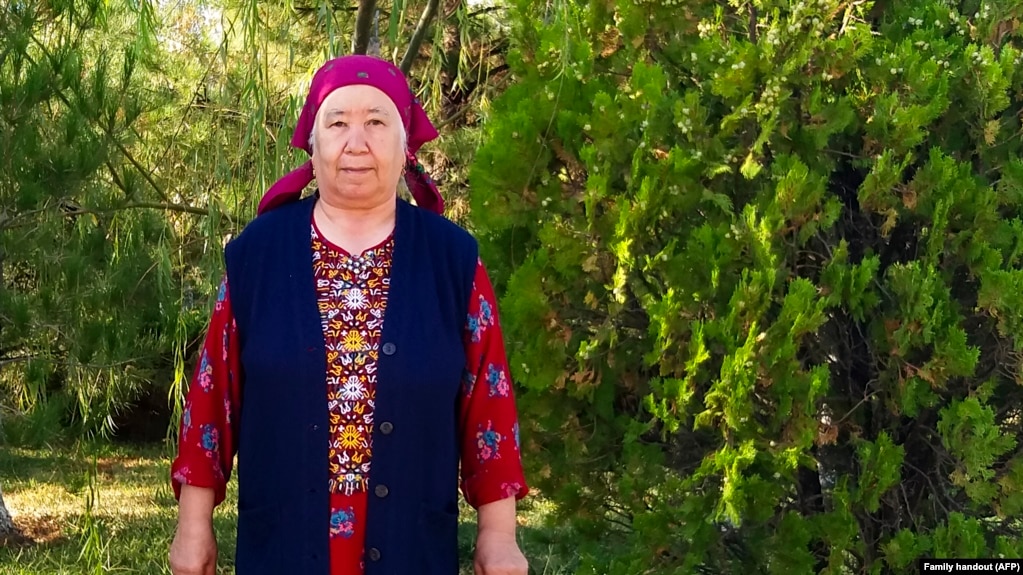
On 19 February 2021 RFE/RL reported that 71-year-old Turkmen journalist Soltan Achilova has issued a rare rebuke of the Central Asian nation’s authoritarian President Gurbanguly Berdymukhammedov, criticizing him and his government in a video posted on YouTube for failing to provide proper heating and water supply to Ashgabat residents during winter.
In the video statement that appeared on YouTube late on February 18, Achilova, who has previously worked as a reporter for RFE/RL’s Turkmen Service, said she will no longer call Berdymukhammedov “respected” because “millions of Turkmen had stopped respecting you long ago.”
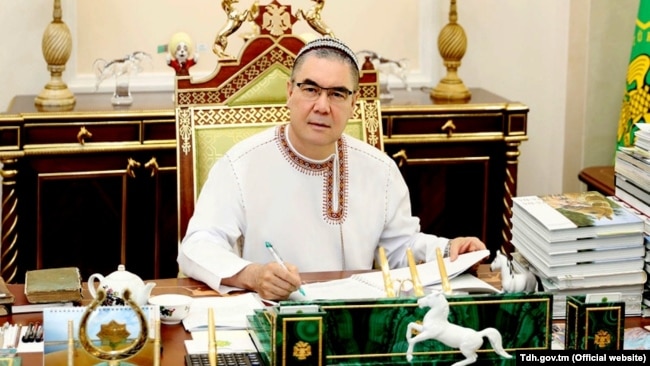
Turkmen President Gurbanguly Berdymukhammedov (file photo)
Such an act of public dissent is a rare occurrence in Turkmenistan, where Berdymukhammedov has run the former Soviet republic with an iron fist since 2006, becoming the center of an elaborate personality cult
Achilova also criticized Berdymukhammedov and his government for what she called a “failure to provide” ordinary people with decent food at acceptable prices, adding that “miserable pensions and salaries in the country” do not provide people with the means to shop for regular items at local markets. Achilova added that the heating system in her apartment had been switched off several times in recent days, which she called an intentional warning over her journalistic activities.
“Our fellow Turkmen citizens working in foreign countries have staged several protests recently demanding your resignation. We join those protests and demand your resignation as well because you are incapable of carrying out your duties. We are suffering and you do not even care about it. All you are capable of is ruining our homes and causing our people to suffer,” Achilova said.
Based in Ashgabat, Achilova is currently a contributor to the Vienna-based independent news website Khronika Turkmenistana (Chronicles of Turkmenistan), which focuses on news and developments in Turkmenistan. Turkmen authorities, who don’t tolerate an independent press, have targeted Achilova in the past for her work as a journalist. SEE ALSO: RFE/RL Correspondent Roughed Up — Again — In Turkmenistan