Posts Tagged ‘You Tube’

Animated video clip on work of UN Special rapporteur on Human Rights Defenders

March 8, 2022

On 7 February 2022, the UN Special Rapporteur on Human Rights Defenders released an animated video explaining how to raise concerns about threats to HRDs and human rights abuses by governments and businesses.

Communications are the main tool used to addressed attacks, such as criminalization, smear campaign, threats and killings. Communications will remain confidential for up to 60 days, giving governments and businesses the time to respond to the allegations. The SR also makes two official country visit every year, and writes two thematic reports.

The UN Special Rapporteur has a mission to promote and protect the work of Human Rights Defenders (HRDs). Find out how she does this, and how you can send information about a Human Rights Defender at risk.

See also: https://humanrightsdefenders.blog/2021/05/20/special-rapporteur-mary-lawlor-starts-new-website/

Visit: https://srdefenders.org/

Follow: https://twitter.com/MaryLawlorhrds

Donovan Ortega, young Human Rights Defender from Mexico

February 5, 2022

We try to defend happiness from a principle of reality” – Donovan Ortega, Human Rights Defender.
Donovan Ortega is a human rights defender from Mexico who participated in the 2021 online edition of ISHR’s Human Rights Defender Advocacy Programme (HRDAP).
Donovan is responsible for the international advocacy agenda at the Fray Francisco de Vitoria Human Rights Center in Mexico, and had the opportunity to do advocacy activities at the Human Rights Council in the framework of Mexico’s Universal Periodic Review (UPR).

In this short video, he explains how his work will help to achieve his objectives and vision in the future.

Mauricio Ochieng – transgender human rights defender from Kenya

December 14, 2021

Mauricio Ochieng‘ is a transgender activist and a SOGIESC human rights defender from the Western part of Kenya. In this short video, posted by the ISHR, he explains how his work will help to fight discrimination, achieve equality and create a better future for transgender people in Kenya. “So I saw the need of engaging different activists and human rights defenders across the region to make sure that this kind of arrest should not happen to anybody because of their gender identity or sexual orientation.”

https://ishr.ch/defender-stories/human-rights-defenders-story-mauricio-ochieng-from-kenya/

Gladys Acevedo, a Colombian mother who has lost her son, became a human rights defender

December 13, 2021

See what has motivated Gladys Acevedo, a Colombian mother who has lost her son in the war, to become a human rights activist and help other victims.

http://america.cgtn.com/livenews

Profile of Barun Ghimire, human rights defender from Nepal

July 5, 2021

The rights of migrant workers is a global problem, and actors in different jurisdictions have to come together to make a difference in this particular area,” says Barun Ghimire, a human rights lawyer based in Kathmandu, Nepal. “And we need to create a collective narrative that is based on a rights-based approach of migrant workers”.

Barun Ghimire is a human rights lawyer and programme manager at the Law and Policy Forum for Social Justice. Barun works for the protection and defence of the rights of migrant workers in Kathmandu, Nepal. 

In this video, Barun explains his work in relation to the rights of migrants, as well as how Covid-19 has affected this group, which is facing even stronger vulnerability. He also calls the international community and other actors to come together and help improve the situation of migrants workers as well as their families.  To achieve this goal, it is necessary to create a new narrative and defend and promote the rights of migrant people in vulnerable situations, especially during and after Covid-19.

Barun was also a participant in ISHR’s Human Rights Defender Advocacy Programme (HRDAP) in 2020.

https://www.ishr.ch/news/human-rights-defenders-story-barun-ghimire-nepal

Five young women human rights defenders to watch

March 16, 2021

Sarah Noble in Geneva Solutions of 15 March 2021 writes about her encounter with five young women activists from around the world who shared their motivation, their pandemic experiences, and advice for future generations:

On International Women’s Day, I was privileged to moderate the conversation, at an event hosted by the EU mission to the UN in Geneva and UN Women. I came away convinced world leaders could learn a lesson or two. They aren’t waiting to be invited to the decision-making table, and are already driving change in their communities and beyond.

The solidarity among them encapsulates a global movement led by female youth, determined in their fight for gender equality, education, eradicating period poverty, and dealing with climate change.

“We do not have to wait for the adults to start campaigning for the action that we want to see,” said Amy Meek of the UK. Along with her younger sister Ella, Amy, 17, launched an award-winning campaign, now a charity, called Kids Against Plastic. The sisters (see picture) were motivated by realising the devastating impact the misuse of plastic was having on the planet and also its potential legacy for future generations.

“I grew up realising how much girls were taught to be weak, were taught to be submissive while boys are taught to be strong and to be leaders. For me it was really puzzling, ”said Yande Banda, a passionate 17-year-old feminist activist and education advocate from Zambia. Yande is the chairperson of Transform Education, a global youth-led coalition hosted by the UN, where she advocates for a gender transformative approach to education. “I began being an advocate and in particular a feminist, ever since I could realise the consequential inequalities within society – so I would say I was around six years old,” “The fight to end the climate crisis has not stopped for the pandemic and as feminist leaders, neither have we”.

İlayda Eskitaşcioğlu, 28, is a human rights lawyer and a PhD student at Koç University in İstanbul. She founded an NGO, We Need to Talk, in 2016, which aims to fight against period poverty and period stigma in Turkey. “Periods do not stop for pandemics! Neither does the fight for gender equality! We are still breaking taboos, step by step – fathers, brothers, romantic partners, co-workers, teachers, those that are not menstruating, period poverty is your problem too! ” We Need to Talk provides sanitary products to three vulnerable target groups: Seasonal agricultural workers, refugees and pre-teens who are going to school in remote rural areas, and tries to start an honest and open conversation around menstruation in the Middle East.

Lucija Tacer is the current UN youth delegate for Slovenia and an advocate for women’s rights. She has made gender equality the priority in her interventions at the world body. “I entered into a workplace where all of the partners and the high level people are men, except one or two women and 100 percent of the secretaries were female and just being in that environment every day really got me thinking, what is going on here ? ”

Julieta Martinez, 17, from Chile is the founder of the TREMENDAS Collaborative Platform, which promotes the empowerment of girls, and young people by putting their skills and talents at the service of the community.

“Amazingly talented girls are all around the world. We have to continue looking for them. We have to continue giving them a space. And we have to continue this fight to actually get to gender equality… Girls, young women and adolescents have the right to raise their voices, to be heard and to take action for their dignity, their integrity and to be agents of social change in a society where human and youth rights must always be defended. ”

Watch the full event on youtube here.

https://genevasolutions.news/peace-humanitarian/five-young-women-activists-to-watch-a-moderator-s-take

Soltan Achilova has issued a rare rebuke of the Turkmen President – On YouTube

February 23, 2021

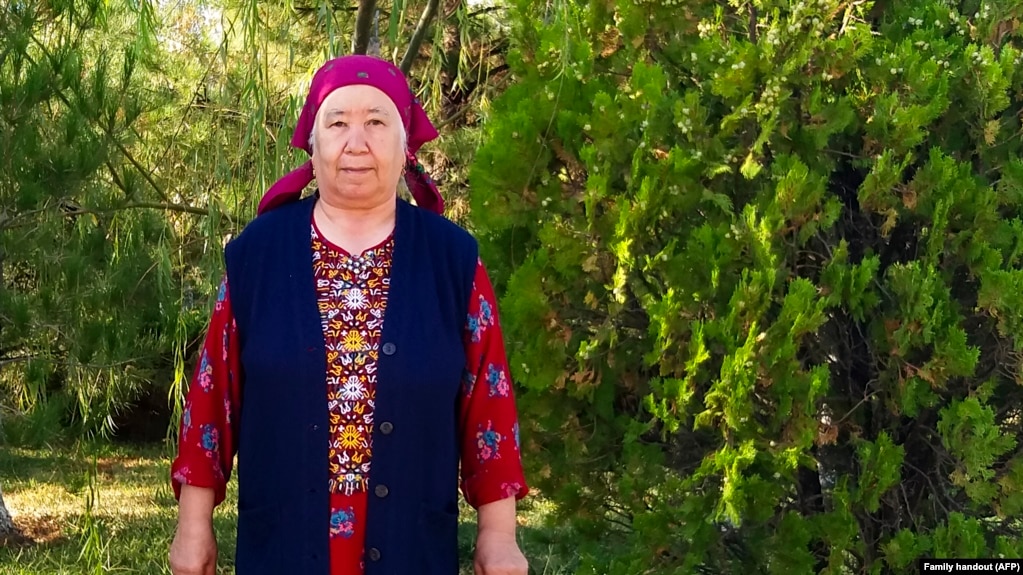
Turkmen journalist Soltan Achilova (file photo)

On 19 February 2021 RFE/RL reported that 71-year-old Turkmen journalist Soltan Achilova has issued a rare rebuke of the Central Asian nation’s authoritarian President Gurbanguly Berdymukhammedov, criticizing him and his government in a video posted on YouTube for failing to provide proper heating and water supply to Ashgabat residents during winter.

In the video statement that appeared on YouTube late on February 18, Achilova, who has previously worked as a reporter for RFE/RL’s Turkmen Service, said she will no longer call Berdymukhammedov “respected” because “millions of Turkmen had stopped respecting you long ago.”

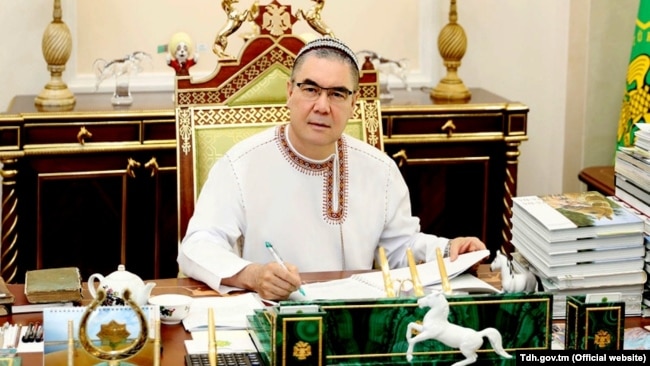
Turkmen President Gurbanguly Berdymukhammedov (file photo)

Such an act of public dissent is a rare occurrence in Turkmenistan, where Berdymukhammedov has run the former Soviet republic with an iron fist since 2006, becoming the center of an elaborate personality cult

Last month, Achilova was named as one of three finalists for the Martin Ennals Award for Human Rights Defenders for her reports from Turkmenistan, one of the most repressive countries in the world. SEE ALSO: Turkmen Journalist Achilova Among Finalists For Top Human Rights Prize [https://humanrightsdefenders.blog/2021/01/18/%e2%80%8b%e2%80%8bmartin-ennals-award-finalists-2021-announced/]. See also: https://www.martinennalsaward.org/hrd/soltan-achilova/#film

Achilova also criticized Berdymukhammedov and his government for what she called a “failure to provide” ordinary people with decent food at acceptable prices, adding that “miserable pensions and salaries in the country” do not provide people with the means to shop for regular items at local markets. Achilova added that the heating system in her apartment had been switched off several times in recent days, which she called an intentional warning over her journalistic activities.

Our fellow Turkmen citizens working in foreign countries have staged several protests recently demanding your resignation. We join those protests and demand your resignation as well because you are incapable of carrying out your duties. We are suffering and you do not even care about it. All you are capable of is ruining our homes and causing our people to suffer,” Achilova said.

Based in Ashgabat, Achilova is currently a contributor to the Vienna-based independent news website Khronika Turkmenistana (Chronicles of Turkmenistan), which focuses on news and developments in Turkmenistan.
Turkmen authorities, who don’t tolerate an independent press, have targeted Achilova in the past for her work as a journalist. SEE ALSO: RFE/RL Correspondent Roughed Up — Again — In Turkmenistan

https://www.rferl.org/a/turkmenistan-journalist-achilova-rare-public-rebuke-president-berdymukhammedov/31111278.html

https://www.timesca.com/index.php/news/23482-turkmenistan-journalist-posts-rare-public-rebuke-of-president-on-youtube

2020 Human Rights Day: 6 Human rights defenders highlighted by NHRF

December 22, 2020

On December 10th the Norwegian Human Rights Fund celebrated Human Rights Day. Many have been heavily impacted by the #COVID19 pandemic, and others face even more risks for defending their #rights now than before. In this video, six human rights defenders (such as Ruki Fernando, Norma Ledezma and Asha Kowtal) from different countries (India, Sri lanka, Thailand, Mexico and Colombia) share their thoughts on the importance of the fight for human rights.

Arab Spring: information technology platforms no longer support human rights defenders in the Middle East and North Africa

December 18, 2020

Jason Kelley in the Electronic Frontier Foundation (EFF) of 17 December 2020 summarizes a joint statement by over 30 NGOs saying that the platform policies and content moderation procedures of the tech giants now too often lead to the silencing and erasure of critical voices from across the region. Arbitrary and non-transparent account suspension and removal of political and dissenting speech has become so frequent and systematic in the area that it cannot be dismissed as isolated incidents or the result of transitory errors in automated decision-making.

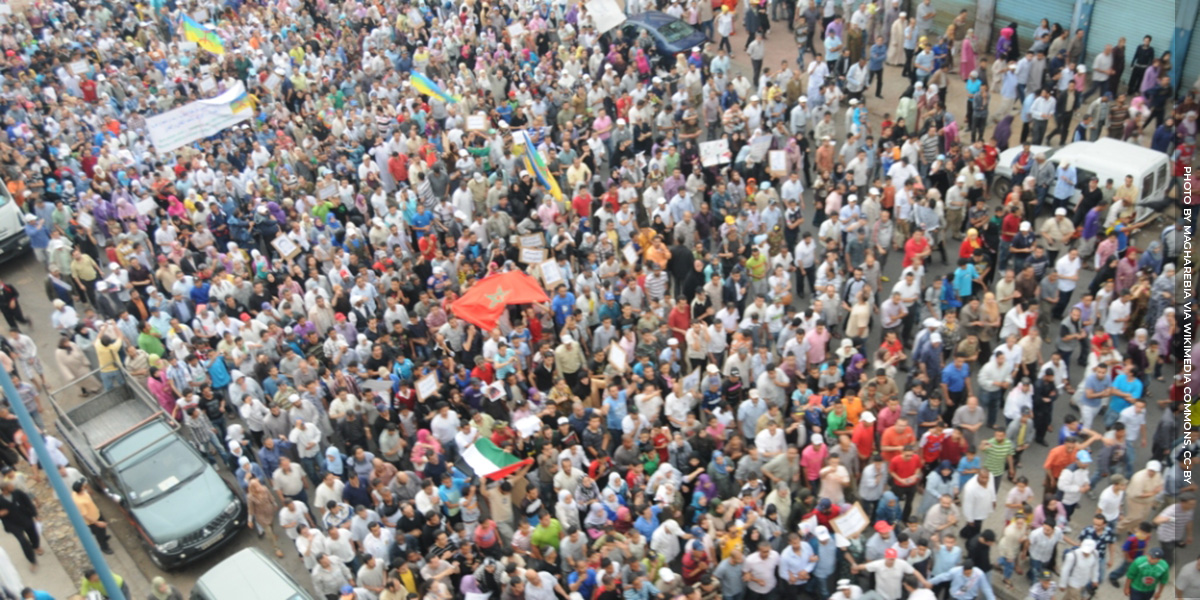
Young people protest in Morocco, 2011, photo by Magharebia

This year is the tenth anniversary of what became known as the “Arab Spring”, in which activists and citizens across the Middle East and North Africa (MENA) used social media to document the conditions in which they lived, to push for political change and social justice, and to draw the world’s attention to their movement. For many, it was the first time they had seen how the Internet could have a role to play in pushing for human rights across the world. Emerging social media platforms like Facebook, Twitter and YouTube all basked in the reflected glory of press coverage that centered their part in the protests: often to the exclusion of those who were actually on the streets. The years after the uprisings failed to live up to the optimism of the time. Offline, the authoritarian backlash against the democratic protests has meant that many of those who fought for justice a decade ago, are still fighting now.

The letter asks for several concrete measures to ensure that users across the region are treated fairly and are able to express themselves freely:

  • Do not engage in arbitrary or unfair discrimination.
  • Invest in the regional expertise to develop and implement context-based content moderation decisions aligned with human rights frameworks.
  • Pay special attention to cases arising from war and conflict zones.
  • Preserve restricted content related to cases arising from war and conflict zones.
  • Go beyond public apologies for technical failures, and provide greater transparency, notice, and offer meaningful and timely appeals for users by implementing the Santa Clara Principles on Transparency and Accountability in Content Moderation.

Content moderation policies are not only critical to ensuring robust political debate. They are key to expanding and protecting human rights.  Ten years out from those powerful protests, it’s clear that authoritarian and repressive regimes will do everything in their power to stop free and open expression. Platforms have an obligation to note and act on the effects content moderation has on oppressed communities, in MENA and elsewhere. [see also: https://humanrightsdefenders.blog/2020/06/03/more-on-facebook-and-twitter-and-content-moderation/]

In 2012, Mark Zuckerberg, CEO and Founder of Facebook, wrote

By giving people the power to share, we are starting to see people make their voices heard on a different scale from what has historically been possible. These voices will increase in number and volume. They cannot be ignored. Over time, we expect governments will become more responsive to issues and concerns raised directly by all their people rather than through intermediaries controlled by a select few.

Instead, governments around the world have chosen authoritarianism, and platforms have contributed to the repression. It’s time for that to end.

Read the full letter demanding that Facebook, Twitter, and YouTube stop silencing critical voices from the Middle East and North Africa, reproduced below:

17 December 2020

Open Letter to Facebook, Twitter, and YouTube: Stop silencing critical voices from the Middle East and North Africa

Ten years ago today, 26-year old Tunisian street vendor Mohamed Bouazizi set himself on fire in protest over injustice and state marginalization, igniting mass uprisings in Tunisia, Egypt, and other countries across the Middle East and North Africa. 

As we mark the 10th anniversary of the Arab Spring, we, the undersigned activists, journalists, and human rights organizations, have come together to voice our frustration and dismay at how platform policies and content moderation procedures all too often lead to the silencing and erasure of critical voices from marginalized and oppressed communities across the Middle East and North Africa.

The Arab Spring is historic for many reasons, and one of its outstanding legacies is how activists and citizens have used social media to push for political change and social justice, cementing the internet as an essential enabler of human rights in the digital age.   

Social media companies boast of the role they play in connecting people. As Mark Zuckerberg famously wrote in his 2012 Founder’s Letter

“By giving people the power to share, we are starting to see people make their voices heard on a different scale from what has historically been possible. These voices will increase in number and volume. They cannot be ignored. Over time, we expect governments will become more responsive to issues and concerns raised directly by all their people rather than through intermediaries controlled by a select few.”

Zuckerberg’s prediction was wrong. Instead, more governments around the world have chosen authoritarianism, and platforms have contributed to their repression by making deals with oppressive heads of state; opening doors to dictators; and censoring key activists, journalists, and other changemakers throughout the Middle East and North Africa, sometimes at the behest of other governments:

  • Tunisia: In June 2020, Facebook permanently disabled more than 60 accounts of Tunisian activists, journalists, and musicians on scant evidence. While many were reinstated, thanks to the quick reaction from civil society groups, accounts of Tunisian artists and musicians still have not been restored. We sent a coalition letter to Facebook on the matter but we didn’t receive a public response.
  • Syria: In early 2020, Syrian activists launched a campaign to denounce Facebook’s decision to take down/disable thousands of anti-Assad accounts and pages that documented war crimes since 2011, under the pretext of removing terrorist content. Despite the appeal, a number of those accounts remain suspended. Similarly, Syrians have documented how YouTube is literally erasing their history.
  • Palestine: Palestinian activists and social media users have been campaigning since 2016 to raise awareness around social media companies’ censorial practices. In May 2020, at least 52 Facebook accounts of Palestinian activists and journalists were suspended, and more have since been restricted. Twitter suspended the account of a verified media agency, Quds News Network, reportedly on suspicion that the agency was linked to terrorist groups. Requests to Twitter to look into the matter have gone unanswered. Palestinian social media users have also expressed concern numerous times about discriminatory platform policies.
  • Egypt: In early October 2019, Twitter suspended en masse the accounts of Egyptian dissidents living in Egypt and across the diaspora, directly following the eruption of anti-Sisi protests in Egypt. Twitter suspended the account of one activist with over 350,000 followers in December 2017, and the account still has yet to be restored. The same activist’s Facebook account was also suspended in November 2017 and restored only after international intervention. YouTube removed his account earlier in 2007.

Examples such as these are far too numerous, and they contribute to the widely shared perception among activists and users in MENA and the Global South that these platforms do not care about them, and often fail to protect human rights defenders when concerns are raised.  

Arbitrary and non-transparent account suspension and removal of political and dissenting speech has become so frequent and systematic that they cannot be dismissed as isolated incidents or the result of transitory errors in automated decision-making. 

While Facebook and Twitter can be swift in responding to public outcry from activists or private advocacy by human rights organizations (particularly in the United States and Europe), in most cases responses to advocates in the MENA region leave much to be desired. End-users are frequently not informed of which rule they violated, and are not provided a means to appeal to a human moderator. 

Remedy and redress should not be a privilege reserved for those who have access to power or can make their voices heard. The status quo cannot continue. 

The MENA region has one of the world’s worst records on freedom of expression, and social media remains critical for helping people connect, organize, and document human rights violations and abuses. 

We urge you to not be complicit in censorship and erasure of oppressed communities’ narratives and histories, and we ask you to implement the following measures to ensure that users across the region are treated fairly and are able to express themselves freely:

  • Do not engage in arbitrary or unfair discrimination. Actively engage with local users, activists, human rights experts, academics, and civil society from the MENA region to review grievances. Regional political, social, cultural context(s) and nuances must be factored in when implementing, developing, and revising policies, products and services. 
  • Invest in the necessary local and regional expertise to develop and implement context-based content moderation decisions aligned with human rights frameworks in the MENA region.  A bare minimum would be to hire content moderators who understand the various and diverse dialects and spoken Arabic in the twenty-two Arab states. Those moderators should be provided with the support they need to do their job safely, healthily, and in consultation with their peers, including senior management.
  • Pay special attention to cases arising from war and conflict zones to ensure content moderation decisions do not unfairly target marginalized communities. For example, documentation of human rights abuses and violations is a legitimate activity distinct from disseminating or glorifying terrorist or extremist content. As noted in a recent letter to the Global Internet Forum to Counter Terrorism, more transparency is needed regarding definitions and moderation of terrorist and violent extremist (TVEC) content
  • Preserve restricted content related to cases arising from war and conflict zones that Facebook makes unavailable, as it could serve as evidence for victims and organizations seeking to hold perpetrators accountable. Ensure that such content is made available to international and national judicial authorities without undue delay.
  • Public apologies for technical errors are not sufficient when erroneous content moderation decisions are not changed. Companies must provide greater transparency, notice, and offer meaningful and timely appeals for users. The Santa Clara Principles on Transparency and Accountability in Content Moderation, which Facebook, Twitter, and YouTube endorsed in 2019, offer a baseline set of guidelines that must be immediately implemented. 

Signed,

Access Now
Arabic Network for Human Rights Information — ANHRI
Article 19
Association for Progressive Communications — APC
Association Tunisienne de Prévention Positive
Avaaz
Cairo Institute for Human Rights Studies (CIHRS)
The Computational Propaganda Project
Daaarb — News — website
Egyptian Initiative for Personal Rights
Electronic Frontier Foundation
Euro-Mediterranean Human Rights Monitor
Global Voices
Gulf Centre for Human Rights (GCHR)
Hossam el-Hamalawy, journalist and member of the Egyptian Revolutionary Socialists Organization
Humena for Human Rights and Civic Engagement
IFEX
Ilam- Media Center For Arab Palestinians In Israel
ImpACT International for Human Rights Policies
Initiative Mawjoudin pour l’égalité
Iraqi Network for Social Media – INSMnetwork
I WATCH Organisation (Transparency International — Tunisia)
Khaled Elbalshy – Daaarb website – Editor in Chief
Mahmoud Ghazayel, Independent
Marlena Wisniak, European Center for Not-for-Profit Law
Masaar — Technology and Law Community
Michael Karanicolas, Wikimedia/Yale Law School Initiative on Intermediaries and Information
Mohamed Suliman, Internet activist
My.Kali magazine — Middle East and North Africa
Palestine Digital Rights Coalition (PDRC)
The Palestine Institute for Public Diplomacy
Pen Iraq
Quds News Network
Ranking Digital Rights
Rima Sghaier, Independent
Sada Social Center
Skyline International for Human Rights
SMEX
Syrian Center for Media and Freedom of Expression (SCM)
The Tahrir Institute for Middle East Policy (TIMEP)
Taraaz
Temi Lasade-Anderson, Digital Action
WITNESS
Vigilance Association for Democracy and the Civic State — Tunisia
7amleh – The Arab Center for the Advancement of Social Media

https://www.eff.org/deeplinks/2020/12/decade-after-arab-spring-platforms-have-turned-their-backs-critical-voices-middle

Facebook and YouTube are allowing themselves to become tools of the Vietnamese authorities’ censorship and harassment

December 1, 2020

On 1 December 2020, Amnesty International published a new report on how Facebook and YouTube are allowing themselves to become tools of the Vietnamese authorities’ censorship and harassment of its population, in an alarming sign of how these companies could increasingly operate in repressive countries. [see also: https://humanrightsdefenders.blog/2020/06/03/more-on-facebook-and-twitter-and-content-moderation/].

The 78-page report, “Let us Breathe!”: Censorship and criminalization of online expression in Viet Nam”, documents the systematic repression of peaceful online expression in Viet Nam, including the widespread “geo-blocking” of content deemed critical of the authorities, all while groups affiliated to the government deploy sophisticated campaigns on these platforms to harass everyday users into silence and fear.

The report is based on dozens of interviews with human rights defenders and activists, including former prisoners of conscience, lawyers, journalists and writers, in addition to information provided by Facebook and Google. It also reveals that Viet Nam is currently holding 170 prisoners of conscience, of whom 69 are behind bars solely for their social media activity. This represents a significant increase in the number of prisoners of conscience estimated by Amnesty International in 2018.

In the last decade, the right to freedom of expression flourished on Facebook and YouTube in Viet Nam. More recently, however, authorities began focusing on peaceful online expression as an existential threat to the regime,” said Ming Yu Hah, Amnesty International’s Deputy Regional Director for Campaigns.

Today these platforms have become hunting grounds for censors, military cyber-troops and state-sponsored trolls. The platforms themselves are not merely letting it happen – they’re increasingly complicit.

In 2018, Facebook’s income from Viet Nam neared US$1 billion – almost one third of all revenue from Southeast Asia. Google, which owns YouTube, earned US$475 million in Viet Nam during the same period, mainly from YouTube advertising. The size of these profits underlines the importance for Facebook and Google of maintaining market access in Viet Nam.”

In April 2020, Facebook announced it had agreed to “significantly increase” its compliance with requests from the Vietnamese government to censor “anti-state” posts. It justified this policy shift by claiming the Vietnamese authorities were deliberately slowing traffic to the platform as a warning to the company.

Last month, in Facebook’s latest Transparency Report – its first since it revealed its policy of increased compliance with the Vietnamese authorities’ censorship demands – the company revealed a 983% increase in content restrictions based on local law as compared with the previous reporting period, from 77 to 834. Meanwhile, YouTube has consistently won praise from Vietnamese censors for its relatively high rate of compliance with censorship demands.

State-owned media reported Information Minister Nguyen Manh Hung as saying in October that compliance with the removal of “bad information, propaganda against the Party and the State” was higher than ever, with Facebook and Google complying with 95% and 90% of censorship requests, respectively.

Based on dozens of testimonies and evidence, Amnesty International’s report shows how Facebook and YouTube’s increasing censorship of content in Vietnam operates in practice.

In some cases, users see their content censored under vaguely worded local laws, including offences such as “abusing democratic freedoms” under the country’s Criminal Code. Amnesty International views these laws as inconsistent with Viet Nam’s obligations under international human rights law. Facebook then “geo-blocks” content, meaning it becomes invisible to anyone accessing the platform in Viet Nam.

Nguyen Van Trang, a pro-democracy activist now seeking asylum in Thailand, told Amnesty International that in May 2020, Facebook notified him that one of his posts had been restricted due to “local legal restrictions”. Since then, Facebook has blocked every piece of content he has tried to post containing the names of senior members of the Communist Party. 

Nguyen Van Trang has experienced similar restrictions on YouTube, which, unlike Facebook, gave him the option to appeal such restrictions. Some appeals have succeeded and others not, without YouTube providing any explanation.

Truong Chau Huu Danh is a well-known freelance journalist with 150,000 followers and a verified Facebook account. He told Amnesty International that between 26 March and 8 May 2020, he posted hundreds of pieces of content about a ban on rice exports and the high-profile death penalty case of Ho Duy Hai. In June, he realized these posts had all vanished without any notification from Facebook whatsoever.

Amnesty International heard similar accounts from other Facebook users, particularly when they tried to post about a high-profile land dispute in the village of Dong Tam, which opposed local villagers to military-run telecommunications company Viettel. The dispute culminated in a confrontation between villagers and security forces in January 2020 that saw the village leader and three police officers killed.

After Facebook announced its new policy in April 2020, land rights activists Trinh Ba Phuong and Trinh Ba Tu reported that all the content they had shared about the Dong Tam incident had been removed from their timelines without their knowledge and without notification.

On 24 June 2020, the pair were arrested and charged with “making, storing, distributing or disseminating information, documents and items against the Socialist Republic of Vietnam” under Article 117 of the Criminal Code after they reported extensively on the Dong Tam incident. They are currently in detention. Their Facebook accounts have disappeared since their arrests under unknown circumstances. Amnesty International considers both Trinh Ba Phuong and Trinh Ba Tu to be prisoners of conscience.

The Vietnamese authorities’ campaign of repression often results in the harassment, intimidation, prosecution and imprisonment of people for their social media use. There are currently 170 prisoners of conscience imprisoned in Viet Nam, the highest number ever recorded in the country by Amnesty International. Nearly two in five (40%) have been imprisoned because of their peaceful social media activity.

Twenty-one of the 27 prisoners of conscience jailed in 2020, or 78%, were prosecuted because of their peaceful online activity under Articles 117 or 331 of the Criminal Code – the same repressive provisions that often form the basis of ‘local legal restrictions’ implemented by Facebook and YouTube. For every prisoner of conscience behind bars, there are countless people in Viet Nam who see this pattern of repression and intimidation and are understandably terrified about speaking their mind. Ming Yu Hah

These individuals’ supposed “crimes” include peacefully criticizing the authorities’ COVID-19 response on Facebook and sharing independent information about human rights online.

For every prisoner of conscience behind bars, there are countless people in Viet Nam who see this pattern of repression and intimidation and are understandably terrified about speaking their minds,” said Ming Yu Hah.

Amnesty International has documented dozens of incidents in recent years in which human rights defenders have received messages meant to harass and intimidate, including death threats. The systematic and organized nature of these harassment campaigns consistently bear the hallmarks of state-sponsored cyber-troops such as Du Luan Vien or “public opinion shapers” – people recruited and managed by the Communist Party of Viet Nam (CPV)’s Department of Propaganda to engage in psychological warfare online.

The activities of Du Luan Vien are complemented by those of “Force 47”, a cyberspace military battalion made up of some 10,000 state security forces whose function is to “fight against wrong views and distorted information on the internet”.

While “Force 47” and groups such as Du Luan Vien operate opaquely, they are known to engage in mass reporting campaigns targeting human rights –related content, often leading to their removal and account suspensions by Facebook and YouTube.

Additionally, Amnesty International’s investigation documented multiple cases of bloggers and social media users being physically attacked because of their posts by the police or plainclothes assailants, who operate with the apparent acquiescence of state authorities and with virtually no accountability for such crimes.


Putting an end to complicity

The Vietnamese authorities must stop stifling freedom of expression online. Amnesty International is calling for all prisoners of conscience in Viet Nam to be released immediately and unconditionally and for the amendment of repressive laws that muzzle freedom of expression.

Companies – including Facebook and Google – have a responsibility to respect all human rights wherever they operate. They should respect the right to freedom of expression in their content moderation decisions globally, regardless of local laws that muzzle freedom of expression. Tech giants should also overhaul their content moderation policies to ensure their decisions align with international human rights standards.

In October 2020, Facebook launched a global Oversight Board – presented as the company’s independent “Supreme Court” and its solution to the human rights challenges presented by content moderation. Amnesty International’s report reveals, however, that the Board’s bylaws will prevent it from reviewing the company’s censorship actions pursuant to local law in countries like Vet Nam. It’s increasingly obvious that the Oversight Board is incapable of solving Facebook’s human rights problems. Ming Yu Hah

“It’s increasingly obvious that the Oversight Board is incapable of solving Facebook’s human rights problems. Facebook should expand the scope of the Oversight Board to include content moderation decisions pursuant to local law; if not, the Board – and Facebook – will have again failed Facebook users,” said Ming Yu Hah.

[see also: https://humanrightsdefenders.blog/2020/04/11/algorithms-designed-to-suppress-isis-content-may-also-suppress-evidence-of-human-rights-violations/]

“Far from the public relations fanfare, countless people who dare to speak their minds in Viet Nam are being silenced. The precedent set by this complicity is a grave blow to freedom of expression around the world.”

https://www.amnesty.org/en/latest/news/2020/12/viet-nam-tech-giants-complicit/

https://www.theguardian.com/world/2020/dec/01/facebook-youtube-google-accused-complicity-vietnam-repression

https://thediplomat.com/2020/07/facebook-vietnams-fickle-partner-in-crime/