On 21 May, at the final hearing of the Özgür Gündem “Editors-in-Chief on Watch” campaign trial, woman human rights defender and co-chair of the Human Rights Association-Insan Hakları Dernerği (IHD), Eren Keskin, was sentenced to 3 years and 9 months prison term for “propaganda for a terrorist organisation” and “openly inciting to commit crime”.
As deeply concerning as this sentencing is, it is far from an isolated case: across Turkey, civil society activists struggling to ensure basic human rights and fundamental freedoms are targeted by the judiciary, acting as an extension of the legislative power, for legitimately and peacefully exercising their constitutional rights. EuroMed Rights strongly condemns the judicial harassment against Ms Keskin and her fellow activists.
EuroMed Rights calls on the Turkish authorities to respect their obligations under international human rights treaties, the European Convention on Human Rights and the Turkish constitution, end the crackdown on critics and halt the persecution of human rights defenders. and release all those detained for peacefully expressing their opinions.
Note The Editors-in-Chief on Watch campaign of Özgür Gündem daily began on May 3, 2016 and ended on August 7, 2016. Daily was closed through the Statutory Decree No. 675 issued under the State of Emergency. At the end of March, Ms. Keskin has been sentenced to 7 years and a half on charges of “insulting the President and State institutions” over three reports published in the newspaper in 2015. On 3 July, she will again stand trial in front of 23th High Criminal Court in Istanbul for the “ Özgür Gündem main trial”.
REBECCA ELLIS published a profile of Marini de Livera under the title “She’s A Lawyer … A Thespian … And Now A State Department ‘Woman Of Courage‘”
Marini de Livera’s plays are not for the faint of heart. In her home country of Sri Lanka, the pro bono lawyer has found that crimes against women and children often take place behind closed doors — in homes, orphanages and schools. With her traveling theater group, de Livera seeks to shed light on the human rights abuses in her country by putting the violence on stage, front and center. “There are beautiful laws in the law books,” she says. “But when I went out to the slums, to the rural areas, to conflict-ridden areas, I found what is in the law books is not a practical reality.”
De Livera has served as the chairperson of Sri Lanka’s child welfare agency, the National Child Protection Authority, and now runs Sisters at Law, an advocacy group for impoverished women and children. She spoke with NPR about her creative approach to addressing human rights in her country, and why she’s focusing on using her theater training to better the situation of children in Sri Lanka’s orphanages.
What are some of the legal issues that women and children in Sri Lanka need help with?
Women and children are denied justice if they’re uneducated, and if they live in rural areas. They don’t enjoy the same basket of human rights that privileged people have because they don’t have access to lawyers.
What needs to happen to accomplish that?
There has to be legal literacy. These women and children have to know what the laws in the country are and what their human rights are. If they are educated about their rights, they can go to court and demand them.
You’ve often used theater to promote this legal literacy in Sri Lanka. Can you give me an example of how this works?
One of my favorite plays I put on was about corporal punishment. I went to a Catholic school where a priest was hitting boys every day. I explained to the school that there are different forms of violence – cultural violence, psychological violence, physical violence. Then I asked the boys to make a play about their experiences with violence. And one of the boys reenacted what the priest had done to him. [It helped] these boys find an outlet to say, “We don’t want to kneel down when we come late to school. We don’t want to be beaten by a cane.”
How did you come to see theater as a way to educate the public on their legal rights?
I had been a lecturer in law [in Sri Lanka], and one of the things I had to teach was U.K. law principles. And the students were bored to death. So I said, these are the books, you read, then you tell me what the rule of law and separation of powers are through a performance. I realized if I could use this in the classroom, why not in the village to simplify the law?
What is your theater group working on now?
I’m working on a street theater [program] to create awareness for parents [and encourage them] not to send their children to orphanages. I’m going to show that family is the place for the child. In Sri Lanka, we have a lot of “social orphans” where they have both parents, but the children are suffering in orphanages.
Past reports have found that over 80 percent of the 20,000 children in Sri Lanka’s child-care institutions, including orphanages, have at least one parent. These parents are often unable to provide for their children or the child has a disability and requires extra care. And sometimes the children are sent to such an institution because of a criminal offense.
Orphanages should be the last resort. So I’m promoting alternative care. Some of the mothers are capable of looking after their children, but they’ve handed over their child to an overcrowded orphanage. I’m thinking of giving parenting skills training to these mothers and economically empowering them, finding them a nice home and settling the children with them.
You mentioned earlier that this prize is the first time in your life you felt appreciated for “walking in the opposite direction” from others in the law profession. Do you have hopes other attorneys will follow in your path?
I’m very unhappy to say each time I go to court people come up to me like a swarm of flies and say, “We don’t have a lawyer to appear on behalf of us.” I want to take all the country’s young attorneys and train them to be another Marini – to clone myself. Because I have to hand this on to the younger generation.
On IWGIA (a global human rights organisation dedicated to promoting, protecting and defending indigenous peoples’ rights) posted a profile of Putla, a 75-year-old woman indigenous rights defender in Cambodia.
….if you drive two and a half hours West of Cambodia’s capital Phnom Penh, you reach a community consisting of five small villages with a total population of around 1,350 people. They are the last members of the indigenous Souy people, who until recently, lived peacefully on their ancestral land. This is where the indigenous rights defender Putla has lived most of her life – except when she was forced to move away by Pol Pot’s Khmer Rouge regime in 1979.
Today, she is a 75-year-old woman whose skin has been tainted by the sun and from a hard life. She is a tiny woman, not more than 150 centimeters tall, and often dresses in the Souy people’s traditional black cloth. Putla is a woman who looks fragile at first sight – but this impression only lasts until she starts to speak, or until you look into her eyes. She has a strong and crisp voice, and her eyes reflect the hardships that she has endured in her life. She is a very warm woman who often finishes her tirades with heartfelt laughter.Read the rest of this entry »
Today the Martin Ennals Award announced that on 9 May a special ceremony was held in Ankara, Turkey for Ms Eren Keskin who is one of the finalists for the 2019 Martin Ennals Award. Ms Keskin continues to be subject to a travel ban imposed by the Turkish authorities, and so was unable to attend the award ceremony held on 13 February 2019 in Geneva. [see also: https://humanrightsdefenders.blog/2019/01/29/eren-keskin-mea-nominee-2019-speaks-out-fearlessly-turkey-more-oppressive-today-than-ever/]. She has been accused of denigrating the Nation and insulting the Turkish President.
She is free, pending the outcome of her appeal. 143 charges were brought against her, but she decided to remain in Turkey whatever the cost. “Even in jail, I will continue to fight. This is my way of living, I will not change it”, said the laureate, who is also very vocal in denouncing sexual violence and rape in detention and defending victims.
Eren Keskin is honoured for her exceptional and unrelenting commitment to fundamental freedoms and rights in Turkey. “The jury was impressed by the courage and tenacity she has shown, over the past 30 years, in advancing the rights of women, Kurds and LGBTI+ notably”, explained Dick Oosting, Chair of the Martin Ennals Foundation. « We add our voice to all those who call on the Turkish authorities to drop all charges on free speech grounds. Turkey must respect and uphold the fundamental rights of its citizens, in all their diversity. »
”This award is vital not only for me, but also for all human rights defenders in Turkey and for the people we stand up for. Freedom of expression and freedom of thought are severely punished in Turkey nowadays. The government tolerates no dissenting voices. ..I know that by resisting we can change the world. Thank you for not forgetting us. Your solidarity and support give me the courage to continue the struggle “, she declared.
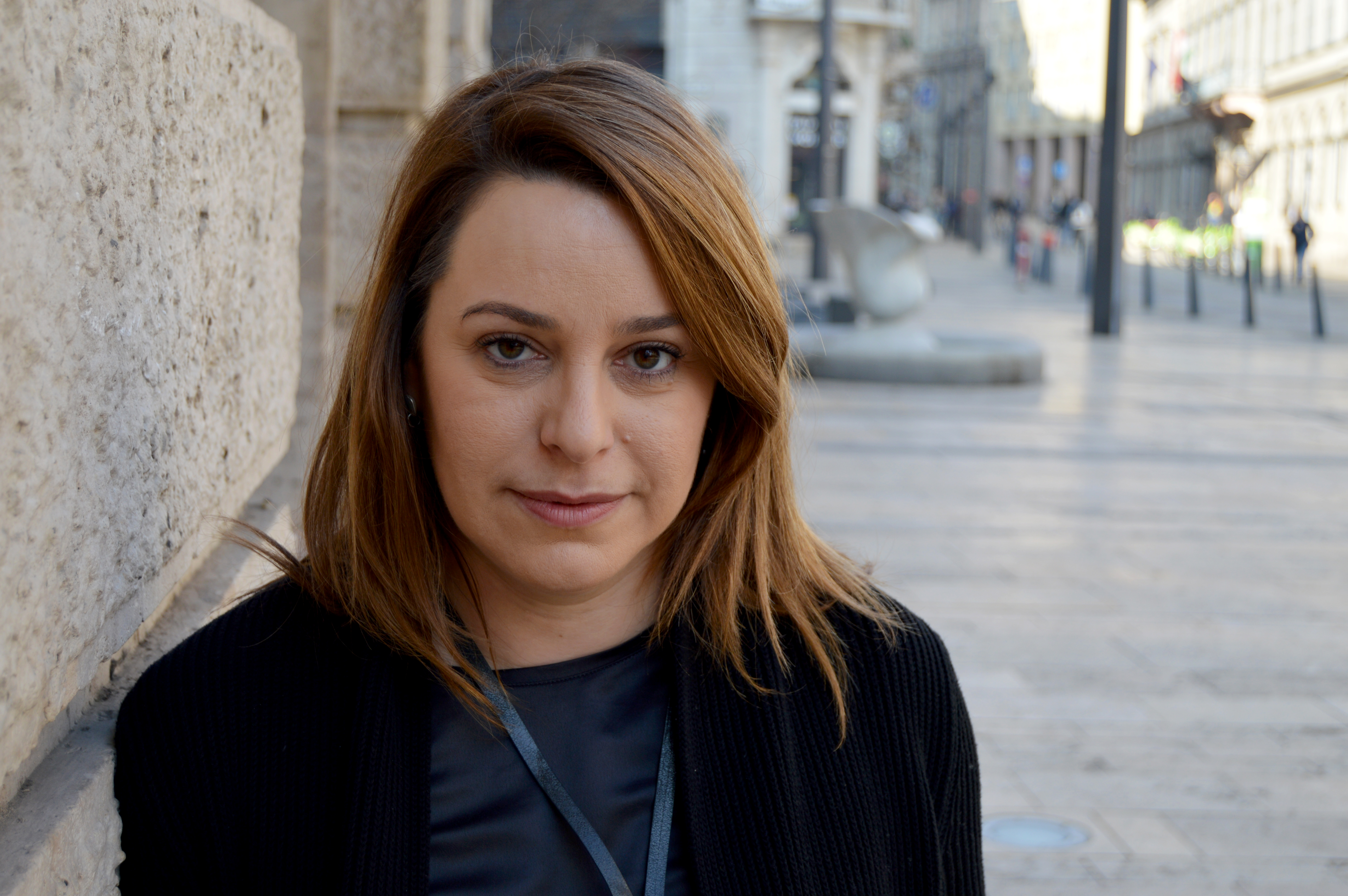
Hungarian human rights lawyer Márta Pardavi has been awarded the Civil Rights Defender of the Year Award 2019. As an outspoken critic of the Hungarian government and its policies, Márta is often smeared and her work discredited. The award is a recognition of her work of many years, fighting against the attempts to systematically dismantle democracy, normalisation of xenophobia and hate crimes in Hungary.
Márta Pardavi is the Co-chair of the Hungarian Helsinki Committee, one of Hungary’s leading human rights organisations. The Hungarian Helsinki Committee is a watchdog organisation that protects human dignity and the rule of law through legal and public advocacy methods. Being both vocal and successful in its activities, and particularly because of their work to support asylum seekers, the organisation has become a prime target of the government’s toxic campaigns.
“Democracy is under threat all over the world and now we see what authoritarians do when they get to power. They target critics, human rights defenders and treat marginalised groups as threats to society. We see this happening in Hungary, but also in other countries such as Poland. This award sends a very strong message, that our work is recognised, and that we as civil society organisations will continue to defend democratic values”, said Márta Pardavi.
Márta Pardavi, Civil Rights Defender of The Year 2019
“For many years, human rights lawyer Márta Pardavi has courageously defended civil and political rights in Hungary. She is leading the Hungarian Helsinki Committee’s work in the field of refugee protection, and with dignity and professionalism, confronts those who attempt to systematically dismantle civil society and normalise xenophobia and hate crimes. For her dedication and exceptional contribution to resist inhumane treatment of the most vulnerable, Márta is awarded the Civil Rights Defender of the Year 2019”, , said the Board of Civil Rights Defenders in its motivation.
During the first two decades of Hungary’s post-communist history, the country was a young but stable democracy, and a role-model of successful transition from authoritarianism to democracy. Today, Prime Minister Viktor Orbán has been in power almost a decade, a period during which Hungary has undergone dramatic changes. Too many posts in this blog have been devoted to this, see e.g.: https://humanrightsdefenders.blog/tag/hungary/.
….But despite this climate, human rights defenders and human rights organisations continue to challenge state policies and propaganda, and the public support for their activities is growing.
“Many civil society organisations are working to address this and while it was probably both unwanted and unintended, the Hungarian government’s pressure has made us better at working together, making us stronger. And the same is true for the government’s anti-NGO campaigns – we have seen that civil society support is growing as an unintended consequence of the state propaganda”, said Márta Pardavi.
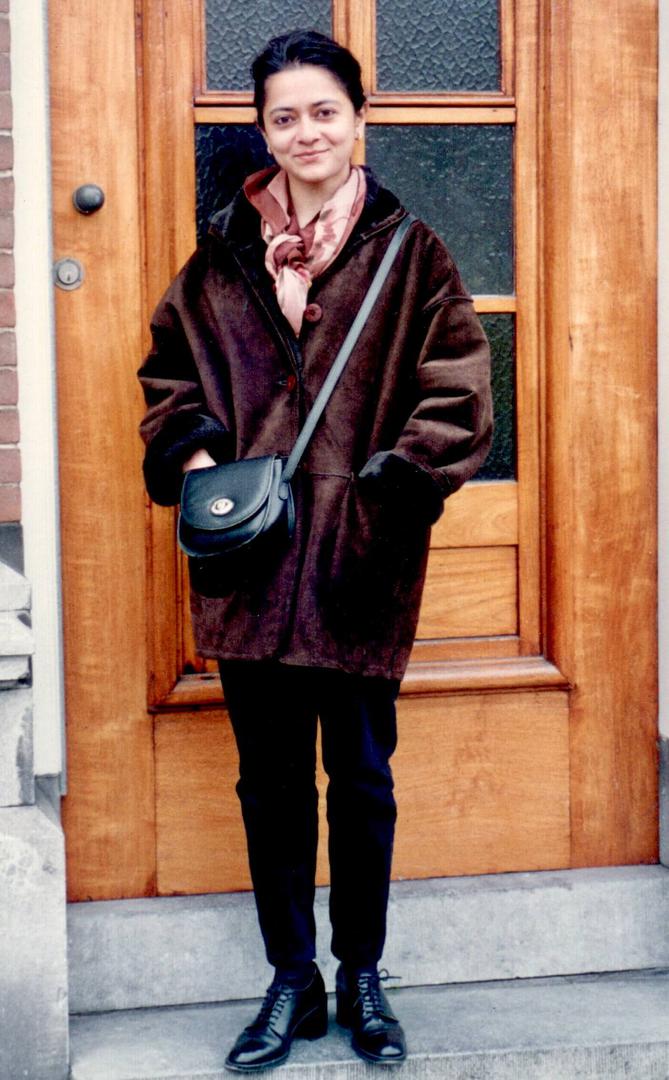
Tej had broad expertise in human rights law, international and domestic politics, post-conflict justice, and reparations mechanisms, and had also worked for the International Criminal Tribunal for the former Yugoslavia and the United Nations Special Rapporteur on violence against women. Her research for Human Rights Watch involved interviews with victims of human rights abuses – and those responsible for committing them. She often shuttled between interviews in remote areas of Nepal and Sri Lanka to the highest levels of government and the UN, briefing diplomats, government officials, the media, and local activists worldwide.
During extensive research on the civil wars in Sri Lanka and Nepal, Tej documented widespread sexual violence, torture, and other atrocities. She worked on important Human Rights Watch reports on war crimes, enforced disappearances, and lack of justice in Bangladesh, Nepal, and Sri Lanka, among many others.
In August 2017, Tej traveled to the Bangladesh-Myanmar border and was among the first human rights researchers to document the Myanmar military’s campaign of ethnic cleansing against Rohingya Muslims.
Tej worked tirelessly to protect human rights defenders and gain space for civil society groups to work freely and without fear. She spent countless hours helping activists, journalists, and their family members escape from threats of violence or arrest. She was always available to people in danger or need, no matter the time of day or time zone she was in. What mattered most to Tej in her human rights work was helping people live in safety and dignity.
Numerous families of victims have her phone number. She helped bring to safety Bangladeshi bloggers and LGBT activists targeted by militant groups. Families of those disappeared would call, not just to discuss their cases, but to share other news. Tej used to laugh with sadness about the number of letters and documents she wrote about accountability and transitional justice in Sri Lanka, saying that she had written the words so often she would sometimes recite them in her sleep.
In her work, Tej always had a special empathy for children. One case in Nepal involved a young girl who had been recruited by the Maoists, injured in combat, and then held and abused in military custody. Tej’s anger over the injustices that this child suffered fueled the energy she brought to her work, and her insistence with officials and diplomats that their governments make every effort to end the abuses.
For Tej, human rights work was always personal. She cared about the people she met and wanted to end their suffering. That decades after the genocide in Bosnia there could be another genocide in Myanmar appalled her. But once again she did what she excelled at, making sure that victims and survivors could tell their stories, and that policymakers could no longer ignore their suffering.
Tej graduated from Wellesley College and Cornell Law School. She is survived by her daughter, Maya, her pride and joy, who will attend Oxford University this year; her sister, Manjushree; and parents, Bhekh and Rita.
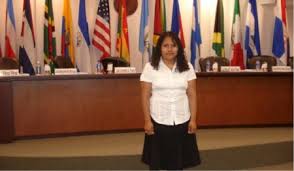
Last year ISHR interviewed Nayaali Ramirez Espinosa, a lawyer providing legal assistance to Mayan communities in the region of Holpelchén, in the State of Campeche in Mexico. She expresses her satisfaction with some legal achievements such as the indigenous consultation in the region. It was published on 13 December, 2018.
On 8 March 2019 LEXICON marked International Women’s Day – in partnership with Peace Brigades International,- with a profile of Valentina Rosendo Cantu, a human rights defender in Mexico. This is the story of a woman who fought for her dignity and transformed her trauma and suffering into resilience. Her case led to a groundbreaking verdict by the Inter-American Court in June 2018.
Turkey‘s anti-democratic mentality has not changed since its foundation, but it has never been as oppressive as today, said Turkish human rights defender Eren Keskin. Over the years, Keskin played a vital role in strengthening civil society awareness in Turkey. She became involved with the Human Rights Association (IHD) three years after its 1986 founding and headed its Istanbul branch for years. She has been arrested and imprisoned numerous times, accused of terrorist ties for defending Kurdish rights, and won several awards including the Aachen Peace Award, the Theodore Haecker Prize, the 2018 Helsinki Civil Society Award, the 2018 Anna Lindh Prize, and the 2017 Hrant Dink Award. A new travel ban is likely to stop her from coming to the Martin Ennals Award ceremony on 13 February 2019.
“Turkey’s undemocratic mentality has not changed since its foundation,” said Keskin. “There is no change in the mind or understanding of the state. I have been part of the struggle for human rights for nearly 30 years. I have not experienced a period in which freedom of thought and freedom of expression have been contravened this much. Turkey is more oppressive today than ever.
Keskin said she had been brought before the courts more than 100 times and convicted on numerous occasions.
“I see the struggle for the defence of human rights as respect for those who have died. It is out of respect for them that I am part of the struggle for human rights,” she said. “We experienced a lot of pressure, but our friends were killed. They were killed fighting for human dignity. I am lucky to be alive…I was assaulted twice with firearms, imprisoned and threatened with death, but never gave up.”
…Keskin became the editor-in-chief of the Kurdish Özgür Gündem newspaper from 2013 to 2016 as part of a solidarity campaign after Turkish authorities arrested its journalists. She was prosecuted for a number of articles that appeared in the newspaper as, under Turkish law, editors-in-chief can be indicted when the authors cannot be held to account. Keskin said 143 criminal cases had been brought against her for her time working at Özgür Gündem. “I have already been sentenced to 12-and-a-half years in prison, a 450,000 lira ($85,000) fine and travel ban,” she said. A court in October lifted the ban on Keskin travelling abroad, but last week she realised she had been given another one when authorities refused to issue her a passport. She had been nominated for the Martin Ennals Award for Human Rights Defenders and was planning to attend the award ceremony in Switzerland. [see: https://humanrightsdefenders.blog/2018/10/24/breaking-news-ennals-award-announces-its-3-finalists-for-2019/]
“People ask, ‘How do you live? How do you endure it?’” Keskin said. “For me, the job we do is a way of life and I have never regretted it.”
The Lutheran World Federation published on 18 January a profile of Colombia HRD María Ruth Sanabria: “40 years of taking risks to defend the rights of others“.
María Ruth Sanabria, Colombian human rights defender. Photo: LWF Colombia
Despite continued threats on her life, María Ruth Sanabria remains undeterred in the struggle for the rights of marginalized people. This includes a project called “Towards the territorialization of peace through women’s bodies, voices and words,” supported by The Lutheran World Federation (LWF) and the Evangelical Lutheran Church of America.
Ever since she was young, Sanabria always felt drawn to dealing with “the pain of others,” and describes this characteristic as the essence of a true human rights defender. Looking back at more than 40 years of advocacy work, she remembers the people who lost their lives because of their work as human rights defenders, a task that is becoming increasingly dangerous in Colombia. Sanabria is gravely concerned about the prevailing discrimination and attacks against human rights’ defenders in her country. She has been the target of attempts against her life. And, she is not the only one. According to the Piedra en el Zapato [A pebble in your shoe] report published by the organization Somos Defensores [We Are Advocates] in 2017, there were more than 500 attacks against human rights’ defenders, leading to 106 murders, 370 threats, 23 arbitrary detentions, nine case of legal prosecution and two instances of theft of sensitive information. [see also my: https://humanrightsdefenders.blog/2018/04/28/2018-latin-america-still-the-graveyard-for-environmental-human-rights-defenders/]
She was aged only 17, when she first became involved in the peasants’ struggle for land rights in San Alberto, a small village in the northern department of Cesar. She later became acquainted with the Indupalma’s Union of palm tree workers, many of who were persecuted and killed during the 1984 economic liberalization crisis, and the subsequent paramilitary attacks.
Following the murder of her husband, a peasant leader, in the early 1990s, and a series of threats against her, Sanabria fled San Alberto in 1994, and sought refuge in Arauquita town in the northeastern department of Arauca. She recalls arriving there with her four children, four boxes and 10,000 Colombian pesos (USD 3).
Fleeing meant she not only had to leave behind a major part of her life, but she also had to gain recognition as a woman leader and advocate in an unfamiliar environment. Gradually, she began to participate in political fora via the Unión Patriótica party, which saw 3,500 of its members murdered during the second half of the 1990s.
In 2001, she met Armando, her partner, who is also a human rights advocate. Together, they formed the Arauquita’s section of the Permanent Committee for the Defence of Human Rights – Arauca Chapter (CPDH). The threats from armed groups resumed, and there were new attempts against her life again, which forced her to seek refuge in Argentina in September 2006. She returned in 2007 only to witness the vicious attacks that paramilitary forces meted on peasant leaders and human rights advocates.
Her contact with the LWF started with a meeting involving its office in Colombia, CPDH and the Arauca Peasant Association (ACA), where joint work was initiated. The strong bond of trust that was established then is still going strong. Thanks to the LWF, “the CPDH was able to open its first offices in Arauquita and Fortul, although the latter was dismantled after the conflict took a turn for the worse,” she says. The office also acted as a center for workshops, which previously had been held under trees, in slums, and in the streets. “The people from the Lutheran World Federation have always been there for us through the toughest of times,” Sanabria concludes.