With her “Hack the patriarchy” laptop stickers, Nighat Dad is a digital warrior. But this human rights award winner and founder of Pakistan”s first cyber-harassment helpline still tears up as she describes receiving calls from women afraid of being killed by male relatives for using the internet. Nighat Dad established the help line in 2016 with prize money (100,000 euros) from the Dutch human rights award, the Tulip
Much of Pakistani society lives under the patriarchal, outdated code of so-called “honour” that systemises the oppression of women by preventing them from, for example, choosing their own husband or working outside the home. Activists have denounced pervasive, sometimes deadly violence by men — usually male relatives — against women who break those taboos. The situation is dire enough in the offline world.
But Pakistan is only just beginning to grapple with what violent notions of honour mean for women online, in a country where internet penetration is at 22 percent and growing, but digital literacy is low.
Much of the work the helpline does is to explain to women what recourse they have. Social media companies are playing ball, Dad says — some have even agreed to establish “escalation channels” for getting content off the internet quickly when a woman”s life is in immediate danger. But she warns that community guidelines developed by such companies, usually US-based, are not appropriate in Pakistan. “I think they need to do more,” Dad says. More than three years on, the Tulip money has run out. Now the helpline survives only by the grace of small grants from groups such as the Netherlands-based Digital Defenders Partnership, which supports rights activists.
…. She cites last year”s International Women”s Day march in Pakistan, which saw women turn out in unprecedented numbers loudly celebrating divorce and periods, among other things. The response was swift and shocking in its intensity, with Dad describing mullahs making rape and death threats against the march organisers in videos widely distributed online. The 2016 murder of social media star Qandeel Baloch has also impacted her, she says. Baloch divided Pakistan with her videos and selfies, tame by Western standards but provocative in Pakistan. She was strangled by her brother in 2016 in what has been called the country”s most high-profile “honour” killing.
“She was a hero for me… she did what she wanted to do, and not every woman can do this in Pakistan,” Dad says.
Dad says she cannot help but see the similarities between herself and Baloch. They are from similar backgrounds, both left abusive marriages, and both have gained fame by loudly challenging social taboos online — though admittedly not in quite the same way. Her murder “shook me badly,” she tells AFP. “It was enough to shake us all.”
International Human Rights Day, 10 December 2019, was celebrated or observed all around the world and there is no way to report on every event. Stil to add flavour here a selection of some 14 smaller and bigger events – for more details follow the links provided (and for last year’s anthology see references at the end):
There was of course the annual statement by UN High Commissioner for Human Rights Michelle BacheletRightly, these young people are pointing out that it is their future which is at stake, and the future of all those who have not yet even been born. It is they who will have to bear the full consequences of the actions, or lack of action, by the older generations who currently run governments and businesses, the decision-makers on whom the future of individual countries, regions and the planet as whole depends…We have a duty to ensure young people’s voices are heard. The Universal Declaration of Human Rights, adopted by the UN General Assembly on 10 December 1948, was a firm commitment by States to protect the rights of everyone – and that includes making it possible for future generations to uphold human dignity, equality and rights…..Climate harms will not be halted by national borders – and reactions based on hostile nationalism, or short-term financial considerations, will not only fail: they will tear our world apart. The struggles for climate justice and human rights are not a political quarrel. This is not about left or right: it is about rights – and wrongs… We need to mobilise across the world – peacefully and powerfully – to advance a world of rights, dignity and choice for everyone. The decision-makers understood that vision very clearly in 1948. Do they understand it now? I urge world leaders to show true leadership and long-term vision and set aside narrow national political interests for the sake of everyone, including themselves and all their descendants.
Pakistan: Human Rights Defenders asked the government to make serious efforts to provide fundamental rights. Human rights, labour rights and civil society activists called upon the government to make serious efforts for the provision of fundamental human rights and freedoms, especially the freedoms of association and expression, enshrined in the Constitution of Pakistan and the Universal Declaration of Human Rights. Addressing a joint press conference at the Karachi Press Club to mark International Human Rights Day, PILER joint director Zulfiqar Shah, human rights activists Naghma Shaikh and Saeed Baloch representing the Sindh Human Rights Defenders Network said the government should ensure the restoration of the freedom of expression and the freedom to association. They demanded that the government should bring in a law to protect the rights of human rights defenders as they stood up for the voiceless people…. They also demand fully restoring the freedom of expression, as it was a constitutional right of the people to express their thought. Access to the information right must be ensured, they said.
India: Activists say NHRC urgently needs to protect human rights defenders. The National Human Rights Commission should proactively protect the rights of ‘human rights defenders’, said activists at the national convention on rights of Dalit and Adivasi rights defenders in the capital on Tuesday. Human Rights Defenders appealed to the commission to proactively intervene in cases where the works of Dalit and Adivasi organisations were being obstructed. Activists said there were a growing attack on human rights defenders in India and said the need of the hour was collective action….On Human Rights Day, the convention highlighted the importance of the work of human rights defenders. Despite the country having national human rights institutions and over 160 state human rights institutions dealing with human rights, women, children, minorities, SCs, STs, right to information, persons with disabilities, and safai-karamcharis, these institutions have often failed to protect the human rights defenders, activists said. In addition to the usual challenges, women human rights defenders face gender-specific violations, such as rape and sexual violence which are used as tools for harassment, said activists. Caste discrimination has also presented a greater danger for women rights defenders belonging to the Dalit and Adivasi communities.
Cambodia: The Khmer Times reported that very differing opinions on the status of human rights in the Kingdom became apparent as various groups marked Human Rights Day at two venues in the capital. About 400 government officials and youth group members marked the day’s 71st anniversary at the Cambodia-Korea Cooperation Centre, while about 2,000 unionists and members of the public marked the day at Freedom Park.
Keo Remy, president of the Cambodian Human Rights Committee, at the CKCC said the government has always paid attention to the rights of citizens. “Our leaders prioritise peace and stability,” Mr Remy said. “Youths can make the country chaotic because of the words democracy and human rights. That is why we focus on youths and stability.” while..
Ath Thorn, president of the Coalition of Cambodian Apparel Workers’ Democratic Union, at Freedom Park said respecting the rights of workers has decreased over the years and it is a source of concern for many. “We see that respecting workers’ rights has decreased – investors do not pay attention to workers,” Mr Thorn said. “Investors need to consider the rights of workers.” He said garment factory workers are faced with decreasing salaries, overtime work, discrimination, short-term contracts, violence and imprisonment. The Cambodian Centre for Human Rights in a statement said the government has taken action to curb issues surrounding human rights, but it has not done enough. “We call on the government to encourage the celebration of Human Rights Day in Cambodia and acknowledge the benefit human rights have on society as a whole,” it said. “We implore the government to cease all arbitrary action and targetting of human rights defenders.” The CCHR also called for the charges against two former Radio Free Asia journalists and Kem Sokha to be dropped.
Palestine: the Addameer Prisoner Support and Human Rights Association reported that Palestinians marked International Human Rights Day following a year of nonstop violence and widespread human rights violations by Israeli Occupation Forces (IOF), against the Palestinian population used, as a form of collective punishment and a method to control Palestinian society. These consistent and systematic policies by the occupation include, extrajudicial executions and issuance of discriminatory legislations, mass arrests campaigns, torture, administrative detention, and medical negligence against Palestinian political prisoners…..In 2019, the (IOF) continued its crackdown and repression of human rights defenders. Currently, Addameer faces gag orders against around 40 of the cases they represent, who are in interrogation. The gag order prohibits us from releasing any information to the public regarding their detention status, or face grave consequences.
Philippines: Groups under the Ecumenical Voice for Human Rights and Peace in the Philippines (Ecuvoice) has submitted its first wave of reports on the human rights situation in the Philippines to United Nations Commissioner on Human Rights Michelle Bachelet on Monday, Dec. 9. This is in line with Resolution 41/2 which was adopted by the UN Human Rights Council (UNHRC) in July this year. “With the intensifying transgressions on the Filipinos people’s political rights and civil liberties, we are participating in this report-making process of the UN High Commissioner for Human Rights to pursue justice and accountability,” the convenor of Ecuvoice, Edita Burgos, said.
while
the international trade union movement was using international human rights day to call attention to the alarming attacks on human and labour rights defenders in the Philippines. The government’s targeting of trade unionists has been ramped up recently with fresh waves of arrests and violence. The international trade union movement is united in calling on the government to stop the attacks. The government is targeting labour activists through a practice known as red-tagging. By falsely identifying people who speak out against the government as associated to armed militia groups, the government purposely targets them with harassment and arrests and exposes them to violence and even murder….The International Labour Organization (ILO) has resolved to send a High-Level Tripartite Mission to the Philippines to investigate the human rights situation, but despite the urgency, the government has yet to receive the Mission. The international labour movement is undertaking solidarity events across the world to demand an end to the human rights abuses and the targeting of trade unionists. The ITUC has requested to meet with the representative of the Philippines to the EU on Human Rights Day and has outlined three key demands.
Turkey. Amnesty International Turkey and MetroPOLL Strategic and Social Research Center have jointly conducted a Survey on Perception of Human Rights. The results of the survey have shown that when they hear the expression of “human rights”, 65.2 percent of the participants think of “right to life” first. While “freedom of expression” comes to the minds of 33.5 percent, the right to a fair trial ranks third with 22.1 percent. According to the survey participated by 2,651 people from 28 cities and conducted in a face-to-face manner, 82.1 percent of the society think that fundamental rights and freedoms are violated in Turkey. Of these people, 58 percent say that fundamental rights are occasionally violated and 42 percent say that they are frequently violated. 62.6 percent of the participants are of the opinion that fundamental rights and freedoms are restricted in Turkey. While 72 percent of the young participants think that fundamental rights and freedoms are restricted, this rate falls as the age of the participant gets older. For more detials see the full report.
China:Samuel Wade posted an interesting piece in China Digital Times on how the Chinese government defends if record on human rights and how others see this. Here one excerpt out of manY:
On Tuesday, International Human Rights Day, spokesperson Hua Chunying mounted a familiar defense of China’s rights record at the Ministry of Foreign Affairs’ regular press conference …and went on to note that the MoFA and State Council Information Office would host the “2019 South-South Human Rights Forum” this week “with a view to adding new dimensions and injecting impetus into exchange and cooperation in the field of human rights.” ….. At Hong Kong Free Press, the Uyghur Human Rights Project’s Omer Kanat commented on the ‘South-South Human Rights Forum’ hailed by Hua Chunying,…… Among the enablers of Xi Jinping’s repression are states with disreputable recor[ds attracted to a possible exemption from universal standards that ‘human rights with Chinese characteristics’ affords. And again, if we could freely ask the populations who reside in these states how they feel about such a concept, there would be few advocates. Therefore, on Human Rights Day, we have a responsibility to defend those who defend universal values and be clear ‘never again’ has meaning. There is injustice everywhere and we must fight it. Uyghurs are among them, for example, the imprisoned Ilham Tohti, and in exile Rebiya Kadeer, Nury Turkel, Rushan Abbas, and Gulchehra Hoja, whose families have been detained and disappeared in East Turkestan because of their advocacy. The second ‘South-South Human Rights Forum’ is opening in Shanghai for this year’s Human Rights Day. The dangerous fiction of the ‘Beijing Declaration’ that there are exceptions to the universality of rights should be firmly resisted.
Afghanistan ‘Human Rights’ should be more focused during peace talks. MENAFN (Afghanistan Times) reported that UN Special Representative for Afghanistan and head of UNAMA, Tadamichi Yamamoto, in a gathering has expressed concerns regarding the human rights achievements, saying that these gains should be saved in the ongoing negotiation with the Taliban. He called on the National Security Council to consider perseverance of human and civil rights in talks with the Taliban, adding ‘Afghanistan Independent Human Rights Commission’s role is very important in the peace process, every voice that raise should be heard and rights of the victims should be observed.‘.. Moreover, head of AIHRC, Shaharzad Akbar has called on the Taliban to legislatively recognize the values of human rights. …There are massive concerns about the violation of achievements of human rights and freedom of speech in the peace negotiation with the Taliban militants. The Taliban has back in 1990 ruled Afghanistan with the sever restriction on girls and school students. The cultural Taboos and less freedom of women are one of the other key issues that have brought sever concerns from Afghan and foreign officials.
The NGO WITNESS used the occasion to publish its ANNUAL REPORT which looks at key successes from July 2018-June 2019 (fiscal year 2019). See the video clip:
Malaysia. “What happened to Harapan’s vow to improve human rights?” asks Jasmine Choin an open letter:…’When Pakatan Harapan won a dramatic victory in the GE14 elections, they vowed to steer the country forward with human rights as one of their top priorities. However, since their win, we have seen a heavy regression in the area. The kind of regression that has gotten us worried about our present and our future as a modern, fair, and humane nation. From the Suaram 2019 report, several areas of abuse were glaring. One was the treatment of prisoners. The government has yet to abolish the Security Offences (Special Measures) Act 2012, the Prevention of Crime Act 2015 and the Dangerous Drugs (Special Preventive Measures) Act 1985……….The list of human rights abuse is getting longer and the frustration we feel with our government is reaching boiling point. Malaysia is considered a modern and democratic country, so why are we so far behind when it comes to human rights? The government should stop pandering to the religious majority and stop focusing on external matters. The rights of the rakyat are being abused.
Netherlands/Sri Lanka. The Dutch Ambassador Gonggrijp spoke at an event for Human Rights Day 2019 organized by Equal Grounds Sri Lanka saying inter alia:
…Sri Lanka has recently known a long period of conflict, during which human rights were under pressure. The reconciliation process after the end of the war has been slow. And I hear people say: what is the point of looking back, let’s move forward. To my opinion it is about recognition and human dignity. To that respect we should also recognize the progress that has been made: the Office on Missing Persons has been mandated to restore the rights of every Sri Lankan of any background, language or religion, to know what happened to their loved ones. And the work of the Sri Lanka Human Rights Commission, as an independent entity, mirrors the country’s commitment to uphold human rights and civil freedoms. The Netherlands supports this and stands ready to help Sri Lankan institutions like these with capacity building and technical expertise…..
The policy of Netherlands is aimed at 1) abolishing the criminalization of homosexuality, 2) opposing discrimination on the basis of sexual orientation and gender identity and 3) achieving wider social acceptance of gay people. In the Netherlands we have taken the first step of decriminalization a long time ago, but we are also still working on stopping discrimination and promoting acceptance. As I hope Sri Lanka will also take this first step in the near future, I also recognize that this will not solve all issues the LGBTI community is facing. It is key to inform people about the rights they have, regardless of their sexual orientation. To empower them to take responsibility, stand up or seek justice. It is also key to educate and make people from outside the community aware of the harassment and discrimination that people from the LGBTI community face. In order to also empower them to show solidarity and to take action if necessary. Every form of emancipation has been and still is a struggle. It starts with a ‘fight for your rights’. This is why this initiative of Equal Ground is so important, because – and allow me to quote again:
Mongolia / EU: Montsame reported that on the occasion of International Human Rights Day the Delegation of the European Union to Mongolia together with the Embassies of France and Italy presented European Union Human Rights Defenders’ Award (a national award!) to nine people, who are making their efforts to human rights protection…..Unfortunately, we are still observing human rights violations in many countries, especially gender and racial discrimination and discrimination in sexual orientation. Therefore, the EU Delegation to Mongolia, the Embassies of France and Italy and the Embassies of other countries are showing respect to human rights activists in Mongolia. Protection of human rights is one of main principles of the European Union, which defines its internal, and foreign policies and it is belonged to everyone. We will ever protect and encourage the people who endeavor for human rights, “ Ambassador of the European Union to Mongolia Traian Laurentiu Hristea said at the opening of the award presenting ceremony. The Ambassador also highlighted that the event will be traditionally held in the future.
MEXICO An indigenous activist who documented and denounced abuse committed by the military in Guerrero is this year’s winner of the National Human Rights Prize. Obtilia Eugenio Manuel was awarded the prize at Tuesday’s presidential press conference by National Human Rights Commission (CNDH) president Rosario Piedra Ibarra. The human rights chief said that among the military abuses that have been documented by Eugenio are the forced sterilization, sexual assault and sexual torture of indigenous women. Piedra also said the activist has received numerous threats and noted that she was abducted for four days earlier this year. ..“We don’t want one more rapist in our way,” Eugenio said, making a reference to the Chilean feminist anthem that has been performed around the world in recent weeks. Also at Tuesday’s press conference, Piedra recognized the human rights work of Margarito Díaz González and presented an award to his widow, Modesta Chávez de la Rosa. A former member of the Wirikuta security council and an advocate for environmental and indigenous rights, Díaz was murdered in Nayarit last year. Piedra recalled that the activist opposed the construction of a dam and other projects in San Luis Potosí and the development of Canadian-owned mines on sacred sites of the Huichol people.
If you are interested to compare with last year, see:
On 22 September 2019 Indian Spice published an old video (from 12 April 2012) in which former UN High Commissioner for Human Rights Navi Pillay talks about the human cost of homophobia and transphobia. It may date back a few years but the message is still relevant!
All over the world, lesbian, gay, bisexual and transgender people of all ages face harassment and discrimination — at work, at home, at school and in many other everyday situations.
In many countries, national laws are skewed against them. In some 76 States, having a partner of the same sex is a criminal offense. People are being arrested, singled out for physical attack, being tortured, even killed — just for being in a loving relationship.
When I raise these issues, some complain that I’m pushing for “new rights” or “special rights” for lesbian, gay, bisexual and transgender people. But there is nothing new or special about the right to life and security of person, the right to freedom from discrimination. These and other rights are universal … enshrined in international law but denied to many of our fellow human beings simply because of their sexual orientation or gender identity. We cannot let these abuses stand.
We know what needs to be done. States must repeal discriminatory laws and ban discriminatory practices: punish violence and hatred … not love. And we should all challenge homophobic attitudes. The best antidote is education — for children and adults alike. Reach out. Talk. Learn. And help make our world safer and better for everyone. This is an historic moment: more and more States recognize the need for action and are speaking up — including here at the United Nations.
With your help and the support of millions of people who believe in universal human rights, we will secure equal rights for every last one of us.
In a video Op-Ed in the NYT of 6 May 2019, former U.N. High Commissioner for Human Rights, Zeid Ra’ad Al Hussein, argues that world leaders are weak, shortsighted and mediocre, and no longer willing or able to defend human rights. Abuses used to be called out and stopped, and human rights offenders had something to fear. Today, they are met with silence instead. Zeid Ra’ad Al Hussein served as the United Nations High Commissioner for Human Rights from 2014 to 2018.
Previously he spent 18 years as a diplomat helping to establish the International Criminal Court and serving on the Security Council. He is now the Distinguished Global Leader in Residence at the Perry World House, University of Pennsylvania.
Last year ISHR interviewed Nayaali Ramirez Espinosa, a lawyer providing legal assistance to Mayan communities in the region of Holpelchén, in the State of Campeche in Mexico. She expresses her satisfaction with some legal achievements such as the indigenous consultation in the region. It was published on 13 December, 2018.
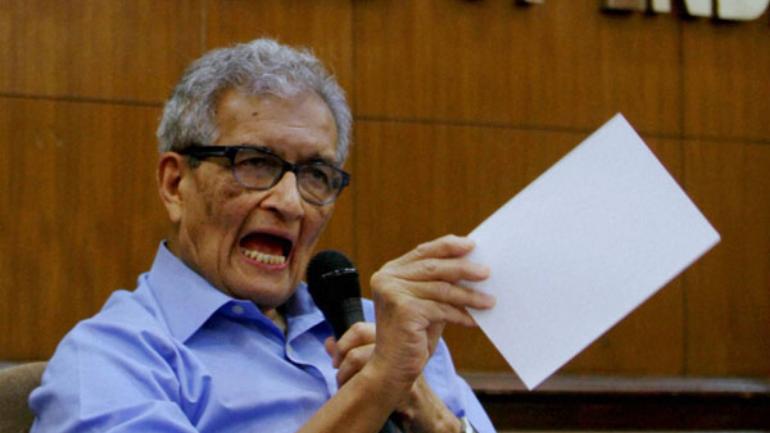
Amartya Sen said that many institutions in the country are under attack. (Photo: PTI)
Nobel laureate Amartya Sen on Sunday 6 January 2019 came out in support of actor Naseeruddin Shah, who recently stoked a controversy with his remark on mob violence and appeared in a video for Amnesty India against alleged government crackdown on NGOs, and said attempts were being made to “disturb” the actor. In a 2.13-minute solidarity video for Amnesty, Shah had said on 4 January that those who demand rights are being locked up. [for example: https://humanrightsdefenders.blog/2018/10/07/india-attacks-on-human-rights-defenders-abound-under-unlawful-activities-prevention-act/ ]
On being asked about the actor’s comments, Sen said, “We must protest against such attempts to disturb the actor. What has been happening (in the country) is objectionable. It should stop.” The 85-year-old economist Amartya Sen said that many institutions in the country are under attack, and their freedom is being encroached. “Even journalists are facing harassment,” he said.
Further talking about the troll attacks against personalities like Shah, Sen said, “Losing the ability to tolerate others is a serious cause for concern, it points to losing of the ability to think and analyse.”
Under the hashtag #AbkiBaarManavAdhikaar, Amnesty India had claimed that India has witnessed a massive crackdown on freedom of expression and human rights defenders. In a solidarity message in Urdu, Shah had said, “Artistes, actors, scholars, poets are all being stifled. Journalists too are being silenced.” “In the name of religion, walls of hatred are being erected. Innocents are being killed. The country is awash with horrific hatred and cruelty“. Last month, the 68-year-old also said that the death of a cow had acquired more significance than that of a police officer in the country. He was speaking in the wake of a mob violence that broke out in Uttar Pradesh’s Bulandshahr on December 3 over alleged cow slaughter in the Mahaw village. The violence led to the death of two men, including a police inspector.
The National Award-winning actor’s visit to a literary fest in December was cancelled following protests by Hindu outfits over his comments on mob violence.
On 13 December 2018 ISHRGlobal published this interview with Mariana Zaragoza. “Our countries are restricting migrants’ rights, and there is always something we can do to demand full protection of people“, says Mariana Zaragoza in her interview. Mariana works in the immigration programme at the Ibero-American University of Mexico and she advocates for migrants and refugees’ rights.
The European Centre for Constitutional and Human Rights, ECCHR, uses the emancipatory potential of law in order to unmask unjust power relations and enforce social justice. Its goal is to change or re-create legal norms in the spirit of global justice. As part of its 10-year anniversary it created a new ECCHR department: the Institute for Legal Intervention.The Institute will complement ECCHR’s litigation and will encompass the Education Program, professional exchanges in transnational networks, cooperation with universities and dialogue with artists as well as cultural and social movements. The aim of the Institute is to initiate important legal debates, to foster young human rights lawyers and to deepen collaboration between disciplines.
All this thanks to the generous support of the Bertha Foundation. The Video clip above gives the details.
Yesterday, 3 May 2018, was World Press Freedom Day and many noteworthy activities took place. The Economist and many other newspapers of course paid attention with grisly statistics from the Committee to Protect Journalists and other sources. It was also a time to award courageous journalists and cartoonist; just to mention a few:
Musa Kart was announced as the 2018 laureate of the International Press Cartoon Prize by Cartooning for Peace.
The 2018 International Press Cartoon (or Drawing) Prize, presented biannually in Geneva, was awarded to the Turkish cartoonist who was recently sentenced to almost four years in prison for “aiding terrorism”. He is a 64-year-old artist working with the Turkish daily newspaper Cumhuriyet and was described as a “free spirit and a remarkable artist” by Swiss cartoonist Chappatte, a member of the jury.
It was also the day of the presentation of the first Ari Rath Prize for Critical Journalism (established to honour journalists who have rendered outstanding services to critical reporting on immigration, expulsion and asylum, committed to respect for human rights, in the spirit of the former editor-in-chief of the Jerusalem Post, who died in January 2017). Austrian journalist Alexandra Föderl-Schmid was the laureate.
The Stockholm Center for Freedom (SCF) partnered with the London-based International Observatory of Human Rights (IOHR) to commemorate World Press Freedom Day in Stockholm with an event focused on Turkey, which leads the world in the highest number of journalists in jail. According to SCF data, 258 journalists and media workers were in jail as of today, with 59 of them already convicted on dubious charges of terrorism, defamation and coup plotting. In addition, 142 Turkish journalists who were forced to go into exile or still remain at large in Turkey are wanted for arrest by authorities.
Nine NGOs wrote on World Press Freedom Day a joint letter expressing deep concern over the continued arbitrary detention of Tashi Wangchuk, a Tibetan language advocate arrested in 2016 after giving an interview to the New York Times. Tashi Wangchuk has since been tried for “inciting separatism,” a politically motivated charge that violates his rights to freedom of expression and association. [Tashi Wangchuk began raising public concern for the lack of rightful Tibetan-language education …In late 2015, he spoke with the New York Times in an interview about his attempts to promote the teaching of Tibetan; he insisted the interview be on the record. A journalist from the New York Times also accompanied him to Beijing, where Tashi Wangchuk attempted to file a lawsuit to ensure local authorities guarantee the provision of Tibetan language education. The result was an article and video documentary featured in the New York Times in November 2015.
In his article, Tashi Wangchuk insisted that his language advocacy was peaceful and non-political. His attempts to persuade the Chinese government to guarantee Tibetan language instruction were conducted through official channels and he made it clear that he was not advocating Tibetan independence. Instead, his main focus was ending the destruction of Tibetan language and culture. Despite taking these precautions, Tashi Wangchuk was arrested on 27 January 2016, held in an unknown location and later stood trial in a closed session. See also:
And then there were many smaller events all around the globe that also deserves attention, such as Amnesty International Nepal voicing support to journalists as human rights defenders (such as Charan Kumar Prasai and Subodh Pyakurel and Rajan Prasad Kuikel).
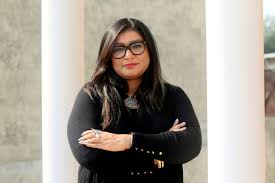 With her “Hack the patriarchy” laptop stickers, Nighat Dad is a digital warrior. But this human rights award winner and founder of Pakistan”s first cyber-harassment helpline still tears up as she describes receiving calls from women afraid of being killed by male relatives for using the internet. Nighat Dad established the help line in 2016 with prize money (100,000 euros) from the Dutch human rights award, the Tulip