Posts Tagged ‘USA’

Vietnamese blogger ‘Mother Mushroom’ released

October 18, 2018
Quynh, one of Vietnam's most prominent dissidents, was serving a 10-year-sentence for anti-state propaganda [AP]
Quynh, one of Vietnam’s most prominent dissidents, was serving a 10-year-sentence for anti-state propaganda [AP]

Vietnam has released dissident blogger Nguyen Ngoc Nhu Quynh, also known as “Mother Mushroom“. [https://humanrightsdefenders.blog/2017/07/06/the-kind-of-blogging-that-got-mother-mushroom-10-years-imprisonment-in-vietnam/]. Quynh, 39, was freed from jail and put on a plane to the United States where her mother and children live. She boarded a flight to Houston around noon Wednesday 17 October 2018, said Martin Gemzell, Asia program director for Civil Rights Defenders, a group based in Sweden.

Quynh, one of Vietnam’s most well-known activists, whose recognisable pen name “Me Nam” comes from her daughter’s nickname “mushroom”, was jailed in June 2017.  She is an outspoken critic of Vietnam’s one-party state and gained notoriety with her writing about the environment, politics and deaths in police custody. Quynh came to prominence when she received the Civil Rights Defender of the Year award in 2015 and also the (USA) International Woman of Courage Award in 2017.

The overly broad, ill-defined scope of this law makes it all too easy to quash any kind of dissenting views and to arbitrarily detain individuals who dare to criticize government policies,” former UN High Commissioner for Human Rights Zeid Ra’ad Al Hussein said in 2016.

While the Vietnamese authorities have not given a reason for the release of Quynh, it coincided with a visit to Vietnam by US Secretary of Defence Jim Mattis.  Quynh is the second Vietnamese dissident released this year. A prominent human rights lawyer, Nguyen Van Dai, was released from prison in June and went to Germany.

[See also: https://humanrightsdefenders.blog/2017/11/18/overview-of-recent-campaigning-for-human-rights-defenders-in-vietnam/]

https://www.wral.com/mother-mushroom-vietnamese-activist-is-said-to-be-released/17922631/

https://www.aljazeera.com/news/2018/10/dissident-vietnamese-blogger-mother-mushroom-released-181017100207668.html

Becca Heller, human rights lawyer, gets MacArthur Genius scholarship 2018

October 5, 2018

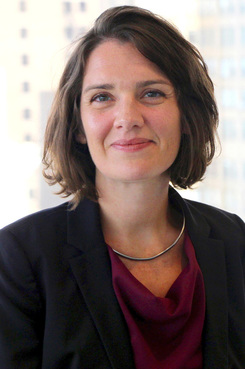
Portrait of Becca Heller

Becca Heller – a Human Rights Lawyer with the International Refugee Assistance Project in New York – became a MacArthur ‘Genius” scholar in 2018. She has been mobilizing the resources of law schools and law firms to defend the rights of refugees and improve protection outcomes for many of the world’s most at-risk populations.

ABOUT BECCA’S WORK 

Becca Heller is a human rights lawyer mobilizing the resources of law schools and law firms to defend the rights of refugees and improve protection outcomes for many of the world’s most at-risk populations. She is the director and co-founder of the International (originally Iraqi) Refugee Assistance Project (IRAP), which provides legal services to individual refugees as they navigate labyrinthine application, appeal, and resettlement processes under U.S. and international law. 

IRAP functions as a nimble, “virtual” public interest law firm that partners with volunteer attorneys who work pro bono on urgent refugee cases, often teamed with law students.  Founded as a student organization at Yale Law School in 2008 to help Iraqis displaced by war safely resettle in the West, IRAP has since established chapters at 29 law schools and partnerships with more than 100 law firms and has expanded its reach to refugees from countries throughout the Middle East and North Africa. Cases are taken on through IRAP’s field offices in Jordan and Lebanon as well as referrals from the United Nations High Commissioner for Refugees, among numerous other organizations, with a special focus on highly vulnerable individuals, such as children with medical emergencies; Iraqi and Afghan wartime allies; those persecuted for reasons of religion, sexual orientation, or gender identity; and survivors of gender-based violence. Lessons learned through individual cases have also led IRAP to advocate for systemic reforms that benefit broader refugee populations, such as improved Special Immigrant Visa processing for Iraqis and Afghans facing threats because of their service to the U.S. military.

More recently, Heller and IRAP played a prominent role in responding to the January 27, 2017, executive order restricting people from seven majority Muslim countries from entering the United States. Anticipating the signing of the order, Heller and colleagues alerted IRAP’s vast network of volunteer lawyers to go to airports to assist those who might be detained. Hameed Darweesh, an IRAP client who served as a translator for the U.S. Army in Iraq, became the lead plaintiff in a lawsuit that resulted in a nationwide stay preventing the deportation of people with valid visas and refugee status.  As the number of forcibly displaced people reaches unprecedented levels worldwide, Heller is working to expand pathways to safety for those fleeing persecution and educating a new generation of lawyers about the importance of access to counsel for those whose lives hang in the balance.

BIOGRAPHY

Becca Heller received a B.A. (2005) from Dartmouth College and a J.D. (2010) from Yale Law School. She has served as co-founder and director of the International Refugee Assistance Project since 2008 and was a visiting clinical lecturer at Yale Law School from 2010 to 2018. Heller has authored articles in Foreign Policy and the Stanford Social Innovation Review and is a frequent speaker on immigration and refugee issues.

https://www.macfound.org/fellows/1013/

Nominees for the 2018 Sakharov Prize announced by European Parliament

September 30, 2018

The nominees for the 2018 Sakharov Prize for Freedom of Thought have been announced on 27 September (Nominations can be made by political groups and groups of at least 40 MEPs – remarkable is the more active role played by right-wing groups in the EP, see the last two nominees):

Oleg Sentsov, a Ukrainian film director, convicted to 20 years in prison for “plotting terrorist acts” against the Russian “de facto” rule in Crimea. Amnesty International has described the court process as “an unfair trial before a military court”. He has become a symbol for the approximately 70 Ukrainian citizens illegally arrested and convicted to long prison sentences by the Russian occupation forces in the Crimean peninsula. He has been on hunger strike since May 2018. Nominated by EPP.

NGOs protecting human rights and saving migrant lives across the Mediterranean Sea. Since 2015, NGOs from across the EU have launched search and rescue operations in the Mediterranean to try and save the lives of refugees struggling to reach EU shores. The NGOs are: Boat Refugee Foundation, Jugend Rettet, Lifeline Rescue Boat, Médecins Sans Frontières International, MOAS, Proactiva Open Arms, PROEM-AID, Save the Children, Sea Eye, Sea Watch, and SOS Mediterranée. Nominated by S&D and the Greens/EFA.

Seyran Ateş, a German lawyer of Turkish origin, fighting against political and religious extremism and the oppression of women. She was behind the establishment of the Ibn Rushd Goethe Mosque in Berlin, where men and women can pray together and has received numerous death threats and has to have round the clock protection. She was nominated by ECR, Hans-Olaf Henkel and 40 other MEPs for her “commitment to the protection of human rights and her devotion to a modern and open Islam”.

Caesar is the code name of a former Syrian military photographer who smuggled more than 55,000 pictures out of Syria exposing the war atrocities. Their authenticity is confirmed by the Human Rights Watch. Caesar’s photographs will play a vital role in building criminal and civil cases against those responsible for the crimes documented. Nominated by ALDE.

Nasser Zefzafi is the leader of Hirak, a mass protest movement in the Rif region, Morocco, fighting corruption, oppression and abuse of power. He was arrested in May 2017 and sentenced to 20 years in prison for “conspiracy against the security of the state”. On August 2018, King Mohammed VI pardoned 188 Hirak activists, but Zefzafi was not among them. At the end of August he went on hunger strike to denounce his conditions of detention. Nominated by GUE, Kati Piri, Judith Sargentini, Marie-Christine Vergiat and 39 other MEPs for his fight “against oppression and abuse of power”.

Dewayne Johnson is a former groundskeeper from the US who has just won a landmark case against Monsanto. He was the first person to take Monsanto to trial over allegations that the chemicals sold by the company under the herbicide brand Roundup cause cancer. At the end of the process Dewayne had just months to live, yet he took the stand and described his pain and suffering. Nominated by EFDD as an inspiration “for those afraid to go to court and defend their rights”.

AfriForum is an NGO that aims to protect the rights of minorities in South Africa, with a specific focus on the rights of Afrikaners. It focuses on raising national and international awareness about farm attacks, murders and the expropriation of farm land without compensation, which threatens property rights, food supply and food security. Nominated by ENF.

Mary Wagner is a Canadian activist who has been arrested on multiple occasions and accused of “disturbing the business” of an abortion clinic in Toronto. She remained in prison for not complying with a probation order to stay away from abortion clinics. She was nominated by Marek Jurek and 41 other MEPs for her work “safeguarding the rights of those who cannot speak for themselves”.

For more information this award and 2 others with Sakharov in the name: http://trueheroesfilms.org/thedigest

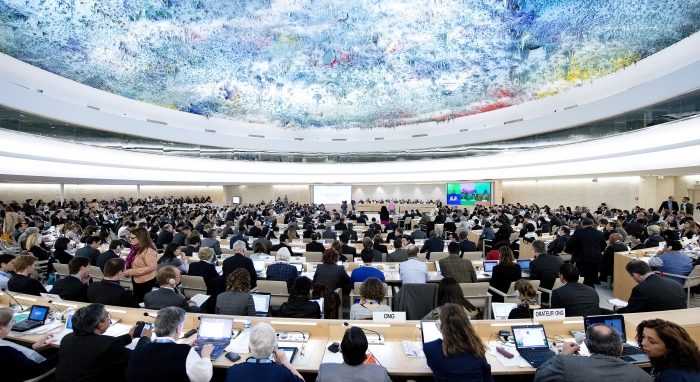
In spite of or because of the US’ absence, the 39th Human Rights Council considered a relative success

September 29, 2018

Civil society organisations welcomed significant outcomes of the Human Rights Council’s 39th session, including the creation of independent investigative mechanism on Myanmar, the renewal of the mandate of the Group of Eminent Experts on Yemen and the Commission of Inquiry on Burundi, and a dedicated space on the Council’s agenda in 2019 to discuss the human rights situation in Venezuela. [see alsohttps://humanrightsdefenders.blog/2018/09/08/many-hrd-issues-at-the-39th-session-of-the-un-human-rights-council/]

In a joint statement, several NGOs (ISHR The African Centre for Democracy and Human Rights Studies (ACDHRS), Amnesty International, Article 19, Center for Reproductive Rights. CIVICUS, DefendDefenders, FIDH, Forum Asia, Human Rights House Foundation (HRHF), Human Rights Watch, International Commission of Jurists) welcomed the Council’s adoption of landmark resolutions on several country situations:

On Myanmar, the creation of the independent investigative mechanism is an important step towards accountability for the horrific crimes committed in Myanmar, as elaborated in the Fact Finding Mission’s report to this session. The overwhelming support for the resolution, notwithstanding China’s shameful blocking of consensus, was a clear message to victims and survivors that the international community stands with them in their fight for justice. 

On Yemen, the Council demonstrated that principled action is possible, and has sent a strong message to victims of human rights violations in Yemen that accountability is a priority for the international community, by voting in favor of renewing the mandate of the Group of Eminent Experts to continue international investigations into violations committed by all parties to the conflict. 

Furthermore, the leadership by a group of States, including Latin American countries, on the landmark resolution on Venezuela, was as an important step for the Council applying objective criteria to address country situations that warrant its attention. The resolution, adopted with support from all regions, sends a strong message of support to the Venezuelan people. By opening up a space for dialogue at the Council, the resolution brings scrutiny to the tragic human rights and humanitarian crisis unfolding in the country.  

The renewal of the mandate of the Commission of Inquiry (CoI) on Burundi will enable it to continue its critical investigation and work towards accountability. However, the Council failed to respond more strongly to Burundi’s record of non-cooperation and attacks against the UN human rights system. [see alsohttps://humanrightsdefenders.blog/2016/10/26/enough-is-enough-ngos-call-for-burundi-suspension-from-un-human-rights-council/]

The Council also adopted a resolution on Syria, which among other things condemns all violations and abuses of international human rights law and all violations of international humanitarian law committed by all parties to the conflict.

However, on other country situations including China, Sudan, Cambodia and the Philippines, the Council failed to take appropriate action. 

On Sudan, the Council adopted a weak resolution that envisions an end to the Independent Expert’s mandate once an OHCHR office is set up; a “deal” Sudan has already indicated it does not feel bound by, and which is an abdication of the Council’s responsibility to human rights victims in Sudan while grave violations are ongoing. At a minimum, States should ensure the planned country office monitors and publicly reports on the human rights situation across Sudan, and that the High Commissioner is mandated to report to the Council on the Office’s findings.  

The Council failed to take action on the Philippines, in spite of the need to establish independent international and national investigations into extrajudicial killings in the government’s ‘war on drugs’, and to monitor and respond to the government’s moves toward authoritarianism. 

In addition, the Council continued with its weak response to the deepening human rights and the rule of law crisis in Cambodia, failing to change its approach even when faced with clear findings by the Special Rapporteur demonstrating that the exclusive focus on technical assistance and capacity building in the country, is failing.

Many States, NGOs and the High Commissioner, raised concerns about China’s human rights record, specifically noting serious violations of the rights of Uyghurs and other predominantly Muslim minorities in Xinjiang province. It is regrettable that States did not make a concrete and collective call for action by China to cease the internment of estimates ranging up to 1 million individuals from these communities. 

On thematic resolutions, the Council adopted by consensus a resolution on equal participation in political and public affairs, as well as a resolution on the safety of journalists. The latter sets out a clear roadmap of practical actions to end impunity for attacks.  

The Council also adopted by consensus a resolution on preventable maternal mortality and morbidity and human rights in humanitarian settings. Women and girls affected by conflict have been denied accountability for too long. The implementation of this resolution will ensure that their rights, including their sexual and reproductive health and rights, are respected, protected and fulfilled. 

Finally, the Council’s first interactive dialogue on acts of reprisals and intimidation was an important step to ensure accountability for this shameful practice. More States need to have the courage and conviction to stand up for human rights defenders and call out countries that attack and intimidate them. [https://humanrightsdefenders.blog/tag/reprisals/]

Read the full statement here.

Nominations for the 2019 Dodd human rights prize open

July 23, 2018

The public is being invited to submit nominations for the human rights prize awarded biennially by the University of Connecticut. For more on the Thomas Dodd Human Rights Award see: http://trueheroesfilms.org/thedigest/awards/thomas-j-dodd-prize-in-international-justice-and-human-rights.

Nominations are being accepted online through 1 October.

See also: https://humanrightsdefenders.blog/2017/02/04/physicians-for-human-rights-gets-dodd-human-rights-award/

https://www.theday.com/statenortheast-news/20180721/public-invited-to-submit-nominations-for-dodd-human-rights-prize

US withdraws from UN Human Rights Council: NGOs make clear their position

June 26, 2018

A group of 18 NGOs sent a joint letter to US ambassador to the United Nations Nikki Haley in response to a letter sent by Haley to the organisations after the US withdrawal from the UN Human Rights Council. On 17 May 2018, 18 NGOs had sent private letters to Member States urging them to not support the US proposal to reopen the Council’s institutional framework at the General Assembly.  Read the joint letter below.

Dear Ambassador Haley,

We write in response to your letter of 20 June 2018, in which you suggest that NGOs are somehow responsible for your decision to withdraw from the Human Rights Council. The decision to resign from the Council was that of the US administration alone. We had legitimate concerns that the US’s proposal to reopen the Council’s institutional framework at the General Assembly would do more harm than good. We see it as our responsibility to express those concerns and would do so again.

Although the Human Rights Council is not perfect, it does play an essential role. It makes a significant contribution to strengthening human rights standards, providing protection and justice to victims, and promoting accountability for perpetrators. The Council and its mechanisms have played a key role in securing the freedom of detained human rights defenders, and investigating rights violations in Syria, Yemen, Burundi, Myanmar, South Sudan, Sri Lanka and North Korea, to name but a few. It continues to address thematic issues of global concern including non-discrimination, freedom of expression online and offline, freedom of assembly, housing, migration, counterterrorism, and the protection of the rights of women, rights of LGBTI people, and rights of people with disabilities.

As you know, we are independent organizations that do not work on behalf of any government. We focus on building support for policies we believe will better the lives of those most affected by abuse –  which does mean we are sometimes opposed to proposals laid out by certain governments, or the proposed means of pursuing them, especially when we believe such an initiative could be more harmful than not.  With regard to the Council, our goal continues to be strengthening and supporting reform efforts that are ongoing in Geneva to ensure that they are informed by the experience and expertise of national and regional level actors, including rights-holders, human rights defenders and other civil society actors, victims, survivors (and their representatives).

We are committed to the international system, including the Human Rights Council, and to ensuring the system is fit for the purpose of promoting and protecting human rights. We will continue to work towards those goals.

Signatories:

  1. Amnesty International
  2. ARTICLE 19
  3. Asian Forum for Human Rights and Development (Forum-Asia)
  4. Asian Legal Resource Centre (ALRC)
  5. Cairo Institute for Human Rights Studies
  6. Centro de Estudios Legales y Sociales (CELS)
  7. Child Rights Connect
  8. Conectas Direitos Humanos
  9. DefendDefenders (the East and Horn of Africa Human Rights Defenders Project)
  10. Human Rights Watch
  11. International Commission of Jurists (ICJ)
  12. International Federation for Human Rights (FIDH)
  13. International Humanist and Ethical Union (IHEU)
  14. International Lesbian, Gay, Bisexual, Trans and Intersex Association (ILGA)
  15. International Service for Human Rights (ISHR)
  16. International Women’s Health Coalition
  17. OutRight Action International
  18. Urgent Action Fund for Women’s Human Rights

Not so diplomatic Diplomat of the Year: Zeid

June 15, 2018

Hussein

Zeid Raad al-Hussein, who serves as the U.N. high commissioner for human rights but is leaving soon [https://humanrightsdefenders.blog/2017/12/22/bound-to-happen-but-still-high-commissioner-zeid-announces-he-will-not-seek-second-term/] was named “2018 Career Diplomat of the Year

Here is his speech to Foreign Policy on 14 June 2018:

Good evening to you all. I must confess I was astounded as well as delighted to receive an award for diplomacy. Over the past few years, I have been attacked and trolled in various ways, but never have I been described as being diplomatic. Still, diplomacy properly defined is the peaceful arrangement of relations between states. 

The Universal Declaration of Human Rights is based on two core premises. One: every human being has inherent dignity, and all of us have equal and inalienable rights. Recognition of those rights, and I quote the first line of the preamble, is the foundation of freedom, justice, and peace in the world.

Four years as the U.N. high commissioner for human rights has brought me many luminous encounters with women and men of immense dignity and principle, a number of desperately important life-saving struggles, much shocking and painful information, and some lessons, profound lessons which may take many years to fully assimilate. I hope to share a few of them with you tonight.

But first I want to circle back, as I have constantly done and found myself doing throughout my mandate, to the Universal Declaration and to the context in which it was drafted.

Forgive me, but I am a historian by training. This is truly where the story begins. It was at time of slaughter and terrible suffering, with broken economies and nations emerging from the ashes of two world wars, an immense genocide, atomic destruction, and the Great Depression. Finding solutions that could ensure global and national peace was a matter of the starkest kind of survival; committing to the U.N. charter and the Universal Declaration of Human Rights was desperately important. They were not philosophical goals. This was life and death.

There will be, to use the refrain, no peace without justice. There will be no durable development without the promotion of broad social progress and better standards of life for all, and larger freedom. The men and women who survived the two world wars understood this, utterly. It was in their bones.

Leaders of states understood it and knew they must draft and hold to international laws which would ensure collective action within and peaceful relationships within and between states.

Treaty after treaty, they built a body of laws and covenants and committed to implementing them. And there was, there is, great cynicism about the global order they constructed, never fully global, never fully orderly.

But although it may have been partial, the progress they ensured was immense. That generation is quickly disappearing and with them the memory of the lessons that were so painfully clear to them.

The world, instead of advancing towards greater freedom, justice, and peace, is going backwards, to a landscape of increasingly strident zero-sum nationalism, where the jealously guarded short-term interests of individual leaders supplant and destroy efforts to find common solutions.

Backwards to an era of contempt for the rights of people who have been forced to flee or leave their homes because the threats they face are more dangerous even than the perils of their voyage.

Backwards to a time of proxy wars at the knife edge of sparking regional and global conflicts.

A time when military operations could deliberately target civilians and civilian sites such as hospitals.

A time when chemicals were openly used for military purposes and against innocent families.

Backwards to an era where racists and xenophobes deliberately inflame hatred and discrimination among the public while carefully cloaking themselves in the guise of democracy and the rule of law.

Backwards to an era when women were not permitted to control their own choices and their own bodies.

Backwards to an era where criticism was criminalized and human rights activism brought jail or worse.

This is the way wars are made. With the smarm of belligerence and the smirk of dehumanization. With the incremental erosion of old and seemingly wearisome checks.

The path to violence is made up of the unreckoned consequences of banal, incidental brutality seeping into the political landscape.

It is shaped by leadership that is both thuggish and infantile, petulant, cultivating grievances to reap votes and sowing humiliation, oppression, and hatred, and disregard for the greater common good.

Here is one lesson: Intolerance is an insatiable machine. Its wheels, once they begin to function at a certain amplitude, become uncontrollable. Grinding deeper, more crudely, and more widely.

First, one group of people is singled out for hatred, then more and more, as the machine for exclusion accelerates into crimes, and civil and international warfare, feeding always on its own rage, a growing frenzy of grievance and blaming.

As that tension begins to peak, no obvious mechanism exists that is capable of decompressing and controlling its intensity, because the machine functions on an emotional level that has very little contact with reason.

Release may only come after tremendous violence. This, in the human rights community, is something we have witnessed time and again.

We are at a pivotal moment in history now as contempt for human rights spreads. Xenophobes and racists have emerged from the shadows. Backlash is growing against advances made in women’s rights, Ireland notwithstanding, and many others. The space for civic activism is shrinking. The legitimacy of human rights principles is attacked. And the practice of human rights norms is in retreat.

What we are destroying is quite simply the structures that ensure our safety. The destruction of Syria is a murderous parable written in blood, which brings home yet again the horrific spiraling of incremental human rights violations into absolute destruction. The organized campaigns of violence against the Rohingya in Myanmar, which was Southeast Asia’s fastest-growing economy in 2016 yet again reminds us that economic growth will never maintain peace and security in the face of biting discrimination. In 2017, only last year, we once again saw the specter of possible genocide, and once again we did very little to stop it from happening.

In a sentence, what is the one core lesson brought home to me by the extraordinary privilege, crushing mandate as High Commissioner, is that in every circumstance the safety of humanity will only be secured through vision, energy, and generosity of spirit. Through activism, through the struggle of greater freedom, equality, and through justice. I thank you so much for your attention.

2018 Career Diplomat of the Year Zeid Ra’ad Al Hussein: Read the Transcript

Death of international human rights regime declared premature by professor Nye

May 24, 2018
Joseph S. Nye, a professor at Harvard, in a piece of 10 May 2018 entitled “Human rights and the fate of the liberal order“, takes issue with those who despair of the current slide of the human rights system as we know it. The piece is certainly worth reading in total:
Image courtesy Pawel Ryszawa via Wikimedia Commons.

Many experts have proclaimed the death of the post‑1945 liberal international order, including the human-rights regime set forth in the 1948 Universal Declaration of Human Rights. The cover of Foreign Policy recently displayed the white dove of human rights pierced by the bloody arrows of authoritarian reaction.

According to ‘realist’ international relations theorists, one cannot sustain a liberal world order when two of the three great powers—Russia and China—are anti-liberal. Writing in Foreign Affairs, Yascha Mounk and Roberto Stefan Foa argue that the era when Western liberal democracies were the world’s top cultural and economic powers may be drawing to a close. Within the next five years, ‘the share of global income held by countries considered “not free”—such as China, Russia, and Saudi Arabia—will surpass the share held by Western liberal democracies’.

There are several problems with this argument. For starters, it relies on a measure called purchasing power parity, which is good for some purposes, but not for comparing international influence. At current exchange rates, China’s annual GDP is $12 trillion, and Russia’s is $2.5 trillion, compared to the United States’ $20 trillion economy. But the more serious flaw is lumping countries as disparate as China and Russia together as an authoritarian axis. There is nothing today like the infamous Axis of Nazi Germany and its allies in the 1930s.

While Russia and China are both authoritarian and find it useful to caucus against the US in international bodies like the United Nations Security Council, they have very different interests. China is a rising power that is highly intertwined with the international economy, including the US. In contrast, Russia is a declining country with serious demographic and public health problems, with energy rather than finished goods accounting for two-thirds of its exports.

Declining countries are often more dangerous than rising ones. Vladimir Putin has been a clever tactician, seeking to ‘make Russia great again’ through military intervention in neighbouring countries and Syria, and by using cyber-based information warfare to disrupt—with only partial success—Western democracies. A study of Russian broadcasting in Ukraine found that it was effective only with the minority that was already Russia-oriented, though it was able to produce polarising and disruptive effects in the political system. And the revival of Cold War–style information warfare has done little to create soft power for Russia. The London-based Soft Power 30 index ranks Russia 26th. Russia has had some success cultivating allies in Eastern Europe, but it is not part of a powerful authoritarian axis such as existed in the 1930s.

China is different. It has announced its willingness to spend billions to increase its soft power. At meetings in Davos in 2017 and Hainan in 2018, Xi Jinping presented China as a defender of the existing international order, but one with Chinese rather than liberal characteristics. China does not want to overturn the current international order, but rather to reshape it to increase its gains.

It has the economic tools to do so. It rations access to its huge market for political purposes. Norway was punished after the dissident Liu Xiaobo was awarded the Nobel Peace Prize. Eastern Europeans were rewarded after they watered down European Union resolutions on human rights. And Singaporean and Korean companies suffered after their governments took positions that displeased China. The Chinese government’s massive Belt and Road Initiative to build trade infrastructure throughout Eurasia provides ample opportunities to use business contracts to wield political influence. And China has increasingly restricted human rights at home. As Chinese power increases, the global human-rights regime’s problems will increase.

But no one should be tempted by exaggerated projections of Chinese power. If the US maintains its alliances with democratic Japan and Australia, and continues to develop good relations with India, it will hold the high cards in Asia. In the global military balance, China lags far behind, and in terms of demography, technology, the monetary system and energy dependence, the US is better placed than China in the coming decade. In the Soft Power 30 index, China ranks 25th, while the US is third.

Moreover, no one knows what the future will bring for China. Xi has torn up Deng Xiaoping’s institutional framework for leadership succession, but how long will Xi’s authority last? In the meantime, on issues such as climate change, pandemics, terrorism and financial stability, both an authoritarian China and the US will benefit from cooperation. The good news is that some aspects of the current international order will persist; the bad news is that it may not include the liberal element of human rights.

The human-rights regime may face a tougher environment, but that is not the same as a collapse. A future US administration can work more closely with the EU and other like-minded states to build a human-rights caucus. A G10, comprising the world’s major democracies, could coordinate on values alongside the existing G20 (which includes non-democracies such as China, Russia and Saudi Arabia), with its focus on economic issues.

Others can help. As Kathryn Sikkink points out in her new book, Evidence for hope, while US support has been important to human rights, the US was not always very liberal during the Cold War, and the origins of the regime in the 1940s owed much to Latin Americans and others. Moreover, transnational rights organisations have developed domestic support in numerous countries.

In short, we should be concerned about the multiple challenges to liberal democracy during the current setback to what Samuel P. Huntington called the ‘third wave’ of democratisation. But that is no reason to give up on human rights.

Israel bars human rights lawyers from the USA

May 4, 2018

Two U.S. human rights lawyers were detained Sunday 29 April 2018 for 14 hours at Israel’s Ben Gurion International Airport before being deported back to the United States. Columbia University’s professor of law, gender and sexuality studies Katherine Franke and Center for Constitutional Rights’ executive director Vincent Warren were repeatedly questioned about their associations with groups critical of Israel. They were part of a delegation of American human rights defenders heading to Israel and Palestine to learn about the human rights situation and meet with local activists. They arrived back in New York City early Monday. Hear the interview with Vincent Warren and Katherine Franke via:

Goldman environmental prizes in 2018 go to women human rights defenders

April 23, 2018
On 23 April the Guardian and other papers announced the laureates of the 2018 Goldman environmental prize and note that most of the winners are women. They are grassroots activists who have taken on powerful vested interests. For more on this award: http://trueheroesfilms.org/thedigest/awards/goldman-environmental-prize.
Goldman environment prizewinners 2018: (clockwise from top left) Manny Calonzo, Francia Márquez, Nguy Thi Khanh, LeAnne Walters, Makoma Lekalakala and Liz McDaid, Claire Nouvian.
Goldman environment prize winners 2018: (clockwise from top left) Manny Calonzo, Francia Márquez, Nguy Thi Khanh, LeAnne Walters, Makoma Lekalakala and Liz McDaid, Claire Nouvian. Photograph: 2018 Goldman Environmental Prize

This year’s Goldman environmental prizes celebrate six remarkable success stories, five of them driven by women.

In Latin America, the winner is Francia Márquez, an Afro-Colombian community leader who led a 10-day, 350-mile march of 80 women from the Amazon to Bogotá that prompted the government to send troops to remove illegal miners who were polluting rivers with cyanide and mercury. [The dangers of environmental activism have been evident in the murder of two Goldman-prize recipients in the past two years: the 2015 winner Berta Cáceres and the 2005 winner Mexican activist Isidro Baldenegro López]  “The first thing we need is to be more aware of the historical moment in which we find ourselves: the planet is being destroyed, it’s that simple, and if we do nothing to avoid it we will we will be part of that destruction,” Francia Márquez said. “Our time has come, we must act, we have a responsibility to future generations to leave a better world, in which taking care of life is more important than producing cumulative wealth.

South African anti-nuclear activists Makoma Lekalakala and Liz McDaid, [see: anti-nuclear court ruling against former South African president Jacob Zuma]

Vietnamese clean-energy advocate Nguy Thi Khanh,

USA clean-water defender LeeAnne Walters, and

French marine-life champion Claire Nouvian.

Philippines anti-lead campaigner Manny Calonzo.

– see also: https://humanrightsdefenders.blog/2016/04/19/goldman-environmental-prizes-awarded-san-francisco-activists/

https://humanrightsdefenders.blog/2016/03/03/berta-caceres-human-rights-defender-assassinated-today-in-honduras/

https://www.theguardian.com/environment/2018/apr/23/unprecedented-win-for-women-in-top-global-environment-awards-goldman-prize