Posts Tagged ‘USA’

Report on how governments work behind the scenes to defund the UN’s human rights work

November 3, 2025

In a first-of-its-kind investigation into the closed-door negotiations of the UN’s budget in New York, ISHR uncovers how a small group of States – led by China and Russia – have coordinated efforts to block and slash funding for the UN’s human rights work through political manoeuvring and influence. At a moment of sweeping UN reform and financial crisis, these efforts – compounded by the US failure to pay their UN membership fees and outstanding debts – pose an existential threat to the UN’s human rights system.

…The UN’s historically underfunded human rights work now faces an existential threat due to budget cuts under the UN80 Initiative and the UN’s liquidity crisis, fuelled by the failure of the United States, China and other countries to pay their contributions in full and on time.  Drawing from dozens of interviews and combing through official documents and internal budget negotiation documents from 2019 to 2024, ISHR’s report Budget Battles at the UN: How States Try to Defund Human Rights finds that China and Russia have led a sustained effort to build influence, disrupt proceedings, and politicise technical discussions at the UN General Assembly’s Fifth Committee (5C), where States negotiate the UN’s budget, and its little-known yet influential advisory body, the Advisory Committee on Administrative and Budgetary Questions (ACABQ). Over the past decade, Chinese influence within these bodies has expanded sharply, the report shows. Beijing has invested heavily in building its representation at the 5C, the ACABQ and other related bodies to push heavy budget cuts to human rights. Russia has frequently played the role of outspoken spoiler in negotiations, enabling China to deploy its influence more quietly but effectively behind closed doors.

Russian and Chinese diplomats have weaponised UN budget negotiations to serve their own interests and shield allies from scrutiny, at the expense of human rights. Budget negotiations should be solely guided by the goal of adequately funding the UN’s work, not serving as a political tool to weaken accountability and rights protection.‘ – Madeleine Sinclair, Director of ISHR’s New York office..

A deepening cash crisis The report finds that years of underfunding and attacks on the UN’s human rights budget are now being compounded by a severe liquidity crisis triggered by US and Chinese late or non-payment of dues, while the United Nations undergo urgent reform.  Since taking office in January 2025, the Trump Administration has launched repeated assaults on UN bodies, often on grounds of an alleged ‘anti-Israel bias’, abruptly blocking the payment of overdue contributions from 2024 dues and all of the US contributions for 2025, while cutting nearly all voluntary funding to the UN. As the US, the largest contributor, withholds this vast portion of the UN budget, Beijing’s increasingly late payments risk depriving the UN of over 40% of its operational cash flow for 2025.  Meanwhile, China’s paying in full but extremely late has a similar result to not paying contributions in full, as a little-known State-imposed UN rule perversely returns unspent cash – that could not be used as it came so late – to Member States in the form of credits to future dues. In 2024, China paid its contributions on 27 December, four days before the year’s end. The broader US withdrawal from multilateralism also enables China and Russia to further grow their influence in shaping a more State-centric UN, at the expense of civil society and the universality of human rights.

….

UN80 reform risks deepening the damage US cuts also forced the UN into an unprecedented race for reform through the UN80 Initiative, an internal reform drive to make the organisation more efficient and effective, yet so far focused primarily on austerity and cost-cutting.  Initial cuts proposed by the Secretary-General in September slash the human rights budget by 15%, a higher percentage than cuts proposed for the UN’s development and peace and security work. Further cuts are expected once the ACABQ reviews the Secretary-General’s proposals, and States table additional reform proposals under UN80 in the coming months.

‘China and Russia have long exploited UN processes in order to spin a web of influence against human rights progress, and now the Trump administration is moving in that same direction. But this is not irreversible. The UN80 Initiative must be more than a hunt for ‘efficiency’: it should be a collective effort towards meaningful, human rights-driven reform. For this, States, and particularly Global South countries who have a clear stake in having strong, responsive UN human rights bodies, can still take back the space and ensure funding for a UN that advances human rights protection on the ground for all.’ – ISHR Executive Director Phil Lynch

Funding for the UN’s human rights work is on the brink of collapse at a time when it is most needed to address global crises…

Download the report

NGO Statement on the International Day of Political Prisoners (30 October)

October 30, 2025
Freedom House Logo - Torch next to words Freedom House

On this International Day of Political Prisoners, the NGOs mentioned below stand together to affirm a simple truth: no one should be imprisoned for exercising their fundamental rights or for peacefully expressing their beliefs. Yet around the world, there are an estimated one million political prisoners, who are unjustly detained for political reasons. These individuals—journalists, human rights defenders, democratic opposition leaders, religious leaders, artists, and ordinary citizens—represent the conscience of their societies. Their imprisonment is an assault not only on their freedom, but on the shared principles of human dignity and justice.

The International Day of Political Prisoners originated in the Soviet Union in 1974, when  political prisoners collectively held a one-day hunger strike. Soviet prisoners of conscience repeated this protest every October 30, supported by demonstrations of solidarity in major cities. In response to Vladimir Putin’s ongoing and deepening repression, Russian political prisoners rekindled the tradition in 2021. In the years since, it has become an international day of solidarity with political prisoners worldwide.

Political imprisonment corrodes the rule of law, silences dissent, undermines press freedom, and weakens the foundations of democracy. Authoritarian governments use it to suppress opposition, instill fear, and consolidate control. Each unjust detention sends a chilling message to others who seek to speak truth to power.

We, as organizations who advocate on behalf of those unjustly detained around the world, call on democratic governments to continue to make the release of political prisoners a global priority—to raise these cases consistently in bilateral and multilateral forums, to request information and specific actions be taken on the prisoners’ behalf, to support accountability mechanisms, and to continue to provide support to organizations that advocate on behalf of those unjustly detained and provide legal and humanitarian assistance to them and their families. Solidarity with the unjustly detained must be sustained, coordinated, and visible.

We also stand in solidarity with the families, lawyers, and civil-society organizations who continue to advocate for freedom in the face of repression. Their courage reminds us that the defense of liberty is a collective responsibility.

On this day, and every day, we reaffirm our shared commitment to the universal right to freedom of thought, expression, association, and belief. The world’s political prisoners must not be forgotten—and their freedom must remain a global cause.

Signed:

  1. Freedom House
  2. Free Russia Foundation
  3. McCain Institute
  4. National Endowment for Democracy
  5. Abdorrahman Boroumand Center for Human Rights in Iran
  6. Al-Tahreer Association for Development (TAD)
  7. Amnesty International
  8. Center for Civil Liberties
  9. Committee to Protect Journalists
  10. Freedom Now
  11. George W. Bush Institute
  12. Global Magnitsky Justice Campaign
  13. Human Rights Center Viasna
  14. Human Rights Defense Center Memorial
  15. Human Rights First
  16. Human Rights Foundation
  17. Human Rights Watch
  18. International Republican Institute
  19. James W. Foley Legacy Foundation
  20. Lantos Foundation for Human Rights & Justice
  21. Oma Organization for Human Rights and Democracy Promotion
  22. Organization for Community Civic Engagement
  23. OVD-Info
  24. Political and Governance Development Academy
  25. Socio-Economic Rights and Accountability Project (SERAP)
  26. The 30 October Foundation
  27. The Raoul Wallenberg Centre for Human Rights
  28. Victims of Communism Memorial Foundation
  29. World Liberty Congress

https://freedomhouse.org/article/joint-statement-international-day-political-prisoners

https://goodlander.house.gov/media/press-releases/goodlander-helps-introduce-resolution-supporting-international-day-of-political-prisoners/

Michele Garnett McKenzie new Executive Director of Advocates for Human Rights

October 20, 2025

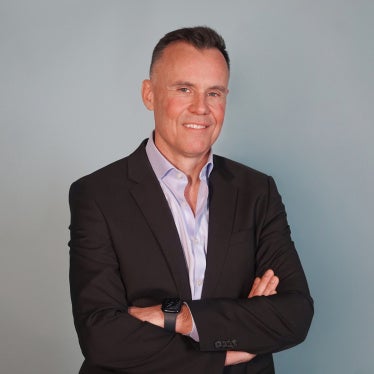
Michele Garnett McKenzie

On 17 October, 2025, Minnesota-based NGO Advocates for Human Rights appointed Michele Garnett McKenzie as the new Executive Director.


In accepting her new role, McKenzie said, “I am honored to lead our smart, experienced, and dedicated team at a moment when our work could not be more urgent. My vision is clear: strengthen our capacity to protect human rights, forge strategic partnerships that amplify our collective power, and ensure The Advocates’ independence and resilience.

https://www.theadvocatesforhumanrights.org/Person/Index?id=3

https://www.einpresswire.com/article/859109580/the-advocates-for-human-rights-selects-michele-garnett-mckenzie-as-its-new-executive-director

Incredible number of NGOs (3700!!) condemn attacks on civil society in USA

October 9, 2025

Human Rights Watch stands with civil society and signed this letter, alongside more than 3700 other organizations, condemning the Trump administration’s attacks. It is a testament to our community’s solidarity.

“We are a coalition of nonprofit and nonpartisan organizations formed to champion causes dear to all Americans. We work in communities across the country to protect our air and water, our right to vote, to worship, and to organize; we fight for consumers, workers, and our children; we advocate for civil and human rights at home and abroad; we have made it safer to drive on our roads, easier to start a business, and healthier to live in our cities. We span the full ideological spectrum. And today, we stand together for our democracy and in solidarity with the nonprofit groups unjustly and illegally targeted by the Trump administration, including in a new September 25 presidential memorandum. 

We of course unequivocally reject political violence. But we won’t mince words. No president–Democrat or Republican–should have the power to punish nonprofit organizations simply because he disagrees with them. That is not about protecting Americans or defending the public interest. It is about using unchecked power to silence opposition and voices he disagrees with. That is un-American and flies in the face of the Constitution, including the First Amendment bar on targeting organizations for their advocacy. 

Charities perform crucial functions in every community across our country, including providing healthcare, housing, education, religious services, food and water, and so much more. Like other nonprofits, the organizations threatened by President Trump have a mission to serve the public good and are composed of everyday people fighting for dignity, safety, and opportunity. 

This attack on nonprofits is not happening in a vacuum, but as a part of a wholesale offensive against organizations and individuals that advocate for ideas or serve communities that the president finds objectionable, and that seek to enforce the rule of law against the federal government. Whether the target is a church, an environmental or good government group, a refugee assistance organization, university, a law firm, or a former or current government official, weaponizing the executive branch to punish their speech or their views is illegal and wrong. It is also an attack on the very notion that government power must serve the people, not those in office. 

Charitable organizations serve our communities in various ways, playing a central role in public protection, health, accountability, anti-discrimination, and in creating the moral fabric of our nation. That is, of course, precisely why this administration is targeting them. They know that the organizations they are attacking exist to lift up the voices of everyday Americans and shine the spotlight of accountability on those who seek to abuse power. 

Political violence is unacceptable. But efforts by the president of the United States to defund, discredit, and dismantle nonprofit groups he simply disagrees with are reprehensible and dangerous—a violation of a fundamental freedom in America. This Administration is trying to bully people into silence but speaking out is, and has always been, our collective mission. We stand with those wrongly targeted and with each other. No exceptions.”

https://www.hrw.org/news/2025/10/08/an-open-letter-rejecting-presidential-attacks-on-nonprofit-organizations

https://www.commondreams.org/news/letitia-james-indicted

Project Galileo 10th anniversary : Protecting Human Rights Defenders Online

August 21, 2025

Project Galileo celebrated its 10th anniversary with two distinguished panels hosted by the NED (National Endowment for Democracy).

These conversations highlight the future of the Internet and Internet freedom. The panels explored recent U.S. State Department efforts on Internet freedom; the role the private sector plays in helping effectuate the U.S. vision of Internet freedom with efforts like Project Galileo; the current challenges associated with authoritarian government’s influence on Internet standards, governance, and international development.

The discussions also touched on the role policy plays, both in the United States and globally, in efforts to protect the Internet; what the U.S. and other rights-respecting nations stand to lose if the open Internet is diminished; and how all stakeholders (private sector, civil society, governments) can work together to protect and advance the free and open Internet.

Moderator

  • Alissa Starzak, Head of Policy, Cloudflare

Panelists

  • Jennifer Brody, Deputy Director of Policy and Advocacy for Technology and Democracy, Freedom House
  • Emily Skahill, Cyber Operations Planner, Joint Cyber Defense Collaborative (JCDC), Cybersecurity & Infrastructure Security Agency, U.S. Department of Homeland Security (DHS)
  • Adrien Ogée, Chief Operations Officer, CyberPeace Institute

https://cloudflare.tv/event/project-galileo-presents-protecting-human-rights-defenders-online/Ya01peZn

Deluge of NGO criticism greets 2024 US State Department Report on human rights

August 20, 2025

The Trump administration’s omission of key sections and manipulation of certain countries’ rights abuses degrade and politicize the 2025 US State Department human rights report, Human Rights Watch, Amnesty International, Human Rights First and many other NGOs concluded .

On August 12, 2025, the State Department released its “Country Reports on Human Rights Practices” covering the year 2024. The report omits several categories of rights violations that were standard in past editions, including women, LGBT people, persons with disabilities, corruption in government, and freedom of peaceful assembly. The administration has also grossly mischaracterized the human rights records of abusive governments with which it has or is currently seeking friendly relations.

By undermining the credibility of the report, the administration puts human rights defenders at risk, weakens protections for asylum seekers, and undercuts the global fight against authoritarianism. 

This year’s human rights report may strictly keep with the minimum statutory requirements but does not acknowledge the reality of widespread human rights violations against whole groups of people in many locations.  As a result, Congress now lacks a widely trusted, comprehensive tool from its own government to appropriately oversee US foreign policy and commit resources. Many of the sections and rights abuses that the report omits are extremely important to understanding the trends and developments of human rights globally, Human Rights Watch said.

On Israel, the State Department disregards the Israeli authorities’ mass forced displacement of Palestinians in Gaza, their use of starvation as a weapon of war, and their deliberate deprivation of water, electricity, medical aid, and other goods necessary for civilians’ survival, actions that amount to war crimes, crimes against humanity, and acts of genocide. The State Department also fails to mention vast damage and destruction to Gaza’s essential infrastructure and the majority of homes, schools, universities, and hospitals.

The report is dishonest about abuses in some third countries to which the US is deporting people, stating that the US found “no credible reports of significant human rights abuses” in El Salvador, although they cite “reports” of extrajudicial executions, enforced disappearance, and mistreatment by police. The administration has transferred to El Salvador’s prisons, despite evidence of torture and other abuses. 

The State Department glosses over the Hungarian government’s escalating efforts to undermine democratic institutions and the rule of law, including severe curbs on civil society and independent media, and abuses against LGBT people and migrants. It also fails to acknowledge that Russian authorities have widely used politically motivated imprisonment as a tool in their crackdown on dissent, and its prosecutions of individuals for “extremism” for their alleged affiliation with the LGBT movement. 

Compare: https://humanrightsdefenders.blog/2024/05/04/us-state-department-2023-country-reports/

https://www.hrw.org/news/2025/08/12/us-rights-report-mixes-facts-deception-political-spin

https://www.amnestyusa.org/press-releases/u-s-state-departments-human-rights-report-puts-politics-above-human-rights/

https://www.state.gov/reports/2024-country-reports-on-human-rights-practices/

https://theweek.com/politics/state-department-stance-human-rights

https://www.bushcenter.org/publications/what-to-know-about-the-state-departments-new-human-rights-reports

Nobel Peace Prize: choice between Trump and Albanese?

July 24, 2025

No-one will have missed the recent media hype surrounding the opposite candidacies of US President Trump and UN rapporteur Francesca Albanese for this year’s Nobel Peace Prize. This blog with its focus on human rights defenders and their awards would be amiss in not taking note, even if the Nobel Prize is foremost a peace prize not necessarly a human rights award. [see also my piece of 2012 https://global.comminit.com/content/nobel-prize-peace-not-necessarily-human-rights]

So, it is not excluded that the ‘making peace at any cost’ considerations will prevail, but my bet is that the Peace Prize Committee will be careful in ignoring the massive support from the world’s human rights community who have massively come out against the Trump administration’s sanctions against Albanese. Human rights should trump ‘peace’ on this occasion.

Nominations for a Nobel Peace Prize for Francesca Albanese are gathering steam. See the links below:

https://www.frontlinedefenders.org/en/statement-report/united-states-america-sanctions-united-nations-special-rapporteur-assault-human

https://www.scmp.com/news/us/diplomacy/article/3318822/trump-says-he-deserves-nobel-peace-prize-not-everyone-agrees

https://english.pnn.ps/news/47558

https://www.business-humanrights.org/en/latest-news/un-experts-condemn-us-sanctions-on-special-rapporteur-francesca-albanese-amid-report-on-corporate-complicity-in-israels-occupation-genocide/

https://www.thearabweekly.com/eu-gingerly-criticises-washingtons-unprecedented-sanctions-un-rapporteur

https://www.ynetnews.com/article/bku2skjbgl

https://www.hrw.org/news/2025/07/10/us-imposes-sanctions-on-un-special-rapporteur

https://eu.fayobserver.com/story/opinion/2025/08/22/trump-wants-nobel-peace-prize-but-cut-food-abuses-immigrants-has-not-resolved-gaza-or-ukraine/85765058007/

https://www.ynetnews.com/article/sk429uepgg

https://economictimes.indiatimes.com/news/international/global-trends/donalds-dream-dumped-trump-overlooked-for-2025-nobel-peace-prize-but-why/articleshow/124450001.cms?from=mdr#google_vignette

10th anniversary Project Galileo: Protecting Human Rights Defenders Online

June 23, 2025

Project Galileo celebrated its 10th anniversary with two distinguished panels hosted by the NED (National Endowment for Democracy).

These conversations highlight the future of the Internet and Internet freedom. The panels explored recent U.S. State Department efforts on Internet freedom; the role the private sector plays in helping effectuate the U.S. vision of Internet freedom with efforts like Project Galileo; the current challenges associated with authoritarian government’s influence on Internet standards, governance, and international development. The discussions also touched on the role policy plays, both in the United States and globally, in efforts to protect the Internet; what the U.S. and other rights-respecting nations stand to lose if the open Internet is diminished; and how all stakeholders (private sector, civil society, governments) can work together to protect and advance the free and open Internet.

Moderator

  • Alissa Starzak, Head of Policy, Cloudflare

Panelists

  • Jennifer Brody, Deputy Director of Policy and Advocacy for Technology and Democracy, Freedom House
  • Emily Skahill, Cyber Operations Planner, Joint Cyber Defense Collaborative (JCDC), Cybersecurity & Infrastructure Security Agency, U.S. Department of Homeland Security (DHS)
  • Adrien Ogée, Chief Operations Officer, CyberPeace Institute

Learn more about Project Galileo:

https://cloudflare.tv/event/project-galileo-presents-protecting-human-rights-defenders-online/jvPdy5vz

Russian and Ukrainian human rights defenders focus on end to the war in Ukraine.

May 14, 2025

In the past weeks and months, Russian and Ukrainian human rights activists have been focusing on negotiations to end the war in Ukraine. Back in January, human rights activists and the People First campaign raised several issues to parties involved in ongoing negotiations in the hopes that the negotiations would prioritise those affected by the conflict, particularly prisoners of war, detained Ukrainian citizens, Ukrainian children which have been taken to Russia, and Russian political prisoners.

The invasion of Ukraine was only possible thanks to a system of political repression Russia has inflicted on its own people for decades.

In February, on the third anniversary of Russia’s full-scale invasion of Ukraine, a group of UN special rapporteurs and experts called for parties involved in negotiations to put legal and humanitarian issues at the forefront of discussions. They stressed that the Russian government must be held accountable for its aggression and war crimes in Ukraine committed, and its repressive policies towards its own citizens.

The invasion of Ukraine was only possible thanks to a system of political repression Russia has inflicted on its own people for decades. According to experts, over 3,000 individuals have been persecuted by Russian authorities for political reasons. Despite recent efforts by human rights activists to advocate for person-centred negotiations, it seems more and more doubtful that the focus will be on human rights

Russia’s aggression against Ukraine has challenged the established system of international relations, which has now proven to be woefully fragile. Most countries see Putin’s decision to unleash outright war on Ukraine as unacceptable. While many democratic countries have continued to provide Ukraine with assistance, this has at times proven insufficient in the face of Russian violence.

Since January, the rejection by the US of legal norms in place since the two world wars has unleashed a new crisis in international politics.

US tactics to repeal basic human rights seem eerily familiar for Russian activists, who have been fighting similar state tactics for the past 25 years.

The new American administration’s policy is increasingly similar to Putin’s own tactics. Both favour the “right of the strong”, whereby great powers can decide the fate of others and dictate conditions. The US has shown itself to be less interested in international law, making it increasingly easy for norms to be overlooked.

US tactics to repeal basic human rights seem eerily familiar for Russian activists, who have been fighting similar state tactics for the past 25 years. Russians knew a world without regard for international human rights or legal norms long before 2025, or the invasion of Ukraine in 2022.

For 25 years, Putin’s government has created a country which prioritises the interests of the state and denies basic human rights.

What is happening in the US is recognisable to many Russians.

By wanting to end the war in Ukraine and find a quick solution, the US president is effectively equating the aggressor with the victim of aggression.

Negotiations thus far suggest Trump is more likely to ensure Russian interests that are detrimental both to the safety of the Ukrainian people, who have been subjected to aggression and occupation, and to justice and a sustainable peace.

Russia’s full-scale invasion of Ukraine was the result of years of human rights violations within Russia and the lack of a response from the international community to these violations.

An unfair peace — a “deal” that contradicts the norms of international law — sets a dangerous precedent. It normalises the war against Ukraine, thereby giving Russia the green light to repeat its aggression and to enact even harsher repressive policies inside Russia.

Such a “deal” is a signal to the whole world, a move towards dangerous instability, reminiscent of the brink of the outbreak of the world wars. Departing from the principles of human rights and international law in peacekeeping practices encourages impunity and will inevitably lead to new wars of aggression. Democracy in many countries will also be at risk, as the new rules of the game will open up opportunities for autocrats and dictators to violate human rights in their countries without regard for international institutions and their international obligations.

No peace without rights 

We call on the leaders of all democratic countries, all politicians for whom human rights are not merely empty words, and civil society to take a stand and bring human rights back into international politics.

This is the only way to create reliable conditions for long-term peace in Europe and prevent the emergence of new-large scale military conflicts globally. Otherwise, the world will find itself in a situation where the fate of countries and the people living in them will be decided through wars unleashed by imperialist predators.

We call on all parties taking part in peace negotiations in Ukraine to prioritise the human aspect: the fate of prisoners of war and the protection needed for civilians, including in Russian-occupied areas of Ukraine.

We insist that negotiations be based on the fundamental norms of international legal agreements, including the UN Charter and the Helsinki Final Act, as they define aggression, protect the principle of territorial integrity and sovereignty, and link military and political security with human rights. Without this, it will be impossible to achieve a just and sustainable peace.

The appeal was drafted and signed by members of the the Council of Russian Human Rights Defenders: Galina Arapova, Sergey Davidis, Yury Dzhibladze, Leonid Drabkin, Sergey Krivenko, Sergey Lukashevsky, Karinna Moskalenko, Oleg Orlov, Lev Ponomarev, Alexander Cherkasov, and Yelena Shakhova.

The names of the other Council members who signed the appeal are not given for security reasons.

https://novayagazeta.eu/articles/2025/05/11/no-peace-without-human-rights-en

https://www.osce.org/odihr/elections/590898

USA nominates Rosa María Payá to the Inter-American Commission on Human Rights

April 11, 2025

The U.S. government announced on 27 March the nomination of the Cuban human rights defender Rosa María Payá Acevedo as a candidate to join the Inter-American Commission on Human Rights (IACHR), an autonomous body of the Organization of American States (OAS).

“Rosa María Payá is a democracy advocate, human rights leader, and internationally renowned expert in Latin American politics,” stated the Department of State in an official statement. [see: https://humanrightsdefenders.blog/2016/06/08/rosa-maria-paya-carries-on-the-work-of-her-father-in-cuba/]

The nomination underscores Washington’s support for the work that the Cuban activist has done in promoting human rights, freedom, and democratic governance in the Western Hemisphere.

Daughter of the deceased opposition leader Oswaldo Payá Sardiñas, who was awarded the Sakharov Prize and died under circumstances that have never been officially clarified, Rosa María has continued his legacy with “unmatched determination,” the State Department highlighted. [see: https://www.trueheroesfilms.org/thedigest/laureates/2522D108-8BCB-46A7-BEBD-144BC99B5926]

Payá is the founder of the Cuba Decide movement, which promotes a binding plebiscite for Cubans to freely and democratically choose their political future. She also leads the Pan-American Democracy Foundation, through which she collaborates with legislators from various countries to support regional stability and security. Among the recognitions he has received are the Morris Abram Award for Human Rights (2019) and the Valor Award from the Society of Common Sense (2022).

“I am deeply honored by the United States nomination to serve on the Inter-American Commission on Human Rights, a vital and independent institution dedicated to protecting the rights and dignity of all people across the Americas,” she wrote.

The elections to renew the members of the CIDH will be held on June 27, during the General Assembly of the OAS taking place in Antigua and Barbuda.

https://en.cibercuba.com/noticias/2025-03-27-u1-e43231-s27061-nid299711-eeuu-nomina-rosa-maria-paya-comision-interamericana