On 23 August 2013, the Observatory for the Protection of Human Rights Defenders, a joint programme of FIDH and OMCT, expresses its deep concern about the Iranian blogger and human rights activist Hossein Ronaghi-Maleki, whose health status has been deteriorating. On August 9, 2013, Mr. Hossein Ronaghi-Maleki started a hunger strike to protest the authorities’ ongoing refusal to allow him to continue his medical treatment out of Evin prison in Tehran. His mother, Ms. Zolaykha Mousavi, also started a hunger strike on August 20, 2013 to draw attention to his plight. Ronaghi-Maleki has been suffering from kidney and heart problems and bladder inflammation. Since the beginning of his hunger strike, he has suffered kidney bleeding, blood pressure oscillations and arrhythmic heart beats. He has already undergone several operations on his kidneys that were damaged after being repeatedly tortured during his detention, including 13 months in solitary confinement. He has been serving a 15-year prison sentence after being arrested on December 13, 2009 and convicted on charges of “membership of Iran-Proxy Internet Group”, “spreading propaganda against the system”, “insulting the Iranian Supreme Leader and the President”.
Although the deadline for nominations (15 August) has passed, I still want to draw your attention to a new series of human rights awards instituted by Pan-African HRDs Network (PAHRD-Net), which in turn is made up of five sub-regional networks i.e. Cairo Institute for Human Rights Studies, East and Horn of Africa Human Rights Defenders Network, West Africa Human Rights Defenders Network, Southern African Human Rights Defenders Network hosted by the International Commission of Jurists and the Zimbabwe Lawyers for Human Rights, and Central African Human Rights Defenders Network.
The new awards aim to honour exceptional individuals who peacefully promote and protect universally recognized rights as stated in the Universal Declaration of Human Rights and the African Charter on Human and Peoples’ Rights. Altogether six awards will be presented, one Pan-African Human Rights Defenders Award and five sub-regional awards:
– East and Horn of Africa Human Rights Defenders Award 2013
– West Africa Human Rights Defenders Award 2013
– Southern Africa Human Rights Defenders Award 2013
– Central Africa Human Rights Defenders Award 2013
– Northern Africa Human Rights Defenders Award 2013
Both individuals and organizations are eligible. Awards include support to the human rights work of the winning individual or organisation with a total value of 10 000 USD for the Pan-African award winner and 5 000 USD for each sub-regional award winners. The winners will be selected by an independent jury. Nominations should be returned to: hrdaward@defenddefenders.org.
The awards will be presented to the winners at the occasion of the 54th Ordinary Session of the Africa Commission on Human and People’s Rights scheduled to be held in October 2013 in Banjul, The Gambia.
Several newspapers and NGOs, including the Asian Human Rights Commission, have criticized the new government of Pakistan for deciding to do away with the Ministry of Human Rights and merge it with the Ministry of Justice. Read the rest of this entry »
Amnesty International’s 2013 report comes with an introductory video which shows governments are using the excuse of ‘internal affairs’ in shameful attempts to block concerted international action to resolve human rights emergencies.
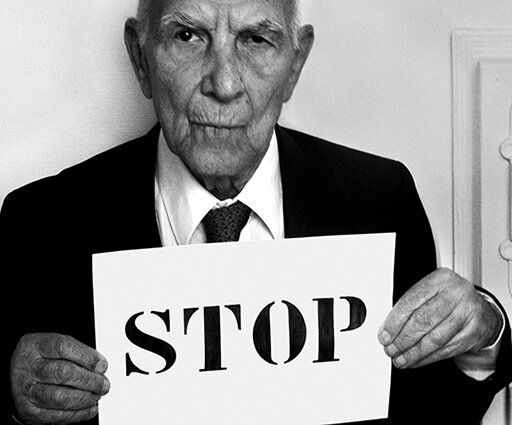
Stéphane Hessel, a hero of the French Resistance, diplomat and activist (what a rare combination) died on Tuesday 27 February in Paris at the age of 95. His life and works are described in detail by the mainstream press, so I only single out here his strength of conviction that made him publish at a very advanced age – in October 2010 – “Indignez-Vous!”, a short pamphlet that urged young people to revive the flame of resistance to injustice that burned in himself during World War II, this time in peaceful rebellion against what he termed the dictatorial forces of international capitalism, and to reassert the ideal that the privileged must help the less fortunate rise. Read the rest of this entry »
If you are looking for good quotes from top UN officials on human rights, you will find some in the panel discussion that took place on 25 February to mark the 20th anniversary of an indeed benchmark meeting, the World Conference on Human Rights held in Vienna in 1993. The resulting Vienna Declaration, which led to the creation of the post of the UN High Commissioner for Human Rights, strengthened human rights work, and reinforced the universality of human rights and the duty of States to uphold them. “Human rights and fundamental freedoms are the lifeblood of the United Nations,” Secretary-General Ban Ki-moon said in a video message to panel discussion in Geneva to commemorate the 20th anniversary of the Vienna Declaration and Programme of Action.“Since the Organization was founded, Member States and civil society partners have worked to build a body of human rights instruments that can uphold the principles of the UN Charter and the Universal Declaration of Human Rights,” he noted. The declaration – adopted at the World Conference on Human Rights, held in Vienna in June 1993, and later endorsed by the General Assembly – led to the creation of the post of the High Commissioner for Human Rights. As a member of a women’s rights organization who participated in a side event at the 1993 Conference, High Commissioner for Human Rights Navi Pillay recalled that the event took place amid a “time of transformation” with the end of the Cold War and as progress had been made in dismantling apartheid in South Africa. In remarks read out on her behalf by Bacre Ndiaye, Director of the Human Rights Council and Special Procedures Division in the Office of the UN High Commissioner for Human Rights OHCHR, Ms. Pillay said the Conference was also the first time that representatives of governments and civil society spoke about women’s rights at a conference dedicated to human issues and not specially women’s issues. “This shift in human rights thinking paved the way for key advances,” she noted, including the adoption of the UN Declaration on violence against women, and the Optional Protocol to the Convention on the Elimination of All Forms of Discrimination against Women. It also contributed to how the gender perspective was integrated into human rights work and the Organization as a whole. “However, much remains to be done. As was the case 20 years ago, women and girls continue to be sexually and physically abused, and their abusers go unpunished,” Ms. Pillay said, adding that women’s political participation and full empowerment are a “work in progress.” The High Commissioner also urged civil society to continue its strong engagement with the UN, noting the vital role non-governmental organizations played in the Vienna Declaration and Programme of Action “The United Nations cannot attain its lofty objectives without the participation of those it is supposed to serve. It is only by listening to their concerns that we can we ensure that our action is grounded in the real lives of real people,” she said.
A Turkish court has acquitted four men on trial for their participation in a protest in support of a conscientious objector.
On Thursday 7 December 2012 the court in the north-western city of Eskişehir cleared human rights defender Halil Savda and three others of the charge of “alienating the public from military service”, a criminal offence under Turkey’s Penal Code. The case against them began in 2011 after they protested outside the hearing of fellow conscientious objector Enver Aydemir a year earlier in what became known as the “everyone is born a baby” case – a twist on the Turkish military slogan “every Turk is born a soldier”. In response John Dalhuisen, Director of Amnesty International’s Europe and Central Asia Programme said: “This acquittal should prove that every Turk is born with rights, including the right to freedom of expression”.
In acquitting the defendants, the court ruled that their protest and slogans were protected under the Universal Declaration of Human Rights, the European Convention on Human Rights and the Turkish Constitution, because they did not contain or incite violence, and that a democratic society must allow freedom of expression even if it shocks and disturbs. However, Savda has another similar conviction that is currently pending at the Supreme Court of Appeals.
An interesting local idea: the Liberian Coalition of Human Rights Defenders (LICHRD), in collaboration with the Independent National Commission on Human Rights, will from Tuesday through Wednesday December 4-5 hold the first annual National Human Rights Book Fair in Monrovia. The event is a prelude to the celebration of the International Human Rights Day .
On December 4-5, 2012, Human Rights First will convene the inaugural Human Rights Summit: American ideals. Universal values, marking the 64th anniversary of the Universal Declaration of Human Rights.
The Summit is designed to bring international civil society activists, U.S. policymakers, military and business leaders together to look at U.S. global leadership on human rights. Human Rights First believes that American leadership is necessary to secure human rights around the world. We hope you will join us as we celebrate progress and address the challenges ahead. Sessions during the two-day Summit will cover human rights issues including the Arab Spring, emerging technologies, immigration reform, and more. Senators Richard Durbin (D – IL) and John McCain (R-AZ), Chairman of the United Civil Front Garry Kasparov, President of the Ethics & Religious Liberty Commission Dr. Richard Land, and Vice President of Communications and Public Policy at Facebook Elliot Schrage will join us as guest speakers.
Human Rights First also invites you to the screening of the award-winning film THE HOUSE I LIVE IN on Tuesday, December 4, at 7 p.m. The screening will be followed by a discussion with acclaimed filmmaker Eugene Jarecki, who received the Grand Jury Prize at this year’s Sundance Film Festival for this film. This event is free and open to the public
This is the second part of the series “Focus Human Rights” that I referred to in an earlier post. It deals with the second dimension of the Human Rights system: The Economic, Social and Cultural Rights. Additionally, it explains women’s rights and shows how NGOs in the Human Rights sector work. Especially the latter part seems somewhat forced into this second volume as they operate in both areas to say the least. It has also a rather strange reference to the International Society for Human Rights which is listed with AI, HRW and HRF as an example of well-known NGOs, while it is in fact fairly small and – outside Germany – without much influence.
The clips are done by Jan Künzl and Jörn Barkemeyer, who welcome comments.



 A Turkish court has acquitted four men on trial for their participation in a protest in support of a conscientious objector.
 Hans Thoolen on Human Rights Defenders and their awards