Posts Tagged ‘United Nations’

12 November 2014: 5th Theo van Boven lecture by Hina Jilani

November 1, 2014
Theo van Boven 2011

Theo van Boven 2011

On 12 November 2014 the fifth annual Theo van Boven Lecture will be delivered by Mrs. Hina Jilani, in the University of Maastricht (16.00 – 18.30). The lecture is in honour of Prof. Theo van Boven, one of the founders of the Maastricht Centre for Human Rights and the most crucial human right director in the UN in 1977-1982 when the first special procedures were enacted. [https://thoolen.wordpress.com/tag/theo-van-boven/]

Mrs. Jilani is an internationally known human rights defender from Pakistan. She created Pakistan’s first all-women law firm and co-founded Pakistan’s first legal aid centre. She also founded the Human Rights Commission of Pakistan and Pakistan’s Women Action Forum, a prominent women’s rights group whose campaigns have been at the heart of the democracy movement in the country. She was the first Special Representative of the United Nations Secretary-General on Human Rights Defenders from 2000 to 2008. Since 2013 she is a member of The Elders. For more information on her work: http://www.maastrichtuniversity.nl/web/file?uuid=23a2b13c-1422-4e13-8df8-4209bb39e791&owner=20b720a7-b4e5-478d-a68e-9b2019fc1761. The lecture is open to the public.

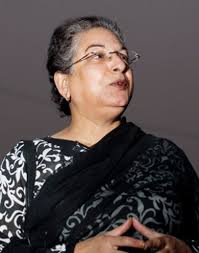
Hina Jilani 2014

Ben Whitaker died: one of the early human rights defenders at the international scene

July 16, 2014

Ben (Benjamin) Whitaker died on 8 June 2014. The memory of the human rights world being notoriously short, there will be many who do not recognize the name of one of the early human rights defenders in the international arena. A UK citizen, in 1965 he spoke out forcefully against detention camps in Rhodesia (now Zimbabwe), became one of the most activist members of the UN SubCommission in the mid seventies and lead the struggle to have the Armenian Genocide recognised. His 1985 final report on the question of genocide – which only had a brief but controversial mention of the Armenia – was for that reason blocked at the Commission level by Turkey and could not be distributed as such. I was at that time Director of the Netherlands Institute for Human Rights (SIM) and we agreed to publish a few thousand copies of the complete text under his own name.

As his link with the Armenian community was and remained strong, it should not surprise that one of the obituaries was published in DIARIO ARMENIA in Argentina. It was written by Leandro Despouy, President of the Argentine Audit Office and Former president of the SubCommission as well as the Human Rights Commission of the United Nations. Below is the English translation of this piece:

http://www.diarioarmenia.gov.ar:

Benjamin Whitaker, the Argentine dictatorship and the acknowledgement of the Armenian Genocide by the United Nations

Ben Whitaker died on June 8th. Predictably, an Armenian friend gave me the news. Whitaker’s name will forever be consistently associated to the recognition of the Armenian Genocide by the United Nations. It happened after extensive and difficult sessions, sabotaged by Turkey during fifteen years, which finally materialized in 1985 with the approval of the document that carries his name, the Whitaker Report.

He was a man of remarkable virtues, but two of these: coherence and sense of humour, were present in each and every one of the multiple activities he undertook during his life. Born into an aristocratic family, he made his first political incursions in the north London borough of Hampstead: he won the Hampstead seat for the Labour Party, a seat that had traditionally gone to the Tories for the previous 81 years. He had already graduated from Oxford to the bar, and spoken out vehemently against the local police regime in his book The Police.

Ben remained faithful to his neighbourhood football club throughout his life. An “argumentative idealist” –as he liked to describe himself-, who intensified the campaign for the enforcement of Human Rights worldwide, he battled against discrimination, the death penalty, the criminalization of homosexuality, against the outlawing of adultery and abortion, in favour of environmental care and all the issues that were surfacing with enormous force during the sixties and the seventies of the past century, an era which produced an unprecedented cultural change.

His condemnation, in 1965, of the clandestine detention camps of Rhodesia (Zimbabwe) is well-known. He served as consultant for Labour governments and became executive director of the Calouste Gulbenkian Foundation, created by an Armenian in Portugal, which is dedicated to the advancement of the arts, sciences and education. There is no doubt, however, that his better known activity took place in the United Nations, where he was appointed Special Rapporteur of the United Nations SubCommission on Prevention of Discrimination and Protection of Minorities -a competent area of independent expertise-, by David Owen, the British Minister of Foreign Affairs of the seventies.

During his time at the SubCommission, after multiple attempts at public accusation, Whitaker, the French ambassador Nicole Questiaux and Theo van Boven managed to unfetter the restraints that the diplomacy of the Argentine dictatorship (Gabriel Martínez, Mario Amadeo) had used to muzzle the accusations – presented  before the United Nations since 1976 -, of murders and disappearances in our country. In 1979, Whitaker delivered a clear message to the effect that countries who exercised terrorism within their territories should not try to use the same methods in the United Nations.

In 1983, the SubCommission and the Human Rights Commission (nowadays Council) entrusted Benjamin Whitaker with a study and revision of the Convention on the Prevention and Punishment of the Crime of Genocide, and its relation to the Convention of the Non-Applicability of Statutory Limitations to War Crimes and Crimes against Humanity, in order to insure that Governments would comply with these directives. Whitaker was chosen for this research because of his intellectual stature and his proven integrity; nevertheless, one of the female experts advised him to add a bullet-proof vest to his wardrobe.

In point of fact, two preliminary studies (1973 and 1975) developed by the Rwandan expert Ruhashiankiko, included a paragraph , number 30, which would become renowned because it labeled the Armenian Massacres of 1915 and 1923 as “the first genocide of the twentieth century”. This paragraph raised a storm of great proportions, conducted by the Turkish diplomacy, and had to be suppressed from the final report in 1979. The Rwandan expert vanished from the international arena.

We met at the SubCommission. We were 26 experts. Alfonsin’s administration was just getting started, as was the revolution of the cause of Human Rights. When I was appointed General Rapporteur of the SubCommission in 1984, the project of Whitaker’s excellent Report was being debated. It contained the definition of the Armenian Genocide. I agreed entirely with its contents, but found it difficult, from a political standpoint, to show signs of support and proximity to an Englishman, when the wounds of the Malvinas War were still so fresh. Concurrently, the investigation of the Argentine dictatorship’s crimes and the legal summons issued to the Juntas drew us closer, so we established an undercurrent of mutual sympathy in an almost clandestine fashion, sometimes mediated by the French judge Louis Joinet who was also an expert in the SubCommission. I told him I supported him. By 1985 we already enjoyed a fluid relationship and though the context was not simple, we were able to overcome that contingency; we shared a profound dialogue, and we both had knowledge of the world of the United Nations and Human Rights.

The situation was also very complicated for Whitaker; Margaret Thatcher ruled in Great Britain, her government did not endorse his condition of Rapporteur, and he had to receive the backing of a British NGO in order to finish his mandate at the United Nations. A committed socialist, Whitaker did not support the policies of Thatcher’s administration, and although these circumstances weakened him personally, the forcefulness of his Report made him stronger. That situation was taken advantage of by the Turkish diplomacy, who tried to erase from his Report the paragraph about the Armenian Genocide. During the debate of this issue, I brought up the changes which had taken place in Argentina, our solidarity with the victims of genocides and openly declared that the controversial paragraph must be kept.

In 1985, Whitaker reported to the SubCommission the theft of documents which he was never to recover. In that same session, as General Rapporteur, I pointed out that the expression “genocide” had been replaced by “Armenian question”. In those days, Whitaker received the visit of two Turkish diplomats who tried to dissuade him from continuing with his investigation. But Whitaker was a man of principles, not easily swayed by political pressure. The final approval in 1985 of the historical Report, which has become part of the patrimony of the United Nations, is the culmination of an unprecedented diplomatic battle that produced an important judicial and political impact throughout the world.

Whitaker ended his Report stating that it was necessary to close that chapter of History in an honourable way, and that if the experts did not have the courage to tell the truth, then participating in the SubCommission’s work would be useless, since it was the duty of the SubCommission to protect the victims from the governments and not the other way round.  For ethical reasons and in an act of chivalry, Whitaker abstained from voting for his own Report. When we met again in 1986, during his visit to Buenos Aires, he declared that the approval of the Report had been a good example of Anglo Argentine cooperation. Unknown to the media, he met with Dante Caputo and president Raúl Alfonsín.

He dedicated his last years to painting, and he campaigned to have a statue of George Orwell installed in front of the BBC, where it stands today.


International Service for Human Rights rings alarm bell over composition of UN Committee on Civil society

May 1, 2014

Civil society loses as repressive States win election to regulate NGO access to UN” is the headline of a rightly alarming report on 23 April 2014 by the New York desk of the International Service for Human Rights [ISHR]. It calls on States that value and respect a vibrant civil society should do more to support non-governmental organisations to have their voices heard at the United Nations. The call comes after very few such States stood for election to an important UN committee that regulates civil society access to the UN, leaving the field to repressive States whose intolerance for civil society at home looks set to further restrict NGO access to the UN.ISHR-logo-colour-high Read the rest of this entry »

Saudi Arabia criticises Norway over human rights record: that is news..

April 30, 2014

Saudi Arabia has criticised Norway’s human rights record, accusing the country of failing to protect its Muslim citizens and not doing enough to counter criticism of the prophet Mohammed. The gulf state and other islamic countries called for all criticism of religions and of prophet Mohammed to be made illegal  in Norway. It also expressed concern at “increasing cases of domestic violence, rape crimes and inequality in riches” and noted a continuation of hate crimes against Muslims in the country. Russia also called for Norway to clamp down on expressions of religious intolerance and and criticised the country’s child welfare system. They also recommended that Norway improve its correctional facilities for those applying for asylum status. All this happened when Norway submitted itself to scrutiny during the current session of the United Nations’ Universal Periodic Review.

The criticism may sound incongruent for those who know how often Russia and Saudi Arabia figure in reports from human rights defenders, including ib this blog, but – as the Norwegian Foreign Minister, Børge Brende, in Geneva told Norway’s NTB newswire prior to the hearing –  “… that is the United Nations.

Saudi Arabia criticises Norway over human rights record – News – The Independent.

Ban Ki-Moon calls civil society “an indispensable part of the United Nations”

March 27, 2014

Civil society actors must be able to do their work freely, independently, safe from fear, retaliation or intimidation. This requires collective action to denounce reprisals and defend free voices and protect those targeted,” said the UN Secretary-General Ban Ki-Moon, referring to civil society as “an indispensable part of the United Nations”. “We must expand the space for civil society to meaningfully participate and contribute,” he added in a video statement screened at a discussion on the promotion and protection of civil society space, in the context of the Human Rights Council’s 25th session.humanrightslogo_Goodies_14_LogoVorlagen

Civil society actors around the world face risks ranging from threats and intimidation to horrible reprisals, even killings”, said UN Human Rights Deputy, Flavia Pansieri at a discussion on the promotion and protection of civil society space. “From the NGO who is prohibited from receiving funding to the whistle-blower who is imprisoned for revealing corruption… we must work to protect civil society from such practices,” she said.

Hina Jilani, Read the rest of this entry »

Six UN human rights experts urge probe into recent violence in Venezuela

March 9, 2014

On 6 March 2014 a group of six United Nations experts has asked the Venezuelan Government for prompt clarification of allegations of arbitrary detention and excessive use of force and violence against protesters, journalists and media workers during recent protests. “The recent violence amid protests in Venezuela need to be urgently and thoroughly investigated, and perpetrators must be held accountable,” the experts stressed in a news release. They also expressed their shock at the reported deaths of at least 17 persons during the demonstrations. “We are deeply disturbed by the allegations of multiple cases of arbitrary detention of protesters. Some were reportedly beaten – and in some cases severely tortured – by security forces, taken to military facilities, kept in incommunicado detention, and denied access to legal assistance,” they said….“The reconciliatory dialogue that is so deeply needed in Venezuela is not going to take place if political leaders, students, media groups and journalists are harassed and intimidated by the authorities,” they stated.

The experts speaking out on Venezuela are Frank La Rue, Special Rapporteur on the promotion and protection of the right to freedom of opinion and expression; Maina Kiai, Special Rapporteur on the rights to freedom of peaceful assembly and of association; Mads Andenas, Chair-Rapporteur of the Working Group on arbitrary detention; Juan Méndez, Special Rapporteur on torture and other cruel, inhuman or degrading treatment or punishment; Christof Heyns, Special Rapporteur on extrajudicial, summary or arbitrary executions; and Margaret Sekaggya, Special Rapporteur on the situation of human rights defenders.

via United Nations News Centre – UN human rights experts urge probe into recent violence amid Venezuelan protests.

PS: It is ironic that at the same time the Government of Venezuela has invited the UN Committee on the Exercise of the Inalienable Rights of the Palestinian People to hold a special meeting at the historic Yellow House in Caracas on 17-18 April 2013.

Serious concern for health of detained human rights defender Cao Shunli

February 25, 2014
Activists gather at the Beijing hospital where rights defender Cao Shunli was hospitalized in critical condition on Feb. 16. The rights defenders in the photo were not allowed to see Cao. She had been denied medical treatment while in detention, and was in a coma by the time authorities took her to an emergency facility. (Sound of Hope)

(human rights defenders in the photo were not allowed to see Cao – Sound of Hope)

Critically ill human rights defender Cao Shunli, who was prevented from attending a United Nations human rights review of China last fall, was taken to intensive care on 16 February 2014 after being denied medical treatment for months while in detention. “Cao Shunli is unconscious and on a ventilator,” her lawyer Wang Yu explained to Radio Free Asia. “She can’t talk and her condition is extremely serious… We think her life is in danger, but the hospital won’t give us any details; they just mumble something when we ask them,” he continued. A nurse blocked the entrance to the intensive care unit and told rights defender Wang Ling that Cao was “deeply unconscious” and would not recognize him, according to Human Rights in China (HRIC). Though Cao was initially taken to Beijing’s Qinghe Emergency Center, she was then transferred to an Army hospital, though her family requested that she be taken to an acute care hospital. Police at the hospital prevented activists from entering the hospital, and about 20 of them were taken to police substations for questioning, Wang Ling told HRIC.

[Cao and fellow rights defender Chen Jianfang were detained on 13 September, 2013 at Beijing’s International airport as they were leaving to fly to Geneva to take part in activities associated with the United Nations Human Rights Council UPR review of China’s human rights record. On the eve of the review, 21 October, she was formally arrested and charged with “creating a disturbance,” and has been detained since then. See earlier posts:

https://thoolen.wordpress.com/2013/10/16/un-alarmed-by-reprisals-against-chinese-activists/ and https://thoolen.wordpress.com/tag/cao-shunli/

Also:  http://www.frontlinedefenders.org/CaoShunli

UN General Assembly indeed defers UN focal point on human rights defenders

January 8, 2014

On 4 December 2013 I reported on the setback in the establishment of a focal point against reprisals in the United Nations. The disappointing vote in the Third Committee could theoretically have been reversed by the General Assembly but that miracle did not happen. On 19 December the General Assembly also put on hold a Human Rights Council initiative to strengthen the protection of human rights defenders from attacks and reprisals. A group of African States, together with China, Cuba, and Russia, successfully put forward a resolution to defer the appointment of a senior UN official tasked with coordinating the protection of human rights defenders. This is despite the Human Rights Council overwhelmingly passing a resolution in September calling on the UN Secretary-General to appoint ‘a United Nations-wide senior focal point’ to combat reprisals and intimidation.‘  The vote had a narrow margin of only three votes: 83 – 80.

[In the face of an African Group position, only two African States had the courage to abstain from the vote: Chad and Morocco.]

via UN General Assembly turns its back on human rights defenders | ISHR.

‘Rights up Front’ presented by Jan Eliason: “It is irrefutable that serious human rights violations are the best early warning of atrocities”

December 26, 2013

(Deputy Secretary-General Jan Eliasson. UN Photo/Paulo Filgueiras)

Still haunted by its failure to forestall genocide in Rwanda and Srebrenica nearly 20 years ago and confronted by ongoing bloodshed in Syria and the Central African Republic (CAR), the United Nations is revamping its preventive strategies under a new initiative called ‘Rights up Front.’ “The need for early action, and the crucial role of responding early to human rights violations, is at the heart of theRights up Front’ initiative,” Deputy Secretary-General Jan Eliasson told an informal session of the General Assembly on 17 December 2013 – as he presented a six-point action plan.

It includes training UN staff on the world body’s core purpose of promoting respect for human rights; providing Member States with the information needed to respond to human rights violations; and ensuring that UN personnel around the world are more attuned to situations where there is a risk of serious human rights abuses and are equipped for the responsibilities that such potential crises entail.

The strategy, initiated by Secretary-General Ban Ki-moon, also includes achieving a more coherence by strengthening engagement with the General Assembly, the Security Council and the Geneva-based UN Human Rights Council and providing earlier and more coherent support to teams on the ground before a crisis emerges; and better organization of human rights staff so that they can identify risks of serious violations of human rights that could lead to atrocities.

Finally, underpinning all these activities will be better information management on threats and risks to populations for planning operational activities and for sharing with Member States.

“. ..It is irrefutable, and needs repeating, that serious human rights violations are the best early warning of impending atrocities.” Eliasson said. “If we fail to act early, the human, political and economic costs can be devastating as we know far too well. This calls for a more alert, flexible and coordinated UN System, both on the ground and at headquarters.”

Horrendous events led us all to say ‘never again’, Mr. Eliasson said. “We said we would have to do more to prevent serious violations of international human rights and humanitarian law. Despite much effort, since 1995 hundreds of thousands of people have died as a result of mass atrocities and tens of millions have been displaced.” But steps forward have been taken. “World leaders endorsed the ‘responsibility to protect in 2005. And Member States have over the years articulated an increasingly detailed agenda for the protection of civilians,” he said. Yet, the crises in Syria, where over 100,000 people have now been killed and 8 million driven from their homes in the nearly three-year civil war, and in CAR, where thousands have been killed and over 600,000 displaced in a conflict increasingly marked by inter-communal clashes between Christians and Muslims, are reminders that serious human rights abuses are often the clearest early warning of emerging conflict, he added.

“When people in today’s world are at risk or subject to serious violations, they expect and request the United Nations to act – and we do,” Mr. Eliasson declared. “However, in practice, our response to crisis often comes when a situation has deteriorated to the point where only a substantial political or peacekeeping mission can deal with the problems.”

via United Nations News Centre – New UN ‘Rights up Front’ strategy seeks to prevent genocide, human rights abuses.


Media can help uphold human rights, says meeting in Dhaka

December 22, 2013

Lawyers, former diplomats and rights activists at a dialogue on 16 November 2013 in Dhaka, Bangladesh, stressed that media should use national and international mechanisms in reporting on human rights issues. They also pointed out that pressuring the government by international mechanism and pressure groups, such as diplomats and international media, could help improve the human rights situation in the country. Former ambassador Harun Ur Rashid, Dhaka Tribune editor Zafar Sobhan, Sayeed Ahmad of Forum Asia, Tahmina Rahman of Article 19, lawyer Jyotirmoy Barua, Nur Khan of Ain o Salish Kendra were the panelists at this dialogue entitled “Journalists as human rights defenders working together for the promotion and protection of human rights” organised by the human rights group Ain O Salish Kendra. Ambassador Harun ur Rashid said the media played an important role in creating awareness as well as acting as a pressure group to uphold human rights.“Individuals are now recognised not only in the national law but also in the international laws, so when his/her rights are violated, both state and the UN can intervene to protect the individual,” Harun ur Rashid added. Dhaka Tribune Editor Zafar Sobhan said the government had a tendency to act unresponsively on human rights violations until the issue was being picked up by international media or watchdogs. “Still, the media is playing a great role here. Ultimately the international watchdogs and media mostly gather information from news published in local media,” he said, adding that media persons also have the duty to respect victim’s privacy and rights. Sayeed Ahmad of Forum Asia observed that accountability was much more needed than creating awareness on human rights among the government institutions and law enforcement agencies such as Rapid Action Battalion, police and armed forces to ensure human rights. Echoing Sayeed, Tahmina of Article 19 said if such groups always enjoy exemption from the laws in the country, a culture of impunity is hard to eliminate.

via Media can help uphold human rights: Dialogue | Dhaka Tribune.