Posts Tagged ‘UN Special Rapporteurs’

HRC45: key issues for human rights defenders

September 6, 2020

Based on the as usual excellent preview by the ISHR: “HRC45 | Key issues on the agenda of September 2020 session”,  I am able to provide an overview of issues that are specially relevant for human rights defenders:

Summary: The Human Rights Council’s 45th session will take place from 14 September to 6 October 2020. The Council will consider issues including reprisals, rights of indigenous peoples and people of African descent, arbitrary detention, and enforced disappearances, among others. It will present an opportunity to address grave human rights situations in States including Yemen, China, the United States of America, Saudi Arabia, Libya, the Philippines, Venezuela, Burundi and Myanmar, among many others. Here’s an overview of some of the key issues on the agenda.

If you want to stay up-to-date: Follow @ISHRglobal and #HRC45 on Twitter, and look out for our Human Rights Council Monitor.

Modalities for civil society participation in HRC45

NGOs in consultative status with ECOSOC, with active designations in Geneva, will be given the opportunity to deliver video-statement insofar as interactive dialogues are concerned, pending further decision from the Council at the opening of HRC45 on 14 September, and additionally for panels and the adoptions of UPR outcomes as set out in HRC decision 19/119. It won’t be possible to hold “official” side events during the 45th session (online or in-person). Any events happening on the sidelines of the session will be considered independent events and won’t be publicised in the Bulletin of Informal meetings by the Secretariat. Read here the information note by the Secretariat which is updated according to the latest information, and an additional explainer by HRC-net.

Thematic areas of interest

Reprisals

On 25 September, the new Assistant Secretary General for Human Rights, Ilze Brands Kehris, will present the Secretary General’s annual report on Cooperation with the United Nations, its representatives and mechanisms in the field of human rights (also known as ‘the Reprisals Report’) to the Council in her capacity as UN senior official on reprisals. The presentation of the report will be followed by a dedicated interactive dialogue, as mandated by the September 2017 resolution on reprisals.

ISHR remains deeply concerned about reprisals against civil society actors who engage or seek to engage with UN bodies mechanisms. We call for all States and the Council to do more to address the situation.  [see also: https://humanrightsdefenders.blog/2020/08/31/ishrs-2020-report-on-reprisals-to-the-un-secretary-general/]

The dedicated dialogue provides a key opportunity for States to raise concerns about specific cases of reprisals, and demand that Governments provide an update on any investigation or action taken toward accountability. An increasing number of States have raised concerns in recent sessions about individual cases of reprisals, including in Egypt, Nicaragua, Cuba, Saudi Arabia, Malaysia, Bahrain, Yemen, Burundi, China and Venezuela.

During the 42nd session, the Council adopted a resolution which listed key trends, such as the patterns of reprisals, increasing self-censorship, and the use of national security arguments and counter-terrorism strategies by States as justification for blocking access to the UN. The resolution also acknowledged the specific risks to individuals in vulnerable situations or belonging to marginalised groups, and called on the UN to implement gender-responsive policies to end reprisals. The Council called on States to combat impunity and to report back to it on how they are preventing reprisals, both online and offline.

Other thematic issues

At this 45th session, the Council will discuss a range of civil, political, economic, social and cultural rights and issues through dedicated debates with Special Procedure mandate holders, including interactive dialogues with the:

  1. Working Group on Enforced or Involuntary Disappearances
  2. Special Rapporteur on truth, justice, reparation and guarantees of non-recurrence
  3. Special Rapporteur on the implications for human rights of the environmentally sound management and disposal of hazardous substances and wastes 
  4. Special Rapporteur on contemporary forms of slavery, including its causes and consequences
  5. Working Group on Arbitrary Detention

In addition, the Council will hold dedicated debates on the rights of specific groups including with the:

  1. Special Rapporteur  on the rights of indigenous peoples and the Expert Mechanism on the Rights of Indigenous Peoples
  2. Working Group of Experts on People of African Descent
  3. Independent Expert on the enjoyment of all human rights by older persons 

Country-specific developments

China (Hong Kong and Uyghur regions)

In light of worsening restrictions in Hong Kong and ongoing repression against Uyghur, Tibetan and other ethnic groups and those defending them, ISHR welcomes the joint statement from July and urges countries to step up action at HRC45 to improve the UN’s monitoring and reporting on China. This echoes the unprecedented press release by over 50 Special Procedures experts calling for urgent and ‘decisive measures’. ISHR expects opportunities for States to increase scrutiny, and for civil society who seek to keep the UN informed, to include:

  • interventions in dialogue with the UN WGAD and UN WGEID
  • responses to the Secretary General’s reprisals report, where China is regularly a ‘top violator’
  • reactions to the findings of the UN Independent Expert on Older Persons, following her December 2019 country visit

USA

The High Commissioner will present her first oral update to the Council on the preparation of the report on systemic racism and police brutality, especially those incidents that resulted in the death of George Floyd and of other Africans and people of African descent, as well as government responses to anti-racism peaceful protests. The High Commissioner will also provide an update on police brutality against Africans and people of African Descent.

ISHR joined 144 families of victims of police violence and over 360 civil society organisations to endorse this letter sent on 3 August to the UN High Commissioner, detailing expectations from the report and the process for its preparation, including an “inclusive outreach to communities of colour and the creation of meaningful, safe, and accessible opportunities for consultation”. On 19 August 2020, the High Commissioner responded to the letter. Read the response here.

ISHR urges all States to support the five recommendations presented by families of victims of police violence and civil society to the High Commissioner, in their national and joint statements at the Council under General Debate Item 9.

Background information: The report was mandated by the resolution adopted following the urgent debate at the Council in June 2020 on current racially inspired human rights violations, systemic racism, police brutality and violence against peaceful protests in the US and elsewhere. Though the urgent debate prompted by the African group initially called for the establishment of an international commission of inquiry on the US and other countries, due to acute diplomatic pressure from the US and its allies, the Council finally decided to instead mandate the High Commissioner with preparing the report, and to include updates on police brutality against Africans and people of African descent in all her oral updates to the Council.

In June 2020, ISHR joined the calls made by the families of George Floyd, Breonna Taylor, Philando Castile and Michael Brown and over six hundred human rights organisations from over 60 countries in requesting the Council to mandate a commission of inquiry for the situation of racism and police brutality in the United States. The UN Special Rapporteur on contemporary forms of racism, racial discrimination, xenophobia and related intolerance and the UN Working Group on Experts on People of African Descent had also voiced their support for the international commission of inquiry. They have urged the Council to ensure the following outcomes from the debate:

  1. the creation of an international commission of inquiry to investigate systemic racism in law enforcement in the United States; and
  2. the creation of a thematic international commission of inquiry to investigate systemic racism in law enforcement globally, with a focus on systemic racism rooted in legacies of colonialism and transatlantic slavery.

They stressed that “both measures described above are necessary and cannot be substituted for one another”. The experts “expressed serious concern that extreme pressure by certain powerful and influential countries—including countries that publicly voiced support for the need to take action in the face of systemic racism—has operated to dilute the strength of the planned consensus resolution of the Urgent Debate.”

Saudi Arabia

Women human rights defenders have been in prison for over two years, only because they demanded that women be treated equally as men. No one has been held accountable for their torture. While the Council has sustained pressure on Saudi Arabia in 2019, it is essential that this scrutiny continues as the situation on the ground has not improved. ISHR calls on all States to jointly call on Saudi Arabia to immediately and unconditionally release the WHRDs and drop the charges against them; and implement the bench-marks set out in the two joint statements delivered by Iceland and Australia in 2019, underlining that should these benchmarks not be met, more formal Council action would follow.

Saudi Arabia is running for Human Rights Council elections in October 2020 and hosting the G20 in November 2020. These all provide windows of opportunity to push for the immediate and unconditional release of the women human rights defenders and all those detained for exercising their rights. [see also: https://humanrightsdefenders.blog/2020/09/02/vloggers-selling-their-souls-to-boost-image-of-arab-regimes/]

Venezuela

The time has come for the fact-finding mission on Venezuela, created by the Human Rights Council last September, to report to the Council. ISHR has joined 85 national, regional and international organisations calling for the renewal and strengthening of the mandate, to keep the pressure on Venezuela. National NGOs have highlighted the ongoing human rights violations in the country as evidence that the new mandate should include an exploration of the root causes of these violations; a preservation of evidence to allow for processes to hold individual perpetrators to account, and a focus on gender-based violence. Oral statements from OHCHR will also be presented this session as will – potentially – a second resolution focusing on technical cooperation. The fact-finding mission’s report is due to be published on 15 September, with the interactive dialogue with States due the following week.

Philippines

The Anti-Terrorism Law passed earlier this month complements the Duterte Administration’s arsenal of tools, giving it the ability to label, detain and eliminate government critics using a vague definition of ‘terrorism’. In the prevailing climate of impunity and attacks against human rights defenders, this law granting the government excessive and unchecked powers will further jeopardise the safety of defenders.

This law passed in the context of ongoing violations against defenders in the country, with recent instances of judicial harassment of defenders and targeting defenders with smear campaigns. It is the most recent example of the government’s worsening human rights record. The recent report of the UN High Commissioner highlights widespread and systematic killings and arbitrary detention in the context of the war on drugs, silencing of independent media and critics, and stark and persistent impunity.

ISHR joined the calls by civil society and UN Special Procedures for an independent investigation mechanism into the human rights situation in the Philippines.

Burundi

ISHR joined more than 40 partners in a civil society call made public ahead of the 45th session, urging States to support the renewal of the mandate of the Commission of Inquiry (CoI) on Burundi.

Burundi is in a period of potential transition, following the 20 May 2020 presidential, legislative and local elections resulting in the election of a new President, Évariste Ndayishimiye and after the death of former President Nkurunziza. At this moment and in this context, there are signs of promise as well as of significant concern. Despite promising remarks by President Ndayishimiyeduring at his inauguration, as well as the authorities’ new, more transparent approach to tackling the COVID-19 pandemic, observers also raised concerns, notably over the fact that several newly appointed members of the Ndayishimiye administration are subject to international individual sanctions for their alleged responsibility in human rights violations. Nonetheless, the political transition represents an opportunity to open a new chapter for the Burundian people and for Burundi’s relationship with the UN human rights system.

As of today, the Commission of Inquiry remains the only independent mechanism mandated to monitor and document human rights violations and abuses, and publicly report on the situation in Burundi, with sufficient resources and experience to do so. At its 45th session, the Council should avoid sending the Government of Burundi signals that would disincentivise domestic human rights reforms, such as terminating the CoI’s mandate in the absence of measurable progress. It should avoid a scenario where re-establishing the CoI’s mandate would be necessary after a premature discontinuation, because of a renewed escalation of human rights violations and abuses. The Council should rather ensure continued investigations, monitoring, public reporting, and public debates on Burundi’s human rights situation.

Egypt

The ‘Terrorism Circuit courts’ in Egypt are enabling pre-trial detention as a form of punishment including against human rights defenders and journalists, such as Ibrahim Metwally, Mohamed El-Baqer and Esraa Abdel Fattah, Ramy Kamel, Alaa Abdel-Fattah, Patrick Zaky, Ramy Shaat, Eman Al-Helw, Solafa Magdy and Hossam El-Sayed. All of the individuals that the Special Procedures and the High Commissioner have written about since September 2019 are still in pre-trial detention by these courts.

ISHR urges States to call on Egypt to immediately and unconditionally release all those detained for exercising their human rights, to stop using pre-trial detention as a punishment, and to take immediate measures to guarantee their rights to contact their families on a regular and continuous basis and to ease sending and receiving letters, food and medical supplies to them.

Background information: Seven UN experts have expressed concern about the collective and corrosive effects of Egypt’s counter-terrorism laws and practices on the promotion and protection of human rights. They stated that “Despite [] repeated communications by UN experts over arbitrary detention of individuals, human rights defenders and activists, the Egyptian Government has not changed its laws of practice”. The government’s response to the UPR in March 2020 demonstrated its lack of political will to address key concerns raised by States and to engage constructively with the Council. For example, the government refused to acknowledge the systematic and widespread attacks against defenders, the practice of torture and ill-treatment in detention centres, and to receive visits by Special Rapporteurs on torture and human rights defenders. The government claimed that no one is detained for exercising their rights, despite the fact that the UN Working Group on Arbitrary Detention found that arbitrary detention is a systematic problem in Egypt and could constitute a crime against humanity.[see also: https://humanrightsdefenders.blog/2020/08/27/egypt-15-year-term-for-human-rights-defender-bahey-el-din-hassan/]

Other country situations

The High Commissioner will provide an oral update to the Council on 14 September 2020. The Council will consider updates, reports on and is expected to consider resolutions addressing a range of country situations, in some instances involving the renewal of the relevant expert mandates. These include:

  • Oral update by the High Commissioner on the human rights situation in Nicaragua 
  • Oral updates by the High Commissioner, and an Interactive Dialogue on the report of the independent international fact-finding mission on the Bolivarian Republic of Venezuela
  • Enhanced Interactive Dialogue on the report of the HC on the situation of human rights in Myanmar, including of Rohingya Muslims and other minorities, an interactive dialogue on the report of on the Independent Investigative Mechanism on Myanmar, and an Interactive Dialogue with the SR on the situation of human rights in Myanmar
  • Interactive Dialogue with the Commission of Inquiry on Burundi 
  • Interactive Dialogue with the Commission of Inquiry on the Syrian Arab Republic 
  • Enhanced Interactive Dialogue with the Commission on Human Rights in South Sudan
  • Interactive dialogue with the Group of Eminent International and Regional Experts on Yemen 
  • Interactive Dialogue with the High Commissioner on the situation of human rights in Ukraine 
  • Interactive Dialogue with the Special Rapporteur on the situation of human rights in Cambodia 
  • Enhanced Interactive Dialogue with the High Commissioner on the situation of human rights in the Democratic Republic of the Congo and on the final report of the team of international experts on the situation in Kasai
  • Interactive Dialogue with the Independent Expert on the situation of human rights in Somalia
  • Enhanced Interactive Dialogue with the Independent Expert on the situation of human rights in the Sudan 
  • Interactive Dialogue with the Fact-finding mission on Libya
  • Interactive Dialogue with the Independent Expert on the situation of human rights in the Central African Republic 
  • Presentation of the High Commissioner’s report on cooperation with Georgia 

Council programme, appointments and resolutions

Appointment of mandate holders

The President of the Human Rights Council will propose candidates for the following mandates:

  1. Special Rapporteur on the rights of persons with disabilities 
  2. Working Group on Arbitrary Detention, member from African States and member from Latin American and Caribbean States
  3. Working Group on discrimination against women and girls, member form Latin American and Caribbean States
  4. Working Group on Enforced or Involuntary Disappearances, member from African States
  5. Working Group on the use of mercenaries as a means of violating human rights and impeding the exercise of the right of peoples to self-determination, member from Asia-Pacific States
  6. Independent Expert on the situation of human rights in the Sudan (if renewed).

Resolutions to be presented to the Council’s 45th session

At the organisational meeting on 31 August the following resolutions were announced (States leading the resolution in brackets):

  1. Special Rapporteur on hazardous waste mandate renewal (African Group)
  2. Working Group of Experts on People of African Descent mandate renewal (African Group)
  3. From rhetoric to reality – a global call for concrete action against racism, racial discrimination, xenophobia and related intolerance (African Group)
  4. Technical assistance and capacity building in Sudan (African Group)
  5. Human rights and indigenous peoples (Mexico, Guatemala)
  6. Human rights and terrorism (Egypt, Mexico)
  7. The human rights to safe drinking water and sanitation (Germany, Spain)
  8. Technical assistance and capacity building in Yemen ((Yemen)
  9. Local government and human rights (Chile, Egypt, South Korea, Romania)
  10. The human rights situation in Yemen (the Netherlands, Belgium, Canada, Ireland, Luxembourg)
  11. Independent expert on the human rights situation in Somalia (Somalia and the United Kingdom)
  12. Technical cooperation and capacity building in the field of human rights (Brazil, Honduras, Indonesia, Morocco, Norway, Qatar, Singapore, Thailand, Turkey)
  13. Accountability for ensuring women’s and girls’ full enjoyment of human rights in humanitarian settings (Canada, Fiji, Georgia, Uruguay, Sweden)
  14. Human rights and the regulation of civilian acquisition, possession and use of firearms (Ecuador, Peru)
  15. Rights of the Child (EU, GRULAC)
  16. Human rights situations in Burundi (EU)
  17. IGWG Private military and security companies mandate renewal TBC (South Africa)
  18. Elimination of discrmination against women and girls in sport (South Africa)
  19. Inequalities in and amongst States in the realization of human rights (South Africa)
  20. National human rights institutions (Australia)
  21. Contribution of Human Rights Council to prevention of human rights violations (Norway, Sierra Leone, Switzerland, Uruguay)
  22. Safety of journalists (Austria, Brazil, France, Greece, Morocco, Qatar, Tunisia)
  23. Special Rapporteur on the promotion of truth, justice, reparation and guarantees of non-recurrence mandate renewal (Switzerland, Argentina, Morocco)
  24. Enforced disappearances mandate renewal (France, Argentina, Morocco, Japan)
  25. Women, peace and security (Spain, Argentina, Azerbaijan, Namibia, Tunisia, Finland)

Adoption of Universal Periodic Review (UPR) reports

During this session, the Council will adopt the UPR working group reports on Kyrgyzstan, Guinea, the Lao People’s Democratic Republic, Lesotho, Kenya, Armenia , Guinea-Bissau, Sweden, Grenada, Turkey, Kiribati and Guyana. ISHR supports human rights defenders in their interaction with the UPR and publishes briefing papers regarding the situation facing human rights defenders in some States under review and advocate for the UPR to be used as mechanism to support and protect human rights defenders on the ground. This session of the Council will provide an opportunity for Turkey and Guinea to accept recommendations made in relation to human rights defenders, as proposed in ISHR’s briefing papers.

Panel discussions

During each Council session, panel discussions are held to provide member States and NGOs with opportunities to hear from subject-matter experts and raise questions. Three panel discussions are scheduled for this upcoming session:

  1. Annual half-day discussion on the rights of indigenous peoples. Theme: Protection of indigenous human rights defenders
  2. Biennial panel discussion on the right to development. Theme: COVID-19 and the right to development: we are all in this together
  3. Annual discussion on the integration of a gender perspective throughout the work of the Human Rights Council and that of its mechanisms. Theme: Gender and diversity: strengthening the intersectional perspective in the work of the Human Rights Council

https://www.ishr.ch/news/hrc45-key-issues-agenda-september-2020-session
 

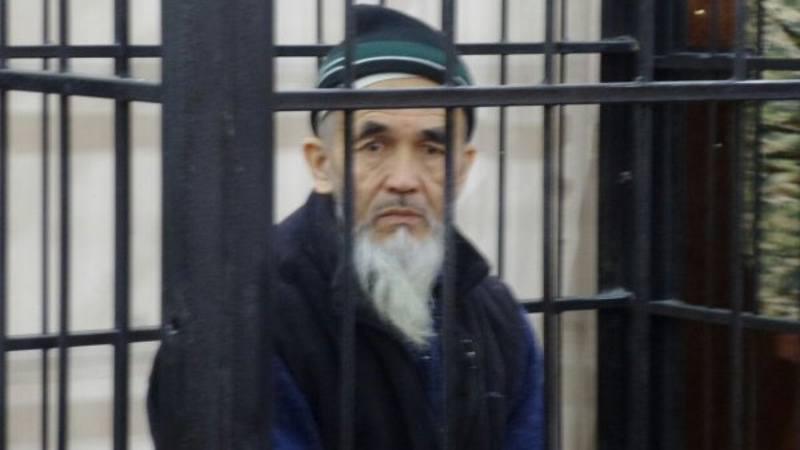
Mary Lawlor calls death of human rights defender Askarov a stain on Kyrgyzstan’s reputation,

July 31, 2020

The death in prison of human rights defender Azimjan Askarov, who for 10 years had unsuccessfully challenged his life sentence, shows a cruel disregard for human rights in Kyrgyzstan, says said Mary Lawlor, UN Special Rapporteur on the situation of human rights defenders.[see: https://humanrightsdefenders.blog/2020/07/26/kyrgyzstan-activist-askarov-dies-in-prison-after-decade-battling-tainted-conviction/

I was deeply saddened to hear the news of Mr. Askarov’s death, despite multiple requests for his release on humanitarian grounds as his health deteriorated significantly in prison,”

Although the Kyrgyz Government shared detailed information on court proceedings and medical care afforded to Askarov, she criticized the government for not taking concerns about his health seriously.

“We learned in June that, in the midst of COVID-19, and despite his age and pre-existing conditions, Mr. Askarov did not qualify for early release under Kyrgyz law,” Lawlor said. “I now question whether more could have been done to protect his health.”

In the days before Askarov’s death, his lawyer made a number of urgent medical appeals to authorities after the 69-year-old fell ill with a cough, fever, aches and pains, and had difficulty eating and walking. It was only on 24 July 2020, when he had already been sick for 10 days, that he was transferred to a prison medical facility, where he died the following day.

“Mr. Askarov’s case should act as a reminder to all states of the serious and grave threat that prisoners in at-risk categories face during the COVID-19 pandemic,” she said. She stressed that human rights defenders and all those detained without sufficient legal basis, or most at risk of the virus, should be released…

Lawlor’s call has been endorsed by the Special Rapporteur on minority issues, Fernand de Varennes; the Special Rapporteur on the independence of judges and lawyers, Diego García-Sayán; and the Special Rapporteur on torture and other cruel, inhuman or degrading treatment or punishment, Nils Melzer.

https://akipress.com/news:646397:Death_of_human_rights_defender_Azimjan_Askarov_a_stain_on_Kyrgyzstan_s_reputation,_says_UN_expert/

UN Human Rights Council concluds 44th session and appoints four special rapporteurs, including Irene Khan

July 20, 2020

Thanks to ReliefWeb‘s detailed coverage of the UN Human Rights Council:

On 17 july The Human Rights Council adopted four resolutions dealing with the promotion and protection of human rights in the context of peaceful protests ; the situation of human rights in the Syrian Arab Republic ; the Social Forum ; and the contribution of respect for all human rights and fundamental freedoms to achieving the purposes of the Charter of the United Nations. It also appointed four Special Procedure mandate holders, and concluded its regular forty-fourth session.

The Council also appointed four new Special Procedure mandate holders : Marcos A. Orellana (Chile) for the position the Special Rapporteur on the implications for human rights of the environmentally sound management and disposal of hazardous substances and wastes ; Irene Khan (Bangladesh) for the position of the Special Rapporteur on the promotion and protection of the right to freedom of opinion and expression ; Tlaleng Mofokeng (South Africa) as Special Rapporteur on the right of everyone to the enjoyment of the highest attainable standard of physical and mental health ; and Siobhán Mullallay (Ireland) as the Special Rapporteur on trafficking in persons, especially women and children.

Yackoley Kokou Johnson, Vice-President of the Council and Rapporteur, noted that during the session, the Council had held 29 meetings, seven debates and 35 interactive dialogues, including with the High Commissioner on her annual report, as well as with 22 Special Procedure mandate holders, two commissions of inquiry and two special representatives of the Secretary-General, covering over 50 human rights themes and 40 country situations.

Elisabeth Tichy-Fisslberger, President of the Council, concluded by thanking those present for their dedication, flexibility and creativity in implementing many precautionary measures, proving that the Council could continue to do its important work in these difficult times.

The Human Rights Council is scheduled to hold its forty-fifth session from 14 September to 2 October.

https://reliefweb.int/report/world/human-rights-council-adopts-four-resolutions-appoints-four-special-procedure-mandate__________

Turkey engages in abduction of Turkish nationals living abroad through secret agreements with other states according to UN letter

July 11, 2020

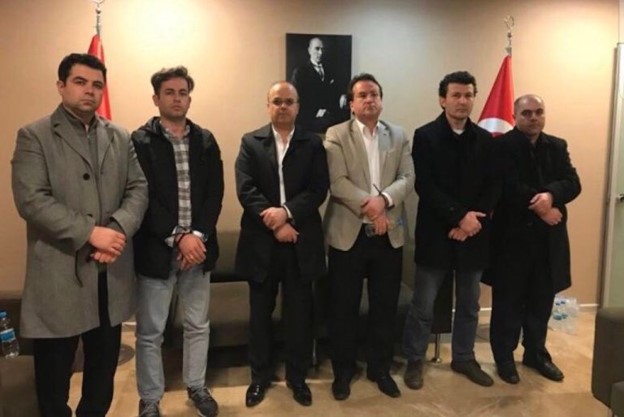
Turkish nationals who were abducted in Kosovo were kept for a time at the Turkish embassy premises.

On 9 July 9, 2020 the Nordic Monitor higlighted the shocking news that the Turkish government has signed bilateral security cooperation agreements with multiple states that were phrased ambiguously to allow for the expulsion or abduction of Turkish nationals living abroad, This is based on a joint UN letter on 5 May 2020.

Four UN rapporteurs/experts sent a joint letter to the Turkish government to express their concern about the “systematic practice of state-sponsored extraterritorial abductions and forcible return of Turkish nationals from multiple States to Turkey.

Joint UN letter on systematic practice of state-sponsored extraterritorial abductions and forcible return of Turkish nationals from multiple States to Turkey, see: https://spcommreports.ohchr.org/TMResultsBase/DownLoadPublicCommunicationFile?gId=25209

The Government of Turkey, in coordination with other States, is reported to have forcibly transferred over 100 Turkish nationals to Turkey, of which 40 individuals have been subjected to enforced disappearance, mostly abducted off the streets or from their homes all over the world, and in multiple instances along with their children,” the letter said.

Nordic Monitor previously reported how the content of Turkey’s security agreements has changed in parallel to the transformation of national legislation and that the new documents contained ambiguous copy-paste phrases designed to suppress government opponents outside the country.

[The Turkish] Government has signed bilateral security co-operation agreements with multiple States allegedly containing broad and vague references to combatting terrorism and transnational crime. Sources claim that the agreements have been phrased ambiguously to allow for expulsion or abduction of anyone deemed to be a ‘security risk’ from third countries party to the agreements. There appears to be a clear link in the timing of the alleged operations – most, if not all, have been carried out within two years since the agreements entered into force. For instance, allegations are made that Turkey has signed secret agreements with several States, including Azerbaijan, Albania, Cambodia and Gabon, where several operations are reported to have taken place,” the letter stated….

Furthermore, rapporteurs, with reference to statements by Turkish officials, exposed the fact that over 100 alleged members of the Gülen movement have been abducted abroad by Turkish intelligence and brought back to Turkey as part of the Turkish government’s systematic global manhunt.

“Turkish authorities have not only acknowledged direct responsibility in perpetrating or abetting abductions and illegal transfers, but have also vowed to run more covert operations in the future. On September 21, 2018, it is alleged that Turkey’s Presidential Spokesperson stated during a press conference that the Government would continue its operations against the Hizmet Movement, similar to the one in Kosovo (March 29, 2018).”….

We note in this respect that deprivation of nationality for the sole purpose of facilitating expulsion or removal goes against international law norms and standards. Finally, we wish to highlight that violations of international human rights obligations resulting from these agreements engage Turkey’s responsibility under international law as well as the third countries parties to the agreements” the letter said….

https://www.nordicmonitor.com/2020/07/turkey-signed-secret-agreements-with-several-states-to-conduct-state-sponsored-extraterritorial-abductions-a-joint-un-letter-underlines/

That Turkey takes an aggressive stand on anything that smacks like terrorism was made clear again on 7 July 2020 when Turkey’s Foreign Ministry slammed recent remarks by Sweden’s foreign minister against Turkey’s military operation in northeastern Syria while meeting via videolink with members of the PYD/YPG/PKK terrorist organization.  

Essentially this meeting was not the first in which Ann Linde came into contact with members of the terrorist organization. She previously held talks with members of the terrorist organization and participated in activities organized by people associated with the terrorist organization,” the ministry said late Thursday in a statement.

It is a shame that so-called human rights defenders, who are becoming an instrument to the terrorist organization’s smear campaign, ignore the massacres, crimes and oppression…committed by these terrorists in Syria,” it stressed. [what the term “human rights defenders” here means is not clear] – https://www.aa.com.tr/en/turkey/turkey-slams-swedish-fm-for-meeting-with-terror-group/1905510

UN Experts Appalled by the Enforced Disappearance of Idris Khattak even though now re-appeared

June 30, 2020

UN experts no only jointly addressed three big countries [see: https://humanrightsdefenders.blog/2020/06/27/un-experts-address-3-big-ones-usa-china-and-india/] but on 30 june 2020 a group of experts also spoke out on the re-appearance of Idris Khattak, a human rights defender who went missing last year (https://humanrightsdefenders.blog/2019/11/25/how-human-rights-defender-idris-khattak-went-missing-in-pakistan/)

While welcoming of course the disclosure by the Pakistani Government of the whereabouts of Khattak, they strongly condemned his enforced disappearance. On 16 June 2020, the Pakistani authorities acknowledged for the first time that he has been in the custody of law enforcement authorities and detained incommunicado since then.

“The enforced disappearance of Mr. Khattak, which began over seven months ago, is an intolerable attack on his legitimate work of monitoring, documenting and advocating against a range of human rights and minority violations in the Khyber Pakhtunkhwa and the former Federally Administered Tribal Areas in Pakistan,” the independent experts said.

Even today, Mr. Khattak remains deprived of the most basic protections of the law, and his enforced disappearance subjected him and his family to severe and prolonged suffering, that could amount to torture,” the experts said. “Given the arbitrariness of Mr. Khattak’s arrest and detention, and the very serious violations of his integrity and procedural rights, we call on the Government of Pakistan to immediately release Mr. Khattak and to provide him and his family with adequate redress and rehabilitation,” said the experts..

The experts stressed that there can be no justification for the Government’s failure to end enforced disappearances and that any such violation must be investigated, prosecuted and punished.

Truth and justice must be served, both in the case of Idris Khattak and for countless other victims and their families in Pakistan. State-sponsored disappearances and related impunity may amount to a crime against humanity and must end now,” they said.

https://www.ohchr.org/EN/NewsEvents/Pages/DisplayNews.aspx?NewsID=26010&LangID=E

UN experts address 3 big ones: USA, China and India

June 27, 2020
Home

Joint statements by groups of UN experts are becoming more frequent, with at least three this month. When it comes to major powers like the USA, China and India – who are rather sensitive when criticised – there must be safety in numbers:

Addressing the USA after George Floyd..

On 5 June 2020 nearly 30 independent experts appointed by the UN Human Rights Council called for the United States to reform its criminal justice system in the wake of a recent spate of killings of African Americans, including at the hands of the police. In their statement they urged the US authorities to address systemic racism and racial bias, and to conduct independent investigations into cases of excessive use of force by police officers.

The UN human rights experts charged that these killings involved impunity, disregard or depravity toward human life, and the use of public spaces to assert racial control, with each characteristic of a modern-day lynching. “The latest videos to surface showing white men chase, corner, and execute a young man who was out jogging, or showing an officer kneeling with his weight on a man’s neck for eight minutes shock the conscience and evoke the very terror that the lynching regime in the United States was intended to inspire”, they said.

With millions of Americans taking to the streets, the experts also expressed concern about police response to these protests. They said demonstrations have been marked by violence, arbitrary arrest, militarisation and the detention of thousands of protesters. Journalists of colour have also been targeted and detained, some of whom have faced violence and harassment.

UN Experts Urge India To Release Protest Leaders

On 26 June 2020 13 UN experts jointly called on India to immediately release human rights defenders who have been arrested for protesting against changes to the nation’s citizenship laws. “These defenders, many of them students, appear to have been arrested simply because they exercised their right to denounce and protest against the CAA (Citizenship Amendment Act), and their arrest seems clearly designed to send a chilling message to India’s vibrant civil society that criticism of government policies will not be tolerated,” the experts said.

[see also: https://humanrightsdefenders.blog/2020/03/05/indias-overblown-notion-of-sovereignty-no-to-un-advice-for-supreme-court/]

Authorities should immediately release all human rights defenders who are currently being held in pre-trial detention without sufficient evidence, often simply on the basis of speeches they made criticising the discriminatory nature of the CAA,” they said. (Meeran Haider, Gulfisha Fatima, Safoora Zargar, Asif Iqbal Tanha, Devangana Kalita, Natasha Narwal, Khalid Saifi, Shifa Ur Rehman, Dr. Kafeel Khan, Sharjeel Imam, Akhil Gogoi.)

The experts also highlighted their concern that the authorities’ response to the protests seemed discriminatory. It appears they have not similarly investigated allegations of incitement to hatred and violence made by CAA supporters, some of whom are reported to have chanted “shoot the traitors” at counter-rallies.

UN experts call for decisive measures to protect ‘fundamental freedoms’ in China

On 26 June 2020 almost 50 UN independent experts on Friday to express their continuing alarm, urging the country to “abide by its international legal obligations”.

After having “repeatedly communicated” their concerns, they highlighted the repression of protests and democracy advocacy in the Hong Kong; impunity for excessive use of force by police; the alleged use of chemical agents against protesters; the alleged sexual harassment and assault of women protesters in police stations; together with the alleged harassment of health care workers.

The experts also raised their “grave concerns” on issues ranging from the collective repression of specific communities – “especially religious and ethnic minorities, in Xinjiang and Tibet” – to the detention of lawyers and prosecution – in addition to disappearances – of human rights defenders across the country. .

They urged China to invite civil and political rights monitors to conduct independent missions “in an environment of confidentiality, respect for human rights defenders, and full avoidance of reprisals” and encouraged the UN Human Rights Council (HRC) to urgently monitor Chinese human rights practices. 

https://news.un.org/en/story/2020/06/1065722

https://www.scoop.co.nz/stories/WO2006/S00162/un-experts-urge-india-to-release-protest-leaders.htm

https://news.un.org/en/story/2020/06/1067312

Human Rights Defenders and the 44th session of the UN Human Rights Council

June 25, 2020

The ISHR published on 24 June its usual and irreplacable “HRC44 – Key issues on agenda of June 2020 session”

As usual I have lifted out of this the issues that would seem to affect most directly Human Rights Defenders. To stay up-to-date on all issues: follow @ISHRglobal and #HRC44 on Twitter, and look out for its Human Rights Council Monitor.

The UN Human Rights Council (the Council) will hold its 44th regular session at Palais des Nations in Geneva from 30 June to 21 July 2020.

Modalities for participation in HRC44

State delegations not wishing to enter the plenary room physically will be able to deliver their statements by pre-recorded video-message, as provided for under HRC decision 19/119. Similarly, NGOs in consultative status with ECOSOC will be given the opportunity to do the same insofar as interactive dialogues, panels and UPR adoptions are concerned. It won’t be possible to hold “official” side events during the 44th session (online or in-person). Any events happening on the sidelines of the session will be considered independent events and won’t be publicised in the Bulletin of Informal meetings by the Secretariat. Read here the information note by the Secretariat which is updated according to the latest information, and an additional explainer by HRC-net.  

Human Rights implications of COVID-19

The High Commissioner will present an oral update on the human rights impact of COVID-19 at the 44th session, as mandated by the presidential statement adopted by the Council in May 2020. The presidential statement also calls on the High Commissioner to produce a report on the impact of the COVID-19 pandemic on the enjoyment of human rights around the world to be presented at the 46th session in March 2021. In addition to their previously mandated reports, some mandateholders will present additional reports to address the impact of COVID-19 as related to their mandate, including the Special rapporteur on freedom of opinion and expression, David Kaye.  [for some of my earlier posts on covid and human rights see: https://humanrightsdefenders.blog/tag/covid-19/]

Here are some highlights of the session’s thematic discussions:

Business and human rights

At this session, the Working Group on Business and Human Rights is expected to present reports on their activities over 2019, including a country visit to Honduras and on the theme of anti-corruption and the UN Guiding Principles (UNGPs). They are also meant to present groundbreaking guidance on human rights defenders and the role of business. ISHR expects that such guidance should provide companies with concrete suggestions for how to engage human rights defenders in the development and implementation of their human rights policies. It is important that the guidance explains why this is not simply good practice, but is also aligned with the Guiding Principles’ word and spirit – and thus should be widely mainstreamed for any company committed to the UNGPs.  There will tentatively be a resolution presented to renew the mandate of the UN Working Group on Business and Human Rights, as well as to welcome the thematic reporting.

Sexual orientation and gender identity 

ISHR joined a coalition of 187 organisations to draw the attention of the Human Rights Council to the situation of LGBTI persons and those who defend their rights in the context of the COVID-19 pandemic outbreak. In line with the call to action signed by 96 human rights experts, organisations working for the protection of the human rights of persons of diverse sexual orientation, gender identity and expression and sex characteristics (SOGIESC) globally urged States and stakeholders to ensure that this public health emergency will neither exacerbate existing prejudices, inequalities or structural barriers, nor lead to increased violence and discrimination [see: https://humanrightsdefenders.blog/2020/06/11/coalition-of-187-global-organisations-issues-joint-statement-re-the-impact-of-covid-19-pandemic-on-lgbti/]

Reprisals

Reports of cases of intimidation and reprisal against those cooperating or seeking to cooperate with the UN not only continue, but grow. Intimidation and reprisals violate the rights of the individuals concerned, they constitute violations of international human rights law, and undermine the UN human rights system. [agains for earlier posts see: https://humanrightsdefenders.blog/tag/reprisals/]

During the 42nd session, the Council adopted a resolution which listed key trends such as the patterns of reprisals, increasing self-censorship, as well as the use of national security arguments and counter-terrorism strategies by States as justification for blocking access to the UN. The resolution acknowledged the specific risks to individuals in vulnerable situations or belonging to marginalised groups, and called on the UN to implement gender-responsive policies to end reprisals. The Council called on States to combat impunity and to report back to it on how they are preventing reprisals, both online and offline.

Item 5 of the Human Rights Council’s agenda provides a key opportunity for States to raise concerns about reprisals, and for governments involved in existing cases to provide an update to the Council on any investigation or action taken toward accountability to be carried out.

Other thematic reports :

At this 44th session, the Council will discuss a range of civil, political, economic, social and cultural rights through dedicated debates with the mandate holders, including interactive dialogues with:

The Working Group on the issue of human rights and transnational corporations and other business enterprises  (includes recommendations from 2019 visit to Peru)

The Special Rapporteur on contemporary forms of racism, racial discrimination, xenophobia and related intolerance 

The Special Rapporteur on extrajudicial, summary or arbitrary executions 

The Special Rapporteur on the rights to freedom of peaceful assembly and of association 

The Special Rapporteur on the promotion and protection of the right to freedom of opinion and expression 

In addition, the Council will hold dedicated debates on the rights of specific groups including:

  • The Special Rapporteur on trafficking in persons, especially women and children 
  • The Special Rapporteur on the independence of judges and lawyers 
  • The Special Rapporteur on the human rights of migrants 
  • The Working Group on discrimination against women and girls 
  • The Special Rapporteur on the human rights of internally displaced persons 
  • The Special Rapporteur on violence against women, its causes and consequences 
  • The Independent Expert on protection against violence and discrimination based on sexual orientation and gender identity 

#HRC44 | Country-specific developments

China (Hong Kong and Uyghur regions)

Violations in China, especially those linked to freedom of association, were made even more clear during the government’s efforts to respond to the COVID-19 epidemic. …..States should ensure continued calls for access to UN human rights experts, in line with last year’s joint letter condemning China’s suppression of minorities. Finally, following nearly a year of protests – largely of peaceful civilians –  the central government in Beijing launched an initiative to draft and pass National Security Legislation in Hong Kong. This alarming development was foreshadowed by increasing police violence and use of chemical weapons; the arrest and political prosecution of more than a dozen pro-democracy leaders; and further restrictions on the free press. Many activists, and the European Parliament, are calling for UN Secretary-General António Guterres to appoint an envoy, rightly recognising that China’s actions violate international agreements aimed at ensuring peace and security.

United States of America

Last week, the Council held an urgent debate and adopted a resolution in reaction to systemic racism and police violence in the US and elsewhere. The UN Special Rapporteur on contemporary forms of racism and the UN Working Group on Experts on People of African Descent had also voiced their support for an international commission of inquiry. They have urged the Human Rights Council to ensure the following outcomes from the debate: (1) the creation of an international commission of inquiry to investigate systemic racism in law enforcement in the United States; and (2) the creation of a thematic international commission of inquiry to investigate systemic racism in law enforcement globally, with a focus on systemic racism rooted in legacies of colonialism and transatlantic slavery. They stressed that “both measures described above are necessary and cannot be substituted for one another”.

Saudi Arabia

Women human rights defenders (WHRDs) have been in prison for over two years, only because they demanded that women be treated equally as men, and no one has been held accountable for their torture. While the Council has sustained pressure on Saudi Arabia in 2019, it is essential that this scrutiny continues as the situation on the ground has not improved. ISHR calls on all States to jointly call on Saudi Arabia to immediately and unconditionally release the WHRDs and drop the charges against them; and implement the bench-marks set out in the two joint statements delivered by Iceland and Australia in 2019, underlining that should these benchmarks not be met, more formal Council action would follow.

Saudi Arabia is running for Human Rights Council election in October 2020 and hosting the G20 in November 2020. These all provide windows of opportunity to push for the immediate and unconditional release of the women human rights defenders and all those detained for exercising their rights. 

Nicaragua

The COVID-19 crisis has not prevented the Nicaraguan government from making further use of repressive methods to continue targeting released political prisoners, human rights defenders, as well as indigenous people and other social groups, and their relatives. In a rapidly-deteriorating human rights situation, the authorities’ dangerous denial and inaction in the face of the pandemic have additionally fueled an alarming health crisis.

It is in this context that Council Members renewed a resolution on Nicaragua this week at the resumed 43rd session of the Human Rights Council. ISHR joined Race and Equality and a number of national and international organisations in urging the Council to ensure strong support for the resolution on the human rights situation in Nicaragua. To ensure the international community is fully informed of the worsening national situation, the resolution requests the High Commissioner to prepare a report and two oral updates, the first of which should be presented at the Council’s 44th session.

Honduras

The Working Group on Business and Human Rights will present the report on its official visit to Honduras (carried out between the 19 and 28 August 2019). …According to the end of mission statement, a significant number of human rights defenders who work for the respect and protection of human rights in the context of business activity have been arbitrarily arrested, intimidated, stigmatised, criminalised, threatened and some killed.

This was particularly evident in reference to those working in the field of extractive and hydro-electric industries.  The murder of leading land,environment and indigenous peoples´ rights defender Berta Cáceres, who had been campaigning against the construction of the Agua Zarca dam, is one case cited where impunity is ongoing.  Individuals responsible for the killing have been tried and jailed. However, those suspected of planning the crime, including senior management from the company building the dam (DESA) according to the independent mission of experts GAIPE, have not been investigated or prosecuted. [see also: https://humanrightsdefenders.blog/2020/06/10/nina-lakhanis-who-killed-berta-caceres-reviewed/]. Another Special Procedure expert – the Special Rapporteur on the independence of judges and lawyers – will also be presenting a report on its official visit to Honduras in August 2019. After completion of the visit, he called on Honduras to take urgent action to end corruption and guarantee an independent judiciary, stressing that ‘the justice system, as well as the political class’ are being ‘called strongly into question by the citizens’.

Burundi

The Commission of Inquiry on Burundi will present its oral briefing during the 44th session of the HRC. ISHR continues to remain highly concerned about the human rights situation in Burundi and its refusal to cooperate with the Council’s mechanisms.

Egypt

Seven UN experts have expressed concern about the collective and corrosive effects of Egypt’s counter-terrorism laws and practices on the promotion and protection of human rights. They stated that “Despite repeated communications by UN experts over arbitrary detention of individuals, human rights defenders and activists, the Egyptian Government has not changed its laws of practice”. The ‘Terrorism Circuit courts’ in Egypt, are enabling pre-trial detention as a form of punishment including against human rights defenders and journalists, such as Ibrahim Metwally, Mohamed El-Baqer and Esraa Abdel Fattah, Ramy Kamel, Alaa Abdel-Fattah, Patrick Zaky, Ramy Shaat, Eman Al-Helw, Solafa Magdy and Hossam El-Sayed. All of the individuals that the Special Procedures and the High Commissioner have written about since September 2019 are still in pre-trial detention by these courts. Once the terrorism courts resumed after they were suspended due to COVID-19, they renewed their detention retroactively.

The government’s response to the UPR in March 2020 demonstrated its lack of political will to address key concerns raised by States and to engage constructively with the Council. For example, the government refused to acknowledge the systematic and widespread attacks against defenders, the practice of torture and ill-treatment in detention centres, and to receive visits by Special Rapporteurs on torture and human rights defenders. The government claimed that no one is detained for exercising their rights, despite the fact that the UN Working Group on Arbitrary Detention found that arbitrary detention is a systematic problem in Egypt and could constitute a crime against humanity.

ISHR urges States to call on Egypt to immediately and unconditionally release all those detained for exercising their human rights, to stop using pre-trial detention as a punishment, and to take immediate measures to guarantee their rights to contact their families on a regular and continuous basis and to ease sending and receiving letters, food and medical supplies to them.

Philippines 

The OHCHR issued its report (A/HRC/44/22) on the human rights situation in the Philippines, drawing on extensive engagement with and information provided by civil society in the country, the region and globally. The report refers to the killing of 208 human rights defenders, journalists and trade unionists, including 30 women, between January 2015 and December 2019. Confirming practices of vilification, criminalisation, restrictions of fundamental rights, as well as the continuing attacks including ‘red-tagging,’ the report notes existing impunity and the failure of domestic mechanisms to ensure accountability. The presentation of this report provides an important opportunity for debate on the key findings, and to consider options for how to advance recommendations to address the government’s violations of human rights overall, and restrictions on human rights defenders in particular.

See also: https://humanrightsdefenders.blog/2020/06/05/how-a-philipines-website-does-the-reporting-on-the-un-findings-on-human-rights-violations/

Other country situations:

The Council will hold an interactive dialogue on the High Commissioner’s annual report on 2 July 2020. The Council will consider reports on and is expected to consider resolutions addressing a range of country situations, in some instances involving the renewal of the relevant expert mandates. These include:

  • Interactive Dialogue with the High Commissioner on the human rights situation of Rohingya people 
  • Enhanced Interactive Dialogue with the High Commissioner on the situation of human rights in the Philippines 
  • Interactive Dialogue with the SR on the situation of human rights in Eritrea
  • Oral update by the High Commissioner on the situation of human rights in Nicaragua
  • Interactive Dialogue with the SR on the situation of human rights in Belarus 
  • Interactive Dialogue with the High Commissioner on the situation of human rights in the Bolivarian Republic of Venezuela
  • Interactive Dialogue with the Commission of Inquiry on Burundi 
  • Interactive Dialogue with the SR on the situation of human rights in Myanmar 
  • Interactive Dialogue with the Commission of Inquiry on the Syrian Arab Republic 
  • Interactive Dialogue with the SR on the situation of human rights in the Palestinian Territories occupied since 1967 
  • Enhanced ID on the oral reports of the Government of the Sudan and OHCHR on progress towards the opening of a country office 
  • Oral update of the High Commissioner on cooperation with Georgia 

Adoption of Universal Periodic Review (UPR) reports

During this session, the Council will adopt the UPR working group reports on Armenia, Grenada, Guinea, Guinea-Bissau, Guyana, Kenya, Kiribati, Kuwait, Kyrgyzstan, Lao People’s Democratic Republic, Lesotho, Spain, Sweden, and Turkey.

ISHR supports human rights defenders in their interaction with the UPR. We publish and submit briefing papers regarding the situation facing human rights defenders in some States under review and advocate for the UPR to be used as a mechanism to support and protect human rights defenders on the ground. This session of the Council will provide an opportunity for Turkey, Kuwait and Guinea  to accept recommendations made in relation to human rights defenders, as proposed in ISHR’s briefing papers.

#HRC44 | Council programme, appointments and resolutions

During the organisational meeting for the 44th session held on 12 and 15 June 2020, the President of the Human Rights Council presented the programme of work. It includes five panels of discussion and 81 reports. States also announced at least 17 resolutions. 

Appointment of mandate holders

The President of the Human Rights Council has proposed candidates for inter alia the Special Rapporteur on freedom of opinion and expression and the Special Rapporteur on trafficking.

Resolutions to be presented to the Council’s 44th session

At the organisational meeting the following resolutions were announced (States leading the resolution in brackets) especially relevant:

  1. Elimination of discrimination against women (Colombia, Mexico)
  2. Human rights situation in Eritrea (Australia, Austria, Belgium, France, Germany, Netherlands) mandate renewal 
  3. Business and human rights (Norway, Russian Federation, Ghana, Argentina) Working Group + Accountability and Remedy project mandate renewals
  4. Extrajudicial, summary or arbitrary executions (Sweden) mandate renewal
  5. Human rights and climate change (Bangladesh, Philippines, Viet Nam)
  6. Independence and impartiality of the judiciary, jurors and assessors, and the independence of lawyers  (Hungary, Australia, Botswana, Maldives, Mexico, Thailand) + mandate renewal
  7. Trafficking in persons, especially women and children (Germany, Argentina, Philippines) + mandate renewal 
  8. Freedom of opinion and expression: access to information (Canada, Namibia, Brazil, Fiji, Netherlands, Sweden) 
  9. Rights of persons with disabilities (Mexico, New Zealand) mandate renewal 
  10. The human rights situation in Belarus (EU) 
  11. The right to peaceful protest (Switzerland, Costa Rica)

Panel discussions

During each Council session, panel discussions are held to provide member States and NGOs with opportunities to hear from subject-matter experts and raise questions. All panel discussions are broadcast live and archived on http://webtv.un.org. Five panel discussions are scheduled for this upcoming session:

  1. Annual full-day meeting on the rights of the child (two panels, theme: “Realizing the rights of the child through a healthy environment”) 
  2. Annual full-day discussion on the human rights of women 
  3. Panel discussion on the impacts, opportunities and challenges of new and emerging digital technologies with regard to the promotion and protection of human rights; including an oral update of the Advisory Committee on its report on new and emerging digital technologies 
  4. Panel discussion on promoting and protecting the rights of persons with disabilities in the context of climate change 
  5. Annual thematic panel discussion on technical cooperation in the promotion and protection of human rights (theme: “Upholding the human rights of prisoners, including women prisoners and offenders: enhancing technical cooperation and capacity-building in the implementation of the Nelson Mandela Rules and the Bangkok Rules”)

For the latest session see: https://humanrightsdefenders.blog/2020/02/24/human-rights-defenders-issues-on-the-agenda-of-43rd-human-rights-council/

https://www.ishr.ch/news/hrc44-key-issues-agenda-june-2020-session

4 June 2020 Webinar on business and human rights in the context of COVID-19

May 27, 2020

Having just posted a report on the prolifiration of intergovernmental responses to the Corona virus pandemic [https://wp.me/pQKto-4ob], it perhaps good to point to the webinar that Business & human rights is organising on 4 June 2020 on Risks and Protection of Human Rights Defenders.

This webinar will have a focus on the risks and protection of HRDs, particularly labour rights and land/environmental defenders and ensuring their participation in the post-pandemic recovery.

Date & Time: 4 June, 4.15 – 5.15 (ICT) / 10.15 – 11.15 (BST)

It will have two parts: a closed and an open session. The closed session – happening on Jitsi – will be a safe space for civil society organisations, human rights defenders, including labour rights and land and environmental defenders, labour unions, and journalists to jointly define practical recommendations on what governments and companies can do to address human rights situation, particularly of labour, land, environmental defenders and civic freedoms, in the context of COVID-19. This part of the webinar is invite-only.

The second part – happening on Zoom – will be an open session, will be an opportunity for civil society, defenders, and journalists to interact with government and business representatives and discuss how companies, governments and civil society can work together to ensure all stakeholders are able to shape recovery efforts, and make sure they are human rights compliant. Anyone is free to join us in the public session by RSVP-ing below.

Proliferation of Human Rights Bodies’ Guidance on COVID-19

May 27, 2020

On 22 May 2020 in “Just Security” [see: https://www.justsecurity.org/about-us/) published a post ” Mapping the Proliferation of Human Rights Bodies’ Guidance on COVID-19 Mitigation “. It is in some ways rather critical of the response by intergovernmental bodies in the human rights area when it comes to the COVID-19 pandemic. It starts by pointing out that they have collectively put out more than 150 statements on respecting human rights during the pandemic since late February. ..To help those interested in keeping track of the many statements, the International Justice Resource Center (IJRC) has published a webpage – COVID-19 Guidance from Supranational Human Rights Bodies – listing and linking to all relevant press releases and other guidance. This article serves to provide an overview of – and initial response to – the nature, scope, and sources of human rights advice available to States in the context of the pandemic. Having myself contributed with my blog to the proliferation of policy repsonse by NGOs and IGOs, I feel that this piece deserves full citation:

Read the rest of this entry »

17 May was International Day against Homophobia: COVID-19 makes things worse

May 18, 2020

The commemoration on 17 May comes as the world continues to battle the COVID-19 pandemic which has increased the vulnerability of lesbian, gay, bisexual, transgender and intersex (LGBTI) people. On the eve of the International Day Against Homophobia, Transphobia and Biphobia (IDAHOBIT) a large group of United Nations and international human rights experts (for names see the link below) call on States and other stakeholders to urgently take into account the impact of COVID-19 on lesbian, gay, bisexual, transgender and gender diverse (LGBT) persons when designing, implementing and evaluating the measures to combat the pandemic.

…..
COVID-19, and the measures taken to address it, exacerbate inequalities and discrimination. The existence of criminalization laws, for example, makes LGBT persons more vulnerable to police abuse and arbitrary arrest and detention in the context of movement restrictions and curfews. While contributing to the fight against the pandemic by staying at home, LGBT children, youths and elders are forced to endure prolonged exposure to unaccepting family members, which exacerbates rates of domestic violence and physical and emotional abuse, as well as damage to mental health. In many jurisdictions, LGBT persons, particularly those most impoverished or without proper documentation, rely overwhelmingly on informal economies made impossible by COVID-19 restrictions. The socio-economic consequences of the pandemic and the loss of income might also increase the vulnerabilities of LGBT persons to human trafficking and sexual exploitation. The reallocation of health resources has also created or exacerbated shortages of antiretrovirals for those living with HIV, while also impacting the ability of trans men and women to receive hormonal therapy or gender-affirming care. Gender-based curfew laws and policies have reportedly condemned gender-diverse persons to permanent seclusion while making trans individuals targets for humiliation and violence when going out.  

The pandemic has also created a context conducive to increased persecution. Some States have enacted measures which intentionally target LGBT persons under the guise of public health, including proposing legislation to deny transgender and gender diverse persons of their legal recognition. Hate speech explicitly or implicitly inciting violence against LGBT persons has been on the rise, including discourse by prominent political or religious leaders blaming the pandemic on the existence of LGBT persons in the community. Surveillance and other digital technologies enacted to track COVID-19 carriers increase risks of infringing privacy and exacerbating stigma.

………We therefore urge States and other stakeholders, on the eve of this 17 May 2020 and in times of COVID-19, to give visibility to and protect LGBT persons in the context of the pandemic. We call on States to pursue all means necessary – including conducting research, adopting legislation, public policy, and ensuring access to justice mechanisms – to ensure that this public health emergency will neither exacerbate existing misconceptions, prejudices, inequalities or structural barriers, nor lead to increased violence and discrimination against persons with diverse sexual orientations and gender identities. We urge all stakeholders, particularly States, to urgently implement lines of action designed to sustain and ensure the continuity of the work of civil society and human rights defenders – the capacities existing within this sector must not be put in peril. And, to effectively meet these objectives, we urge States to engage with LGBT persons, organizations and communities in the design, implementation and evaluation of the measures adopted to respond to the pandemic.The history of LGBT persons, like others subjected to discrimination and violence, has been one of suffering, endurance and hope – a vital struggle for freedom and equality in the face of singular adversity. During the COVID-19 pandemic, we call upon State authorities to listen to the particular concerns of LGBT persons, respect their expertise over their own lives and communities, and accept their solidarity in the construction of new realities of freedom and equality for humankind. 

Already facing bias, attacks and murder simply for who they are or whom they love, many LGBTI people are experiencing heightened stigma as a result of the virus, as well as new obstacles when seeking health care,” added UN SG Guterres. There are also reports of COVID-19 directives being misused by police to target LGBTI individuals and organizations.”

“LGBTI people are often exposed to additional stigma, discrimination and violence, including when seeking medical services – and perhaps saddest of all, within their own families during lock-downs. They are also in some places being treated as scapegoats for the spread of the virus,” UN High Commissioner for Human Rights, Michelle Bachelet said. Referencing the theme for the international day, Ms. Bachelet urged everyone to stand up against hate and ‘break the silence’ surrounding the discrimination and violence suffered by LGBTI people.

See also: https://humanrightsdefenders.blog/2017/05/21/nine-things-everyone-needs-to-know-about-international-lgbti-rights/

https://www.coe.int/en/web/commissioner/-/covid-19-the-suffering-and-resilience-of-lgbt-persons-must-be-visible-and-inform-the-actions-of-states

https://news.un.org/en/story/2020/05/1064232