On 19 October Michel Forst, UN Special Rapporteur on Human Rights Defenders, wrote a piece for the Monitor of the ISHR under the title “No more ‘business as usual’ when it comes to business and human rights defenders”. Read the rest of this entry »
Posts Tagged ‘UN Human Rights Council’
No more ‘business as usual’ when it comes to business and HRDs
November 11, 2015Burundi: what more ‘early’ warning does one need?
November 10, 2015
MEA Laureate Mbonimpa, Burundi
- On 3 August 2015, prominent human rights defender Pierre Claver Mbonimpa – laureate of the MEA 2007 – was shot in the face and neck. He was forced to seek medical treatment abroad.
- His son-in-law, Pascal Nshimirimana, was shot dead outside his home in Bujumbura on 9 October.
- On 6 November, the body of Welly Nzitonda, the son of Mbonimpa, was found dead a few hours after he was arrested in the Mutakura neighborhood of Bujumbura where protests have taken place.
- Just before that – on 3 November – Mbonimpa spoke out on a video message from the place where is recovering: https://www.defenddefenders.org/2015/11/voices-that-cannot-be-silenced-pierre-claver-mbonimpa-speaks-out-on-burundi/
On 9 November 2015 eleven leading human rights NGOs addressed an Open Letter to the UN Human Rights Council urging them to organize a special session to prevent (further) atrocities in Burundi.
“In Defense of Life”: observer mission report to Mexico at side event Geneva
September 25, 2015
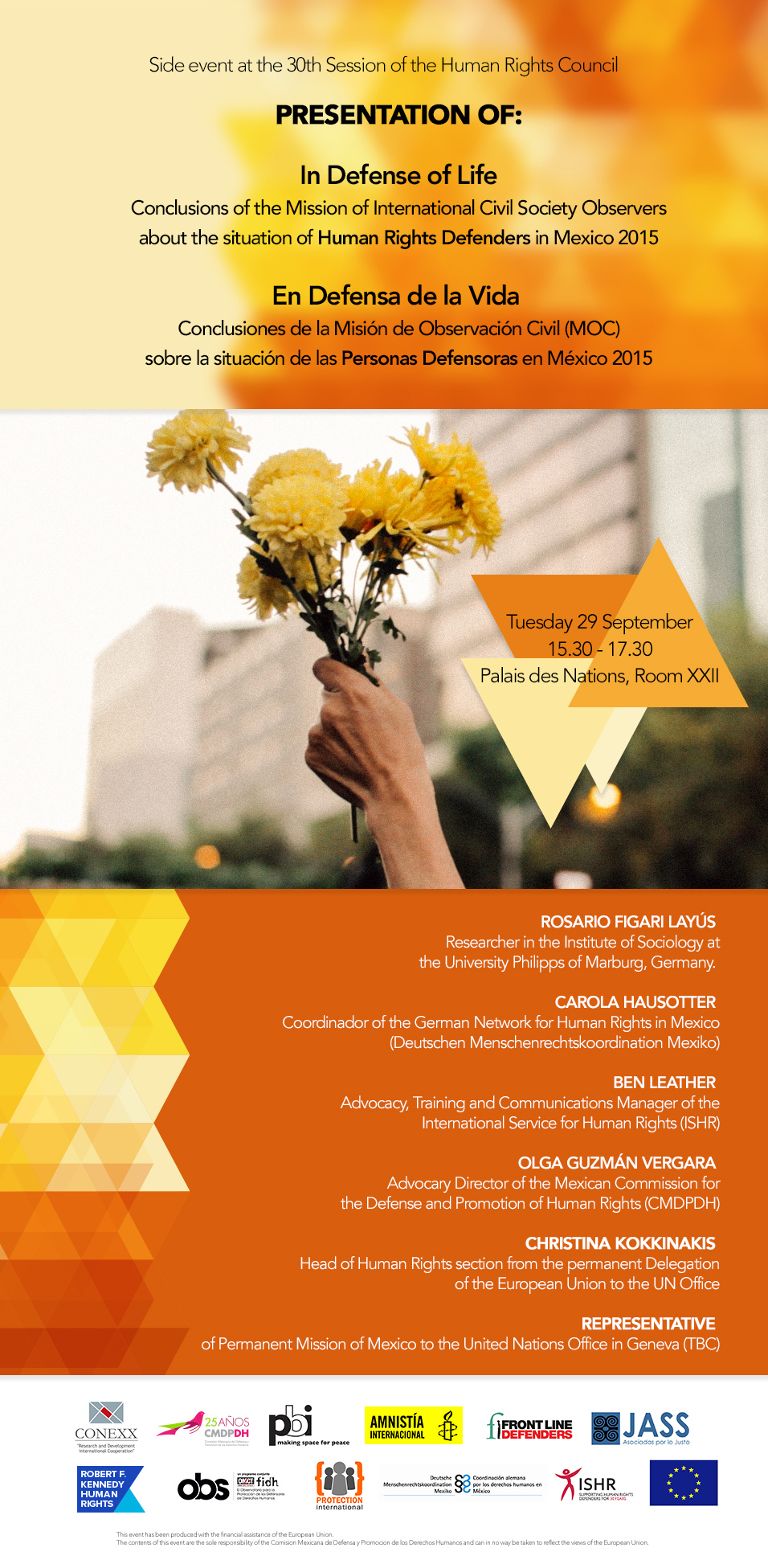
On Tuesday 29 September (15h30 – 17h30, Palais des Nations, Room XXII, Geneva), the CMDPDH, Asociación Civil and ISHR organise a side event about the situation for human rights defenders in Mexico. [A Mission of International Observers visited Mexico in November 2015 and will present its conclusions – under the title “In Defense of Life” – to the Mexican Government within the framework of the 30th session of the Human Rights Council.]
Panelists in the event are::
- Rosario Figari Layús – Researcher in the Institute for Interdisciplinary Research on Conflict and Violence (IKG) at the University of Bielefeld, Germany.
- Carola Hausotter – Coordinador of the German Network for Human Rights in Mexico (Deutschen Menschenrechtskoordination Mexiko)
- Ben Leather – Advocacy, Training and Communications Manager of the International Service for Human Rights (ISHR)
- Olga Guzmán Vergara – Advocary Director of the Mexican Commission for the Defense and Promotion of Human Rights (CMDPDH)
- Ambassador Jorge Lomónaco Tonda – Permanent Representative of Mexico to the UN in Geneva (TBC)
- Christina Kokkinakis – Head of Human Rights section from the Permanent Delegation of the European Union to the UN in Geneva
Download the flyer: HUMAN RIGHTS IN MEXICO
see previous posts: https://thoolen.wordpress.com/tag/mexico/
Human rights defender Khalef Khalifa from Kenya in the spotlight
July 9, 2015 in its July 2015 Newsletter puts the spotlight on Khalef Khalifa, Executive Director of the NGO MUHURI in Kenya.
On 8 April 2015, the official Gazette notice listed 85 companies and organisations, including MUHURI and Haki Africa, as suspected of having links to terrorism and linking them as specified entities. On 20 and 21 April, the police raided the offices of both organizations, disabling their servers, carrying away hard disks and documents, allegedly to determine whether they had been involved in tax evasion. On 28 May, the Non-Governmental Organisations’ Coordination Board announced through the media that they had de-registered the organizations. On 12 June the court dismissed all charges against MUHURI and Haki Africa on the basis that there was no evidence against them.
Khalef Khalifa (KK): As you know, on the 12th June was a good day for us as both MUHURI and Haki Africa, were entirely vindicated in court. The judge dismissed all the charges against us and said that there was absolutely no evidence to link us to terrorism in any form and specifically forbade the police or even the Minister to make any such reference in the future. However the outstanding difficulty is that he refused to unfreeze our bank accounts on the basis that we had failed to include the Central Bank in our case against the state. They have now agreed to join our case calling for the accounts to be freed but we have to wait for another hearing before the judge makes his ruling and we can begin getting back to normal.

FLD: Given the various lines of attack that were opened against MUHURI it seems as though the government was out to get you?
KK: ...we were targeted on three fronts: by the police, the Revenue Commissioners and by the NGO Board. So while the government accused us of terrorism, the Revenue Commissioners descended on our office and took away all out financial documentation to look for evidence of tax avoidance and the NGO Board lodged a complaint that we had not kept them properly informed of our activities, and in particular that we had not informed them of new appointments to our board, as required by the NGO Law. In the final verdict, while the judge said there was no evidence of involvement in terrorism, both the Revenue Commissioners and the NGO Board had to concede that we were 100% compliant with the regulations. The only thing the NGO Board could trip us up on was that while we had notified the NGO Board of the new appointments, we had not used the appropriate, and newly introduced, form. What is interesting is that in the early stages of the case the government was totally focused on pursuing a case on the basis of terrorism, but they quite quickly changed tack and started looking for any small technical failures they could find to try and make a case against us. But they failed because we have always operated in an entirely open and transparent way.
KK: The real reason for their animus against MUHURI is that we are critical of the police and have investigated their involvement in extrajudicial executions and forced disappearances. There have been at least 52 such killings and disappearances in the Mombasa region in the last two years. The police claim to be fighting terror but in fact terror is a more accurate description of the way the police themselves work. In one incident 8 people were shot dead in a church. The police claimed that it was an attack by Al Shabaab. However when the perpetrators were arrested it was clear that they were not Muslims and in fact had no affiliation to any particular group. The police then hid the names and tried to maintain the fiction of an Al Shabaab attack.
FLD: Will the work of MUHURI get back to normal now?
KK: ...As soon as the accounts are unfrozen we will continue out work as normal. For us it is clear that the government wants to intimidate and frighten MUHURI but we will not be intimidated – we will not give up.
for full interview see: HRD Spotlight: Khalef Khalifa, Kenya | Front Line Defenders.
The more general backdrop can be found in earlier Front Line messages, the 5 June appeal by the Observatory [http://www.omct.org/human-rights-defenders/urgent-interventions/kenya/2015/06/d23190/] and the statements made by NGOs on 26 June 2015 at the adoption by the UN Human Rights Council of the report of the Universal Periodic Review [UPR] of Kenya:
– International Service for Human Rights (ISHR) : Kenya should create an enabling environment for the work of human rights defenders – including repealing restrictions on NGO access to foreign funding and amending or repealing the Information Communication Amendment Bill and Media Council Bill. The statement also emphasised the risks faced by LGBTI people and organisations in Kenya as a result of the criminalisation of same-sex conduct. ‘It is crucial that the voices of human rights defenders are safeguarded and encouraged. This assists to create a vibrant, independent and diverse civil society which is essential to protect human rights, democracy and the rule of law’ said Michael Ineichen of ISHR.
http://www.ishr.ch/news/kenya-safeguard-and-encourage-essential-voices-human-rights-defenders
AllAfrica.com reports on Human Rights Watch comments: “We note Kenya’s acceptance of some important recommendations such as commitments to investigate torture and extrajudicial killings, including the killing of activist Hassan Guyo, and to fully cooperate with the International Criminal Court. But we remain concerned that there has been little tangible progress in many key areas. The ongoing abuses and recent threats to civil society illustrate a lack of commitment to implement these recommendations.”
http://allafrica.com/stories/201506260835.html
Human rights defenders and their organizations are at the heart of the protection of natural resources
June 19, 2015The link between human rights defenders and the exploitation of natural resources was the focus of this year’s report (18 June 20150 by the United Nations Special Rapporteur on the rights to freedom of peaceful assembly and of association, Maina Kiai. He called for a new treaty binding businesses to respect fundamental human rights, and for States and corporations to fully engage with civil society organizations in the context of natural resource exploitation.
“Corporations play an outsized role in the decision-making processes about exploitation of natural resources. But they are not subject to legally binding human rights obligations,” Mr. Kiai told the UN Human Rights Council during the presentation of his latest report. “It is time to address this issue more robustly; corporations must not escape responsibility to safeguard human rights.”
“I am aware that some would rather strengthen compliance with the Guiding Principles than have a binding treaty. But this should not be an either/or matter: Both should be pursued to protect human rights.”
The Special Rapporteur also highlighted States’ responsibility to recognize civil society organizations, including affected communities, as key actors in the context of natural resource exploitation. “Authorities endeavour to silence individuals and associations that express opposition to natural resource exploitation processes,” the independent expert said.
In his report, the Special Rapporteur argues that States’ and corporations pervasive disregard of communities and associations’ input in the natural resources sector is counterproductive and divisive, and is likely contributing to an erosion of confidence in the world’s prevailing economic system.
“The rights to freedom of peaceful assembly and of association are instrumental in achieving sustainable and mutually beneficial exploitation of natural resources,” he said. “These rights help foster increased transparency and accountability in the exploitation of resources and inclusive engagement throughout the decision-making chain.”
During his presentation, Mr. Kiai also warned that authorities have increasingly sought to stifle expressions of criticism and opposition by cracking down, often with unnecessary force, on peaceful protests; arresting, harassing, prosecuting and imprisoning human rights defenders; enacting restrictive legislation on associations; and interfering with the operations of civil society organizations.
“Peaceful protests are banned from sites where natural resource exploitation takes place and the situation is not any better in relation to the right to freedom of association,” he noted. “Individuals and associations who express opposition to natural resource exploitation processes are vilified as ‘anti-development’, ‘unpatriotic’, and even as ‘enemies of the State’”.
“This intolerance is reflected in countries in the global North, and the global South,” the Special Rapporteur said. “Nevertheless, I remain optimistic because of the incredible courage and determination of activists and ordinary people who refuse to be cowed or defeated, even if it means paying with their lives.”
The Special Rapporteur’s full report (A/HRC/29/25/Add.3) is at: http://ap.ohchr.org/documents/dpage_e.aspx?m=189
For the UN Guiding Principles on Business and Human Rights: http://www.ohchr.org/EN/Issues/Business/Pages/Tools.aspx
Natural resources sector: UN expert calls for binding human rights treaty for corporations.
Azerbaijan: the repressive side of the Baku Games – side event 16 June in Geneva
June 13, 2015In the context of the 29th session of the UN Human Rights Council a side event – organized by the Human Rights House Network and several other NGOs – will shine light on the severe restrictions on fundamental freedoms and the imprisonment of human rights defenders in Azerbaijan, which risk turning these European Olympics into a sad symbol of repression. Live webcast on: www.peopleinneed.cz and www.azadiq.org
Speakers:
- Dinara Yunus
Daughter of detained human rights defenders Leyla and Arif Yunus - Idrak Abbasov
Institute for Reporters’ Freedom and Safety (IRFS) - Gulnara Akhundova
International Media Support
Moderation by Florian Irminger Human Rights House Foundation
Remarks:
- Michel Forst
Special Rapporteur on the situation of human rights defenders - Maina Kiai (TBC)
Special Rapporteur on rights to freedom of assembly and association - David Kaye (TBC)
Special Rapporteur on freedom of opinion and expression
It will taken place on Tuesday, 16 June 2015, 11:00 – 13:00 in Geneva (Switzerland), Palais des Nations, room XVII.
For access and more information contact: Anna Innocenti, International Advocacy Officer, Human Rights House Foundation ( +41 22 332 25 56 )
via: Azerbaijan: the repressive side of the European Olympic Games – Human Rights House Network.
Preview of Human Rights Defenders stuff at the upcoming Human Rights Council starting 15 June
June 12, 2015The UN Human Rights Council will hold its 29th regular session at the United Nations in Geneva from 15 June to 3 July. Courtesy of the International Service for Human Rights, here is my selection of what is directly relevant to Human Rights Defenders: 
– During the session, Norway, along with other States, will deliver a statement calling on all States to ensure that human rights defenders are able to carry out their vital work free from arbitrary detention and other restrictions. Read the rest of this entry »
Human rights defender Farmonov’s jail sentence extended; time for Rapporteur on Uzbekistan
May 29, 2015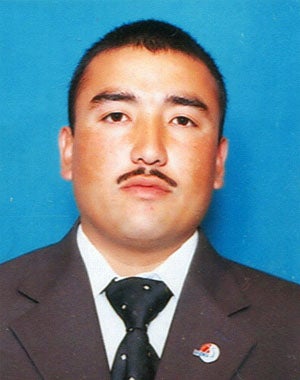
Human Rights Defender Azam Farmonov, imprisoned since 2006. © Tolib Yakubov
Uzbek authorities should immediately and unconditionally release the imprisoned human rights defender Azam Farmonov, whose sentence has been arbitrarily extended for five years by an Uzbek court, Human Rights Watch said on 28 May. In a related press statement NGOs call on the UN Human Rights Council to mark the 10th anniversary of the Andijan massacre to establish a special rapporteur on the human rights situation in Uzbekistan to hold the government accountable for ongoing, egregious abuses and the ensure sustained scrutiny and public reporting on human rights developments in the country. The Uzbek government’s serious, systematic violations and persistent refusal to cooperate with the UN’s human rights mechanisms-including by denying access to special procedures, and failing to implement key recommendations made by treaty bodies and UN member states under the Universal Periodic Review-warrant resolute Human Rights Council action.
[The arbitrary extension of Farmonov’s prison term shortly before his scheduled release date for allegedly “violating prison rules,” came to light on May 21, 2015. The EU and the UN Committee against Torture have previously called for Farmonov’s release. “Azam Farmonov has already lost nine years simply for being a human rights activist in Uzbekistan,” said Steve Swerdlow, Central Asia researcher at Human Rights Watch. “The cruel addition of five more years to his sentence is yet another sign that the Uzbek government should be made to pay a price for its abysmal human rights record.”]
Human Rights Watch has documented the practice of arbitrarily extending the sentences of people imprisoned on political charges. The action is often taken just days before the person is to be released, on bogus grounds such as possessing “unauthorized” nail clippers, saying prayers, or wearing a white shirt and may result in years of additional imprisonment.
Farmonov’s family also revealed that they had received a note Farmonov had written on toilet paper in which he appeals to United Nations Secretary-General Ban Ki-moon to raise the issue of his unjust treatment directly with President Islam Karimov and senior officials in the Uzbek government. Ban is scheduled to visit Uzbekistan from June 9 to 11 and should urge President Karimov to uphold Uzbekistan’s international human rights commitments and release all those held on politically motivated charges.
The EU, the UN Committee against Torture, and other bodies have earlier called for Farmonov’s release. In an official statement by then-European Commission president José Manuel Barroso, at a January 2011 meeting in Brussels with Karimov, Barroso raised specific human rights concerns, including Farmonov’s unjust imprisonment and ill-treatment. In its 2014 human rights dialogue with Uzbekistan, the EU noted its concern with the authorities’ practice arbitrarily extending sentences. But an EU statement on May 18 following a meeting of the EU-Uzbekistan Cooperation Council reads: “the EU welcomed Uzbekistan’s readiness to discuss about human rights with the EU in an increasingly open fashion within the Human Rights Dialogue.” “The extension of an unjust sentence for a human rights defender, not Uzbek officials’ hollow rhetoric, is the real test of whether the government is ‘ready’ to improve human rights,” Swerdlow reacted
Uzbekistan: 5 More Years for Jailed Activist | Human Rights Watch.
New and updated information on Reprisals in the Arab World
May 20, 2015On 14 May 2015, the Geneva-based NGO Alkarama provided the United Nations Secretary General with a report on the state of reprisals in the Arab world especially in Oman, Syria, Saudi Arabia and Egypt. This topic – as argued in this blog many times [https://thoolen.wordpress.com/tag/reprisals/] – is one of the most urgent facing the human rights movement. If human rights defenders suffer from harassment and intimidation for their cooperation with the UN, it would completely undermine the work of UN experts, Special Rapporteurs, Treaty bodies and the UPR. The UN Human Rights Council has adopted several resolutions (e.g. Resolution 24/24) calling upon States to enact laws and policies to protect HRDs at the national level, to prohibit all forms of intimidation or reprisal against HRDs, and to appoint a UN focal point to whom people who have suffered from retaliation for their cooperation with the UN could turn to.
In its new report Alkarama raises cases of reprisals in:
Oman, where the retaliation against human rights defenders has become systematic. Said Jadad, a prominent activist and advocate for democracy in his country was arrested in December 2014, three months after meeting with the Special Rapporteur on the rights and freedom of peaceful assembly and association during his visit to the country in September 2014. After 12 days in secret detention, during which he was questioned about his “ties with international NGOs working for the protection of human rights”, Jadad was set free only to be arrested again on 21 January 2015. On 8 March 2015, he was sentenced to three years of imprisonment for “harming the State’s prestige”. In August 2014, Omani journalist and human rights activist Mohammad al Fazari was summoned by the Royal Police, for “reasons that concern him personally”. He was subsequently detained in secret for five days, before the authorities confiscated his identity documents and imposed a travel ban in December.
Syria, where two human rights defenders, Jadia Abdallah Nawfal, Director of the Syrian Centre for Democracy and Civil Rights, and Omar Al Shaar, Editor-in-chief of the Day Press News’ English section, were arrested on 31 October upon their return from Beirut where they attended human rights conferences and workshops. After numerous UN Special Procedures holders intervened with the Syrian authorities on their behalf in November, they were both set free on 18 December 2014. [Also in Syria, Alkarama informed Ban Ki-moon of the 23rd postponement of the hearing of Mazen Darwish, President of the Syrian Centre for Media and Freedom of Expression and his colleagues, Hussayn Gharir and Hani Zitani before the Anti-Terrorism Court, despite the call from both the UNSG and UN Special Procedures for their release. What is more, on 9 June 2014, a presidential amnesty was issued pardoning all individuals charged with “promoting terrorist acts,” but Mazen Darwish and his colleagues were excluded from the pardon, as highlighted by the UN High Commissioner for Human Rights, Zeid Ra’ad Al Hussein in February. Finally, Alkarama reported the continuous secret detention of Khalil Matouk, a human rights lawyer – who defended, amongst others, Mazen Darwish and his colleagues – and Director of the Syrian Centre for Legal Studies and Research, whose case was raised by the UNSG in 2014. Arrested in October 2012, he has been, since March 2013, detained incommunicado at an Air Force Intelligence Branch, despite a UN call for his release.]
Egypt, where the case of Alkarama’s Country Representative Ahmed Mefreh, which was raised by the UNSG in his 2014 report, saw new developments. In September 2013, an arrest warrant was issued accusing him of “being a member of an armed organisation,” as a reprisal for his work as a human rights defender documenting then the killing of 985 peaceful demonstrators in Rabaa Adawiya and Nahda squares in Cairo. Today, Mefreh is being prosecuted in absentia with 49 other people on trumped-up charges including: “joining an illegal group aiming at impeding the enforcement of the Constitution and the law; disrupting institutions; hampering personal rights guaranteed by the Constitution; damaging national unity and social peace while pursuing terrorist goals to overthrow the authorities; assaulting police forces and public facilities; and disrupting the public order.”
Saudi Arabia, where the authorities continue to crackdown on human rights activists. Alkarama updated Ban Ki-moon on the cases of Fawzan Al Harbi, Abdullah Al Hamid and Mohammad Fahad Al Qahtani, all founding members of the Saudi Civil and Political Rights Associations (ACPRA). ACPRA, an NGO founded in 2009 to document cases of human rights violations in Saudi Arabia, suffered from reprisals by the authorities for having provided the UN with information, often via Alkarama. On 19 November 2014, after having been accused of “spreading false information about the Saudi government,” Fawzan Al Harbi was sentenced to 10 years in prison and subjected to a 10-year travel ban. Abdullah Al Hamid and Mohammad Al Qahtani, who were sentenced in March 2013 respectively to 10 and 11 years of imprisonment by the Criminal Court of Riyadh for having provided “false information as evidence to official international apparatuses such as the mechanisms of the Human Rights Council,” continue to be detained despite a call from several UN Special Procedures for their release. Fadhel Al Manasif, a Saudi human rights defender was sentenced by the Specialized Criminal Court to 15 years plus a travel ban of the same length after his prior sentence, and a fine of US$ 26,666 for charges that included “breaking allegiance with the king” and “being in contact with foreign news agencies in order to exaggerate news and harm the reputation of the kingdom of Saudi Arabia and its people”.
“It is important to recall that, because not all victims are able to advocate their own case, or because they fear further reprisals, we should never forget that these cases are only the tip of the iceberg, as Ban Ki-moon highlighted in his last reprisals report,” says Inès Osman, Legal Coordinator at Alkarama. “The international community needs to stand by these women and men and fight against impunity for these unacceptable acts of reprisals. These individuals do not only ‘cooperate with the UN,’ they embody the fight for a world in which all people can demand their rights without fear.” T
For more information or an interview, please contact the media team at media@alkarama.org
FOCUS: Reprisals Continue in the Arab World as Civil Society Space Shrinks – Alkarama Foundation.
UN consultation on space for civil society
May 19, 2015The High Commissioner for Human Rights is putting together a report of practical recommendations on how to create and maintain the space for civil society to work freely and independently. The freedom of expression, association, peaceful assembly etc are at the heart of civic activity and good laws and rules to guarantee public freedoms, as well as ways to monitor and protect them are of course a necessary condition. But also needed are:
- a political and public environment that values civil society’s contributions
- free flow of information
- long-term support and resources
- space for dialogue and collaboration
The OHCHR is interested to hear from you about your experience. Please share:
- your examples and illustrations of these and other ways to maintain space to work
- if there are limitations, how do you continue to carry out your activities
- useful links, tools, resources, guides (whatever the language)
And forward this Note to others who should know about it!!
Please send information before 30 June 2015 by email to: civilsociety@ohchr.org, with in the subject heading “Civil Society Space Report – Input”.
For the full text of the resolution of the UN Human Rights Council, see: http://ap.ohchr.org/documents/dpage_e.aspx?si=A/HRC/RES/27/31
 Hans Thoolen on Human Rights Defenders and their awards