Posts Tagged ‘UN Human Rights Council’

Joint Inspection Unit on human rights: not so innocent as it sounds

April 7, 2015

In a long but excellent post in Universal Rights of 23 March 2015, Subhas Gujadhur and Marc Limon dissect the issue of the Joint Inspection Unit‘s [JIU] report at the 28th session of the UN Human Rights Council (2 – 27 March) under the title: “The JIU report: what’s all the fuss about?”.

The background in short is that for years a number of countries – not by coincidence those that do not like the sometimes rather forthright pronouncements by the Office of the UN High Commissioner for Human Rights -have tried to get more ‘control’ over its management and resources. They are in fact using the ‘backdoor’ of the UN inspection unit to get there.

This is a very important issue but one that is too much cloaked in UN jargon to make it to mainstream media. In the words of the authors:  “Casual observers of the Human Rights Council may have been forgiven.. for a degree of bafflement at repeated and sometimes quite excitable references to a three letter acronym: JIU.

So let me quote liberally from the post in question:

The report on the ‘review of management and administration’ of the OHCHR [JIU/REP/2014/7] was produced by the JIU in response to a request by the Human Rights Council in March 2013 (resolution 22/2) and the report’s author, Mr. Gopinathan Achamkulangare, hoped to be able to present is to the Council at is 28th session.

This may all seem innocuous enough. However, resolution 22/2 and the JIU report touch upon fundamental and extremely sensitive questions about the role, prerogatives and independence of OHCHR, and its relationship with the member states of the Council; and are part of a long-running struggle between two groups of states with very different views on what OHCHR is, what it is there to do, and how it’s work should be overseen.

Council resolution 22/2 (adopted by a vote, with developed countries against and developing countries in favour) requested the JIU to ‘undertake a comprehensive follow up review of the management and administration of the Office of the High Commissioner for Human Rights (OHCHR), in particular with regard to its impact on the recruitment policies and composition of the staff.’ This resolution, like many previous ones with the same title, was pushed by Cuba and others in the belief that the staffing policies of the OHCHR favoured individuals from some regions (notably the West) over others.

In Cuba’s view, OHCHR had continuously failed to improve regional balance among its staff and thus, in order to strengthen accountability; it was asked to report and explain itself to the Council.

However, to others – especially Western states – asking the OHCHR to report to the Council on an administrative issue represented a worrying step towards making this supposedly independent entity answerable – and thus under the political oversight of – states sitting in the UN’s apex human rights intergovernmental body.

Similar differences of opinion have arisen, since the Council’s establishment in 2006, with regard to the financial resources of the OHCHR. Cuba and other developing countries have regularly expressed concern about where the Office’s money comes from (the UN’s regular budget or voluntary contributions from certain states), and how it is used and allocated (e.g. to certain field operations, to certain Special Procedures mandates). These concerns led Cuba and others to circulate a resolution in 2011, calling for greater financial transparency – though this was subsequently replaced by a Presidential Statement merely inviting the High Commissioner to provide more information on funding.

Central to the concerns of Cuba and others on both issues is a suspicion that the high proportion of individuals from Western states working at the Office (including at senior levels) together with Western financial support (especially where that support is ‘earmarked’ for certain purposes), gives the West undue influence over the OHCHR.

For its part, Western states, together with a number of states from other regions, suspect that Cuba and other leading countries of the Like Minded Group are intent on undermining the independence of the Office and bringing it under the political control of the Council (and thereby seeking to stop OHCHR criticism of states’ human rights records).

It should also be noted that the main author of the report is Mr. Gopinathan Achamkulangare, a former Ambassador of India to the Human Rights Council, who took position in the debates favoring the prerogatives of the Council over the OHCHR.

The report (more detail in the post itself) makes six recommendations:

  1. The GA should initiate an action-oriented review of the governance arrangements of the OHCHR through an open-ended working group/ad hoc committee […] so as to strengthen the capacity of member states to provide strategic guidance and to direct and monitor the work of OHCHR.
  2. The High Commissioner should update the existing action plan with specific measures, targets and timetables to broaden the geographical diversity of the professional workforce.
  3. The High Commissioner should develop a comprehensive strategy and related action plan to adapt specific circumstances and requirements of OHCHR’s human resource management strategy and policies.
  4. The Secretary General should, in the context of the Human Rights Up Front initiative, review the mandates of the different UN entities with human rights functions with a view of streamlining their work and mainstreaming human rights across the UN system.

The controversy even led to uncertainty that Mr. Gopinathan Achamkulangare would be allowed to present the report with some states (correctly, based on a legal analysis of relevant UN documents) arguing that discussing the management and administration of OHCHR is not part of the Council’s mandate as per GA resolution 60/251. In the end, the President of the Council and the Bureau announced that, as a courtesy, the JIU inspector would be allowed to present his report, but there would be no interactive debate with states.

By the time of the report’s presentation on 13th March, the Secretary-General had provided his comments on its findings and recommendations.[Note by the Secretary-General, A/70/68/Add.1] as follows:

  • The Secretary-General in effect rejected recommendation 1, arguing that ‘existing governance arrangements strike an appropriate balance between independence and accountability.’ The Secretary-General noted GA resolution 48/141 (1993) creating the post of High Commissioner, which decided that the High Commissioner would be appointed by the Secretary-General (i.e. is part of the secretariat). He also rejected the notion (used to support the view that while the High Commissioner is independent, the OHCHR is not and should operate under the political oversight of the Council) that the High Commissioner and OHCHR ‘have separate mandates and perform separate functions.’
  • Regarding recommendation 4, the Secretary-General noted that geographical diversity is a priority for the entire secretariat.
  • The Secretary-General also rejected recommendation 5 which called for the UN secretariat’s human resource management strategy to be ‘adapted to the specific circumstances and requirements of OHCHR’, on the grounds that ‘OHCHR is part of the Secretariat…and its staff members are subject to the same regulations, rules and policies as other departments.’
  • Finally, the Secretary-General welcomed recommendation 6 as a useful opportunity to strengthen the mainstreaming of human rights across the UN system.

There was some debate in which Western states, in line with the analysis of the Secretary-General, rejected key findings and recommendations in the report. For example, Norway noted that ‘existing governance arrangements strike an appropriate balance between independence and accountability,’ and underscored the importance of safeguarding the independence of the High Commissioner.

Countering this view, Pakistan on behalf of Like-Minded Group (LMG) states, expressed support for the JIU conclusions and recommendations, noting that oversight by a relevant intergovernmental body would contribute to ‘enhanced efficiency and effectiveness of the Office activities.’ LMG states therefore called for a clarification ‘of the respective roles of the different intergovernmental bodies with a view to streamlining the governance dynamics of OHCHR’ (i.e. in line with the JIU’s recommendations).

The post by Subhas Gujadhur and Marc Limon provides detailed and interesting background to the issue of imbalance in staffing and funding and rightly states that it “doesn’t take an international lawyer to understand that all these utterances are packed with possible political meanings, some subtle some less so, and have enormous potential implications for the functioning of the UN human rights system”.

——–

In this context, on 23 March a group of leading human rights NGOs (delivered by HRW, and supported by ISHRCivicusFIDHFORUM ASIAOMCT and EIPR), called in a statement to the Human Rights Council to resist Cuban-led attempts to micromanage and fetter the independence of the UN’s top human rights official.

The statement said that among its contradictory recommendations, the report proposes a mechanism to enable States to ‘direct and monitor’ the work of the High Commissioner and highlighted that creation of High Commissioner for Human Rights was one of the landmark achievements of the Vienna Declaration adopted by all States in 1994. For more than 20 years, successive High Commissioners have provided a strong and independent voice, committed to promoting and protecting human rights around the world, the statement said.

Today, that independence is under threat. The draft resolution, inaccurately titled “Composition of staff of the Office of the UN High Commissioner for Human Rights” seeks to affirm and encourage follow-up to the report of the Joint Inspection Unit (JIU), which reviews the “Management and Administration” said John Fisher of HRW delivering the statement.

The independence of the High Commissioner for Human Rights and his office is axiomatic to his effectiveness. The High Commissioner must be free to speak without fear and without favour, unconstrained by the political agenda of any State or group of States,’ said ISHR’s Michael Ineichen. ‘This report must not be permitted to be used as a subterfuge to constrain the High Commissioner and his office at a time when both their monitoring and reporting, and their advice and technical assistance, are needed perhaps more than ever before.’

See the full statement here.

 http://www.universal-rights.org/blogs/128-the-jiu-report-what-s-all-the-fuss-about

Human Rights Council: Reject attempts to limit Office of the High Commissioner | ISHR.

What the Human Rights Council did on HRDs in March 2015

April 7, 2015

For those (few, I hope) who do not regularly read the Human Rights Monitor of the ISHR, here is a wrap-up of the 28th session of the Human Rights Council in relation to human rights defenders:ISHR-logo-colour-high

5 Resolutions adopted: Read the rest of this entry »

China OR the UN must ensure independent investigation into death of Cao Shunli !

March 27, 2015

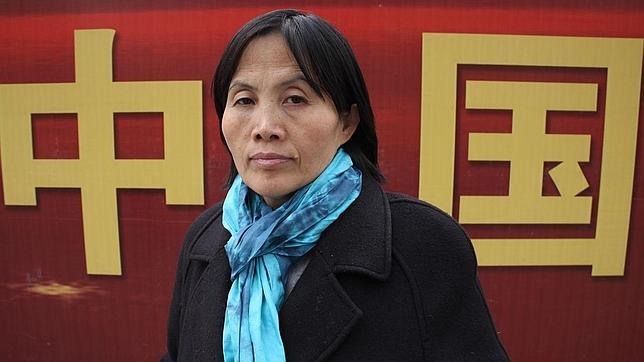
When late Chinese human rights defender Cao Shunli – as Final Nominee of he Martin Ennals Award 2014 – got a standing ovation during the ceremony in October last year, we all said, with the 10 NGOs on the Jury, that we should not forget her. On 19 March 2015 in a statement to the UN Human Rights Council that is exactly what a group of NGOs [International Service for Human Rights and supported by Human Rights WatchCIHRSCIVICUSConectasEHARDPArticle 19HRHF and ALRC] asked for: Ensure independent investigation into death of Cao Shunli.CAO_SHUNLI_PORTRAIT

China must ensure a full, independent and impartial investigation into the death of Chinese human rights defender Cao Shunli, ..If Chinese authorities are unable or unwilling to conduct such an investigation in accordance with international standards, the Human Rights Council as the world’s top human rights body must take appropriate action, the statement said.

One year after her tragic death, there has been no adequate investigation or accountability in relation to the death of Chinese defender Cao Shunli,’ said Michael Ineichen, Head of Human Rights Council Advocacy at ISHR. ‘If China is let of the hook for such a blatant case of reprisals against someone wanting to cooperate with UN human rights mechanisms, the Council sends a message to rights abusers that activists can be attacked with impunity.’

The statement highlighted the negative effect of impunity for cases of intimidation and reprisals, as shown by the numerous reported cases of intimidation and reprisals occurring during the 28th session of the Human Rights Council, including against South Sudanese and Bahraini defenders.

The legal and moral obligations of States to protect those who cooperate with the UN are clear, and if a State fails to conduct stop reprisals or to properly investigate allegations, the UN has a responsibility to act, the statement said.

We welcome recent advances on the institutional level, such as the treaty body policies that recognise States’ primary duty to ensure accountability in the case of reprisals, and the UN’s own duty of care,’ said Eleanor Openshaw, Head of Reprisals Advocacy at ISHR. ‘However, in the absence of a more systematic approach, such as through a dedicated focal point on reprisals which could coordinate investigation of and follow-up to individual cases, these steps will remain the proverbial drop in the ocean’   The statement is available as a PDF and video.

for more on reprisals in this blog see: https://thoolen.wordpress.com/tag/reprisals/

Broad coalition of NGOs at UN condemns Egypt’s treatment of women human rights defenders

March 23, 2015

During the adoption of the Universal Periodic Review (UPR) report on Egypt in the UN Human Rights Council on 20 March 2015 the Women Human Rights Defenders International Coalition (for the composition see below), made a forceful statement about the terrible situation of women human rights defenders in that country.

“The systematic judicial harassment faced by many women human rights defenders is highlighted through the emblematic case of the seven women defenders2 arrested on 21 June 2014 for protesting peacefully against the Protest and Public Assembly Law (No. 107), who faced arduous hassles including prolonged pre-trial detention. Their sentence was finally reduced to two years of imprisonment and two years of surveillance by the appeals court in December 2014. [The seven are: Ms. Sanaa Seif, Ms. Yara Sallam, Ms. Hanan Mustafa Mohamed, Ms. Salwa Mihriz, Ms. Samar Ibrahim, Ms. Nahid Bebo and Rania El-Sheikh]

Furthermore, we strongly condemn the killing of Shaimaa ElSabbagh during a peaceful protest on 24 January 2015. She was taking part in a gathering to commemorate the fourth anniversary of the 25 January revolution. We call on the Egyptian government to ensure a prompt, independent and effective investigation to identify the perpetrator and hold them to account. In this connection, we are deeply concerned that Azza Soliman from the Centre for Egyptian Women’s Legal Assistance (CEWLA), who was witness to the incident and testified before the Prosecutor’s Office, is now targeted as a suspect and charges have been brought against her under the public assembly law.

Finally, we express our continued dismay over sexual violence against women in online and offline public spaces. Though a national strategy to combat violence against women has been announced, we emphasise the need for it to be comprehensive and holistic with involvement of all relevant ministries and stakeholders, as well as adequate budget allocation. During the UPR, the government highlighted a new amendment to the Penal Code article 306, which addresses sexual harassment. This amendment is far insufficient in its scope as it only considers sexual harassment a crime if the intent of the perpetrator is proven to be related to obtaining sexual benefits…”

The Coalition members:  Amnesty International, Asia Pacific Forum on Women, Law and Development (APWLD), Asian Forum for Human Rights and Development (FORUM-ASIA), Association for Progressive Communications (APC), Association for Women’s Rights in Development (AWID), BAOBAB for Women’s Human Rights, Centre for Reproductive Rights, Centre for Women’s Global Leadership, Coalition of African Lesbians, Front Line Defenders, Human Rights First, Information Monitor (INFORM), International Federation for Human Rights, International Service for Human Rights (ISHR), International Women’s Rights Action Watch Asia-Pacific (IWRAW-AP), Isis International, ISIS Women’s International Cross- Cultural Exchange, Just Associates (JASS), The Latin American and Caribbean Committee for the Defense of Women’s Rights (CLADEM), MADRE, Nazra for Feminist Studies, Peace Brigades International, Rainbow Rights Project Inc, Urgent Action Fund for Women’s Human Rights, Women Living Under Muslim Laws (WLUML), Women’s Global Network for Reproductive Rights, WOmen’s Initiatives for Gender Justice, Women’s Rehabilitation Centre (WOREC), World Organisation against Torture (OMCT).

Report on a panel: Counter-terrorism laws must not criminalise human rights defenders

March 17, 2015

I was in Geneva last week where a number of interesting meetings took place. One of the side events I attended (a picture went out on Twitter), concerned the crucial issue of  “ Human rights defenders and national security”, on 9 March organized by a group of NGOs (International Service for Human Rights, Article 19, the International Federation for Human Rights (FIDH), Human Rights House Foundation, the International Commission of Jurists and the World Organisation Against Torture).ISHR-logo-colour-high

The panel was moderated by ISHR Director Phil Lynch, and had a very knowledgeable speakers such as Michel Forst, Special Rapporteur on Human Rights Defenders; Hina Jilani, Pakistani human rights lawyer and former Special Representative on Human Rights Defenders; Jimena Reyes, Director of the Americas Desk at FIDH; Roselyn Hanzi from Zimbabwe Lawyers for Human Rights; Gerald Staberock, Director of the World Organisation against Torture (OMCT); and Tanele Maseko, human rights defender from Swaziland.
A short report below:
Restrictions on human rights defenders

Phil Lynch opened the discussion by referring to unequivocal examples of restrictions imposed on human rights defenders by the operation of counter-terrorism laws, with examples cited including the recent amendments to the Australian Security Intelligence Organisation Act in Australia which criminalises the disclosure of information about ‘special intelligence operations’, even where such disclosures expose or relate to serious human rights abuses; draft legislation in China which vaguely defines ‘terrorism’ to include ‘thought, speech or behavior’ that is ‘subversive’ or seeks to ‘influence national policy making’, and Law 8/2015, passed recently in Egypt, which allows individuals and associations which ‘infringe public order’ or ‘harm national unity or national security’ to be designated as terrorists. Concern was also expressed that renewed US efforts to combat extremism do not contain adequate human rights safeguards and that the imperative to counter-terrorism is being used as a subterfuge by regimes in allied States – such as Bahrain, China, Egypt and Saudi Arabia – to further restrict and repress civil society.

Panelists built on these examples throughout the discussion, referring to significant limitations on, and prosecution of, human rights defenders under the guise of national security in their regions, including the prosecution of indigenous activists campaigning against major development projects in Chile under the Anti-Terrorist Act; human rights defenders being spied on by intelligence authorities in Cuba which consequently contributed to their murder; human rights defenders in Zimbabwe being charged for allegedly participating in a disruptive demonstration, or under the Official Secrets Act which forbids the release of information, even if that information regards human rights violations; and human rights defenders being imprisoned and labelled terrorists for voicing disagreement with the government in Swaziland. Members of the audience provided further examples, including defenders in South Korea being charged under a law that prohibits support for North Korea.

Legislation protecting the rights of defenders

A schizophrenia currently exists in many countries where authorities laud their own human rights mechanisms in the international sphere and then actively criminalise the activities of human rights defenders at home,’ said Hina Jilani. It is essential that along with a national law for the protection of human rights defenders, counter terrorism laws do not impose restrictions on those protections.

Counter terrorism laws should be developed in a manner that fights terrorism, while at the same time, respecting the legitimate work of human rights defenders,’ said Gerald Staberock of OMCT.

The panelists also stressed the importance of ensuring the rights of human rights defenders are not constrained under other laws, such as laws prohibiting criticism of the head of state, emir or the army.

Independence of the judiciary and the military

The discussion also highlighted the necessity to ensure the independence of the judiciary. In this regard, Jimene Reyes of FIDH referred to the use of the judicial system in Cuba as an ‘instrument of uncritical oppression’. Members of the audience identified the importance that the judiciary, as well as the executive, must be able to recognise and respect the legitimate activities of human rights defenders.

Similarly the importance of the separation between the State and the military was emphasised. Ms Reyes stressed the risk for human rights defenders if they are ‘considered by the military to be the enemy’.

Importance of civil society participation

While there is a clear trend of governments using counter-terrorism legislation to conflate the legitimate activities of human rights defenders with actions that threaten national security, the panelists were in clear consensus that human rights defenders and a strong and healthy civil society is essential to the stability of the State and good governance.

‘The work of human rights defenders and other civil society actors is crucial to address inequality and to promote good governance, accountability and inclusive development, all of which contribute to national security,’ said Phil Lynch of ISHR. ‘However, to ensure this is possible, it is essential to raise national and international awareness of the pitfalls of counter-terrorism legislation and the importance of civil society participation’.

The event concluded with a reflection of the need to counter the ‘rhetoric of fear’ and firmly establish that ‘the rights to peaceful assembly and of association do not encourage extremism, chaos, or violence but are, in fact, the best antidotes we have against all of these ills’.

Myself and others brought up the need to fight back in the public domain and the media against campaign to delegitimize the work of human rights defenders and show more the positive contribution their legitimate work brings to society.

[The high-level segment of the Council session has called on all States to fully implement Human Rights Council Resolution 22/6, which was led by Norway and adopted by consensus in March 2013. It urges States to ensure that ‘measures to combat terrorism and preserve national security … do not hinder the work and safety’ of human rights defenders.]

National security: Counter-terrorism laws must not criminalise human rights defenders | ISHR.

Side event on the Ukraine on 17 March

March 14, 2015
  • HRHFlogoThe Human Rights House Foundation, in cooperation with the Ukrainian Parliament Commissioner for Human Rights (Ukraine), the Center for Civil Liberties, the Human Rights House Kyiv, the “Almenda” Civic Education Center and the Head of Mejilis of the Crimean Tatar People (Ukraine), organizes the side event: “The Human Rights Situation in Ukraine“.  On Tuesday 17 March 2015, from 14 to16h, at Palais des Nations, room XII.Panelists:
    Valeriya Lutkovska, Ukrainian Parliament Commissioner for Human Rights (Ukraine),
    Refat Chubarov, Head of Mejilis of the Crimean Tatar People (Ukraine),
    Olga Skrypnyk, “Almenda”, Civic Education Center (Ukraine),
    Oleksandra Matviichuk, Center for Civil Liberties, Human Rights House Kyiv (Ukraine).

Florian Irminger, Human Rights House Foundation, moderator.

UN Special Rapporteur on HRDs, Michel Forst, first presentation to Council

March 11, 2015

humanrightslogo_Goodies_14_LogoVorlagenIn his report, the Special Rapporteur on the situation of human rights defenders, Michel Forst, [presented to the 28th Session of the UN Human Rights Council on 9 March 2015 and published earlier as A/HRC/28/63] underscores that violations of freedom of expression are a central feature of attacks against human rights defenders.

As well as outlining his recent activities, the report sets out a clear and comprehensive “road map” for the issues the mandate will address during his tenure based on extensive consultations. In this regard, Michel Forst emphasises that he will interpret his mandate as broadly as possible, and identifies nine key themes he will address through his work. On this basis, he calls on all States to, inter alia:

  • Combat impunity for threats and violations aimed at human rights defenders;
  • Repeal laws criminalising the work of human rights defenders;
  • Pay particular attention to defenders “most exposed” to risk;
  • Cooperate with the mandate, including by responding satisfactorily to communications, and extending open invitations for country visits.
  • The Special Rapporteur expresses serious concerns regarding reprisals against defenders engaging with international human rights mechanisms. [E.g. of 34 defenders recently convicted or imprisoned in Azerbaijan as part of a broad campaign to suppress dissenting voices, NGOs such as Article 19 have noted that several have been targeted for their engagement with the Council of Europe and European Court of Human Rights. Ten NGOs have jointly  called upon the Human Rights Council to address Azerbaijan under Item 4 of the Council’s agenda.]

via UNHRC: UN Special Rapporteur on Human Rights Defenders urges… · Article 19.

Another memorable speech by the High Commissioner for Human Rights

March 5, 2015

High Commissioner for Human Rights Zeid Ra’ad Al Hussein. UN Photo/Jean-Marc Ferré

On 5 March 2015 the United Nations High Commissioner for Human Rights urged Member States to uphold the human rights principles underlying their communities in their fight against radicalism.

Speaking to the UN Human Rights Council earlier he warned of the “real danger” that opinion-leaders and decision-makers would “lose their grasp” of the values that States built 70 years ago “to ward off the horror of war.”

The fight against terror is a struggle to uphold the values of democracy and human rights – not undermine them,” Mr. Zeid declared. “Counter-terrorist operations that are non-specific, disproportionate, brutal and inadequately supervised violate the very norms that we seek to defend. They also risk handing the terrorists a propaganda tool – thus making our societies neither free nor safe.”

At the same time, the UN human rights chief said he was “appalled” by the “rising tide of attacks” around the world targeting people on account of their beliefs. Such “horrific acts of racial and religious hatred,” he said, spanned countries in Western Europe and North America, where “unfair policing, daily insults, and exclusion” affected large swathes of the population. Meanwhile, he added, “the tentacles of the extremist takfiri movement” – an ideology where one believer apostasies another and then condemns them as impure – had reached into a wide range of countries, from Iraq and Syria to Nigeria, Yemen, Libya and Somalia.

Against that backdrop, Mr. Zeid voiced deep concern at the tendency of States to clamp down on the most basic of human rights, including the adoption of measures that restrict freedom of expression and democratic space.

When powerful leaders feel threatened by a tweet, a blog, or a high-school student’s speech, this speaks of profound underlying weakness,” he continued. “And when writers are abducted, jailed, whipped, or put to death; when journalists are assaulted, subjected to sexual violence, tortured and killed; when peaceful protestors are gunned down by thugs; when human rights lawyers, human rights defenders and land activists are arrested and jailed on spurious charges of sedition; when newspapers are attacked or shut down – such cases attack and undermine the foundations of stable governance.”

It is the people who sustain government, create prosperity, heal and educate others and pay for governmental and other services with their labour,” Mr. Zeid concluded. “It is their struggles that have created and sustain States. Governments exist to serve the people – not the other way round.

United Nations News Centre – Member States must enforce human rights amid rising tide of extremism – UN rights chief.

EU says no impunity for perpetrators of recent violence in Bangladesh

March 2, 2015

On 27 February bdnews24.com in Bangladesh reported that the EU delegation said – at the end of three sub-groups meetings with the government – that victims of violence must get justice. The meetings discussed issues of governance, human rights and migration, trade and development cooperation under the framework of the 2001 Cooperation Agreement.

Victims of violence deserve proper justice,” the EU said, pointing out that human rights’ is the “corner stone” of the EU-Bangladesh relations.

The EU delegation said the discussions between the Dhaka and Brussels were “open and constructive”. They exchanged views on a wide range of issues.

In particular, the need to protect the fundamental democratic rights of the people of Bangladesh was discussed, in view of the recent incidents of violence…The EU delegation also addressed the need to strengthen cooperation on democracy, governance and human rights, in particular, the implementation of the international human rights standards relating to the judiciary and freedom of expression.

Recent developments on rule of law, good governance, transparency, accountability for extrajudicial killings, freedom of the media, freedom of assembly and civil society were some of the issues of “mutual interest and concern” they discussed.

The focus of one sub-group meeting was labour rights, the rights of ethnic and religious minorities, the Chittagong Hill Tracts Peace Accord, the situation of the Rohingyas, women and children’s rights, the death penalty and migration issues. The EU reiterated the importance of protecting human rights defenders. Bangladesh’s membership of the UN Human Rights Council should be an opportunity to work more closely with the EU on promoting and protecting human rights.

The EU and Bangladesh agreed to continue their dialogue on these issues.

via EU wants troublemakers punished – bdnews24.com.

Subedi’s last fact-finding mission to Cambodia

January 15, 2015

UN Rapporteur Surya P. Subedi will carry out an official visit to Cambodia from 17 to 25 January 2014. This is Mr. Subedi’s last mission in his capacity as the Special Rapporteur on the situation of human rights in Cambodia as appointed by the UN Human Rights Council. He is expected to meet with the Prime Minister and other senior members of the Government as well as human rights defenders, representatives from civil society organisations and communities as well as the UN Country Team and the donor community.

Since his appointment as Special Rapporteur in March 2009, Mr. Subedi has made eleven visits to Cambodia and has presented seven reports to the UN Human Rights Council. He is completing his full term of six years in this position in March 2015 when a new mandate holder will be appointed.

Final fact-finding mission to Cambodia | Scoop News.

For earlier posts on Cambodia: https://thoolen.wordpress.com/tag/cambodia/

The Special Rapporteur’s latest report to the Human Rights Council (A/HRC/24/36): http://www.ohchr.org/EN/HRBodies/HRC/RegularSessions/Session24/Pages/ListReports.aspx