Posts Tagged ‘UN Human Rights Council’
March 25, 2016
The Norwegian-led resolution was adopted by a vote of 33 Member States of the Human Rights Council to just 6 against. Eight States in the 47-seat Council abstained. Over 150 NGOs from all over the world united to call on Member States of the Council to adopt the resolution and reject a series of 30 hostile amendments proposed by Russia, China, Egypt, Cuba and Pakistan, designed to undermine the protection of defenders and to deny their legitimacy and very existence.
The 6 States that voted ‘No’ on the resolution were not surprisingly Burundi, China, Cuba, Nigeria, Russia and Venezuela. States that abstained were Bolivia, El Salvador, Kenya, Namibia, Qatar, Saudi Arabia, the United Arab Emirates, and Viet Nam. Interesting and positive to note that some of the States that had supported hostile amendments (including Ecuador, Indonesia and India) in the end voted in favour of the resolution.
[The resolution affirms the legitimate and essential role of human rights defenders in promoting, protecting and contributing to the realisation of economic, social and cultural rights – including indigenous rights and the right to development – and condemns restrictions and attacks against them by both States and business enterprises. It also underscores the fact that exercise of the rights to freedom of expression, association, assembly and public participation can be essential to the promotion, protection and realisation of ESC rights, and that restrictions or violations of these democratic rights may lead and amount to violations of the ESC rights for which defenders are advocating.
The resolution also provides invaluable guidance to States and business as to obligations and good practices in the protection of defenders. For States, such obligations and good practices include developing specific human rights defender protection laws and mechanisms, investigating and ensuring accountability for attacks and reprisals against them, and facilitating access to information and participation in policy and decision-making processes. For businesses, the resolution reinforces the obligation to respect and not interfere with the work of defenders, and to consult closely with defenders to identify, avoid, mitigate and remedy human rights risks and violations associated with business activities and development projects.]
‘We particularly recognise the principled leadership of Norway in leading the development of this timely resolution,’ Mr Ineichen of the ISHR said.
‘The systematic but ultimately unsuccessful efforts by a small group of States to undermine the human rights defender resolution paradoxically demonstrate the vital importance and potential impact of this resolution,‘ said ISHR Director Phil Lynch.
Source: Human Rights Council adopts historic resolution on protection of defenders of economic, social and cultural rights | ISHR
Posted in human rights, Human Rights Council, Human Rights Defenders, ISHR, UN | 2 Comments »
Tags: ESC rights, Geneva, Human Rights Defenders, ISHR, Michael Ineichen, NGOs, Norway, reprisals, Resolution, social economic and cultural rights, UN Human Rights Council
March 7, 2016
A major new report by the UN Special Rapporteur on human Rights Defenders, Michel Forst, documents good practices and policies in the protection of defenders and makes concrete recommendations to States, business enterprises, national human rights institutions, donors, civil society organisations and other stakeholders to ensure a safe and enabling environment for defenders’ work (A/HRC/31/55).
Key among these is a recommendation that, in consultation with civil society, States should develop and implement specific national laws and mechanisms to protect defenders and to investigate and ensure accountability for threats and attacks against them. [ISHR’s work to develop a model national law on the recognition and protection of human rights defenders is specifically referenced in this regard.] [see also: https://thoolen.wordpress.com/2014/03/05/two-more-side-events-on-human-rights-defenders-on-10-and-12-march/]
In addition to enacting laws, the Special Rapporteur recommends that States establish and adequately-resourced protection mechanisms, in consultation with civil society.
Through the report, the Special Rapporteur endorses a ‘holistic’ approach to the protection of defenders, engaging the responsibility of a range of actors. Key insights and recommendations included in the report include that:
- States should publicly recognise the vital and legitimate work of human rights defenders, disseminate and raise awareness about the Declaration and actively respect and protect ‘the right to defend rights’.
- National human rights institutions should develop concrete action plans to support and protect defenders and establish focal points to ensure effective implementation and evaluation of such plans.
- Business enterprises have an important and influential role to play in protecting defenders and should be engaged in this regard: ‘The condemnation of violations by members of the business community not only legitimises defenders’ concerns but also builds opposition to bad business practices,’ the report says. ‘In addition, due to their economic and political influence, the support of business leaders can draw in wider support of society.’
- Donors should provide long-term, sustainable, flexible financial support to defenders and their organisations and networks, providing for their ‘holistic protection’.
- The UN itself should strengthen the protection of defenders and prevent violations against them, including through the ‘Rights Up Front’ initiative and the Sustainable Development Goals, and by strengthening its institutional response to cases of reprisals against those who for cooperate with UN human rights mechanisms. The need to prevent and ensure accountability for reprisals is particularly important given the Special Rapporteur’s finding that international and regional human rights mechanisms are increasingly being turned to and relied upon by defenders either to complement and strengthen domestic advocacy efforts, or because democratic institutions and the rule of law are weak or non-existent at the national level. [see also my ‘old’ post: https://thoolen.wordpress.com/2014/03/13/zero-tolerance-for-states-that-take-reprisals-against-hrds-lets-up-the-ante/]
In addition to making concrete recommendations, the Special Rapporteur also articulates 7 key principles for all stakeholders that he considers should inform and underpin all policies and practices namely:
- Principle 1: They should adopt a rights-based approach to protection, empowering defenders to know and claim their rights.
- Principle 2: They should recognise that defenders are diverse and come from different backgrounds, cultures, and belief systems.
- Principle 3: They should recognise the significance of gender in the protection of defenders and apply an intersectionality lens to the assessment of risks and to the design of protection initiatives.
- Principle 4: They should focus on ‘holistic security’ of defenders, including physical security, digital security, and psychosocial wellbeing.
- Principle 5: They should not focus on the rights and security of individual defenders alone, but also include the groups, organisations, communities, and family members who share their risks.
- Principle 6: They should involve defenders in the development, choice, implementation and evaluation of strategies and tactics for their protection. The participation of defenders is key to their security.
- Principle 7: They should be flexible, adaptable, and tailored to the specific needs and circumstances of defenders.
http://www.ohchr.org/Documents/Issues/Defenders/A-HRC-31-55_en.pdf
See more at: http://www.ishr.ch/news/good-practices-protection-human-rights-defenders-major-new-report#sthash.VjHvu4uZ.dpuf
Posted in books, human rights, Human Rights Council, Human Rights Defenders, ISHR | 1 Comment »
Tags: Civil society, enabling environment, good practices, Human Rights Defenders, Human Rights Up Front, ISHR, legal protection, Michel Forst, national institutions, reprisals, UN Human Rights Council, UN Special Rapporteur on Human Rights Defenders
March 4, 2016
Severe time restraints made that several NGOs could not make their oral statement on 4 March 2016 during the Interactive Dialogue with the United Nations Special Rapporteur on the Situation of Human Rights Defenders in the UN Human Rights Council [see: https://thoolen.wordpress.com/2016/02/25/preview-of-the-upcoming-session-of-the-un-human-rights-council/].
Here follows the text of the statement that the World Organisation Against Torture (OMCT) and FIDH, within the framework of the Observatory for the Protection of Human Rights Defenders, would have delivered:
Read the rest of this entry »
Posted in FIDH, human rights, Human Rights Council, Human Rights Defenders, Observatory for the Protection of Human Rights Defenders, OMCT | Leave a Comment »
Tags: FIDH, Human Rights Defenders, intervention, Michel Forst, Observatory for the Protection of Human Rights Defenders, OMCT, oral statement, Special Rapporteur on Human Rights Defenders, stigmatization, UN Human Rights Council
March 2, 2016

DefendDefenders (East and Horn of Africa Human Rights Defenders Project) together with the many NGOs, whose logos are shown above, will host the side event “Crisis in Burundi: Implementing Sustainable Solutions” on 4 March 2016 (15h00 – 17h00), Room XXIV, Palais des Nations, Geneva.
Panelists:
- Michel Forst, UN Special Rapporteur on the situation of Human Rights Defenders
- Pierre Claver Mbonimpa, President of APRODH (and Laureate MEA 2007)
- Tom Gibson, Representative for Burundi and DRC at Protection International
Moderator:
- Hassan Shire, Executive Director of East and Horn of Africa Human Rights Defenders Project.
The situation in Burundi is terrible as is know from the many reports issued already and the December 2015 Special Session of the UN Human Rights Council, which culminated in the adoption of a strong resolution mandating the High Commissioner for Human Rights to deploy a mission by independent experts to visit the country to investigate human rights violations, represents an important step to ensuring greater accountability for violations of fundamental rights in Burundi. However, the Burundian Government’s refusal to facilitate this mission has severely hampered efforts to identify and implement a sustainable resolution to the crisis [https://thoolen.wordpress.com/2016/02/08/what-is-burundi-doing-in-the-un-human-rights-council/]. Although there is now a bit of hope as three investigators are due to visit Burundi for a week from March 1, the Office of the High Commissioner for Human Rights (OHCHR) said in a statement. The three experts — from Algeria, Colombia and South Africa — are members of the UN’s Independent Investigation on Burundi (UNIIB). “Our aim is to help the state fulfil its human rights obligations, ensure accountability for human rights violations and abuses, including by identifying alleged perpetrators,” said Christof Heyns, the UN’s Special Rapporteur on Extrajudicial, Summary of Arbitrary Executions who is one of the investigators. The African Union (AU) said it would increase the number of human rights and military observers deployed. “The AU will deploy 100 human rights observers and 100 military monitors to Burundi to monitor the situation,” a statement on the South African presidency’s website said Saturday.
Source: HRC31: Side-event on Burundi on 4th March at 3pm – East and Horn of Africa Human Rights Defenders Project
http://www.timeslive.co.za/africa/2016/02/29/UN-to-send-human-rights-team-to-Burundi
Posted in human rights, Human Rights Council, Human Rights Defenders | Leave a Comment »
Tags: Burundi, Christof Heyns, DefendDefenders, East and Horn of Africa Human Rights Defenders Project, Geneva, MEA 2007, Michel Forst, monitoring, NGO 'Protection International, Pierre Claver Mbonimpa, side event, UN Human Rights Council, UN's Independent Investigation on Burundi (UNIIB)
February 29, 2016
The Statement of the UN High Commissioner for Human Rights, Zeid Ra’ad Al Hussein, at the 31st session of the Human Rights Council in Geneva, on 29 February 2016 is worth reading (as usual). Some of the highlights are: 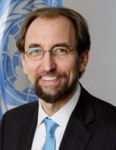
Today we meet against a backdrop of accumulating departures from that body of institutions and laws which States built to codify their behaviour. Gross violations of international human rights law – which clearly will lead to disastrous outcomes – are being greeted with indifference. More and more States appear to believe that the legal architecture of the international system is a menu from which they can pick and choose – trashing what appears to be inconvenient in the short term.
Read the rest of this entry »
Posted in human rights, Human Rights Council, Human Rights Defenders | Leave a Comment »
Tags: conflict, Human Rights Up Front, humanitarian law, migration, nationalism, racism, refugees, statement, UN High Commissioner for Human Rights Zeid, UN Human Rights Council, Zeid Ra'ad Al Hussein
February 25, 2016
The UN Human Rights Council will hold its 31st regular session at Palais des Nations in Geneva from 29 February to 24 March 2016 (it also marks the 10th anniversary of the Human Rights Council). The International Service for Human Rights (see link at the bottom of the post) has published an Alert full of details, but I highlight here the elements that concern human rights defenders most directly:
Human rights defenders: The Special Rapporteur on the situation of human rights defenders, Michel Forst, will present his annual report to the Council on 3 March. The report focuses on good practices to promote and protect the rights of human rights defenders. Presentation of the report will be followed by a dialogue. Of significance this session is a substantive resolution that will be presented by Norway on the situation of human rights defenders. The resolution at this session of the Council follows on the heels of the resolution on human rights defenders presented at the General Assembly in November 2015. The General Assembly resolution included a number of new, important and substantive provisions, including on the vital role of advocacy and the work of defenders in contributing to sustainable development and the realisation of economic, social and cultural rights, and the responsibilities of business enterprises with respect to engaging, consulting and protecting defenders. [see also: https://thoolen.wordpress.com/2015/12/18/un-general-assembly-adopts-resolution-on-human-rights-defenders-with-increased-majority/] This latest resolution provides an opportunity to recognise the critically important work of economic, social and cultural rights defenders, and the cross-cutting challenges they face, including restrictions not only on their rights to health, food, housing, social security and work, but also on their rights to freedom of expression, association, assembly and life itself. Economic, social and cultural rights activists have been identified by current and previous Special Rapporteurs on the situation of human rights defenders as among the most isolated and stigmatised defenders. It is integral that the resolution recognises the role of both State and non-State actors in the protection of human rights defenders, and enjoys broad State support for strong language demanding their protection. (On 7 March, ISHR will facilitate a side event on this topic which will be the subject of a separate post) Read the rest of this entry »
Posted in human rights, Human Rights Council, Human Rights Defenders, ISHR, OHCHR, UN | 1 Comment »
Tags: Burundi, China, draft resolution, freedom of assembly, Human Rights Defenders, ISHR, Michel Forst, Myanmar, Norway, reprisals, side event, social economic and cultural rights, UN General Assembly, UN High Commissioner for Human Rights, UN Human Rights Council, UN Special Rapporteurs, UPR
February 25, 2016
 launches its new RightDocs tool with a Demo on 29 February 2016, from 18:00-19:30 in the Palais des Nations, Delegates Restaurant, Geneva.
RightDocs is a new tool to search, sort, filter, and discover resolutions of the UN Human Rights Council online and public.
The RightDocs tool is supported by the Permanent Mission of Denmark to the UN in Geneva. Read the rest of this entry »
Posted in Human Rights Council, Human Rights Defenders, HURIDOCS, UN | 1 Comment »
Tags: access, Denmark, documentation tools, Geneva, human rights documentation, HURIDOCS, launch, on-line, RightDoc, UN Human Rights Council
February 8, 2016
Burundi is still one of the basket cases in Africa and since my lats post nothing has improved [https://thoolen.wordpress.com/2015/11/10/burundi-what-more-early-warning-does-one-need/]. The Special Session of the Human Rights Council in December 2015 mandated the High Commissioner for Human Rights to put together an expert mission to Burundi, to investigate abuses and make recommendations to the Council and the Burundian government on ways of ending serious human rights violations. But the follow-up is below par: Read the rest of this entry »
Posted in human rights, Human Rights Council, Human Rights Defenders, ISHR | 8 Comments »
Tags: Burundi, High Commissioner for Human Rights, Human Rights Defenders, ISHR, Kenya, membership UN human rights council, Michael Ineichen, monitoring, Prince Zeid Raad Zeid al-Hussein, suspension, threats, UN, UN Human Rights Council
January 13, 2016
Ted Piccone, Senior Fellow, Foreign Policy, at The Brookings Institution published on 12 August 2015 a post entitled: “5 Myths About the UN Human Rights Council”. A bit belatedly I repeat it here for those – especially in the USA – who need a coherent statement in favour of continued engagement by the US in the UN Human Rights Council:
Read the rest of this entry »
Posted in human rights, Human Rights Council | Leave a Comment »
Tags: Brookings Institute, Foreign Policy of the USA, Huffington Post, Ted Piccone, UN Human Rights Council, USA
December 16, 2015
Tomorrow 17 December there will be a
Special session of the Human Rights Council on preventing further deterioration [now that is diplomatic language!] of the human rights situation in
Burundi. The International Service for Human Rights
(ISHR) is using the occasion to organize a side event on: “Escalation of Violence in Burundi: Human rights defenders voices from the ground” from 09.00-10.00 am in Room XII, Palais des Nations, Geneva. It will be webcast live on
www.ishr.ch/webcast. Follow on twitter using the hash-tag #BurundiHRDs.
Panelists (moderator Nicolas Agostini of FIDH):
- Mr Pierre Claver Mbonimpa, Association for the Protection of Human Rights and Incarcerated Persons (APRODH), MEA Laureate 2007.
- Ms Margaret Barankitse, Maison Shalom
- Mr Anschaire Nikoyagize, Ligue ITEKA
- Ms Carina Tertsakian, Human Rights Watch
Read the rest of this entry »
Posted in human rights, Human Rights Council, Human Rights Defenders, UN | Leave a Comment »
Tags: African Union, Anschaire Nikoyagize, Burundi, Centre for African Journalists, East and Horn of Africa Human Rights Defenders Project, Front Line (NGO), Geneva, Human Rights Defenders, ISHR, Journalist, Pierre Claver Mbonimpa, side event, special session, UN Human Rights Council, webcast, Zeid Ra'ad Al Hussein
 Hans Thoolen on Human Rights Defenders and their awards