Posts Tagged ‘UN High Commissioner for Human Rights’

Jacob Blaustein Institute for Human Rights publishes book on UN High Commissioner for Human Rights

December 21, 2013

On 19 December 2013 it was announced that the AJCs Jacob Blaustein Institute for the Advancement of Human Rights  on the occasion of the 20th anniversary of the Office of the UN High Commissioner for Human Rights released a unique volume entitled: “The United Nations High Commissioner for Human Rights: Conscience for the World”. Read the rest of this entry »

U.N. High Commissioner says Sri Lanka increasingly authoritarian

September 2, 2013

On Saturday 31 August 2013 United Nations High Commissioner for Human Rights, Navi Pillay, said at the end of her long awaited one-week-long fact-finding mission that the Sri Lankan state is becoming more authoritarian. “The war between government troops and Tamil rebels may have ended, but in the meantime democracy has been undermined and the rule of law eroded,” the U.N. commissioner for human rights told a news conference in Colombo, Sri Lanka. She visited the former Tamil rebel-held areas in northern Sri Lanka, and met civil society groups, politicians and aid workers before meeting President Mahinda Rajapaksa and his brothers, Defense Secretary Gotabhaya Rajapaksa and Economic Affairs Minister Basil Rajapaksa.” I am deeply concerned that Sri Lanka, despite the opportunity provided by the end of the war to construct a new vibrant, all-embracing state, is showing signs of heading in an increasingly authoritarian direction,” Pillay said. The U.N. envoy said that some people she visited in the northeastern part of the country previously held by the rebels had been later visited by military and police officers and questioned again. “This type of surveillance and harassment appears to be getting worse in Sri Lanka, which is a country where critical voices are quite often attacked or even permanently silenced,” she said. Pillay visited Sri Lanka on the invitation of the Sri Lankan government, but some of the members of the government have criticized her and openly ridiculed her, with one of the Cabinet ministers saying he was willing to marry her.Pillay also expressed concern about media freedom, incomplete investigations into disappearances and abductions, attacks on civil protests, issues of sexual harassment of women and harassment of human rights defenders. She is due to submit a report to the UN Human Rights Council in Geneva next month. Cabinet Minister Keheliya Rambukwella said that the government had invited her to the country genuinely and would await the report to be submitted next month.

via U.N. human rights chief says Sri Lanka increasingly authoritarian – Wire Lifestyle – The Sacramento Bee.

the full version of her very substantive speech can be found at: 

https://www.colombotelegraph.com/index.php/full-speech-un-high-commissioner-for-human-rights-navi-pillay-at-the-press-conference-on-her-mission-to-sri-lanka/


Pillay urges immediate release of detained human rights defender Adilur Rahman Khan in Bangladesh

August 14, 2013

On 13 August 2013 the United Nations added its voice to the many to call for his immediate release of Adilur Rahman Khan, the director of Odhikar, a well-known human rights organization in the country. He was arrested at his home in the capital, Dhaka, on 10 August by plainclothes officers reportedly acting without a warrant, according to the Office of the UN High Commissioner for Human Rights [OHCHR]. “We are calling on the Government of Bangladesh to guarantee the physical and psychological integrity of Mr. Khan, whose arrest might be linked to his work as human rights defender,” OHCHR spokesperson Liz Throssell told reporters in Geneva. She said Mr. Khan is reported to have been arrested under section 54 of the Code of Criminal Procedure and

humanrightslogo_Goodies_14_LogoVorlagen

section 57 of the Information and Communication Technology Act, accused of publishing false information about violence by Government forces during demonstrations in May by the Islamist movement, Hefazat-e-Islami. Odhikar reported that 61 people had died during these protests, challenging the Government’s version of events, noted Ms. Throssell.She said that the day after his arrest, Mr. Khan was denied bail and ordered to be held on remand for five days. “He was allegedly denied access to a lawyer before his court hearing,” she added.

via United Nations News Centre – Bangladesh: UN urges immediate release of detained human rights defender.

State media in Sri Lanka lead attacks on Human Rights Defenders

June 4, 2013

According to a statement from the Federation of Media Employees Trade Unions forwarded by the Asian Human Rights Commission (AHRC) on 4 June there is an ongoing attack in Sri Lanka on Human Rights Defenders, NGOs & opposition politicians through the Independent Television Network (ITN). The statement give concrete and detailed indications to show that ITN – in spite of its name – has continued to follow the government line and started a fresh round of attacks in May this year. Read the rest of this entry »

Egyptian NGO bill with big shortcomings in crucial last phase

May 31, 2013
Egyptian President Mohammed Morsi
(Egyptian President Mohammed Morsi)

In the context of restrictive legislation to hinder the work of human rights defenders, the Egyptian case deserves urgent attention now. The law on NGOs is being rewritten in this important country and others in the region may follow the example. Despite recent amendments Read the rest of this entry »

Egyptian HRD and MEA Nominee, Mona Seif, under attack

May 3, 2013

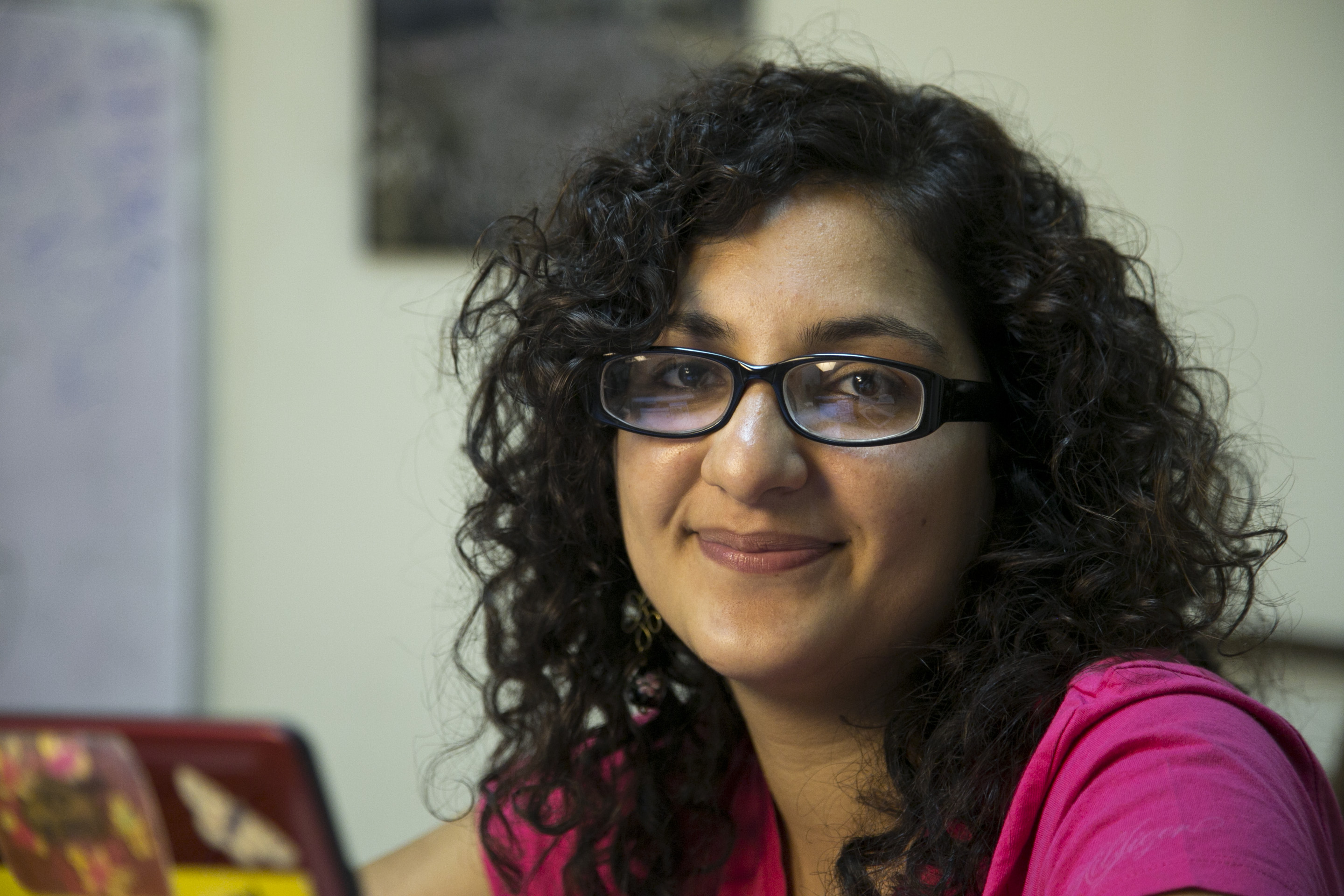
As readers of this blog know I would have readily reported on any developments surrounding the MEA especially since the Final Nominees 2013 were announced recently. A few days ago a controversy arose around the nomination of Mona Seif, the courageous Egyptian human rights defender who was selected because of her campaign against military trials for civilians. UN Watch, an NGO affiliated to the American Jewish Committee,  and famous for its strident monitoring of anything that smacks of  criticism of Israel, accused Mona Seif of being a terrorist sympathizer on the basis of 3 older tweets in which she strongly defended the right of Palestinians to resist Israeli occupation. The organisation started a twitter campaign to have Mona recalled as nominee.

Mona Seif, Egypt - Final Nominee MEA 2013

Mona Seif, Egypt – Final Nominee MEA 2013

The problem is that I am – in a personal capacity – the Chair of the Jury which is composed of ten of the world’s leading human rights NGOs (see list http://www.martinennalsaward.org). I am a non-voting chair whose only role is to facilitate the process and I do not participate in the selection. The board of the Martin Ennals Foundation also has no role in the selection as the Statutes provide for a fully independent Jury. Only the NGOs on the Jury can vote on the recipient of the MEA. Still, I feel that my capacity of Chair of the Jury obliges me to show restraint in speaking out.

Read the rest of this entry »

The UN Human Rights Council compares well to its predecessor the Commission, say Geneva academic

March 14, 2013

In a lengthy interview with ‘Geneva International Cooperation’ published on 13 March 2013, Andrew Clapham, the widely respected Director of the Geneva Academy of International Law and Human Rights, argues that the Human Rights Council of the UN, which replaced the Commission on Human Rights (of which, in 2005, Kofi Annan said that its “declining credibility has cast a shadow on the reputation of the United Nations system as a whole”) has in the end made important improvements. The interview is certainly worth reading in its totality but for the hard-pressed here are some quotes:

Q: Do you think the Human Rights Council has been effective in restoring the damage caused by its predecessor to the reputation of the UN?  Yes. The credibility of the Human Rights Council is now much higher than that of the Commission on Human Rights in 2005. One of the major criticisms of the former Commission was the ability for states to use political pressure to focus attention on individual states. Under the four year Universal Periodic Review (UPR) cycle, it is possible to read reports about the United States, China, Russia, Haiti, Iraq and Libya, and not just the states that are out of favour at any given time. One of the crucial differences is the fact that the Human Rights Council now considers the situations in powerful states. The ability of the Human Rights Council to establish Commissions of Inquiry is another important and unexpected development. These Commissions are now highly regarded references and sources of information.

Q: Can you give some examples of concrete achievements that have resulted from the creation of the Human Rights Council? Read the rest of this entry »

Upcoming Human Rights Council to deal with laws affecting human rights defenders

February 15, 2013

The UN Human Rights Council’s 22nd session will be held from 25 February to 22 March 2013 and consider a range of significant thematic and country-specific human rights issues and actions. The ISHR provides timely and expert information especially as for human rights defenders there are several relevant initiatives. Norway will lead negotiations on a resolution focusing on legislation that affects human rights defenders with the goal of improving the protection of human rights defenders and eliminating laws which impair their work. ISHRISHR-logo-colour-high has watched the development of this resolution closely. The resolution will build on the report of the Special Rapporteur on Human Rights Defenders, Ms Margaret Sekaggya, to the UN General Assembly in 2012. This report considered the issue of the ‘criminalisation’ of human rights defenders Read the rest of this entry »

UN High Commissioner for Human Rights: a real human rights actor

January 23, 2013

On  earlier occasions I have expressed my admiration for the UN High Commissioner for Human Rights, Mrs Pillay, and her spokesperson, Rupert Colville, for the forthright manner in which this Office nowadays express itself on on-going human rights issues, including very often on Human Rights Defenders. It may seem tame in the eyes of some activists but one should not forget that (1) the Office remains an intergovernmental institution created and controlled by governments, and (2) not so long ago this was unheard of. Until the late 70’s countries could not be named in the proceedings of the UN Human Rights Commission, in the early 80’s under the leadership of Theo van Boven the first ‘special procedures’ were established but he was forced out of his job in 1982 for too much naming and shaming of Governments.

High Commissioner for Human Rights, Ms. Navane...

Navanethem Pillay (credit: Wikipedia)

To illustrate my point here follows a summary of a press statement made on 18 January 2013:

1) Mali

The crisis in Mali has led to various human rights violations, including extrajudicial killings, rape and torture. These have been documented in a report requested by the Human Rights Council which was published by our Office on January 14, along with the growing ethnic tensions in the country which raise very serious concerns. Our report (http://www.ohchr.org/Documents/HRBodies/HRCouncil/RegularSession/Session…in French only) presents the findings of a human rights mission deployed to Mali, Burkina Faso, Mauritania and Niger from 11 to 20 November 2012. …….OHCHR stands ready to provide assistance to the Malian Government by supporting the establishment of a transitional justice mechanism to facilitate national reconciliation.

2) Sri Lanka

The UN High Commissioner for Human Rights Navi Pillay is deeply concerned that the impeachment and removal of Sri Lanka’s Chief Justice has further eroded the rule of law in the country and could also set back efforts for accountability and reconciliation. The removal of the Chief Justice through a flawed process — which has been deemed unconstitutional by the highest courts of the land — is, in the High Commissioner’s view, gross interference in the independence of the judiciary and a calamitous setback for the rule of law in Sri Lanka. Chief Justice Shirani Bandaranayake was served notice of her dismissal and removed from her chambers and official residence on Tuesday (15 January), in spite of a Supreme Court ruling that the parliamentary procedure to remove her violated the Constitution. Sri Lanka has a long history of abuse of executive power, and this latest step appears to strip away one of the last and most fundamental of the independent checks and balances, and should ring alarm bells for all Sri Lankans.

The jurist sworn in by the President as the new Chief Justice on 15 January, the former Attorney-General and Legal Advisor to the Cabinet, Mr. Mohan Peiris, has been at the forefront of a number of government delegations to Geneva in recent years to vigorously defend the Sri Lankan government’s position before the Human Rights Council and other human rights mechanisms. This raises obvious concerns about his independence and impartiality, especially when handling allegations of serious human rights violations by the authorities……Just this morning we have received alarming reports from the Independent Bar of Sri Lanka of a series of death threats, acts of intimidation and even a couple of reported murder attempts against lawyers who have been supporting Chief Justice Bandaranayake, and the rulings of the Supreme Court and Court of Appeal on her case. The High Commissioner will be issuing a report on Sri Lanka at the February-March session of the Human Rights Council, focusing on the engagement of UN mechanisms in support of the accountability and reconciliation processes.

3) Zimbabwe

We condemn recent attacks against human rights defenders in Zimbabwe, including arbitrary arrests, intimidation and harassment. In the latest case, on January 14, the police charged Okay Machisa, the director of Zimbabwe Human Rights Association (ZimRights) and chairperson of the Crisis in Zimbabwe Coalition, for allegedly publishing false statements prejudicial to the State, fraud and forgery after allegedly conducting illegal voter registration. Machisa handed himself to the police on January 14, accompanied by his lawyer, and remains in detention. In a previous incident, ZimRights Education Programmes Manager, Leo Chamahwinya, and ZimRights Local Chapter Chairperson, Dorcas Shereni, were arrested by the police on 13 December 2012. They were both denied bail by the High Court and remain in detention. We are concerned about the crackdown on non-governmental organisations and dissenting voices seen as critical of President Robert Mugabe’s rule and apparently politically motivated prosecutions, ahead of the elections which are expected to take place later this year.

4) Iran

We welcome the temporary release of Nasrin Sotoudeh, the well-known lawyer and human rights activist who is serving a six-year sentence in Tehran’s Evin Prison. Ms Sotoudeh was granted a three day temporary leave and it has now been confirmed that she joined her family yesterday. The travel restrictions imposed on her family – the issue that caused her to go on hunger strike in the autumn — were lifted in December, so her temporary release marks a second improvement in her case. We hope that the temporary leave will be extended, and that Ms Sotoudeh will soon be indefinitely released.
humanrightslogo_Goodies_14_LogoVorlagen

If you  want to be kept informed yourself, you can follow the UN Human Rights work on the following social media:

Facebook: https://www.facebook.com/unitednationshumanrights

Twitter: http://twitter.com/UNrightswire

Google+ gplus.to/unitednationshumanrights

YouTube:http://www.youtube.com/UNOHCHR S

torify: http://storify.com/UNrightswire
Harassment of HRDs confirmed by the UN

August 18, 2012

A few months ago I drew your attention to the annual effort by the UN to collect information on the harassment of those who cooperate with the United Nations (its representatives and mechanisms, including the Special Rapporteurs). Now – on 13 August 2012 – the report has been published  as GA A/HRC/21/18 and makes grim reading. Several countries (such as Bahrain, Colombia, Iran, China, Sri Lanka) continue to punish or intimidate persons who had the courage to stand up in the United Nations and accuse their country of human rights violations. Government controlled media routinely refer to them as ‘traitors’ and that is the least of the bad treatment given. One would wish that the UN would be even more outspoken and concrete in protecting its own sources!

full document in PDF:

Click to access A-HRC-21-18_en.pdf