On 13 July 2023 the ITUC has protested to the Hong Kong authorities, the ILO and the UN over its deep concern about the escalation in the climate of fear, intimidation, arrests, arbitrary prosecutions, threats for the exercise of trade union rights and civil liberties in Hong Kong.
In particular, the disproportionate and unwarranted extra-territorial application of the National Security Law to target trade unionists, human rights defenders and pro-democracy advocates by the Authorities of the Hong Kong Special Administrative Region (HKSAR) undermines its commitment to fulfil their international obligations.
The ITUC has called on the HKSAR Chief Executive Officer to respect and fully implement the conclusions and recommendations of ILO supervisory bodies and UN Human Rights bodies, in law and practice, including those regarding the National Security Law.
And he has been urged to release all those arrested and imprisoned for allegations related to the exercise of civil liberties including freedom of assembly, expression, press and association and those participating in pro-democracy activities.
On 4 July 2023, the HKSAR authorities announced, under the National Security Law, the issuance of arrest warrants against eight human rights defenders and pro-democracy advocates and placed a bounty of HK$ one million on each of their heads.
ITUC Acting General Secretary Luc Triangle said: “We unequivocally deplore the HKSAR authorities’ criminalisation and securitisation of trade union and democracy-promoting activities. We consider it particularly egregious, especially given the risks to life and safety faced by trade unionists, human rights defenders and pro-democracy advocates around the world for their legitimate activities, that the HKSAR authorities approved and announced a bounty on the heads of these eight people for exercising their civil liberties or trade union rights.
“As a special administrative region of a member State of the ILO, China, the HKSAR is also obliged to respect and promote the fundamental principles and rights at work including freedom of association and treat with the utmost regard, the authoritative guidance of the ILO’s supervisory bodies.”
The ITUC letter of protest sets out the recent findings of the ILO and other UN bodies on the abuse of workers’ and trade union rights by the HKSAR. It says that seeking to apply the National Security Law in an extraterritorial manner and placing a bounty on the heads of pro-democracy advocates and human rights defenders for alleged crimes related to the exercise of civil liberties and trade union rights is an overreach and certainly not proportionate – its coercive and chilling effective is wide ranging. With the use of the National Security Law in this disproportionate and arbitrary manner, the HKSAR authorities are violating their obligations under the Constitution of the ILO and Convention 87.
On 6 July 2023 Oxfam issued a statement that it stands in solidarity with the Bangladesh Garment and Industrial Workers Federation (BGIWF), trade union leaders and all human rights defenders who stand up for workers’ rights and protect human rights.
Oxfam learned of the horrific news of the brutal murder of Shahidul Islam, a union leader who was beaten to death on June 25th for his labour rights activism in Gazipur, a major garment industry hub on the outskirts of Dhaka, Bangladesh. He was an organizer of the BGIWF for 25 years advocating for workers’ rights as a trade union organizer, and was attacked and killed for standing up for basic human rights. We mourn not only the loss of an individual but also the loss of a powerful voice that championed the rights and well-being of workers, including the right to a living wage. We extend our sincere condolences to the grieving family, friends, colleagues and allies mourning his loss.
Kalpona Akter, the president of BGIWF, said: “Shahidul mobilised thousands of workers to join unions, empowering them to become solid factory-level trade union leaders. Throughout his life, he assisted thousands of workers in receiving arrears and severance pay wrongfully denied by their employers. With workers’ needs always in mind, Shahidul and three other union leaders met on the evening of his death to discuss a peaceful resolution to a wage dispute and the Eid-ul-Azha festival bonus. He met his fate due to the industry’s ill practice to promote yellow unionism for years and the neglect of workers’ voices. This needs to stop. Let our workers be free to organize and join unions. Shahid’s contributions to the labour movement were remarkable and will be sorely missed.”
Ahmed Sharif, a union organizer who was wounded in the attack, told the Guardian “As soon as we came out of the gate, a group of assailants grabbed Islam and separated him from us. They started cursing and randomly beating us, particularly Islam, some of them were kicking him mercilessly.”
As an organisation dedicated to the fight to end poverty and injustice, we are deeply concerned by the murder of Shahidul Islam. This tragic incident highlights the vulnerability of union leaders and activists fighting for workers’ rights. Oxfam joins BGIWF in demanding a thorough investigation and ensure justice is served for the death of Islam. We further call on all brands and stakeholders to conduct ethical purchasing practices upholding human rights within their supply chain and paying a living wage. We call on the government of Bangladesh to step up their protection of trade unionists who are exercising their fundamental human rights to freedom of association and collective bargaining.
Oxfam stands in solidarity with BGIWF, raising a resounding call for justice in the case of Shahidul Islam and demanding the unwavering safety of workers, union members and human rights defenders. We stand united in their relentless struggle to defend workers’ rights at Prince Jacquard Sweaters Ltd factory and in workplaces across Bangladesh. Together we demand accountability and an end to the systemic violations that perpetuate injustice.
Background
Shahidul and his colleagues were attacked after leaving the meeting with the management of a factory named Price Jacquard Sweaters Ltd to help the workers collect their due bonuses and wages. The factory management refused to comply despite being directed by the Deputy Commissioner’s (DC) office of Gazipur District to pay the workers’ salaries.
This is not the first time BGIWF has been the victim of such a fatal attack. Eleven years ago, in April 2012, another worker leader, Aminul Islam was tortured and murdered. Aminul was also an organizer with BGIWF, a vital contributor to the nation’s striving movement to advance workers’ rights. The murders of human rights defenders exemplify the extreme measures employed to suppress freedom of association in Bangladesh.
The tragic death of Shahidul, along with countless incidents of other workers being silenced by violence and fear, highlight the urgent need for change. Brands are responsible for ethical business practices and need to ensure that their purchasing practices are not leading to exploitation and deprivation of human rights. Brands must guarantee the right to a living wage and just, safe and healthy working conditions for garment workers.
Despite legal provisions, union leaders and activists face many challenges and restrictions such as anti-union discrimination, harassment, and retaliation against union leaders and members. Additionally, labour activists have raised concerns about the composition and independence of worker participation committees in factories. Labour activists argue that these ‘yellow unions’ are established by factory owners to exert control on workers raising concerns of workers’ rights to collective bargaining and discriminatory power dynamics.
Oxfam Canada, Oxfam Australia and Oxfam Aotearoa’s What She Makes campaign aims to transform the fashion industry into a more just and equitable space by holding brands accountable for their purchasing practices and advocating for a living wage. A living wage is the minimum amount that a worker should earn in a 48-hour work week and adequately covers workers’ and their family’s basic needs, including food, water, housing, energy, healthcare, clothing, childcare, education, transportation and savings for unexpected events. We stand united with the women who make our clothes, advocating for their right to living wages, freedom of association and labour rights.
On 7 March 2023 EuroMed Rights issued the following statement regarding the situation in Tunisia:
For several weeks now, Kaïs Saïed’s presidentialist regime has been conducting a relentless campaign of arrests, intimidation, denigration and targeted attacks against political opponents, journalists, trade unionists and civil society representatives, under the pretext of an alleged conspiracy to undermine state security, accusations of corruption or contacts with foreign diplomats. International trade union activists who have come to participate in activities of the Tunisian General Labour Union (UGTT), such as Esther Lynch, the General Secretary of the European Trade Union Confederation, have been expelled and any other trade union representatives are now persona non grata in Tunisia.
“These arrests based on the crime of opinion and the widespread repression of freedom of expression in all its forms constitute a serious breach of the rule of law. They raise fears of a return to the practices of the authoritarian regime that preceded the January 2011 revolution. The national dialogue that the UGTT has initiated in partnership with the Tunisian League for Human Rights (LTDH), the National Bar Association and the Tunisian Forum for Economic and Social Rights (FTDES), towards a roadmap to overcome the political, economic and social crisis, must be supported,” said Wadih Al-Asmar, President of EuroMed Rights.
A justice system at the orders
Accused of being “traitors” and “terrorists”, the opponents of the regime put in place, month after month, by President Kaïs Saïed since his power grab of 25 July 2021, are challenging the concentration of powers, in particular the supervision of the Ministry of Justice and the dismissal of many judges and prosecutors. Controlling the judicial power is a weapon that the Tunisian authorities no longer hesitate to use and abuse to silence critics.
“The rule of law in Tunisia is on the brink of collapse,” added Wadih Al-Asmar. “The presumption of innocence is being flouted. Moreover, to declare that anyone who exonerates those prosecuted would be considered an accomplice is a denial of the role and independence of judges and prosecutors. The ban on demonstrations and the desire to isolate Tunisian civil society from its international contacts are other symptoms of the regime’s autocratic drift.”
Attacks on migrants
On 21 February, President Kaïs Saïed continued his diatribe by calling for “urgent measures” against the “hordes” of sub-Saharan migrants, endorsing the conspiratorial theory of the “Great Replacement,” which asserts the existence of a plot to change the demographic composition of the country. As a result, racist and violent attacks, both official and unofficial, against migrants from sub-Saharan Africa continue, leading to arrests and deportations.
“Migrants have been expelled from their homes and fired from their jobs; children have been removed from their schools; women of sub-Saharan origin have been reportedly raped. Fear is growing among migrants who have been living in Tunisia, some for years, causing many families to leave the country to avoid facing violence,” said Rasmus Alenius Boserup, Executive Director of EuroMed Rights. “The European Union and its Member States, in their bilateral relations with Tunisia, must make clear that arbitrary repression and incitement to racial hatred are unacceptable, and should express solidarity with all those arrested, defamed and subjected to violence.”
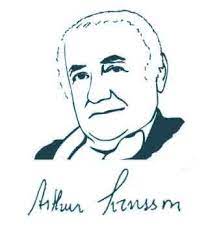
Representatives and employees of trade unions throughout the world are free to nominate candidates for next year’s Arthur Svensson international prize for trade union rights.
The nominees will be judged on to what extent the person or organization has promoted union rights and/or union organizing in the world. More on the award here –https://www.svenssonstiftelsen.com/about
Workers taking part in solidarity rallies. Minsk, 14 August 2020. Photo: АВ / Vot Tak TV / Belsat
Belsat.eu of 9 April 2021 reports thatthe 2021 Arthur Svensson International Prize for Trade Union Rights has been awarded to the independent trade union movement in Belarus, represented by the Belarusian Congress of Democratic Trade Unions (BKDP) and its affiliates. for ‘their fearless struggle for democracy and fundamental trade union rights in Europe’s last dictatorship’.
“Belarus is considered one of the worst countries in the world for violating workers’ rights. Human rights organizations have for many years expressed deep concern about the human rights violations in the country; «disappearances», police violence and lack of freedom of expression and association. Despite the Lukashenka regime’s attempts to take control of the independent unions and complicate recruitment, organizing and regular trade union activity, they have never given up and have continued to work for its members,” the awarding committee says.
According to them,the independent trade union movement became central early in the fight against the falsification of the election result and the fight for democracy when the situation in the country significantly deteriorated in the wake of the 2020 presidential election.
Fight Back News Service is circulating this 11 December 2020 joint statement from the Council of Global Unions Philippine affiliates.
We strongly deplore the simultaneous raids of residences and the consecutive arrests of trade union organizers, Dennise Velasco of Defend Jobs Philippines, Romina Astudillo, Deputy Secretary-General of Kilusang Mayo Uno-Metro Manila, Mark Ryan Cruz, Regional Executive Committee of KMU-Metro Manila, Jaymie Gregorio Jr. of KMU-Metro Manila, Joel Demate of Solidarity of Labor Rights and Welfare (SOLAR), Rodrigo Esparago of Sandigang Manggagawa sa Quezon City (SMQC) and journalist Lady Ann Salem, Communication officer of the International Association of Women in Radio and Television, and editor for online news site Manila Today.
The raids happened dawn of December 10, International Human Rights Day, which allegedly generated an armory of high-powered rifles and explosives in each of the residences searched. Velasco, Esparago, Astudillo, Cruz, Demate, Gregoria Jr and Salem may be facing obviously manufactured charges of illegal possession of firearms and explosives on this account –the same criminal charges filed against trade union activists who were arrested before them. Just a few days before Human Rights Day, Jose Bernardino of Workers Alliance in Region III (WAR III-KMU), an organizer of workers in industrial zones and jeepney drivers, and former President of the Young Christian Workers, was also arrested on the same made up criminal charges. With the Anti-Terror Law in effect, it has been an open season for arrests of activists, and it will not come as a surprise that these trade union organizers will be labelled as communist-terrorists.
This is yet another blow to the trade union movement in the Philippines. Trade union activists are being criminalized, illegally arrested and detained, as the government’s way of preventing them from organizing workers into unions and associations and depriving them their freedom of thought and expression as translated into their activities among the workers. The intensified crackdown is precisely aimed at stifling dissent and organized action among the people. Killings among activists and rights defenders, as a way of instilling fear and silencing the people, have not ceased.
We call on the Duterte government to immediately release the HRD7 workers and journalist, drop the trumped-up charges against them, and stop this detestable practice of filing manufactured criminal charges against unionists and activists.
We also call on international bodies – the UN Human Rights Council and the International Labor Organization (ILO) – to consider as an emergency the deteriorating human rights condition in the Philippines and employ all official and diplomatic venues available, including sending their missions to investigate human rights and trade union repression in the country and help reverse the situation.
We likewise call on trade unions and freedom-loving people all over the world to continue the fight for trade union and human rights in the Philippines. We shall hold to account all those responsible in these brazen human rights violations.
This case has dragged on [see: https://humanrightsdefenders.blog/tag/andy-hall/] but has finally come to a good end thanks to strong international pressure. The Supreme Court’s decision on June 30, 2020 to acquit Andy Hall for criminal defamation and computer crimes offenses was welcome news, finally bringing an end to a seven-year legal battle that represented just how far some companies are willing to go to silence activists who expose modern slavery.
Hall’s case even attracted the attention of UN human rights experts, who criticized the lawsuits brought against him, saying that they were an example of Strategic Lawsuits Against Public Participation (SLAPPs). SLAPPs related to defamation have been increasingly used in recent years in Thailand by companies linked to forced labor and labor rights violations as a means to silence critics. [see also: https://humanrightsdefenders.blog/2020/06/08/defending-defenders-challenging-malicious-lawsuits-in-southeast-asia/]
In response to the Supreme Court’s ruling, Andy Hall said: “I welcome today’s final ruling in this case. But after years of ongoing judicial harassment that has taken a heavy toll on me, my family and my colleagues, the verdict does not feel like a victory. My activism for over a decade in Thailand was intended only to promote and uphold the fundamental rights of millions of migrant workers in the country.
These workers continue to find themselves without a voice in high risk situations of forced labor and subject to systemic human and labor rights violations in global supply chains. I remain open to reconciliation to put an end once and for all to this continued irrational cycle of litigation against me and my colleagues that remain in Thailand.”
International Human Rights Day, 10 December 2019, was celebrated or observed all around the world and there is no way to report on every event. Stil to add flavour here a selection of some 14 smaller and bigger events – for more details follow the links provided (and for last year’s anthology see references at the end):
There was of course the annual statement by UN High Commissioner for Human Rights Michelle BacheletRightly, these young people are pointing out that it is their future which is at stake, and the future of all those who have not yet even been born. It is they who will have to bear the full consequences of the actions, or lack of action, by the older generations who currently run governments and businesses, the decision-makers on whom the future of individual countries, regions and the planet as whole depends…We have a duty to ensure young people’s voices are heard. The Universal Declaration of Human Rights, adopted by the UN General Assembly on 10 December 1948, was a firm commitment by States to protect the rights of everyone – and that includes making it possible for future generations to uphold human dignity, equality and rights…..Climate harms will not be halted by national borders – and reactions based on hostile nationalism, or short-term financial considerations, will not only fail: they will tear our world apart. The struggles for climate justice and human rights are not a political quarrel. This is not about left or right: it is about rights – and wrongs… We need to mobilise across the world – peacefully and powerfully – to advance a world of rights, dignity and choice for everyone. The decision-makers understood that vision very clearly in 1948. Do they understand it now? I urge world leaders to show true leadership and long-term vision and set aside narrow national political interests for the sake of everyone, including themselves and all their descendants.
Pakistan: Human Rights Defenders asked the government to make serious efforts to provide fundamental rights. Human rights, labour rights and civil society activists called upon the government to make serious efforts for the provision of fundamental human rights and freedoms, especially the freedoms of association and expression, enshrined in the Constitution of Pakistan and the Universal Declaration of Human Rights. Addressing a joint press conference at the Karachi Press Club to mark International Human Rights Day, PILER joint director Zulfiqar Shah, human rights activists Naghma Shaikh and Saeed Baloch representing the Sindh Human Rights Defenders Network said the government should ensure the restoration of the freedom of expression and the freedom to association. They demanded that the government should bring in a law to protect the rights of human rights defenders as they stood up for the voiceless people…. They also demand fully restoring the freedom of expression, as it was a constitutional right of the people to express their thought. Access to the information right must be ensured, they said.
India: Activists say NHRC urgently needs to protect human rights defenders. The National Human Rights Commission should proactively protect the rights of ‘human rights defenders’, said activists at the national convention on rights of Dalit and Adivasi rights defenders in the capital on Tuesday. Human Rights Defenders appealed to the commission to proactively intervene in cases where the works of Dalit and Adivasi organisations were being obstructed. Activists said there were a growing attack on human rights defenders in India and said the need of the hour was collective action….On Human Rights Day, the convention highlighted the importance of the work of human rights defenders. Despite the country having national human rights institutions and over 160 state human rights institutions dealing with human rights, women, children, minorities, SCs, STs, right to information, persons with disabilities, and safai-karamcharis, these institutions have often failed to protect the human rights defenders, activists said. In addition to the usual challenges, women human rights defenders face gender-specific violations, such as rape and sexual violence which are used as tools for harassment, said activists. Caste discrimination has also presented a greater danger for women rights defenders belonging to the Dalit and Adivasi communities.
Cambodia: The Khmer Times reported that very differing opinions on the status of human rights in the Kingdom became apparent as various groups marked Human Rights Day at two venues in the capital. About 400 government officials and youth group members marked the day’s 71st anniversary at the Cambodia-Korea Cooperation Centre, while about 2,000 unionists and members of the public marked the day at Freedom Park.
Keo Remy, president of the Cambodian Human Rights Committee, at the CKCC said the government has always paid attention to the rights of citizens. “Our leaders prioritise peace and stability,” Mr Remy said. “Youths can make the country chaotic because of the words democracy and human rights. That is why we focus on youths and stability.” while..
Ath Thorn, president of the Coalition of Cambodian Apparel Workers’ Democratic Union, at Freedom Park said respecting the rights of workers has decreased over the years and it is a source of concern for many. “We see that respecting workers’ rights has decreased – investors do not pay attention to workers,” Mr Thorn said. “Investors need to consider the rights of workers.” He said garment factory workers are faced with decreasing salaries, overtime work, discrimination, short-term contracts, violence and imprisonment. The Cambodian Centre for Human Rights in a statement said the government has taken action to curb issues surrounding human rights, but it has not done enough. “We call on the government to encourage the celebration of Human Rights Day in Cambodia and acknowledge the benefit human rights have on society as a whole,” it said. “We implore the government to cease all arbitrary action and targetting of human rights defenders.” The CCHR also called for the charges against two former Radio Free Asia journalists and Kem Sokha to be dropped.
Palestine: the Addameer Prisoner Support and Human Rights Association reported that Palestinians marked International Human Rights Day following a year of nonstop violence and widespread human rights violations by Israeli Occupation Forces (IOF), against the Palestinian population used, as a form of collective punishment and a method to control Palestinian society. These consistent and systematic policies by the occupation include, extrajudicial executions and issuance of discriminatory legislations, mass arrests campaigns, torture, administrative detention, and medical negligence against Palestinian political prisoners…..In 2019, the (IOF) continued its crackdown and repression of human rights defenders. Currently, Addameer faces gag orders against around 40 of the cases they represent, who are in interrogation. The gag order prohibits us from releasing any information to the public regarding their detention status, or face grave consequences.
Philippines: Groups under the Ecumenical Voice for Human Rights and Peace in the Philippines (Ecuvoice) has submitted its first wave of reports on the human rights situation in the Philippines to United Nations Commissioner on Human Rights Michelle Bachelet on Monday, Dec. 9. This is in line with Resolution 41/2 which was adopted by the UN Human Rights Council (UNHRC) in July this year. “With the intensifying transgressions on the Filipinos people’s political rights and civil liberties, we are participating in this report-making process of the UN High Commissioner for Human Rights to pursue justice and accountability,” the convenor of Ecuvoice, Edita Burgos, said.
while
the international trade union movement was using international human rights day to call attention to the alarming attacks on human and labour rights defenders in the Philippines. The government’s targeting of trade unionists has been ramped up recently with fresh waves of arrests and violence. The international trade union movement is united in calling on the government to stop the attacks. The government is targeting labour activists through a practice known as red-tagging. By falsely identifying people who speak out against the government as associated to armed militia groups, the government purposely targets them with harassment and arrests and exposes them to violence and even murder….The International Labour Organization (ILO) has resolved to send a High-Level Tripartite Mission to the Philippines to investigate the human rights situation, but despite the urgency, the government has yet to receive the Mission. The international labour movement is undertaking solidarity events across the world to demand an end to the human rights abuses and the targeting of trade unionists. The ITUC has requested to meet with the representative of the Philippines to the EU on Human Rights Day and has outlined three key demands.
Turkey. Amnesty International Turkey and MetroPOLL Strategic and Social Research Center have jointly conducted a Survey on Perception of Human Rights. The results of the survey have shown that when they hear the expression of “human rights”, 65.2 percent of the participants think of “right to life” first. While “freedom of expression” comes to the minds of 33.5 percent, the right to a fair trial ranks third with 22.1 percent. According to the survey participated by 2,651 people from 28 cities and conducted in a face-to-face manner, 82.1 percent of the society think that fundamental rights and freedoms are violated in Turkey. Of these people, 58 percent say that fundamental rights are occasionally violated and 42 percent say that they are frequently violated. 62.6 percent of the participants are of the opinion that fundamental rights and freedoms are restricted in Turkey. While 72 percent of the young participants think that fundamental rights and freedoms are restricted, this rate falls as the age of the participant gets older. For more detials see the full report.
China:Samuel Wade posted an interesting piece in China Digital Times on how the Chinese government defends if record on human rights and how others see this. Here one excerpt out of manY:
On Tuesday, International Human Rights Day, spokesperson Hua Chunying mounted a familiar defense of China’s rights record at the Ministry of Foreign Affairs’ regular press conference …and went on to note that the MoFA and State Council Information Office would host the “2019 South-South Human Rights Forum” this week “with a view to adding new dimensions and injecting impetus into exchange and cooperation in the field of human rights.” ….. At Hong Kong Free Press, the Uyghur Human Rights Project’s Omer Kanat commented on the ‘South-South Human Rights Forum’ hailed by Hua Chunying,…… Among the enablers of Xi Jinping’s repression are states with disreputable recor[ds attracted to a possible exemption from universal standards that ‘human rights with Chinese characteristics’ affords. And again, if we could freely ask the populations who reside in these states how they feel about such a concept, there would be few advocates. Therefore, on Human Rights Day, we have a responsibility to defend those who defend universal values and be clear ‘never again’ has meaning. There is injustice everywhere and we must fight it. Uyghurs are among them, for example, the imprisoned Ilham Tohti, and in exile Rebiya Kadeer, Nury Turkel, Rushan Abbas, and Gulchehra Hoja, whose families have been detained and disappeared in East Turkestan because of their advocacy. The second ‘South-South Human Rights Forum’ is opening in Shanghai for this year’s Human Rights Day. The dangerous fiction of the ‘Beijing Declaration’ that there are exceptions to the universality of rights should be firmly resisted.
Afghanistan ‘Human Rights’ should be more focused during peace talks. MENAFN (Afghanistan Times) reported that UN Special Representative for Afghanistan and head of UNAMA, Tadamichi Yamamoto, in a gathering has expressed concerns regarding the human rights achievements, saying that these gains should be saved in the ongoing negotiation with the Taliban. He called on the National Security Council to consider perseverance of human and civil rights in talks with the Taliban, adding ‘Afghanistan Independent Human Rights Commission’s role is very important in the peace process, every voice that raise should be heard and rights of the victims should be observed.‘.. Moreover, head of AIHRC, Shaharzad Akbar has called on the Taliban to legislatively recognize the values of human rights. …There are massive concerns about the violation of achievements of human rights and freedom of speech in the peace negotiation with the Taliban militants. The Taliban has back in 1990 ruled Afghanistan with the sever restriction on girls and school students. The cultural Taboos and less freedom of women are one of the other key issues that have brought sever concerns from Afghan and foreign officials.
The NGO WITNESS used the occasion to publish its ANNUAL REPORT which looks at key successes from July 2018-June 2019 (fiscal year 2019). See the video clip:
Malaysia. “What happened to Harapan’s vow to improve human rights?” asks Jasmine Choin an open letter:…’When Pakatan Harapan won a dramatic victory in the GE14 elections, they vowed to steer the country forward with human rights as one of their top priorities. However, since their win, we have seen a heavy regression in the area. The kind of regression that has gotten us worried about our present and our future as a modern, fair, and humane nation. From the Suaram 2019 report, several areas of abuse were glaring. One was the treatment of prisoners. The government has yet to abolish the Security Offences (Special Measures) Act 2012, the Prevention of Crime Act 2015 and the Dangerous Drugs (Special Preventive Measures) Act 1985……….The list of human rights abuse is getting longer and the frustration we feel with our government is reaching boiling point. Malaysia is considered a modern and democratic country, so why are we so far behind when it comes to human rights? The government should stop pandering to the religious majority and stop focusing on external matters. The rights of the rakyat are being abused.
Netherlands/Sri Lanka. The Dutch Ambassador Gonggrijp spoke at an event for Human Rights Day 2019 organized by Equal Grounds Sri Lanka saying inter alia:
…Sri Lanka has recently known a long period of conflict, during which human rights were under pressure. The reconciliation process after the end of the war has been slow. And I hear people say: what is the point of looking back, let’s move forward. To my opinion it is about recognition and human dignity. To that respect we should also recognize the progress that has been made: the Office on Missing Persons has been mandated to restore the rights of every Sri Lankan of any background, language or religion, to know what happened to their loved ones. And the work of the Sri Lanka Human Rights Commission, as an independent entity, mirrors the country’s commitment to uphold human rights and civil freedoms. The Netherlands supports this and stands ready to help Sri Lankan institutions like these with capacity building and technical expertise…..
The policy of Netherlands is aimed at 1) abolishing the criminalization of homosexuality, 2) opposing discrimination on the basis of sexual orientation and gender identity and 3) achieving wider social acceptance of gay people. In the Netherlands we have taken the first step of decriminalization a long time ago, but we are also still working on stopping discrimination and promoting acceptance. As I hope Sri Lanka will also take this first step in the near future, I also recognize that this will not solve all issues the LGBTI community is facing. It is key to inform people about the rights they have, regardless of their sexual orientation. To empower them to take responsibility, stand up or seek justice. It is also key to educate and make people from outside the community aware of the harassment and discrimination that people from the LGBTI community face. In order to also empower them to show solidarity and to take action if necessary. Every form of emancipation has been and still is a struggle. It starts with a ‘fight for your rights’. This is why this initiative of Equal Ground is so important, because – and allow me to quote again:
Mongolia / EU: Montsame reported that on the occasion of International Human Rights Day the Delegation of the European Union to Mongolia together with the Embassies of France and Italy presented European Union Human Rights Defenders’ Award (a national award!) to nine people, who are making their efforts to human rights protection…..Unfortunately, we are still observing human rights violations in many countries, especially gender and racial discrimination and discrimination in sexual orientation. Therefore, the EU Delegation to Mongolia, the Embassies of France and Italy and the Embassies of other countries are showing respect to human rights activists in Mongolia. Protection of human rights is one of main principles of the European Union, which defines its internal, and foreign policies and it is belonged to everyone. We will ever protect and encourage the people who endeavor for human rights, “ Ambassador of the European Union to Mongolia Traian Laurentiu Hristea said at the opening of the award presenting ceremony. The Ambassador also highlighted that the event will be traditionally held in the future.
MEXICO An indigenous activist who documented and denounced abuse committed by the military in Guerrero is this year’s winner of the National Human Rights Prize. Obtilia Eugenio Manuel was awarded the prize at Tuesday’s presidential press conference by National Human Rights Commission (CNDH) president Rosario Piedra Ibarra. The human rights chief said that among the military abuses that have been documented by Eugenio are the forced sterilization, sexual assault and sexual torture of indigenous women. Piedra also said the activist has received numerous threats and noted that she was abducted for four days earlier this year. ..“We don’t want one more rapist in our way,” Eugenio said, making a reference to the Chilean feminist anthem that has been performed around the world in recent weeks. Also at Tuesday’s press conference, Piedra recognized the human rights work of Margarito Díaz González and presented an award to his widow, Modesta Chávez de la Rosa. A former member of the Wirikuta security council and an advocate for environmental and indigenous rights, Díaz was murdered in Nayarit last year. Piedra recalled that the activist opposed the construction of a dam and other projects in San Luis Potosí and the development of Canadian-owned mines on sacred sites of the Huichol people.
If you are interested to compare with last year, see:
Jacob Wolinsky blogged in Value Walk of 9 September 2019 about “Gaspar MatalaevFree After Three Years Of Unjust Imprisonment”. Gaspar Matalaev, a labor rights monitor from Turkmenistan,was released from prison on 6 September after three years’ imprisonment in retaliation for his reporting on forced labor. A court in Turkmenabat sentenced Matalaev on spurious charges of fraud in 2016 and Matalaev served the entire three-year sentence. “We are relieved that Gaspar is out of prison and home with his family where he belongs,” said Ruslan Myatiev, director of turkmen.news, a member of the Cotton Campaign. “But make no mistake, every day that Gaspar spent in prison was a travesty of justice to punish him for his human rights work and intimidate others from speaking out about abuses.”
Gaspar Matalaev, a reporter with turkmen.news who had monitored and reported on the systematic use of forced adult and child labor in Turkmenistan during cotton harvesting, was arrested in October 2016, just two days after turkmen.news published his extensive report on Turkmenistan’s labor practices. While in detention, Matalaev was tortured by electric shock and held incommunicado. Throughout the investigation and trial, he did not have access to effective legal representation or to key files, information, and documents. The United Nations Working Group on Arbitrary Detentions determined that Matalaev’s arrest and imprisonment was arbitrary.
“Matalaev and others take great personal risks when they document these abuses,” said Judy Gearhart, executive director at the International Labor Rights Forum, which hosts the Cotton Campaign. “Turkmenistan’s international partners, including in the U.S., EU, and the international development banks, should use their influence with the government of Turkmenistan to press for greater protections for human rights monitors and journalists.” International Labor Rights Forum honored Matalaev with its annual Labor Rights Defender award in 2019.
More than 100,000 people signed a petition calling on the government of Turkmenistan to release Matalaev. …….
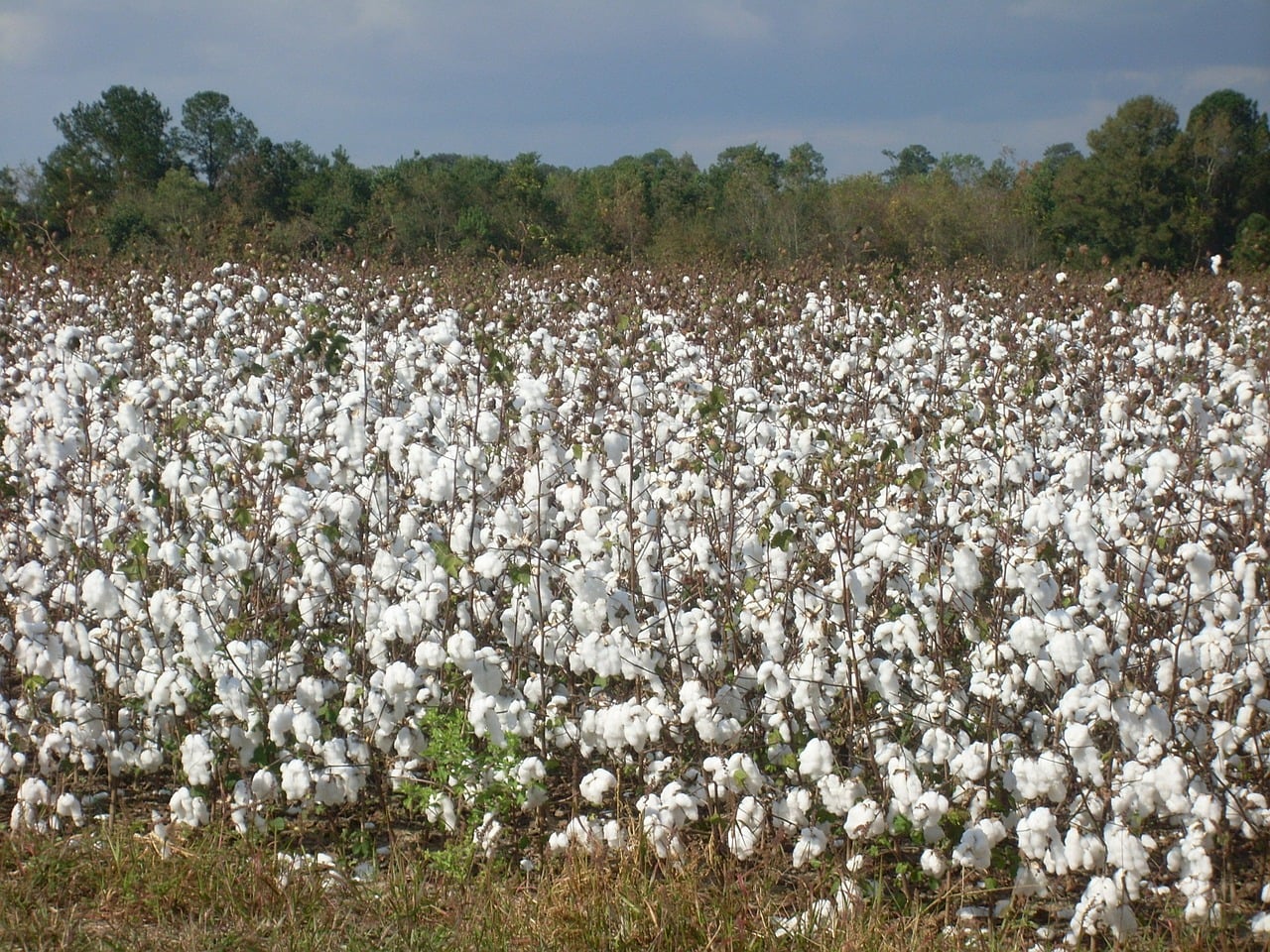
The Cotton Campaign and investors called on companies to sign the Turkmen Cotton Pledge, and work to ensure that cotton from Turkmenistan produced with forced labor does not enter their supply chains. Thus far 70 major apparel and home goods brands and industry associations have signed the pledge.
“Thanks to the work of reporters and human rights defenders like Gaspar Matalaev, companies and consumers can make informed sourcing and purchasing decisions,” said Patricia Jurewicz, vice president of the Responsible Sourcing Network, Cotton Campaign co-founder, and host of the Turkmen Cotton Pledge. “Companies can take a stand to end the human rights abuses in Turkmenistan, and ensure that materials produced with forced labor do not enter their supply chains.”
Cotton Campaign is a global coalition of human rights, labor, responsible investor, and business organizations dedicated to eradicating child and forced labor in cotton production.
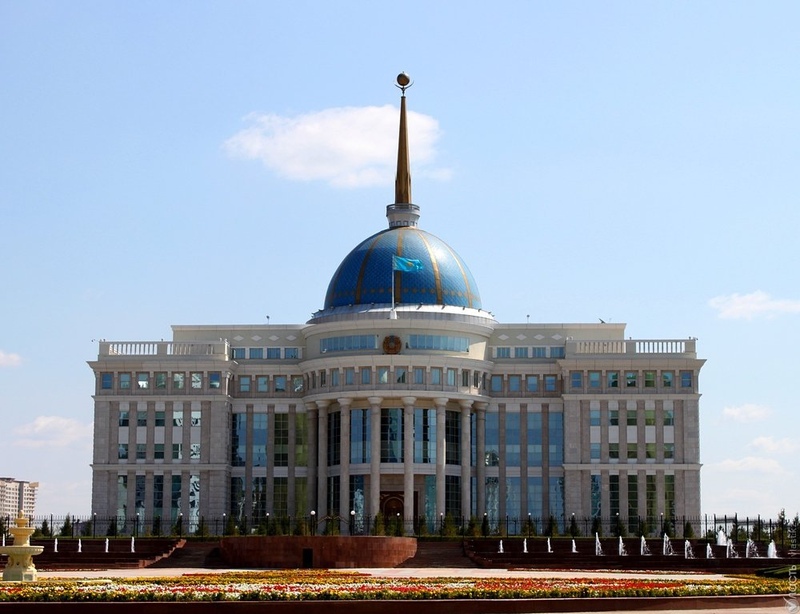
A bit of good news: President of Kazakhstan Kassym-Jomart Tokayev ahead of Eid al-Adha pardoned the convicted journalist Yaroslav Golyshkin and a trade union activist Erlan Baltabai, the President’s spokesman Berik Uali reported. They both were released, according to radio Azzattyk. Editor of the Pavlodar newspaper “Versiya” Yaroslav Golyshkin in October 2015 was sentenced for 8 years on extortion of money from then-governor of Pavlodar region Kanat Bozumbayev in return of secrecy of the compromising information. Golyshkin was conducting journalist research on the supposed rape in the office of the governor. However, the international fund for freedom of speech “Adil soz” claimed that the journalist’s prosecution is connected to execution of his professional duties. According to the Radio Azzattyk, the Kazakh human rights defenders in 2018 called the journalist a political prisoner.
The trade union activist Erlan Baltabai was jailed for 7 years by the Shymkent court for “power abuse”, “violation of requirements of regulations of the trade union”, “embezzlement of trade union“s money” and “causing damage to the complainant”.


 Hans Thoolen on Human Rights Defenders and their awards