Posts Tagged ‘sanctions’

Council of the European Union decides to impose measures on more individuals and entities in Iran

April 29, 2025

The Council decided 14 April to impose restrictive measures on an additional seven individuals and two entities responsible for serious human rights violations in Iran, including for the use of the judiciary as a tool for arbitrary detention.

The European Union continues to be deeply concerned by Iran’s distressing practice to arbitrarily detain EU mono and dual nationals ..

In this context, the EU is imposing sanctions on the Shiraz Central Prison, located in Fars Province, and the First Branch of the Revolutionary Court of Shiraz. Furthermore, the EU is imposing restrictive measures on members of the judiciary, including Hedayatollah Farzadi, head of Evin prison, and Mehdi Nemati, head of the Fars Prisons Protection and Intelligence Department.

Restrictive measures now apply to a total of 232 individuals and 44 entities. They consist of an asset freeze, a travel ban to the EU, and a prohibition to make funds or economic resources available to those listed. A ban on exports to Iran of equipment, that might be used for internal repression, and of equipment for monitoring telecommunications is also in place.

The European Union expresses its support for the fundamental aspiration of the people of Iran for a future where their universal human rights and fundamental freedoms are respected, protected and fulfilled. The relevant legal acts have been published in the Official Journal of the EU.

The EU introduced in 2011 a regime consisting of restrictive measures that have been renewed annually since, and last extended until 13 of April 2026. Since 2022, the EU has drastically increased restrictive measures, adopting 11 packages of sanctions in the context of growing concerns about serious human rights abuses and violations in Iran.

Some thoughts on the 25th anniversary of the UN Declaration on Human Rights Defenders

December 14, 2023

Since its adoption, the U.N. established in 2000 a Special Rapporteur to report on the situation of HRDs, and more than 60 countries now have laws, policies, or protection mechanisms to protect HRDs.

Some countries, including the United States, sometimes sanction those who target HRDs with financial penalties and visa bans. Mechanisms like these are important, but they can be slow and used selectively, says Michael Breen of Human Rights First in Just Security of 9 December 2023.

Perpetrators often feel so protected from legal accountability that they openly threaten and attack HRDs. In 2022, more than 400 defenders were killed for their human rights work. This year the number killed is likely to be higher…In our work with HRDs, they often recommend public exposure of those who target them as one step that can be taken for their protection.

Breen states that It is on a reputational level that perpetrators can be most vulnerable and provides several examples.

We are working with HRDs to create a more international approach of social accountability. We will share research on the social circles in which their attackers move, or that they want to join. We will be compiling lists of who has received awards from where, engaging with institutions about publicly rescinding awards, and otherwise publicly causing embarrassment to perpetrators. This is largely new territory for human rights NGOs, and we will work closely with HRDs in assessing any additional risks produced by socially targeting their attackers.

———–

On 11 December 2023 Global Witness published a blog post: “Land and environmental defenders protect our planet – but they cannot halt climate change without access to justice

“For more than a decade, we’ve been documenting and celebrating the hard-fought wins of land and environmental defenders worldwide. Together, their efforts not only help to prevent environmental destruction and human rights harms by companies, but also help to protect the environment from the worst effects of climate change.”

“Defenders globally continue to face reprisals after speaking out to protect the environment. At least 1,910 land and environmental defenders around the world have been killed since 2012, with 177 cases in 2022 alone. Of these killings last year, 88% occurred in Latin America – a region consistently found to be the most dangerous place in the world for activists.”

“Impunity is consistently named as a key driver behind attacks on defenders by the UN Special Rapporteur on the situation of human rights defenders, Mary Lawlor, whose office has repeatedly noted how failures to properly prosecute perpetrators have fueled further attacks. This is no coincidence. Every perpetrator who walks free sends a fatal message to defenders and activists worldwide.”

“The future of our planet depends on the continued stewardship of Indigenous people over their ancestral land, with Indigenous practices cited as protecting 80% of the world’s biodiversity. We simply cannot meet the 1.5°C limit and prevent devastating consequences on human life without the efforts of environmental defenders.”

See also: https://ishr.ch/25-years-un-declaration-on-human-rights-defenders/

https://www.globalwitness.org/en/blog/land-and-environmental-defenders-protect-our-planet-but-they-cannot-halt-climate-change-without-access-to-justice/

UDHR@75: occasion for US, UK and Canada to put sanctions on human rights abusers

December 9, 2023

The UK, US and Canada are announcing a sweeping package of sanctions targeting individuals linked to human rights abuses around the world, ahead of the 75th anniversary of the Universal Declaration of Human Rights on 10 December. 

UK targets forced labour operations in Southeast Asia, and government-linked officials in Belarus, Haiti, Iran, and Syria complicit in repressing individual freedoms.

The first set targets 9 individuals and 5 entities for their involvement in trafficking people in Cambodia, Laos and Myanmar, forcing them to work for online ‘scam farms’ which enable large-scale fraud. Victims are promised well-paid jobs but are subject to torture or other cruel, inhuman, or degrading treatment…

The second is aimed at a number of individuals linked to the governments, judiciaries and prosecuting authorities of Belarus, Haiti, Iran, and Syria, for their involvement in the repression of citizens solely for exercising fundamental freedoms in those countries.

Included in the USA sanctions are two Afghanistan government ministers accused of repressing women and girls, by restricting access to secondary education; two Iranian intelligence officers who the Treasury says plot violence against Iranian regime opponents beyond the nation’s borders and two Chinese officials accused of torturing Uyghur ethnic minorities in the Xinjiang region of China.

https://www.gov.uk/government/news/uk-and-allies-sanction-human-rights-abusers

https://thehill.com/homenews/ap/ap-u-s-news/ap-u-s-sanctions-officials-from-afghanistan-to-china-on-declaration-of-human-rights-anniversary/

https://www.france24.com/en/live-news/20231208-us-uk-canada-sanction-dozens-on-human-rights-anniversary

UN Rapporteur on Iran comes with devastating assessment

March 22, 2023

Patrick Wintour, Diplomatic editor of the Guardian, reported on Monday 20 March 2023 that the he UN rapporteur on Iran, Javaid Rehman, has said the scale and gravity of Iran’s violations of human rights amount to a crime against humanity. Javaid Rehman, a special rapporteur on Iran, told the United Nations Human Rights Council on Monday the country was experiencing the most serious violations in four decades.

Rehman warned Iran was experiencing the most serious violations in four decades. He also claimed the death in police custody of Mahsa Amini, a young Kurdish woman, in September 2022 resulted from beatings by the “morality police”. Iran has said she died from a pre-existing neurological disorder, but Rahman said reliable medical sources pointed to state culpability. He said Iran had refused to conduct an impartial or transparent inquiry into her death, including the allegations that she was beaten up and tortured.

The scale and gravity of the violations committed by Iranian authorities, especially since the death of Ms Amini, points to the possible commission of international crimes, notably the crimes against humanity of murder, imprisonment, enforced disappearances, torture, rape and sexual violence, and persecution,” he said.

Drawing on evidence, including eyewitness testimony and comments from reliable medical sources, the report said it was clear she had died on 16 September “as a result of beatings by the state “morality police”.

“I would like to stress that her death was not an isolated event but the latest in a long series of extreme violence against women and girls committed by the Iranian authorities,” Rehman said. He said “the responsibility of top senior officials in instigating this violence can … not be ignored.”

The UN human rights council decided last November – despite protests from Beijing and Tehran itself – to launch a fact-finding mission into the repression of peaceful demonstrators after protests erupted around Iran. A fact-finding team has been appointed but has been denied access to Iran. See: https://humanrightsdefenders.blog/2022/11/23/un-human-rights-council-holds-special-session-on-iran-on-24-november/

“Protesters including children were beaten to death,” Rehman said, adding that “at least 527 people, including 71 children were killed, and hundreds of protesters severely injured.”He also said dozens of protesters “have lost their eyes because of direct shots to the head”, while Iranian doctors had reported that women and girls participating in the demonstrations “were targeted with shotgun fire to their faces, breasts and genitals”.

He said: “Children released have described sexual abuses, threats of rape, floggings, administration of electric shocks and how their heads were maintained underwater, how they were suspended from their arms or from scarves wrapped around their necks.”

The EU says it has now imposed sanctions on 204 individuals and 34 entities in six waves of sanctions. The UK announced it was putting sanctions on five members of the board of directors of the IRGC Co-operative Foundation. This organisation funnels money into the Iranian regime’s repression, the UK Foreign Office said.

He voiced outrage at the executions of at least four people associated with the protests “after arbitrary, summary, and sham trials marred by torture allegations”. He added: “These summary executions are the symbols of a state ready to use all means to instil fear and quash protests,” pointing out that at least 17 other protesters have so far been sentenced to death and more than 100 others face charges that carry the death penalty.

See also: //humanrightsdefenders.blog/2023/03/13/women-human-rights-defenders-from-iran-and-pakistan-explain-why-women-resisting-are-a-force-to-be-reckoned-with/

https://www.theguardian.com/world/2023/mar/20/iran-rights-violations-crime-against-humanity-un-expert

Also Human rights violations by authorities in Belarus and Venezuela may amount to crimes against humanity, the UN human rights council has heard. SEE: https://genevasolutions.news/global-news/un-finds-possible-crimes-against-humanity-in-belarus-venezuela-iran?utm_source=newsletter&utm_medium=email

EU – China Summit on 1 April should not be a joke

March 30, 2022

European Union leaders should announce specific policy responses to the Chinese government’s atrocity crimes, Human Rights Watch said today, 30 March 2022. A virtual summit between the EU and China is scheduled for April 1, 2022.

The summit takes place at a time of heightened tensions between the EU and the Chinese government, which retaliated against Lithuania for its relations with Taiwan, baselessly sanctioned EU bodies and European research institutions, and has not condemned Russian war crimes in Ukraine. The Chinese government’s disregard for international human rights norms mirrors its domestic track record of grave abuses without accountability.

The EU’s foreign policy chief has pointed with alarm to the Chinese government’s ‘revisionist campaign’ against universal human rights and institutions,” said Sophie Richardson, China director at Human Rights Watch. “Brussels should revise its approach to match the magnitude of that threat.”

In a March 18 joint letter from 10 nongovernmental organizations to Ursula von der Leyen, president of the European Commission, and Charles Michel, president of the European Council, Human Rights Watch cited Chinese authorities’ deepening assault on human rights, including crimes against humanity targeting Uyghurs and other Turkic communities in Xinjiang, and heightened repression in Tibet and Hong Kong. Human rights defenders across the country – including the citizen journalist Zhang Zhan, the Uyghur intellectual and Sakharov Prize laureate Ilham Tohti, the Swedish publisher Gui Minhai, and many others – remain arbitrarily detained. {see https://www.trueheroesfilms.org/thedigest/laureates/37AE7DC4-16DB-51E9-4CF8-AB0828AEF491, and https://humanrightsdefenders.blog/2020/02/25/gui-minhai-10-years-jail-sentence-in-china/

While the EU has taken important steps in reaction to these developments, including some targeted sanctions and strong condemnations of Beijing’s abuses at the United Nations, these efforts lack the consequences to bring significant change. The rights groups urged Michel and von der Leyen to use their time with the Chinese leaders to announce further steps to counter Beijing’s abuses, and cautioned them against calling for yet another round of the bilateral human rights dialogue, which after 37 rounds has proven unable to secure concrete progress.

Stronger, better coordinated action is also supported by the European Parliament, which has remained a staunch critic of the Chinese government’s crackdown and has repeatedly denounced its abuses. Beijing responded by sanctioning several members of the European Parliament. In response, the European Parliament froze consideration of a bilateral trade deal and called for a new, and more assertive, EU strategy on China, including further targeted sanctions and closer coordination with like-minded partners. [see: https://humanrightsdefenders.blog/2021/05/21/china-eu-investment-deal-off-the-rail/]

Presidents Michel and von der Leyen should go beyond words of condemnation at the summit if they want to deter Chinese government violations now and in the future,” said Claudio Francavilla, EU advocate at Human Rights Watch. “Bolder steps are needed to counter Beijing’s crimes against humanity and anti-rights agenda, and EU leaders should announce their determination to pursue them.”

https://www.hrw.org/news/2022/03/18/joint-ngo-letter-ahead-eu-china-summit

https://www.hrw.org/news/2022/03/30/eu-no-business-usual-china-summit

Bangladesh: sanctions seem to work … at least for a while

March 21, 2022

It is rare to come across a piece that makes such a strong case that there is a causal link between sanctions and human rights improvement…..

Azad Majumder in Online News of 20 March, 2022 reports “No Bangladesh ‘gunfight’ deaths in 100 days after US sanctions”

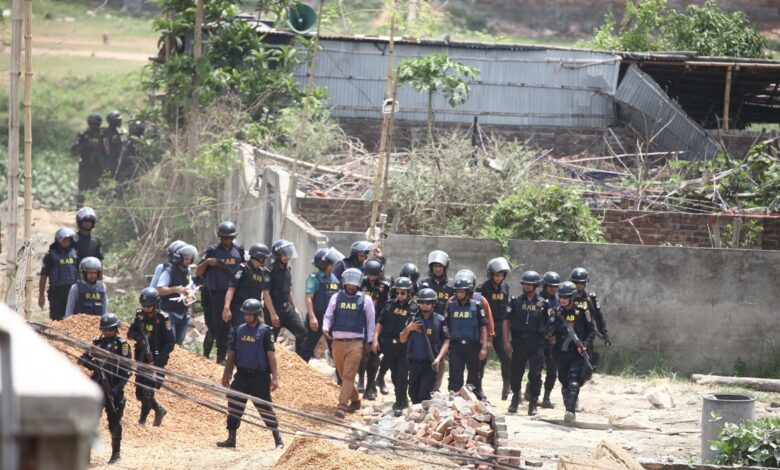
Bangladesh passed a rare 100 days on Sunday without any extrajudicial killing in the name of “gunfight” or “shootout” between law enforcers and suspected criminals. The unexpected pause in the frequent “shootout” incidents came after the United States on 10 December imposed sanctions on the country’s elite security force Rapid Action Battalion (RAB) and seven of its current and former officials, including police chief Benazir Ahmed for alleged human rights abuses.

Human rights defenders said the pause in killings in the so-called gunfights after the US sanctions showed law-enforcing enforcing agencies staged these incidents and provided false narratives.

However, see also: https://humanrightsdefenders.blog/2022/03/17/un-experts-urge-bangladesh-to-end-reprisals-against-human-rights-defenders/

A similar halt took place in 2020 after the killing of a retired army major in southern Cox’s Bazar district. The alleged murder sparked tension between the military force and police. The “shootout” or “gunfight” resumed slowly, causing the death of 51 people in 2021, said Bangladeshi rights group Ain o Salish Kendra (ASK).

The last such death was reported hours before the imposition of the US sanctions when a suspected “robber” was killed in a “gunfight” between RAB and “a gang of robbers” in southwest Barguna district.

It has also proven that these incidents were neither spontaneous nor sporadic, instead it was a well-coordinated tactic of the law enforcement agencies, presumably backed by a policy decision,” Ali Riaz, a professor at Illinois State University and non-resident senior fellow of Atlantic Council, told EFE.

Riaz led a research project for the non-profit Center for Governance Studies in Bangladesh, which analyzed 591 incidents of extrajudicial killings in the country between 2019 to 2021. The research, published on Mar.12, found “gunfights” constituted 86.63 percent of such killings.

At least 4,140 people were killed in Bangladesh between 2001 and 2021 in extrajudicial killings by security forces, said human rights group Odhikar.

Riaz said US sanctions had drawn international attention to the human rights records of Bangladesh. But he feared the current pause was unlikely to sustain for long.

There are three reasons that make it likely to resume. No punitive measures are attached to the sanctions, the US focus is likely to be shifted, and the institutional arrangements of impunity to the law enforcement agencies is not being addressed,” he said.

In the wake of UN sanctions on RAB, Bangladesh appointed a lobbyist firm in the US for a monthly fee of $20,000 with a target to remove the sanctions, deputy minister for Foreign Affairs Shahriar Alam told media in February.

Rights defenders criticized the move. They said appointing a lobbyist or public relations firm for a rosy picture of the human rights situation was not the way. “It is unfortunate that the government seems more focused on its reputation than to address the root problem robustly,” Meenakshi Ganguly, South Asia director at Human Rights Watch, told EFE.

The government should be committed to the protection of the rights of Bangladeshis to not be arbitrarily detained, tortured, forcibly disappeared, or killed,” she said.

Bulgarian MEP Ilhan Kyuchyuk sanctioned over Sakharov Prize for Ilham Tohti

March 24, 2021

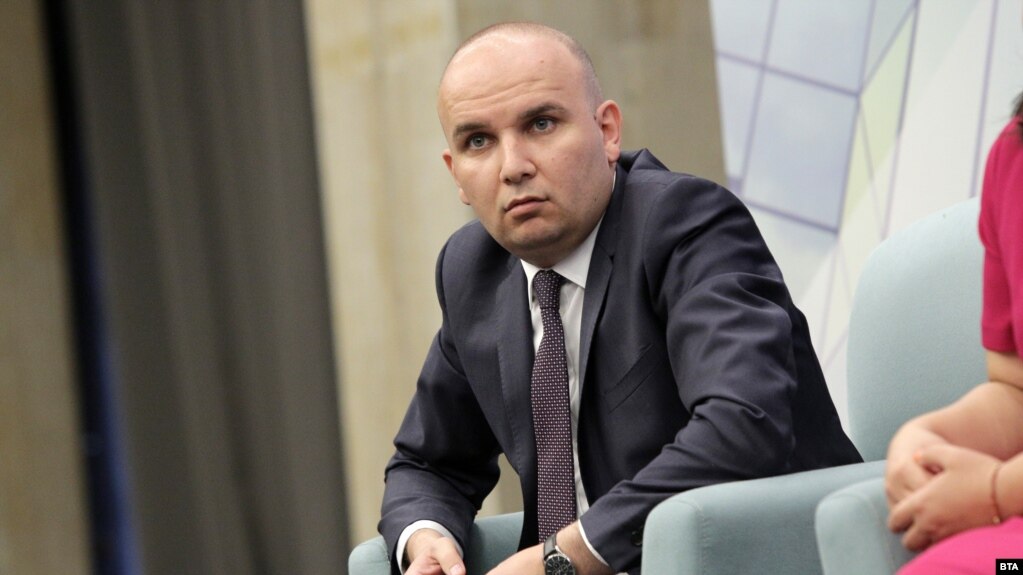
Bulgarian MEP Ilhan Kyuchyuk (file photo)

On 23 March, 2021 the RFE/RL’s Bulgarian Service reported that an ethnic-Turkish Bulgarian deputy at the European Parliament believes China imposed sanctions on him because he helped an imprisoned Ilham Tohti receive the Sakharov Prize for Freedom of Thought. Tohti is the winner of at least seven human rights awards -see: https://www.trueheroesfilms.org/thedigest/laureates/37AE7DC4-16DB-51E9-4CF8-AB0828AEF491]

“I think it’s because of my active role in nominating Professor Ilham Tohti for the Sakharov Prize,” Ilhan Kyuchyuk told RFE/RL when asked why he was among 10 European individuals blacklisted by Beijing on March 22.

China’s Foreign Ministry announced that Kyuchyuk was on its tit-for-tat blacklist list after coordinated Western sanctions were imposed against Chinese officials and companies over the abuse of the rights of the mainly Muslim ethnic-Uyghur community in the Xinjiang region.

In addition to Kyuchyuk, Beijing sanctioned four other members of the European Parliament – Reinhard Butikofer and Michael Gahler from Germany, Raphael Glucksmann from France, and Miriam Lexmann from Slovakia.

This should not surprise in view of Chinese earlier strong reaction on human rights awards: see: https://humanrightsdefenders.blog/2020/08/29/chinese-sensitivity-again-on-display-re-human-rights-awards/

as well as: https://humanrightsdefenders.blog/2012/12/06/china-and-its-amazing-sensitivity-on-human-rights-defenders/

https://www.rferl.org/a/bulgarian-mep-kyuchyuk-china-sanctions-uyghur-tohti-sakharov-prize/31165846.html

Large group of NGOs call on Biden administration to repeal ICC Sanctions

February 19, 2021

After the Trump administration attacks on the ICC [see https://humanrightsdefenders.blog/2020/06/12/trump-issues-new-sanctions-on-the-icc-and-human-rights-defenders/], the question is now how the Biden administration will change course:

On 17 February 2021, more than 70 Non-Governmental Organizations, Faith-Based Groups and Academic Institutions called for the Biden Administration to Repeal ICC Sanctions:

The undersigned organizations urge the Biden Administration to engage constructively with the International Criminal Court (ICC). The U.S. government’s support for the ICC could help secure justice for victims in situations from Myanmar to Darfur, just as it helped facilitate the February 4 historic conviction of a former leader of an armed rebel group for war crimes and crimes against humanity in northern Uganda.There is an immediate need to act to reset U.S. policy regarding the ICC. Most urgently, we are alarmed by recent calls for the U.S. government to maintain or even expand the sanctions put into place by the Trump administration in June 2020 currently targeting the court’s work.These actions were an unprecedented attack on the court’s mandate to deliver justice and the rule of law globally, an abuse of the U.S. government’s financial powers, and a betrayal of the U.S. legacy in establishing institutions of international justice. They were also an attack on those who engage with the court, including human rights defenders and victims. These extraordinary measures have put the U.S. at odds with many of its closest allies. They also have been challenged on constitutional grounds domestically. Keeping in place the executive order authorizing sanctions would be inconsistent with the new administration’s laudable commitments to respecting the rule of law and pursuing multilateral cooperation in support of U.S. interests. It would also transform a shameful but temporary action into a standing license for other governments to attack multilateral institutions when they disagreewith those bodies’ actions. We call upon the U.S. government to rescind Executive Order 13928 and all sanctions measures against ICC officials at the earliest possible opportunity. We appeal for constructive engagement with the ICC and we urge the Biden administration and members of Congress to support that approach.

This statement was coordinated by the Washington Working Group for the International Criminal Court (WICC), an informal and nonpartisan coalition of diverse NGOs, including human rights organizations, faith based groups, professional associations, and others.

The Advocates for Human Rights, Allard K. Lowenstein International Human Rights Clinic, Yale Law School, American Civil Liberties Union (ACLU), American Jewish World Service (AJWS), Amnesty International USA, Anti-Torture Initiative, American University Washington College of Law, Associazione Luca Coscioni, Center for Civilians in Conflict (CIVIC), Center for Constitutional Rights (CCR)Center for Justice and Accountability Center for the Study of Law & Genocide, Loyola Law School, Center for Victims of Torture (CVT) Congregation of Our Lady of Charity of the Good Shepherd, US, Provinces Darfur Women, Action Group Democracy for the Arab World Now (DAWN), Eumans European Center for Constitutional and Human Rights, Fortify Rights, Global Centre for the Responsibility to Protect, Global Justice Center, Global Justice Clinic, New York University School of Law, Guernica 37, Chambers and Centre for International Justice, Human Rights and Gender Justice Clinic, City University of New York School of Law, Human Rights FirstHuman Rights Institute, Georgetown University Law Center, Human Rights Watch, Institute for Policy Studies, Drug Policy Project, Institute for Policy Studies, New Internationalism Project, International Association of Democratic Lawyers, International Center for Transitional Justice (ICTJ). International Commission of Jurists (ICJ), International Criminal Court Alliance (ICCA), International Federation for Human Rights (FIDH), International Human Rights Clinic, Boston University School of Law, International Human Rights Clinic, Harvard Law School, InterReligious Task Force on Central AmericaJ . StreetJustice for Muslims Collective. Leitner Center for International Law and Justice, National Advocacy Center of the Sisters of the Good Shepherd. Never Again Coalition, No Peace Without Justice, Open Society Foundations, Operation Broken Silence, Parliamentarians for Global Action (PGA), Partners in Justice International, Pax Christi USA, Physicians for Human Rights, Presbyterian Church (USA), Office of Public Witness, Project Blueprint,The Promise Institute for Human Rights, UCLA School of Law REDRESS, The Rendition Project

EU now has its own ‘Magnitsky’ regime to sanction human rights abuses

December 8, 2020

Efi Koutsokosta  in Euronews of 8 December 2020 writes that the European Union has agreed to establish a regime similar to the Magnitsky Act in America that will allow the 27 member bloc to sanction those responsible for human rights abuses. The decision came at a meeting of European foreign ministers in Brussels on Monday and will allow the EU to freeze assets and impose travel bans on individuals involved in serious human rights abuses. [see also: https://humanrightsdefenders.blog/2015/05/08/the-case-for-smart-sanctions-against-individual-perpetrators/]

The new measures will allow for travel bans on involved individuals and the freezing of their funds too. It could also be forbidden from making funds available to those being sanctioned.

A European Magnitsky Act, as it’s known, is named after Sergei Magnitsky, who died in a Russian jail after uncovering a huge fraud scheme allegedly involving government officials. [see also; https://humanrightsdefenders.blog/2019/08/29/european-court-rules-on-sergei-magnitskys-death/]

Bill Browder, who helped Magnisky discover these fraudulent acts, told Euronews this is an historic step for Europe, but not the perfect one. [see also: https://humanrightsdefenders.blog/2020/08/29/bill-browder-speaks-abouit-his-global-magnitsky-act/]

This unanimity rule is a real problem. Another problem with the EU Magnitsky Act is that it doesn’t include kleptocracy, it only includes human rights abuse. And what we found is that kleptocracy and human rights abuse go hand in hand, they are intertwined. Of course, we are celebrating today because this is a huge milestone but tomorrow the work begins to put pressure on sanctioning bad actors in countries like Russia and China and to make sure that the law that the EU has, is upgraded to include corruption,” Browder said.

The criteria for sanctions will apply to acts such as genocide, crimes against humanity, as well as. torture, slavery, extrajudicial killings, arbitrary arrests, or detentions.

It will then be up to the European Council, which consists of all 27 national governments, to act upon a proposal from a member state or from the High Representative of the EU for Foreign Affairs and Security Policy, to establish, review and amend the sanctions list.

https://www.euronews.com/2020/12/08/eu-agrees-its-own-magnitsky-regime-to-sanction-human-rights-abuses

Bill Browder speaks about “his’ Global Magnitsky Act

August 29, 2020

The Human Rights Foundation published on 27 August this interview with Bill Browder in which international legal associate Michelle Gulino speaks with Browder about just how and why he’s become a thorn in Putin’s side, what makes the Kremlin such a threat to democracy and why Magnitsky legislation is so critical to address this threat, and finally, Sergei’s legacy and his message of resilience.On November 16, 2009, Sergei Magnitsky, the lawyer of global financier Bill Browder, was murdered for uncovering a $230 million corruption scheme by officials within Russia’s Interior Ministry. Bill became a thorn in Putin’s side after he began a campaign to seek justice for Sergei through the Global Magnitsky Act, which implements visa bans and asset freezes against serious human rights abusers and corrupt officials.

See also: https://humanrightsdefenders.blog/2019/08/29/european-court-rules-on-sergei-magnitskys-death/ and

https://humanrightsdefenders.blog/2015/05/08/the-case-for-smart-sanctions-against-individual-perpetrators/