The nominees for the 2018 Sakharov Prize for Freedom of Thoughthave been announced on 27 September (Nominations can be made by political groups and groups of at least 40 MEPs – remarkable is the more active role played by right-wing groups in the EP, see the last two nominees):
Oleg Sentsov, a Ukrainian film director, convicted to 20 years in prison for “plotting terrorist acts” against the Russian “de facto” rule in Crimea. Amnesty International has described the court process as “an unfair trial before a military court”. He has become a symbol for the approximately 70 Ukrainian citizens illegally arrested and convicted to long prison sentences by the Russian occupation forces in the Crimean peninsula. He has been on hunger strike since May 2018. Nominated by EPP.
NGOs protecting human rights and saving migrant lives across the Mediterranean Sea. Since 2015, NGOs from across the EU have launched search and rescue operations in the Mediterranean to try and save the lives of refugees struggling to reach EU shores. The NGOs are: Boat Refugee Foundation, Jugend Rettet, Lifeline Rescue Boat, Médecins Sans Frontières International, MOAS, Proactiva Open Arms, PROEM-AID, Save the Children, Sea Eye, Sea Watch, and SOS Mediterranée. Nominated by S&D and the Greens/EFA.
Seyran Ateş, a German lawyer of Turkish origin, fighting against political and religious extremism and the oppression of women. She was behind the establishment of the Ibn Rushd Goethe Mosque in Berlin, where men and women can pray together and has received numerous death threats and has to have round the clock protection. She was nominated by ECR, Hans-Olaf Henkel and 40 other MEPs for her “commitment to the protection of human rights and her devotion to a modern and open Islam”.
Caesaris the code name of a former Syrian military photographer who smuggled more than 55,000 pictures out of Syria exposing the war atrocities. Their authenticity is confirmed by the Human Rights Watch. Caesar’s photographs will play a vital role in building criminal and civil cases against those responsible for the crimes documented. Nominated by ALDE.
Nasser Zefzafiis the leader of Hirak, a mass protest movement in the Rif region, Morocco, fighting corruption, oppression and abuse of power. He was arrested in May 2017 and sentenced to 20 years in prison for “conspiracy against the security of the state”. On August 2018, King Mohammed VI pardoned 188 Hirak activists, but Zefzafi was not among them. At the end of August he went on hunger strike to denounce his conditions of detention. Nominated by GUE, Kati Piri, Judith Sargentini, Marie-Christine Vergiat and 39 other MEPs for his fight “against oppression and abuse of power”.
Dewayne Johnson is a former groundskeeper from the US who has just won a landmark case against Monsanto. He was the first person to take Monsanto to trial over allegations that the chemicals sold by the company under the herbicide brand Roundup cause cancer. At the end of the process Dewayne had just months to live, yet he took the stand and described his pain and suffering. Nominated by EFDD as an inspiration “for those afraid to go to court and defend their rights”.
AfriForum is an NGO that aims to protect the rights of minorities in South Africa, with a specific focus on the rights of Afrikaners. It focuses on raising national and international awareness about farm attacks, murders and the expropriation of farm land without compensation, which threatens property rights, food supply and food security. Nominated by ENF.
Mary Wagner is a Canadian activist who has been arrested on multiple occasions and accused of “disturbing the business” of an abortion clinic in Toronto. She remained in prison for not complying with a probation order to stay away from abortion clinics. She was nominated by Marek Jurek and 41 other MEPs for her work “safeguarding the rights of those who cannot speak for themselves”.
Iranian lawyer Nasrin Sotoudeh next to her husband Reza Khandan | Behrouz Mehri/AFP via Getty Images
On 13 June 2018, Nasrin Sotoudeh, the human rights defender was arrested at her home in Tehran, Iran. She was transferred to prosecutor’s office of Evin prison.Nasrin Sotoudeh https://www.frontlinedefenders.org/en/profile/nasrin-sotoudehis a prominent human rights lawyer who in recent months has acted as the lawyer for women’s rights activists who protested against the compulsory veiling in Iran and were subsequently prosecuted. According to her husband, Reza Khandan, Nasrin Sotoudeh was informed that she will be imprisoned for five years, however neither of them are aware of the charges against her.
In 2010, Nasrin Sotoudeh was given a prison sentence of eleven years and banned from working as a lawyer or leaving the country for twenty years. Nasrin Sotoudeh remained in prison for three years under charges of ‘spreading propaganda’ and ‘conspiring to harm state security’, designed to force her to stop her legitimate and peaceful human rights activities. Nasrin Sotoudeh was finally released in September 2013after receiving a pardon. Prior to her detention, Nasrin Sotoudeh represented many human rights defenders opposed to the current regime in Iran, and worked extensively with young prisoners who had been sentenced to death for crimes they committed when they were under 18. In 2012 she won the EU’s Sakharov award {http://thedigestapp.trueheroesfilms.org/publicpage#/awards/BDE3E41A-8706-42F1-A6C5-ECBBC4CDB449/Sakharov-Prize-for-Freedom-of-Thought]
An Egyptian lawyer, Samir Sabry, has requested the Attorney General to bring human right defender Asmaa Mahfouz to court. The reason? Winning the Sakharov Prize in 2011! If Egypt Today had reported it a day earlier (on 1 April), I would have credited it as a good April 1st spoof, but unfortunately it is not. In his complaint, Sabry called for the Attorney General to transfer Mahfouz to a Criminal Court trial and ban her from travelling outside the country. He stated that the prize, worth €50,000 was given to her suddenly, and he did not know why. He asked whether it is funding, a reward, or for certain service, and what the reason is for this award. The complaint from Sabry also claimed that this is a Jewish award [SIC} and questions the award’s links to Zionism. According to Sabry, the answer is that Mahfouz received the prize money, and accepted the award, in return for betraying Egypt.
Asmaa Mahfouz was one of the founding members of the April 6 Youth Movement, which sparked nation-wide demonstrations in April 2008 and was indeed awarded the Sakharov prize in 2011 (sharing it with four other Arab figures).
However, the issue of foreign funding is a major one in the Egyptian context as demonstrated by the case of two Egyptian woman human rights defenders in the ‘NGO foreign-funding case” (as ISHR reminds us on 29 March 2018): harassed and targeted Egyptian woman defenders Azza Soliman and Mozn Hassan [https://humanrightsdefenders.blog/2017/02/02/right-livelihood-has-to-go-to-egypt-to-hand-mozn-hassan-her-2016-award/] face life imprisonment if their cases are brought to trial simply for conducting legitimate human rights work.
The National Assembly in Venezuela was nominated for the award by the center-right European People’s Party (EPP) parliamentary grouping along with the Alliance of Liberals and Democrats for Europe (ALDE group). MEP Jose Ignacio Salafranca said “they are brave people who, despite being beaten or imprisoned, are not afraid and do not give up, but fight for their freedom and for their dignity.” Fellow MEP Guy Verhofstadt said the award supported “the fight of democratic forces in favor of a democratic Venezuela and against the Maduro regime.”
On 26 October it was announced that Nadia Murad and Lamiya Aji Bashar are the 2016 laureates of the EU’s Sakharov Prize for Freedom of Thought although Crimean Tatar Mustafa Dzhemilev was in the lead.
Nadia Murad Basee Taha and Lamiya Aji Bashar are survivors of sexual enslavement by Islamic State (IS) and have become spokespersons for women afflicted by IS’s campaign of sexual violence. They are public advocates for the Yazidi community in Iraq, a religious minority that has been the subject of a genocidal campaign by IS militants.
On 3 August 2014, IS slaughtered all the males in the village of Kocho, Aji Bashar and Murad’s hometown in Sinjar/Iraq. Following the massacre, women and children were enslaved: all young women, including Aji Bashar, Murad and their sisters were kidnapped, bought and sold several times and exploited as sex slaves. During the Kocho massacre, Murad lost six of her brothers and her mother, who was killed along with 80 older women deemed to have no sexual value. Aji Bashar was also exploited as a sex slave along with her six sisters. She was sold five times among the militants and was forced to make bombs and suicide vests in Mosul after IS militants executed her brothers and father.
In November 2014, Murad managed to escape with the help of a neighbouring family who smuggled her out of the IS-controlled area, allowing her to make her way to a refugee camp in northern Iraq and then to Germany. A year later, in December 2015, Murad addressed the UN Security Council’s first-ever session on human trafficking with a powerful speech about her experience. In September 2016, she became the first United Nations Office on Drugs and Crime (UNODC) Goodwill Ambassador for the Dignity of Survivors of Human Trafficking, participating in global and local advocacy initiatives to raise awareness around the plight of the countless victims of trafficking. In October 2016, the Council of Europe honoured her with the Václav Havel Human Rights Prize. [https://thoolen.wordpress.com/2016/10/18/yazidi-survivor-nadia-murad-wins-vaclav-havel-human-rights-prize-2016/]
Aji Bashar tried to flee several times before finally escaping in April with the help of her family, who paid local smugglers. On her way over the Kurdish border, and while racing towards Iraq’s government-controlled territory with IS militants in pursuit, a landmine exploded, killing two of her acquaintances and leaving her injured and almost blind. Luckily she managed to escape and was eventually sent for medical treatment in Germany, where she was reunited with her surviving siblings. Since her recovery Aji Bashar has been active in raising awareness about the plight of the Yazidi community and continues to help women and children who were victims of IS enslavement and atrocities.
The European Parliament awards the Sakharov Prizefor Freedom of Thought every year to honor individuals and organisations defending human rights and fundamental freedoms. Nominations for the Sakharov Prize are made by political groups or by at least 40 MEPs. The 4 nominees for this year’s Sakharov Prize are:
Can Dündar, the former editor-in-chief of Turkish daily Cumhuriyet, was arrested last November after his newspaper reported on Turkey’s intelligence service smuggling arms to rebels in Syria. He was later sentenced to five years and 10 months in prison for “revealing state secrets”, survived an assassination attempt and now lives in exile. He was nominated by Greens/EFA, EFDD and GUE/NGL.
Mustafa Dzhemilev, former chair of Mejlis of the Crimean Tatars People (Tatar parliament), a former Soviet dissident and a Ukrainian MP, has been standing up for human and minority rights for more than half a century. He was six months old when he and his family were deported to central Asia along with all other Crimean Tatars and was only able to come back 45 years later. Now, after Russia annexed Crimea, the human rights activist is again barred from entering the peninsula. He was nominated by EPP and ECR.
Nadia Murad Basee and Lamiya Aji Bashar are advocates for the Yazidi community and for women surviving sexual enslavement by Islamic State. They are both from Kocho, one of the villages near Sinjar, Iraq, which was taken over by Islamic State in the summer of 2014, and are among the thousands of Yazidi girls and women abducted by Islamic State militants and forced into sex slavery. Murad is also a promoter for recognition of the Yazidi genocide. They were nominated by S&D. Murad Basee was also nominated separately by ALDE.
The vote for the shortlist of three finalists will be held during a joint meeting of the foreign affairs and development committee. The Conference of Presidents, made up of the Parliament President and the political group leaders, will announce the winner(s) of the 2016 Sakharov Prize on 27 October.
Nine former Sakharov prize laureates from different countries met in Brussels on 24 May 2016 to discuss how to adapt to the challenges facing human rights defenders in the digital era. The event was organised by the European Parliament (EP) in the framework of Sakharov prize network activities engaging former prize laureates and Members of EP to draw attention to human rights violations and to support former laureates and their causes.
The Boris Nemtsov Foundation was established by Zhanna Nemtsova, a daughter of the murdered politician, Boris Nemtsov, and plans to work in the field of education and raising public awareness, expert evaluations and also in “helping political prisoners and those who are prosecuted on political grounds in Russia.” A new national award, the Boris Nemtsov Prize, was created which is awarded annually for “outstanding courage in fighting for democratic values, human rights and freedom in Russia.”
Lev Schlosberg, a member of the Yabloko Party and a former deputy of the Pskov regional parliament, was announced as the first recipient. The award ceremony will take place in Bonn, Germany, on Russia’s National Day, June 12.
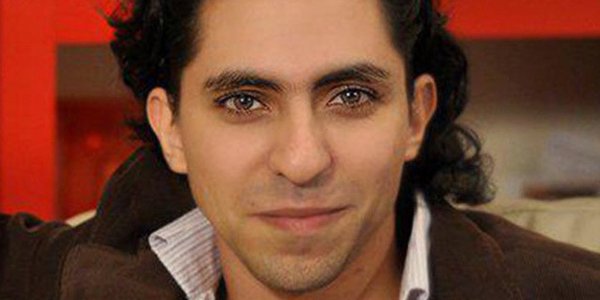
European Parliament President Martin Schulz urged Saudi King Salman “to free him, so he can accept the prize“. Mr Badawi’s wife Ensaf Haidar, now living Canada with their children, told AFP news agency that award was a “message of hope and courage”.
[Earlier this year Badawi also won the Pen Pinter Prize and the Moral Courage Award].
Badawi was one of three nominees for this year’s prize along with assassinated Russian opposition leader Boris Nemtsov and the Venezuelan opposition movement Mesa de la Unidad Democratica.
Nasrin makes a brief appearance in Jafar Panahi’s recent film “Taxi, which was awarded the Golden Bear for best film at the Berlin international film festival 2015.
On 8 July FIDH published an update on the situation of Iranian human rights defender Nasrin Sotoudeh: “With A Defiant Smile – A Portrait of Nasrin Sotoudeh“. For more posts on her see: https://thoolen.wordpress.com/tag/nasrin-sotoudeh/
Nasrin Sotoudeh is among the most prominent human rights lawyers in Iran (recipient of the 2012 Sakharov Prize, which she shared with the Iranian filmmaker Jafar Panahi, and the PEN/Barbara Goldsmith Freedom to Write Award). Known for her work in defending women’s rights activists, minors on death row, journalists, Kurdish rights activists and other human rights lawyers, including the Nobel prize winner Shirin Ebadi, she is a national hero to many Iranians.
In January 2011, she was sentenced to 11 years in prison on charges of “propaganda against the system,” and “acting against national security“. Following persistent calls for her release from the UN, governments, and NGOs her sentence was reduced to six years, to be spent in the notorious Evin prison.
In 2013, after three years in prison, Sotoudeh was unexpectedly released, without explanation from the authorities. During her incarceration, she spent time in solitary confinement and went on several hunger strikes in protest of the inhumane prison conditions and the 2012 travel ban imposed on her husband and young daughter. One of the hunger strikes lasted 49 days and resulted in her losing 95 pounds. Upon her release, despite her weakened physical state, Sotoudeh got right back to work fighting for the respect for human rights in Iran.
Since then she has reactivated the Professional Women Lawyers Association and the Children’s Rights Committee, both of which she had helped found before her imprisonment. However, she has been spending much of her energy on a new campaign to abolish the death penalty in Iran, called Step by Step to Stop the Death Penalty (LEGAM). The initiative focuses on amending Iranian legislation to gradually reduce and eventually abolish the use of the death penalty.
Until recently, her ability to push for legislative reforms remained greatly limited due to the Iran Bar Association’s October 2014 decision (under pressure from the Judiciary) to suspend her license to practice law for a period of three years. In protest, Sotoudeh staged daily sit-ins in front of the Bar Association’s offices in Tehran. Her perseverance and that of her supporters finally paid off when, on 23 June 2015, Sotoudeh was informed that the Bar Association had revised the ban and reduced it to a period of nine months [Sotoudeh declared that she would be applying to renew her license].
When asked how she became a human rights defender, Sotoudeh says that as a lawyer, she was forced to make a choice: “When a lawyer witnesses unfair trials, when a lawyer witnesses the execution of minors, either they must turn their back or they must face up to the problem they are witnessing. I think I entered the field of human rights on the day I decided not to avoid such issues.”
Sotoudeh seeks to change Iran from the inside, by arguing cases and convincing others that protecting human rights is necessary. As she said recently regarding the conflict with the Iran Bar Association: “The channel for negotiations should never be closed. However, there are prerequisites for negotiations. If they are fulfilled, we should welcome such negotiations. If not, we should not insist only on negotiations. We should use civil action to persuade the other party to engage in negotiations.”
In the brief appearance in Jafar Panahi’s recent film “Taxi,” (see above) Sotoudeh explains the trials and tribulations human rights defenders face in Iran all the time with a smile on her face, but a defiant smile!