Imprisoned Russian opposition leader Alexei Navalny has been awarded with the Sakharov Prize for Freedom of Thought. The award winner was selected by the leaders of the political parties represented in the European Parliament during a plenary session in Strasbourg on Wednesday 20 October 2021. [For more on this and other awards in the name of Sakharov, see: https://www.trueheroesfilms.org/thedigest/awards/BDE3E41A-8706-42F1-A6C5-ECBBC4CDB449]
Navalny, the most prominent foe of Russian President Vladimir Putin, was nominated alongside Afghan women, whose plight has taken centre stage after the Taliban takeover, and Jeanine Áñez, a Bolivian politician who became interim president in 2019 after alleged electoral fraud by Evo Morales. Áñez was later arrested for allegedly plotting coup d’état against Morales. [see: https://humanrightsdefenders.blog/2021/09/29/the-nominees-for-the-eus-sakharov-prize-2021/]
The award is supposed to be presented during a European Parliament session in Strasbourg on December 15, although this seems unlikely to happen in the case of Navalny since he’s currently serving a two-and-a-half-year jail sentence for fraud in Russia.
He says the charges were politically motivated to halt his challenge to the Kremlin. Russian authorities have opened a new criminal case against Navalny that could see him stay in jail for another decade.
“Today’s prize recognises his immense bravery and we reiterate our call for his immediate release,” said David Sassoli, President of the European Parliament, in a tweet. The main political parties also celebrated the laureate’s work and recognition, although some
“His unbroken commitment for a democratic Russia is representative of the many activists who are fighting for liberal rights,” wrote David McAllister, a German MEP of the centre-right EPP group and chairman of the parliament’s committee on foreign affairs.
“His bravery for freedom of thought and expression show how they are the precondition for democratic politics, human dignity & peace,” said Belgian MEP Guy Verhofstadt, from Renew Europe.
This year’s nominations for the European Parliament’s Sakharov Prize for Freedom of Thought were presented in a joint meeting of the foreign affairs and development committees and the human rights subcommittee in Brussels on 27 September 2021. They are:
Alexei Navalny, nominated by the EPP and Renew Europe for his courage in fighting for freedom, democracy and human rights, is a Russian opposition politician, anti-corruption activist and major political opponent of the country’s president Vladimir Putin. Known through his LiveJournal blog, YouTube and Twitter, where he has millions of followers he came to international prominence by organising demonstrations, running for office and advocating reforms against corruption in Russia, Putin and his government. In August 2020, while on a trip to Siberia, he was poisoned. He spent months recovering in Berlin, but returned to Moscow in January 2021 where he was arrested. In February he was sentenced to 2½ years in prison. Now incarcerated in a high-security penal colony, he went on a 23-day hunger strike in April to protest the lack of medical care. In June 2021, a Russian court banned Navalny’s regional offices and his Anti-Corruption Foundation.
Afghan women, nominated by S&D and the Greens/EFA for their brave fight for equality and human rights. Under the previous Taliban regime, women experienced forced marriage, high maternity mortality, low literacy, forced virginity tests and couldn’t travel without a male. Following the Taliban’s return to power, women are again excluded from government and education and their rights and freedoms are threatened. The women included in the nomination are:
Shaharzad Akbar – chair of the Afghan Independent Human Rights Commission (AIHRC)
Habiba Sarabi – member of the negotiating team of the Islamic Republic of Afghanistan
Anisa Shaheed – political reporter
Jeanine Áñez, nominated by the ECR, is a Bolivian politician and symbol of repression against dissidents and deprivation of due process and rule of law in Latin America. She became interim president in November 2019, after alleged electoral fraud by incumbent Evo Morales. In November 2020, after free and fair elections there was a peaceful transfer of power. However, on 13 March 2021 she was arrested on charges of “terrorism, sedition and conspiracy”. Accused of plotting a coup d’état against Morales, she has been imprisoned ever since.
Sultana Khaya, nominated by The Left, is a Sahrawi activist and human rights defender based in the Western Sahara, promoting the right to self-determination for the Sahrawi people. She is the president of the organisation League for the Defence of Human Rights and against Plunder of Natural Resources in Boujdour/Western Sahara and member of the Saharawi Organ against the Moroccan Occupation (ISACOM). She has been under de facto house arrest without a warrant since 19 November 2020. Since 2005, she has suffered physical attacks, death threats, torture and sexual assaults. Over the last year, the Moroccan authorities have intensified repression against Saharawi activists and journalists, who are subjected to ill-treatment, arbitrary arrests and harassment in order to silence or punish them for non-violent action against the occupation of Western Sahara. On 1 July 2021, the UN Special Rapporteur on Human Rights Defenders Mary Lawlor strongly condemned the reprisals against Sultana Khaya.
Global Witness, nominated by Marie Toussaint and other 42 MEPs, is a UK-based NGO, which for more than 25 years has investigated and exposed environmental and human rights abuses in the oil, gas, mining and timber sectors, tracking money and influence through the global financial and political system. Nowadays, it also focuses on the issue of the climate emergency, attacks on public space and civic freedoms and the protection of environmental defenders throughout the world. Since 2011, Global Witness and its 22 local partners have addressed abuses of power to protect human rights, verifying and publishing each year the number of defenders killed worldwide. Sewe also: https://humanrightsdefenders.blog/2021/09/13/global-witness-2020-the-worst-year-on-record-for-environmental-human-rights-defenders/
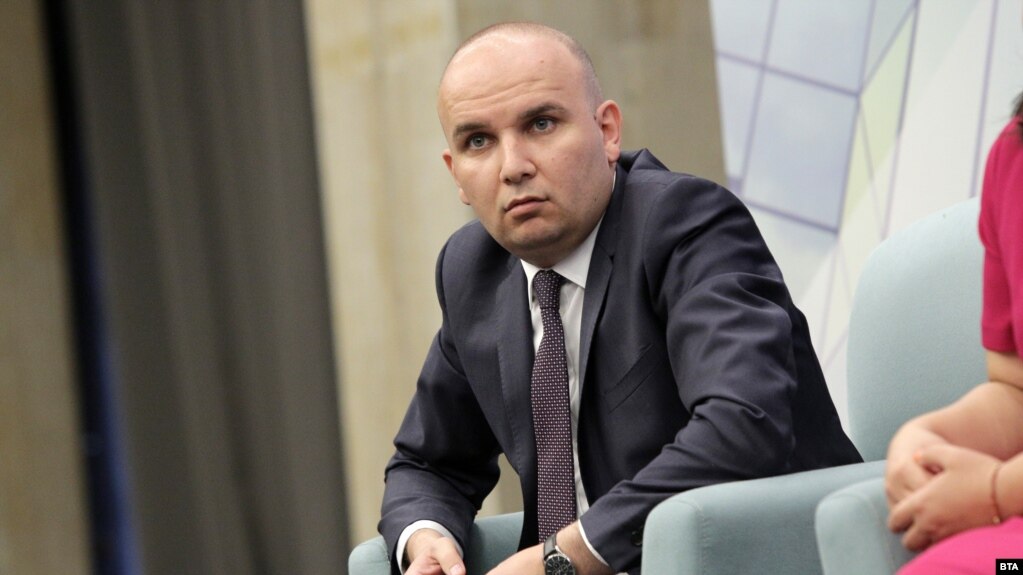
“I think it’s because of my active role in nominating Professor Ilham Tohti for the Sakharov Prize,” Ilhan Kyuchyuk told RFE/RL when asked why he was among 10 European individuals blacklisted by Beijing on March 22.
China’s Foreign Ministry announced that Kyuchyuk was on its tit-for-tat blacklist list after coordinated Western sanctions were imposed against Chinese officials and companies over the abuse of the rights of the mainly Muslim ethnic-Uyghur community in the Xinjiang region.
In addition to Kyuchyuk, Beijing sanctioned four other members of the European Parliament – Reinhard Butikofer and Michael Gahler from Germany, Raphael Glucksmann from France, and Miriam Lexmann from Slovakia.
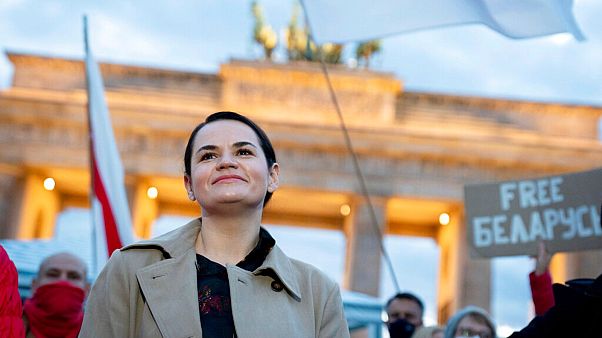
Belarusian opposition leader Svetlana Tikhanovskaya is welcomed by supporters, during a rally, by the Brandenburg Gate in Berlin, Monday, Oct. 5, 2020. – Copyright Kay Nietfeld/dpa via AP
The European Parliament (EP) has chosen Belarus’ opposition movement as the winners of this year’s Sakharov Prize for Freedom of Thought. EP President David Sassoli recognised an “initiative of brave women” in his speech including opposition leader Svetlana Tikhanovskaya, Nobel Laureate Svetlana Alexievich, musician and political activist Maryia Kalesnikava, and political activists Volha Kavalkova and Veranika Tsapkala.
He also gave honourable mentions to political and civil society figures and the founder of the Telegram channel NEXTA, Stsiapan Putsila, among others.
The ongoing political demonstrations in Belarus against the government and Alexander Lukashenko were sparked in the wake of the country’s presidential election in August.
The prize will be awarded in a ceremony at the European Parliament on 16 December.
Arnold Joaquín Morazan was shot dead in his home in Guapinol, a small low-income community on Honduras’s north coast, earlier this week in what is being reported as a murder by local media.
Morazán Erazo belonged to the Guapinol environmental group, whose imprisoned activists were recently shortlisted for the EU’s Sakharov Prizefor freedom of thought. [see: https://humanrightsdefenders.blog/tag/guapinol-activists/]
On 27 September 2020, in the central Honduran city of Comayagua, two unidentified individuals on a motorcycle shot Almendares, a local freelance journalist, three times and then fled the scene; bystanders brought the journalist to a local hospital, and he was then transferred to the Escuela Universitario hospital in the capital city of Tegucigalpa, where he died yesterday morning, according to newsreports and a report by Honduran free expression organization C-Libre.
“Honduran authorities must do everything in their power to conduct a credible investigation into the killing of journalist Luis Alonzo Almendares, determine whether it was related to his work, and prosecute those responsible,” said CPJ Central and South America Program Coordinator Natalie Southwick, in New York. “Violence against journalists is happening with terrifying frequency in Honduras, and impunity prevails in almost all cases. The government must act urgently to show that the killers of journalists will be held to account.
The European Parliamenthas announced its long-list of nominees for the annual Sakharov Prize. The nominees for this year’s prize, announced at last week’s plenary session of the Parliament, are:
Two nominations for the democratic opposition in Belarus, represented on the one hand by the Coordination Council, an initiative of political and civil society figures, and on the other by Sviatlana Tsikhanouska, an activist and politician whose defeat in this year’s presidential election led to accusations of fraud against the winner, Alexander Lukashenko. Tsikhanouska is also a member of the Coordination Council.
Monsignor Najeeb Moussa Michaeel, Archbishop of Mosul in Iraq who ensured the evacuation of Christians, Syriacs and Chaldeans to Iraqi Kurdistan when Islamic State arrived in the city in 2014, and who safeguarded more than 800 historic manuscripts dating from the 13th to the 19th century.
Guapinol activists and Berta Caceres in Honduras. The Guapinol activists have been imprisoned after taking part in a peaceful protest against a polluting mining company in Tocoa, Honduras. Berta Caceras was assassinated in 2016, and was a land-rights activist and protestor against illegal logging and land-grabbing from indigenous peoples in Honduras.
Finally, Polish LGBTI activists Jakub Gawron, Paulina Pajak, Paweł Preneta and Kamil Maczuga who founded the website Atlas of Hate, monitoring the implementation by local municipalities to the anti-LGBTI legislation introduced by the national government. This year five of the municipalities sued Gawron, Pajak and Preneta, demanding financial compensation for loss of reputation.
At the end of the month, the foreign affairs and development committees and the human rights subcommittee of the Parliament will announce their shortlist of three finalists. On 22 October the Conference of Presidents – consisting of the President of the European Parliament and the leaders of the political groups – will announce the winner.
The Prize itself will be awarded at a ceremony in the European Parliament in Strasbourg on 16 December.
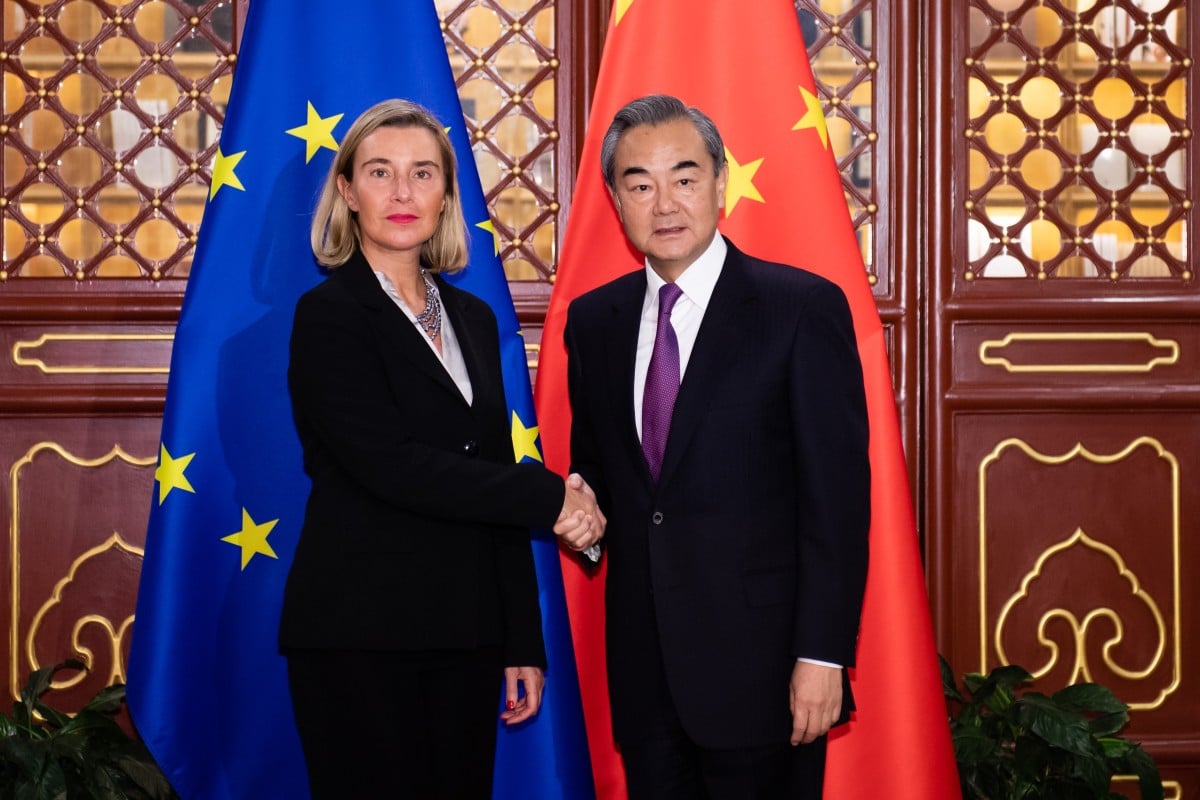
Chinese Foreign Minister Wang Yi met his EU counterpart Federica Mogherini in Beijing on Tuesday. Photo: Xinhua
Keegan Elmer in the South China Morning Post of 25/26 October 2019 reports that Chinese officials have told their European counterparts that human rights should be measured by the people’s well-being and rejected the EU’s support for the “universal” values enshrined in the United Nations Charter. The statements issued by both sides after a meeting between the EU’s foreign affairs chief and Chinese foreign minister Wang Yi underlined their disagreements on human rights by recording their discussions on the topic in markedly different ways. While the Europeans focused on Mogherini’s support for “universality”, the Chinese statement emphasised her call for mutual respect and comments that there were “different approaches” to the issue.
According China, Mogherini had acknowledged that there are “different approaches to safeguarding and promoting human rights” and accepted that there were “problems with the human rights situation in European countries”. It continued that she had agreed to continue cooperation and exchanges with China “on the basis of mutual respect”, adding: “The EU does not intend to act as the ‘teacher’ of other countries on human rights issues.”
But the EU’s account of the meeting did not refer to Wang’s comments and said Mogherini had “underlined to the Chinese leadership that the EU will continue to stand up for the universality, interdependence and indivisibility of human rights based on the UN Charter and standards”.
China extraordinary sensitivity to ‘interference’ of any level into what it considers its domestic affairs is well-known. I touched upon this ‘hot’ topic’in my own 2011 article “The international human rights movement: not perfect, but a lot better than many governments think” in the book ‘NGOs in China and Europe’(exceptionally also published in Chinese!): Yuwen Li (ed), Ashgate, 2011, pp 287-304 (ISBN: 978-1-4094-1959-4).
On the same day that the pair met in Beijing, the European Parliament awarded its 2019 Sakharov Human Rights Prize to human rights defender Ilham Tohti, who is serving a life sentence. The statement announcing the award called for his immediate release and said “for over two decades, he has worked tirelessly to foster dialogue and understanding between Uygurs and other Chinese people”. [see: https://humanrightsdefenders.blog/2019/10/24/lham-tohti-now-also-awarded-the-2019-sakharov-prize/]. Predictably, during a press conference on Friday, Chinese foreign ministry spokesman Hua Chunying said the parliament had “given a prize to a criminal”. “I don’t know how much meaning, value or influence [the prize] has,” said Hua. “I only know Tohti is a criminal that has been sentenced by a Chinese court.”
Neither the Chinese nor the EU have said whether Tohti’s case or the situation in Xinjiang – where Beijing is accused of detaining a million mainly Uygur Muslims in re-education camps – had been discussed.
It was just accounced that Uyghur human rights defender Ilham Tohtihas been awarded this year’s European Parliament Sakharov Prize for Freedom of Thought. European Parliament President David Sassoli announced the laureate in the Strasbourg chamber at noon on Thursday, following an earlier decision by the Conference of Presidents: “I am very pleased to announce that the European Parliament has chosen Ilham Tohti as the winner of the 2019 Sakharov Prize for Freedom of Thought. Tohti has dedicated his life to advocating for the rights of the Uyghur minority in China. Despite being a voice of moderation and reconciliation, he was sentenced to life in prison following a show trial in 2014. By awarding this prize, we strongly urge the Chinese government to release Tohti and we call for the respect of minority rights in China”. The Sakharov award ceremony will be held in the European Parliament’s hemicycle in Strasbourg on 18 December. For more on the Sakharov Prize for Freedom of Thought and similar awards, see: http://www.trueheroesfilms.org/thedigest/awards/sakharov-prize-for-freedom-of-thought.
This is the 6th major human rights award that Ilham Tohti has picked up:
2014 Freedom to Write Award (PEN)
2016 Martin Ennals Award for Human Rights Defenders
In the first of a two-part series on media repression and “fake news” in Morocco – written in collaboration with Access Now – Global Voices tells on 4 April 2019 how jailed human rights activist Nasser Zefzafi was smeared by Moroccan pro-government media.
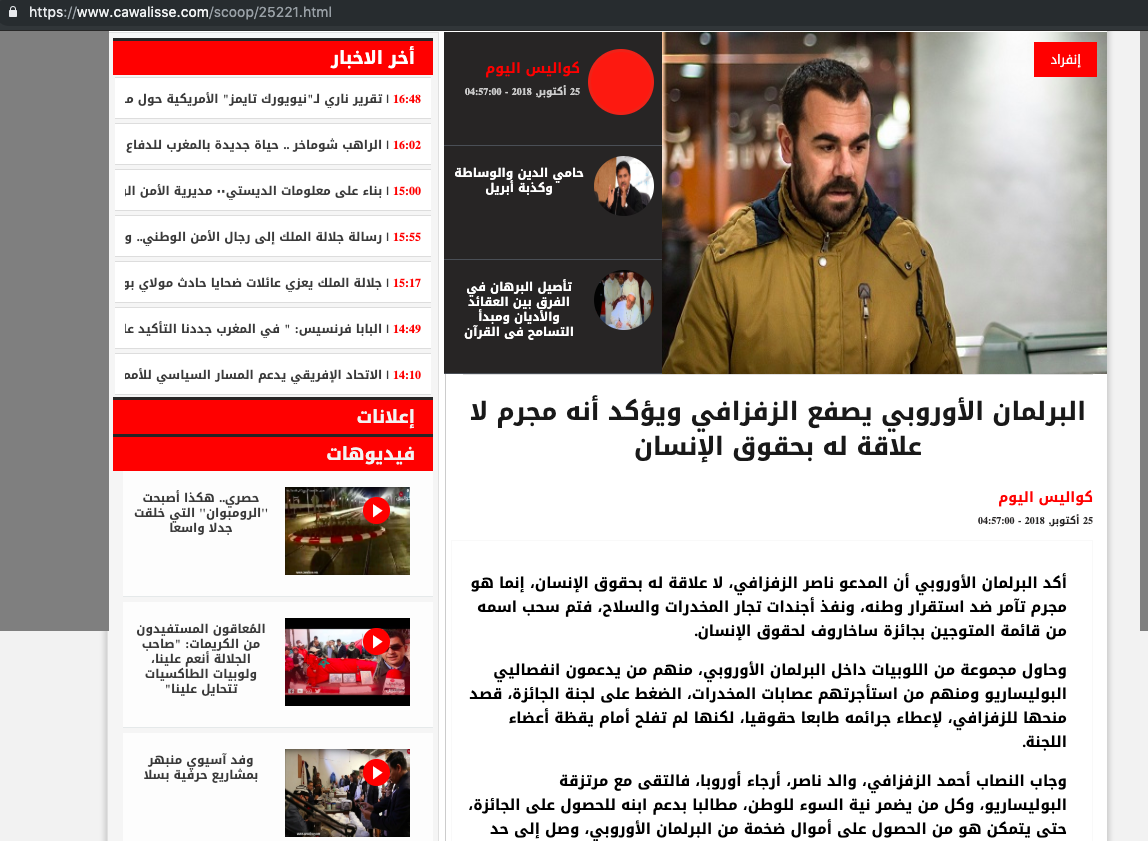
Zefazfi is currently serving a 20-year prison term for his role as a leader in the Hirak protests. … Zefzafi made it to the list of three finalists for the Sakharov Prize, but did not win. It was instead awarded to Ukrainian film director and writer Oleg Sentsov. Following the announcement of the winner on 25 October, Moroccan news site Cawalisse published a fabricated story alleging that the European Parliament “withdrew Zefzafi’s name from the list of winners’’ because he is a “criminal who has no link to human rights.”
Screenshot of the fabricated Cawalisse story alleging that the European Parliament deemed Zefzafi a ”criminal’.
The article (which does not list an author!) states that “a group of lobbies from within the European Parliament, including those that support Polisario separatists and those hired by drug gangs, pressured the prize’s committee to award it to Zefzafi and give his crimes the label of protecting rights.” The story is completely false. It is based on fabricated facts and conspiracy theories. The European Parliament never maintained that Zefzafi was a criminal, nor did they withdraw his name “from the list of winners.” He was simply not chosen to win the prize. In fact, there was no “list of winners” in the first place, but only one winner, Oleg Sentsov…
On 11 December 2018 the European Parliament published “Rule of law and human rights in Cuba and Venezuela and EU engagement”, done by external authors Par ENGSTROM and Giulia BONACQUISTI.
The European Parliament (EP) has consistently followed the situation in Cuba and Venezuela. It has expressed its support for human rights defenders and democracy with the award of the Sakharov prize to Cuban activists on three occasions (2002, 2005, 2010), and to Venezuela’s Democratic Opposition in 2017 [see: https://humanrightsdefenders.blog/2017/10/27/european-parliaments-sakharov-prize-awarded-to-venezuela-opposition/]. In line with this engagement, a workshop on human rights and rule of law in both countries was held on 6 September 2018, in Brussels, at the request of the EP’s Subcommittee on Human Rights (DROI). Dr. Par Engstrom (University College London) presented the first draft of an independent study analysing the main human rights developments in Cuba and Venezuela since 2014 and the EU’s response. The paper, which focused specifically on the Sakharov laureates, was discussed with Members and other experts, including from the UN Office of the High Commissioner for Human Rights, the European External Action Service and the European Commission. During the lively discussion, there was broad agreement with the description of major trends in the human rights situation in the two countries. Critical comments and controversial issues related to the impact of the government’s repression of the Venezuelan opposition, the need to consider not only civil and political but also economic and social rights, the effectiveness of sanctions against Venezuela and the potential role of the Sakharov Prize. Observations and comments made during the workshop fed into the final version of the study, which is also included in this report.