Posts Tagged ‘Russia’

Human rights defender Mark Kuperman -persecution in Russia doesn’t spare anyone

February 17, 2025

A group of UN Special Rapporteurs condemned the criminal prosecution of 85-year-old human rights defender Mark Kuperman, who has a disability and uses a wheelchair.

Kuperman, a prominent Russian human rights advocate, faces severe “terrorism” charges and is being targeted for his anti-war views and human rights work. A celebrated human rights defender, Kuperman is the head of the Public Human Rights Center in Sakhalin region and in 2022, was awarded the Moscow Helsinki Group’s human rights prize.

On 4 April 2024, the Sakhalin Investigative Committee initiated a criminal case against Kuperman on charges of “extremism.” When the investigation concluded in early December 2024, the case was unexpectedly reopened on 20 December 2024, and the authorities escalated the charges to “public calls for terrorist activities” under article 205, part 2 of the Russian Criminal Code. These charges stem from a draft document Kuperman received from a colleague and allegedly shared with his team in January 2023, discussing potential scenarios for Russia’s democratic development and the role of the West in supporting future democratic institutions.

The experts voiced serious concerns about the impact of judicial harassment on Kuperman, especially considering his advanced age, disability, and deteriorating health. The court proceedings, set to start immediately, could endanger his life and well-being, particularly if he is detained.

It is appalling to prosecute an older human rights defender with a first-degree disability on unsubstantiated charges of “terrorism”, brought against him just to punish him for his criticism of the war against Ukraine,” the experts said.

“Russian authorities rushing the case to trial and denying Kuperman adequate time to prepare his defence demonstrates once again the lack of judicial independence and instrumentalisation of the judicial system to silence the independent and dissenting voices in Russia.”

The Yuzhno-Sakhalinsk City Court set an unreasonably short five-working-day deadline for Kuperman to study the case files, without providing any procedural accommodations and ignoring his disability, cognitive decline, chronic pain, movement restrictions, and weak vision. On 24 January, the investigator arbitrarily ended the review process, hindering Kuperman’s defence preparation and blocking his ability to request case dismissal due to lack of evidence. Additionally, the Russian security services (FSB) apparently installed listening devices in his apartment, preventing his confidential communication with his lawyer, as Kuperman is unable to leave his apartment due to his physical impairment.

“This case fits the broader pattern of using counter-extremism and counter-terrorism legislation in Russia to target human rights defenders, anti-war activists, and political opponents for exercising their freedom of expression,” the experts added. “Kuperman’s private discussions and human rights work have been criminalised, undermining the integrity of legal proceedings and violating due process. All charges against Kuperman should be dropped.”

https://www.ohchr.org/en/press-releases/2025/02/russia-must-immediately-drop-charges-against-85-year-old-human-rights

https://community.scoop.co.nz/2025/02/russia-must-immediately-drop-charges-against-85-year-old-human-rights-defender-mark-kuperman-un-experts/

Three Navalny lawyers sentenced to years in Russian penal colony

January 20, 2025

On 17 January, 2025 Mark Trevelyan for Reuters reported that three lawyers for the late opposition leader Alexei Navalny were found guilty by a Russian court of belonging to an extremist group and sentenced to years in a penal colony.

Igor Sergunin, Alexei Liptser and Vadim Kobzev were arrested in October 2023 and added the following month to an official list of “terrorists and extremists”. They were sentenced respectively to 3-1/2, 5 and 5-1/2 years after a trial held behind closed doors in the Vladimir region, east of Moscow.

Vadim, Alexei and Igor are political prisoners and must be released immediately,” Yulia Navalnaya, the widow of the late politician, posted on X.

Human rights activists say the prosecution of lawyers who defend people speaking out against the authorities and the war in Ukraine crosses a new threshold in the repression of dissent under President Vladimir Putin.

“Lawyers cannot be persecuted for their work. Pressure on defence lawyers risks destroying the little that remains of the rule of law, whose appearance the Russian authorities are still trying to maintain,” rights group OVD-Info said in a statement.

It said Navalny’s lawyers were being prosecuted “only because the letter of the law still matters to them and they did not leave the man alone with the repressive machine”.

The Kremlin says it does not comment on individual court cases. Authorities have long cast Navalny and his supporters as Western-backed traitors seeking to destabilise Russia. Despite his imprisonment, Navalny was able via his lawyers to post on social media and file frequent lawsuits over his treatment in prison, using the resulting legal hearings as a chance to keep speaking out against the government and the war. The lawyers were accused of enabling him to continue to function as the leader of an “extremist group”, even from behind bars, by passing his messages to the outside world.

In court, a woman shouted “Boys, you are heroes” and supporters applauded the three men, standing together in a barred cage for the defendants, after their sentencing.

Yulia Navalnaya last month published video of secretly recorded meetings between Navalny and the lawyers in prison, something she said was illegal because an accused person has the right to confer privately with a lawyer. Russia’s federal prison service did not reply to a request for comment.

Navalnaya said the recordings were made by the authorities and handed to her team after it offered a reward for people to come forward with information about Navalny’s death.

She alleges her husband was murdered on Putin’s orders, an accusation that the Kremlin has strongly denied. Navalnaya herself is wanted in Russia for alleged extremist activity but has said she hopes to return to the country one day and run for president.

On 21 January 2025 the UN Special Rapporteur on the situation of human rights in the Russian Federation, Mariana Katzarova, urged authorities to end the severe crackdown on the legal profession in Russia and stop endangering the lives and safety of lawyers.

https://www.reuters.com/world/europe/three-navalny-lawyers-jailed-belonging-extremist-organisation-mediazona-news-2025-01-17/

https://www.ohchr.org/en/press-releases/2025/01/russia-special-rapporteur-appalled-prison-sentences-punish-navalny-lawyers

Indigenous human rights defender Victoria Maladaeva from Russia

November 6, 2024

Indigenous communities must have better political representations to ensure our rights are protected both constitutionally and in practice,‘ says Victoria Maladaeva, and Indigenous peoples’ rights defender from Russia. Victoria was also a participant in ISHR’s Women Rights Advocacy Week this year. She spoke to ISHR about her work and goals.

Hello Victoria, thanks for accepting to tell us your story. Can you briefly introduce yourself and your work?

Sure! I’m a Buryat anti-war decolonial activist, co-founder of the Indigenous of Russia Foundation.

What inspired you to become involved in the defence of human rights?

Since the full-scale Russian invasion of Ukraine, Indigenous peoples, particularly Buryat, have been hit the hardest. I wanted to help my people, fight the Russian propaganda and raise awareness about systemic colonial oppression and discrimination faced by Indigenous people and ethnic minorities in the Russian Federation.

What would Russia and your community look like in the future if you achieved your goals, if the future you are fighting for became a reality?

The country needs a large-scale transformation— political, economic, and cultural. Indigenous communities must have better political representations to ensure our rights are protected both constitutionally and in practice. Genuine democratic reforms involve fundamental rights for self-determination and autonomy where Indigenous peoples gain control of their land and resources. Putin’s constitution’s amendments to national Republics must be reversed, our languages must be mandatory in all schools, universities, and institutions where Indigenous communities live. 

How do you think your work is helping make that future come true?

I’m advocating for the rights of Indigenous peoples with international stakeholders and institutions to raise awareness about issues faced by our communities and spreading awareness, producing documentaries, and mobilising diasporas. 

Have you been the target of threats or attempts at reprisals because of your work?

Unfortunately, yes. There have been threats because of my anti-war activism and for shedding light on the disproportionate mobilisation in the Republic of Buryatia. For some reason, my colleagues and I were denied participation in the UN Permanent Forum on Indigenous Issues. I would like to believe this was a mistake and that there was no influence from the Russian delegation at the UN.

Do you have a message for the UN and the international community?

Russia needs decolonisation and de-imperialisation. Without revising the past and acknowledging colonial wars (not only in Ukraine) and discrimination, there can be no bright future for Russia—free and democratic. The international and anti-imperialist community should acknowledge that the Russian government is not for any anti-colonial movement. Stand in solidarity with independent Indigenous activists!

https://ishr.ch/defender-stories/human-rights-defenders-story-victoria-maladaeva-from-russia

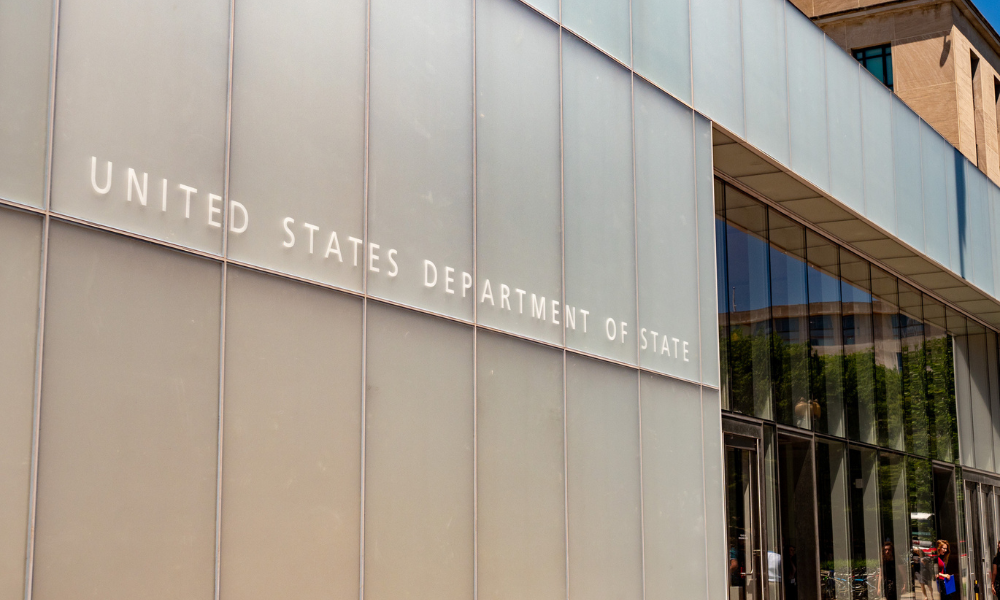
US State Department 2023 country reports

May 4, 2024

US State Department highlights human rights concerns globally in 2023 country reports

On 2 May 2023 Angelica Dino in the Canadian Lawyer summarizes the latest annual Country Reports on Human Rights Practices, released by the U.S. Department of State on the 75th anniversary of the UN Universal Declaration of Human Rights (UDHR).

The Human Rights Report evaluated the status of internationally recognized individual, civil, political, and worker rights in nearly 200 countries and territories, leveraging insights from various sources, including government agencies, NGOs, and media. According to the State Department, this documentation serves as a critical tool in connecting U.S. diplomatic and foreign aid efforts to the foundational American values of human rights protection and promotion.

The release coincides with the third Summit for Democracy, led this year by the Republic of Korea. The summit emphasizes a collective international effort to strengthen democratic governance and address human rights abuses. Its goals include expanding media freedom, enhancing women’s rights, combating corruption, and ensuring that technology supports democratic processes rather than acting as a tool of repression.

This year’s report detailed significant human rights violations across several countries, with stark abuses noted in Russia’s ongoing conflict in Ukraine. Russian military actions have been characterized by violent assaults on civilians, with extensive documentation of crimes potentially amounting to crimes against humanity. The report also highlighted the forced transfer and assimilation of Ukrainian children into Russian territories, marking a severe violation of international law.

Further, the report raised concerns about the human rights situations in Sudan, where both government and paramilitary forces have committed war crimes, and in Uganda, which has enacted severe anti-LGBTQI+ legislation. The ongoing conflict between Israel and Hamas also drew attention, with the report calling for adherence to international law and protection of civilians amidst military actions.

In Iran, the regime’s crackdown on dissent extended beyond its borders, posing grave risks to its citizens both domestically and internationally. Similarly, the report condemned the Taliban’s discriminatory actions against women and girls in Afghanistan, which starkly undermined their societal roles and freedoms.

Conversely, the report identified positive strides in several nations. Notably, Kenya has upheld freedom of expression for LGBTQI+ individuals, and Estonia and Slovenia have recognized marriage equality. Additionally, labour reforms in Mexico have empowered workers to improve conditions and assert their rights more effectively.

Secretary of State Anthony Blinken emphasized the report’s role and expressed hope that the findings will support and inspire human rights defenders globally. “I hope that the honest and public assessments of human rights abuses, as well as the reports of progress, reflected in these pages give strength to these brave individuals across the globe who often put their lives at risk to improve conditions in their own countries, and, ultimately, make the world a freer, safer place for us all,” Blinken said.

see also: https://humanrightsdefenders.blog/2022/04/14/us-state-departments-report-2021-is-out/

https://www.canadianlawyermag.com/news/international/us-state-department-highlights-human-rights-concerns-globally-in-2023-country-reports/385900

‘Foreign Agent’ Laws Spread, now also Georgia ?

April 8, 2024

Iskra Kirova, Advocacy Director, Europe and Central Asia Division of HRW, wrote on 4 April 2024: ‘Foreign Agent’ Laws Spread as EU Dithers to Support Civil Society

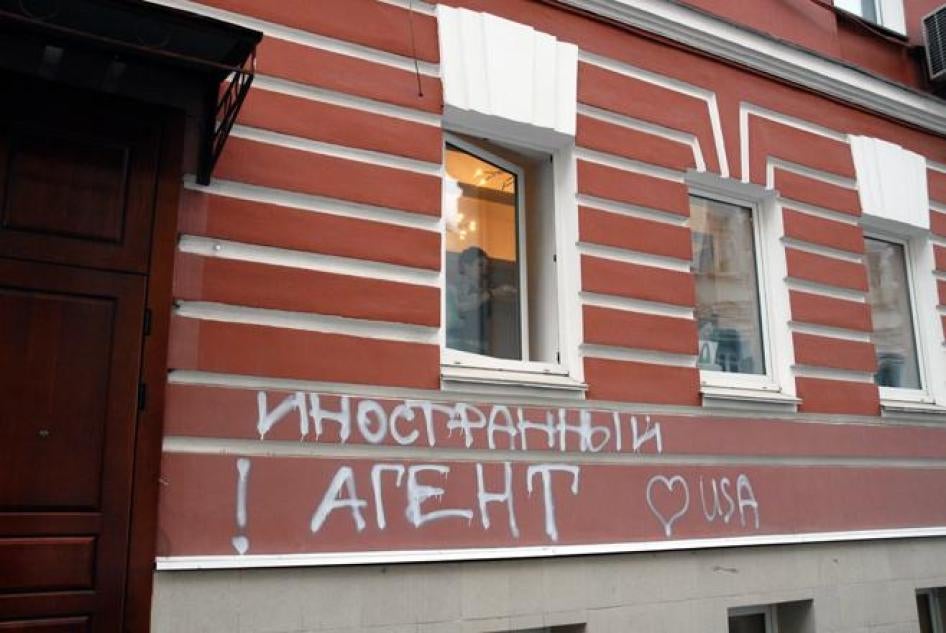
On the night before the infamous “foreign agents” law came into force back in 2012, unknown individuals sprayed graffiti reading, “Foreign Agent! ♥ USA” on the buildings hosting the offices of three prominent NGOs in Moscow, including Memorial. 
On the night before the infamous “foreign agents” law came into force back in 2012, unknown individuals sprayed graffiti reading, “Foreign Agent! ♥ USA” on the buildings hosting the offices of three prominent NGOs in Moscow, including Memorial.  © 2012 Yulia Klimova/Memorial

Georgia’s ruling party plans to reintroduce highly controversial Russia-style “foreign agent” legislation aimed at incapacitating civil society and independent media. If adopted, the laws, which were withdrawn last year in the face of massive protests, would require foreign-funded nongovernmental organizations and media to register as “agents of foreign influence”. That would make them subject to additional scrutiny and sanctions, including administrative penalties up to 25,000 GEL (about 8,600 Euro). Authorities claim the laws promote “transparency”, but their statements make it clear the laws will be used to stigmatize and punish critical voices.

Georgia was granted EU candidate status in December 2023 on the understanding it would improve conditions for civil society. This move risks derailing its EU integration even if the EU has until now been willing to move the country forward in the accession process despite limited progress on EU reform priorities. Georgia’s defiance of the EU on its civil society commitments isn’t so surprising when seen in the regional context. See also: https://humanrightsdefenders.blog/2024/03/24/kyrgyzstan-on-its-way-to-emulate-russia-with-a-draft-law-on-foreign-representatives-agents/

The day before Georgia’s announcement, Kyrgyzstan’s president signed an abusive “foreign representatives” law. Copied almost entirely from the Russian equivalent, the law would apply the stigmatizing designation of “foreign representative” to any nongovernmental organization that receives foreign funding and engages in vaguely defined “political activity”. The bill had been widely criticized after its initial submission in November 2022, including in a urgency resolution by the European Parliament.

The EU had ample opportunity to press the authorities to reject this bill. Kyrgyzstan benefits from privileged access to the EU internal market tied to respect for international human rights conventions: conventions this law clearly contravenes. The country is poised to sign an enhanced partnership agreement with the EU that centers democracy and fundamental rights. The EU has been silent on whether these deals would be imperiled by the bill’s adoption, despite the fact the European Commission’s own assessment highlighted Kyrgyzstan’s dire environment for civil society and the country’s breach of its obligations.

The latest spate of curbs on civil society comes in the wake of the European Commission’s December 2023 legislative proposal for an EU Directive on “transparency of interest representation” that would create a register of organizations which receive foreign funding. European civil society vehemently opposes the proposal because it risks shrinking space for independent organizations at home and diminishing the EU’s credibility in opposing such laws abroad. Yet the Commission forged ahead. On the same day the proposal was adopted, Hungary’s parliament approved a law that gives a government-controlled body broad powers to target civil society and independent media.

With civil society organizations under threat throughout Europe and Central Asia, we need an EU that in words and actions protects civic space and sets the right standards.

https://www.hrw.org/news/2024/04/04/foreign-agent-laws-spread-eu-dithers-support-civil-society

https://www.ohchr.org/en/press-briefing-notes/2024/04/kyrgyzstan-new-law-risks-undermining-work-ngos

https://news.un.org/en/story/2024/05/1149776

https://www.ohchr.org/en/press-releases/2024/05/georgia-un-experts-condemn-adoption-law-transparency-foreign-influence

and see this! https://oc-media.org/georgian-foreign-agent-law-protester-lazare-grigoriadis-found-guilty/

How bad prison conditions in Russia are: Human Rights Defender Gregori Vinter asks Putin to euthanize him

February 3, 2024
Human rights activist Gregori Vinter appears in court in Cherepovets, Russia, on January 17.

On 29 January 2024, Rafio Free Europe reported that Russian paleontologist and human rights defender Gregori Vinter, who was sentenced to three years in prison earlier this month on a charge of distributing “false” information about Russian armed forces involved in Moscow’s ongoing invasion of Ukraine, has asked President Vladimir Putin to euthanize him “to avoid an excruciating death of diabetes.”

Vinter’s lawyer, Sergei Tikhonov, on January 28 called the letter written by his client before he was handed his sentence on January 18 “a gesture of despair.”

In the letter, Vinter says prisons could not supply the insulin he needs to treat his diabetes, while getting supplies from outside the institution would be impossible because he would have to visit doctors to get prescriptions, something that wouldn’t be allowed.

“My experience tells me that without my medicine my life in custody will be very short…. I will face a process of a long and cruel death…. Knowing that as an inmate I will face a mere excruciatingly painful death among the alien, cruel, and absolutely indifferent people of the prison, I ask you to allow a voluntary medical euthanasia for me,” Vinter’s letter to Putin says.

“Imprisonment for a person like me, a person who survived a stroke, a clinical death during COVID, an attempted murder in 2018, actually means an execution, a public execution accompanied with long-term suffering through a slow and painful death. This is not just 1937 [period of Josef Stalin’s great purge] — it is perverted pathological sadism that is known to the whole world as the Russian Federation’s Federal Penitentiary Service.”

Prison officials have not commented on Vinter’s letter and whether he would have regular access to the medical assistance he needs.

The 55-year-old Vinter is the leader of the For Human Rights group branch in his native city of Cherepovets. His human rights activities in recent years helped to reveal the mass beatings of inmates at a local prison and investigations of the penitentiary’s guards. He also made headlines in 2019 after he led several rallies protesting against the local government’s deforestation activities in the region around Cherepovets.

During the pandemic in 2020, Vinter was handed a parole-like two-year sentence over an online post about the transportation of convicts without medical masks and other COVID precautions.

Before the sentence was pronounced, Vinter spent time in a detention center where, he said, investigators tortured him with electricity and broke his leg.

Vinter later told journalists about what he endured in the detention center, which led to a public outcry and investigations of the center’s administration.

The case against Vinter was initiated in August 2022 after he posted materials on the Internet about alleged atrocities committed by Russian troops against civilians in Ukraine.

The Memorial human rights group has recognized Vinter as a political prisoner.

https://www.rferl.org/a/imprisoned-russian-rights-activist-asks-putin-euthanasia/32796757.html

Environmental defender Alexander Nikitin awarded compensation by European Court

November 13, 2023

On 10 November 2023 the Caucasian Knot reported that the ECtHR had found a violation of the rights of Krasnodar activist Nikitin. Alexander Konstantinovich Nikitin is a Russian former submarine officer and nuclear safety inspector turned environmentalist. In 1996 he was accused of espionage for revealing the perils of decaying nuclear submarines, and in 2000 he became the first Russian to be completely acquitted of a charge of treason in the Soviet or post-Soviet era. Nikitin is still engaged in environmental and human rights issues in Russia. He is the head of Bellona Foundation’s Saint Petersburg branch, and is engaged in environmental and nuclear safety projects, as well as in human rights cases. He is a widely recognised HRD, see: https://www.trueheroesfilms.org/thedigest/laureates/D519B52C-D0C3-4B3B-B8F6-798A34B1BF04

The European Court of Human Rights (ECtHR) has awarded compensation of EUR 5000 to Alexei Nikitin, a Krasnodar activist. Nikitin was detained at an action against increasing prices for public transport in 2018 and at a rally in support of Alexei Navalny* in 2021.

Navalny’s offices are recognized as extremist organizations and banned in Russia. Alexei Navalny is a founder of the Anti-Corruption Foundation (known as FBK), an NCO that is included by the Russian Ministry of Justice (MoJ) into the register of NCOs performing functions of a foreign agent. The NCO is also recognized by a court as extremist and banned in the territory of Russia.

https://eng.kavkaz-uzel.eu/articles/63451

Human rights defender Oleg Orlov in further trouble

October 30, 2023

The Prosecutor’s Office has appealed against the verdict passed to human rights defender, Oleg Orlov, who was fined on charges of discrediting the Russian Army, and demanded to sentence him to three years in colony. [see: https://humanrightsdefenders.blog/2022/04/01/grim-times-for-human-rights-defenders-and-real-journalists-in-russia/]

The “Caucasian Knot” has reported that on October 11, the Golovinsky District Court of Moscow sentenced Oleg Orlov, a co-chairman of the “Memorial” Centre for Human Rights Defence, to a fine of 150,000 roubles. At the same time, the prosecutor asked the court to fine Orlov by 250,000 roubles, and his defence stated that the article of the Criminal Code about discrediting the Russian Army was contrary to the Russian Constitution and the international law.

The reason to accuse Orlov was a Russian translation of his article posted on the Facebook*; the original was published in the French outlet named “Mediapart”. The article condemns the special military operation (SMO) in Ukraine.

On October 26, Orlov and his defence filed a complaint against the court verdict, the above “Memorial” Centre reported in its Telegram channel.

“The PO has also challenged the verdict. They demand to sentence Orlov to three years of freedom deprivation – this is the maximum punishment under the article under which he is being tried,” the outlet says.

The PO has justified the change in its position by saying that Orlov experiences political and ideological hatred of the Russian Federation, and also, together with the “Memorial”, continues undermining the stability of the civil society.

Oleg Orlov has treated the PO’s appeal presentation as “an act of self-exposure.” “Now no one can doubt that this trial was and continues to be of a political nature. I am being prosecuted for my dissent,” he has noted.

https://eng.kavkaz-uzel.eu/articles/63362

Results of the 54th session of the UN Human Rights Council

October 15, 2023

On 13 October 2023 the ISHR and other NGOs shared their reflections on the key outcomes of the 54th session of the UN Human Rights Council [see: https://humanrightsdefenders.blog/2023/09/11/human-rights-defenders-at-the-54th-session-of-the-un-human-rights-council/:

…We firmly condemn all crimes and other grave violations under international law committed by both Israel and Palestinian armed groups. Targeted and indiscriminate attacks against civilians can never be justified. We call on the ICC Office of the Prosecutor to accelerate its investigation into serious crimes committed by all parties in Palestine and Israel. We call on Israel to ratify the Rome Statute, and for the ICC to hold both State and non-State perpetrators of international crimes accountable. We call on the Commission of Inquiry to address the situation within the context of its root causes: settler colonialism, apartheid, and denial of the fundamental rights to self-determination and return of the Palestinian people, all amounting to grave violations of international law. We call on governments to immediately stop providing political and military support to Israel, while Ministers manifest a genocidal intent against Palestinians. On 9 October 2023, Yoav Gallant, Israel’s Minister of Defense, stated: “We are imposing a complete siege on [Gaza]. No electricity, no food, no water, no fuel – everything is closed. We are fighting human animals, and we act accordingly”. We deplore the dehumanization of all people, including not mentioning  Palestinian civilians’ killings in statements in this Council. As we gear up to celebrate the 75th anniversary of the UDHR, we remind this Council that for 75 years, generations of people in Gaza and historic Palestine have not been born free and equal in dignity and rights. Until this is addressed, the cycles of violence will not end. As Israel continues to bomb the Rafah crossing, the international community has a duty to guarantee immediate humanitarian access to besieged Gaza. We call on States to establish an international protective presence in the OPT, as called for by UN Special Procedures.  For 75 years, the international community has enabled impunity and failed to fulfill the right to self-determination of Palestinian people, including through their legitimate right to resist colonialism.

The Council has shown that it does have an important role to play in addressing violations amidst multiple human rights crises. We welcome the establishment of the mechanism on Sudan and the extension of the Special Rapporteur on Russia, inter alia, in this regard. But these stand in stark contrast to its failure to renew the critical mandate on Ethiopia, particularly in light of the expert finding of the acute risk of ongoing and further atrocity crimes, as well as other Council blind spots where mounting human rights violations remain ignored. We stress the need for the Council to take a principled approach and to address situations on their merits. 

We remain deeply concerned about reprisals against civil society actors who engage or seek to engage with UN bodies and mechanisms. We call on all States and the Council to do more to address the situation, including raise concerns about specific cases of reprisals and demand that governments provide an update on any investigation or action taken toward accountability. We welcome the adoption of the resolution on cooperation with the UN, including the reference to adequately resourced dedicated civil society focal points, however we are disappointed that several proposals by States and civil society to strengthen the text were not taken on board. The Secretary General’s most recent report on reprisals notes increased physical and digital surveillance of those cooperating with the UN and application of laws aimed at punishing or deterring cooperation. While the resolution takes notes of these trends we regret that the resolution does not fully address how these should be addressed. We welcome the strong focus on prevention and emphasis given to accountability. Nonetheless, the preventative role the Council could play in regard to reprisals, as signs of deterioration in civic space conditions, is overlooked. In addition, States’ monitoring and reporting responsibilities in relation to allegations of acts of intimidation or reprisal could be addressed more fully. Also, we welcome the call to the SG for adequate resources to be allocated to OHCHR to prevent and address allegations.

We welcome the resolution on preventable maternal mortality and morbidity, which reiterates that PMMM is a human rights issue that requires a human rights-based approach response, centering inter alia the principles of accountability, meaningful participation of primarily affected people, non-discrimination and equality and transparency. The resolution aims at garnering political will to curb maternal mortality and morbidity rates that have been stagnating and failing to meet SDGs targets. The resolution rightly highlights the full realization of the right to sexual and reproductive health and the provision of comprehensive sexual and reproductive health information and services, including comprehensive sexuality education and safe abortion (with the caveat of not when against national law), as pre-conditions to lower PMMM. We welcome the call to update the technical guidance on a HRBA to PMMM. We however deplore the amendments put forward seeking to weaken the text and apply a protectionist lens to women’s rights to bodily autonomy, taking away their agency and their status of full rights holders under IHRL.

We express our support for a new resolution on the right to privacy in the digital age, which contains strong new standards under the theme of data protection. The resolution also contains stronger language on remote biometric surveillance systems, such as facial recognition, stressing that they raise serious concerns with regard to their proportionality. While we applaud that the resolution acknowledges that some applications of new and emerging technologies may not be compatible with international human rights law, we call for future iterations to take a step further in establishing “red lines” and to call for bans of such technologies. We also urge the core group to address other emerging issues for the right to privacy in the future, such as social media monitoring.

We welcome the adoption of the resolution on the question of the death penalty aimed at ensuring that criminal justice systems are consistent with international human rights obligations in relation to capital punishment, with a focus on the relation between Art 6 and Art 14 of the ICCPR, particularly on the right to seek pardon or commutation of the sentence, and the right to have one’s conviction reviewed by a higher tribunal according to law. In accordance with the safeguards guaranteeing the protection of the rights of those facing the death penalty, as set out in the annex to Economic and Social Council Resolution 1984/50. We welcome that any attempt by a number of States to undermine the aim of the resolution through a number of amendments, have been rejected.           

We welcome the adoption of the resolution from rhetoric to reality: a global call for concrete action against racism, racial discrimination, xenophobia and related intolerance’ and the mandate renewal of the Working Group of Experts of People of African Descent (WGEPAD). We welcome that the rhetoric to reality resolution, interalia, strongly condemns the discriminatory treatment, unlawful deportations, excessive use of force and deaths of African migrants and migrants of African descent, including refugees and asylum-seekers, at the hands of law enforcement officials engaged in migration and border governance. It calls on States to ensure accountability and reparations for human rights violations at borders and to adopt a racial justice approach, including by adopting policies to address structural racism in the management of international migration. However, we regret that it did not reiterate that the transatlantic trade in enslaved Africans and colonialism were grave violations of international law that require States to make reparations proportionate to the harms committed and to ensure that structures in the society that are perpetuating the injustices of the past are transformed, including law enforcement and the administration of justice. We urge all States to fully implement the Durban Declaration and Programme of Action (DDPA). We also call on States to fully cooperate with the WGEPAD and EMLER including by accepting country visits, and implementing their recommendations as well as those from the Permanent Forum and the High Commissioner’s Agenda towards Transformative Change for Racial Justice and Equality.

We welcome the adoption of the resolution on the human rights situation in the Russian Federation, and the re-mandating of the Special Rapporteur. The human rights situation in Russia has drastically deteriorated in the past year, and the Special Rapporteur needs more time to report on the general situation in the country and the Council to equally be able to scrutinize the situation.

We welcome the adoption of the resolution on a Working Group on the rights of Peasants and Other People Working in Rural Areas. The resolution recognizes the contributions of peasants and other people working in rural areas in ensuring the right to adequate food and nutrition, a clean, healthy and sustainable environment, as well as to conserving and improving biodiversity. It calls upon all States and all stakeholders to cooperate fully with the Working Group on the Rights of Peasants and Other People Working in Rural Areas. The establishment of an interdisciplinary WG with balanced geographical representation will promote the effective and comprehensive implementation of the UNDROP and provide opportunities to share and promote good practices and lessons learned on the implementation of the UNDROP.

We welcome the adoption of the resolution on Afghanistan, which extends and strengthens the mandate of the Special Rapporteur. However, we are dismayed that the HRC once again failed to establish an independent investigative mechanism, despite compelling evidence for its need. This risks the entrenchment of impunity for crimes against humanity. This body must center rights holders and survivors, and heed the call of Afghan civil society, who have consistently asked for such a mechanism. We urge States to recognise the situation of women and girls in the country as amounting to gender apartheid, and to support the codification of this crime in the draft Articles on Crimes against Humanity.

We regret that the item 10 resolution on Yemen, again fails to respond to the urgent need for accountability for past and on-going violations and abuses in Yemen.

We welcome the adoption of the resolution on the enhancement of technical cooperation and capacity-building in the field of human rights and its focus on the Universal Periodic Review. The resolution contains a number of key references to the positive role civil society plays in technical assistance, and the possible role multi-stakeholder partnerships between States, UN agencies and civil society can play in supporting the implementation of international human rights obligations by UN Member States. The establishment of an online repository of technical cooperation and capacity-building activities could help civil society identify advocacy opportunities in regards to country-specific situations, in collaboration with UN agencies, as well as opportunities to share best practices and capitalize on lessons learned in regard to technical assistance.

We welcome the renewal of the mandate of the Special Rapporteur on the situation of human rights in Cambodia. In a context defined by systematic targeting and silencing of human rights defenders, critics and political opponents, the Special Rapporteur’s independent and objective assessment of the situation is more important than ever. However, we regret that the resolution once again failed to adequately reflect the reality of the situation and attempted to justify continuing restrictions on civil and political space on the basis of the country’s political and historical particularities as well as national legislation that contradict its international obligations.

We welcome the resolution on the rights of older persons and its important focus on the right of older persons to live free from violence, abuse, and neglect. Now, more needs to be done to ensure that older persons’ rights are protected in reality, including by establishing an international treaty on the rights of older persons.

We welcome the allocation of additional resources to the OHCHR in the area of economic, social and cultural rights, with the adoption of the resolution on ESCR and inequalities.

One year after the release of the OHCHR report finding possible crimes against humanity committed by China against Uyghurs and Muslim minorities, we deplore the sustained failure of this Council to engage in dialogue on the matter, let alone prevent the continuation of abuses. We regret the absence of a joint statement on China at the Council in 2023. The CESCR, the CEDAW, the CERD, the OHCHR, the ILO, as well as Special Procedures through three joint statements, nearly 30 press releases and over 100 letters to the government since 2018, have provided overwhelming evidence pointing to systematic and widespread human rights violations across the country. So long as the Council is not able to take principled action on the basis of objective criteria, other powerful perpetrators will feel empowered to continue committing atrocity crimes, relying on the Council’s silence. We reiterate our pressing call for all Council Members to support the adoption of a resolution establishing a UN mandate to monitor and report on the human rights situation in China.

Finally, we note the outcomes of the Human Rights Council elections. We welcome that Russia’s candidacy was defeated but regret the election of other members responsible for atrocity crimes, widespread civil society repression, and patterns of reprisals.

Signatories: International Service for Human Rights (ISHR), International Federation for Human Rights (FIDH), GIN SSOGIE NPC, Cairo Institute for Human Rights Studies, FIAN International, Asian Forum for Human Rights and Development (FORUM-ASIA).

See also: https://www.jurist.org/news/2023/10/un-human-rights-council-adopts-5-new-resolutions-including-renewal-of-un-mandate-in-burundi/ 

https://ishr.ch/latest-updates/hrc54-civil-society-presents-key-takeaways-from-human-rights-council/

https://rightlivelihood.org/news/54th-un-human-rights-council-we-shed-light-on-activist-repression-indigenous-peoples-plight-in-nicaragua-environmental-degradation/

Elections to the next UN Human Rights Council: some good and quite some bad news

October 13, 2023

A year after being suspended from the body, Russia will not be returning to the UN Human Rights Council in January, despite its best efforts. Running for one of two seats allocated to countries from Central and Eastern Europe, Russia received only 83 votes, significantly less than competitors Albania (123) and Bulgaria (163).

With this vote, States have acted in line with General Assembly resolution 60/251 and stopped Russia’s brazen attempt to undermine the international human rights system,’ said Madeleine Sinclair, co-director of ISHR’s New York office. ‘Russia must answer for a long list of crimes in Ukraine and for its ruthless and longstanding crackdown on civil society and individual liberties at home. We’re relieved voting States agreed that it could not have legitimately held a seat at the UN’s top human rights body,’. [see also: https://humanrightsdefenders.blog/tag/russia/]

In the only other competitive race, between States from Latin American and the Caribbean, the General Assembly re-elected Cuba, one of Russia’s most consistent allies. Cuba ran for one of three seats for Latin America and the Caribbean, facing three competitors and coming in first, with 146 votes, ahead of Brazil (144), the Dominican Republic (137) and Peru (108).

Results for Asia and Africa were as disappointing as they were predictable, with the election of China and Burundi. Both States ran in uncompetitive races, with only as many candidates as seats available, thus all but assured to win. They were elected with 154 (China) and 168 (Burundi), finishing bottom of each of their respective regional slates with noticeably fewer votes than their direct competitors. 

Both countries are objectively and manifestly unsuitable for the Human Rights Council in view of their domestic records, their past actions as Council members, and the very criteria that nominally governs membership of the Council.

ISHR has been campaigning to call on States at the General assembly to vote in accordance with resolution 60/251 and to use their votes to ensure a strong and principled Human Rights Council. ISHR produced a series of individual and regional scorecards examining the records of all 17 candidates running this year.

https://ishr.ch/latest-updates/general-assembly-states-stave-off-cynical-russian-attempt-to-return-to-the-human-rights-council/

For more on scoring, see: https://www.universal-rights.org/2023-elections-to-the-human-rights-council-did-ga-members-vote-according-to-human-rights-criteria/