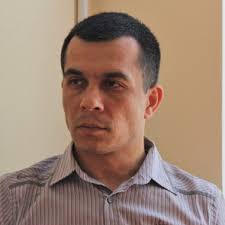
esponding to the news that Crimean lawyer Emil Kurbedinovwas detained by the de-facto authorities in Russian-occupied Crimea and is now facing charges for a Facebook post he made five years ago, Marie Struthers, Amnesty International’s Director for Eastern Europe and Central Asia said: “Following yesterday’s arrest of prominent human rights defender Lev Ponomarev in Moscow, the detention of Emil Kurbedinov is the second time in two days that a human rights defender has been thrown behind bars over a Facebook post….The similarities of these two cases are obvious, even if they are not directly related. Both men are prominent members of the human rights community and both have been deliberately targeted by Russian authorities for this very reason. See also:
Background: Emil Kurbedinov, a human rights defender and lawyer for a number of Crimean Tatar activists prosecuted by the Russian authorities, was detained on 6 December by Russian Interior Ministry officers on his way from home to his office in the Crimean capital Simferopol. He faces charges under the Russian law forbidding “propaganda or public demonstration of Nazi or other extremist attributes or symbols”, on account of his 2013 Facebook post on a Hizb ut-Tahrir event in Simferopol published a year before Russia occupied the peninsula. A number of groups and organizations which legally exist in Ukraine, including Hizb ut-Tahrir, are banned in Russia. On 5 December, a court in Moscow sentenced 77-year-old human rights activist Lev Ponomarev to 25 days in administrative detention for a Facebook post.
“Through his courage and determination, by putting his life in danger, the filmmaker Oleg Sentsov has become a symbol of the struggle for the release of political prisoners held in Russia and around the world,” European Parliament President Antonio Tajani said.
Sentsov, is serving a 20-year sentence in a Russian penal colony north of the Arctic Circle. The 42-year-old was convicted of an alleged arson plot in Crimea, which Russia annexed from Ukraine in 2014 and triggered sanctions from the European Union.
Sentsov’s cousin Natalya Kaplan, who lives in the Ukrainian capital Kiev, said she hopes the prize will raise his morale when he finally hears about it. “I hope (this) will help Oleg to further stay strong and of course I am happy for him. He deserved this,” Kaplan told AFP in written remarks.
Sentsov started a hunger strike on May 14 demanding the release of all Ukrainian prisoners in Russia, and his deteriorating health provoked an outcry from the international community. Sentsov called off the protest after 145 days to avoid being force-fed.
The sixth Václav Havel Human Rights Prize– which honours outstanding civil society action in defence of human rights – has been awarded to the head of the Grozny office of the Memorial Human Rights Center in Chechyna, Oyub Titiev (Russian Federation). The prize was presented at a special ceremony on 8 October 2018 at the Palais de l’Europe in Strasbourg, on the opening day of the autumn plenary session of the Parliamentary Assembly of the Council of Europe (PACE).[see: https://humanrightsdefenders.blog/2018/01/15/chechen-human-rights-defender-oyub-titiev-arrested-on-trumped-up-charges/ ]
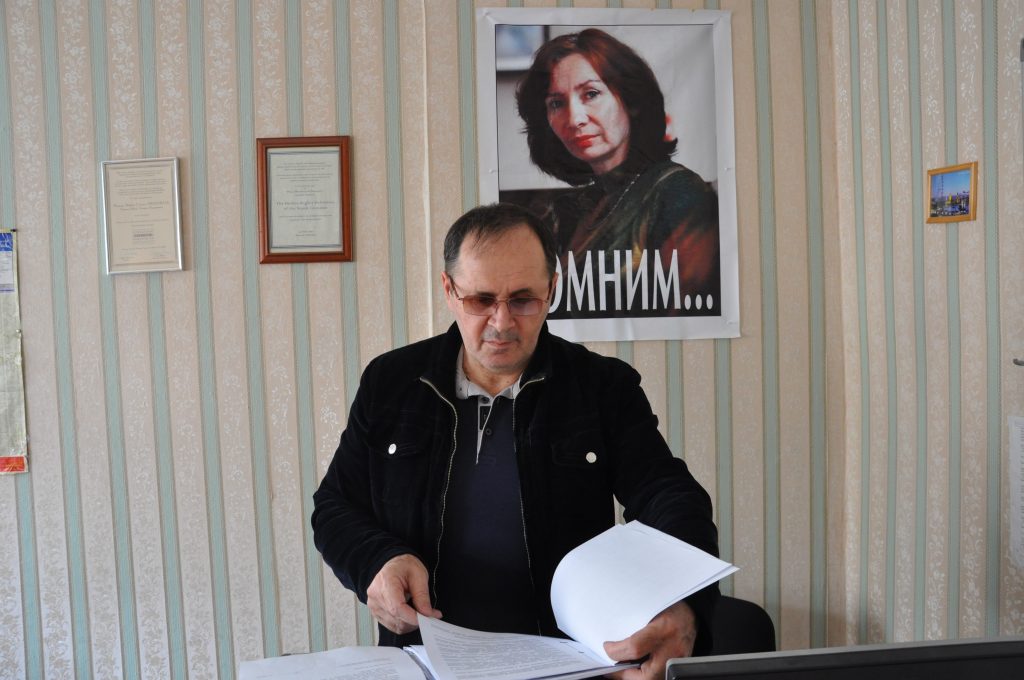
Oyub Titiev, in detention since January 2018, is a prominent human rights defender and head of the Grozny office of the Memorial Human Rights Center in Chechyna. In this capacity, Mr Titiev succeeded Natalia Estemirova, murdered in 2009, and has made a widely recognised contribution to the defence of human rights in the region by reporting on abuses by the local authorities. Mr Titiev being in detention, the prize was presented to Aleksandr Cherkasov, Chairman of the Memorial Human Rights Centre Board.
“We are fully aware of the difficulties that Mr Titiev and his colleagues face. This prize is a recognition of the work he and Memorial are doing,” the PACE President said. “It is also a message to all those who work in this region to affirm the principles of the rule of law and human rights. Keep up the good work, you can count on our support,“ Liliane Maury Pasquier added.
Rights Activist Binalakshmi Nepram Wins Anna Politkovskaya Award
Reach All Women in War (RAW in WAR) has decided to honour Binalakshmi Nepram and Svetlana Alexievich with the prestigious 2018 Anna Politkovskaya Award for their bravery in speaking out against injustice, violence and extremism, especially for their role in their respective conflict-ridden and yet ‘forgotten’ domicile regions of Manipur and Belarus. For more on the award: http://trueheroesfilms.org/thedigest/awards/anna-politkovskaya-award
Anna Politkovskaya was assassinated on 7 October, 2006. credit: twitter
Nepram is the founder of the Manipur Women Gun Survivors Network which has helped more than 20,000 female survivors of gun violence rebuild their lives and strive for justice. Binalakshmi Nepram is a writer from the Manipur. A human rights defender on the Indo-Myanmar border, she believes that returning to India would endanger her life. She fears that she could meet the same fate as Gauri Lankesh, a well-known journalist and co-winner of the 2017 Anna Politkovskaya Award. Last year Lankesh was gunned down in Bengaluru for speaking out against religious extremism and violence in India.[see: https://humanrightsdefenders.blog/2017/10/06/gauri-lankesh-and-gulalai-ismail-win-2017-anna-politkovskaya-award/]
In 2015, Svetlana Alexievich received the Nobel Prize in Literature for her body of work primarily centred around oral histories of victims of wars and catastrophes. Alexievich has been relentlessly exposing the injustices in post-Soviet Union Russia and other regions facing the threat of Russian aggression. Alexievich has repeatedly criticised the Russian annexation of Crimea as well as Ukraine’s growing nationalism, which has rendered her vulnerable to threats from both Russian and Ukrainian nationalists.
Svetlena Alexievich. credit: reuters
Responding to the RAW in WAR’s decision to honour her, Alexievich said: “My friends and I, we are all trying to resist the all-consuming grey gloom that surrounds us today, but our efforts are not visible!! But in order to remain true to ourselves, we continue to do our little bit all the same. Thank you for your support.”
The awards will be presented to the winners in March 2019 in London at RAW in WAR’s ‘Refusing to be Silenced’ event, which is part of the 2019 Women of the World Festivalat the London’s Southbank Centre.
Russian President Vladimir Putin (L) Indian Prime Minister Narendra Modi (C) and Turkish President Recep Erdogan (R) interact during a family photo during the BRICS summit meeting in Johannesburg, South Africa, 27 July 2018. EPA-EFE/GIANLUIGI GUERCIA / POO
As they met in Johannesburg last week, BRICS leaders focused on the economy, development, peacekeeping, health and industrialisation issues within the bloc (accounting for 40% of the world’s population). However, equally important issues such as the protection and realisation of human rights in the respective countries remained off the agenda. Jennifer Wells, an intern with AI South Africa, on 30 July 2018, gave a useful reminder of what could and should have been also addressed:
Brazil
Brazil has one of the highest murder rates in the world, with around 60,000 people murdered each year…Brazil’s failure to protect black Brazilians from police violence remains critical as this year marks the 25th anniversary of the Candelaria killings. The tragedy, in which eight young black boys were killed by off-duty police officers in Rio de Janeiro in 1993, represents the endemic racism within the Brazilian security forces. The situation was aggravated by the murder of Rio de Janeiro human rights defender and councilwoman Marielle Franco on 14 March 2018. [https://humanrightsdefenders.blog/2018/03/16/marielle-franco-38-year-old-human-rights-defender-and-city-councilor-of-rio-assassinated/]
Russia
…human rights defenders and civil society activists continued to face harassment, intimidation and arbitrary arrests across the country. The trial of human rights defender Oyub Titiev started in Chechnya. He, like several other human rights defenders, is being prosecuted on trumped-up criminal charges. Law enforcement agencies continue to launch cases on fabricated “extremism” and “terrorism” charges. [https://humanrightsdefenders.blog/2018/01/15/chechen-human-rights-defender-oyub-titiev-arrested-on-trumped-up-charges/] The Ukrainian film director Oleg Sentsov, serving 20 years on “terrorism” charges, is on day 75 of a hunger strike demanding the release of “64 political prisoners from Ukraine”. The right to freedom of peaceful assembly has been increasingly restricted in Russia since 2012 and remains under severe clampdown. …. The rights of LGBTI people are trampled upon daily and the authorities continue to refuse to investigate the horrific gay purge in Chechnya. The World Cup has come and gone, but the suppression of freedoms and shrinking of civil liberties continues unabated.
India
It’s a similar story in India where human rights defenders are consistently under threat, attacked and threatened, often from security forces. India has witnessed horrific instances of alleged extrajudicial executions by security forces for years as police and federal forces have effective immunity from prosecution. In the North-Eastern state of Manipur, human rights defenders who have lost their loved ones in alleged extrajudicial executions and are now campaigning for justice, face unprecedented attacks. Salima Memcha, a widow who lost her husband to an alleged extrajudicial execution, was verbally threatened by security personnel. Her house was also vandalised by them. Three other human rights defenders in Manipur have faced similar reprisals for campaigning for justice for their loved ones.
China
In China, the government continues to enact repressive laws under the guise of “national security” that present serious threats to human rights. Nobel Peace Prize laureate Liu Xiaobodied in custody whilst other human rights defenders are detained, prosecuted and sentenced on vague charges such as “subverting state power”, “separatism” and “picking quarrels and provoking trouble”. Controls on the internet have been strengthened and freedom of expression and freedom of association are under attack.[see also:https://humanrightsdefenders.blog/2018/04/12/how-china-extracts-televised-confessions-from-human-rights-defenders/]
South Africa
In the host nation, nearly a quarter of century after adopting arguably one of the most progressive constitutions in the world, the country is bedevilled by profound inequalities, which persistently undermine economic, social and cultural rights. Failures in the criminal justice system continue to present barriers to justice for victims of human rights abuses and violations, including the state’s failure to hold perpetrators accountable for the killing of 34 striking mineworkers in Marikana in 2012 by the South African Police Service. Access to sexual and reproductive health services remain a human rights issue as does the provision of quality education.
On 6 July 2018 Stephanie Nebehay reported for Reuters that China, Russia and Pakistan lost their bid on Friday to weaken a U.N. resolution upholding the crucial rule of human rights defenders. The United Nations Human Rights Council adopted a resolution calling on all states to protect civil society groups from threats and intimidation, and prosecute reprisals against them. Chile presented the resolution text on behalf of more than 50 countries on the final day of a three-week session. Amendments proposed by China, Pakistan and Russia – declaring that civil society groups must respect “the sovereignty and territorial integrity of states” and that their funding must be “legal and transparent” – were soundly defeated. So, in spite of increasing retaliation against human right defenders and pressure on civil society in many countries [see recently: https://humanrightsdefenders.blog/2018/06/08/ishr-new-report-on-reprisals-and-restrictions-against-ngo-participation-in-the-un/ ], the UN is still able to resist some of the more blatant attempt to silence critics.
“China and Russia are often the least tolerant of civil society at home. They are now seeking to introduce similar restrictions at the international level,”John Fisher of Human Rights Watch told Reuters. Their attempts to place national sovereignty above international human rights law “would turn guarantees of peaceful assembly and association on their heads”.
“These amendments were a swing and a miss for China and its allies on the Council,” Sarah Brooks of the International Service for Human Rights told Reuters, using an American baseball term. “Their efforts to limit civil society’s independence and shut down civil society voices were rebuffed by a strong message – from member states across the globe – about the importance of keeping defenders’ voices at the table”.
[At the current session, China tried unsuccessfully to block the accreditation of Uighur activist Dolkun Isa, U.N. sources said. China’s delegation publicly challenged activists speaking on behalf of Uighur and Tibetan ethnic minorities. Council president Vojislav Suc, Slovenia’s ambassador, said allegations of intimidation and reprisals had emerged during the session and urged “all necessary measures” to prevent such acts.]
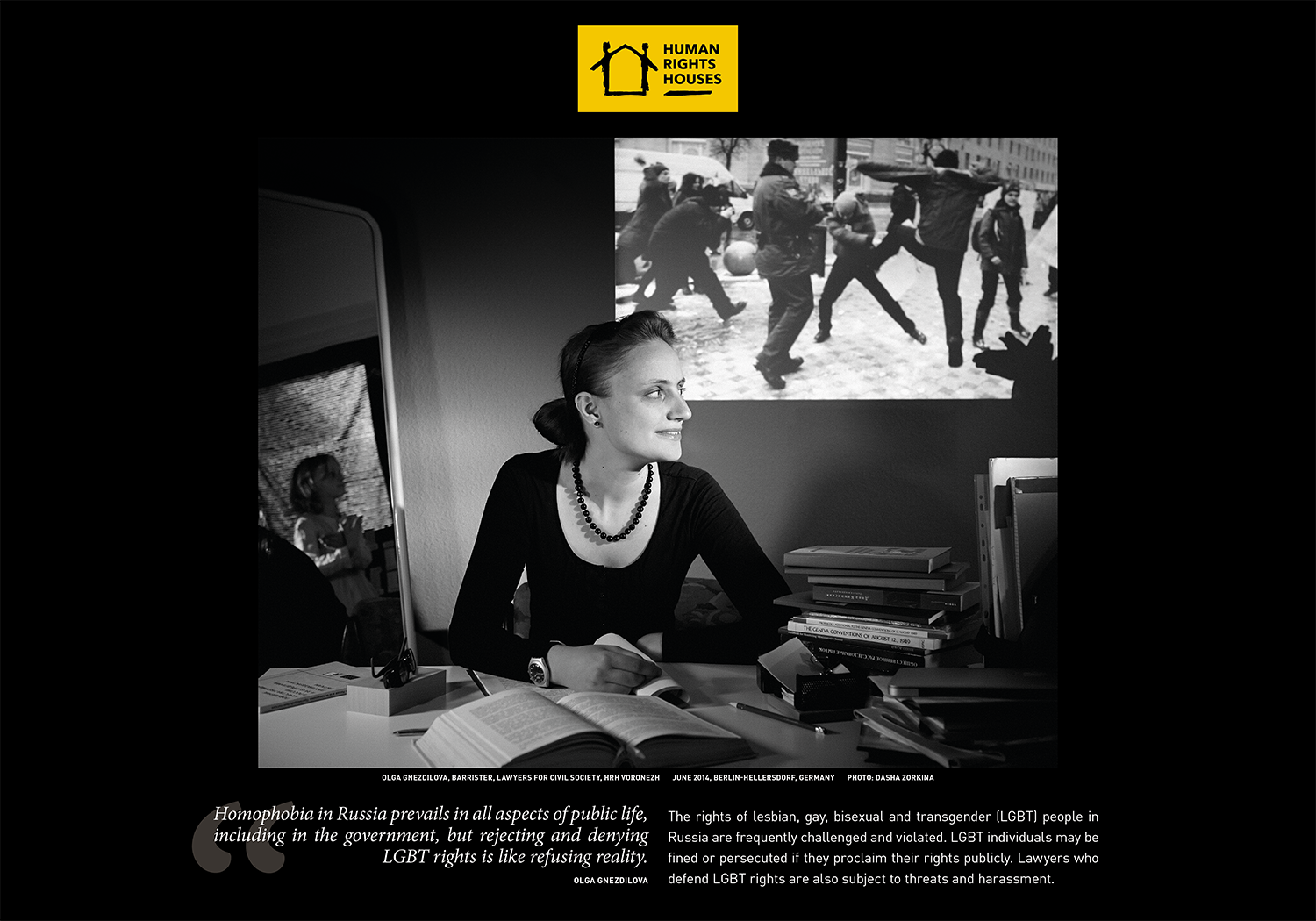
On 7 June 2018, one week before the opening of the FIFA World Cup in Russia, Amnesty Internationalcomes with a marvelous contribution: a team of 11 Russian human rights champions who routinely put their lives on the line to defend human rights in Russia. A new campaign, Team Brave, will profile a human rights defender from each of the 11 regions hosting World Cup matches to raise awareness of their important work, and you can send messages of solidarity to show these brave individuals that they are not alone.
“As World Cup excitement builds, we want to highlight the work of the inspiring men and women who risk their lives and freedom to fight for human rights in Russia. The lineup of Team Brave includes activists who have fought to end torture in police stations, protect the environment, defend LGBTI rights and sex workers’ rights, and support victims of domestic violence – they are the real champions in Russia,” said Inga Kelekhsaeva, Russia Campaigner at Amnesty International.
The lineup of Team Brave includes activists who have fought to end torture in police stations, protect the environment, defend LGBTI rights and sex workers’ rights, and support victims of domestic violence – they are the real champions in Russia:
Grozny: Oyub Titiev, the head of the NGO Memorial’s office in Chechnya imprisoned under bogus charges since January 2018
Sochi: Andrei Rudomakha, an environmental human rights defender who was brutally attacked in 2017
St Petersburg: Irina Maslova, who founded a movement to defend the rights of sex workers.
Volgograd: Igor Nagavkin, who worked on fighting torture and corruption in the Volgograd region until he was arbitrarily detained in October 2016.
Rostov-on-Don: Valentina Cherevatenko, a women’s rights activist
Kaliningrad: Igor Rudnikov, an independent journalist investigating cases of corruption until his arbitrary detention in 2017.
Samara: Oksana Berezovskaya, who runs an LGBTI rights organization
Nizhny Novgorod:Igor Kalyapin, who founded the Committee Against Torture
Kazan: Yulia Fayzrakhmanova, an environmental human rights defender
Yekaterinburg: Aleksei Sokolov, who fights torture and other abuses in the prison system
Saransk: Vasiliy Guslyannikov, the founder of the NGO Mordovian Republic Human Rights Centre
Many of these human rights defenders have faced harassment, intimidation, physical attacks, smear and in some cases have been arbitrarily detained simply for carrying out their vital work.
As part of the Team Brave campaign, Amnesty International is asking supporters to take action for three of the human rights defenders featured, who remain in prison to date or whose assailants remain at large.
Oyub Titiev has been detained for almost six months on fabricated charges because of his human rights work. Environmental human rights defender Andrei Rudomakhawas brutally assaulted in 2017 by unknown assailants for documenting illegal construction work on the Black Sea coast, and his attackers still walk free. Igor Nagavkin has spent more than a year and a half in pre-trial detention on trumped-up charges for his work defending prisoners’ rights and combatting torture and corruption.
“The Russian authorities cannot continue to intimidate and harass every critic into silence. With the eyes of the world on Russia, they must decide what they want the legacy of this World Cup to be. There can be no winners in Russia until human rights defenders are recognized, protected and free to do their important work unobstructed and without fear of reprisals.”
[On 29 May, FIFA took the important step of launching a complaints mechanism for human rights defenders and media representatives to report rights violations and committed to supporting human rights defenders and freedom of the press in relation to FIFA’s activities. With the 2018 World Cup taking place amidst a crackdown on human rights by the Russian authorities, FIFA commitments and mechanisms will be put to the test. Amnesty International has urged the Football’s governing body to be ready to confront the Russian authorities and use all of its leverage to effectively protect human rights defenders and stop the 2018 World Cup providing the backdrop for a renewed wave of oppression.] See also: https://humanrightsdefenders.blog/2018/05/24/fifa-expresses-concern-about-chechen-human-rights-defender-but-to-whom/
Joseph S. Nye, a professor at Harvard, in a piece of 10 May 2018 entitled “Human rights and the fate of the liberal order“, takes issue with those who despair of the current slide of the human rights system as we know it. The piece is certainly worth reading in total:
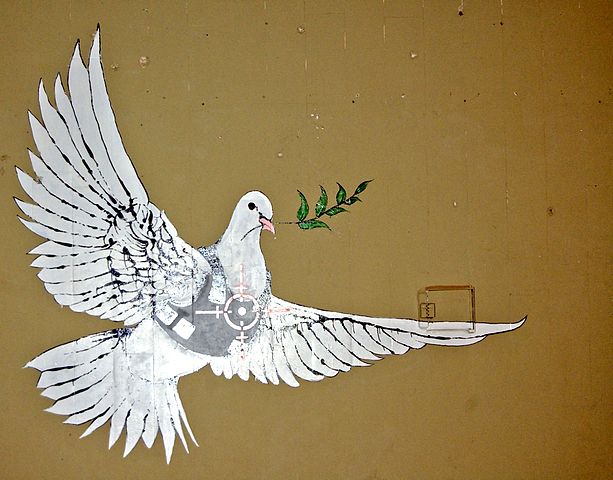
Many experts have proclaimed the death of the post‑1945 liberal international order, including the human-rights regime set forth in the 1948 Universal Declaration of Human Rights. The cover of Foreign Policy recently displayed the white dove of human rights pierced by the bloody arrows of authoritarian reaction.
According to ‘realist’ international relations theorists, one cannot sustain a liberal world order when two of the three great powers—Russia and China—are anti-liberal. Writing in Foreign Affairs, Yascha Mounk and Roberto Stefan Foa argue that the era when Western liberal democracies were the world’s top cultural and economic powers may be drawing to a close. Within the next five years, ‘the share of global income held by countries considered “not free”—such as China, Russia, and Saudi Arabia—will surpass the share held by Western liberal democracies’.
There are several problems with this argument. For starters, it relies on a measure called purchasing power parity, which is good for some purposes, but not for comparing international influence. At current exchange rates, China’s annual GDP is $12 trillion, and Russia’s is $2.5 trillion, compared to the United States’ $20 trillion economy. But the more serious flaw is lumping countries as disparate as China and Russia together as an authoritarian axis. There is nothing today like the infamous Axis of Nazi Germany and its allies in the 1930s.
While Russia and China are both authoritarian and find it useful to caucus against the US in international bodies like the United Nations Security Council, they have very different interests. China is a rising power that is highly intertwined with the international economy, including the US. In contrast, Russia is a declining country with serious demographic and public health problems, with energy rather than finished goods accounting for two-thirds of its exports.
Declining countries are often more dangerous than rising ones. Vladimir Putin has been a clever tactician, seeking to ‘make Russia great again’ through military intervention in neighbouring countries and Syria, and by using cyber-based information warfare to disrupt—with only partial success—Western democracies. A study of Russian broadcasting in Ukraine found that it was effective only with the minority that was already Russia-oriented, though it was able to produce polarising and disruptive effects in the political system. And the revival of Cold War–style information warfare has done little to create soft power for Russia. The London-based Soft Power 30 index ranks Russia 26th. Russia has had some success cultivating allies in Eastern Europe, but it is not part of a powerful authoritarian axis such as existed in the 1930s.
China is different. It has announced its willingness to spend billions to increase its soft power. At meetings in Davos in 2017 and Hainan in 2018, Xi Jinping presented China as a defender of the existing international order, but one with Chinese rather than liberal characteristics. China does not want to overturn the current international order, but rather to reshape it to increase its gains.
It has the economic tools to do so. It rations access to its huge market for political purposes. Norway was punished after the dissident Liu Xiaobo was awarded the Nobel Peace Prize. Eastern Europeans were rewarded after they watered down European Union resolutions on human rights. And Singaporean and Korean companies suffered after their governments took positions that displeased China. The Chinese government’s massive Belt and Road Initiative to build trade infrastructure throughout Eurasia provides ample opportunities to use business contracts to wield political influence. And China has increasingly restricted human rights at home. As Chinese power increases, the global human-rights regime’s problems will increase.
But no one should be tempted by exaggerated projections of Chinese power. If the US maintains its alliances with democratic Japan and Australia, and continues to develop good relations with India, it will hold the high cards in Asia. In the global military balance, China lags far behind, and in terms of demography, technology, the monetary system and energy dependence, the US is better placed than China in the coming decade. In the Soft Power 30 index, China ranks 25th, while the US is third.
Moreover, no one knows what the future will bring for China. Xi has torn up Deng Xiaoping’s institutional framework for leadership succession, but how long will Xi’s authority last? In the meantime, on issues such as climate change, pandemics, terrorism and financial stability, both an authoritarian China and the US will benefit from cooperation. The good news is that some aspects of the current international order will persist; the bad news is that it may not include the liberal element of human rights.
The human-rights regime may face a tougher environment, but that is not the same as a collapse. A future US administration can work more closely with the EU and other like-minded states to build a human-rights caucus. A G10, comprising the world’s major democracies, could coordinate on values alongside the existing G20 (which includes non-democracies such as China, Russia and Saudi Arabia), with its focus on economic issues.
Others can help. As Kathryn Sikkink points out in her new book, Evidence for hope, while US support has been important to human rights, the US was not always very liberal during the Cold War, and the origins of the regime in the 1940s owed much to Latin Americans and others. Moreover, transnational rights organisations have developed domestic support in numerous countries.
In short, we should be concerned about the multiple challenges to liberal democracy during the current setback to what Samuel P. Huntington called the ‘third wave’ of democratisation. But that is no reason to give up on human rights.
In less than a month, millions of people will turn their eyes upon Russia as the 2018 Football World Cup kicks off. On 23 May 2018, the NGO Civil Rights Defenders published FIFA’s reply to an open letter it and and 13 other international and Russian human rights groups sent to FIFA, urging the association to start engaging with the Russian authorities on the human rights crisis in Chechnya, especially the case of Oyub Titiev [see also: https://humanrightsdefenders.blog/2018/01/15/chechen-human-rights-defender-oyub-titiev-arrested-on-trumped-up-charges/].
Oyub Titiev in Memorial’s local office in Grozny, Chechnya. In the background a portrait of his murdered colleague, Natalia Estemirova.
[In January 2018, Chechen authorities started a campaign against the leading Russian human rights organisation Memorial, by jailing prominent human rights defender and head of Memorial’s local office, Oyub Titiev, on fabricated charges. In February, it was announced that the capital of Chechnya, Grozny, was confirmed by FIFA as the team base for Egypt.]
“Such engagement is consistent with FIFA’s responsibility to respect human rights under the UN Guiding Principles on Business and Human Rights,” the letter addressed to Mr. Infantino, President of FIFA, read. “It is also consistent with the commitment in article 3 of FIFA’s statutes to promote the protection of international human rights, and would demonstrate determination to implement its new Human Rights Policy”. [see also: https://humanrightsdefenders.blog/2017/02/02/fifa-governance-committee-starts-dealing-with-a-human-rights-policy/]
FIFA has now replied (follow link for full text) to the letter, thanking the rights groups for raising concern about the detention of Oyub Titiev: “… FIFA values the important work done by human rights defenders such as Mr. Titiev and yourselves and is, in accordance with paragraph 11 of its human rights policy, committed to respect and help protect the rights of everyone who is working to advance human rights in relation to FIFA’s activities.”
This is quite a change from the traditional view that politics and sport have nothing to do with each other, but it does not say WHAT and with WHOM in Russia FIFA has taken up the case. That will probably remain confidential.




Nepram is the founder of the Manipur Women Gun Survivors Network which has helped more than 20,000 female survivors of gun violence rebuild their lives and strive for justice. Binalakshmi Nepram is a writer from the Manipur. A human rights defender on the Indo-Myanmar border, she believes that returning to India would endanger her life. She fears that she could meet the same fate as Gauri Lankesh, a well-known journalist and co-winner of the 2017 Anna Politkovskaya Award. Last year Lankesh was gunned down in Bengaluru for speaking out against religious extremism and violence in India.[see: https://humanrightsdefenders.blog/2017/10/06/gauri-lankesh-and-gulalai-ismail-win-2017-anna-politkovskaya-award/]