Posts Tagged ‘rule of law’

NGOs alarmed by draft law “TRANSPARENCY OF PUBLIC LIFE” in Hungary

May 27, 2025

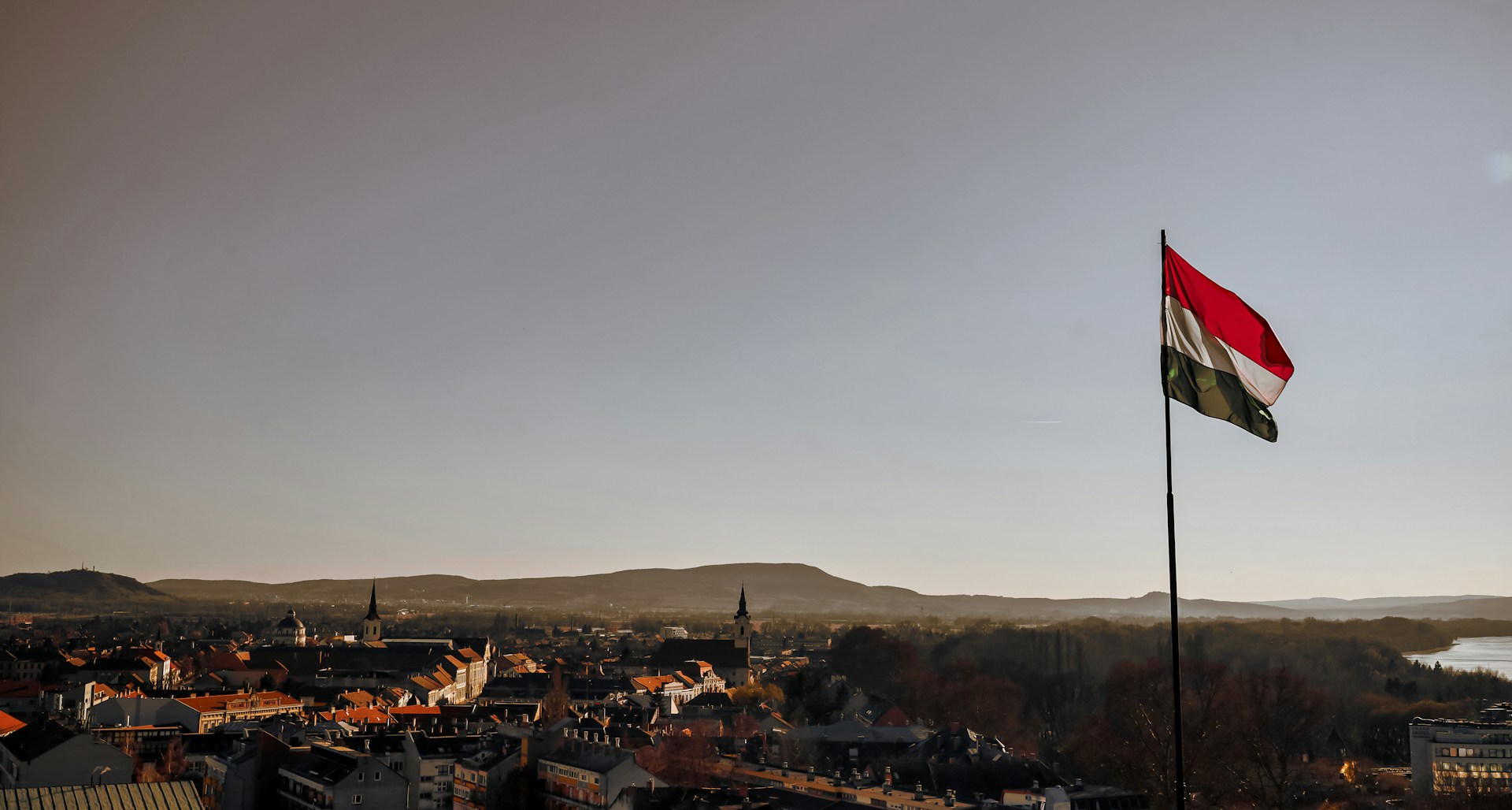
Human Rights Watch, Civil Rights Defenders and many, many other NGOs are deeply alarmed by a new legislative proposal in Hungary that, if passed, would institutionalise sweeping, opaque, and politically motivated repression of independent civil society, the press, and private organisations that receive foreign support or have any kind of income that the Hungarian government feels would threaten the country’s sovereignty. 

The draft law, which is deceptively titled ‘On the Transparency of Public Life’, would give the authorities unchecked powers, allowing it to recommend the registration of organisations deemed to be ‘influencing public life’ with foreign funding in ways that ‘threaten Hungary’s sovereignty’. Because this phrasing is vague and ideologically loaded, it risks including any kind of criticism of government policy, including the promotion of human rights, press freedom, gender equality, and the rule of law. 

Potential disastrous consequences

  • No legal remedy: If the government demands an organisation register itself, the organisation in question would not be able to appeal this decision. Once listed, organisations would have no access to effective legal redress; 
  • Broad definitions: ‘Foreign support’ is defined as any financial input, no matter how small, from practically any international source (including EU institutions and dual citizens) as well as commercial revenue; 
  • Sweeping prohibitions and sanctions: Listed organisations would have to seek permission from the tax authorities to receive foreign support. Financial institutions would be required to report and block transfers, meaning NGOs would effectively be permanently monitored; 
  • Loss of domestic support: Listed organisations would lose access to Hungary’s 1% income tax donation scheme, which would prevent them from receiving support from regular Hungarian citizens; 
  • Political targeting: Leaders of registered organisations would be labelled ‘politically exposed persons’, which would expose their private financial transactions to invasive scrutiny; 
  • Severe penalties: Any violations could lead to fines of up to 25 times the amount received, suspension of the organisation’s advocacy activities, and even forced closure.

EU must speak out against proposed law

Hungary’s draft law is not about transparency: it is a calculated attempt to criminalise dissent, silence watchdogs, and entrench one-party control over the democratic public sphere and civic space. If passed, the law would violate multiple provisions of the EU Charter of Fundamental Rights and the European Convention on Human Rights, including freedom of expression and association and the right to an effective remedy. 

In an open letter to President Ursula von der Leyen and Commissioner Michael McGrath of 22 May 2025, the NGOs urge to take the following immediate steps:

  • Immediately request the Court of Justice of the European Union (CJEU) to grant interim measures in the ongoing infringement procedure on the Law on the Defence of National Sovereignty (Case C-829/24). The Sovereignty Protection Office is crucial to the new bill and therefore this is an imminent and effective way to halt the progress and impact of the bill. Cognizant of the impending danger, the European Parliament and civil society have been calling for this step since 2024. Interim measures are designed to prevent irreparable harm — in this case, the effective paralysis of civil society organisations, independent media and dissenting voices – and with this new development comprehensive interim measures should be requested immediately.
  • At the same time, call on the Hungarian government to withdraw the bill and if unsuccessful, open a new infringement procedure on new violations that are not linked to the ongoing case on the Defence of National Sovereignty.
  • With the forthcoming Article 7 hearing on Hungary on 27 May 2025 and recognising the escalation of a systematic breakdown of the rule of law, support the Council of the EU to move to a vote on Article 7(1).

This new bill represents a severe and existential threat to democratic principles, human rights and the rule of law in Hungary and in the EU as a whole. If the existing tools are not effectively deployed, we risk an unravelling of the rules on which the EU was founded and a clear step towards authoritarian practices. We call on you to stand in solidarity with Hungarian civil society and their counterparts across the region and remain available to provide additional information and support.

https://www.hrw.org/news/2025/05/23/open-letter-hungarian-bill-entitled-transparency-public-life

https://www.coe.int/nb/web/commissioner/-/commissioner-asks-hungary-s-parliament-not-to-adopt-law-that-stifles-civil-society

Day of the Endangered Lawyer (24 January 2024)

January 30, 2024

To mark the Day of the Endangered Lawyer, the Law Society of England and Wales issued a press release on 24 January honouring legal professionals who are targeted for upholding the rule of law and defending a strong justice system.

The Law Society has published its annual intervention tracker which shows that the Society took 40 actions relating to 17 countries in 2023. Most of these actions were initiated by concerns relating to arbitrary arrest or detention (58%) followed by harassment, threats and violence (27%).

Law Society president Nick Emmerson said: “Across the world, lawyers continue to face harassment, surveillance, detention, torture, enforced disappearance and arbitrary arrest and conviction...

We use this day to draw attention to the plight faced by countless lawyers across the globe, as they fight for their right to freely exercise their profession and uphold the rule of law.

Our intervention tracker reflects where the Law Society has acted on behalf of lawyers and human rights defenders in 2023. The intervention tracker is part of our Lawyers at Risk programme to support those who are prevented from carrying out their professional duties. See: https://www.lawsociety.org.uk/campaigns/international-rule-of-law/whats-changing/lawyers-at-risk.

A recent example comes from Amnesty International on 25 January 2024: On 31 October 2023, human rights lawyer, Hoda Abdelmoniem, was due to be released after serving her unjust five-year prison sentence stemming solely from the exercise of her human rights. Instead, the Supreme State Security Prosecution (SSSP) ordered her pretrial detention pending investigations into similar bogus terrorism-related charges in a separate case No. 730 of 2020. During a rare visit to 10th of Ramadan prison on 4 January, her family learned that her health continues to deteriorate and that she developed an ear infection, affecting her balance and sight. She must be immediately and unconditionally released. [see also: https://humanrightsdefenders.blog/2020/11/29/2020-award-of-european-bars-associations-ccbe-goes-to-seven-egyptian-lawyers-who-are-in-prison/]

The Geneva newspaper le Temps [https://www.letemps.ch/monde/moyenorient/chaque-minuscule-resultat-est-une-victoire-immense-en-iran-les-avocats-face-au-simulacre-de-justice] carries the story of Leila Alikarami, “avocate iranienne et défenseuse des droits humains, a représenté plus de 50 femmes devant les juges religieux des tribunaux révolutionnaires”.

See also: https://humanrightsdefenders.blog/2020/01/28/law-society-of-ontario-reflects-on-how-to-support-human-rights-lawyers-abroad/

https://www.lawsociety.org.uk/contact-or-visit-us/press-office/press-releases/honour-those-who-defend-our-human-rights

Tunisia: The rule of law on the brink

March 16, 2023

On 7 March 2023 EuroMed Rights issued the following statement regarding the situation in Tunisia:

For several weeks now, Kaïs Saïed’s presidentialist regime has been conducting a relentless campaign of arrests, intimidation, denigration and targeted attacks against political opponents, journalists, trade unionists and civil society representatives, under the pretext of an alleged conspiracy to undermine state security, accusations of corruption or contacts with foreign diplomats. International trade union activists who have come to participate in activities of the Tunisian General Labour Union (UGTT), such as Esther Lynch, the General Secretary of the European Trade Union Confederation, have been expelled and any other trade union representatives are now persona non grata in Tunisia.

“These arrests based on the crime of opinion and the widespread repression of freedom of expression in all its forms constitute a serious breach of the rule of law. They raise fears of a return to the practices of the authoritarian regime that preceded the January 2011 revolution. The national dialogue that the UGTT has initiated in partnership with the Tunisian League for Human Rights (LTDH), the National Bar Association and the Tunisian Forum for Economic and Social Rights (FTDES), towards a roadmap to overcome the political, economic and social crisis, must be supported,” said Wadih Al-Asmar, President of EuroMed Rights.

A justice system at the orders

Accused of being “traitors” and “terrorists”, the opponents of the regime put in place, month after month, by President Kaïs Saïed since his power grab of 25 July 2021, are challenging the concentration of powers, in particular the supervision of the Ministry of Justice and the dismissal of many judges and prosecutors. Controlling the judicial power is a weapon that the Tunisian authorities no longer hesitate to use and abuse to silence critics.

“The rule of law in Tunisia is on the brink of collapse,” added Wadih Al-Asmar. “The presumption of innocence is being flouted. Moreover, to declare that anyone who exonerates those prosecuted would be considered an accomplice is a denial of the role and independence of judges and prosecutors. The ban on demonstrations and the desire to isolate Tunisian civil society from its international contacts are other symptoms of the regime’s autocratic drift.”

Attacks on migrants

On 21 February, President Kaïs Saïed continued his diatribe by calling for “urgent measures” against the “hordes” of sub-Saharan migrants, endorsing the conspiratorial theory of the “Great Replacement,” which asserts the existence of a plot to change the demographic composition of the country. As a result, racist and violent attacks, both official and unofficial, against migrants from sub-Saharan Africa continue, leading to arrests and deportations.

“Migrants have been expelled from their homes and fired from their jobs; children have been removed from their schools; women of sub-Saharan origin have been reportedly raped. Fear is growing among migrants who have been living in Tunisia, some for years, causing many families to leave the country to avoid facing violence,” said Rasmus Alenius Boserup, Executive Director of EuroMed Rights. “The European Union and its Member States, in their bilateral relations with Tunisia, must make clear that arbitrary repression and incitement to racial hatred are unacceptable, and should express solidarity with all those arrested, defamed and subjected to violence.”

And see also: https://www.hrw.org/news/2023/03/17/tunisia-talks-eu-should-privilege-human-rights-over-politics

Human Rights Defender Linda Kasonde creates new NGO in Zambia

September 9, 2019

lets Linda Kasondeexplain her Chapter One Foundation. She says the formation has been born from the growing threat on human rights, constitutionalism and the rule of law in Zambia. Chapter One Foundation is named after Chapter One of the Laws of Zambia which contains the Constitution.

Kasonde who is executive director of the foundation noted that Increased inequality, growing populism and weakening of public institutions and public accountability were affecting the country’s ability to deliver on the sustainable development goals. “Human rights, the people that defend human rights, constitutionalism and the rule of law are facing a growing threat the world over and Zambia is no exception. Increased inequality, growing populism and weakening of public institutions and public accountability is affecting our ability to deliver on the sustainable development goals that Zambia has signed up to. The mere existence of public institutions is not enough to ensure the promotion and protection of human rights; these public institutions must also be guided by certain principles that ensure the institutions truly function for the benefit of society,” she stated.

Chapter One Foundation is financially supported by the Swedish Embassy, the National Endowment for Democracy, ActionAid Zambia and Caritas Zambia who all recognise the growing need to defend the civic space in Zambia. It is these principles that guide the work of Chapter One Foundation, our goal is to see a Zambia where citizens are freely and actively participating in the governance of Zambia, and where “we the people” take our rightful place as the authors of our own destiny. To achieve this, we recognize that we have to put the individual at the heart of our work, that is why human rights are at the core of what we do.”

See also: https://humanrightsdefenders.blog/2018/10/09/profile-of-human-rights-defenders-godfrey-malembeka-zambia/

Interview with Kenyan human rights defender Okiya Omtatah

September 3, 2019
The Kenyan newspaper the Daily Nation of 1 September 2019 carries a long profile of the human rights defender Okiya Omtatah. See also: https://humanrightsdefenders.blog/2018/12/03/human-rights-defenders-in-kenya-honored-with-national-awards/

Okiya Omtatah

Activist Okiya Omtatah at Milimani Law Courts on September 14, 2018. PHOTO | FILE | NATION MEDIA GROUP

1. The many petitions you have presented in court on behalf of Kenyans and the fact that you have succeeded in many of them points to a void in our public life as ordinary citizens created by the government through its many agencies. Sir, who is sleeping on the job that has prompted you to step in? How can we hold these public servants or institutions responsible as taxpayers for sustainable quality service delivery? Komen Moris, Eldoret

My activism is anchored on the Constitution of Kenya, 2010. My overriding objective is to the immense power of the Constitution to have the Judiciary entrench constitutionalism and the rule of law in the conduct of public affairs.

Hence, all the petitions I have filed concern public law, and they fall in three broad categories: motions challenging decisions of law-making institutions where I contest the constitutionality of statutes by Parliament or by county assemblies, and both the constitutionality and legality of subsidiary legislation; motions contesting the constitutional and legal validity of policy decisions and other administrative actions of the executive at both national and county levels, and motions seeking to protect public property from thieving public officials and private individuals.

From my experience, the struggle is against contemptuous disregard of the constitutionally prescribed limits and powers of government, and affirmation that Kenyans are not subjects but sovereign citizens with their rights and fundamental freedoms enshrined in the Bill of Rights. From the above, it follows that the solution to our problems is to uphold the Constitution. However, it is clear our political leadership has failed in its duty to whip us as a nation into fully implementing the Constitution so as to realise its great promise.

2. Not long ago you called on Kenyans to contribute towards instituting a suit against all the MPs over house allowances they had awarded themselves. How did this initiative go and how much were you able to raise? Githuku Mungai

The initiative was not for instituting the case but to pay for the costs of serving the petition on the MPs through full page adverts published in the Daily Nation and Standard newspapers as ordered by the High Court. I required at least a million shillings but only raised some Sh130,000.

3. Over the course of your public life, you have largely been plastered with two labels: a defender of public interest by many and a rebel to a few. This can be attributed to the many cases you have argued out in the corridors of justice, among them bank capping rates, judges retirement age, most recently the CBA-NIC tax waiver. These cases largely touch on the crucial interests of the ordinary citizen. I can’t help but ask, what is the philosophy behind what you do? Do you feel intimidated or shaken by the weight of cases you take on considering the fact that in many cases you take them on your own? Kagwera Raphael, Kisii

The philosophy behind what I do is the Gospel of Christ, who preached about God’s love and divine mercy, and continues to reveal that the Kingdom of God is among us and therefore we must do right. At creation time, God gave Adam and Eve the power over all that he had created, but He did not give them the power over themselves; He gave them the law.

And when they broke that law they lost the Garden of Eden. Hence, the rule of men is doomed since it is anathema to the will of God. Only the rule of law works. Hence, humanity cannot rule itself and prosper except by the laws anchored on promoting the rights and fundamental freedoms of all people – and that includes obeying the Constitution of Kenya, which largely mirrors the Gospel of Christ. I don’t feel threatened or intimidated by the cases I take on since I take them up as part of my apostolate. And for as long as God wants to use me to call upon all Kenyans to obey the law, I will be available to do so.

4. Having had a peaceful, respectful, issue-based and effective campaign for the Busia senatorial race during the 2017 elections, one which didn’t turn out as most of us had expected, what is your objective opinion on Kenyan politics and campaigns? Kagwera Raphael, Kisii

My Busia senatorial race was a very rewarding experience for me. Though I vied on a Ford-Kenya ticket in an ODM stronghold and, literally, I had no money to match what the incumbent unleashed, I chose the route of civic and political education to agitate for resource-based leadership and it worked very well. It was a neck and neck race where I got more than 100,000 votes, and the difference between me and the Senator wasn’t much. But even though we can’t cap the amounts of money candidates spend on campaigns, the amounts and their sources must be disclosed to law enforcement. That way, it will at least reduce the distortion illicit money has on the democratic process, especially on poverty-stricken populations scavenging for basics. We must also eradicate mass poverty at the grassroots.

5. Your nature of work in the areas of human rights demands that you really need a good and reliable sponsorship so to speak, or stable source of income from where you can get resources to mount the kind of legal challenges you undertake. What is the source of your income? What is your reaction to allegations that you are often paid to institute the cases you do? Francis Njuguna, Kibichoi

First of all I don’t need a lot of money because I don’t hire lawyers to research, draft and prosecute my cases. I do so myself. Second, I lead a very simple lifestyle which is basically a source of income through the savings I make. I have seen people who earn much more than I do lead very miserable lives due to reckless lifestyles. As for allegations, they are just that. It is human nature to speculate where you have no facts. And it is written in the Holy Book that John the Baptist ate not and he was called a madman; Christ ate and drunk and He was called a glutton.

6. Our history is full of examples of good human rights activists including yourself, Kepta Ombati, Cyprian Nyamwamu, Boniface Mwangi, among others who tried to unsuccessfully run for political office. No doubt, political office is an expansion of activism and movement work. What should good activists do to win elections and continue their good work as politicians? Raphael Obonyo, Nairobi

They should not give up and I don’t think they have. The society is changing and, soon, we will have issue-based politics and one’s ethnicity or capacity to give handouts will not be trump cards at elections. While still at it, I point out that Prof Kivutha Kibwana, the Makueni Governor who has performed exceptionally well, was and is an activist who was elected into office and has delivered on his convictions.

7. There is a popular joke in Kenya about the Judiciary: ‘Why hire a lawyer when you can buy a judge?’ Former Chief Justice Dr Willy Mutunga began ambitious efforts to transform Kenya’s courts and earn back the people’s trust. What is your assessment of the transformation at the Judiciary given that you frequently interact with them? Raphael Obonyo, Nairobi

The joke is just a joke. Whereas one or two judges may not be up to scratch, most judges and other judicial officers are very hard working individuals who deliver for Kenyans in very difficult situations. The Kenyan Judiciary is the only arm of government that retains and espouses Kenya’s republican character. We cannot compare the Judiciary to the Executive and the Legislature, at both national and county levels, which are totally captive to ethnicity and corruption

8. Due to the nature of your work, sometimes you challenge decisions of the powerful and mighty. Don’t you ever fear for your life when making such challenges? Have you ever received threats to have you drop the matter you are pursuing? Emmanuel Lesikito

Though I take precaution, I know that there are no human beings who are mighty and powerful. Only God is mighty and powerful. So I have no fear of any man and their threats, since God is my shield. No man can destroy my soul.

9. Of all the advocacy and litigation cases that you have undertaken in the interest of the public good, explain the one case that posed the greatest challenge and possibly a danger to your life. Nyongesa Chris Makhanu, Nairobi

A 2012 petition where I challenged the flawed procurement of the BVR kits which failed to work on Election Day. I was offered a bribe of Sh9 million to drop the case but I refused. I then applied to court for police protection but Justice Majanja dismissed my application. Two days later I was attacked by two men who hit my head with metal bars and left me for dead. As they were clobbering me, I could hear them say something to the effect that “Ulikataa pesa sasa utakufa na kesi yako pia itakufa” (You refused our offer; we are going to kill you and your case is going to collapse). But God saved me.

10. Do you really always read Kenyan’s mood before you move to court? I am referring to the case on the new currency, which by and large has been welcomed by a majority of Kenyans. Bernard Nyang’ondi, Mombasa

No, I am driven by fidelity to the law and the public interest.

11. Thank you for fighting for the common person. My question is: Fresh job seekers are required to produce a Certificate of Good Conduct and clearance certificate from Ethics and Anti-corruption Commission, among others. These requirements make me wonder, do jobseekers have to pay for not committing crime? Do they have to pay for not being corrupt? Why have you never gone to court to challenge these primitive requirements? Evans Muteti, Mombasa

Justice Odunga declared those requirements to be unconstitutional in the case that was filed by Justice GBM Kariuki. I also filed another case on the same — but it is pending at the High Court — to allow the Supreme Court to determine whether it will allow the High Court to proceed or it will hear an advisory reference on the same issue that was filed by the Kenya National Commission on Human Rights (KNCHR).

12 Sir, you are known to be one of the most relentless and leading human rights defenders in Kenya. You are no guest in our courts and all these court cases require resources. What motivates you? Geoffrey Oyoo, Embakasi East

The Holy Scripture, especially the teachings on the salt and light of the world; the Good Samaritan, and the call to be witnesses of Christ.

13. Recently, a young woman died at KNH after she developed maternal complications due to negligence by staff on duty. Of course many other preventable deaths occur in public hospitals due to negligence. Don’t you think it is more worthwhile to fight for the rights of such helpless victims as opposed to, say, pursuing elitist court cases like the one on new currency notes? Stephen Kathurima, Nairobi

There are no elites under the law. All are equal. Secondly, I believe in draining the swamp not waiting to kill every snake and mosquito that escapes from the swamp. The mess in our hospitals and other institutions is a rule of law problem. Let’s drain the swamp by implementing the Constitution and upholding the rule of law.

https://www.nation.co.ke/news/One-on-one-with-activist-Okiya-Omtatah/1056-5256164-l8pfwyz/index.html
 

Lawyers key to the rule of law – even China agrees but only lip service

June 26, 2019

Lawyers have an essential role in upholding the Constitution and realising the rule of law – at the Human Rights Council 41st session this week, even China agreed. So why does the Chinese government continue to harass, intimidate and persecute lawyers who defend human rights ask 4 NGOs on 25 June 2019: Lawyers for Lawyers, International Bar Association, International Service for Human Rights and Lawyer’s Rights Watch Canada. In a joint statement the NGOs call on the UN expert on independence of judges and lawyers, and the Council and its members, to press for accountability.

‘The Chinese delegation recognised the need for balance in regulation between lawyers’ and judges’ rights, on the one hand, and their professional responsibilities, on the other hand’, says Sarah M Brooks, Asia Advocate at ISHR. ‘But it is hard to take this claim seriously, as Chinese authorities continue to adopt  abusive laws and measures, using them as a “sledgehammer” to restrict fundamental freedoms’.

This includes in particular lawyer Jiang Tianyong, who – since his nominal release from prison on 28 February 2019 – has been subject to invasive surveillance, restrictions on his freedom of movement, and refusal of independent medical exams. Worse, he is unnecessarily and inhumanely kept from joining his family in the U.S. [see also: https://humanrightsdefenders.blog/2017/11/21/jiang-tianyong-chinese-defender-of-defenders-sentenced-to-2-years-jail/]

The statement draws on research conducted by Chinese Human Rights Defenders and other partners into two ‘administrative measures’ that have had far-reaching consequences for lawyers on the ground.  The Measures on the Administration of Law Firms and Administrative Measures for the Practice of Law by Lawyers of Law Firms call on lawyers, law firms and regional bar associations not only to take measures to ensure that lawyers’ freedom of speech, both online and off, in professional and personal capacities, is not critical of the government. Furthermore, language added to one of the measures in 2018 specifically states that  ‘Law firms shall adhere to guidance of Xi Jinping Thought on Socialism with Chinese Characteristics for a New Era, adhere to and strengthen the comprehensive leadership of the Party over the work of lawyers, persist in preserving the authority and uniform leadership of the Party with Comrade Xi Jinping as its core, make support for the Party’s leadership and support for socialist rule of law basic requirements for the profession, and increase the conscientiousness and resoluteness with which lawyers as a group walk the path of socialist rule of law with Chinese characteristics’.

As a result of making comments that were deemed critical of the Chinese Communist Party, from January 2017 to January 2019, groups have documented cases of at least 26 lawyers and three law firms that have been punished for their opinion or expression, or by association with lawyers. This includes well-known rights lawyers such as Yu Wensheng, Wang Yu, Xie Yanyi and, just last week, Liu Xiaoyuan. 

[for the massive crackdown in 2015, see: https://humanrightsdefenders.blog/2015/07/29/the-remarkable-crackdown-on-lawyers-in-china-in-july-2015/]


—-

Full statement

Joint statement under Item 3: Interactive Dialogue with Special Rapporteur on Independence of Judges and Lawyers and the Independent Expert on SOGI

24 June 2019

Mr. Vice President,

We thank the Special Rapporteur for his report. We wish to highlight that many of the trends of restriction he notes also apply to lawyers. For example, across China, repression of human rights lawyers and legal activists continues. They are disappeared, detained, and denied basic rule of law guarantees.

Lawyer Jiang Tianyong is one example. Although he served his sentence for ‘inciting subversion of the State’, he now lives under constant police surveillance and with a serious medical condition.

What was his so-called ‘crime’? Representing fellow lawyers in court, investigating black jails, speaking out for victims of human rights violations and meeting with UN officials.

Mr Special Rapporteur, we are concerned about Chinese government actions to imprison and disbar lawyers who do not adhere to official ideology. The Chinese delegation raised earlier the need to uphold the Constitution – we couldn’t agree more. But problematic regulations passed in 2016 allow authorities to, inter alia, shut down law firms if they refuse to dismiss lawyers who express critical views, or who advocate for clients or causes unpopular with the Communist Party of China.

China’s claims to ‘faithfully uphold the rule of law’ are true only in relation to national laws created to authorize such government action. Chairman Xi has stressed the Communist Party’s control over the legal system, and has used the law to repress and punish those mandated to uphold and protect rights.

Yu Wensheng, Sui Muqing, Zhou Shifeng, Xie Yanyi, Li Heping, Wang Yu, Liu Zhengqing and Liu Xiaoyuan are only 8 out of at least 27 documented cases of human rights lawyers whose licenses have been invalidated or revoked since 2016, simply for fulfilling their professional duties.

In her UPR follow-up letter to the government, the High Commissioner identified key areas for improvement, including ‘guaranteeing an independent judiciary, fair trials, and access to legal counsel, releasing all human rights defenders, including lawyers’.

We call on you, Mr Special Rapporteur, and on this Council, to insist that China immediately stop all forms of harassment and persecution of human rights lawyers, including through administrative means, and unconditionally release those arbitrarily deprived of their liberty.

Thank you.

Nigerian NGO writes open letter to new President Muhammadu Buhari

May 29, 2019

On 29 May, 2019 Kolawole Oluwadare, Deputy Director of the NGO SERAP wrote to Buhari to request “To Make Every Day Of The Remainder Of Your Stay In Aso Rock A Rule Of Law Day”.

Re: Request To Make Every Day Of The Remainder Of Your Stay In Aso Rock A Rule Of Law Day’

Your Excellency,

Ahead of your inauguration and the start of your second term in office today, Socio-Economic Rights and Accountability Project (SERAP) is writing to urge you to publicly commit to making every day of the remainder of your stay in Aso Rock a ‘Rule of Law’ day, including by ensuring every segment of your government’s daily operations is lawful and rule-of-law compliant, for the sake of fairness, justice, your legacy as president, and the success of your anti-corruption agenda, which has remained stuck in limbo principally because of persistent disobedience of decisions of Nigerian courts.

SERAP is a non-profit, nonpartisan, legal and advocacy organization devoted to promoting transparency, accountability and respect for socio-economic rights in Nigeria. SERAP received the Wole Soyinka Anti-Corruption Defender Award in 2014. …..The deficits in the rule of law have been particularly notable in three areas: failure to obey decisions of Nigerian courts, failure to push for transparency in asset declarations by high-ranking government officials and failure to push for unexplained wealth orders against former presidents and former governors and other senior public officials suspected of living on proceeds of corruption and ‘dirty money’.

…..Another court order that is yet to be complied with is the order for the release of Islamic Movement of Nigeria leader, Sheikh Ibrahim El-Zakzaky and his wife, Zeenah, from unlawful detention, obtained by human rights lawyer and Senior Advocate of Nigeria, Femi Falana. Persistent disobedience of decisions of our courts by the government has opened the way for many state governors to do the same within their states including by using anti-media laws to suppress the civic space, target journalists and human rights defenders, grant to themselves pensions for life and commit grand corruption and other appalling atrocities……Ignoring or refusing to obey decisions of our courts is implicitly rendering the judiciary powerless to enforce constitutional and legal rights, violating separation of powers, undermining the rule of law, and ultimately, raising serious question marks on the government’s commitment to fight grand corruption…

Democracy is an inherent element of the rule of law, and obeying decisions of the courts, pushing for transparency of high-ranking government officials and going after former senior officials suspected of living on proceeds of corruption and ‘dirty money’ are closely connected with the existence and consolidation of democracy, good governance and development.

SERAP therefore urges you to use the opportunity of your second term to begin to implement your oft-expressed commitment to the rule of law by immediately obeying decisions of Nigerian courts, promoting transparency in asset declarations by publishing widely details of your assets declaration, encouraging Vice-President Professor Yemi Osinbajo to do the same and instructing all your ministers to publish their asset declarations.

SERAP also urges you to immediately instruct your next Attorney General of the Federation and Minister of Justice to pursue unexplained wealths court orders against all former presidents (and their estates), former governors, former presidents of the Senate and former speakers of the House of Representatives aimed at forcing those of them suspected of living on proceeds of corruption and ‘dirty money’ to reveal sources of their fortune or risk forfeiting it.

https://www.modernghana.com/news/935530/re-request-to-make-every-day-of-the-remainder-of-your-stay.html

26 February: lecture on populism and human rights by Michael Ignatieff in Geneva

February 10, 2019

The populist upsurge in the emerging democracies of Eastern Europe and in established democracies like the United States has exposed the political vulnerability of rule of law as a cornerstone of liberal democracy. It is not just in authoritarian populist states that the independence of judges and the authority of law have come under attack in the name of a majoritarian conception of democracy. This suggests that the rule of law has always stood in a relation of tension with other principles of democracy, including majority rule and an independent media. The lecture explores these renewed political pressures on rule of law using contemporary examples drawn from the US, the UK and Hungary. [for some of my posts on populism, see: https://humanrightsdefenders.blog/tag/populism/]

Tuesday 26 February 2019, 18:30 – 20:00 in the Auditorium IVAN PICTET | Maison de la Paix, Geneva

Michael Ignatieff is the Rector and President of Central European University in Budapest. His major publications are The Needs of Strangers (1984), Scar Tissue (1992), Isaiah Berlin (1998), The Rights Revolution (2000), Human Rights as Politics and Idolatry (2001), The Lesser Evil: Political Ethics in an Age of Terror (2004), Fire and Ashes: Success and Failure in Politics (2013), and The Ordinary Virtues: Moral Order in a Divided World (2017). [see also: https://humanrightsdefenders.blog/2019/02/08/11825/]

The lecture will be moderated by Shalini Randeria, Professor of Social Anthropology and Sociology at the Graduate Institute, Director of the Albert Hirschman Centre on Democracy and Rector of the Institut für die Wissenschaften vom Menschen Institute (IWM) in Vienna.

This event is organised by the Graduate Institute’s Albert Hirschman Centre on Democracy.

To register: http://graduateinstitute.ch/home/research/centresandprogrammes/hirschman-centre-on-democracy/events-1/past-events.html/_/events/hirschman-centre-on-democracy/2019/law-populism-and-liberal-democra


Justice’s law firm exists 60 years In Geneva

September 28, 2018

The International Commission of Jurists (ICJ) celebrates its 60th year in Geneva.

2018 marks the 60th anniversary of the ICJ’s move to Geneva thanks to the Swiss jurist Jean-Flavien Lalive, who was ICJ’s Secretary General in 1958. This makes the ICJ one of the earliest international organizations to establish its headquarters in Geneva. DISCLAIMER: I worked for the ICJ from 1977-1982. The ICJ was at that time a small organisation with less than 10 persons including the interns. As Executive Secretary – the grandiose title belied my real position as the personal assistant of the impressive Secretary General Niall MacDermot. Still, then as now the ICJ plays a preeminent role as a non-governmental organization seeking to defend human rights and the rule of law worldwide.

The ICJ will mark this event with two major initiatives:

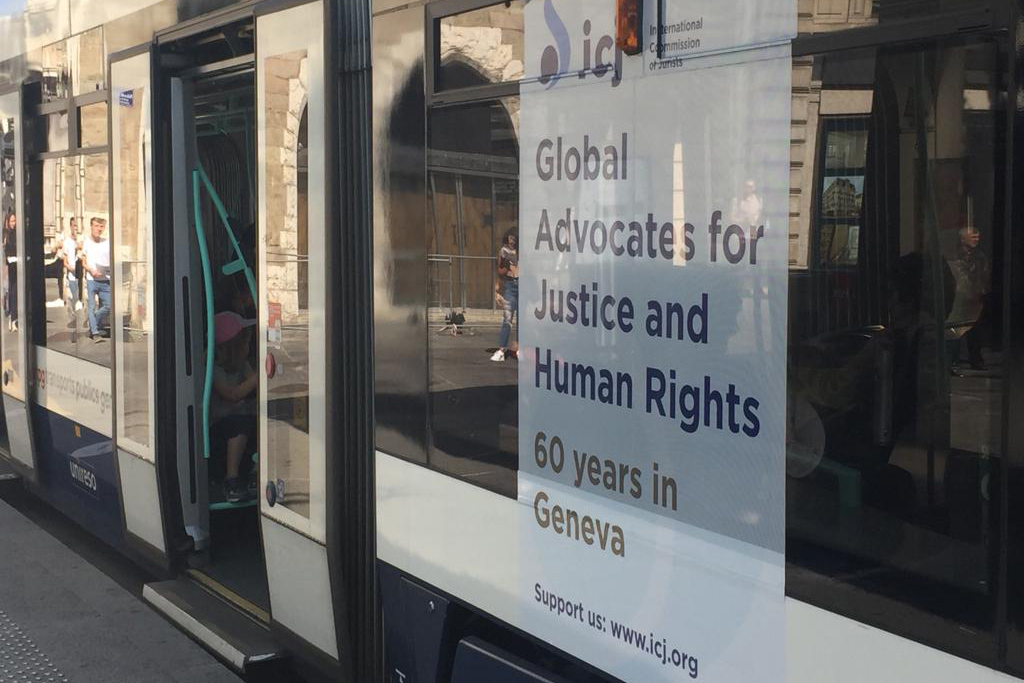
  • A visibility campaign from 26th September to 9th October: the TV screens on the Geneva public transport network and five vehicles will carry the slogan “Global Advocates for Justice and Human Rights – 60 years in Geneva”
  • The launch of the “60th Anniversary Appeal” to all lawyers in the Republic and canton of Geneva to support the ICJ and, in turn, their less privileged colleagues, victims of persecution on five continents.

Geneva can be proud of its image as the world human rights capital. It is a beacon for justice advocates around the world. We must continue to make it shine,” said Sam Zarifi, Secretary General of the ICJ. “Through its 60-year history, the ICJ has contributed significantly to Geneva’s human rights record: the campaigns that led to the creation of the post of UN High Commissioner for Human Rights in 1993 and the UN Human Rights Council in 2006, as well as the adoption of the United Nations Convention against Torture in 1984 are some emblematic examples,” said Olivier Coutau, Head of La Genève Internationale.

The international reputation of the ICJ rests on these pillars:

  • 60 Commissioners – eminent judges and lawyers – from all regions of the world and all legal systems – with unparalleled knowledge of the law and human rights;
  • Cooperating with governments committed to improving their human rights performance;
  • Effective balance of diplomacy, constructive criticism, capacity building, and if necessary, ‘naming and shaming’;
  • Unmatched direct access to national judiciaries, implementing international standards and improved legislation impacting millions;
  • Guiding, training and protecting judges and lawyers worldwide to uphold and implement international standards (e.g.in 2018, the ICJ provided local trainings on five continents to assist 4,300 judges, lawyers and prosecutors strengthen their ability to protect and promote fundamental rights)
  • Working for access to justice for victims, survivors and human rights defenders, in particular from marginalized communities;
  • Following a strict result based management in project delivery.

The ICJ has been awarded, during its long history, some of the most prestigious international awards: the Council of Europe Human Rights Prize, the United Nations Award for Human Rights, Erasmus Prize, Carnegie Foundation Wateler Peace Prize.

https://www.icj.org/global-advocates-for-justice-and-human-rights-the-icj-60-years-in-geneva/

Polish Ombudsman Adam Bodnar winner of 2018 RAFTO award!

September 27, 2018
Polish lawyer Adam Bodnar – Defender of minority rights and judicial independence in Poland (Photo credit: Kluczek/RPO.GOV.PL )

The Rafto Prize 2018 is awarded to the Polish lawyer Adam Bodnar and the institution he leads, the Office of the Commissioner for Human Rights, for the important stance taken in the face of current political developments in Poland.  A key function of the Ombudsman, or the Commissioner for Human Rights, is to ensure that the public authorities secure and respect the human rights of all members of Polish society. As lawyer and Ombudsman, Adam Bodnar (41) has highlighted the crucial role played by independent Ombudsman institutions in safeguarding human rights in Poland – and other countries – where such actors and institutions  increasingly have come under attack.

Since Law and Justice (PiS) won the Polish election in October 2015, the party has used its majority in the National Parliament to adopt legislation that reduces the independence of the courts and centralizes state powers. New laws grant the government control of state media and place severe limits on freedom of information and political lobbying. The rights of vulnerable groups have been repeatedly ignored.  “The award is not just an award to my work and the institution, but mostly a support from your community given to the Polish civil society, academia, judges and lawyers fighting for rule of law, juridical independence, pluralism and protection of minorities in Poland,” said Adam Bodnar.

The Rafto Prize for 2018 to Adam Bodnar and the Ombudsman for Human Rights highlights the rolling back of democracy and human rights protections in Poland. The conflict over the Polish Constitutional Tribunal and the Supreme Court are important internationally because they are symbolic of an alarming tendency where the independence of courts increasingly is under political pressure. It is crucial that the international community, the EU, Norway and other European countries take a clear stance against human rights violations and attacks on the rule of law and minority rights that take place in our own region. Adam Bodnar, being the civil servant, cannot accept the prize money awarded along with the Rafto Prize. The Rafto Foundation will identify and donate the prize money to civil society working for human rights in Poland.

For more on this and other awards: http://trueheroesfilms.org/thedigest/awards/rafto-prize

https://www.rafto.no/news/the-2018-rafto-prize-to-ombudsman-adam-bodnar