Posts Tagged ‘resource extraction’

Mongolia: human rights defender Beejin Khastamur on trial on 8 July

July 5, 2016

According to Front Line Defenders a rather curious case seems to have been construed against a human rights defender in Mongolia. The trial of human rights defender Mr Beejin Khastamur will start on 8 July 2016 at the Songinokhairkhan District Court in Ulan Bator. He was arrested on 16 March 2016 and denied bail on 22 March. He was eventually released pending trial on 31 March. Beejin Khastamur is the founder of a non-governmental organisation Delhiin Mongol Nogoon Negdel (DMNN), which advocates for the protection of environment and the rights of the nomad people of Mongolia. The organisation has exposed many violations of Mongolia’s environmental laws by foreign and domestic mining companies, in which Mongolian politicians had a stake. It has also organised numerous workshops, public gatherings and demonstrations to educate the public on environmental issues. https://www.frontlinedefenders.org/en/profile/beejin-khastamur

According to the police Beejin Khastamur allegedly attacked the driver of another car using a knife. On 6 February 2016, Beejin Khastamur was indeed involved in a car accident, during which no one was killed or injured and the material damage caused was minimal. The human rights defender was driving in Ulan Bator when a Nissan car tried to pass him on the wrong side twice and eventually hit his vehicle. Its driver got out of the car and attacked Beejin Khastamur kicking him and hitting the human rights defender in his head. Subsequently, during the forensic examination it was revealed that Beejin Khastamur sustained bruises all over his body and had a brain concussion, while the second driver had only small scratches on one of his knees. When police arrived at the scene, they concluded that the accident had been the fault of the second driver and left. However, they subsequently returned and brought Beejin Khastamur to the police station for questioning. The actions of the police have given rise to the suspicion that the accident may have been used as a pretext to target Beejin Khastamur for his human rights work.

[On 21-23 December 2015, Beejin Khastamur organised a sit-down strike protesting the illegal permit given to a Canadian and Mongolian joint company enabling it to mine gold right on Onon River. Since then he has received multiple threats. On several occasions people came to his house, banging on his door at night, cutting his electricity, puncturing his car tires, threatening his wife and children. The human rights defender also received death threats on the phone.]


Frontline NEWlogo-2 full version - cropped


Profile of Pedan Marthe Coulibaly, human rights defender from Côte d’Ivoire

May 27, 2016

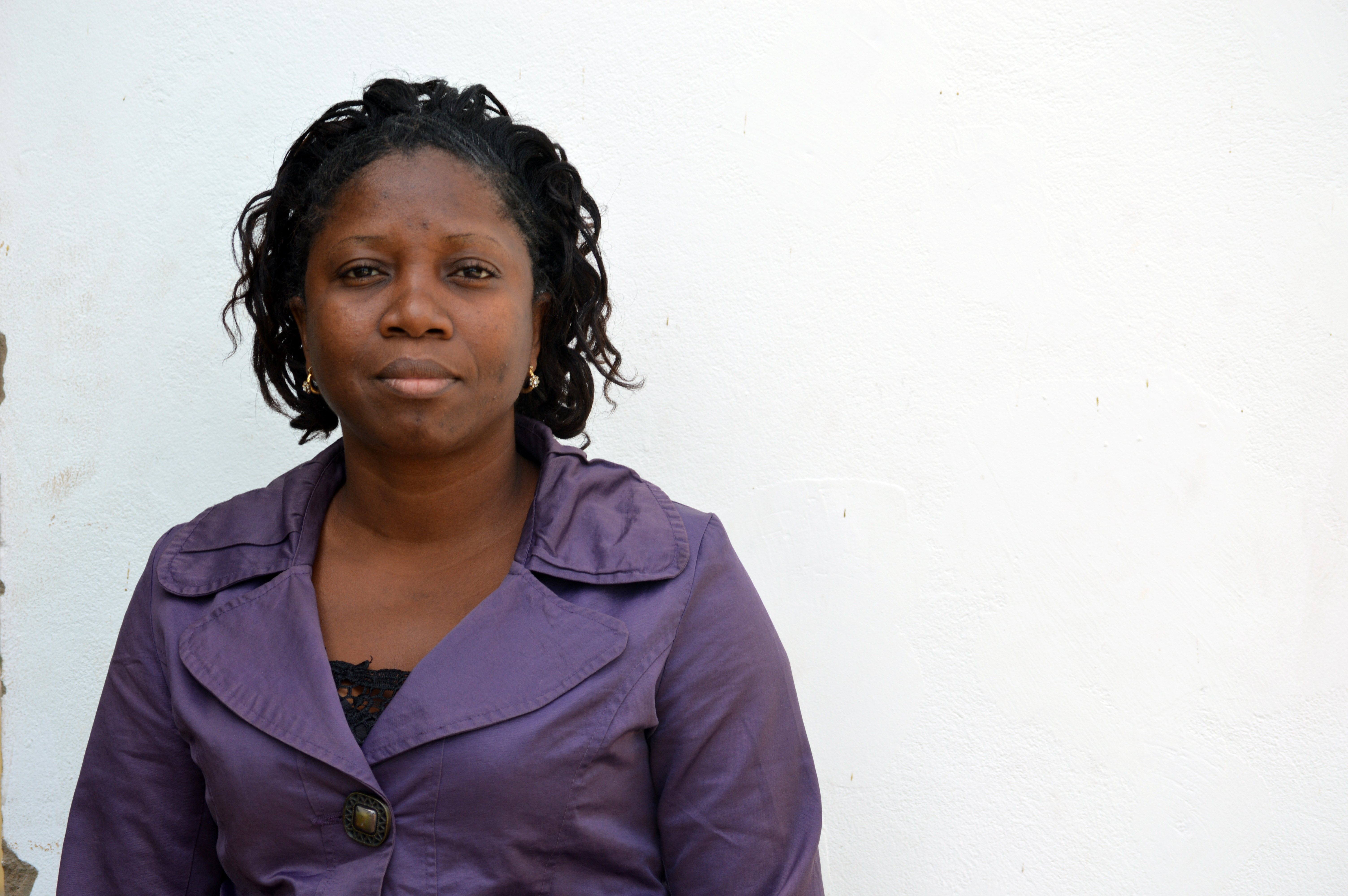
Pedan Marthe Coulibaly human rights defender Côte d'Ivoire.


Pedan Marthe Coulibaly, human rights defender from Côte d’Ivoire

Ms Pedan Marthe Coulibaly is the national coordinator of the “Coalition Ivoirienne des défenseurs des droits humains” (human rights defenders coalition from Côte d’Ivoire). She was part of the NGO delegation sent by ISHR to participate in the 58th session of the African Commission on Human and Peoples’ Rights. On 11 April 2016 ISHR published the following interview on her work

The Coalition Ivoirienne des Défenseurs des droits humains (CIDDH) was founded in 2004 and gathers together more than a dozen national civil society organisations. Its two main missions are to protect human rights defenders and to promote their rights. This work mostly involves raising awareness of and increasing the capacity of defenders to make use of human rights protection mechanisms. A founding member of the Centre féminin pour la démocratie et les droits humains (Women’s centre for democracy and human rights) in Côte d’Ivoire, Ms Coulibaly has been advocating for human rights in general, and women’s rights in particular, for over a decade. She started engaging on these issues immediately after graduating, when she realised that during the 2002 national crisis women were among the most exposed to human rights violations.

What does the coalition do?

The first activity of CIDDH is to ‘connect with the member organisations on a regular basis and seek information about the realities of their work’. The aim is to stay in tune with the challenges facing grassroots human rights defenders and, when needed, to identify ways of assisting them.

When informed about a difficulty facing a defender, the coalition carries out a risk analysis of the situation. If the risk is deemed high, the coalition can decide to alert partners, such as the West African human rights defenders network; send communications to the United Nations and African Commission Special Rapporteurs on human rights defenders; or collect resources among its network in order to ‘move the defender to a safe place’.  Sometimes, the coalition may also publish press releases for distribution at press conferences.

Who are the most exposed defenders in Côte d’Ivoire? 

Given her pivotal role within CIDDH, Ms Coulibaly has been able to identify some of the most at risk defenders in Côte d’Ivoire, who are typically those working on sensitive issues, such as extractive industries. 

‘When they go to the field, defenders working on extractive industries are often forced to hide their true identity and the name of their organisations. (…) They can be subject to intimidations or threats from industries, sometimes with the support of administrative authorities.’

Defenders who question certain cultural practices, such as female genital mutilation, are also often the targets of  hostile community reactions.

The role of the coalition in the development of the HRD law

CIDDH was at the frontline throughout the drafting and adoption process of the recent law on human rights defenders in Côte d’Ivoire. The coalition was first invited by the Ministry of Human Rights to participate in the validation session of the draft law. CIDDH then initiated an intensive advocacy campaign to ensure the recommendations and concerns they shared at the validation session had been taken into account.

CIDDH also intended to check if the parliamentarians targeted during the advocacy campaign had appropriated the recommendations as their own and shared them during the adoption process. One of the concerns exposed by the coalition was the need to include the notion of ‘threat’ in the list of dangers facing women human rights defenders. This concern was duly included in the adoption process. Regretfully, the coalition’s opposition to the obligation for human rights defenders to submit annual reports to the State fell on deaf ears.

The coalition subsequently attended, as an observer, the parliamentary session to adopt the law, where they were relieved to witness that most of the recommendations made by human rights defenders had been retained.

Following the adoption, CIDDH focused on training human rights defenders so they could get to know the content of the law and ‘make it theirs so as to promote their own rights’. The coalition intends to continue advocating for the adoption of an implementation decree for the law, as well as for an implementation mechanism to be put in place.  

More proactivity for better protection 

While recognising the crucial role of ‘emergency funds’ provided by partners such as Frontline Defenders when defenders’ rights are violated, Ms Coulibaly insists on the need for and the difficulty in achieving a more proactive approach.

 ‘We should not wait to see real dangers before starting to collect resources to protect defenders (…) If the coalition had permanent resources for a staff member dedicated to the protection of defenders, this would make the work of defenders a lot easier.’

Ms Coulibaly also calls for the international community to step in for the protection of human rights defenders. She stresses that ‘collaboration with the international community should go beyond exchange of information, communications or reports’ and take the form of ‘concrete measures’ to protect defenders.

Putting defenders at the heart of the African Year of Human Rights

With 2016 being declared the African Year of Human Rights by the African Union there is an opportunity to make an assessment of the situation of human rights defenders in Africa, says Ms Coulibaly. The progress made to date and remaining challenges should be identified. It is also essential that each country sets up strategies to implement laws protecting human rights and that these laws have a real effect on the ground.  

‘It is a real problem: protocols are being adopted, legal instruments are being adopted, but these documents have no impact on real life. No one can feel any change.’

Source: Defender profile : Pedan Marthe Coulibaly, woman human rights defender from Côte d’Ivoire | ISHR

Human Rights Defender Profile: Pedro Sica from Guatemala

April 21, 2016

Pedro Tzicá (or Sica) is a K’iche’ Guatemalan human rights defender working on human and environmental rights, as well access to justice and the right to development of indigenous peoples. Tzicá spoke to ISHR about his work, including organising community consultations to defend the indigenous peoples’ rights to land and natural resources in the face of mega-projects. The profile appeared in the ISHR Monitor of 7 March 2016. Read the rest of this entry »

500 signatories demand release of Indian filmmaker Sarangi

April 4, 2016

A remarkably large and diversified group of some 500 film makers, writers, professionals in the area of art & culture, academics, activists and social organisations demand the release of Indian filmmaker and human rights defender Deba Rajan Sarangi in an open letter published on 3 April 2016.

They state that they are deeply shocked to hear about his arrest on 18 March, 2016, by plainclothes policemen from the Kucheipadar village of Rayagada District, Odisha. Debaranjan was in Kucheipadar to attend a funeral. He was arrested with a non-bailable warrant issued by the court of JMFC, Kashippur in pursuance of a case registered in Tikri police station of Rayagada district in 2005, when Debaranjan was actively involved in the struggle of the Adivasis in Kashipur to protect their lands from the invasion of the bauxite mining companies…

Deba Ranjan Sarangi has highlighted and critiqued policies of destructive development, unbridled mining practices, displacement, police impunity, atrocities on Dalits, Adivasi issues , growth of communal fascism in Odisha, violence on women and farmers’ suicide in the context of acute agrarian. Deba Ranjan has been put behind bars because he had the courage to show what he witnessed to the world through his expressions of film making, writing and speech. He is neither a Maoist nor a terrorist. We call upon the Odisha government to address the issues raised by the human rights defenders in the State of Odisha rather than imprisoning them and crushing the voices of film makers. We call upon the Odisha government to desist from such disgraceful attempts of violating the Indian Constitution and Indian democracy.
The link below gives a partial list of signatories:

Source: 500 Artists, Activists And Writers Demand Filmmaker Sarangi’s Release

Alarming criminalisation of human rights defenders in Latin America

February 27, 2016

The criminalization of human rights defenders in the context of the extraction of natural resources and megaprojects is becoming a very worrisome phenomenon in Latin America, denounces the Observatory in a report published today in Mexico. Entitled “The criminalization of human rights defenders in the context of industrial projects: a regional phenomenon in Latin America”, this document points to the role of businesses, civil servants, public prosecutors, judges, and the State. The report issued by OMCT and FIDH (in the context of their Observatory for Human Rights Defenders) on 25 February 2016 describes the specific cases of human rights defenders criminalized in eight Latin American countries (Brazil, Colombia, Ecuador, Guatemala, Honduras, Mexico, Nicaragua and Peru).


The report especially stresses two core issues common to all the countries studied: Read the rest of this entry »

Latin America, Philippines most dangerous places for Human Rights Defenders

January 6, 2016

The latest statistical report released by Front Line Defenders revealed the appalling reality that human rights defenders all over the world are at great risk to be victims of extreme forms of violence. And based on the organization’s annual report, 157 human rights activists were killed or died in detention in 25 countries in 2015. Latin America, Philippines are named as most dangerous places for Human Rights Defenders. Read the rest of this entry »

Human Right Defender Jean-Pierre Okenda, Democratic Republic of Congo

November 29, 2015

On 26 October 2015, the ISHR published a profile of human rights defender Jean-Pierre Okenda, Democratic Republic of Congo. It was conducted on the margins of a meeting of the African Commission. ISHR-logo-colour-high

Jean-Pierre Okenda has taken his own route toward improving human rights impacts of extractives projects in his country. His role, as coordinator for a platform of civil society organisations in the mining sector, involves a great deal of immersion in books and texts, but also with people.

In the context of the DRC, it was absolutely critical that I redirect my work to make clear the connection between human rights and the extractive sector, and that meant research. It means understanding the global stakes of the issue. It meant explaining how bilateral relations and investment treaties really impact ordinary citizens and their rights.” Research for research’s sake is not Mr Okenda’s goal. He aims to develop networks, training, and tools to empower affected communities and other organisations to better document, understand, and evaluate the human rights impacts of a project.  He also emphasises the role of research in strengthening peoples’ understanding of the links between human rights, extractives industries, and taxation, incomes, and other ‘technical’ issues. He also urged legal reforms to help protects human rights at the local level.

Building relationships with the government and enterprises is a challenge – but it is possible, if one understands where they start from. I sent a questionnaire on human rights to local and national authorities, and you know what? There was, aside from a small amount of general familiarity at the central level, a total gap in terms of human rights knowledge. This made it clear that – sometimes – violations arise because of this lack of awareness or training. And yet, they are still responsible for protecting and realising these rights!” It is important,’ he added, ‘that they know what we are looking for when we come and ask for such and such a document’.

With corporations, it is the same. They limit themselves to two things: to the legal framework, and to the business’s internal priorities and policies. If they don’t have an internal policy, it’s likely that they don’t know a thing about human rights. To get them to think about human rights, it is critical to use another language they will understand, the language of professionalism.To further insist on empowering local communities and civil society to act, Mr Okenda noted the critical importance of having decentralized human rights institutions, so that even communities far from Kinshasa could seek resources and assistance to combat violations and abuses. ‘There is a growing global move toward more participation of civil society, in decisions related the politics and planning, in addition to the implementation. We need to see this apply in the area of extractives as well.’ The participation at the global level of local communities in the conversation about human rights and businesses is important. But the ability to participate is limited, says Mr Okenda, and so while human rights are central to the resolution of the issue, they will always be limited by governments’ hypocrisy, by neoliberalism, the financial crisis, and other geostrategic concerns.

Mr Okenda is clear: risks do exist, for all human rights defenders, including intimidation, violent attacks, denunciation, and abusive prosecutions. For those working on investment and extractives issues, the problem is that these might sometimes be the very same individuals or institutions (e.g., government agencies) that are meant to be protecting the people.So, according to Mr Okenda, defenders face every day a personal dilemma – to do what they think is right and defend a community’s interests, or to protect their property and the lives of themselves and their families.  In addition to overt risks, some defenders face pressure from their families themselves, who worry about the impact of rights defence work on safety and security. ‘When the family becomes vulnerable, you are really weakened, too.’ Nonetheless, concludes Mr Okenda: Even if there are risks, even if we human rights defenders face failure or lose patience, it is essential to keep speaking out. Silence is the biggest threat.Mr Okenda remains optimistic in his work. Efforts to encourage the government to recognize human rights defenders, and – along with corporate actors – see defenders as partners as opposed to adversaries, will be key.

Source: Defender Profile: Jean-Pierre Okenda, Democratic Republic of Congo | ISHR

Alberto Solis Castro explains the unbalanced power of government and businesses in Mexico

November 24, 2015

On 2 November the ISHR carries an interview with Alberto Solis Castro, a human rights defender concerned with the indigenous communities in Mexico.

Read the rest of this entry »

Alejandro González, corporate accountability human rights defender from Mexico

September 21, 2015

A bit belatedly, I refer to the interview (19 June 2015) with Alejandro González in the Newsletter of the ISHR. Alejandro is a human rights specialist who works for PODER, an award winning and multi-faceted civil society organisation based in Mexico that helps build the capacities of communities, workers, NGOs, and other civil society groups affected by corporate malfeasance and accompanies their accountability campaigns.

We help communities participate in the consultative process. In the end, it is about what communities want. We are not in favour or against the project. We make sure communities know their rights and are aware of the potential positive and negative impacts of the project.’ Free, prior and informed consent of the local communities is needed to pass development projects in indigenous regions of Mexico. Recent reforms, however, have opened the energy sector to both national and international investment. Mexico is currently in a maelstrom of speculation. ‘This is a dangerous situation. Many powerful companies in Mexico have a poor track record in human rights and we are concerned that local communities will lose their power to defend their land rights. Communities affected by gas speculation can either be obliged to sell their land or be forcibly dispossessed. It is vital that we observe, facilitate and publicise these negotiations.’

PODER, together with rural communities, is currently conducting an ex ante human rights impact assessment on extractive projects in Puebla, Mexico. In other states, such as Hidalgo, Oaxaca, and Sonora, PODER conducts participatory research with communities and accompanies their advocacy efforts. In Oaxaca it is part of an international mission to monitor the Free, Prior and Informed Consent process regarding the construction of wind farms by Australian, Dutch, Japanese and Mexican corporations.

The government wants to use this case as a model – to set a precedent for all future negotiations. If it goes poorly, the consequences could be devastating … We have met frequently with the Dutch, European Union and other embassies to amplify the voices of local people. We have also conducted extensive research into the companies and provided this information to the community, to help them make informed decisions.’

Standing up to powerful economic actors is dangerous work. In 2013, Héctor Regalado Jiménez, member of the Popular Assembly of the Juchiteco People, was shot and killed after opposing the wind farms. ‘Another activist we were working with died in a suspicious car accident. We still don’t know what happened, but this is a common modus operandi in Mexico. The killers make it look like an accident. Community leaders are frequently subject to death threats and assaults.

Since PODER does not directly advocate on land rights issues, Alejandro is not in as much risk as the human rights defenders it supports, though he and his colleagues face increasing surveillance. He believes that a powerful political and corporate élite pose a major challenge to the work of business and human rights defenders across Mexico. ‘There is a small group of families who control most of the market. It is a secretive group who meet with the president and cabinet members behind closed doors. Together they decide the laws and regulations. That’s how they pushed through the reforms that opened up the energy sector.’

To address this lack of transparency in the government and private sector, PODER is involved in online platform  such as “Who’s Who Wiki” (rindeucentas.org) and ‘MéxicoLeaks’ – a whistleblowing tool that allows people to send information of public interest through secure technologies that protect the identity of the source. The information received through MéxicoLeaks is then verified, analyzed and published by the partners of the alliance, made up of civil organizations and media outlets. “The investigations that follow allegations communicated via ‘MéxicoLeaks’ are dangerous. In a two-year period, 10 journalists were murdered and 326 attacked. We have seen an increasing use of cyber attacks – as hackers force outlets offline or bombard them with viruses. Any journalist who exposes government corruption can expect to lose his job.”

Despite these adverse conditions, Alejandro is positive that good business practice is in the best interests of businesses. ‘We make corporations aware that human rights violations are a material risk. For example, if a company pollutes a river, there will be mobilisation and litigation against the company as well as a huge attack on their reputation – all of which costs money. Making corporations aware of the cost of violating human rights puts pressure on them to improve their due diligence.

In Mexico we would like to see a civil society powerful enough to be on equal footing with both the authorities and the private sector. For this you need information, complete transparency in everything the government does and strong accountability mechanisms. The private sector must prioritise human rights with due diligence, and not merely refrain from doing harm, but actively to do good.’


Alejandro González: Mexican corporate accountability human rights defender | ISHR.

see also: https://thoolen.wordpress.com/tag/mexico/

Soraya Aziz Souleymane: a ‘business and human rights defender’ from the DRC

September 3, 2015

On 1 September 2015, the ISHR carried an interview with Soraya Aziz Souleymane, a business and human rights defender from the Democratic Republic of Congo (DRC).

Soraya holds the role of Deputy Field Office Director in charge of The Carter Center’s Mining Governance Program in the DRC, part of a new generation of young activists and NGO workers dedicated to seeing their country reach its potential.

Soraya started managing grants to affected communities at a large mining company’s foundation. She described her frustrations with the limitations of working within the foundation; she had discovered that many of the decisions about where and how to disburse the funds had already been made as part of the initial negotiations with affected communities. She soon decided to move into the corporate structure itself.

[When I joined the corporation,] it was an exceptional time, because the company was just beginning work in a new area and there was a need for many people… so much so that I was able to create a whole community relations department from the ground up. 

Despite the positive experience of getting the first community relations department off the ground, Soraya said she still wasn’t satisfied. She described the realization of the limitations of working with projects, saying: My impact was limited just to this one small community. I couldn’t take those impacts and apply them to others. Also, all the policies had to be linked to production, to the generation of profit for stakeholders and investors. That’s how companies have always worked, and this was no different.

Feeling sidelined after production began at the mine, she joined The Carter Center’s office in 2014.

Soraya described her transition from private sector to civil society, highlighting both challenges and opportunities:

At the company, it was good – we had resources, support, the voice, we had almost immediate access to the ministries, no problem. A big challenge at The Carter Center is that we don’t have the same financial resources or the same level of influence. But other things are better, at least for me. My primary goal now at work is to change the situation of communities –  all communities – not simply to increase production or placate one group. 

Soraya also uses her new role to engage in direct advocacy with the DRC government.  As she said, the chance to influence the policies of the state is ultimately a great opportunity. She also emphasized the value of gaining perspective through exposure to different sectors, and dismissed the idea that working for a company was ‘treason’. Instead, she noted that this kind of movement back and forth, especially within a sector, can lead to a lot of evolution and changing perspectives. It can also lead to more cooperation. We’ve seen many times when civil society and companies have joined forced against the government to say, “No, that will not fly.” It’s a strategic alliance.

…….

And despite the challenges, Soraya has a passion to do this work, and an optimism about civil society. I think my background, the fact that I am Congolese and that I have worked in the sector means I have real interest in and capacity to influence what my country becomes – my children will grow up here. 

I am very optimistic because there are many young people who are innovators, who are open to new ideas, who are willing to sit down with a range of stakeholders. They are also willing to say to the international community, “No, we don’t need x, we need y.” 

And as for the government, the emphasis is also on frank discussion, even when there is a disagreement. As Soraya says, We must work with them for change – and we must be clear that this is not the same as working for them, as accepting the problem.

-See more at: Soraya Aziz Souleymane: Business and human rights defender from the DRC | ISHR