Posts Tagged ‘resource extraction’

Ecuador: unique case of mass amnesty for environmental defenders

March 31, 2022

On 30 March 2022 CIVICUS reported on a very interesting case: On 11th March 2022, the National Assembly of Ecuador approved a bill granting amnesty to 268 people who faced prosecution for their defence of land, indigenous and environmental rights, and for their involvement in 2019 protests. The bill was approved by the plenary of the National Assembly with 99 favourable votes out of the 125 parliamentarians in attendance.

Among those benefitted by the amnesty, 153 are land defenders, 43 are environmental activists, 12 are Indigenous leaders criminalised for administering Indigenous justice and 60 others were more generally facing charges related to their involvement in the October 2019 demonstrations. Several defenders, such as Gabriela Fraga, Nancy Simba, Ángel Punina, Javier Ramírez and Jovita Curipoma, were cleared of charges related to resistance against extractive industries. Civil society groups also highlighted the case of Víctor Guaillas, a water defender who had been detained on charges of ‘sabotage’ in 2019, for whom amnesty came too late. Guaillas was one of the 62 people murdered in November 2021 amid a riot in a Guayaquil prison.

Ecuador’s Human Rights Alliance (DDHH) called the move a “historical precedent against the criminalisation and prosecution of rights defenders.” In a statement, the coalition said that this amnesty “means vindicating the right to truth and justice for those who exercise the right to defend human rights” in a context of recurrent criminalisation of these actors.

In a separate but related development, in December 2021 President Guillermo Lasso had made stigmatising statements about social movements and Leonidas Iza, the president of the Indigenous confederation Confederación de Nacionalidades Indígenas (CONAIE). Iza and former CONAIE president Jaime Vargas were among those facing prosecution related to October 2019 protests, and were both granted amnesty in March 2022.

On 21st December 2021, during a weekly broadcast programme in which he discusses government initiatives, Lasso called Iza “an anarchist” and “a violent man,” and claimed that the Indigenous leader “hates democracy.” The President accused the CONAIE leader of incentivising violence during the October 2019 protests. Lasso also said his government would use all the power of the state to jail “those who want to anarchise this country, disrupt public services, and deepen an economic crisis that has already been affected by the pandemic.”

On 22nd December 2021, the DDHH issued a statement expressing solidarity with the Indigenous movement and Leonidas Iza. The coalition said that Guillermo Lasso’s “violent and contemptuous discourse stigmatises the work carried out by social and political leaders, social and Indigenous movements, and makes unfounded and reckless attacks against Leonidas Iza.”

Lasso repeated his statements in a programme aired on 4th January 2022, calling Iza “an enemy of Ecuadorean democracy.”

On 27th January 2022, Ecuador’s Constitutional Court confirmed the violation “of the rights to prior consultation, to nature, water, a healthy environment, culture and territory, as well as comprehensive reparation measures”, regarding the A’i Cofán Indigenous people of the Sinangoe community in relation to mining concessions that affected their ancestral territory without their free, prior and informed consent. In their ruling, the country’s highest court reaffirmed the state’s obligations in consultation processes on plans and projects that affect Indigenous peoples’ rights and interests.

Indigenous communities and organisations have led the international campaign “Who Should Decide?”. Just days before this court ruling, they delivered more than 365,000 signatures to the Constitutional Court asking the Court to protect the right of Indigenous peoples to decide on the future of their ancestral territories.

International group Amazon Frontlines said that the Constitutional Court ruling recognises “for the first time, the right of Indigenous communities to have the final decision over oil, mining and other extractive projects that affect their lands.” The organisation also evaluated that Ecuador “now has one of the most powerful legal precedents in the world on the internationally recognised right of Indigenous peoples to Free, Prior and Informed Consent.”

See also my earlier: https://humanrightsdefenders.blog/2016/02/27/alarming-criminalisation-of-human-rights-defenders-in-latin-america/

https://monitor.civicus.org/updates/2022/03/30/ecuador-amnesty-granted-268-rights-defenders-and-protesters/

100 NGOs join Amnesty International’s call for Biden to pardon Steven Donziger

March 16, 2022
Amnesty International Logotype

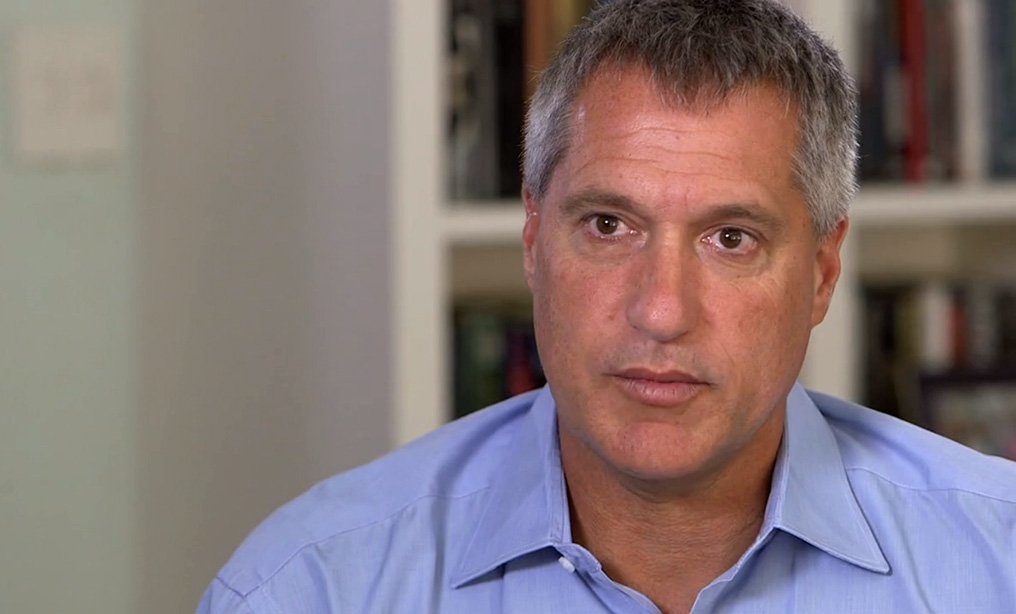
For more than two years, human rights lawyer Steven Donziger – currently serving the remainder of a six month sentence on house arrest – has been arbitrarily detained in apparent retaliation for his work to hold Chevron accountable for its deliberate dumping of more than 16 billion gallons of toxic oil waste into the Amazon rainforest. Despite repeated calls from human rights advocates and governmental authorities for Donziger’s release, the Department of Justice has refused to respond or take any action to remedy this human rights violation. Today, over 100 human rights and environmental organizations from around the world joined Amnesty International, Greenpeace USA, Amazon Watch, Global Witness, Rainforest Action Network, HEDA Resource Center, ReCommon, and the Pachamama Alliance to call on President Biden to exercise his clemency powers to pardon Steven Donziger as a way to ensure his immediate release.

In a letter to President Biden, the organizations state: “More than four months since a discerning opinion by the UN Working Group on Arbitrary Detention that found Steven Donziger’s detention to be arbitrary, U.S. judicial authorities have thus far failed to take any action to remedy the situation and implement the Working Group’s call to ensure Mr. Donziger’s  immediate release.”  See also: https://humanrightsdefenders.blog/2020/08/17/steven-donziger-speaks-out-himself-about-being-targetted-by-chevron

In a statement in October 2021, President Biden promised the U.S. would “stand in solidarity with, and continue to work tirelessly in support of, the activists, human rights defenders, and peaceful protestors on the front lines of the struggle between freedom and tyranny.”All the while, the administration has failed to side with the brave human rights defenders within the United States and respond to the demand of the U.N. Working Group on Arbitrary Detention, Congress, and the international community to free Steven Donziger. 

Steven Donziger is a human rights defender that bravely stood up against one of the most powerful corporations in the world,” said Daniel Joloy of Amnesty International. “In response, he has endured years of harassment, intimidation, smear campaigns and more than two years in arbitrary detention. President Biden must now listen to the over 100 human rights and environmental organizations calling to pardon Steven Donziger and ensure he is released immediately and unconditionally. Allowing this ordeal to continue only sends a chilling message that corporations around the world can continue attacking human rights defenders without consequences.”

Paul Paz y Miño of Amazon Watch said “Instead of supporting the people of Ecuador who were poisoned by Chevron’s admitted deliberate dumping of billions of gallons of toxic waste, Biden has turned a blind eye to the persecution of a key lawyer who worked to win a historic judgment against Chevron. The U.S. government’s responsibility should be to make Chevron clean up its waste and support efforts to hold the fossil fuel company accountable, not allow the appointment of a private prosecutor with ties to the very same oil company to imprison human rights lawyer Steven Donziger. This travesty has gone on for over two years, and Biden has ignored members of the E.U. parliament, members of the House and Senate, and even the United Nations High Commissioner for Human Rights. Well over 100 organizations are now demanding action, and Biden’s lack of action continues to be a dark stain on his alleged claims to respect human rights. Oil companies do not prosecute and imprison people in the U.S. This must end now.”

Chevron’s legal attack on Donziger is not the first, nor will it be the last case of its kind. Right now, the right to dissent is being repressed by both our government and corporations

Annie Leonard, co-Executive Director Greenpeace USA

Simon Taylor, Co-Founder & Director, Global Witness said “I have spent much of the past 25 years seeking accountability of the fossil fuel industry for its gross human rights abuses and other crimes. Amongst the judicial authorities we have liaised with during this time, the Southern District of New York has stood as a beacon in this fight against criminality. Shockingly, just as Biden gears up this struggle, New York’s judicial authorities seem instead intent on destroying their reputation, thanks to their apparent complicity in the unprecedented corporate prosecution and judicial harassment of Steven Donziger. These acts, in my experience, are more what I would expect from one of the ‘Banana Republics’ we have investigated around the world. These are shameful acts. If Biden is serious about tackling the climate crisis, he cannot allow the fossil fuel industry to weaponise the US judicial system to go after its detractors – Biden must act now and release Steven Donziger.”

https://www.commondreams.org/news/2022/03/15/100-groups-urge-biden-pardon-human-rights-lawyer-steven-donziger

Human Rights High Commissioner Bachelet urges support for environmental defenders

March 2, 2022
United Nations
Protect the defenders of the planet, UN rights chief urges
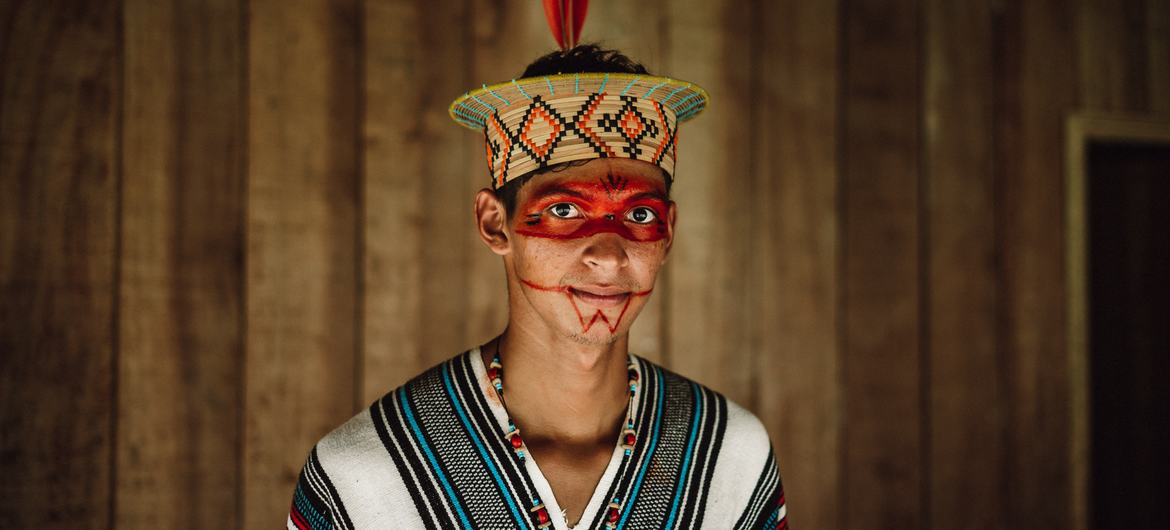
Poyowari Piyãko, a young activist, poses in his home in the Apiwtxa village, which belongs to the Ashaninka indigenous people, in northern Brazil.

Poyowari Piyãko, a young activist, poses in his home in the Apiwtxa village, which belongs to the Ashaninka indigenous people, in northern Brazil. © UNICEF/Alécio Cézar

The world must be made a safer place for people working to protect the planet, who sometimes pay with their own lives for their activism, UN Human Rights High Commissioner Michelle Bachelet said on Tuesday 1 March 2022.  Protecting the environment goes hand-in-hand with protecting the rights of those who defend it, she told the UN Human Rights Council in Geneva, which is holding its annual month-long session. 

Ms. Bachelet revealed how speaking out and standing up for environmental rights can come at enormous cost as activists have been killed or subjected to abuse, threats and harassment.   

At particular risk are people who speak out against deforestation, extractives, loss of cultural heritage or identity, or large scale-agribusinesses and development projects – including those intended to produce clean energy, such as mega dams,she said.  Many environmental human rights defenders are also indigenous peoples, or members of local communities or minority groups – or those representing them.   Berta Caceres, an environmental activist from Honduras, was assassinated in March 2016.  She was recognized posthumously as a UN Champion of the Earth laureate for her tireless campaign for the rights of indigenous people.

Berta Caceres, an environmental activist from Honduras, was assassinated in March 2016. She was recognized posthumously as a UN Champion of the Earth laureate for her tireless campaign for the rights of indigenous people. © UNEP

She said entire communities may face threats and intimidation when someone speaks out on their behalf.  Ms. Bachelet underlined that States have an obligation to respect and protect the rights of environmental human rights defenders, and the communities they represent.  Authorities must also prevent and ensure accountability for attacks.  These actions are in line with a Council resolution adopted last year which upholds the right to a healthy environment, she said.  See also: https://humanrightsdefenders.blog/2021/10/26/aarhus-convention-gets-new-mechanism-to-protect-environmental-defenders/ and

“In addition, it is critical that States effectively regulate businesses and hold them accountable for human rights violations,” she said, while corporations also have a similar duty, as outlined in the UN Guiding Principles on Business and Human Rights

Ms. Bachelet advised that prior to undertaking any climate project, both governments and businesses must carry out human rights risk assessments.  

If indigenous peoples’ rights are at risk of being adversely affected by such projects, it is crucial that their free, prior and informed consent is obtained,” she said. 

The UN rights chief also reported on some of the global work of her staff.  “All around the world, my Office is committed to supporting States, businesses and environmental human rights defenders in all of their efforts to protect our planet,” she said. 

For example, over 200 human rights defenders in the Pacific region have been trained to help boost sustainable development, business and human rights in the context of climate change.  

In Southeast Asia, OHCHR is monitoring cases of harassment, arrest, killings and disappearances of environmental human rights defenders, while

https://yubanet.com/world/protect-the-defenders-of-the-planet-un-rights-chief-urges/working with governments towards ending punitive measures levelled against activists. 

https://news.un.org/en/story/2022/03/1113022

AFREWATCH wins Business and Human Rights Award 2021

December 14, 2021

At the United Nations Forum on Business and Human Rights, the 2021 award recipient was announced: AFREWATCH — a small, courageous organization headquartered in Democratic Republic of Congo that focuses on the human rights and environmental impacts of extractive companies in Africa.

Here a 3-minute video announcing the award: https://www.humanrightsandbusinessaward.org/announcement-2021-recipient-of-the-human-rights-and-business-award/. The video features two Advisory Network members announcing the award (Abiodun Baiyewu and Seema Joshi), followed by the Executive Director of AFREWATCH (Emmanuel Umpula) accepting the award.

AFREWATCH researches and reports on abuses by mining and oil companies and by governments; engages with government officials to advocate for improvements in law and practice; presses for extractive companies to pay their fair share of taxes, and helps grassroots community organizations build their capacity.  

For more on this award and its laureates, see: https://www.trueheroesfilms.org/thedigest/awards/fd511ca0-10f0-11ea-8f61-d1d879c27588

https://www.humanrightsandbusinessaward.org/award-recipient/afrewatch/

Documentary film Arica gets attention from United Nations Human Rights Council

September 15, 2021

On 2 June 2021 Davide Abbatescianni wrote in Cineuropa about Lars Edman and William Johansson’s film which documents the devastation caused by a Swedish mining giant in a Chilean desert town

Over 30 years after Swedish mining and smelting giant Boliden shipped almost 20,000 tons of toxic mining waste to the Chilean desert city of Arica, a group of Special Rapporteurs from the United Nations Human Rights Council (UNHRC) led by Dr Marcos Orellana have made allegations of ongoing human rights abuses, as exposed in Lars Edman and William Johansson’s documentary Arica [+]. The feature was presented at last year’s IDFA and is set to continue its festival run in Spain, the Czech Republic, Italy and Belgium.

Exposure to the waste led to numerous cases of cancer, birth defects and serious diseases. Currently, the Chilean government estimates that around 12,000 people were exposed to the toxins. The UNHRC has advised the Swedish government that “urgent measures should be taken to repatriate the hazardous wastes to Sweden and/or ensure the disposal of the hazardous wastes in an environmentally sound manner”.

Particular criticism is aimed at Boliden Mining, which the body accuses of “intimidating and threatening behaviour” towards human rights defenders – namely, the legal team representing the victims in Arica. They allege that such an approach, adopted by Boliden following the decision by the Swedish court of appeal not to hear the Arica case on the grounds that Boliden’s actions took place too long ago to be tried under Swedish law, was “a deliberate attempt to produce a wider, chilling effect of silencing and intimidating other lawyers and human rights defenders”. The United Nations’ action has been welcomed by victims and campaigners, including community campaigner Rodrigo Pino Vargas, who said: “For over 30 years, we have seen our families and our neighbours suffer the consequences of this Swedish waste. We have buried our children and been forced from our homes. We will not stop until our voices are heard and the damage is repaired. Even when we win in court, we find nothing but broken promises. For the first time, the intervention of the United Nations gives us hope that our human rights will be upheld. The people of Arica demand that immediate action be taken to meet our health needs and that the toxic waste be returned to where it belongs – in Sweden.”

The acclaimed documentary, shot over the course of 15 years, sheds light on a shameful case of modern colonialism. After losing their case in 2018 with a sentence that ultimately sided with Boliden, rejecting the Chilean judges’ verdict on the firm’s responsibilities and decriminalising their misdeeds, another appeal was lost in 2019. As of today, the Swedish Supreme Court has not granted Arica’s victims the right to appeal, and Boliden is threatening to sue their lawyers to make them pay the legal costs, a sum close to $5 million.

Producer Andreas Rocksén commented: “When Lars and William began filming 15 years ago, their intention was to ensure that the voices of the people in Arica, affected by the waste that came from under the soil where they grew up, would be heard. What has happened since has surpassed any expectations: their story is being heard around the world, and yet those same people in Arica are still fighting for justice. We will continue to amplify their voices as best we can and applaud all the different initiatives aimed at seeing their human rights upheld.”

Meanwhile, political pressure in Sweden is mounting as the country prepares to host the Stockholm+50 event, marking 50 years since the first-ever UN Conference on the Human Environment.

Arica was produced by Swedish independent studio Laika Film & Television, and was co-produced by Belgium’s Clin d’Oeil Films, Chile’s Aricadoc, Norway’s Relation04 Media and the UK’s Radio Film Ltd. Its world sales are entrusted to Swiss outfit Lightdox.

https://www.cineuropa.org/en/newsdetail/405513

Global Witness: 2020 the worst year on record for environmental human rights defenders

September 13, 2021

Since 2012, Global Witness has been gathering data on killings of land and environmental defenders. In that time, a grim picture has come into focus – with the evidence suggesting that as the climate crisis intensifies, violence against those protecting their land and our planet also increases. It has become clear that the unaccountable exploitation and greed driving the climate crisis is also driving violence against land and environmental defenders.

In 2020, we recorded 227 lethal attacks – an average of more than four people a week – making it once again the most dangerous year on record for people defending their homes, land and livelihoods, and ecosystems vital for biodiversity and the climate. [CF: https://humanrightsdefenders.blog/2020/07/29/global-witness-2019-worst-year-ever-for-land-rights-and-environmental-defenders/]

As ever, these lethal attacks are taking place in the context of a wider range of threats against defenders including intimidation, surveillance, sexual violence, and criminalisation. Our figures are almost certainly an underestimate, with many attacks against defenders going unreported. You can find more information on our verification criteria and methodology in the full report. Downloads

In 2020, over half of attacks took place in just three countries: Colombia, Mexico and the Philippines.

For the second year in a row, Colombia saw the highest number of killings in 2020, with 65 land and environmental defenders murdered. These took place in the context of widespread attacks on human rights defenders and community leaders across the country, despite the hopes of the 2016 peace agreement. Indigenous peoples were particularly impacted, and the COVID pandemic only served to worsen the situation. Official lockdowns led to defenders being targeted in their homes, and government protection measures were cut.

In Mexico, we documented 30 lethal attacks against land and environmental defenders in 2020, a 67% increase from 2019. Logging was linked to almost a third of these attacks, and half of all the attacks in the country were directed against Indigenous communities. Impunity for crimes against defenders remains shockingly high – up to 95% of murders do not result in prosecution.

In the Philippines, the deteriorating human rights situation has received increasing international condemnation. Opposition to damaging industries is often met with violent crackdowns from the police and military. In our data, over half of the lethal attacks were directly linked to defenders’ opposition to mining, logging, and dam projects.

President Duterte’s years in office have been marked by a dramatic increase in violence against defenders. From his election in 2016 until the end of 2020, 166 land and environment defenders have been killed – a shocking increase for a country which was already a dangerous place to stand up for the environment.

Forest defenders under threat

In instances where defenders were attacked for protecting particular ecosystems, 70% were working to defend the world’s forests from deforestation and industrial development. In Brazil and Peru, nearly three quarters of recorded attacks took place in the Amazon region of each country.

Almost 30% of the attacks were reportedly linked to resource exploitation (logging, mining and large-scale agribusiness), and hydroelectric dams and other infrastructure. Of these, logging was the sector linked to the most murders, accounting for 23 cases. Mexico saw a large rise in logging- and deforestation-related killings, with 9 in 2020.

An unequal impact

Much like the impacts of the climate crisis itself, the impacts of violence against land and environmental defenders are not felt evenly across the world. The Global South is suffering the most immediate consequences of global warming on all fronts, and in 2020 all but one of the 227 recorded killings of defenders took place in the countries of the Global South.

The disproportionate number of attacks against Indigenous peoples continued, with over a third of all fatal attacks targeting Indigenous people – even though Indigenous communities make up only 5% of the world’s population. Indigenous peoples were also the target of 5 out of the 7 mass killings recorded in 2020.

As has been the case in previous years, in 2020 almost 9 in 10 of the victims of lethal attacks were men. At the same time, women who act and speak out also face gender-specific forms of violence, including sexual violence. Women often have a twin challenge: the public struggle to protect their land, and the less-visible struggle to defend their right to speak within their communities and families.

[Defenders are] at risk because they find themselves living on or near something that some corporation is demanding. That demand – the demand for the highest possible profit, the quickest possible timeline, the cheapest possible operation – seems to translate eventually into the understanding, somewhere, that the troublemaker must go. – Bill McKibben

Business is responsible

Many companies engage in an extractive economic model that overwhelmingly prioritises profit over human rights and the environment. This unaccountable corporate power is the underlying force that has not only driven the climate crisis to the brink, but which has continued to perpetuate the killing of defenders.

In too many countries, rich in natural resources and climate critical biodiversity, corporations are operating with almost complete impunity. Because the balance of power is stacked in the favour of corporations, it’s rare that anyone is arrested or brought to court for killing defenders. When they are it’s usually the trigger-men – the ones holding the guns, not those who might be otherwise implicated, directly or indirectly, in the crime.

Governments must stop the violence

Governments have been all too willing to turn a blind eye and fail in providing their core mandate of upholding and protecting human rights. They are failing to protect land and environmental defenders, in many cases directly perpetrating violence against them, and in others complicit with business.

Even worse, states around the world – from the US to Brazil, Colombia and the Philippines – used the COVID pandemic to strengthen draconian measures to control citizens and close civic space.

There is a clear link between the availability of civic space and attacks against defenders – the most open and tolerant societies see very few attacks, whereas in restricted societies, attacks are much more frequent.

The majority of killings took place in states with limited civic freedoms

Data on civic freedoms via CIVICUS Monitor Open Narrowed Obstructed Repressed Closed 0 50 100 150 killings Killings in closed civic spaces are likely to be underreported about:blank

Recommendations

As the climate crisis intensifies, so too does its impact on people, including on land and environmental defenders. Meaningful climate action requires protecting defenders, and vice versa. Without significant change this situation is only likely to get worse – as more land is grabbed, and more forests are felled in the interest of short-term profits, both the climate crisis and attacks against defenders will continue to worsen.

Governments can turn the tide on the climate crisis and protect human rights by protecting civil society, and through passing legislation to hold corporations accountable for their actions and profits. Lawmakers have relied too much on corporate self-reporting and voluntary corporate mechanisms. As a result, companies continue to cause, contribute to, and benefit from human rights abuses and environmental harms, particularly across borders.

The United Nations, through its member states, must formally recognise the human right to a safe, healthy, and sustainable environment, ensure that commitments to meet the Paris Agreement integrate human rights protections, and implement the recommendations of the Special Rapporteur on human rights defenders and the UN Working Group on Business and Human Rights.

Statesmust ensure national policies protect land and environmental defenders and scrap legislation used to criminalise them, require companies to conduct human rights and environment due diligence in their global operations, and investigate and prosecute all actors involved in violence and other threats against defenders.

The European Commission is currently preparing to publish binding due diligence legislation, including an initiative on Sustainable Corporate Governance. They must ensure this initiative requires all companies doing business in the EU, including financial institutions, to identify and address human rights and environmental harms along their value chains. This legislation must include robust liability regimes and penalties to hold companies accountable for failing to do so.

Finally, companies and investors must publish and implement effective due diligence systems to identify and prevent human rights and environmental harms throughout their supply chains and operations, adopt and implement a zero-tolerance stance on reprisals and attacks on land and environmental defenders, and provide effective remedy when adverse human rights and environmental impacts and harms occur.

People sometimes ask me what I’m going to do, whether I’m going to stay here and keep my mother’s fight alive. I’m too proud of her to let it die. I know the dangers – we all know the dangers. But I’ve decided to stay. I’m going to join the fight. – Malungelo Xhakaza, daughter of murdered South African activist Fikile Ntshangase

Defenders are our last line of defence against climate breakdown. We can take heart from the fact that, even after decades of violence, people continue to stand up for their land and for our planet. In every story of defiance against corporate theft and land grabbing, against deadly pollution and against environmental disaster, is hope that we can turn the tide on this crisis and learn to live in harmony with the natural world. Until we do, the violence will continue.

Those murdered included South African Fikile Ntshangase, 65, who was involved in a legal dispute over the extension of an opencast mine operated by Tendele Coal near Somkhele in KwaZulu-Natal province. She was shot dead in her own living room. See also: https://humanrightsdefenders.blog/tag/fikile-ntshangase/

https://www.bbc.com/news/science-environment-58508001

Download the full report : Last line of defence (low resolution) (2.3 MB), pdf

Download the full report : Last line of defence (high resolution) (18.1 MB), pdf

Almost 200 international organizations denounce attacks against peaceful resistance to Escobal mine in Guatemala

January 25, 2021

On 21 January, 2021 Ellen Moore in Earthworks reports that more than 190 organizations have denounced an armed attack against Guatemalan land defender Julio David González Arango, a leader in the peaceful resistance to Pan American Silver’s Escobal mine. Julio was shot and wounded on January 16 at his home. Since the attack, two other members of the peaceful resistance have received threatening messages saying they’ll be next. The letter calls on the Guatemalan Attorney General to immediately launch a thorough investigation into the attack and hold the material and intellectual authors of this crime responsible. Julio has led opposition to the Escobal mine for nearly a decade, facing numerous criminalization and defamation campaigns against him by supporters of the mine. Saturday’s terrifying attack is part of a long history of violence against opponents of the Escobal mine since the project was first imposed in 2011. A Constitutional Court order suspended the mine in 2017 pending consultation with the Xinka people. But the threats and defamation campaigns against community leaders never stopped. In early December, a complaint was filed with Guatemalan authorities denouncing threats against Julio. Community leaders report that following the filing of the complaint, threats against them actually increased, including threats directed at Xinka representatives who are participating in the consultation process. 

This is a dangerous time for land-defenders impacted by the Escobal mine, which Xinka leaders say is made worse by Pan American Silver’s ongoing community outreach. For more than two years, the Xinka have called on the company to respect the court ordered suspension and halt all mining activities, including community programs, which they say stoke tensions and undermine their ability to freely participate in the consultation process.

While the Ministry of Energy and Mines (MEM) recently agreed to accept all 59 Xinka representatives in the consultation process, marking the first significant advancement in almost two years, serious obstacles remain. A recent report details a slew of attacks against judicial independence in Guatemala, including allegations of corruption within the Supreme Court. This is significant for the Escobal mine consultation given that the Supreme Court is the main arbiter in the process, responsible for ensuring that the Constitutional Court order is upheld and Xinka rights are respected. Without an independent and impartial Supreme Court, Xinka communities are left in an increasingly precarious and dangerous situation. 

For More Information: 

Civil Rights Defender of the Year Award 2020 goes to Naw Ohn Hla

December 11, 2020
Naw Ohn Hla appears in court in Kyauktada Township in October last year on charges of organizing Kayin Martyr’s  Day. (Photo-Nay Myo Win)

Naw Ohn Hla appears in court in Kyauktada Township in October last year on charges of organizing Kayin Martyr’s Day. (Photo-Nay Myo Win) Published 11 December 2020

Naw Ohn Hla, chairperson of Democracy and Peace Women Network in Myanmar, has been presented with the Civil Rights Defender of the Year Award 2020 by Civil Rights Defenders based in Sweden. The award announcement was made on Human Rights Day on December 10.

Naw Ohn Hla is a Karen democracy activist, politician, human rights defender, environmental rights and land rights activist for decades. She has been active in campaigning against the Letpadaung mining project in northern Burma. Naw Ohn Hla is also serving as general secretary of the United Nationalities Democracy Party.

Naw Ohn Hla has received the award for her exceptional perseverance in the fight against oppression and for her continued courage to stand up to those in power, Civil Rights Defenders said in its statement.

We are standing by the victims of human rights violations. It is now encouraging to see that not only us but also the international community is standing by this. It also encourages us to do more,” said Naw Ohn Hla.

She said she would accept the award at the headquarters of Civil Rights Defenders in Sweden together with the 2021 award winner because this year sees the Covid-19 outbreak.

For more on the Civil Rights Defender of the Year Award see: https://www.trueheroesfilms.org/thedigest/ 

See also: https://humanrightsdefenders.blog/2017/01/25/civil-rights-defender-of-the-year-award-2017-goes-to-edmund-yakani-from-south-sudan/

https://elevenmyanmar.com/news/naw-ohn-hla-wins-civil-rights-defender-of-the-year-award-2020

https://en.wikipedia.org/wiki/Naw_Ohn_Hla

Fikile Nsthangashe: “I will die for my people” and she did..

November 2, 2020

Portrait of a Community Activist

In the Daily Maverick of 1 November 2020 Estelle Ellis tells the sad story of murdered land rights defender Fikile Ntshangase in South Africa

A strongly worded statement from a large number of civil society organisations in South Africa has condemned the death of KwaZulu-Natal community activist Fikile Ntshangashe who was gunned down in her home last week as lawyers were preparing for a groundbreaking appeal fighting an order that her community organisation and those who assisted them should pay for a failed attempt to stop further mining operations in the area.

I refused to sign. I cannot sell out my people. And if need be, I will die for my people.” This was the quote that activists remembered Mama Fikile Nsthangashe by after she was gunned down in her home at Ophondweni near Mtubatuba on 22 October 2020.

As the vice-chairperson of a sub-committee of the Mfolozi Community Environmental Justice Organisation (MCEJO), she was deeply involved in the challenge against the further expansion of a large coal mine at Somkele in KwaZulu-Natal by Tendele Coal Mining (Pty) Ltd. She was described by her fellow activists as a strong, passionate and principled leader.

On Tuesday the Supreme Court of Appeal will hear one of Nsthangashe’s final stands – an appeal in the case brought by MCEJO to stop the mining operations in the area.

According to a joint statement issued by environmental rights NGO Groundworks; Earthlife Africa; Global Environmental Trust, Mining Affected Communities United in Action, the Mfolozi Community Environmental Justice Organisation, the Southern Africa Human Rights Defenders Network and Women Against Mining United in Action the South African Police were called on to act swiftly and arrest those responsible for her death.

The statement alleges that four gunmen arrived at Ntshangashe’s home on 22 October 2020 at about 18:30. Her 11-year-old grandson was with her. She was shot five times and died at the scene.

“Tendele’s coal mining operations have caused untold destruction of the environment and the homes and livelihoods of the residents of Somkhele,” the statement reads. “Over the past few months, tension has been rising in the community over the proposed expansion of Tendele’s operations, and [her organisation’s] opposition to that expansion … Recently, Tendele was pushing for an agreement to be signed between MCEJO and Tendele to the effect that MCEJO would withdraw its Court challenges of Tendele’s expansion of its coal mine at Somkhele. Mama Ntshangase refused to sign the agreement, which certain of her fellow sub-committee members signed, purportedly doing so on behalf of the organisation … She warned sub-committee members that they had no power to make decisions on behalf of MCEJO and that the agreement only benefited Tendele. She also refused to attend any of the secret meetings that other sub-committee members held with Tendele. Days before her brutal killing, Mama Ntshangase stated her intention to write an affidavit, revealing that sub-committee members had spoken to her of a payment of R350,000 in return for her signature,” she added.

According to the statement the expansion of the mine would require the relocation of 21 families (19 of them MCEJO members) from their ancestral land. Many of these families have lived on their land for generations.

We mourn the senseless tragedy of Mama Ntshangase’s murder, and condemn her killing. We call on the South African Police Service to act swiftly to arrest and prosecute her murderers,” the statement concluded.

Martin Mosweu from the Southern Africa Resource Watch said he was deeply saddened and angered by the killing of Ntshangase.

She was hailed as a courageous human rights defender by her community for standing against the Tendele Coal Mine expansion in violation of the right to a safe environment. The murder of Fikile Ntshangase is a cause of concern to the work of human rights defenders in South Africa and in the SADC region. Governments are failing in their international obligations to the Declaration of Human Rights by not protecting and supporting human rights defenders in the context of their work. In Southern Africa, people who live near mines continue to face threats of violence and intimidation from mining companies who blatantly disregard their socio-economic, land, and environmental rights. Human rights defenders continue to be threatened and killed for standing up against powerful mining companies that violate human rights, often with impunity and tacit support from governments. This is why many mining communities throughout the region are now taking a stand and demanding a new order, insisting on extractive projects that secure a beneficial win-win relationship, free and prior informed consent in involuntary displacements, and community engagement in all stages of the mining cycle for inter-generational sustainable livelihoods,” he added.

Papers filed at the Supreme Court of Appeal for a hearing on Tuesday, in one of the last battles that Ntshangase had been passionately fighting on behalf of her community, has painted a stark picture of the conflict in the area.

The appeal, brought by MCEJO and the Global Environmental Trust is against the refusal by the Pietermaritzburg High Court to issue an interdict to stop mining operations in the area.

The community claimed that the mine did not have the necessary environmental authorisation, lacked land use authorisation, had not removed or altered the traditional graves in the area according to law and had failed to comply with the Waste Act.

The mine, however, argued that it had all the valid mining rights and permissions to carry on with its operations. In papers filed at court, lawyers for Tendele, stressed that their operations were conducted in terms of valid Mining Rights and Environmental Management Programmes granted and approved by the Department of Mineral Resources in 2006 and that while the legislative framework had changed there were transitional measures put in place for mines like Tendele.

This, according to papers before court included the waste management at the mine.

According to papers filed at the Supreme Court of Appeal the Centre for Environmental Rights (CER), represented by advocate Max du Plessis SC; intervened in the matter because of its concerns that the judgment opened the door for mining companies to operate illegally. The CER also expressed its concern over a cost order made in the original case as this “would discourage communities from approaching the courts to defend their constitutional rights through the fear of being debilitated by having to pay the legal costs of industry and the state”.

For another land issue in South Africa, see: https://humanrightsdefenders.blog/2020/01/30/rural-women-in-south-africa-win-landmark-case-in-court/

Brazilian Alessandra Korap Munduruku Wins 2020 Robert F. Kennedy Human Rights Award

October 14, 2020

Robert F. Kennedy Human Rights has named Alessandra Korap Munduruku the winner of its 2020 Human Rights Award for her work defending the culture, livelihoods, and rights of Indigenous peoples in Brazil.

Indigenous peoples, including Alessandra’s Munduruku community, have faced tremendous challenges in Brazil in recent years—from gold miners and loggers illegally invading and exploiting Indigenous territories; to widespread fires in the Amazon; and an increased risk to the coronavirus; not to mention a combative president who’s proactively removed protections for Indigenous tribes and insulted them on numerous occasions.

As one of the key leaders and organizers of the Munduruku people, Alessandra has fought to stop construction projects and illegal mining that are infringing upon Munduruku territory, garnering international attention and support. She’s advocated for the demarcation of Indigenous lands and for Indigenous communities to be consulted on decisions that affect their territories. Alessandra has also played an important role in advancing the leadership of women in the Munduruku community and among other Indigenous tribes in Brazil through her involvement in the Wakoborûn Indigenous Women’s Association and the Pariri Indigenous Association. 

I’m humbled to be this year’s Robert F. Kennedy Human Rights Award winner,” said Alessandra Korap Munduruku. “To have the additional backing and support of Kerry Kennedy and her entire organization, especially during the pandemic, will make all the difference as we continue to fight for our rights, including the demarcation of our lands to ensure that Indigenous peoples have their autonomy, and for the fight of women who are also the strength of the resistance.

Throughout history, Indigenous peoples, including the Munduruku, have repeatedly been oppressed, silenced, and subjected to horrific human rights abuses,” said Kerry Kennedy, president of Robert F. Kennedy Human Rights. “Alessandra has heroically faced intimidation and violence for defending Indigenous rights across Brazil—including the ability to oppose projects and developments that affect her peoples and their livelihoods. She is a champion of women’s rights, Indigenous rights, and the foundational right of all human rights—civic space. Civic space protects the right to dissent, to advocate and to defend human rights, free of government reprisal. It is the keystone of a functioning democracy.”

Alessandra will be honored at a virtual ceremony on Thursday, October 22, at 6:00pm EDT. The event is free and open to the public. You can register here

Kerry Kennedy will present the award, followed by a keynote address from former U.S. Secretary of State John Kerry on the countless threats and challenges Indigenous peoples face around the world. Andrew Revkin, director of Columbia University’s Earth Institute, will then moderate a discussion on the pathways forward for Indigenous peoples in Brazil with an esteemed panel of experts:

  • Juarez Saw Munduruku, Chief of the Sawré Muybu village in Brazil 
  • Maria Leusa Cosme Kaba, a Munduruku women’s leader
  • Francisco Calí Tzay, UN Special Rapporteur on the Rights of Indigenous Peoples
  • Sebastião Salgado, Award-winning French-Brazilian documentary photographer 
  • Antonia Urrejola Noguera, Rapporteur on the Rights of Indigenous Peoples and Commissioner of the Inter-American Commission on Human Rights
  • Christian Poirier, Program Director at Amazon Watch 
  • For more on the Robert F. Kennedy Human Rights award, see: https://www.trueheroesfilms.org/thedigest/award/69FD28C0-FE07-4D28-A5E2-2C8077584068

See also: https://humanrightsdefenders.blog/2020/07/29/rfks-ripple-of-hope-award-2020-to-kaepernick-fauci-and-other-us-leaders/

https://www.globenewswire.com/news-release/2020/10/12/2106955/0/en/Alessandra-Korap-Munduruku-Wins-2020-Robert-F-Kennedy-Human-Rights-Award-for-Her-Work-Protecting-Indigenous-Peoples-in-Brazil.html