Posts Tagged ‘Resolution’

EU adopts Urgent Resolution on Ilham Tohti and the Tibetan Buddhist Academy

December 15, 2016

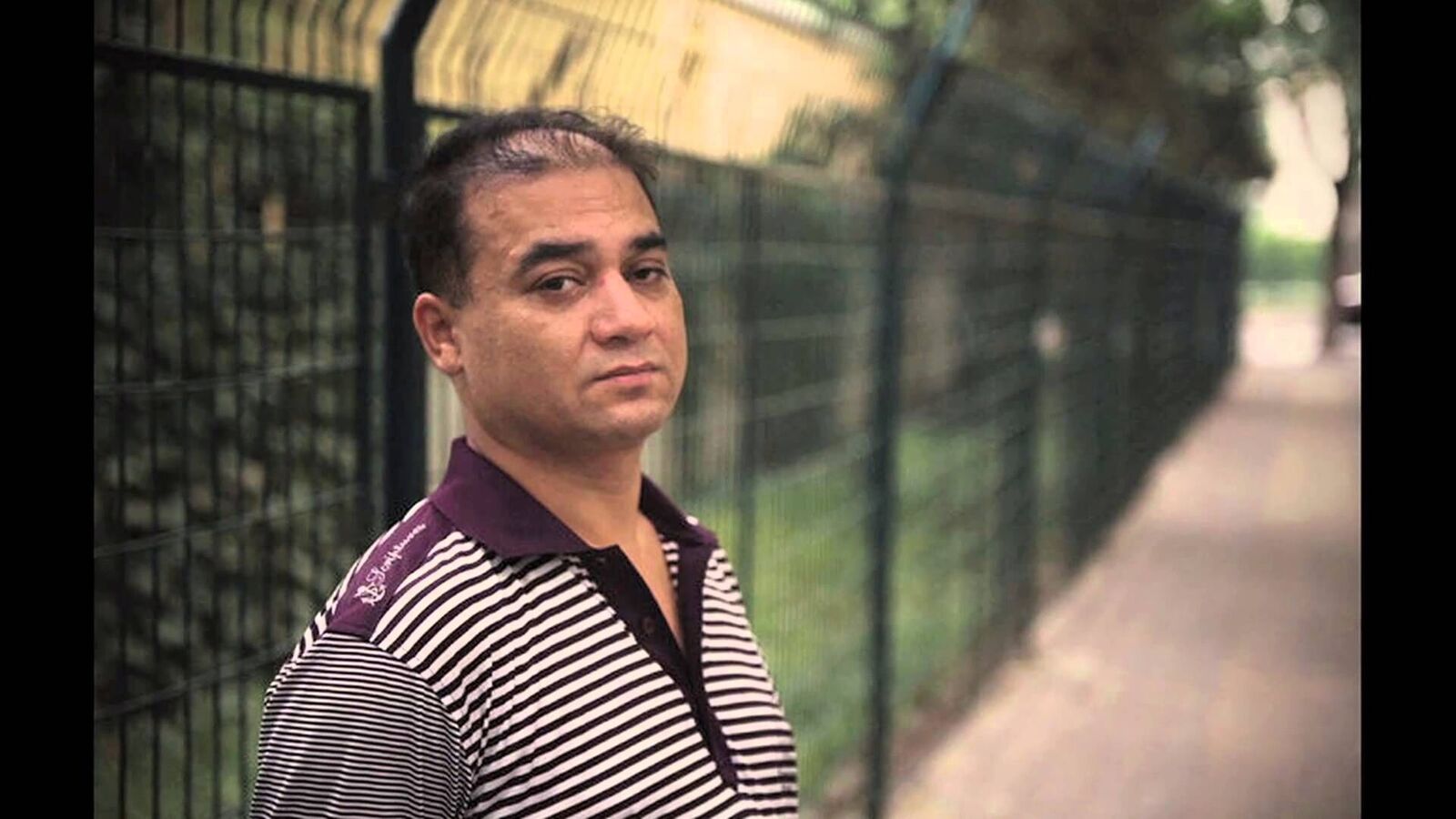
Just now, on 15 December 2016, the European Parliament adopted an urgent and substantive resolution on breaches of human rights, democracy, and rule of law in China. The resolution condemns in particular exactions committed in East Turkestan and Tibet against the Uyghur and Tibetan populations respectively and addresses the cases of the imprisonment of economics professor Ilham Tohti (MEA Laureate 2016) and the dismantling of Larung Gar, the largest Buddhist institute in the world. The EU demands Tohti’s immediate and unconditional release, recalling his scholarly work on Uyghur-Han relations. [https://humanrightsdefenders.blog/2016/10/11/hot-news-ilham-tohti-chinas-mandela-wins-2016-martin-ennals-awad/]

Tohti Ilham


The resolution below (in full) was published by the European Parliament: Read the rest of this entry »

European Parliament zooms in on human rights defenders in Cambodia, Tajikistan and Vietnam

June 9, 2016

A press release of 9 June 2016 reports that the European Parliament – in three resolutions voted on Thursday – focused on:

Opposition in Cambodia

MEPs deplore the worsening climate for opposition politicians and human rights activists in Cambodia and condemn all acts of violence, politically-motivated charges, arbitrary detention, questioning, sentences and convictions imposed on them. The Cambodian authorities should revoke the arrest warrant for, and drop all charges against, Sam Rainsy, President of the leading opposition party, the CNRP, and also immediately release the five human rights defenders still in preventive custody, namely Ny Sokha, Nay Vanda, Yi Soksan, Lim Mony and Ny Chakra. All politicians, activists and human rights defenders should “be allowed to work freely without fear of arrest or persecution”.

Given that the EU is Cambodia’s largest development assistance partner, with a new allocation of €410 million for 2014-2020, Parliament calls on the European External Action Service (EEAS) to make the “amount of EU financial assistance dependent on improvements in the human rights situation in the country”. EU member states, foreign policy chief Federica Mogherini, the EEAS and the EU Commission should also set out clear benchmarks for the forthcoming elections in Cambodia, consistent with international law on freedom of expression, association and assembly, it adds.

Prisoners of conscience in Tajikistan

Parliament is deeply concerned about increases in the detention and arrest of human rights lawyers, political opposition members and their relatives in Tajikistan. Restrictions on media freedom and internet and mobile communications, and restrictions on religious expression are also worrying in this country, it adds. MEPs call for the release of all those imprisoned on politically-motived charges, including, well-known businessman and government critic Abubakr Azizkhodzhaev, opposition figure Zaid Saidov, activist Maksud Ibragimov, opposition deputy leaders Mahmadali Hayit and Saidumar Hussaini, and 11 other members of the Islamic Renaissance Party of Tajikistan (IRPT).

The EU has a “vital interest in stepping up political, economic and security cooperation with the Central Asian region via a strong and open EU-Tajikistan relationship”, says the resolution. But “political and economic relations with the EU are deeply linked to the sharing of values relating to respect for human rights and fundamental freedoms”, adds the text.

Protesters in Vietnam

MEPs deplore continuing human rights violations in Vietnam, including “political intimidation, harassment, assaults, arbitrary arrests, heavy prison sentences and unfair trials, perpetrated against political activists, journalists, bloggers, dissidents and human rights defenders”, and call on the government of Vietnam to put an “immediate stop to all harassment, intimidation, and persecution” of these individuals. “The increasing levels of violence perpetrated against Vietnamese protesters” demonstrating throughout the country in May 2016 to express their anger over “an ecological catastrophe that decimated the nation’s fish stocks” are worrying, note MEPs. The Vietnam government should respect the right to freedom of assembly in line with its international human rights obligations, the findings of the investigations into the environmental disaster should be published and those responsible should be held accountable, they add.

The resolution also calls on the Vietnam government to put an end to religious persecution in the country, to amend legislation on the status of religious minorities and to withdraw the fifth draft of the law on belief and religion, currently being debated in the National Assembly, as it is “incompatible with international norms of freedom religion or belief”.
Source: Human rights: opposition in Cambodia, prisoners of conscience in Tajikistan, continuing violations of human rights in Vietnam

Resolution on protection of defenders of economic, social and cultural rights adopted by Human Rights Council !!

March 25, 2016


On 24 March 2016 the ISHR reported that the UN Human Rights Council has adopted the landmark resolution on the protection of human rights defenders working to promote economic, social and cultural rights (see my post of 23 March: https://thoolen.wordpress.com/2016/03/23/norwegian-resolution-un-human-rights-council-defenders-amendments/).

The Norwegian-led resolution was adopted by a vote of 33 Member States of the Human Rights Council to just 6 against. Eight States in the 47-seat Council abstained. Over 150 NGOs from all over the world united to call on Member States of the Council to adopt the resolution and reject a series of 30 hostile amendments proposed by Russia, China, Egypt, Cuba and Pakistan, designed to undermine the protection of defenders and to deny their legitimacy and very existence.

The 6 States that voted ‘No’ on the resolution were not surprisingly Burundi, China, Cuba, Nigeria, Russia and Venezuela. States that abstained were Bolivia, El Salvador, Kenya, Namibia, Qatar, Saudi Arabia, the United Arab Emirates, and Viet Nam. Interesting and positive to note that some of the States that had supported hostile amendments (including Ecuador, Indonesia and India) in the end voted in favour of the resolution.

[The resolution affirms the legitimate and essential role of human rights defenders in promoting, protecting and contributing to the realisation of economic, social and cultural rights – including indigenous rights and the right to development – and condemns restrictions and attacks against them by both States and business enterprises. It also underscores the fact that exercise of the rights to freedom of expression, association, assembly and public participation can be essential to the promotion, protection and realisation of ESC rights, and that restrictions or violations of these democratic rights may lead and amount to violations of the ESC rights for which defenders are advocating.

The resolution also provides invaluable guidance to States and business as to obligations and good practices in the protection of defenders. For States, such obligations and good practices include developing specific human rights defender protection laws and mechanisms, investigating and ensuring accountability for attacks and reprisals against them, and facilitating access to information and participation in policy and decision-making processes. For businesses, the resolution reinforces the obligation to respect and not interfere with the work of defenders, and to consult closely with defenders to identify, avoid, mitigate and remedy human rights risks and violations associated with business activities and development projects.]

We particularly recognise the principled leadership of Norway in leading the development of this timely resolution,’ Mr Ineichen of the ISHR said.ISHR-logo-colour-high

The systematic but ultimately unsuccessful efforts by a small group of States to undermine the human rights defender resolution paradoxically demonstrate the vital importance and potential impact of this resolution,‘ said ISHR Director Phil Lynch.


Source: Human Rights Council adopts historic resolution on protection of defenders of economic, social and cultural rights | ISHR

Norwegian Resolution on Human Rights Defenders in the UN Human Rights Council: will it survive hostile amendments?

March 23, 2016
Some readers will have doubt about the importance passing Resolutions in the UN, even on the noble topic of the protection of human rights defenders. However, that this is not seen as a sinecure is clear from the diplomatic battles fought every time [see: https://thoolen.wordpress.com/2015/12/18/un-general-assembly-adopts-resolution-on-human-rights-defenders-with-increased-majority/]. Tomorrow (Thursday 24 March) another such clash is expected. Here are the issues:

It is usually Norway that leads the negotiations on the resolution on human rights defenders as is the case this year at the 31st session of the UN Human Rights Council. The resolution this year takes account of the severe risks that human rights defenders face when defending economic, social and cultural rights, including as they relate to environmental, land and development issues, corporate responsibility, anti-corruption, transparency and accountability issues. The draft resolution calls on States to take effective and practical steps to address the continuing violations of the rights of defenders.

During the first week of this session of the Human Rights Council, Norwegian State Secretary Tore Hattrem stated that “Threats and attacks against human rights defenders who are exercising their right to freedom of speech to advocate economic, social and cultural rights, severely hamper the realisation of these rights”. Also Ambassador Steffen Kongstad raised this important topic during the interactive dialogue with the UN Special Rapporteur on Human Rights Defenders, Michel Forst, stating that “Threats and attacks against human rights defenders may hamper the realization of economic, social and cultural rights, undermining social cohesion, and ultimately stability and development”.

The resolution has been discussed in several open informal consultations in Geneva, taking into account a number of suggestions from different countries. Norway formally tabled the resolution on 16 March full text see website. There are currently around 50 countries from all regional groups that will  co-sponsor the resolution. Still, this is far from won as earlier this week a number of countries (including the serial offenders Russia, China, Egypt, Cuba and Pakistan) have put forward 31 adverse amendments to the text. These amendments include proposals which have the purpose or would have the effect of:


Today PACE must adopt resolutions on human rights defenders and NGO restrictions

January 28, 2016

The Parliamentary Assembly of the Council of Europe (PACE) must address the shrinking space for civil society. It must adopt resolutions to strengthen the protection and role of human rights defenders, and to prevent restrictions on NGO activities, in an increasingly worrying environment in many Council of Europe countries, especially Azerbaijan and the Russian Federation. These were the conclusions of discussions at the NGO side event on 27 January 2016 in Strasbourg. HRHN - network logo

I cannot accept that so many remain in prison and Europe doesn’t react strongly… The reason Azerbaijan continues the crackdown is that nobody, including the Council of Europe, takes any serious action,” stated Emin Huseynov, Institute for Reporters Freedom and Safety (IRFS), speaking at an event organised by a group of NGOs at the Parliamentary Assembly of the Council of Europe, sponsored by MPs Mailis Reps (Estonia) and Yves Cruchten (Luxembourg).

Since 2012, the situation has deteriorated in Russia… The activities of HRDs and NGOs are now considered political activities, and even if they do not receive foreign support they end up on the list of foreign agents and are constantly victims of harassment. It would be great to see a Council of Europe reaction on this,” commented Konstantin Baranov, International Youth Human Rights Movement, also speaking at the event.

The Assembly now has an opportunity to act, by adopting two draft resolutions today, 28 January 2016. Together, these resolutions address reprisals against human rights defenders cooperating with the Council of Europe and impunity for actors targeting civil society, and call for measures to end restrictions on NGOs and the misuse of restrictive legislation to criminalise the work of human rights defenders. See my earlier post: https://thoolen.wordpress.com/2015/12/09/council-of-europe-draft-resolution-addresses-reprisals-with-priority/

Rapporteur Mailis Reps, author of the draft resolution Strengthening the Protection and Role of Human Rights Defenders, at the event stated: “Too many human rights defenders are paying a high price for their work and their fate should receive much greater attention from the Council of Europe’s institutions and member states.”

Rapporteur Yves Cruchten, author of the draft resolution Preventing Inappropriate Restrictions on NGO Activities, further stated: “When a member of a parliament decides to join PACE, this MP makes a pledge to human rights. We need to speak up and not let our governments make deals that disregard human rights.” 

Source: PACE Must Act: Protect human rights defenders, prevent NGO restrictions – Human Rights House Network

http://website-pace.net/en_GB/web/apce/plenary-session

Preview of Human Rights Defenders stuff at the upcoming Human Rights Council starting 15 June

June 12, 2015

The UN Human Rights Council will hold its 29th regular session at the United Nations in Geneva from 15 June to 3 July. Courtesy of the International Service for Human Rights, here is my selection of what is directly relevant to Human Rights Defenders: ISHR-logo-colour-high

– During the session, Norway, along with other States, will deliver a statement calling on all States to ensure that human rights defenders are able to carry out their vital work free from arbitrary detention and other restrictions. Read the rest of this entry »

What the Human Rights Council did on HRDs in March 2015

April 7, 2015

For those (few, I hope) who do not regularly read the Human Rights Monitor of the ISHR, here is a wrap-up of the 28th session of the Human Rights Council in relation to human rights defenders:ISHR-logo-colour-high

5 Resolutions adopted: Read the rest of this entry »

Human Rights Council concludes with missed opportunity to protect defenders working on corporate accountibility

June 30, 2014

The always reliable Monitor of the ISHR wraps up the latest session of the UN Human Rights Council in Geneva with a comment on the  Council’s missed opportunity to strengthen the protection of human rights defenders who work to corporate accountability for human rights violations:  Read the rest of this entry »

UN Human Rights Council Adopts New Resolution on Human Rights Defenders

March 29, 2014

This week, the UN Human Rights Council adopted its annual resolution on human rights defenders. The resolution, led by Norway and Ireland, was co-sponsored by 74 nation-states and adopted by consensus. The new emphasis – in line with the latest report by the departing Rapporteur, Margaret Sekaggya – is on the importance of domestic law and administrative provisions which protect human rights defenders from criminalization, stigmatization, impediments, and obstructions contrary to international human rights law. The misuse of national security and counterterrorism legislation to crackdown on human rights defenders is also explicitly warned against. The resolution explicitly refers to the impact of how a country’s laws can be used by a government to further or impede the work of human rights defenders within the country.

for the full text see: http://www.ishr.ch/sites/default/files/article/files/140328-res-council-25-hrds-l24-as-adopted.pdf

European Parliament calls – again – for more attention for Human Rights Defenders

May 2, 2012

The European Parliament adopts every year a Resolution based on the report it receives on the EU’s human rights action and policy. So, it did again on 18 April 2012.

The official emblem of the European Parliament.

The official emblem of the European Parliament. (Photo credit: Wikipedia)

It is quite a long resolution and I only copy here the general paragraphs relevant to Human Rights Defenders (the chapter also includes a somewhat ill-fitting paragraph 91 on Western Sahara and a correct but detailed observation re the Sacharov prize in para 93, which you can consult in the full text):

…….

Re Human rights defenders

87.  Welcomes the EU’s political commitment to supporting human rights defenders, as a long-established component of the EU’s human rights external relations policy, and the many positive examples of demarches, trial observations, prison visits, and other concrete actions undertaken by EU missions and delegations, such as regular, institutionalised meetings with human rights defenders, but remains concerned at the lack of implementation of the EU Guidelines on Human Rights Defenders in some third countries; considers that the VP/HR should make recommendations for enhanced action to those missions where implementation has been noticeably weak;

88.  Urges the EU and its Member States to encourage EU missions and delegations to show their support and solidarity for the work undertaken by human rights defenders and their organisations, by regularly meeting and proactively engaging with them and incorporating their contributions into the development of the specific country strategies on human rights and democracy, and regularly engaging with Parliament;

89.  Reiterates its call on the EU to systematically raise individual cases of human rights defenders in the ongoing human rights dialogues it has with those third countries where human rights defenders continue to suffer harassment and attacks;

90.  Stresses the importance of systematic follow up to contacts with independent civil society, as well as more direct and easier access for human rights defenders to EU Delegations in third countries; welcomes the appointment of liaison officers, in the Delegations and/or in Member State embassies, for human rights defenders, and stresses that these should be experienced and appropriately trained officials whose functions are well-publicised both internally and externally; very much welcomes the fact that the VP/HR has indicated that she will always meet with human rights defenders in the course of her visits to third countries and calls for this practice to be followed by all Commissioners with responsibilities in the external relations field, and for reports on these contacts to be made available to Parliament;

91…….

92.  Reiterates its call for greater inter-institutional cooperation on human rights defenders; considers that the EU’s response capacity and the coherence between the actions of the different institutions on urgent crises for human rights defenders would be well served by a shared alert system based on focal points, and encourages the EEAS and the Commission to explore this avenue further with the European Parliament;

93.  ……

94.  Undertakes to include women’s rights more systematically in its own human rights debates and resolutions and to use the Sakharov Prize network, and especially female winners of the Prize, to advocate women’s rights in the world;

 full text: http://www.europarl.europa.eu/sides/getDoc.do?type=TA&reference=P7-TA-2012-0126&language=EN&ring=A7-2012-0086