
NED’s Communications Staff published on 17 How “NED Safeguards At-Risk Activists” [https://www.ned.org/protecting-at-risk-democracy-activists-ned-approach/]
Democracy activists often face arrest, exile, harassment, or retaliation against their families. This essay explains why NED protects sensitive information about grantees, how that duty of care supports the people advancing freedom, and how NED balances discretion with accountability.
Imagine living in a place where a knock at the door in the middle of the night could mean imprisonment, or worse. This is the daily reality for countless democracy and human rights activists around the world. Their bravery makes their work not only meaningful, but also deeply consequential.
The National Endowment for Democracy (NED) supports those working to strengthen fundamental freedoms in transitional and fragile democracies, as well as those bravely advancing freedom in closed societies. Our grantmaking focuses on the building blocks of democratic life—free elections, independent media, and the freedoms of association, speech, and belief. Just as important, however, is our responsibility to protect the individuals who make that work possible.
This primer offers an overview of why NED carefully manages information about its grantees, including what is shared publicly, what is provided to Congressional oversight bodies, and how discretion underpins the safety and viability of those we support. Activists face vastly different risks depending on their location, visibility, and the tactics of the regimes they confront. Supporting democracy means protecting those who fight for it, including respecting their choices about public visibility to ensure their safety.
Why Public Exposure Can Be Dangerous
Speaking out in many parts of the world can mean risking arrest, exile, or death. According to Freedom House, only about one in five countries around the world is rated “free,” while The Economist’s Intelligence Unit has found that only 25 countries today qualify as full democracies. For the vast majority living under authoritarian or hybrid regimes, even symbolic acts of dissent, like holding up a blank piece of paper, can lead to life-disrupting consequences.
Authoritarian regimes understand the power of dissent and the threat posed by those who dare to speak. That’s why they’ve developed increasingly sophisticated methods to target activists, journalists, human rights lawyers, and civil society leaders, both inside their borders and abroad. Their reach extends across continents, threatening those in exile through transnational repression and those at home through direct prosecution.
The following stories from grantees illustrate why NED’s approach to protection must adapt to the risks posed by both transnational repression and direct prosecution.
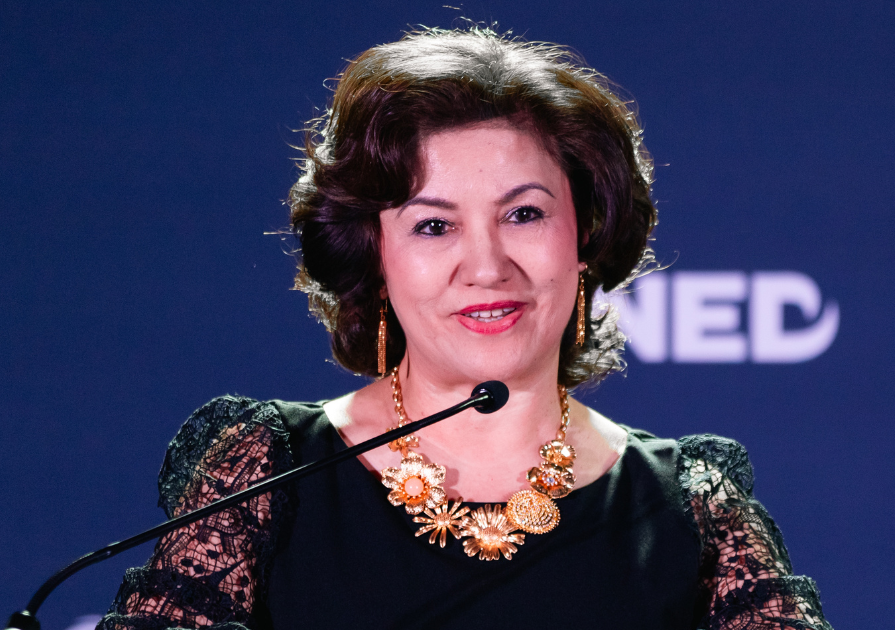
Case Study: Rushan Abbas and the CCP’s Hostage Diplomacy
Rushan Abbas, founder of Campaign for Uyghurs and a NED grantee, gave her first public speech about China’s abuses in Xinjiang in 2018. Her husband’s entire family had already vanished in the 2017 crackdown. Just six days after her speech, her sister, Dr. Gulshan Abbas, a retired medical doctor with no political ties, also disappeared.
“She was being targeted because of my advocacy,” Abbas said. “Every day I wake up with her eyes in my mind. Of course, I feel guilty. Speaking out in the United States as an American citizen cost my sister her freedom.”
To this day, Dr. Gulshan Abbas remains missing in China’s vast detention system—her only ”crime” being related to someone who exposed the CCP’s abuses. This brutal form of hostage diplomacy forces exiled activists into an impossible choice: stay silent or risk their loved ones’ safety.
Case Study: Natalia Arno and the Kremlin’s Transnational Reach
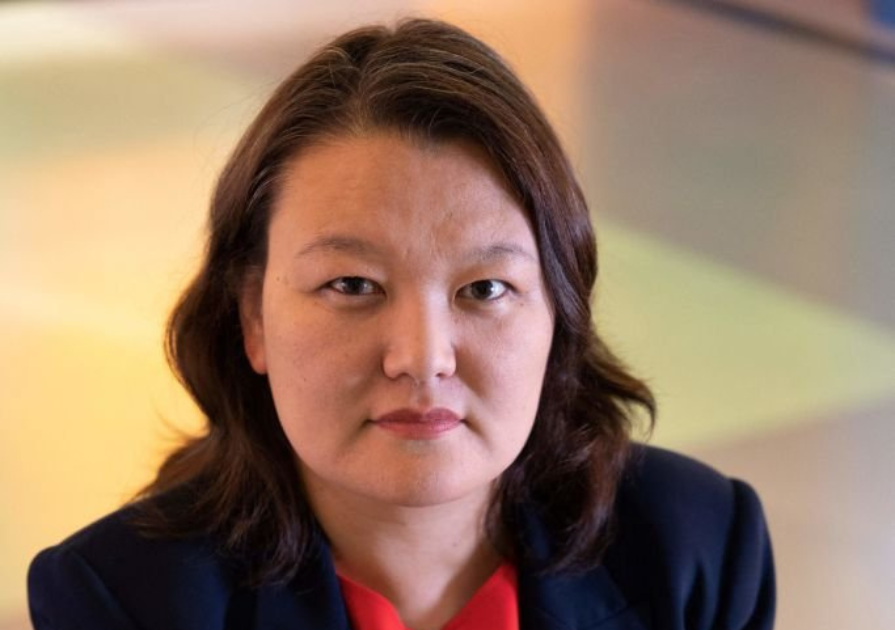
Natalia Arno, president of the Free Russia Foundation and a longtime NED partner, was forced into exile from Russia in 2012. Since then, she’s been a leading voice in exile activism, advocating for political prisoners, supporting democratic leaders, and coordinating programs to hold the Putin regime accountable.
But in May 2023, after a private event in Prague, she returned to her hotel to find the door ajar and a strange scent inside the room. Hours later, she experienced numbness, pain, and blurred vision. Doctors in Washington, D.C. confirmed exposure to nerve toxins.
“I never could have believed the scale and brazenness and how long the Kremlin tentacles are into the West,” she said. Despite years of surveillance and intimidation, Arno continues her work. “You could lose your life,” she said, listing examples of poisoned, tortured, and murdered activists. “I have been in this game for 20 years, and I can write a book about all the kinds of attacks against me in Russia.”
Activism in Exile and Under Authoritarian Rule
Authoritarian regimes target democracy advocates in two primary ways. Activists working inside authoritarian states face direct repression: denial of employment, education or housing to surveillance, interrogation, imprisonment, or death. Activists living in exile, such as members of the diaspora, confront transnational repression: intimidation, harassment, cyberattacks, and retaliation against relatives still living under dictatorship.
While both forms of courage are vital to the cause of freedom, they require different kinds of protection. For activists in exile like Abbas and Arno, visibility can be both a tool and a vulnerability—they use their public platforms to build international support while enduring harassment and threats from afar. For those working quietly inside repressive states, even the faintest association with democracy support can result in severe consequences. NED’s Duty of Care and Do-Not-Disclose policies reflect this spectrum of risk, providing flexible protections appropriate to different contexts, roles, and levels of exposure.
Visibility and Risk in Democracy Activism
Activists face difficult decisions about how visible they can afford to be. For some who live in exile, like Abbas and Arno, activism is essential to raising awareness and building international support. As public figures in free societies, they can testify before lawmakers, engage journalists, and speak on behalf of silenced communities. But even in freedom, visibility comes with the danger of transnational repression.
Abbas has faced smear campaigns, online harassment, and death threats requiring FBI involvement. Her family in China has been targeted. “Those kinds of things actually became so normal because we face this almost weekly or monthly,” she said. “And we just laugh at it and take it as the impact of our work.”
Arno’s risks didn’t end after fleeing Russia. “Being in NATO or EU countries doesn’t save us from this huge Kremlin machine,” she said. “Surveillance is still huge, cyberattacks are huge, but also physical attacks.”
These cases illustrate the first front of transnational repression: authoritarian regimes projecting power beyond their borders to intimidate, threaten, or attack critics abroad.
Iran has become one of the clearest examples of how far authoritarian regimes are willing to go to silence dissent beyond their borders. Iranian democracy activists, journalists, and human rights defenders living in exile have faced kidnapping plots, assassination attempts, surveillance, and harassment across Europe and North America. Multiple Western governments have linked Iranian intelligence services to plots targeting exiled dissidents, leading to disrupted operations, criminal prosecutions, and sanctions. Iran’s efforts to pursue critics abroad underscore the growing reality of transnational repression and the need for democracy organizations to extend duty-of-care protections even to partners living in open societies.
At the same time, this external pressure is inseparable from the repression activists face at home. For those still inside authoritarian states, the threat is direct and unrelenting. These activists continue their work at great personal risk, operating under surveillance, harassment, and the constant threat of arrest or imprisonment while pushing for democratic change.
In response to these dangers, many activists adopt a lower profile. How public they are in their work is an intentional choice to protect themselves, their families, and their networks from retaliation. While the steps they take to remain safe in authoritarian environments may mean their activism lacks the visibility of public campaigns, it is no less vital. Activists in authoritarian environments take great risks to build the infrastructure of democracy movements—documenting abuses, organizing communities, and informing international action.
In China, the Chinese government has systematically stigmatized international democracy funding. Even tenuous connections to external support and collaboration can carry severe consequences. As one activist working with international human rights and democracy organizations explained, “Me, myself, my family members, were interrogated by police officers in China.” Others have been detained and prosecuted for similar work. The Chinese government has also targeted the family members of human rights defenders in an effort to deter continued activism.
As a result, discretion is essential. “We prefer NED to not mention our names publicly,” the activist said, “in order to protect staff members and board members and even former colleagues, former members, and our families.”
Public activism draws global attention and builds coalitions, but it also brings heightened risk. Regimes often target public figures to intimidate or silence them—and to send a warning to others.
Activism that seeks to engage in quieter and less confrontational forms of engagement, by contrast, can provide greater security and sustainability, particularly in repressive settings. “While of course it’s much more dangerous for those activists who are inside Russia to speak out,” one Russian activist explained, “it’s much safer for those working in exile and most continue their work quietly.”
Human rights work in authoritarian environments demands different operational and political strategies. While the work often seeks to expose gross human rights abuses and expose corrupt networks, the ability to gather and verify the information requires close cooperation between groups that are in exile and networks that are in country.
In Tibet, NED-supported partners have documented China’s campaign to erase Tibetan identity through colonial-style boarding schools. In Venezuela and Cuba, investigative journalists have exposed corruption and human rights violations while keeping low profiles to stay safe. While international and exile organizations are often the face of the work, the networks on the ground are equally essential to what they achieve.
As Arno put it, “People are our biggest value, our biggest treasure. When activists are facing such dangerous things like imprisonment, torture, murder, we have to protect them with all possible measures.”
Supporting Activists Safely and Effectively
Since its founding in 1983, NED has supported democracy activists and citizen leaders—whether operating in exile or inside closed societies—to advance human rights and democratic values in some of the world’s most repressive contexts. NED’s Founding Statement of Principles and Objectives notes that in “societies where even [these] independent institutions are prohibited or severely restricted, the immediate objective is to enlarge whatever possibilities exist for independent thought, expression, and cultural activity. … [The Endowment] will not neglect those who keep alive the flame of freedom in closed societies.”
As a congressionally mandated independent nonprofit, NED was designed to provide support to its partners in a way that is impactful, secure, and accountable. Few donors are structured to do this work with the same level of care and discretion, which is why frontline democracy advocates consistently place their trust in NED.
Key to NED’s approach is the principle of protection through discretion. As NED’s Board of Directors approve grantmaking strategy and individual projects, the identifying details of grantees are made available to them. However, we avoid public disclosures that could expose partners to government reprisal. This is not only an ethical commitment—it is a key operating principle rooted in NED’s Duty of Care and Public Disclosure Policies, which obligates the organization to do no harm.
Without this policy of protection, many activists could not safely engage with international support. “It’s very difficult to build reputation and trust” one democracy activist said. “How you treat your grantees, with special care and understanding of the particularities of each region, should be the gold standard that all donors take as an example.”
NED’s Approach to Public Disclosure of Grantees
NED publishes listings of its current grantees twice a year on its website and includes a comprehensive listing of grantees in its annual report, complete with grant descriptions, grant amounts, and grant durations, organized by country and region. However, we do not publicly disclose personally identifiable information in these listings to avoid placing individuals at risk, now or in the future.
Some have asked why NED does not publish the personally identifying details of its grantees on its website. The reason is simple: in many cases, doing so would put a target on the backs of those we support and compromise their ability to do their work.
NED’s Duty of Care and Public Disclosure policies seek to balance the ability of our partners to operate as freely and securely as possible with our transparency requirements. At the same time, our relationship with our grantees is fully transparent. Organizations must take the initiative themselves to seek support from the Endowment. They know who we are, where our funds come from, and the values that guide our support. Activists seek out NED’s assistance precisely because it is open, accountable, and trusted.
NED respects the agency of its grantees to decide whether it is safe to publicly disclose their relationship with NED. Organizations regularly and proudly share their partnership with NED as a mark of credibility and support. Others, particularly those operating in hostile environments, often request confidentiality to safeguard their security and effectiveness. In all cases, NED ensures our partners are aware of our policies and procedures so that they can make informed decisions about their own public posture.
This approach is an ethical obligation as much as it is a matter of organizational policy. We know about the persecution of Uyghurs and underground Christians in China, the protests in Cuba and Iran, the continued repression in Belarus and Nicaragua, and human rights abuses in Burma and North Korea because courageous individuals risk their lives to report them. Supporting democracy means more than funding programs or issuing statements—it means protecting the people behind the work.
With that responsibility comes a duty: to minimize risk, not add to it through careless exposure. In a world where authoritarian regimes are increasingly sophisticated, coordinated, and ruthless in targeting dissent, discretion becomes an essential safeguard.
Transparency and Accountability
Even as NED protects grantee confidentiality in public settings, it maintains rigorous transparency and accountability to the NED Board, Congress, and U.S. oversight bodies. The NED Board reviews and approves both grantmaking strategy and individual grants. As outlined in our Duty of Care, we submit comprehensive annual plans and updates to congressional committees that outline our strategy and grantmaking priorities. We maintain active communication with Members and their staff, respond promptly to official requests for information, and create opportunities for elected officials to engage directly with our grantees—both in Washington and abroad—to better understand the real-world impact of NED-supported efforts. We likewise provide an annual report to the executive branch as a formal accounting of our work, priorities, and impact. NED consults regularly with representatives of the legislative and executive branches on our work, both in Washington and in the field, and responds to Freedom of Information Act information requests.
NED upholds strict due diligence and financial oversight procedures to ensure that resources are used responsibly and for their intended purpose. Our grantmaking is governed by the standards of all federal spending, with clear agreements, financial reporting requirements, and independent audits to ensure funds are used for their intended purpose.
In addition, the Endowment is subject to comprehensive oversight, including Government Accountability Office (GAO) investigations, State Department Inspector General reviews, and annual independent audits.
By combining discretion abroad with transparency at home, NED fulfills its dual responsibility: protecting those who advance freedom in repressive environments while remaining transparent and accountable. As authoritarian threats grow more complex and far-reaching, we will continue strengthening our Duty of Care so those who defend democracy can pursue their work safely, effectively, and with confidence in the support behind them.



 Hans Thoolen on Human Rights Defenders and their awards