Sara Nabil is a human rights defender and artist from Afghanistan, forced into exile. She spoke to ISHR about her dream of one day seeing a ‘free democratic Afghanistan, where each human being [regardless of which] gender they are, man or woman, neutral or other genders, [would be] treated equally.’
‘Since the Taliban came to power, Afghanistan [has become] the only country where we see that women don’t have any kind of rights.’
Here Haris Azhar shares how and why he believes the law can be used as a powerful tool to deal with repression of democratic voices and their rights. Read more from our In My Own Words series here.
My name is Haris Azhar. I would say I’ve been working, in general terms, on human rights issues for the last 25 years. I work across the country in Indonesia on some human rights, issues or situations, and in some conflict areas such as in Papua.
I have been working for and dealing with some vulnerable groups such as labour groups, as well as the indigenous people and victims from the violence as well. These days I practise as a lawyer, I do pro bono and also professional for-profit work where I use the profits work to subsidise the pro bono and public interest legal work. I have also joined some organisations, and I was director for two human rights organisations. So that’s why I’ve been very human rights focused.
In early 2024 me and my friend Fatia were brought to court. We won, and we got a good decision from the court. But this is not the final one, because the attorney general has appealed to the Supreme Court. I think this whole process was meant to serve as an example.
The whole process, especially last year, was intended to be intimidation. The litigation or the pre-trial process was intended to intimidate me [and] not to not say more about the practice of business oligarchs in this country. But myself, lawyers, and groups here said, we would not say sorry. We would not stop speaking, and that those in power could continue their judicial harassment of us and that we would fight them.
And during the fight, a lot of things happened [such as] intimidations, negative accusations and campaigns. They accused us of hoax stories, but actually they did the hoax stories. They took over and intercepted my mobile phone as well. These are the lengths and practices of intimidation in place.
However, the process of the court for people like us, we pretty much don’t really care about the final decisions. We can see the shadow of the prisons, because what the government thinks is important for them is for us to not have democratic voices. There aremany cases by politicians and by business groups that aim to criminalise decent voices, and it has become a [common] practice. There are even consultants that can help you if you would like to know how to criminalise decent/democratic voices.
It’s become an industry against freedom of expression, to show that, “This is what happens if you are against us.” They wanted to show they could bring me to court so the warning was that anyone who becomes the client of Haris should be aware. It was symbolic, and that’s what I mean it is a message to intimidate and to intimidate vulnerable groups especially.
Widespread engagement on human rights, working through organisations, has developed not only my knowledge, my skill, but also my networks. This has also developed my interest in what some of the ways we (as a nation) would like to put on the table with regards to issues of human rights.
As a practising lawyer, we have always believed here that we can use the law [to achieve justice]. However the movement here is not like in South Africa, as an example, where at one point in South Africa there was no real equality. There was no legal institution that could be used to secure fairness. We don’t have that kind of situation here [in Indonesia], but we are still looking for the formalisation of equality and fairness.
We like to use the legal debate, space, and discourse as a way to combat evil, because the law provides the kind of tools or ammunition to attack evil. Those in power hide behind the law and therefore here in Indonesia, most of the battle and discourse always has an element of legality.
I believe that the law is one of the crucial things that need to be handled, in addition to other advocacy issues. Because we know that the law or legal mechanisms are [also] being used by the bad guys, by the oligarchs to justify and legalise their plans and to do their own business. Those in power always say that they have complied with the law, that they uphold the rule of law, but actually we know that the law they comply with is their own creation. It is their own definition. That’s why we [as legal practitioners] need to step in, even though it’s not the popular action to do so.
If those in, and adjacent to, power cannot be left to create what is good and not good within the framework of law. We need to bring in the voices from the ground. We need to bring the voices from the indigenous people. We need to bring the voices from the labour groups, from the students, from the women’s groups, and many other vulnerable groups who are connected to the issues.
This is instead of the politicians and the business groups alone making their own arguments and developing their own definitions. We cannot let them be, and let them take over in that kind of way. Rule of law and legislation, has to be accompanied and coloured by the vulnerable voices and interests. This is why we insist that a part of the campaign, part of the research, is that we take the legal action as well.
The gap between the haves and the political groups on the ground is huge. This has been happening year on year, and it is getting worse every year. The new regulations and legislations that we have here, which very much comply with the interests of the business groups which belong to some politicians, create more loose protection of rights of workers and women. For the youth and the students, they are getting fewer protections for their education and freedom.
There’s no freedom on campus for students anymore, [because of] intervention from the government and the police on campuses. It’s getting obvious these days. So I think we need at least two things. First, figuring out how to protect vulnerable groups, because why they were attacked or would be attacked is because they found irregularities, and problematic issues behind the policies of the government, or the law.
These issues have led to economic issues, social issues, business issues and so the vulnerable groups make a choice where they complain or protest, but they get attacked by police, government and intelligence. That is why we need more collaborations with vulnerable groups.
We also need more friends — lawyers, international advocates, researchers — coming down into the rural areas, and into the urban areas to capture what is happening and make a noise, to campaign. That’s why we need to have the first group that I mentioned before. We need not to deal with the substance of the problem, but with the second layer of the problem, [which is] the attacks of the participation, the effects to the participation. For this we need to have a lot of groups [working on] how to deal with this kind of shrinking space.
We just had the 2024 elections where we campaigned around the threat to our freedoms of speech and expression. Some of the candidates responded very well, but the one that was supported by the current regime didn’t have a strong resonance with what we are saying. In addition to the campaign, along with my criminalisation, myself, some friends and organisations submitted a complaint to the Constitutional Court.
Our complaint was regarding some legal articles which were being used against me and against some journalists. We won the case in the Constitutional Court earlier this year, and an article which had been used to criminalise a lot of people has now been dropped. But this win is very short [lived] because we have some articles within certain laws which allow the police to criminalise speech.
When I said we won, that’s regarding just one article in our criminal code. But in the next year and a half we will have a new criminal code implemented and new articles to criminalise speeches. We will need to challenge those articles in the next two years. It’s like Tom and Jerry, where we play hide and seek. It seems politicians and business need a shield to protect themselves from the public, hence these situations but we keep fighting them using the same law.
Legal institutions are not our institutions yet. They are still their institutions [meaning the powerful]. However to a certain degree, the legal space is an open stage for you to perform, to have a say. I think if we don’t fill the space, it will be filled by those who are not supportive of freedom of speech or freedom of expression.
These are the reasons why I think we have to join legal action. So as to not give space for evil to come in and occupy. Also, legal action is not the only type of work needed. It has to be one among others. For instance there is advocacy work too. But law cannot be neglected and that’s why this current situation (and the coming situations), require more than just focusing on the legal system. It has to be about a collaborative methodology and approach.
On 19 April 2024, the OHCHR published the story of Wendy Flores -Risking it all to stand up for human rights in exile
“I had to leave Nicaragua irregularly. I left with a backpack, my computer, and the feeling that I was leaving my country for having defended other victims, for having accompanied them. I felt like I had committed a crime, when what I had been doing was defending human rights,” said Wendy Flores, a human rights defender from Nicaragua.
Flores studied law and became motivated to defend human rights after observing the injustices occurring in her country. She later joined the non-profit organization Nicaraguan Centre for Human Rights (CENIDH) as an intern in April 2002.
“I began to realise that I was a human rights defender because I was working for the victims, for their rights and supporting them as they faced a series of obstacles in the country,” Flores said.
Flores is currently living in exile, after the government began to cancel the legal status of several civil society organisations dedicated to the defence of human rights, as well as detaining their members, following the protests of April 2018.
According to an Office report, in early April 2018, demonstrations led by environmental groups, the rural peasant population and students erupted in Nicaragua to denounce the slow and insufficient response of the Government to forest fires in the Indio Maíz Biological Reserve. After this, more dissatisfaction grew from among the public from social security reform to the reduction of pension payments, which led to even more protests. The people protesting were quickly seen as Government opponents, which resulted in the repression of the protests, the criminalization of demonstrators and their arrests.
“During the last five years, in Nicaragua more than 3,600 civil society organizations have been cancelled. In December 2018, CENIDH was one of the first 10 organisations to be cancelled,” Flores said. “And even when we said we would continue to defend human rights, unfortunately we didn’t manage to do so inside the country because detentions started happening and it was obvious that that was going to prevent me from doing my job as a defender.”
Flores had to leave Nicaragua because of the risk of being criminalised for defending human rights and putting her family in jeopardy. “Feeling that I was leaving behind, even temporarily, my almost newborn son and my daughter, was one of the hardest situations I’ve faced,” Flores said.
Leaving Nicaragua forced Flores to reinvent her work as a human rights defender and with other human rights defenders who were also in exile, she established the human rights collective Nicaragua Nunca Más (Nicaragua Never Again). The collective aims to support victims, denounce human rights violations, and sends a symbolic message that, despite many obstacles and the need to live in exile, they continue to fight against impunity for human rights violations in Nicaragua.
“We were emotionally broken, apart from our families, disjointed, but we had the strength to continue denouncing human rights violations. And that was the main motivation that we had and that I identified with. In February 2019, we held a press conference to announce that we would continue our work as defenders in exile,” Flores said.
“And since then, we’ve continued to document cases of displaced people in Nicaragua. We’ve managed to identify more than 1140 cases in these five years. We’ve documented the way in which acts of torture have been perpetrated against political prisoners,” Flores said. “We’ve identified more than 40 methods of torture used against political prisoners and their families. And we’ve also identified perpetrators within these documented cases.”
Flores knows that those who remain in Nicaragua face danger, but she points out that there are also extraterritorial risks.
“Those of us who are outside have also experienced acts of siege and surveillance by State forces or forces installed outside Nicaraguan territory to persecute and intimidate defenders. In addition, the denationalisation imposed by authorities, affected more than 317 people who are mainly outside Nicaragua,” Flores said.
“For us to be able to return to Nicaragua, we would need a country that complies with international obligations, that initiates a process of dialogue with international mechanisms for the protection of human rights and that shows evidence that the country is going to undertake a democratic process and respect human rights,” Flores said.
For Flores, some of this evidence would include allowing international organisms such as UN Human Rights and the Inter-American Commission on Human Rights to return to the country.
Our work for defenders in exile
Flores said the impact of UN Human Rights work for human rights defenders in exile has been vital for her as a human rights defender and the human rights movement in her country.
“The UN Human Rights Regional Office for Central America and the Caribbean (ROCA) supports the work of defenders in exile by providing technical assistance to facilitate their access to the human rights mechanisms of the UN and accountability at the international level, such as universal jurisdiction,” said Alberto Brunori, the Representative at ROCA.
Thanks to successive resolutions adopted since 2019, the Human Rights Council addresses the situation in Nicaragua at its sessions through oral updates and written reports submitted by UN Human Rights.
This way, the Office has succeeded in bringing the human rights violations that continue to occur in Nicaragua to the attention of the international community and has supported a solution to the crisis based on human rights principles and standards.
“The Office has advocated for host countries to provide defenders fleeing Nicaragua with the protection they need, as well as the necessary support for their work,” Brunori said.
“Human rights defenders who are forced to leave the country need international protection as they require a safe legal situation that allows them to continue promoting human rights without fear of being returned to Nicaragua,” Brunori said. “They also need their claims of insecurity in exile to be considered. Their work requires financial resources and the necessary political support to ensure that their work, their analysis, and their human rights proposals are included in the decisions that are made about Nicaragua at the international level. Supporting their work means contributing to a more democratic and human rights-based future for the country.”
For Flores, it is essential that the international community continues to keep an eye on Nicaragua.
“Networking and the work that other organisations can do, supporting human rights defenders, really becomes an action for life, because to live is not only to breathe and feed oneself, but to live has to be to live fully, and this has to do with the psychological, mental and physical conditions in which we can carry out our work,” Flores said.
‘My passion is the defence of the right to land and territory,’ says Lourdes Gómez, a land rights defender and professor working on issues affecting Indigenous women defenders and the impacts of palm oil production.
The ISHR had the chance to meet Lourdes Gómez during her Geneva visit to attend the Human Rights Council’s 55th session. Lourdes, a land right defender and professor working on issues of Indigenous women defenders and the impacts of oil palm production, delivered a powerful statement during the session. She was also one of the speakers at a side event about the human rights situation in Guatemala.
Lourdes recently participated into the ‘artivism’ project by journalist and photographer Teresa Ordás, ‘Paisojos de mujeres defensoras de derechos humanos de Guatemala‘ (‘Landscapes of women human rights defenders from Guatemala’). The project is a collection of beautiful photographs of the real reflections of the subjects’ eyes, where Teresa Ordás highlights ‘the world in people’s eyes.’ [Website: https://www.paisojos.com]
Here is how Lourdes introduces herself in the frame of ‘Paisojos’:
‘I am a Q’eqchi’ Mayan woman of African descent. I inherited my path of defending human rights from my mother Lucia Willis Paau, who since my childhood had joined the movement to defend the rights of Mayan women in the north of Guatemala. My passion is the defense of the right to land and territory. I have dedicated myself to denouncing the violence that the State of Guatemala exerts at the community level on Indigenous, rural and peasant women while they fight for access, use, control and protection of their land. These communities face racism, discrimination and machismo. I have dedicated myself to the defense of land rights, contributing through historical registry and communal research, to the restitution of land rights’.
Tala Odeh, a young human rights defender from Jordan, serves as a regional coordinator for the NAMA Network, immersing herself in the MENA region’s socio-political complexities. Her efforts to advocate for individual rights and address systemic issues highlight the critical need for resilience and adaptability.
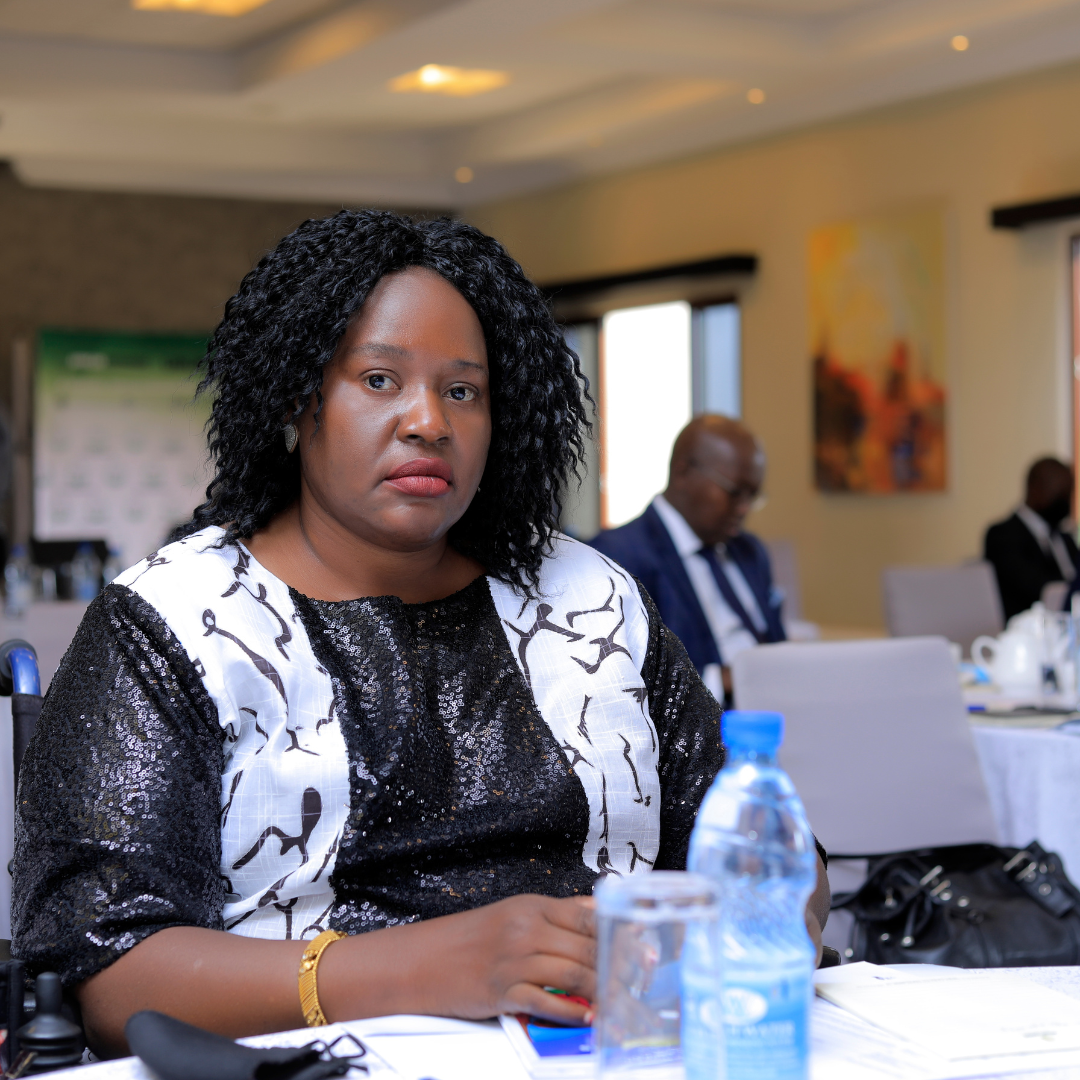
DefendDefenders in January 2024 has chosen as HRDs of the MonthPamela Angwech from Uganda.
For most of her life, Pamela Angwech’s existence has always been a defiant and simultaneous act of survival and resistance. In 1976 when she was born, the anti-Amin movement was gathering pace, and her family was one of the earliest victims in Northern Uganda. Her father, a passionate educationist in Kitgum district was one of the most vocal critics of the dictatorship’s human rights excesses, which made him an obvious target of the state’s marauding vigilantes. Fearing for his life and that of his young family, he escaped North, to Sudan, leaving behind his wife, then pregnant with Pamela, to follow him as soon as she could. It was on the treacherous journey to rejoin her father that Pamela was born, somewhere between Uganda and Sudan, and named Angwench, an Acholi word to mean “on the run,” in keeping with the circumstances of her birth.
Unfortunately, those precarious circumstances would continue to define most of Angwech’s childhood. Although Amin was eventually overthrown, paving way for her family’s return home, the immediate post-Amin years were equally tumultuous, and when President Museveni’s National Resistance Army took power in 1986, Northern Uganda was immediately engulfed in a civil war by the Lord’s Resistance Army(LRA) rebels that would rage on for the next 20 years, bringing wanton anguish and suffering to the region’s people and communities.
Angwench navigated those precarious circumstances to pursue an education, convinced that only then could she impact her community for the better. At University, she studied Gender and Women Studies and immediately returned home to seek work with the UN’s World Food Program Office in Gulu, determined to join the relief effort to alleviate the suffering of her people in Internally Displaced People’s (IDP)Camps.
Initially, they told me there was no job. But I was determined to work with the UN and nowhere else. So, I camped at their office for 14 straight days. Sometimes, I would volunteer as a gatekeeper when the substantive gatekeeper was away, and other times, I would sit at the front patch of the Office Head the whole day. When they realized I was determined not to leave, they allowed me to start officially volunteering with them. “I would go with them to distribute food in the IDP camps, until later, I was formally integrated as official staff.
Yet, despite her dogged stubbornness and resilience, she was not prepared for the heart-rending experience of life in the IDPs, particularly the plight of women and girls.
“I started to notice that after picking their food rations, women and children would start picking residue beans from the floor, to take for either their little children or their elderly parents who could not queue. One other time, I noticed a visibly tired woman carrying a baby on her back, being pushed out of the queue by others. I called her to the front and assured her that I would give her a special ration but asked her to first untie her baby from the back, so she could protect her from the sun and breastfeed her. When she untied her baby, I noticed that the baby’s neck was twisted – it had suffocated and died! That changed me, forever,”
From Humanitarian to Human Rights Activist
Angwech realized that like a balm, humanitarian work could only soothe the suffering of her people but fell short of tackling the root causes of the same suffering. “So I decided that someone had to speak up about the heartbreaking indignity and human rights violations surrounding the conflict in Northern Uganda. I turned full scale, from a humanitarian to a human rights activist, particularly championing the rights of women who were most vulnerable “she says.
Angwech would move on the streets rallying women to stand up for their rights, holding placards signaling injustices against women in IDP camps like molestation and rape. Overtime, she won followers: Emboldened by her courage and audacity, other women started to show up and speak up against the conflict and related violence. Angwech mobilized grassroot women groups to pursue LRA leader Joseph Kony in Congo’s Garamba forest, to dramatize their cries for peace, under UN resolution 13/25 which provides for women’s participation in peace processes.
In 2004, Angwech started Gulu Women’s Economic Development & Globalization (GWED-G) to rehabilitate victims of the war, from victims of conflict-related sexual and gender-based violence to those physically harmed by the conflict. Since then, Angwech says GWED-G has rehabilitated over 1700 war victims through physical rehabilitation projects, giving them prosthesis, among other forms of support. It has also continued to sensitise and organise grassroot women into human rights defenders’ groups, through which they can report and address GBV cases, issues of women economic rights among others. Today, Angwech says there are about 600 of these groups across Gulu, Lamwo, Amuru and Kitgum, each with a membership of 30 -40 members.
Today, GWED-G is arguably the largest grassroots human rights organisation in Northern Uganda. It has also expanded to cover other social and economic causes, including environmental protection advocacy. Angwech says the environment is the local communities’ last refugee, and yet deforestation and charcoal burning are threatening it. “For post-conflict communities like us in Northern Uganda, land is our primary resource. It is the land from which people make an income to feed their families, send their children to school, and access medical care. War destroyed everything else. So, if we don’t protect the environment, our land will be degraded, rainy seasons will begin to change which will affect food production and bring back hunger,” she says.
‘Our impact may be large, may be small, and may be nothing. But we must try. It is our duty to the dispossessed and it is the right of civil society.’ – Cao Shunli
Ten years ago, Chinese woman human rights defender Cao Shunli was a victim of deadly reprisals for engaging with the United Nations.
The International Service for Human Rights (ISHR) and partners invite you to attend a photo exhibition on 14 March 2024, at Place des Nations to honour her memory.
Cao Shunli was a brave Chinese woman human rights defender and lawyer. She campaigned for the meaningful consultation and contribution of independent civil society to the Chinese government’s national reports for its first and second Universal Periodic Reviews (UPR). On 14 September 2013, one month before this review, while on her way to Geneva to attend a human rights training organised by ISHR and CHRD, she was detained and forcibly disappeared by Chinese authorities for five weeks. When she resurfaced in custody in October 2013, she had been charged with ‘picking quarrels and provoking trouble’, and it was evident that she was experiencing serious medical issues in detention. Despite repeated international calls for her urgent release over months of being denied adequate medical treatment, Cao Shunli died of multiple organ failure on 14 March 2014, having been granted bail for medical reasons just days before her death. Cao Shunli was one of the finalists of the prestigious Martin Ennals Award for Human Rights Defenders in 2014. [see also: https://humanrightsdefenders.blog/tag/cao-shunli/ as well as https://www.martinennalsaward.org/hrd/cao-shunli/]
To this day, Chinese authorities have ignored appeals seeking accountability for Cao’s death, including repeated calls by UN Special Procedures experts in 2014 and 2019 for a full investigation into this ‘deadly reprisal’. Her case remains the longest-standing unresolved case in the UN Secretary-General’s annual reports on reprisals. March 2024 marks the 10th anniversary of Cao Shunli’s death. A decade ago, when ISHR and many other human rights groups sought to observe a moment of silence at the Human Rights Council in her memory, the Chinese delegation, together with other delegations, disrupted the session for an hour and a half. China is consistently one of the most frequent perpetrators of reprisals against individuals or groups engaging with the United Nations. Frequently mentioned alongside Saudi Arabia, it has the second highest number of reprisals cases and situations reported by the UN Secretary-General since 2010.
Cao Shunli’s story is a paradigmatic case of reprisals, not only because of her belief in the importance of civil society participation in UN mechanisms, but also due to the array of severe human rights abuses she endured because of this belief, ranging from being barred from exiting her own country, enforced disappearance, arbitrary detention, lack of due process, torture, ill-treatment, and denial of adequate medical care, to subsequent death in custody without any accountability for these abuses.
Kadar Abdi Ibrahim is a human rights defender and journalist from Djibouti. He has drawn inspiration from iconic figures in the human rights movement in the hopes of building a genuine and lasting democracy in his country.
Kadar Abdi Ibrahim has also been the subject of acts of reprisals by his government for his engagement with international bodies. In 2018, days after returning from Geneva where he carried out advocacy work ahead of Djibouti’s Universal Periodic Review, intelligence service agents raided his house and confiscated his passport.
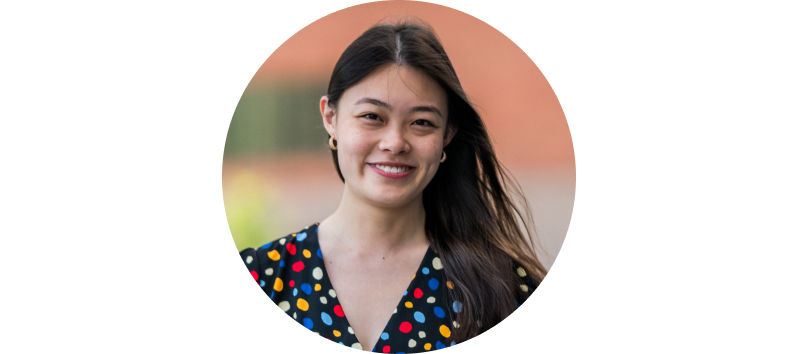
On 22 January 2024, Amnesty International published an interesting piece by Alex, a 31-year-old Romanian activist working at the intersection of human rights, technology and public policy.
Seeking to use her experience and knowledge of tech for political change, Alex applied and was accepted onto the Digital Forensics Fellowship led by the Security Lab at Amnesty Tech. The Digital Forensics Fellowship (DFF) is an opportunity for human rights defenders (HRDs) working at the nexus of human rights and technology and expand their learning.
Here, Alex shares her activism journey and insight into how like-minded human rights defenders can join the fight against spyware:
In the summer of 2022, I watched a recording of Claudio Guarnieri, former Head of the Amnesty Tech Security Lab, presenting about Security Without Borders at the 2016 Chaos Communication Congress. After following the investigations of the Pegasus Project and other projects centring on spyware being used on journalists and human rights defenders, his call to action at the end — “Find a cause and assist others” — resonated with me long after I watched the talk.
Becoming a tech activist
A few days later, Amnesty Tech announced the launch of the Digital Forensics Fellowship (DFF). It was serendipity, and I didn’t question it. At that point, I had already pushed myself to seek out a more political, more involved way to share my knowledge. Not tech for the sake of tech, but tech activism to ensure political change.
Alex is a 31-year-old Romanian activist, working at the intersection of human rights, technology and public policy.
I followed an atypical path for a technologist. Prior to university, I dreamt of being a published fiction author, only to switch to studying industrial automation in college. I spent five years as a developer in the IT industry and two as Chief Technology Officer for an NGO, where I finally found myself using my tech knowledge to support journalists and activists.
My approach to technology, like my approach to art, is informed by political struggles, as well as the questioning of how one can lead a good life. My advocacy for digital rights follows this thread. For me, technology is merely one of many tools at the disposal of humanity, and it should never be a barrier to decent living, nor an oppressive tool for anyone.
Technology is merely one of many tools at the disposal of humanity. It should never be a barrier to decent living, nor an oppressive tool for anyone.
The opportunity offered by the DFF matched my interests and the direction I wanted to take my activism. During the year-long training programme from 2022-2023, the things I learned turned out to be valuable for my advocacy work.
In 2022, the Child Sexual Abuse Regulation was proposed in the EU. I focused on conducting advocacy to make it as clear as possible that losing encrypted communication would make life decidedly worse for everyone in the EU. We ran a campaign to raise awareness of the importance of end-to-end encryption for journalists, activists and people in general. Our communication unfolded under the banner of “you don’t realize how precious encryption is until you’ve lost it”. Apti.ro, the Romanian non-profit organisation that I work with, also participated in the EU-wide campaign, as part of the EDRi coalition. To add fuel to the fire, spyware scandals erupted across the EU. My home country, Romania, borders countries where spyware has been proven to have been used to invade the personal lives of journalists, political opponents of the government and human rights defenders.
The meaning of being a Fellow
The Security Lab provided us with theoretical and practical sessions on digital forensics, while the cohort was a safe, vibrant space to discuss challenges we were facing. We debugged together and discussed awful surveillance technology at length, contributing our own local perspective.
The importance of building cross-border networks of cooperation and solidarity became clear to me during the DFF. I heard stories of struggles from people involved in large and small organizations alike. I am convinced our struggles are intertwined, and we should join forces whenever possible.
Now when I’m working with other activists, I try not to talk of “forensics”. Instead, I talk about keeping ourselves safe, and our conversations private. Often, discussions we have as activists are about caring for a particular part of our lives – our safety when protesting, our confidentiality when organizing, our privacy when convening online. Our devices and data are part of this process, as is our physical body. At the end of the day, digital forensics are just another form of caring for ourselves.
I try to shape discussions about people’s devices similarly to how doctors discuss the symptoms of an illness. The person whose device is at the centre of the discussion is the best judge of the symptoms, and it’s important to never minimize their apprehension. It’s also important to go through the steps of the forensics in a way that allows them to understand what is happening and what the purpose of the procedure is.
I never use a one-size-fits-all approach because the situation of the person who owns a device informs the ways it might be targeted or infected.
The human approach to technology
My work is human-centred and technology-focused and requires care and concentration to achieve meaningful results. For activists interested in working on digital forensics, start by digging deep into the threats you see in your local context. If numerous phishing campaigns are unfolding, dig into network forensics and map out the owners of the domains and the infrastructure.
Secondly, get to know the person you are working with. If they are interested in secure communications, help them gain a better understanding of mobile network-based attacks, as well as suggesting instant messaging apps that preserve the privacy and the security of their users. In time, they will be able to spot “empty words” used to market messaging apps that are not end-to-end encrypted.
Finally, to stay true to the part of me that loves a well-told story, read not only reports of ongoing spyware campaigns, but narrative explorations from people involved. “Pegasus: The Story of the World’s Most Dangerous Spyware” by Laurent Richard and Sandrine Rigaud is a good example that documents both the human and the technical aspects. The Shoot the Messenger podcast, by PRX and Exile Content Studio, is also great as it focuses on Pegasus, starting from the brutal murder of Jamal Khashoggi to the recent infection of the device of journalist and founder of Meduza, Galina Timchenko.
We must continue to do this research, however difficult it may be, and to tell the stories of those impacted by these invasive espionage tactics. Without this work we wouldn’t be making the political progress we’ve seen to stem the development and use of this atrocious technology.
Meet Joey Siu, a Human Rights Foundation (HRF) Freedom Fellow and Hong Kong activist based in Washington, D.C. Siu played a vital role in Hong Kong’s 2019 pro-democracy protests, co-founding a student advocacy coalition and organizing city-wide demonstrations. After fleeing Hong Kong in 2020, Siu served as an advisor to the Inter-Parliamentary Alliance on China and a policy advisor to Hong Kong Watch. Siu is currently an Asia Pacific coordinator for the World Liberty Congress, an advisor to the Athenai Institute, and oversees the Hong Kong program at the National Democratic Institute.
In exile, Siu remains a dedicated advocate for Hong Kongers, Tibetans, Uyghurs, and other communities oppressed by the Chinese Communist Party (CCP). Learn more about her activism in the exclusive interview below.
Q: Tell us a little bit about yourself and your current projects.
A: I am a human rights activist from Hong Kong (HK). Back in 2019, when the pro-democracy movement in Hong Kong first started, I was one of the student leaders who led many of the on-campus activities and city-wide protests and demonstrations. In 2019, I also co-founded a student coalition with other student activists in HK to solidify international advocacy efforts for HK. I was forced to flee HK in late 2020 and settled in Washington, D.C. Since then, my efforts have been focused on international advocacy for HK’s democratic freedoms overseas.
I am establishing a regional activist network for women advocates to connect, amplify, and empower one another and to elevate women leaders in this space. Beyond that, I am very active in the HK diaspora community and working to foster cross-movement solidarity with other communities under the repression of the Chinese Communist Party (CCP).
Q: How do you feel about the bounty HK authorities placed on your head?
A: On Dec. 13, I woke up to the news that HK authorities issued an arrest warrant and a $1 million HK bounty on me. Ever since I fled, I knew this could happen given the Chinese and HK authorities’ efforts to silence dissent, not just from those in HK but from those in exile. But this bounty is like a death certification — I can really never go back. I was overwhelmed by the news and the actions I’ve had to take to step up my personal security.
I — and the 12 others with bounties on their heads — saw this coming. They issued the bounty to threaten us, to deter us from continuing our advocacy, to scare us, and to really intimidate us. But that will not work on me. I will not stop; I will continue my advocacy until I can return to HK.
Q: What tactics does the Chinese regime employ to suppress activists like yourself?
A: The overseas communities have lobbied for international attention on China and HK and all of the human rights atrocities committed by the CCP. That is why the CCP is trying so hard to silence us.
Over the past few years, the CCP and the HK authorities have stepped up their transnational repression. We’ve witnessed a wide variety of tactics employed by the CCP, from holding our loved ones back home as hostages to infiltrating our communities, setting up secret police stations all across the world, including in the United States, to coercing different stakeholders and industries to spy on their behalf.
These tactics have not been used just against Chinese and Hong Kongers but also against Uyghurs and Tibetans. And we’ve seen other authoritarian regimes copying the CCP’s tactics, including Russia, Iran, and Belarus. In fact, these regimes are working hand-in-hand to silence dissent overseas.
Q: Should democracies be paying more attention?
A: I want to stress that the impact of transnational repression extends beyond the activists. Beyond spying on dissidents overseas, tactics include economic coercion, brainwashing, and education through Confucius institutes in American universities and colleges. Those tactics impact every individual living in a democracy.
Democracies all across the world should pay attention to this and take concrete steps to combat transnational repression on their soil and in other democracies. Securing the safety and security of dissidents like me is an essential step to allowing us to have the freedom to continue speaking up and to continue confronting authoritarianism.
Q: How has the Freedom Fellowship supported you in your work?
A: The Fellowship allowed me to meet activists from communities I otherwise would not have been in touch with as actively or frequently. In my cohort, I met activists from Bolivia, Cuba, Myanmar, Morocco, Egypt, and more. I got to talk with them and learn the tactics they’ve used to overcome challenges and unite their communities. Fostering relationships and strategizing on campaigns together was the most valuable experience for me.
Building that cross-community solidarity is essential. We see dictators working together and it is of the utmost importance that we, human rights activists, are working together. Democratic backsliding is not an issue faced by one community alone; it is an issue faced by all communities under oppression.
Q: What have you recently been doing? What do you hope to achieve in 2024?
A: After the news about the HK bounty broke, I had several meetings with US congressional offices. I met with the House Foreign Affairs Committee, Chairman Mike Gallagher of the House Select Committee on the Chinese Communist Party, and Sen. Jennifer Sullivan. Hopefully, these meetings will lead to legislation to combat transnational repression, but we require a coordinated and bipartisan effort in Congress. I hope to see something like the Transnational Repression Policy Act advanced and adopted in this Congress.
With the ongoing reports of the bounty on me and other activists, Jimmy Lai’s case, and the upcoming sentencing of the 47 activists in HK, we can hopefully take advantage of the momentum. We can push the US government and other democracies to take action.
Additionally, during the 2023 Freedom Fellowship retreat, I came up with the idea of the regional women’s network. In the upcoming months, I want to turn this idea into something concrete—start inviting people to be founding members and board members, start the registration process, and establish a financial foundation and fundraising plan.




 Hans Thoolen on Human Rights Defenders and their awards