Mirbahari, a founding member of the organization, was arrested by security forces at his sister’s home in Tehran on October 15, 2025, and detained without charge. His whereabouts remain unknown, as does the status of his case, and he is being denied access to his family and lawyer. There are serious concerns about his state of health. Security agents also sealed the organization’s office and confiscated equipment and communication devices, effectively halting its operations.
“Mirbahari’s unlawful arrest and the closing of the organization mirror the Islamic Republic’s dismantling of other NGOs, and reflect its intensifying drive to wipe out independent civil society organizations,” said Hadi Ghaemi, executive director of the Center for Human Rights in Iran (CHRI).
In a pattern of increasing judicial harassment, Mirbahari was previously arbitrarily arrested on June 20, 2025, and released after 30 days in solitary confinement upon posting bail, again without lawful cause or disclosed charge.
This latest act of repression comes amid an escalating campaign by Iranian authorities to criminalize humanitarian work and silence independent voices advocating for social justice and the rights of children, women, and marginalized groups.
A knowledgeable source told CHRI that Mirbahari’s physical condition is fragile, following chemotherapy, and his whereabouts and charges against him remain unknown. His family and lawyer have had no contact with him since his arrest.
Two Decades of Children’s Rights Advocacy
Since its founding in 2002, the Society for the Protection of Child Laborers and Street Children has been a lifeline for working and street children across Iran, advocating for the eradication of child labor and all forms of exploitation, and promoting equal rights and humane living conditions for every child, regardless of gender, ethnicity, or religion.
Its activities included providing educational programs, health services, psychological support, and advocacy for social protections such as child and family insurance coverage. The organization also sought to raise public awareness about the plight of working children in Iran and to encourage community participation in child protection.
Operating through eight specialized units —public relations, health, arts, library, education, social work, finance, and research— the society was one of the few NGOs in Iran maintaining a consistent focus on children’s welfare amid tightening restrictions on civil society….
Reza Shafakhah, a prominent human rights lawyer, in an interview with Shargh newspaper on October 13, 2024, said:
“It is not possible for you to open a curtain and look out the window in the farthest reaches of Iran and not see a child going through a trash can. The fact that nearly 120,000 street children are active in Iran is a form of child abuse.”
On 17 October, 2025, Minnesota-based NGO Advocates for Human Rights appointed Michele Garnett McKenzie as the new Executive Director.
In accepting her new role, McKenzie said, “I am honored to lead our smart, experienced, and dedicated team at a moment when our work could not be more urgent. My vision is clear: strengthen our capacity to protect human rights, forge strategic partnerships that amplify our collective power, and ensure The Advocates’ independence and resilience.“
Jasmin Lorch in an article of 25 June 2025 argues that European support to human rights NGOs, critical civil society and free media is not merely a “nice-to-have“. Instead, it directly serves European interests due to the important information function that these civil society actors perform.
USAID funding cuts have dealt a heavy blow to human rights defenders, critical Non-Governmental Organizations (NGOs) and independent media outlets around the globe. While the damage is hard to quantify exactly, it is clearly huge. For instance, the Centre for Human Rights and Democracy at People in Need estimates that the human rights and media organizations it supports have seen their budgets shrink by 40 to 100% because of the cuts. Based on a USAID fact sheet, meanwhile taken offline, Reporters without Borders (RSF) informed that the dismantling of USAID had affected support to 6,200 journalists, 707 non-state media outlets and 279 civil society organizations (CSOs) working to support free media. The impacts on local civil society are especially pronounced in closed authoritarian contexts where CSOs are both restricted and donor-dependent. In Cambodia, ADHOC, one of the few remaining local human rights organizations, lost 74 percent of its budget and had to close 16 out of its 22 provincial offices.
As critical CSOs and independent media outlets struggle to find alternative sources of funding, they face another threat to their survival: Major European donors, including Sweden, have cut down on foreign funding as well, citing their own national needs, including the necessity to invest more in defence. Germany, the biggest bilateral donor since the dismantling of USAID, has recently pledged to better integrate its foreign, defence, and development policy and to more closely align development cooperation with its security and economic interests. Accordingly, there is a significant risk that European donors will (further) cut down on funding for critical CSOs and free media as well.
However, European donors should consider that continuing to support human rights defenders, critical NGOs and independent media outlets is in their own interest.
Notably, these civil society actors serve an important information function. By furnishing insights into human rights abuses, governance deficits and patterns of corruption, they provide European (as well as other) governments with a better understanding of political developments, power relations and regime dynamics in their partner countries, thereby enhancing the predictability of security and economic partnerships. Authoritarian governments. in particular, restrict the free flow of information, while, concurrently, engaging in propaganda and, at times, strategic disinformation. Consequently, European foreign, economic and security policy towards these governments routinely suffers from severe information deficits, including the existence of numerous “unknown unknowns”. To compensate for this weakness, country assessments and expert opinions used by foreign, development, and defence ministries in Europe to devise policy approaches towards non-democratic partner countries often include information provided by independent media outlets, human rights or anti-corruption NGOs. Similarly, European embassies in authoritarian countries frequently draw on the reports and documentations accomplished by local human rights NGOs.
In some cases, the information provided by critical NGOs, human rights defenders and independent media outlets – both local and transnational – is highly economically and security relevant, for instance when it serves to unearth patterns of transnational crime. The Organized Crime and Corruption Reporting Project (OCCRP), an investigative journalist network, which also has a media development branch and was heavily affected by the USAID funding cuts, for instance, contributed to the Panama Papers that disclosed the secretive use of offshore tax havens. A recent report named Policies and Patterns. State-Abetted Transnational Crime in Cambodia as a Global Security Threat draws on interviews with journalists and civil society representatives. While expressing disappointment with the ineffectiveness of large parts of the aid community and big counter-trafficking NGOs in addressing the problem, it emphasizes that
“the ‘local civil society’ community — grassroots volunteer response networks, human rights defenders, and independent media —have been and remain the lynchpin of an embattled response. These heavily repressed and poorly funded groups have been and remain the primary source of available evidence on the lead perpetrators, their networks, and their modes of operation” (quote on p.3).
Last but not least, establishing partnerships with human rights defenders and critical NGOs also allows European countries to expand their social and political alliances in their partner countries, a diversification that can be highly useful in times of political uncertainty and change. ..
Support to human rights NGOs, other critical CSOs and free media constitutes an important contribution to democracy and pluralism. However, it also benefits European economic and security interests by enhancing the knowledge base on which European governments can draw when constructing their international alliances. European governments already use the information provided by these civil society actors in various ways, so they should continue providing diplomatic support, solidarity, and resources to them. Moreover, partnerships with human rights, media, and other civil society representatives provide European governments with an important possibility to diversify their international partnerships.
Against this backdrop, European support to these civil society actors is not a “nice-to-have” that can easily be dispensed with when funding gets more scarce. It is an important element in ensuring the predictability and reliability of European foreign relations.
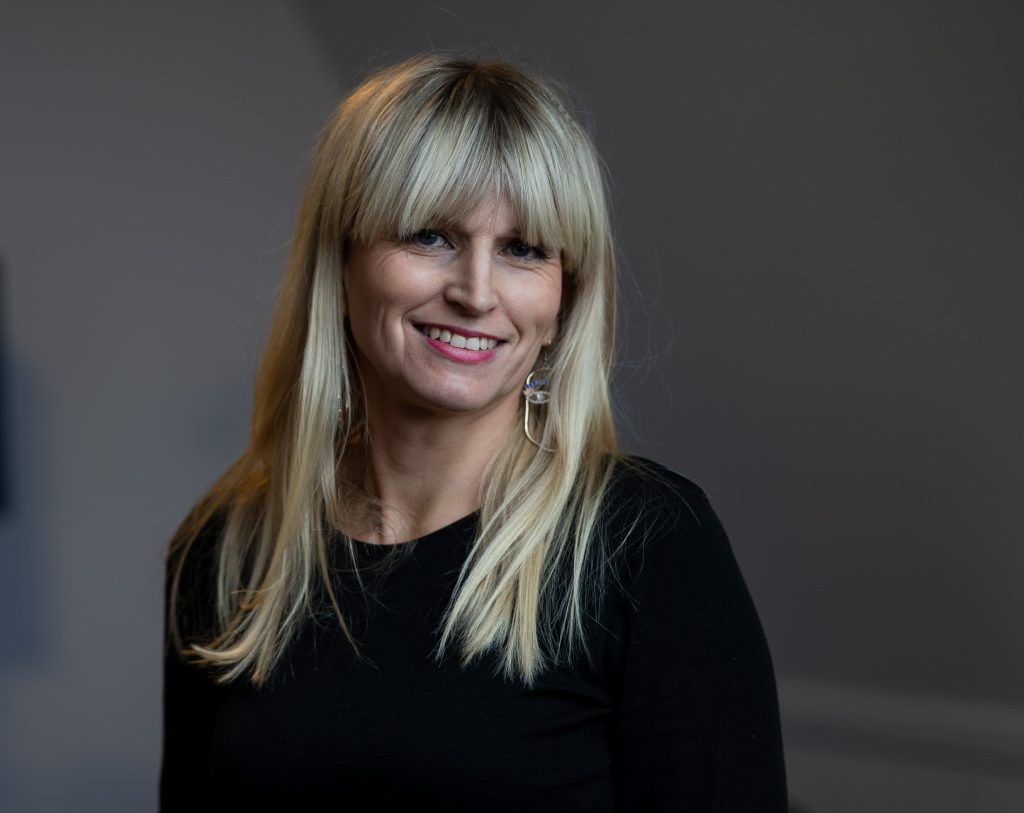
The Board of Civil Rights Defenders has appointed Sofia Walan as the new Executive Director. She will lead the organisation’s work to protect democracy and support human rights defenders worldwide. Sofia Walan will assume her new role on 8 May.
“I am proud and grateful for the trust placed in me to help lead such an innovative and influential human rights organisation as Civil Rights Defenders. We are living in a time when democracy and the rights that so many have fought for—often at great personal risk—are being pushed back. That makes the work of Civil Rights Defenders more crucial than ever, with a unique team of leading experts working every day to protect democracy and support human rights defenders,” says Sofia Walan.
She continues:
“As Executive Director, my ambition is to create the best possible conditions for our work and to build a strong and sustainable organisation for the future.”
Extensive Experience in Civil Society Leadership
Sofia Walan brings broad and extensive experience in leadership and management, with a strong focus on building high-performing teams and results-driven operations in complex, globally dispersed organisations. She joins Civil Rights Defenders from Bris, where she is currently part of the leadership team, and from her role as Chair of Fairtrade Sweden.
Previously, she served as Secretary General of the Swedish Fellowship of Reconciliation (SweFOR), working to support human rights defenders in Colombia, Guatemala, and Mexico. She has also worked on issues related to the International Monetary Fund (IMF) and the World Bank’s role in democracy-building.
On 28 November, 2024 the International Commission of Jurists announced Carlos Ayala as its new President
Ayala brings decades of experience defending the rule of law, advocating for constitutional justice, and championing the rights of marginalized groups
The International Commission of Jurists (ICJ) proudly welcomes Carlos Ayala as its new President, taking over from Robert Goldman after seven years in the role. A distinguished legal scholar and human rights advocate, Ayala brings decades of experience defending the rule of law, advocating for constitutional justice, and championing the rights of marginalized groups.
Ayala, born in Caracas in 1957, has dedicated his career to advancing human rights. From his early days as a law student at Universidad Católica Andrés Bello, Ayala developed a profound sense of defending rights and social justice, which he carried through his graduate legal studies at Georgetown University and later in his legal practice. He is tenured professor and chair of Constitutional Law and a member of the board of the Ibero-American Institute of Constitutional Law. His commitment has spanned defending indigenous land rights in Venezuela to addressing transitional justice issues across Latin America. Notably, Ayala was instrumental in the landmark decision against blanket amnesty laws for human rights violators in Peru, a victory that set critical international legal precedents.
He has been President of the Inter-American Commission on Human Rights, as well as Rapporteur on the Rights of Indigenous Peoples of the Americas, and President of the Andean Commission of Jurists, giving him a vision of the human rights landscape that takes in the whole hemisphere of Americas from Alaska to Tierra Del Fuego.
Ayala has worked extensively on issues relating to the independence of the judiciary and he became involved with the OHCHR in monitoring the appointment of judges of several high courts. He states that one of the cases that impacted him most has been that of Venezuelan Judge Maria Lourdes Afiuni, who was arrested and detained after making a ruling that implemented a decision of the UN Working Group on Arbitrary Detentions which was not in the political interest of the government. She was immediately arrested and her trial lasted 10 years, was a flawed process throughout and ended in a flawed decision to convict.
As President, Ayala envisions the ICJ working as a unified community with other partners and allies committed to reinforcing the rule of law and international justice. Under his guidance, he will support the ICJ to advance human rights standards globally, counter setbacks, and provide critical support to governments, civil society, and multilateral institutions.
“We are facing new threats to reverse the advancement of human rights that we have achieved in the past 70 years – we need to defend against unilateralism and authoritarianism. The ICJ has been actively contributing to stop any setback in international standards, and we will continue this essential work.”
The Board of Civil Rights Defenders would like to deeply thank Anders for his work. Under Anders’ leadership, Civil Rights Defenders has grown and developed greatly, gaining increased recognition, a higher turnover and becoming an important actor for democracy and human rights.
Effective immediately, John Stauffer, Legal Director and Deputy Executive Director, will step in as Acting Executive Director, sharing leadership with Karin Ancker, Chief Financial Officer, who will take on the role of Deputy Executive Director. The recruitment process for a new Executive Director will begin immediately.
Civil society actors across the world frequently operate in challenging or hostile environments in their efforts to defend human rights. The World Organisation Against Torture (OMCT) supports members of the SOS-Torture network, along with local actors, working to end torture and impunity and to support the rehabilitation of victims. We provide support by:
Engaging in joint activities and campaigns.
Sharing expertise and capacity-building opportunities.
Providing financial support to local actors, individuals, organisations, and initiatives, primarily outside the European Union.
This assistance enables them to carry out their crucial work in defending human rights and ending torture.
Our activities in support of the human rights movement are made possible by the generous contributions of our donors.
On 9 April 2024, Michael Morrison in Human Rights Centre Blog of the University of Essex wrote a post “Standing Strong: Supporting Human Rights Defenders Worldwide” about the work of Prisoners Of Conscience (PoC), a UK-based charity,
In a world where human rights are not universally respected, there are courageous individuals who face persecution, silencing, torture, and forced displacement just for standing up for their beliefs. Prisoners Of Conscience (PoC), our UK-based charity, stands in solidarity with these brave people, offering both financial and practical support to those who defend human rights worldwide.
Prisoners Of Conscience operates on a simple yet powerful belief: no one should be persecuted for protecting or advancing human rights. We recognise that while we enjoy the freedom to express ourselves, many others around the world are not so fortunate. These individuals face unimaginable challenges for their beliefs, often enduring imprisonment, torture, harassment, violence, or being forced to flee their home countries.
Our mission is clear: supporting those who stand for rights. Our charity provides rapid financial assistance through grants; ensuring immediate relief, resettlement, and requalification during a recipient’s time of greatest need. These grants are not just about providing temporary relief; they are a lifeline for those who have sacrificed their freedom for the principles they believe in. Financial assistance includes covering legal fees, medical expenses, and basic living costs for individuals and their families.
Moving towards holistic support, we have developed various programs to empower our beneficiaries beyond financial aid. Our employability panel offers guidance and opportunities for career development, including job placement services and vocational training. Additionally, our web-based forum provides a platform for networking and collaboration, where individuals can connect with like-minded activists and organisations. We also collaborate with other parties to offer signposting to practical support, such as mental health services, legal advice, language classes, and integration support for those seeking asylum.
Yuzana* for example, is a writer, surgeon, and founding member of PEN Myanmar. Yuzana faced a daunting 20-year sentence for her role as a campaigns assistant for the National League of Democracy (NLD) and her unwavering commitment to human rights. Despite enduring almost six years of imprisonment in one of Myanmar’s most notorious prisons, Yuzana’s determination remained unyielding. After being released on humanitarian grounds due to her declining health and international pressure, she continued her advocacy work.
Yuzana
In the wake of the military coup in Myanmar in February 2021, PEN Myanmar continues to monitor and share critical information despite grave risks to their safety. Several members of the organisation have been detained, and tragically, four poets are among the unarmed civilians killed. Yuzana, concerned for her safety, was compelled to leave Myanmar and seek refuge in another country. With the assistance of Prisoners Of Conscience, Yuzana was able to cover her travel expenses and basic living costs while she establishes herself in a new environment.
Our recent research indicates that at any one time there are tens of thousands of prisoners of conscience who are persecuted and in need of our support. The impact of our work is evident in the numbers: in the past year alone, Prisoners of Conscience awarded 130 grants to over 420 individuals from 28 countries. This vital support reached a total of 424 individuals, offering crucial assistance during times of adversity. We are profoundly grateful for the generosity of our donors, whose unwavering support enables us to continue our mission of empowering those who defend human rights.
The challenges of the past year, compounded by the pandemic, have prompted us to adapt and innovate, and right now, April is all about #RightsRealityCheck.
Not everyone has access to even the most basic of human freedoms, so we launched the #RightsRealityCheck campaign. This April, human rights champions are undertaking a series of challenges to raise awareness of the rights that many take for granted – basic rights and freedoms which prisoners of conscience risk their life to uphold and protect. Whether it’s reading 5 books throughout the month, writing a blog post each week, or walking in public each day without wearing a head covering, our kind-hearted fundraisers are standing in solidarity with those who face persecution for these simple acts. If you would like to join others who have taken on this commitment to an everyday right, you will not only be standing with prisoners of conscience, but also raising crucial funds to help keep those who defend human rights, and their voices, alive. It’s easy to get started: Simply download our fundraising pack by signing up here (it’s packed with tips and resources to make your challenge a success). Then, share your challenge with friends, family, and colleagues to gather sponsorship. Every pound raised goes directly to supporting human rights defenders and prisoners of conscience around the world. Or alternatively, see what we’re up to and support someone on their challenge by heading to the link here: #RightsRealityCheck Challenge – JustGiving. Let’s turn our everyday actions into a powerful force for change. Together, we can make a difference in the lives of those who need it most.
7 January 2024 Cyprus Mail reported that a demonstration will be held condemning the attack on the offices of refugee NGO Kisa.
Kisa’s offices were attacked on Friday, when an improvised explosive device went off outside their offices, smashing windows, destroying computers and photocopiers.
In their statement, the protest organisers said: “Kisa and its members have repeatedly received threats of various forms, against which the state authorities have shown unacceptable tolerance, which, together with government policies and their racist and xenophobic rhetoric on immigration issues, have not only allowed but also encouraged racist and fascist attacks against migrants and refugees, as well as their rights defenders, thus fostering fascism in society.”
Issuing a statement after the attack, the international NGO Amnesty International’s Cyprus Research Kondylia Gogou said: “Last night’s violent attack on anti-racist organisation Kisa is despicable and raises serious concerns over the safety of human rights defenders in the country. However, it did not happen in a vacuum. Racist violence is on the rise in Cyprus, and KISA and its volunteers have been the target of repeated threats, verbal attacks, and smear campaigns in connection with their work supporting refugees and migrants and denouncing hate crimes.”
According to Amnesty, authorities in Cyprus must send an unequivocal message that attacks on human rights defenders and NGOs will not be tolerated, and conduct a prompt, thorough, independent, and impartial investigation on the attack on the Kisa’s offices “that prioritises the hypothesis that the attack was related to their human rights and anti-racist work”.
In August and September 2023, racialised people including refugees and migrants were subjected to pogrom-like attacks in Chloraka and Limassol. Previously, in early 2023, racist attacks were carried out in Limassol and in January 2022 attacks were carried out in Chloraka. In 2023, the European Commission against Racism and Intolerance (ECRI) found that the public discourse in the country had become “increasingly xenophobic”.
In December 2020, further to an amendment to the law on associations, KISA was removed from the Registry of Associations, and proceedings for its dissolution were initiated. KISA’s appeal to challenge the decision before the country’s Appeal Court remains pending, and despite its registration as a non-profit company, KISA operates with many obstacles.
Santiago Cantón, secretary general of the International Commission of Jurists. (Geneva Solutions/Michelle Langrand)
On 11 May 2023 Geneva Solutions carried an interview with the incoming Secretary General of the International Commission of Jurists:
The new head of the International Commission of Jurists warns of the challenges human rights face as democracies across the world falter and calls on human rights groups to rally behind a new purpose. After spending the last few years in the United States, Santiago Cantón, the Argentinian jurist who recently became the new secretary general of the International Commission of Jurists (ICJ), will call Geneva his home for the next five years.
The discreet organisation of well-respected judges and lawyers, located in the Paquis neighbourhood and now celebrating its 70th anniversary, is almost as old as the 1948 Universal Declaration of Human Rights. Born from the ashes of World War II initially to investigate abuses committed in the Soviet part of post-war Germany, the group has made vital contributions over the decades to the human rights architecture. Most notably, they helped push for the creation of an international criminal court and several UN human rights instruments, including the Convention on Enforced Disappearances, first proposed by its then-president Niall MacDermot.
Cantón, 60, also brings with him some heavy baggage of experience in human rights. He was the executive secretary from 2001 to 2012 of the Inter-American Commission of Human Rights, one of the arms of the Organization of American States tasked with reviewing rights abuses. Before that, Cantón served as the commission’s first special rapporteur on freedom of expression from 1998 to 2001. More recently, Cantón was part of the UN Human Rights Council’s commission of inquiry on abuses committed in the occupied Palestinian territories during the 2018 protests.
As a young student, Cantón saw his country fall into the clutches of a military junta that would rule ruthlessly for ten years. While initially drawn to diplomacy and foreign relations, Cantón knew it wasn’t an option to place his skills at the service of a dictatorship. He opted instead to study international law and human rights.
One of his first experiences, and the one to inspire him the most, was advising former US president Jimmy Carter in his democracy programmes in Latin America, most notably supporting elections in Nicaragua and the Dominican Republic in 1990 at a time when the two countries were emerging from bloody conflicts and transitioning into democracies. He saw the region break away from the chains of military regimes and usher in a new era of democracy and rule of law. “1948, with the universal declaration of human rights, was the big bang of human rights,” he told Geneva Solutions. “Since then, the architecture of human rights created throughout the world has been extraordinary.”
But the tides have turned. “Human rights are in decline and have been since the beginning of the century,” he regretted.
For Cantón, part of it is due to a lack of leadership. “We don’t have the same leaders in the world, and the governments that support human rights today, do not have the leadership they need to have for political reasons.” He said long gone are the Raúl Alfonsín of Argentina, Fernando Henrique Cardoso of Brazil and Patricio Aylwin of Chile, leaders who stood up for democratic values following their countries’ exit from military rule.
“You do have leadership on the wrong side. And they’re winning,” he added. He cited the leaders of El Salvador and Mexico, as well as Brazil’s Jair Bolsonaro and the US’s Donald Trump, as examples of how populist leaders have successfully appealed to disillusioned populations.
“Take El Salvador. Here we have someone that has 70 to 80 per cent of popularity. People (feel) that democracy did not deliver. They are tired and want to change everything completely,” he said. President Nayib Bukele’s recent sweeping crackdown that saw over 60,000 suspected gang members arrested has been praised by many Salvadorians fed up with the violence and insecurity that has gangrened the country for years. And despite the harsh criticism his methods have drawn from human rights campaigners, political figures across the region are flaunting it as a successful model that can be replicated in their own countries.
Cantón cautions against the temptation of wanting to scrap everything. “We cannot just change everything! There are things we need to keep, and human rights is one of those,” he said.
On Cuba, Nicaragua and Venezuela, the usual trio singled out for their authoritarian regimes, Cantón prefers to avoid tired narratives. “it’s not a question of left and right, it’s a question of the strength of the rule of law, and the rule of law is declining,” he observed.
Beyond that, human rights that touch upon issues associated with deeply entrenched cultural values have also been met by a wall of resistance. Cantón hasn’t finished unpacking he has already faced a first crisis. A report published by the ICJ in early March on how to apply human rights standards to criminal law was falsely accused across the internet of condoning sex between adults and minors. For Cantón, the world is increasingly polarised, and he views social media as a significant contributing factor. “It’s hard to find the middle ground, and when things are so polarised, they keep getting pushed harder towards two crazy extremes.”
But governments are not the only ones that need to do some soul-searching. Civil society is also struggling to maintain morale, according to Cantón. “It’s very frustrating when you take one step forward, and you have to go back like ten steps,” he said. For the past years, human rights groups have been on the defence, trying to protect hard-won advances. “We need to mobilise the human rights community again, strongly behind something,” he said.
One of the initiatives the ICJ is working on is the creation of a standing independent mechanism to investigate rights violations. UN-backed probe mechanisms are usually set up on a case-by-case basis and have been accused of being selective and politically motivated. The group of lawyers suggests that such a permanent expert body, created through the Human Rights Council or the General Assembly, could help by making it easier to trigger investigations.